
When Every Hour Counts: Finding Storm Damage Restoration Near Me
Storm damage restoration near me is one of the most urgent searches a homeowner will ever make—and the speed of your response directly determines how much damage you’ll face in the days ahead. As of April 2026, weather data from the National Oceanic and Atmospheric Administration (NOAA) indicates a 15% increase in convective storm activity across the Southeastern United States, making it vital to partner with a trusted roofing and restoration company that can respond instantly. If you are facing an emergency, you can reach our 24/7 line at 205-910-7492 for immediate dispatch.
Living in Alabama, particularly in the “Dixie Alley” corridor, means we are no strangers to volatile weather. From high-velocity straight-line winds to devastating tornadoes and heavy hailstorms, the structural integrity of your home is constantly under threat. When you search for “storm damage restoration near me,” you aren’t just looking for a contractor; you are looking for a lifeline. The restoration process is a race against the elements. Once the protective envelope of your home is breached—whether by a fallen limb, missing shingles, or shattered windows—the interior becomes vulnerable to rapid degradation.
Here are the top things to know right away:
- Act within 24-48 hours to prevent mold growth and secondary structural damage.
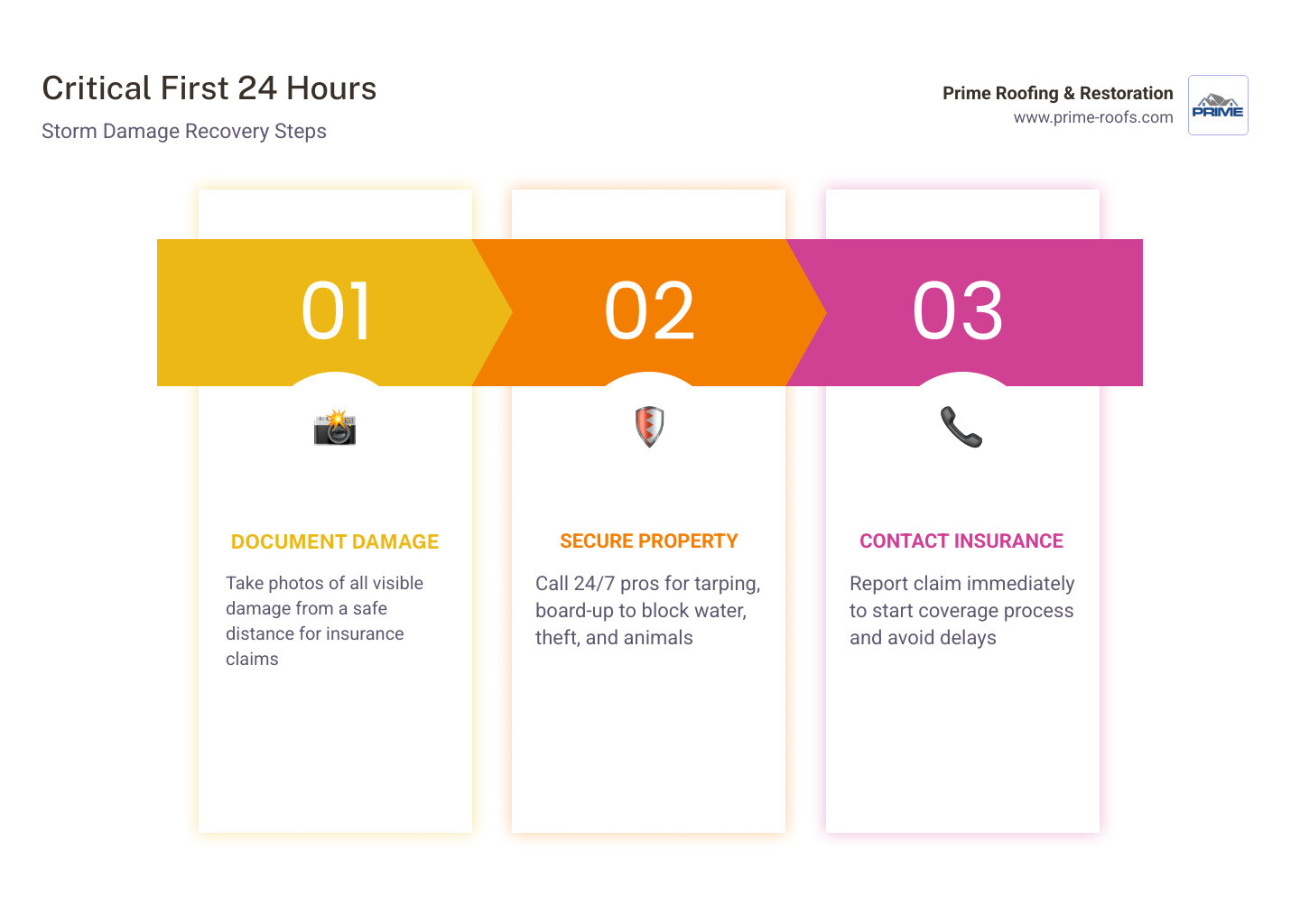
- Call a 24/7 emergency restoration service to secure your property immediately with tarping or board-ups.
- Document all visible damage with high-resolution photos and video before any cleanup begins.
- Contact your insurance provider as soon as possible to start your claim, but have a professional contractor present for the adjuster’s inspection.
- Prioritize safety first — stay away from downed power lines, standing water, and unstable structures.
Storms don’t follow a schedule. Wind, hail, flooding, and roof damage can strike in minutes and leave behind thousands of dollars in destruction. According to restoration professionals and the American Red Cross, mold can begin growing in as little as 24 to 48 hours after water enters a structure. That means the window to protect your home is short — and every hour of delay raises the stakes. Secondary damage, such as wood rot, electrical shorts, and ruined insulation, often costs more to repair than the initial storm impact itself.
Whether you’re dealing with a tree through your roof, a flooded basement, or missing shingles after a hailstorm, the right expert roofing and exterior restoration services can mean the difference between a manageable repair and a full structural rebuild.
I’m Bill Spencer, Owner and President of Prime Roofing & Restoration, a licensed roofing and restoration contractor (License #30275) serving Central Alabama and the Gulf Coast — and storm damage restoration near me is one of the most critical services my team delivers every day. With hands-on experience across residential and commercial properties, I’ll walk you through exactly what to look for, what to do, and who to trust when a storm hits close to home.
Similar topics to storm damage restoration near me:
Immediate Steps for Storm Damage Restoration Near Me
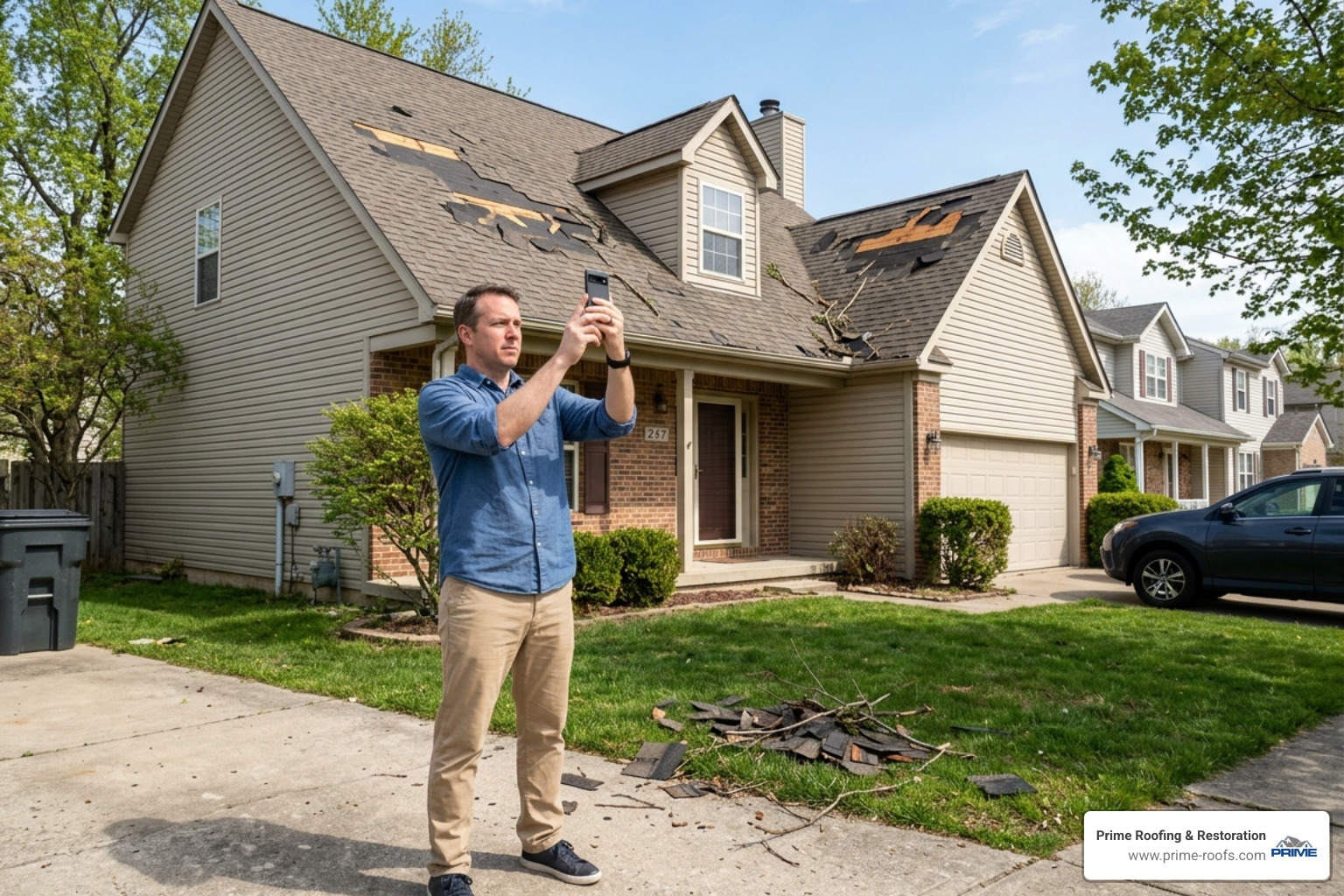
When the clouds clear and the winds die down, your first instinct might be to grab a ladder and start fixing things. Stop right there. Your safety is more important than any shingle. Before you even think about repairs, you need to perform a “safety sweep” of your property. According to FEMA, more injuries often occur after a storm during the cleanup phase than during the storm itself.
- Check for Hazards: Stay far away from downed power lines. Even if they aren’t sparking, they could be live. If you see standing water in your basement or yard, do not walk through it, as it could be “energized” by underground lines or contain harmful contaminants like sewage or chemicals.
- Visual Inspection: Conduct a walk-around of your home from the ground. Use binoculars if necessary. Look for missing shingles, dented gutters, broken windows, or fallen tree limbs. Check your HVAC unit for debris or hail dents, as these can lead to system failure later.
- Documentation: This is the most critical step for your insurance. Take clear photos and videos of everything. If you see a leak inside, take a photo of the ceiling and the floor. Capture the context of the damage—show the whole house and then zoom in on specific issues. For more detailed advice, check out our guide on what to do after a storm damages your roof.
- Call the Pros: Contact a 24/7 restoration team immediately. Even if the damage looks minor, hidden moisture can wreak havoc on your home’s structural integrity. Professional moisture meters can detect water behind drywall that you can’t see or feel.
If you are a resident in the Birmingham area, following these storm damage residential roof repair tips for Hoover homeowners can help you navigate the chaos of a post-storm environment without making costly mistakes.
Why Rapid Storm Damage Restoration Near Me Prevents Mold
The clock is ticking the moment water enters your home. According to CDC guidelines on mold and moisture control, mold can colonize on drywall, wood, and insulation within just 24 to 48 hours of exposure. This is why searching for storm damage restoration near me and getting a team on-site immediately is vital. Mold isn’t just an aesthetic issue; it’s a health hazard that can cause respiratory issues, especially for children and the elderly.
Professional restoration teams use high-velocity air movers and industrial-grade LGR (Low Grain Refrigerant) dehumidifiers that go far beyond what a household fan can do. We don’t just dry the surface; we pull moisture out of the wall cavities and subfloors. Left untreated, this moisture leads to “secondary damage” — rot, structural weakening, and serious respiratory health risks for your family. If you need local help, look for storm damage cleanup near me to find experts who can start the drying process before the spores take hold.
Essential Emergency Stabilization Services
Before the permanent repairs begin, we have to stop the bleeding. Emergency stabilization is about protecting your home from further damage. This is often referred to as “mitigating the loss,” which is a requirement in most insurance policies.
- Roof Tarping: If a tree fell through your attic or the wind ripped off a section of shingles, a professional tarping service is essential. We use heavy-duty, UV-resistant tarps secured with wooden furring strips to ensure they don’t blow away in the next gust. It keeps out the next rainstorm and prevents animals from turning your attic into a hotel. For a deep dive, see our emergency tarping complete guide.
- Window Board-Up: Broken windows are an invitation for rain, pests, and even illegal entry. Boarding up these openings with structural plywood secures the “envelope” of your home and provides peace of mind while you wait for glass replacement.
- Perimeter Fencing: In cases of severe structural damage, we may install temporary fencing to keep the site secure and safe from curious neighbors or intruders. This is particularly important for commercial properties or homes with significant structural collapses.
Utilizing an emergency roof tarping service is often the first line of defense in keeping your interior dry while you wait for the insurance adjuster to arrive. Remember, if you fail to mitigate the damage (like leaving a hole in the roof uncovered), the insurance company may deny coverage for any subsequent water damage that occurs.
Comprehensive Services Included in Professional Restoration
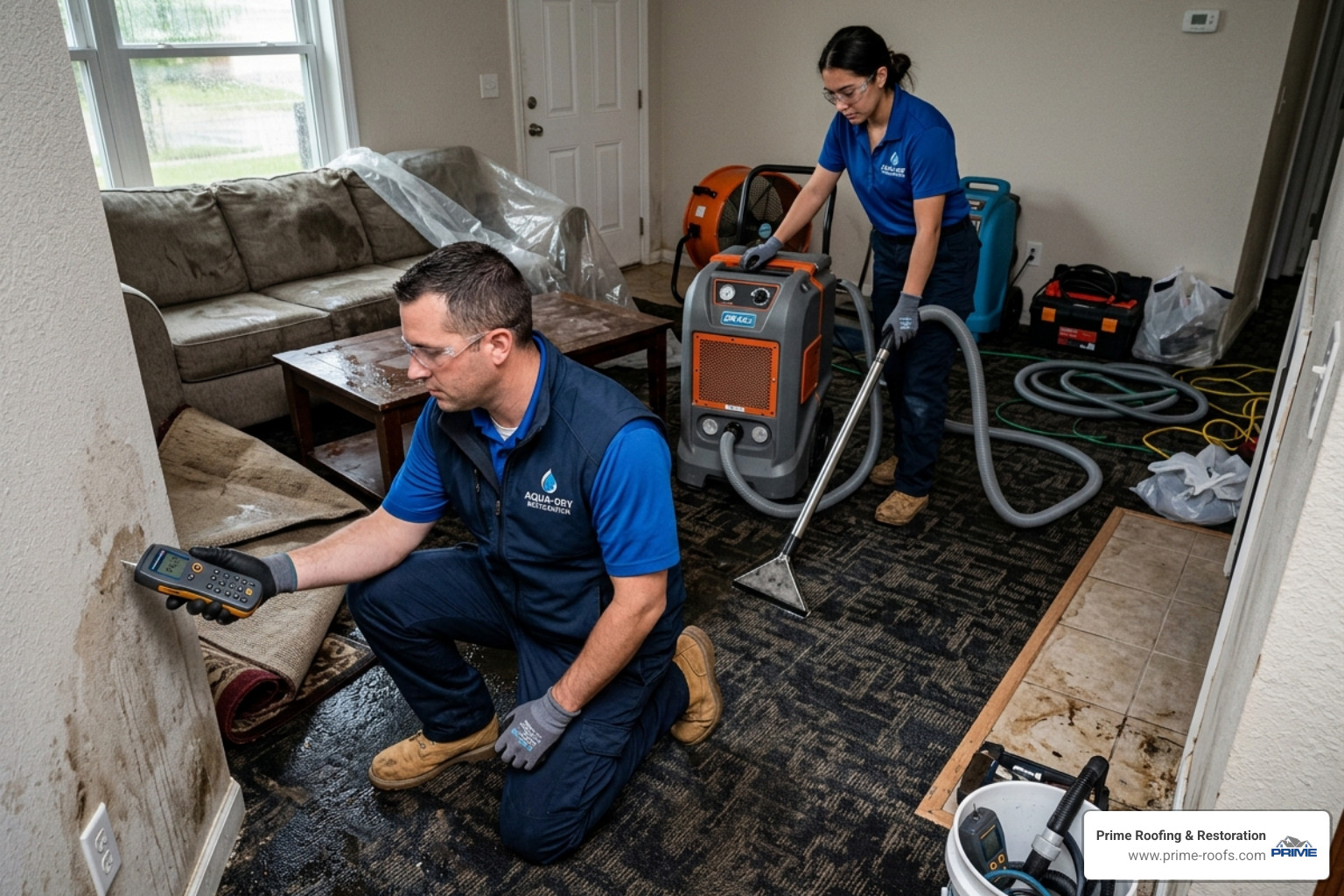
Professional restoration isn’t just about swinging a hammer; it’s a scientific process. When you hire a full-service team for storm damage restoration near me, you are getting a multi-step recovery plan designed to return your property to its pre-loss condition. We follow the IICRC S500 Standards for Professional Water Damage Restoration, which is the industry-standard “roadmap” for safe and effective drying.
Our storm damage repair services typically include:
- Water Extraction: Using industrial-strength truck-mounted pumps to remove standing water quickly. This is critical for preventing the water from seeping into the subfloor.
- Debris Removal: Clearing away fallen trees, shattered glass, ruined building materials, and hazardous waste. We handle the heavy lifting and the disposal logistics.
- Structural Drying: Using moisture meters and thermal imaging cameras to ensure every stud, joist, and layer of insulation is bone-dry. We monitor these levels daily until the “dry standard” is met.
- Sanitization and Deodorization: Treating surfaces with EPA-registered antimicrobial agents to kill bacteria and prevent odors, especially if the storm involved sewage backup or floodwater (Category 3 water).
- HVAC Cleaning: Ensuring your air ducts aren’t blowing mold spores or dust throughout the house after a major event.
The Science of Drying: Why It Matters
Many homeowners think that if a carpet feels dry to the touch, the job is done. However, water is insidious. It travels through capillary action, climbing up drywall and soaking into the sill plates of your framing. If you don’t use professional-grade dehumidification, that trapped moisture will eventually cause the wood to rot and mold to flourish behind the walls. Our technicians are trained in psychrometry—the study of air-vapor mixtures—to manipulate temperature and humidity for the fastest possible drying times.
Residential vs. Commercial Restoration Requirements
While the physics of drying a building are similar, the scale and stakes differ between homes and businesses. For a business owner, every hour the doors are closed is lost revenue. Commercial restoration often involves specialized heavy equipment, high-rise mitigation techniques, and a focus on business downtime mitigation. We work around the clock to ensure your employees can return to a safe environment as quickly as possible. If you own a business, don’t miss our article: Don’t Get Blown Away: What to Do When Commercial Storm Damage Strikes.
For families, the focus is often on emotional restoration and returning to normalcy. Our storm damage home repair complete guide covers the nuances of residential recovery, from structural fixes to the finishing touches like paint and trim.
Contents Restoration and Secure Storage
A house isn’t just a structure; it’s filled with your life. One of the most overlooked parts of storm damage restoration near me is “contents restoration.” This involves a professional “packout” where your belongings — furniture, electronics, clothing, and documents — are inventoried and moved to a secure, climate-controlled facility.
We use specialized cleaning methods, such as ultrasonic cleaning and ozone treatment, to save items you might think are lost. For example, document drying (lyophilization) can save precious photos or legal papers, while textile cleaning can remove smoke or water odors from heirlooms. You can learn more about this detailed process in our storm damage repair complete guide or get a step-by-step overview in From Disaster to Done: A Homeowners Handbook for Storm Repair.
Navigating the Storm Damage Restoration Process
The road to recovery can feel long, but it generally follows a predictable path. Having a clear timeline helps reduce the stress of the unknown. At Prime Roofing & Restoration, we prioritize transparency so you always know what phase your project is in.
| Phase | Key Actions | Tools Used |
|---|---|---|
| Assessment | Inspection of roof, attic, and interior for damage. | Infrared cameras, moisture meters, drones. |
| Mitigation | Tarping, board-up, and water extraction. | Industrial pumps, heavy-duty tarps, plywood. |
| Drying | Removal of moisture from air and surfaces. | Air movers, LGR dehumidifiers, HEPA scrubbers. |
| Reconstruction | Replacing drywall, flooring, and shingles. | HAAG-certified roofing materials, nail guns. |
Our storm damage roof repair experts use infrared thermal imaging technology to find “hidden” leaks that the naked eye can’t see, ensuring we don’t just patch the problem but solve it. For a look at the full cleanup workflow, see our storm damage cleanup complete guide.
Choosing Certified Storm Damage Restoration Near Me
Not all contractors are created equal. When searching for storm damage restoration near me, you need to look for specific credentials that prove the team knows how to handle disaster-level damage. In the wake of a major storm, “storm chasers” often flood the area. These are out-of-state contractors who do quick, sub-par work and disappear before the warranty is ever needed.
- IICRC Certification: This is the gold standard for cleaning and restoration. It ensures the technicians are trained in the latest science of drying and mold remediation. Always ask to see an IICRC firm certification.
- HAAG Certified Inspectors: HAAG certification means the inspector has been trained by forensic engineers to accurately identify storm damage (like hail bruises or wind uplift) and distinguish it from normal wear and tear. This is vital when dealing with insurance adjusters who may try to claim the damage is “pre-existing.”
- Local Licensing and Insurance: Especially in areas like Alabaster and Hoover, ensure your contractor is licensed in Alabama. Check out our Alabaster storm damage complete guide for local specifics.
If you are looking for the top-rated roofers near me in Alabaster, AL, always ask for their license number and proof of workers’ comp insurance before they step on your roof. A reputable local company will have deep roots in the community and a physical office you can visit.
Understanding the Restoration Timeline
How long will this take? It’s the question we hear most. While every storm is different, here are the factors that affect your timeline:
- Severity of Damage: A few missing shingles can be fixed in a day; a tree through the living room can take weeks of structural work.
- Material Availability: Large-scale regional storms can cause shortages in shingles or drywall. Being a local leader, we maintain strong relationships with suppliers to get materials faster.
- Insurance Approval: The speed of your adjuster’s visit often dictates when reconstruction can start. We help expedite this by providing comprehensive documentation immediately.
- Mold Presence: If mold is found, the timeline extends due to the necessary containment and remediation steps required by law.
For those dealing specifically with frozen rain damage, our guide on hail damage roof repair explains why these repairs can sometimes be more complex than they look. You can also find tips for coordinating with your carrier in Hail No: Navigating Storm Damage Roofing Services and Insurance Claims.
Insurance Claims and Financial Recovery
Filing a claim is often the most stressful part of the process. Many homeowners are surprised to learn that “storm damage” is a broad term. Generally, homeowners insurance covers wind and hail damage. However, flood insurance is almost always a separate policy managed through the National Flood Insurance Program (NFIP). If a storm causes a roof leak, that’s usually covered. If a river rises and enters your front door, that’s a flood claim. Understanding this distinction is vital for your financial recovery.
To ensure you get the settlement you deserve, check out The Ultimate Guide to Filing a Storm Damage Insurance Claim. We also recommend reading Don’t Let Your Storm Damage Insurance Claim Blow Away to avoid common filing mistakes, such as failing to keep receipts for temporary repairs.
Common Types of Storm Damage and Repair Methods
Understanding what happened to your home helps you communicate better with your restoration team and your insurance adjuster.
- Hail Damage: This often looks like “bruising” on your shingles. It knocks off the protective granules, exposing the asphalt to the sun’s UV rays, which causes the shingle to become brittle and leak. Learn how to spot roof hail damage before the leaks start.
- Wind Damage: High winds can cause “uplift,” breaking the sealant bond on shingles. Even if they aren’t missing, they might be compromised. We specialize in identifying wind damage to roof shingles that others might miss, such as creased shingles that only show damage upon close inspection.
- Structural Damage: This involves damage to the rafters, trusses, or walls, often from fallen debris. Our roof repair wind damage services cover everything from shingle replacement to full structural reinforcement.
Filing a Successful Claim for Storm Damage
As a restoration company with national account status with many carriers, we speak the “language” of insurance. We use Xactimate, the same estimating software used by most adjusters, to ensure our line-item costs align with their expectations. We provide the detailed documentation, moisture maps, and photo evidence that adjusters need to approve a claim quickly.
In Alabama, where storms can be particularly fierce, having hail damage Alabama experts on your side is a huge advantage. We work with hail damage roofers who know exactly what evidence to present to ensure your home is restored to its pre-loss condition — or better. Don’t settle for a “patch job” when your policy entitles you to a full restoration.
Frequently Asked Questions about Storm Restoration
How long do I have to file a storm damage claim?
The “statute of limitations” for insurance claims varies by state and policy, but it is typically between one and two years from the date of the storm. However, we strongly recommend immediate reporting. The longer you wait, the harder it is to prove the damage was caused by a specific storm and not general wear and tear. For those on the coast, Orange Beach storm damage claims should be filed immediately due to the high risk of secondary salt-water or moisture damage.
Does homeowners insurance cover all types of storm damage?
Standard policies usually cover wind, hail, and lightning. They often do not cover flooding (rising water) or earth movement (mudslides) without specific riders. It is also important to distinguish between structural coverage and “contents” coverage. If you are in a high-risk area, review our guide on storm damage Orange Beach to understand how specialized coverage works.
What certifications should a restoration company have?
At a minimum, they should be IICRC certified (for drying and cleanup) and have HAAG-certified inspectors (for forensic roof assessment). They must also be licensed contractors in the state of Alabama. For residents in our home base, checking for Alabaster storm damage expertise ensures the team understands local building codes and weather patterns.
Can I perform storm restoration myself?
While minor debris cleanup is possible, structural drying and roof repairs should always be handled by professionals. Without industrial dehumidifiers and moisture meters, you risk leaving water trapped inside walls, which leads to mold and rot. Furthermore, climbing on a storm-damaged roof is extremely dangerous due to weakened structures and slippery surfaces.
What is the difference between ACV and RCV?
Actual Cash Value (ACV) pays you the value of the item at the time of the loss (depreciated value). Replacement Cost Value (RCV) pays you what it costs to buy a new version of that item today. Most modern policies are RCV, but you often receive the ACV amount first, with the remaining “depreciation” released once the work is completed.
How do I know if I have hail damage if my roof isn’t leaking?
Hail damage is often invisible from the ground. It creates “bruises” that weaken the shingle’s integrity. Over time, the sun expands and contracts these bruised areas, leading to cracks and leaks months after the storm. A professional HAAG-certified inspection is the only way to be sure.
What should I do if my insurance claim is denied?
If your claim is denied, don’t panic. You have the right to appeal. We can provide additional evidence, such as engineer reports or more detailed photos, to support your case. Sometimes, a second adjuster is sent out for a re-inspection.
Is mold always covered by insurance?
Mold is typically covered only if it is the direct result of a “covered peril,” like a storm-related roof leak. However, many policies have a “mold cap” (e.g., $5,000 or $10,000). This is why rapid mitigation is so important—to keep the mold remediation costs within your policy limits.
Conclusion
At Prime Roofing & Restoration, we understand that a storm does more than damage a building — it disrupts your life and your sense of security. Based in Alabaster, AL, we provide end-to-end solutions that cover everything from the first emergency tarp to the final insurance check. We use only the highest quality materials and employ licensed experts who are available 24/7 to protect your home and family. Our mission isn’t just to fix roofs; it’s to build lasting relationships with our neighbors through honesty, quality, and speed. We are ready to help you weather the storm.
Contact Information
Prime Roofing & Restoration
131 9th St SW, Alabaster, AL 35007
Phone: 205-910-7492
Available 24/7 for Emergency Services
View our location on Google Maps