
Navigating Storm Damage: Your First Steps
When your property is hit by a storm, finding reliable storm damage repair services is the most important step toward recovery. The aftermath can be overwhelming, but a clear plan makes all the difference. That’s why finding an expert roofing and restoration company like Prime Roofing & Restoration is so important for protecting your investment. Here’s what to do first:
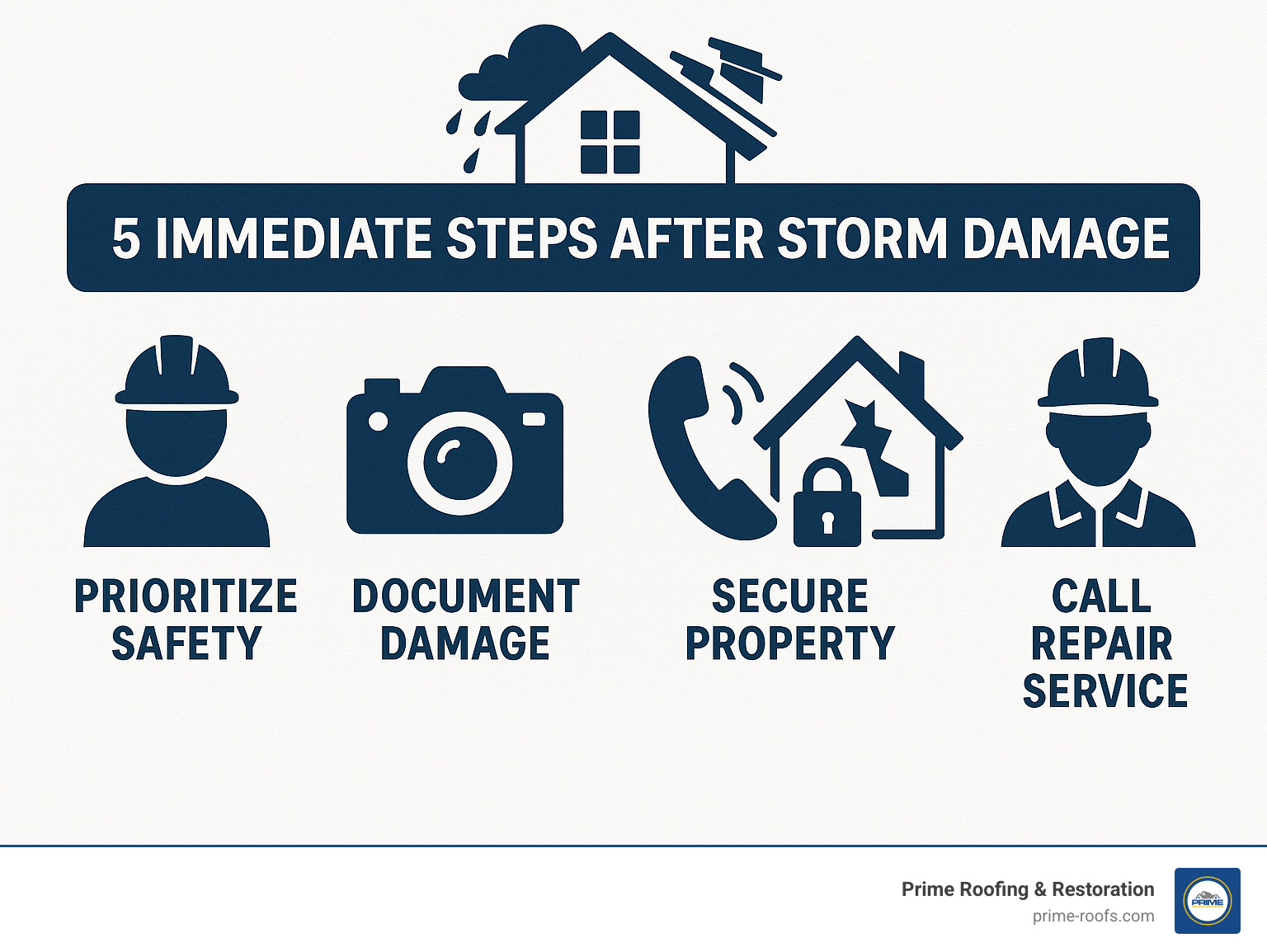
- Ensure Safety: Your top priority is the well-being of everyone in the household. Evacuate if the structure seems unstable.
- Document Everything: Before moving anything, take detailed photos and videos of all damage for your insurance claim.
- Contact Your Insurer: Notify your insurance company about the damage as soon as possible.
- Prevent Further Damage: Take temporary measures, like covering a hole with a tarp, to prevent the situation from worsening.
- Call a Professional: Contact a trusted restoration company for an expert assessment and to begin repairs.
This guide will walk you through identifying damage, navigating insurance, and choosing the right contractor. As Bill Spencer, Owner of Prime Roofing & Restoration, I’ve led our team for over five years, providing expert solutions across the Gulf Coast. We are committed to delivering reliable, code-compliant repairs for our community.
Identifying the Aftermath: Common Types of Storm Damage
After a storm, the damage isn’t always obvious. What seems like a minor issue can quickly become a major problem if ignored. Knowing what to look for can save you significant stress and money. Here are the most common types of storm damage we see.
- Wind Damage: High winds can lift, curl, or tear off shingles, leaving your roof exposed. Even winds at 40 MPH can cause significant issues.
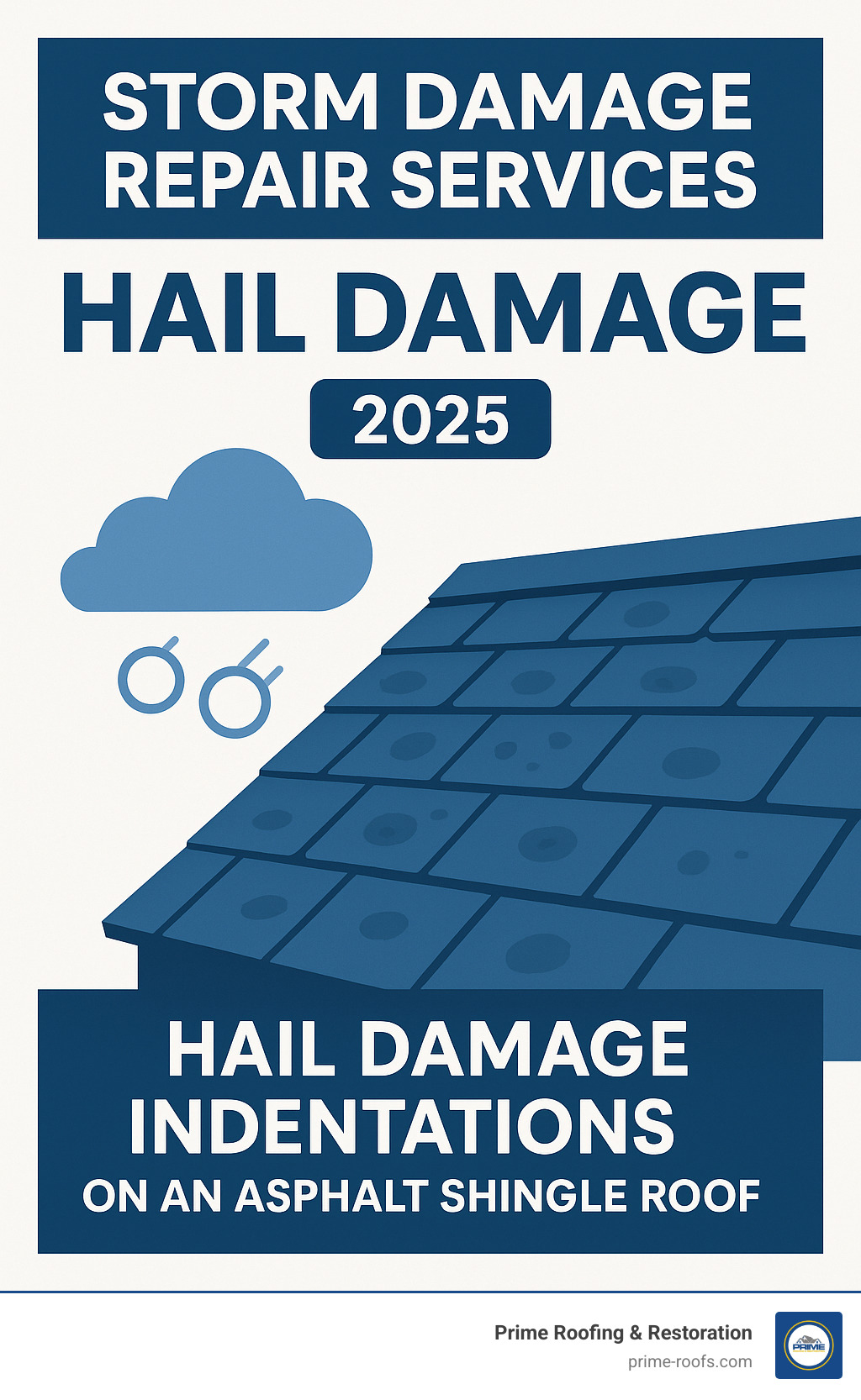
- Hail Damage: Hail can be deceptive. It may not look like much from the ground, but it can bruise shingles, knock off protective granules, and create small cracks that lead to leaks. If you suspect hail damage, we have a guide to help you learn how to spot roof hail damage.
- Water Damage: Once wind or hail compromises your roof, water can get in, leading to stained ceilings, damaged insulation, and mold growth.
- Debris Impact: Flying tree limbs, patio furniture, and other objects can puncture your roof, break windows, and dent siding.
- Structural Damage: The most severe damage affects your home’s framework. Tornadoes, hurricanes, and even strong thunderstorms can compromise the integrity of your foundation, walls, and roof trusses.
Signs Your Roof Needs Repair After a Storm
Your roof is the most vulnerable part of your home during a storm. Look for these signs that it needs professional attention:
Obvious Signs:
- Missing, cracked, or curling shingles.
- Dented gutters, downspouts, or roof vents.
- Granules from your shingles collecting in the gutters.
- Water stains on your ceiling or leaks in the attic.
Subtle Signs:
- Lifted flashing around chimneys or vents.
- Bruised shingle underlayment (not visible from the outside).
- Dents on siding or outdoor AC units, which often indicate roof hail damage as well.
Ignoring any of these signs can lead to more extensive and costly repairs down the road. A quick inspection can make all the difference.
Your Post-Storm Action Plan: Immediate Steps and Emergency Response
Taking swift, correct action after a storm can significantly impact your recovery. Your first priority should always be safety.
- Prioritize Safety: Check for structural damage, gas leaks, or downed power lines. If you notice any of these hazards, evacuate immediately and call emergency services. Your family’s well-being comes first.
- Document All Damage: Once it’s safe, use your phone to take detailed photos and videos of all damage, inside and out. This evidence is crucial for your insurance claim, so capture everything before you begin any cleanup.
- Contact Your Insurance Provider: Call your insurer promptly to start the claims process. They will guide you on the next steps and schedule an adjuster’s visit.
- Mitigate Further Damage: Prevent the situation from worsening by taking temporary measures, like covering a broken window. However, leave dangerous tasks like tarping a damaged roof to professionals.
How Professionals Handle Emergency Storm Damage Repair Services
Professional storm damage repair services are essential for immediate action. Our team understands the urgency and is ready to respond to emergencies 24/7.
Rapid response is key to preventing further issues. We aim to be on-site quickly to secure your property. One of the most critical services is emergency roof tarping. Our skilled team can properly tarp your roof to protect your home from the elements until permanent repairs are made. This is not a safe DIY job and should always be handled by experienced professionals.
Our emergency services also include boarding up shattered windows and doors to secure your property. For homes with water intrusion, we provide immediate water extraction and dehumidification to prevent secondary damage like mold. Our goal in an emergency is to stabilize your property, ensure safety, and prevent further damage as efficiently as possible.
Navigating the Restoration: The Insurance and Repair Process
Dealing with insurance claims adds another layer of stress to storm recovery. Understanding the process can make it much more manageable.
After documenting the damage, your next step is to file an insurance claim. Contact your provider with your policy number to get started. They will assign a claim number and schedule an adjuster to visit your property. We recommend having your contractor present during the adjuster’s inspection to ensure all damage is accurately assessed.
It’s also vital to understand your policy. Know whether you have:
- Actual Cash Value (ACV): This pays for the depreciated value of your damaged property, meaning you may have higher out-of-pocket costs for new materials.
- Replacement Cost Value (RCV): This covers the full cost of replacing damaged property with new, similar materials, which is generally the preferred coverage for homeowners.
Clarify your policy limits and deductible with your insurer. Your contractor will then create a detailed repair estimate. We can help you work with your insurance company to ensure the estimate covers all necessary work for a fair settlement.
Typical Timeline for Storm Damage Restoration
The restoration timeline depends on the extent of the damage, insurance processing, and material availability. Here’s a general breakdown:
- Initial Assessment & Documentation: 1-3 days
- Insurance Claim Approval: 1-4 weeks (can be longer for complex claims)
- Material Ordering & Delivery: 1-4 weeks
- Repair & Reconstruction: Varies from a few days for minor repairs to several months for extensive structural damage.
- Final Inspection: 1 day
Clear communication is essential throughout this process. We keep you informed every step of the way. For insights into insurance industry customer satisfaction, you can refer to organizations like J.D. Power.
Choosing Your Ally: Finding the Best Storm Damage Repair Services
Choosing the right contractor after a storm is a critical decision. Avoid “storm chasers” who appear after a disaster and offer quick fixes, as they often provide subpar work and then disappear. Instead, look for established, local companies with a proven track record.
When vetting contractors, be sure to:
- Check licenses and insurance: This is non-negotiable and protects you from liability.
- Read online reviews: Look for consistent positive feedback on platforms like Google and the Better Business Bureau.
- Ask for local references: Local contractors understand area-specific building codes and weather challenges.
- Understand warranties: A good contractor will offer a solid warranty on both materials and workmanship.
| Credential | Why It Matters |
|---|---|
| Licensed & Insured | Protects you from liability; ensures legal and professional operation. |
| BBB A+ Rating | Indicates a strong commitment to customer satisfaction and ethical business practices. |
| Local Experience | Familiarity with local building codes, weather patterns, and insurance adjusters. |
| Certifications (e.g., GAF Master Elite) | Demonstrates manufacturer recognition for high-quality installation and product knowledge. |
| Workmanship Warranty | Guarantees the quality of the repair work; offers peace of mind. |
Services Offered by Storm Damage Restoration Companies
Comprehensive storm damage repair services cover more than just a quick patch. A full-service company can handle the entire restoration process, including:
- Storm Damage Roof Repair: This is often the most critical need, ranging from minor fixes to a full roof replacement. Our storm damage roof repair specialists are equipped to handle any level of damage.
- Siding, Gutter, and Window Repair: Wind and hail can damage your home’s exterior, compromising its ability to protect against the elements.
- Water Mitigation and Debris Removal: Quick water extraction is vital to prevent mold, and professional debris removal clears your property safely.
- Full-Scale Reconstruction: For severe cases, this includes structural repairs and interior restoration to return your property to its pre-loss condition.
Benefits of Hiring an Experienced Contractor
An experienced contractor provides more than just repairs; they offer peace of mind. Key benefits include:
- Quality Materials: They use durable, warrantied products suited for your climate.
- Building Code Compliance: All work is done to current standards, ensuring your home is safe and legal.
- Insurance Claim Expertise: They can help you steer the claims process to ensure you receive fair coverage.
- Safety and Long-Term Value: Professional work protects your property’s value and ensures your family’s safety for years to come.
Proactive Protection: Preparing Your Property for Future Storms
While you can’t control the weather, you can take proactive steps to minimize potential storm damage. Protecting your property beforehand is a wise investment in its resilience.
- Regular Roof Inspections: Have your roof professionally inspected twice a year (spring and fall) and after any major storm. This helps catch small issues before they become big problems.
- Gutter Maintenance: Keep gutters and downspouts clear of debris to ensure water drains properly away from your roof and foundation.
- Trim Trees: Cut back dead or overhanging tree limbs that could fall on your home during high winds.
- Secure Outdoor Items: Store or secure outdoor furniture, grills, and decorations that could become projectiles in a storm.
- Upgrade Materials: When it’s time for a new roof or siding, consider impact-resistant materials. They offer superior protection and may even lower your insurance premiums.
Taking these preventative measures helps safeguard your property and your family.

Frequently Asked Questions about Storm Damage Repair Services
Facing storm damage brings up many questions. Here are answers to some of the most common ones we hear.
How long does storm damage restoration typically take?
The timeline varies based on the severity of the damage and the insurance process. Minor repairs might take a few days, while a full roof replacement can take one to two weeks. Extensive structural repairs could take several months. Once we assess the damage, we will provide a personalized timeline.
Will my insurance policy cover all the repair costs?
Coverage depends entirely on your specific policy. Most standard policies cover wind and hail damage but exclude flooding, which requires a separate policy. You will be responsible for your deductible. It’s also important to know if your policy provides Replacement Cost Value (RCV) or Actual Cash Value (ACV), as this will affect your out-of-pocket costs. Our team can help you review your policy and work with your adjuster to ensure all covered damages are included in your claim.
What is the most important first step after finding storm damage?
Your first step should be to ensure safety. If you see any hazards like downed power lines, structural instability, or smell gas, evacuate immediately and call for emergency help. Once the area is safe, your next step is to thoroughly document all damage with photos and videos before moving anything. This evidence is vital for your insurance claim. After that, call your insurance provider and a reputable restoration contractor.
Conclusion: Restoring Your Peace of Mind After the Storm
Facing storm damage is stressful, but with a clear plan and a trusted partner, recovery is manageable. The key takeaways are to act fast, document all damage thoroughly for your insurance claim, and choose a qualified, experienced professional for your storm damage repair services.
A reputable contractor will do more than just fix the damage; they will restore your property correctly and guide you through the insurance process.
For homeowners in Central and Southern Alabama, including Alabaster and Orange Beach, Prime Roofing & Restoration is here to help. We provide expert guidance, quality repairs, and 24/7 service to restore both your property and your peace of mind. Our team simplifies insurance claims and uses only the best materials to ensure you’re in good hands.
Don’t wait for the stress to build. For a free estimate, call us at (205) 661-8190 to schedule your free inspection today. Let us help you get your home back to being a safe haven.