
Understanding Alabaster’s Storm Landscape
When powerful storms sweep through, Alabaster storm damage becomes a reality for many residents. Understanding the impact helps you prepare and recover. For residents needing immediate assistance or a professional assessment, reliable storm damage restoration services are crucial for protecting their property from further harm.
Here’s a quick overview of common storm impacts in Alabaster:
- Downed Trees & Power Lines: High winds often bring down trees, blocking roads and damaging infrastructure.
- Power Outages: Widespread electricity loss is common after severe weather.
- Roof & Property Damage: Hail and strong winds can severely damage roofs, siding, and other exterior components.
- Traffic Disruptions: Road closures and debris can make travel difficult.
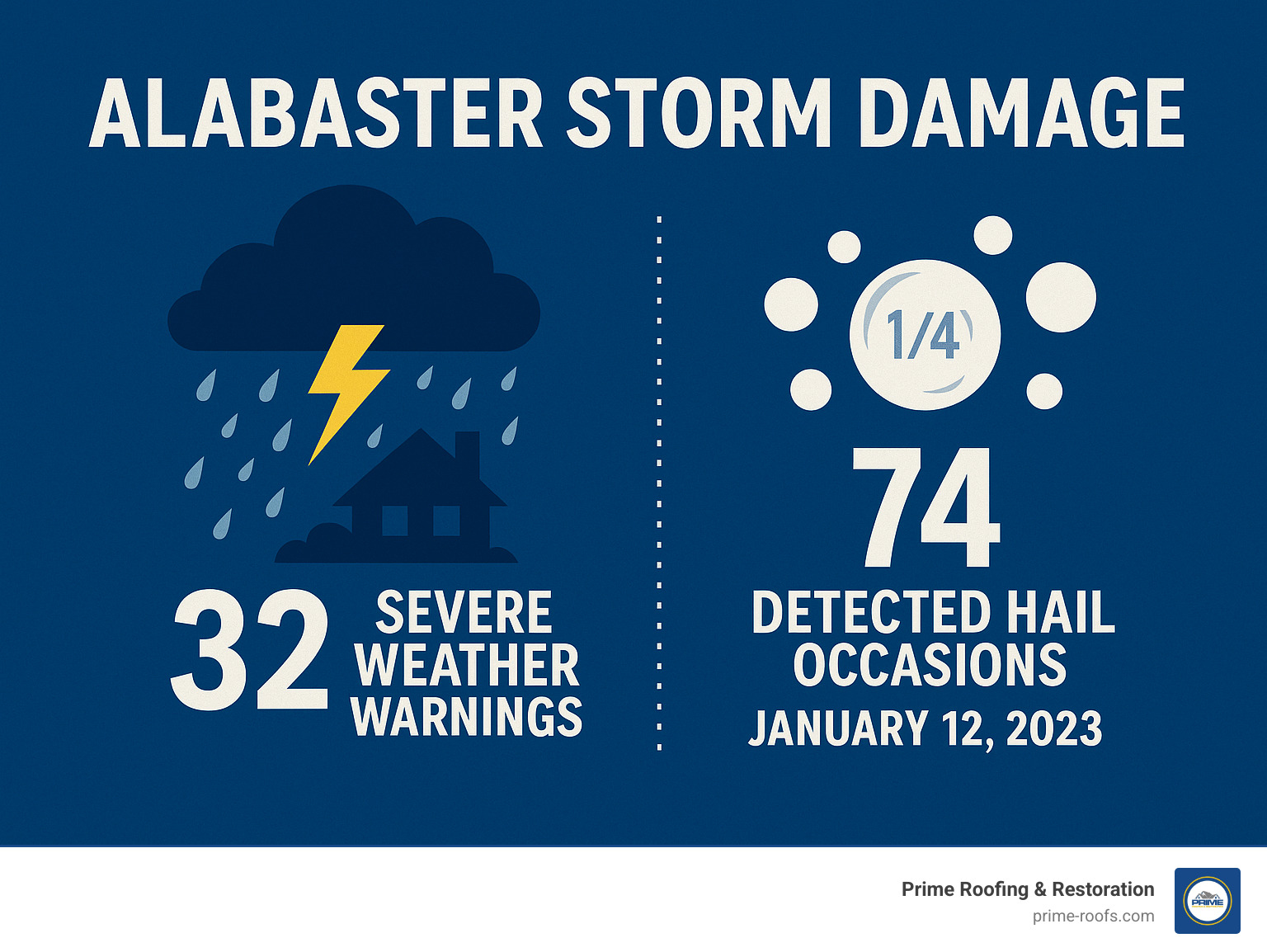
Alabaster residents are no strangers to severe weather. In the past year alone, the area has experienced 32 severe weather warnings. Doppler radar has even detected hail 74 times near Alabaster. These events, ranging from strong winds and hail to the threat of tornadoes, leave a significant mark on the community. This guide will provide a comprehensive look at recent storm damage in Alabaster, including photos, affected areas, and essential steps for homeowners to take.
I’m Bill Spencer, owner of Prime Roofing & Restoration. I’ve seen the extensive Alabaster storm damage caused by severe weather events over the years. My team and I are dedicated to helping local homeowners restore their properties and peace of mind after these challenging times.
Recent Storms Hit Alabaster: A Timeline of Events
We’ve all been there: scanning the skies, listening for the rumble, and then bracing ourselves as another powerful storm rolls through. Alabaster, nestled in Shelby County, is no stranger to nature’s fury. In fact, our community has been under severe weather warnings 32 times in the past 12 months alone! That’s nearly three warnings a month, keeping us on our toes. When Alabaster storm damage strikes, homeowners need a trusted partner to help restore their property and peace of mind. For comprehensive solutions, from initial assessment to full restoration, you can always turn to Prime Roofing & Restoration.
One of the more recent notable events in our area was the widespread severe weather on Saturday, May 25th, which caused significant issues across Central Alabama. While data indicated a “Top Recent Hail Date” of Thursday, May 9, 2024, for Alabaster (a date that was in the future at the time the data was gathered), it really highlights how often hail events occur here. We also clearly remember the quarter-sized hail that pelted areas just southeast of Alabaster on January 12, 2023. These aren’t just statistics; they represent real impacts on our homes and daily lives.
Sometimes, these storms even crash our parties! We saw the disruptive power of these storms when tents were blown over at Alabaster CityFest, a beloved annual event. It’s a stark reminder that severe weather can strike anywhere, anytime, turning a festive atmosphere into a cleanup effort.
For those who like to stay ahead of the curve, you can always view the latest severe weather outlooks from the Storm Prediction Center. We certainly do!
Wind and Thunderstorm Damage
When a storm hits, it’s not just the rain we worry about. The wind, in particular, can be a formidable foe. Alabaster has experienced its fair share of damaging straight-line winds and even microbursts. What’s a microburst, you ask? Imagine an invisible, localized bomb of wind dropping from a thunderstorm, spreading outward with incredible force. These powerful downdrafts can hit speeds of 60-70 mph, strong enough to cause widespread destruction.
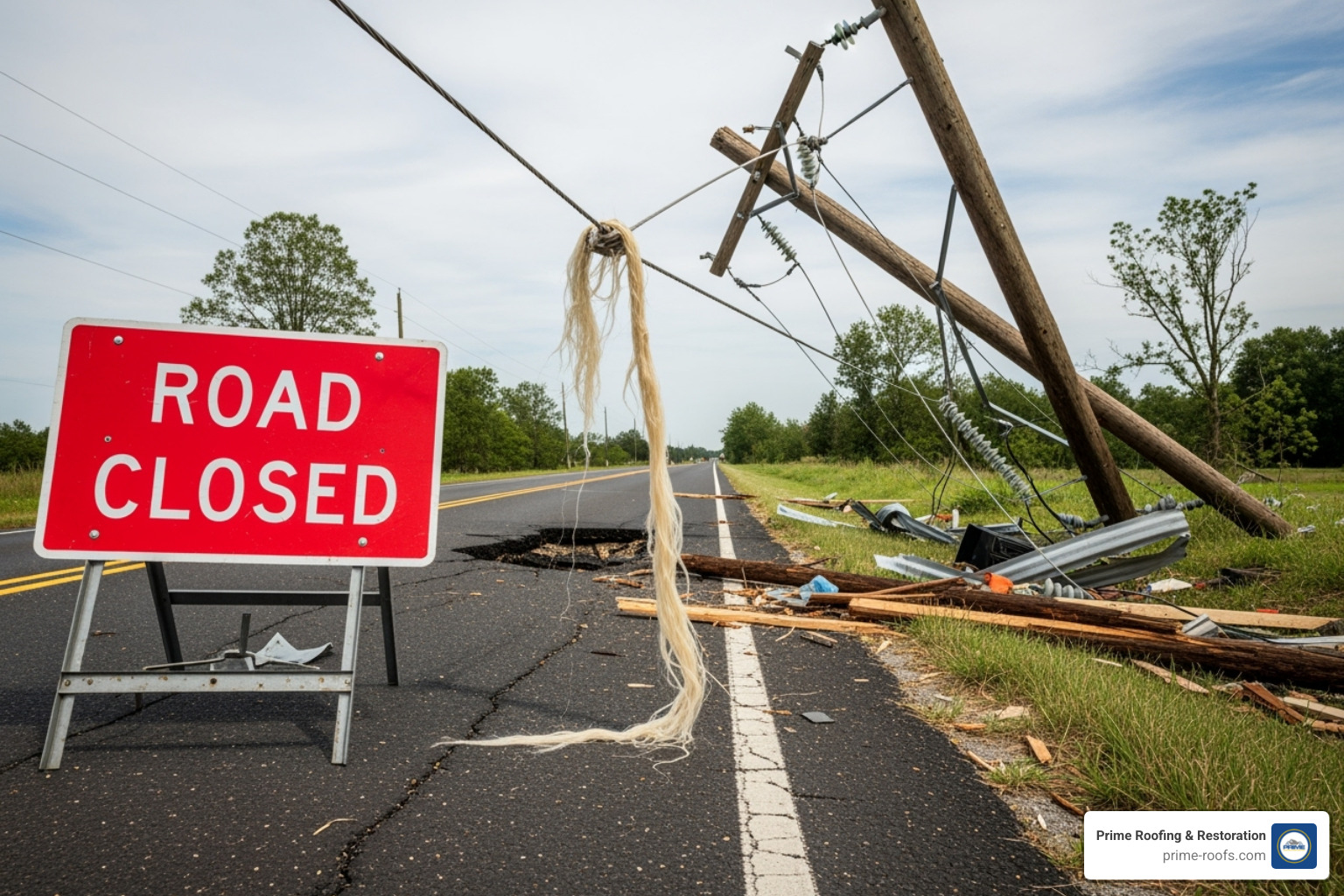
We’ve seen the aftermath: majestic trees, once standing tall, now sprawled across roads and homes. Downed trees and power lines are common culprits, leading to scattered debris and, unfortunately, structural damage reports. A prime example was the incident at the intersection of Navajo and Arrowhead Trails in Alabaster, where a large tree and power lines came down, closing the road for hours as crews worked diligently. We’ve also seen significant impacts in areas like Colonial Drive and the Oak Mountain community, where residents have grappled with fallen trees on houses and widespread debris. These aren’t just inconveniences; they’re direct threats to our property and safety.
Hail and Tornado Activity
While wind can certainly do a number on our homes, hail adds another layer of concern. From pea-sized pellets to chunky quarter-sized hail (like the event we saw on January 12, 2023), and even golf ball-sized ice bombs, hail can leave a trail of destruction. Imagine your roof, siding, and vehicles taking a beating from these icy projectiles – it’s not pretty. Hail damage to vehicles is a common sight after these events, often looking like someone took a hammer to the hood.
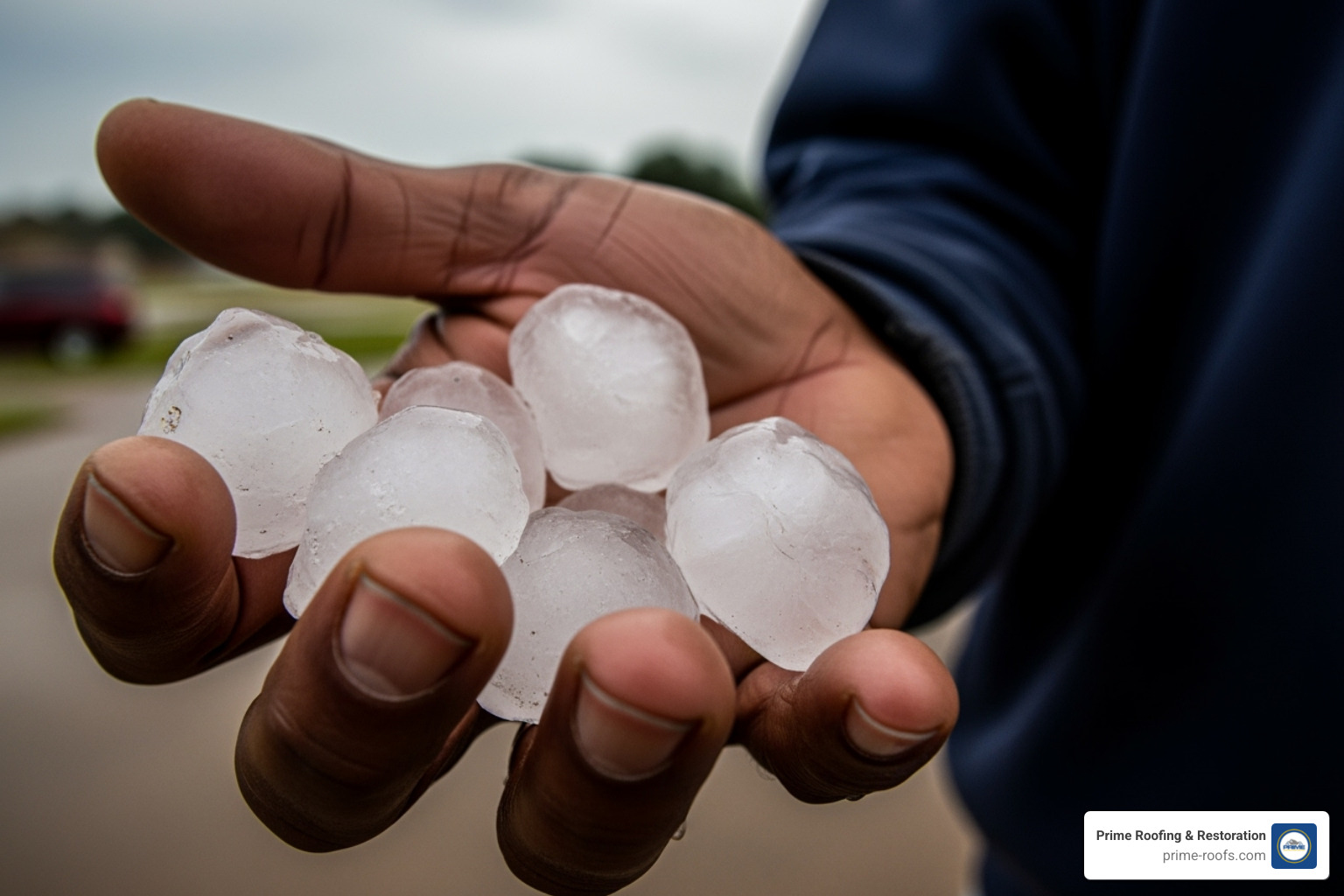
But the real concern for us, as roofing and restoration experts, is the damage to your roof. Hail can bruise shingles, cause granule loss, and even create tiny, invisible cracks that lead to leaks down the line. That’s why getting an expert eye on your roof after a storm is so important. When you’re facing roof issues from severe weather, prompt and professional attention is key to preventing further damage. For reliable solutions, look no further than expert storm damage roof repair services.
And then there’s the big one: tornadoes. While not as frequent as our wind and hail events, the threat of tornadoes is always present. Our community was directly impacted by an EF-0 tornado on April 15, 2011. Though an EF-0 is considered “weak” with estimated maximum wind speeds of 70 mph, it still packed a punch. This particular tornado had a damage path length of 1.37 miles and a maximum path width of 50 yards. While thankfully there were no injuries or fatalities reported from this event, it serves as a powerful reminder of nature’s unpredictable force. Radar-confirmed tornadoes have also been spotted near areas like the Shelby County Airport. We’ve certainly seen the damage these events can cause to roofs, which is why understanding more info about how to spot roof hail damage is so important for homeowners.
Documenting Alabaster Storm Damage: What to Look For
After the storm passes and the immediate danger subsides, the next crucial step is to assess the damage. It can be overwhelming, but a systematic approach will help you capture everything needed for insurance claims and repair efforts. We always recommend homeowners conduct a thorough property assessment, documenting everything they see.
Start with your overall property. Look for fallen trees or large branches, debris scattered across your yard, or any signs of standing water. Then, turn your attention to your home’s exterior. Photo documentation and video evidence are your best friends here. Take pictures from different angles, close-ups of damaged areas, and wide shots to show the overall impact. Don’t forget to include timestamps if possible – your phone usually does this automatically!
When it comes to specific types of damage, here’s what we typically look for:
- Wind Damage: Look for missing shingles, lifted or curled shingles, damaged fascia or soffit, and any dislodged gutters. The wind can also cause external structures like fences or sheds to lean or collapse.
- Hail Damage: This can be trickier to spot. Look for dents or pockmarks on soft metals like gutters, downspouts, and vents. On shingles, hail can cause “bruising,” which looks like dark spots where granules have been knocked off, or even small indentations.
- Water Damage: After a storm, check for water stains on your ceilings or walls, especially in upper levels. This indicates a breach in your roof or exterior, and it needs immediate attention to prevent mold and structural issues.
- Tree Impact: If a tree or large limb has fallen on your house, the damage can be extensive, ranging from punctures in the roof to shattered windows or structural compromise.
Common Types of Alabaster Storm Damage to Roofs
Your roof is your home’s first line of defense against the elements, and it often bears the brunt of a storm’s fury. When we inspect roofs after a storm, we typically find several common types of Alabaster storm damage:
- Missing Shingles: High winds can easily peel back or completely detach shingles, leaving your underlayment exposed to the elements.
- Curled or Lifted Shingles: Even if not completely torn off, strong winds can cause shingles to lift and curl, breaking their seals and making them vulnerable to future damage and leaks.
- Bruised Shingles (from Hail): As mentioned, hail impacts can create soft spots or “bruises” on shingles where the protective granules have been dislodged. This might not look severe initially, but it compromises the shingle’s integrity and shortens its lifespan.
- Damaged Flashing: Flashing, the metal strips installed around chimneys, vents, and valleys, is crucial for preventing water intrusion. Storms can bend, dislodge, or tear flashing, creating direct pathways for water to enter your home.
- Leaking Pipe Jacks: These are often overlooked but can be a major source of leaks. The rubber gaskets on pipe jacks (also known as roof boots) that seal around vent pipes can crack, dry out, or deteriorate from UV exposure and fluctuating temperatures, leading to leaks. Nails holding them down can also become loose or rust, allowing water in.
- Granule Loss: Hail and strong winds can cause the protective granules on asphalt shingles to shed, exposing the asphalt layer to harmful UV rays. This accelerates the aging process of your roof.
- Gutter Damage: Gutters can be dented, torn, or ripped away from the fascia by strong winds or heavy rain. Clogged or damaged gutters can lead to water overflow, causing damage to your siding, foundation, and landscaping.
Recognizing these signs is vital. While some may seem minor, they can lead to significant problems if left unaddressed. That’s where expert storm damage roof repair comes in. We’re here to help you identify and fix these issues before they escalate.
Beyond the Roof: Siding, Windows, and Landscape
While the roof often takes center stage after a storm, it’s crucial to remember that other parts of your property can suffer significant Alabaster storm damage too. We encourage homeowners to extend their inspection beyond the roof and look at the entire exterior.
Here’s a list of non-roof items to inspect after a storm:
- Dented Siding: Hail and wind-blown debris can leave unsightly dents or cracks in your home’s siding, whether it’s vinyl, aluminum, or fiber cement.
- Cracked or Broken Windows: Flying debris, strong winds, or even hail can crack or shatter windows. Always exercise extreme caution around broken glass.
- Uprooted Trees and Broken Branches: This is perhaps one of the most visible signs of a powerful storm. Large trees can be completely uprooted, and heavy branches can snap off, posing hazards to people and property.
- Damaged Fencing: High winds can easily topple or splinter sections of your fence, leaving your property exposed.
- Outdoor Structures: Don’t forget sheds, gazebos, decks, and even mailboxes. These can all suffer damage from wind and falling debris.
- Landscape Damage: Beyond trees, your garden, shrubs, and even lawn can be impacted by heavy rain, hail, or debris.
Documenting all of these, not just the roof, gives you a comprehensive picture of the storm’s impact on your entire property.
Broader Community Impact: Power Outages and Traffic Disruptions
When severe weather sweeps through Alabaster, the impact ripples far beyond just one home. We’ve all seen how quickly a strong storm can affect our entire community. One of the most immediate and widespread consequences of Alabaster storm damage is power outages. It’s a familiar scenario: the lights flicker, then darkness. Alabama Power crews work incredibly hard, but when storms hit hard, thousands of residents can be left without electricity. We’ve seen instances where over 50,000 people were without power across Central Alabama following a severe weather event. Imagine trying to steer daily life without lights, air conditioning (especially brutal during an Alabama summer!), or a way to charge your phone.
Traffic disruptions are another major headache. Downed trees, fallen power lines, and scattered debris can make roads impassable. We’ve seen significant road closures at key intersections like Navajo and Arrowhead Trails, causing frustrating detours and delays for commuters. Major arteries, such as Highway 11 in Chelsea, have also been blocked by fallen trees, impacting many in Shelby County and beyond. These closures don’t just inconvenience us; they can also slow down emergency services trying to reach those who need help most. Our local authorities and utility companies spring into action immediately. City crews and Alabama Power teams work hand-in-hand, often with multiple bucket trucks on site, to clear debris and restore power as quickly as possible. Cleanup efforts can take several hours, or even days, depending on how widespread the damage is. For the latest updates, you can always check for local alerts from the City of Alabaster.
Hotspots for Damage and Closures
While storms can affect any part of Alabaster, certain areas and intersections often bear the brunt of the damage, leading to more frequent closures and cleanup efforts. As we mentioned, the intersection of Navajo and Arrowhead Trails has been a notable hotspot for downed trees and power lines, requiring significant intervention from Alabaster City crews and Alabama Power. These specific incidents highlight the immediate and localized challenges that arise after a storm.
Beyond Alabaster’s city limits, the broader Shelby County, and even neighboring Jefferson County, often experience widespread storm impacts. When a large tree falls across a major road like Highway 11 in Chelsea, it causes significant traffic disruptions for many. Power restoration efforts, as diligently carried out by Alabama Power, often focus on these heavily impacted areas first, prioritizing safety and getting service back to as many people as possible.
A History of Severe Weather in Alabaster
Alabaster’s relationship with severe weather is, shall we say, a long and storied one. It’s not just a recent phenomenon; our community has a history of facing nature’s challenges head-on. The sheer frequency of severe weather warnings and hail reports (like the 74 times detected by Doppler radar!) paints a clear picture: we live in an active storm corridor. This historical context isn’t just for trivia night; it shapes our community’s resilience and preparedness. We’ve learned to adapt, to prepare, and to recover, often coming out stronger on the other side.
Notable Historical Alabaster Storm Damage Events
While we focus on recent events, it’s important to reflect on past significant Alabaster storm damage that has shaped our understanding and preparedness. One of the most distinct events in recent memory was the EF-0 tornado that impacted Alabaster on April 15, 2011.
This specific tornado touched down near the Evangel Church on Thompson Road at 4:59 PM, with estimated maximum wind speeds of 70 mph. It then tracked northeastward, lifting near Highway 31 at the Alabaster City Hall around 5:02 PM. While it was a short-lived event, lasting only 3 minutes, its path length of 1.37 miles and maximum width of 50 yards were enough to cause notable damage. The most concentrated damage occurred along 8th Street SW and 6th Street SW. Residents and even police officers witnessed the tornado, which caused several trees to be knocked down, with some landing on homes. While the damage was described as “much weaker” than what we associate with larger tornadoes, it still left a mark, serving as a powerful reminder that even weaker tornadoes can cause significant localized destruction. Thankfully, there were no injuries or fatalities reported from this event. It’s these kinds of specific events that underscore the importance of being prepared and knowing what to do when severe weather strikes.
What To Do After Your Alabaster Property Is Damaged
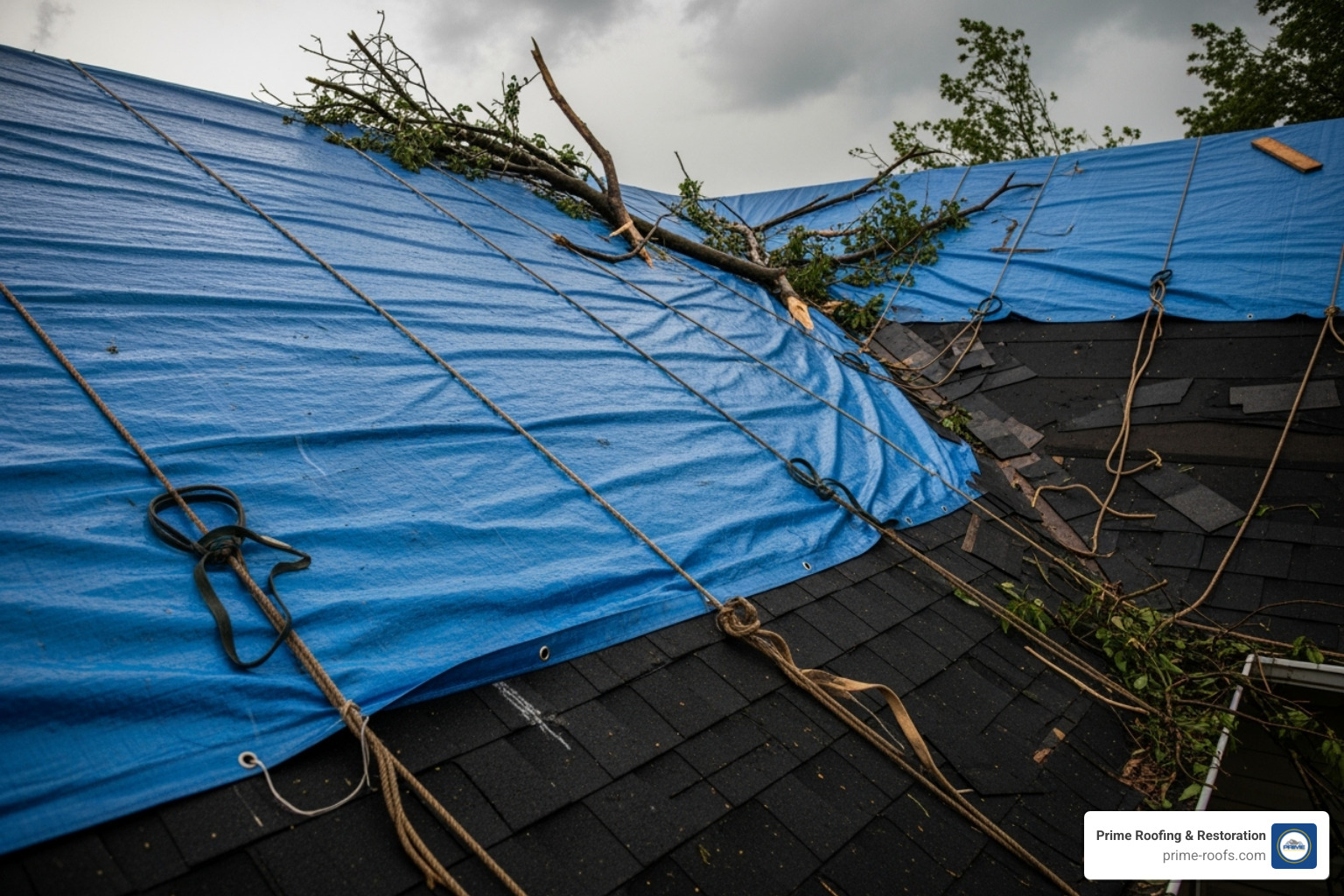
Finding Alabaster storm damage on your property can feel overwhelming, but taking the right steps immediately can make all the difference.
Immediate Steps for Homeowner Safety
Your safety—and your family’s—comes first. Before assessing damage or arranging repairs:
- Assess immediate danger. Watch for dangling power lines, unstable structures, or large trees that could still shift. If you see any of these, evacuate and call emergency services.
- Avoid downed power lines. Treat all lines as live. Stay clear and report them to 911 and Alabama Power.
- Check for gas leaks. If you smell gas or hear a hissing sound, shut off the main supply if safe, open windows, and leave immediately. Notify the gas company from a safe location.
- Report other hazards, such as blocked public roads or live wires in trees, to Alabaster City services or 911.
Once it’s safe, document everything. Take photos and videos from multiple angles—wide shots and close-ups—to support any insurance claim. If your roof has holes or significant leaks, place a tarp over the area only if it’s safe. For detailed guidance, see our post on what to do after a storm damages your roof. For issues that can’t wait, our storm damage roof repair team is on call 24/7 to help protect your home.
Navigating the Insurance Claim Process
Dealing with insurers can feel like a maze, especially while coping with storm damage. Here’s a streamlined approach:
- Contact your insurer promptly. Policies often have strict timelines for filing claims.
- Review your policy. Understand your deductible and whether you have Actual Cash Value (ACV) or Replacement Cost Value (RCV) coverage.
- File your claim. Provide detailed information about the storm event and share your photos and videos.
- Meet the adjuster. Be present if possible; point out all damage you’ve documented.
- Keep meticulous records. Log every conversation (dates, times, names) and save all correspondence, estimates, and receipts.
Our experienced team can perform a comprehensive, professional assessment and work directly with your insurer to ensure you receive a fair settlement. Don’t steer the process alone—reach out to us for expert guidance and support. We provide free estimates; call (205) 661-8190 to schedule your free inspection.
Your Local Partner in Storm Recovery
When severe weather strikes our community, the aftermath can feel overwhelming. You’re staring at Alabaster storm damage on your property, wondering where to even begin. The good news? You don’t have to face this alone.
At Prime Roofing & Restoration, we’ve been helping our neighbors through these challenging times for years. We understand that dealing with storm damage isn’t just about fixing what’s broken – it’s about restoring your sense of security and getting your life back to normal as quickly as possible.
Our team knows Alabaster’s unique weather patterns intimately. We’ve seen how our 32 annual severe weather warnings can impact homes across our community. From the initial damage assessment and emergency tarping to comprehensive repairs and insurance claim navigation, we’re here to guide you through every step of the recovery process.
What sets us apart is our commitment to making this process as smooth as possible for you. We handle the insurance paperwork, work directly with adjusters, and use only the highest quality materials for repairs. Whether you need emergency tarping at 2 AM or a complete roof replacement, our team is available 24/7 to help protect your home and family.
We believe in transparency, which is why we provide free estimates and always start with a thorough, free inspection. Ready to get started on your recovery? Call (205) 661-8190 to schedule your free inspection with the top-rated roofers in Alabaster, AL today. Let our experienced team help you restore your peace of mind and weather any storm.