
The Aftermath of the Storm: Understanding Hail Damage and Your Next Steps
When a hailstorm strikes, hail damage roof repair becomes an urgent priority for property owners across Alabama. The aftermath can involve costly repairs and confusing insurance claims, but quick, informed action can make all the difference. For homeowners needing immediate assistance, having access to reliable roofing and restoration services is the first step toward recovery. For immediate assistance in Alabama, call our team at (205) 555-0199.
The numbers reveal hail’s destructive power. In 2022, over 4,400 severe hail reports were filed in the U.S., and State Farm noted a $1 billion increase in hail claim costs. For an Alabama homeowner, this can mean repair bills ranging from $940 to over $25,000.
What makes hail damage so challenging is that it’s often hidden. Your car may have obvious dents, but your roof could have subtle granule loss or bruised shingles that lead to leaks months later. This guide will walk you through identifying damage, navigating insurance, and restoring your roof’s integrity.
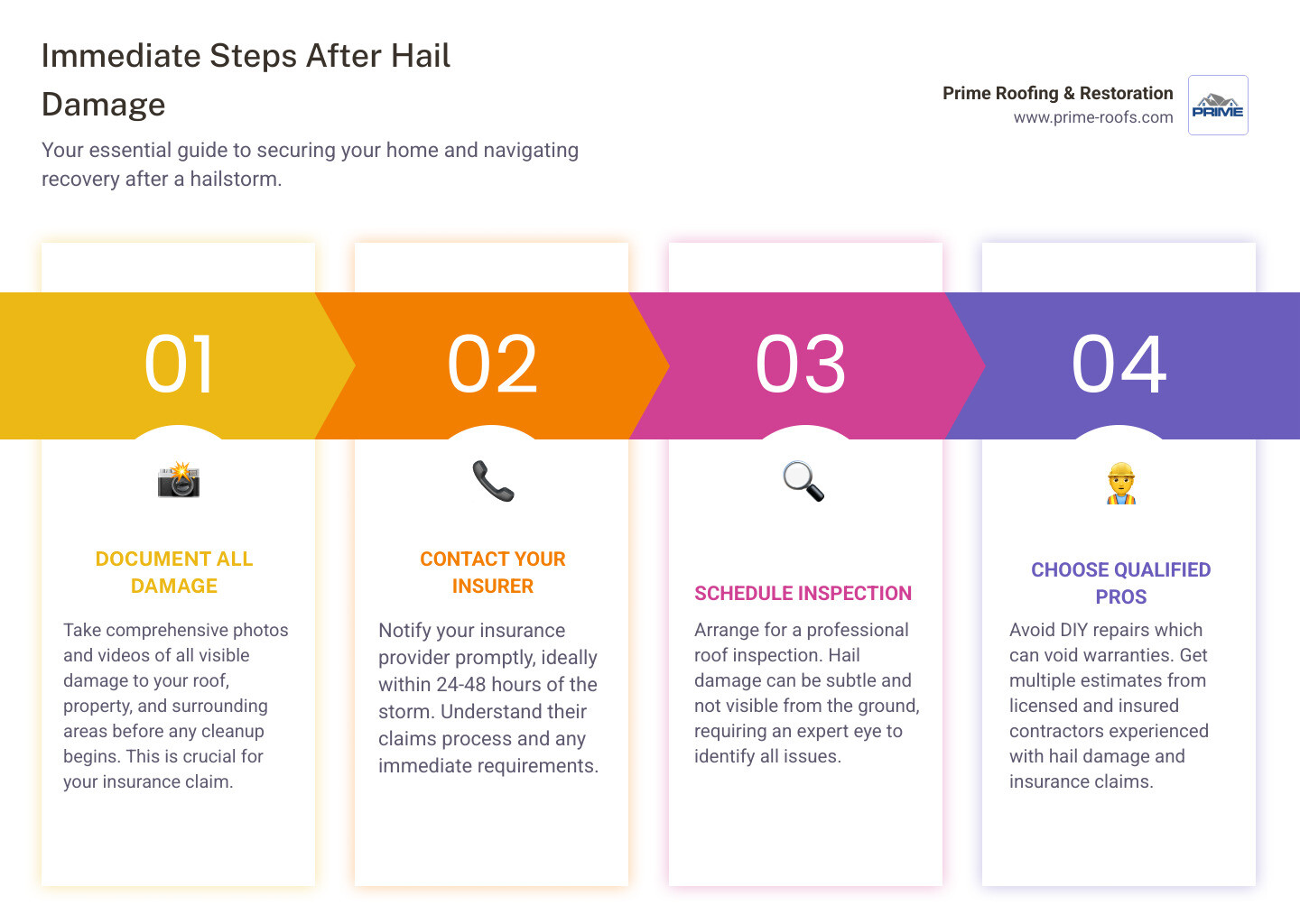
Immediate Steps After a Hailstorm:
- Document Everything: Photograph all visible damage before any cleanup.
- Contact Your Insurer: Notify your insurance company within 24-48 hours.
- Get a Professional Inspection: Much of the damage is not visible from the ground.
- Avoid DIY Repairs: This can void warranties and insurance coverage.
Spotting the Unseen: How to Identify Hail Damage on Your Roof
After a hailstorm, many homeowners glance at their roof and assume they’re safe if they don’t see missing shingles. However, hail damage is often subtle and can lead to expensive problems if ignored. Understanding what to look for is your first line of defense.
Signs of Damage on Asphalt Shingles
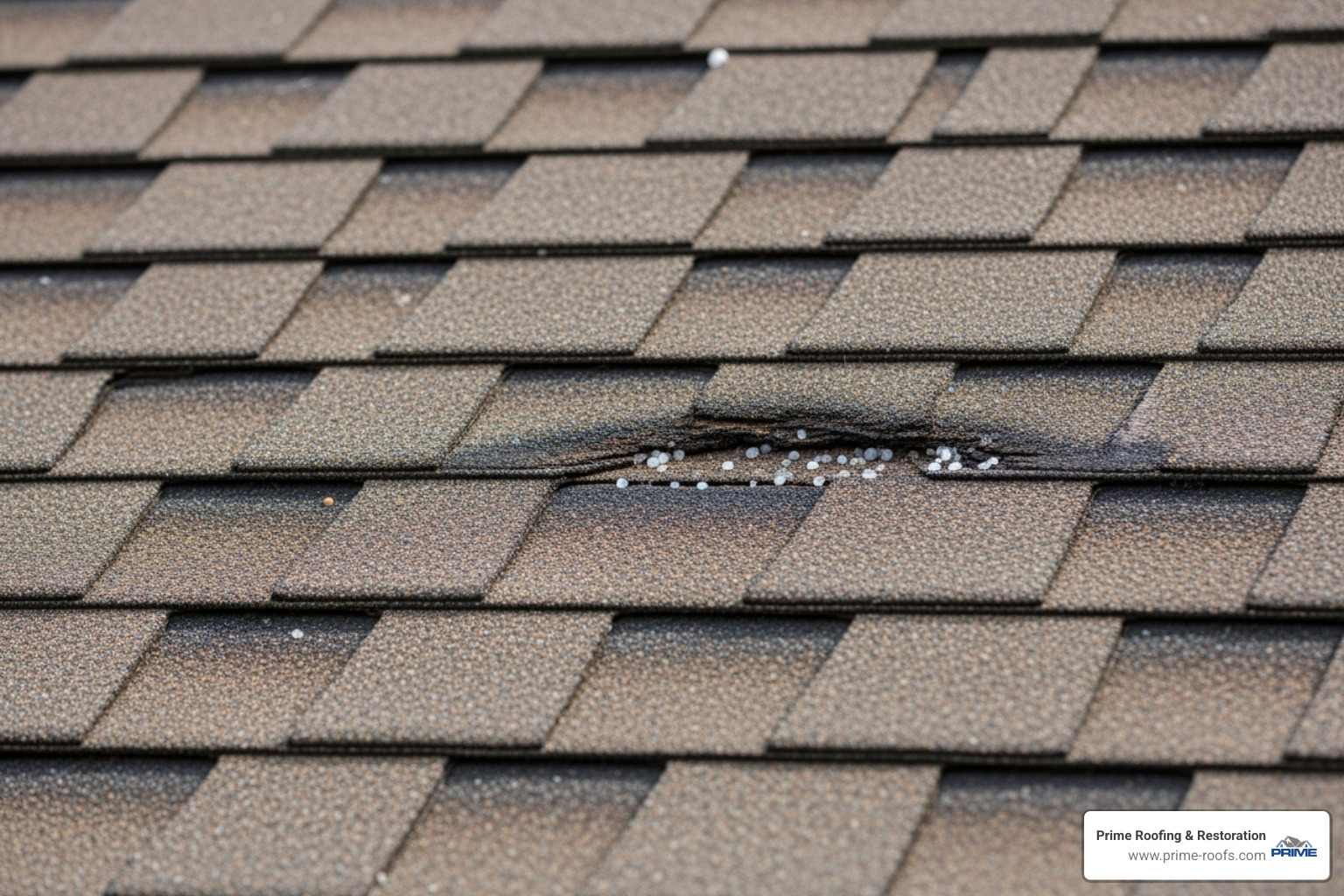
Most Alabama homes have asphalt shingles, which show specific signs of hail impact.
- Granule Loss: Hail knocks off the protective granules, leaving “bald spots” that expose the shingle to UV damage. You may also find granules in your gutters.
- Bruising: Hailstones can bruise the shingle’s asphalt layer without breaking the surface. These spots feel soft or spongy and will eventually crack, allowing water to seep in.
- Cracks: Look for crescent-shaped cracks or fractures in the shingles from the force of the impact.
- Exposed Fiberglass Mat: In cases of severe impact, the underlying fiberglass mat may be exposed, indicating serious damage.
Hail damage typically appears in a random pattern, unlike wind damage, which is more uniform.
Telltale Marks on Metal and Specialty Roofing
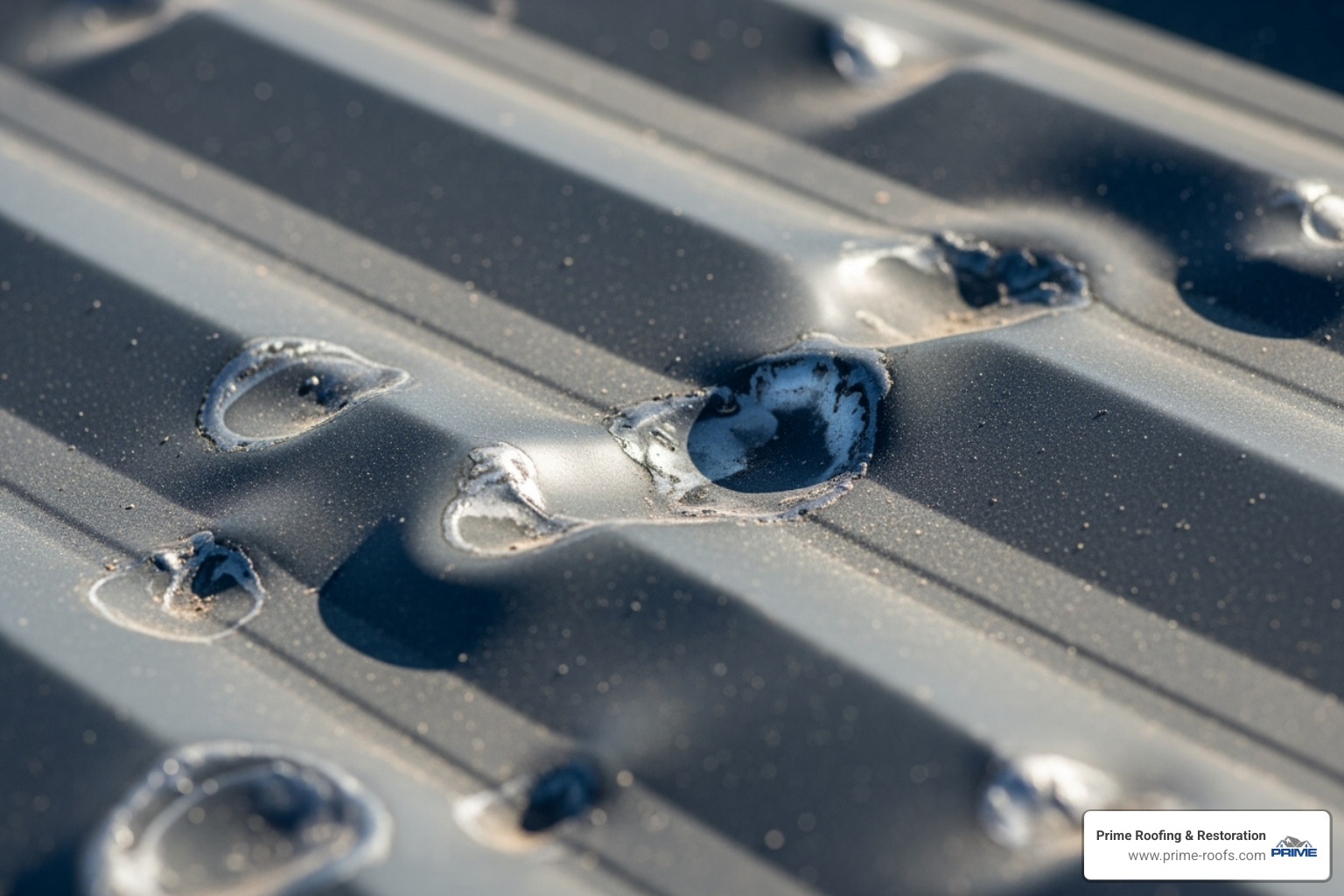
Different roofing materials show damage in unique ways.
- Metal Roofs: Hail leaves dents and dings, similar to a car. While often cosmetic, severe impacts can compromise seams and flashing. On painted metal, look for chips or scratches that could lead to rust. Learn about the benefits of metal roofing and why proper maintenance is key.
- Tile Roofs (Clay, Concrete, Slate): These durable materials can crack, chip, or shatter under the force of large hailstones.
- Wood Shake Roofs: Look for splits, cracks, or deep gouges along the wood grain.
Pro Tip: Check your gutters, downspouts, siding, and AC unit for dents. If these are damaged, your roof likely is too.
How Big Does Hail Need to Be to Cause Damage?
The size of hail required to cause damage depends on several factors. For standard asphalt shingles, hail of 1 inch in diameter (quarter-sized) is often enough to warrant an insurance claim. Stronger materials like thick wood shakes or concrete tiles may require hail of 1.25 to 2 inches in diameter.
However, size isn’t the only factor. Wind speed, roof age, and condition are also critical. High winds can make smaller hailstones more destructive, and an older, brittle roof is far more susceptible to damage. According to the International Association of Certified Home Inspectors (NACHI), these variables make a professional assessment essential after any significant hailstorm.
The True Cost of Neglect: Long-Term Risks and Impact on Home Value
Ignoring what seems like minor hail damage today can become a homeowner’s nightmare tomorrow. Seemingly small issues create weak spots on your roof, leading to a cascade of expensive problems.
From Small Dents to Major Leaks
Hail strikes create “failure points” that compromise your roof’s integrity. This leads to several long-term issues:
- Accelerated Aging: When hail knocks off protective granules from asphalt shingles, the underlying material is exposed to UV rays. This makes the shingles brittle, drastically shortening the roof’s lifespan.
- Water Infiltration: Even tiny cracks provide a path for water, leading to slow leaks that you may not notice for months. Once water gets past the shingles, it can cause significant attic and ceiling damage.
- Mold and Mildew: Damp insulation and wood in the attic create a perfect environment for mold and mildew growth, which poses health risks and requires costly remediation.
- Structural Damage: In severe cases, water can rot wooden roof structures or reach electrical wiring, creating fire hazards and compromising your home’s stability.
Addressing damage promptly is critical. What to do after a storm damages your roof is essential knowledge to prevent these escalating issues.
How Hail Damage Impacts Your Home’s Value
Unaddressed hail damage also hits you financially when it’s time to sell or insure your home.
- Decreased Curb Appeal: A roof with visible dents, cracks, or granule loss is a major deterrent to potential buyers.
- Red Flag for Home Inspectors: Inspectors are trained to spot hail damage, and it will be a major issue in their report. This often becomes a significant negotiating point, and it’s one of the key 5 signs you need roof replacement.
- Lower Sale Price: Buyers will demand significant price reductions to cover the cost of a new roof, potentially costing you tens of thousands of dollars.
- Insurance Issues: Some insurance companies may refuse to renew a policy on a home with extensive, unrepaired hail damage, making it difficult to find affordable coverage.
Promptly addressing hail damage protects both your home and your financial investment.
Navigating the Aftermath: Your Step-by-Step Insurance and Hail Damage Roof Repair Process
Filing an insurance claim for hail damage can feel overwhelming, but a clear roadmap makes the process manageable. The key is thorough documentation and having the right professional support.
Filing Your Insurance Claim: A Step-by-Step Guide
To ensure a smooth claim process, follow these steps:
- Document Everything: Before touching anything, take extensive photos and videos of the damage. Capture wide shots of the roof, close-ups of damaged shingles, and any impact marks on gutters, siding, or AC units.
- Contact Your Insurer: Notify your insurance company within 24-48 hours. Have the date of the storm ready and provide a general description of the damage.
- Meet the Adjuster: Your insurer will send an adjuster to assess the damage. It is highly recommended to have your trusted roofing contractor present. A professional roofer speaks the same technical language and can point out subtle damage the adjuster might miss.
- Review the Adjuster’s Report: Carefully review the adjuster’s estimate. If it seems inaccurate or incomplete, provide your own documentation and photos to support a re-evaluation.
Having an advocate who understands both roofing and insurance makes the entire process less stressful for homeowners.
Understanding Your Insurance Coverage
Insurance policies can be complex, but knowing a few key terms is crucial.
- Actual Cash Value (ACV) vs. Replacement Cost Value (RCV): An ACV policy pays for the depreciated value of your old roof. An RCV policy pays the full cost to replace your roof with new materials. RCV policies typically involve two payments: an initial check for the ACV and a second check for the remaining amount (recoverable depreciation) after the work is complete.
- Deductibles: This is the amount you pay out-of-pocket. For hail damage, deductibles are often a percentage (1-5%) of your home’s insured value.
- Cosmetic vs. Functional Damage: Some policies exclude purely cosmetic damage (e.g., small dents on a metal roof that don’t cause leaks). However, most hail damage is functional, as it compromises the roof’s integrity and lifespan, and should be covered.
Understanding the Costs of Hail Damage Roof Repair
Repair costs vary widely based on the extent of the damage and the materials involved. Minor repairs might cost a few hundred dollars, but significant damage can lead to a full replacement costing $15,000 to $25,000 or more.
- Material Type: Asphalt shingles are generally the most affordable to repair, while materials like wood shake or slate are more expensive.
- Labor Costs: Labor rates in Alabama vary, and costs increase for steep or complex roofs.
- Hidden Costs: If water has infiltrated your home, you may face additional costs for insulation replacement, ceiling repairs, or mold remediation.
The size and slope of your roof, accessibility, and collateral damage all influence the final price. This is why get a roof repair estimate from a qualified professional.
Choosing Your Partner in Restoration: Selecting a Contractor and Preventing Future Damage
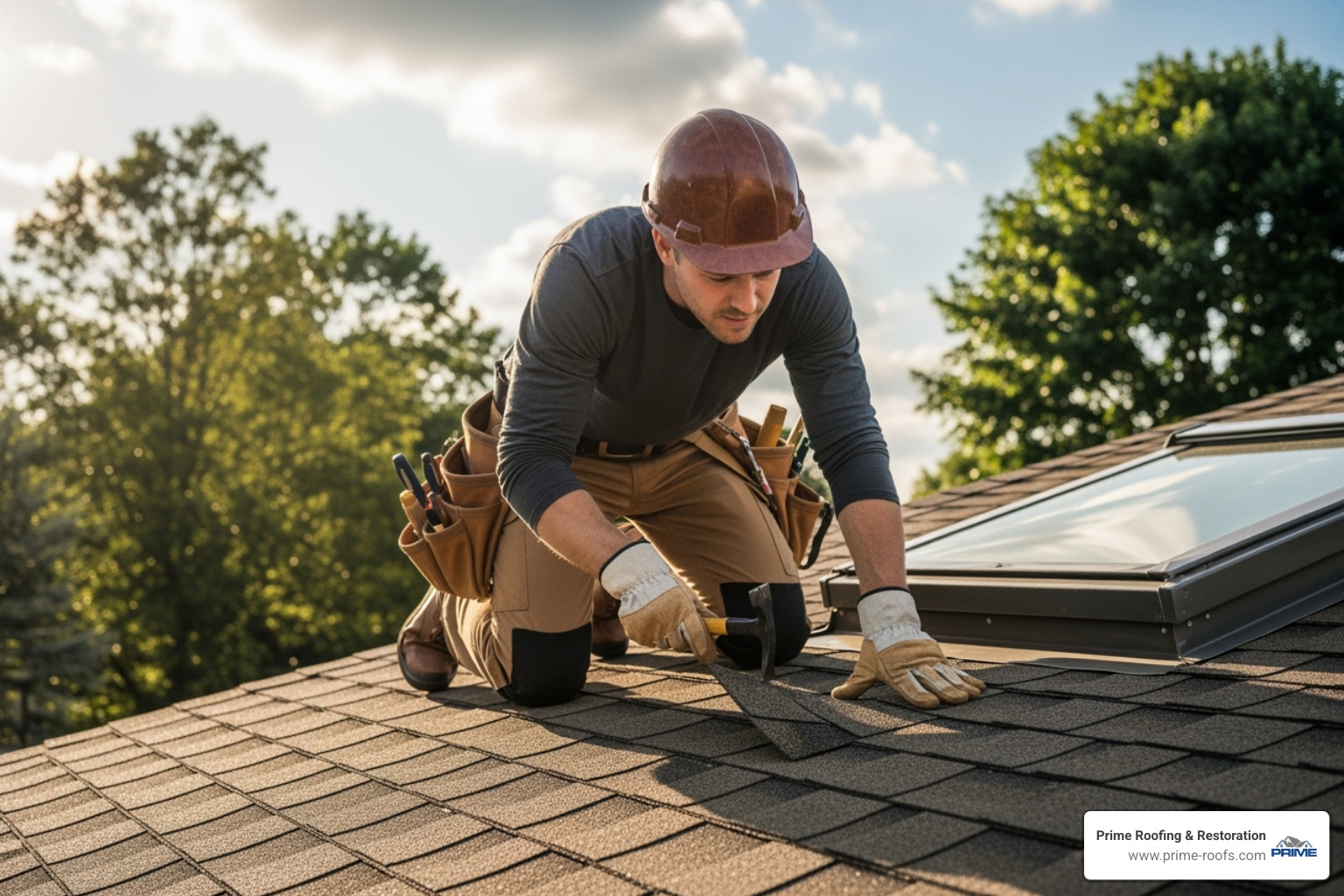
Look for these non-negotiable qualities in a roofer:
- Licensed and Insured: Verify that the contractor holds a current state license and carries both liability and worker’s compensation insurance. This protects you from financial risk.
- Local Reputation: Choose a company with deep roots in your community. Check online reviews and ask for local references. A local contractor’s reputation depends on your satisfaction.
- Insurance Claim Experience: A contractor who regularly works with insurance companies can streamline your claim by providing proper documentation and communicating effectively with adjusters.
- Written Estimates and Warranties: A professional estimate should detail the scope of work, materials, timeline, and costs. Ask about both workmanship and material warranties.
For more guidance, review these tips for choosing a roofer.
Proactive Protection: Can You Prevent Hail Damage?
While you can’t stop a hailstorm, you can take steps to minimize potential damage:
- Impact-Resistant Materials: When replacing your roof, consider Class 4 impact-resistant shingles. They are engineered to withstand significant hail impacts and may earn you a discount on your insurance premium.
- Regular Maintenance: A well-maintained roof with secure shingles and clear drainage is better equipped to handle severe weather.
- Trim Overhanging Trees: This prevents branches from scraping the roof or falling during a storm.
DIY vs. Professional Hail Damage Roof Repair: Why Expertise Matters
Attempting DIY roof repairs is risky and often creates more problems.
- Safety Risks: Falls from roofs are a leading cause of serious injury. Professionals have the training and safety equipment to work at heights safely.
- Voiding Warranties: Most roofing material warranties require professional installation and repair. DIY work can void this valuable coverage.
- Insurance Issues: Insurers typically require repairs to be done by licensed professionals and may deny claims for DIY work.
A professional assessment ensures all damage is found and repaired correctly. If you need an expert in the Alabaster area, call us at (205) 555-0199 or connect with a roofing contractor in Alabaster, AL who understands storm recovery.
Frequently Asked Questions about Hail Damage
Dealing with storm damage brings up many questions. Here are answers to the most common concerns we hear from Alabama homeowners.
How long do I have to file an insurance claim for hail damage?
Most insurance policies require you to file a claim within a specific timeframe, typically one year from the date of the storm. This can vary, so it’s crucial to check your policy or contact your agent immediately. Waiting too long can lead to a denied claim, especially since hail damage can worsen over time, causing further issues that may not be covered if you delay.
Will filing a hail damage claim raise my insurance rates?
This is a common fear, but claims for “Acts of God,” like hailstorms, generally do not cause an individual’s rates to increase. Insurers classify these as comprehensive claims, not at-fault incidents. However, if a specific region experiences frequent, widespread storm damage, insurers might raise rates for everyone in that area to manage their risk. Your individual claim should not penalize you personally.
Can my roof have hail damage even if my car doesn’t?
Yes, absolutely. This is a major misconception. Roofing materials react differently to impact than a car’s metal body. An older roof with brittle shingles is far more susceptible to damage than a new car’s paint. Furthermore, the angle of your roof, its material, and its age all play a role. Most importantly, roof damage like granule loss or bruising is often invisible from the ground, unlike obvious car dents. A professional roof inspection is the only way to be certain about your roof’s condition after a storm.
Secure Your Home with Confidence
Recovering from a hailstorm doesn’t have to be a stressful, prolonged ordeal. A smooth recovery comes down to acting quickly, understanding your options, and choosing the right professional partner.
By promptly identifying the signs of damage we’ve discussed, you can prevent minor issues from escalating into major structural problems and costly water damage. Understanding the insurance process and working with an experienced contractor who can advocate on your behalf transforms an overwhelming situation into a manageable one.
Partnering with a trusted, local professional is key. It’s not about the cheapest bid; it’s about finding an expert who will restore your home correctly and stand behind their work for years to come.
Don’t let uncertainty about potential damage lead to bigger problems down the road. If your home has been through a hailstorm, contact Prime Roofing & Restoration for a comprehensive inspection. Our local Alabaster team is ready to help you steer the aftermath and ensure your home remains the safe, secure haven your family deserves.
Prime Roofing & Restoration
123 Main Street
Alabaster, AL 35007
(205) 555-0199