
Why Professional Roof Installation Is One of the Most Important Decisions You’ll Make as a Homeowner
Professional roof installation is the process of replacing or installing a new roof using trained, certified crews who follow manufacturer specs, local building codes, and proven safety standards — and it’s the only reliable way to protect your home long-term. When you partner with Prime Roofing & Restoration for your exterior needs, you ensure that every component of your roofing system is installed to the highest industry standards. In the humid, storm-prone climate of Central Alabama, a roof is more than just a structural necessity; it is a complex engineering system designed to withstand high winds, torrential rains, and the blistering Southern sun.
Choosing the right contractor is a decision that will impact your home’s safety and value for the next three decades. Many homeowners underestimate the complexity of a modern roofing system. It is not merely a collection of shingles nailed to a board. It is a sophisticated assembly of ventilation, moisture barriers, structural supports, and aesthetic finishes. A single error in any of these components can lead to catastrophic failure, mold growth, and structural rot. This is why professional expertise is non-negotiable.
Here’s what you need to know upfront about the investment and expectations for 2026:
- Average cost: $8,000 nationally, with most projects in the Hoover and Alabaster areas ranging from $5,500 to $11,000 depending on material choice and roof complexity.
- Timeline: Most standard residential roofs (under 3,000 sq ft) are completed in 1-3 days, though weather conditions in Alabama can occasionally shift these windows.
- Lifespan: 25-30 years for high-quality architectural asphalt shingles; 50-75 years for metal roofing systems, provided they receive professional maintenance.
- Resale value: A professionally installed roof is one of the highest ROI home improvements, returning roughly 60-70% of its cost during a property sale.
- Labor vs. materials: Labor typically accounts for 60% of total costs. This reflects the high level of skill, insurance, and safety equipment required for a compliant install.
- Why not DIY: Incorrect installation is the #1 cause of premature roof failure. Furthermore, DIY work almost universally voids manufacturer warranties from brands like GAF and Owens Corning.
Your roof isn’t just shingles. It’s a layered system — decking, underlayment, flashing, ventilation, and ridge caps — that works together to keep water, heat, and storm damage out. When one layer is wrong, the whole system fails. That’s exactly why cutting corners with a DIY installation almost always costs more in the long run than hiring professional roof installation experts from the start. According to the National Roofing Contractors Association (NRCA), professional oversight ensures that local building codes are met, which is vital for insurance compliance.
The stakes are real. Homeowners who go with the lowest bidder — or attempt the job themselves — often face leaks, structural rot, and voided warranties within months. A botched install doesn’t just damage your roof. It damages your ceilings, walls, insulation, and your home’s resale value. In Alabama, where humidity can lead to rapid mold growth, a small leak can become a five-figure remediation project in a matter of weeks.
I’m Bill Spencer, Owner and President of Prime Roofing & Restoration, and I’ve spent years overseeing professional roof installations across Central Alabama — from standard shingle replacements to complex storm-damage rebuilds. In my experience, understanding the full installation process is the single best thing a homeowner can do before hiring anyone. If you have questions or need an immediate inspection, you can reach our team at 205-235-2113.
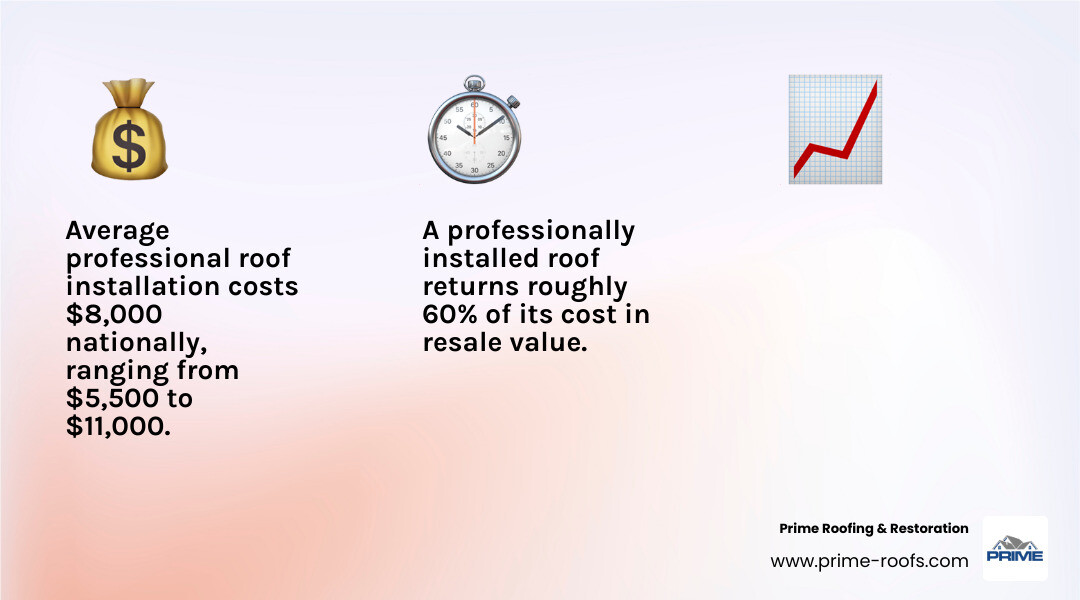
Simple Professional roof installation word guide:
Recognizing the Signs You Need a Professional Roof Installation
Knowing when to call for a Professional roof installation can save you thousands in interior water damage. While some issues are obvious, like a tree limb crashing through the attic, most signs are subtle and require a trained eye to detect. In April 2026, we are seeing many homes with roofs installed in the early 2000s reaching their absolute limit. The asphalt technology of twenty years ago simply wasn’t designed to handle the increased frequency of extreme weather events we see today.

| Criteria | Repair Recommended | Full Replacement Needed |
|---|---|---|
| Roof Age | Under 15 years | Over 20-25 years |
| Shingle Condition | Minor localized loss | Widespread curling, cracking, or missing |
| Leaks | Single, identified source | Multiple recurring leaks in different areas |
| Granule Loss | Minimal | Heavy deposits in gutters |
| Structure | Solid decking | Visible sagging or soft spots |
| Energy Bills | Stable | Sudden, unexplained spikes in cooling costs |
The Danger of Granule Loss
If you notice dark streaks or “bald spots” on your shingles, that is significant granule loss. These granules are not just for color; they are the “sunscreen” for your roof. They protect the underlying asphalt from UV rays. Without them, the asphalt becomes brittle, cracks, and eventually allows water to seep through. If you find what looks like coarse sand in your gutters, your roof is shedding its protective layer and is nearing the end of its functional life. This is a primary reason to seek Professional roof installation before the next storm season.
Interior Warning Signs
If you notice interior water stains on your ceilings or walls, it’s a clear indicator that your home’s first line of defense has been breached. Moss growth is another red flag; it might look charming on a cottage, but it traps moisture against the shingles, leading to rot. Furthermore, check your attic for signs of “light leaks.” If you can see daylight through the roof boards, water can certainly get in. For a deeper look, check out our Residential Roof Installation Services overview.
Determining Your Roof’s Current Lifespan
In 2026, the standard lifespan for a traditional asphalt shingle roof is approximately 20 to 25 years. However, Alabama’s intense heat and sudden storm cycles can accelerate this timeline. During an inspection, we look at the pliability of the shingles. If they snap when slightly lifted, the oils have dried out, and the roof is “dead,” regardless of its chronological age. You can find more info about roof installation on our dedicated service page. We also recommend consulting the Asphalt Roofing Manufacturers Association (ARMA) for technical standards on shingle degradation.
Identifying Structural Red Flags
Structural integrity is the most critical factor. If the roofline appears to dip or sag, you aren’t just looking at a shingle problem—you have a decking or rafter issue. This often happens when multiple layers of shingles have been added over the years, exceeding the weight capacity of the home’s frame. Recurring leaks in the same spot often point to rotted plywood underneath that can no longer hold a nail. Our Home Roof Installation Complete Guide covers these structural nuances in detail. If you suspect structural damage, call us immediately at 205-235-2113.
Why DIY Roofing is a Costly Mistake Compared to Expert Services
We understand the appeal of a DIY project, but roofing is one area where the “do-it-yourself” approach consistently fails. Statistically, labor accounts for 60% of a Professional roof installation cost because it requires specialized skill, high-risk maneuvers, and expensive specialized equipment that the average homeowner does not possess.
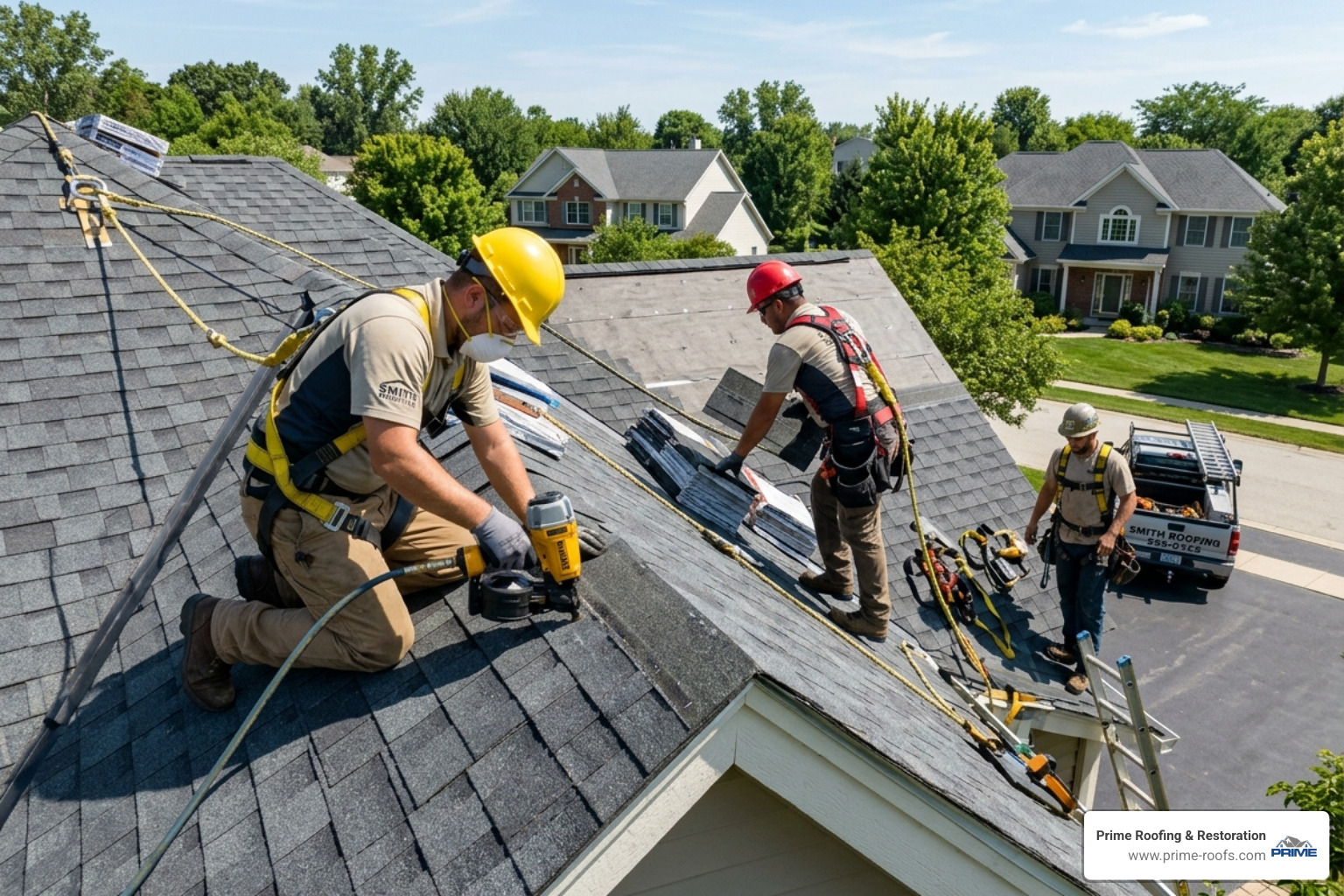
The Safety and Liability Gap
The safety risks alone are staggering. Professional contractors carry $2+ million in liability insurance and adhere to strict OSHA fall protection standards. A single slip for an untrained homeowner can be catastrophic. Furthermore, many homeowners’ insurance policies have exclusions for injuries sustained during DIY structural work. If a friend or neighbor helps you and gets hurt, you could be personally liable for their medical expenses. Professional crews are covered by Workers’ Compensation, protecting you from these legal and financial nightmares.
Warranty and Compliance Issues
Beyond physical safety, DIY installations almost always void manufacturer warranties. Most major brands, like GAF or Owens Corning, require a certified installer to validate their long-term coverage. If you install it yourself and it leaks two years later, you are entirely on your own. Additionally, professional installers handle the permitting process. In cities like Hoover and Alabaster, failing to pull the correct permits can result in fines and complications when you try to sell your home.
The Value of Manufacturer Certifications
Hiring a contractor with elite certifications (like GAF Master Elite or Owens Corning Platinum Preferred) provides access to extended warranties that aren’t available to the general public. These warranties often cover both materials and workmanship for up to 50 years. This level of protection is a cornerstone of our Expert Roof Installation Complete Guide.
Long-term ROI of Expert Craftsmanship
A roof is an investment. A properly installed system returns about 60% of its value during a home sale. Beyond resale, expert installation ensures precision sealing around “penetrations” like chimneys and vents—the most common fail points in DIY jobs. High-quality roof installation services also integrate proper insulation and ventilation, which can significantly lower your Alabama cooling bills. According to the U.S. Department of Energy, a properly ventilated roof can reduce attic temperatures by up to 30 degrees in the summer.
The Step-by-Step Professional Roof Installation Process
When we arrive at a home in Hoover or Alabaster, we follow a meticulous 8-step process to ensure the new system is bulletproof. This process is designed to address the specific challenges of the Alabama climate, including high humidity and rapid temperature fluctuations.
- Tear-off: We remove all old shingles down to the wood deck. “Layovers” (putting new shingles over old ones) are a major mistake; they trap heat, add excessive weight, and prevent us from seeing deck damage. We use specialized “shingle eaters” to ensure a clean removal without damaging the underlying structure.
- Deck Inspection: Once the deck is bare, we inspect every inch of plywood for rot, soft spots, or “delamination,” replacing any damaged sheets immediately. A roof is only as strong as the wood it is nailed to.
- Drip Edge Installation: This metal flashing goes on the edges to direct water into the gutters and away from the fascia. Without a drip edge, water will wick back under the shingles and rot your eaves.
- Ice-and-Water Shield: We apply a self-adhering membrane in valleys, around chimneys, and at all penetrations. This is a critical secondary barrier against wind-driven rain and potential ice damming.
- Underlayment: We use high-quality synthetic underlayment across the entire deck. Unlike old-fashioned felt paper, synthetic underlayment does not tear, does not absorb moisture, and provides a much flatter surface for shingle application.
- Shingle Installation: Shingles are laid from the bottom up using specific 6-nail patterns to meet high-wind resistance ratings. We ensure that the “starter course” is perfectly aligned to prevent wind uplift at the edges.
- Ventilation & Flashing: We install ridge vents and new galvanized flashing around chimneys and pipes. Proper ventilation is the “lungs” of your home, allowing the attic to breathe and preventing shingle “cooking” from the inside out.
- Cleanup: We perform multiple passes with high-powered magnetic sweeps to ensure your yard, driveway, and flower beds are free of nails. We treat your property with the same respect we would our own.
For a localized look at this process, see our guide on Installing A New Roof In Hoover Alabama A Step By Step Guide.
Preparing Your Property for a Professional Roof Installation
Preparation is key to a smooth “install day.” We recommend:
- Relocating vehicles: Move cars to the street to make room for material delivery and the debris trailer. This also protects your vehicles from falling debris.
- Protecting the yard: Move patio furniture, grills, and potted plants away from the “drop zone.” If you have delicate landscaping, let us know so we can use protective netting.
- Attic prep: Cover valuables in the attic with old sheets, as the vibration from the tear-off will shake down dust and small debris. If you have fragile items hanging on walls inside the house, it is wise to secure them.
- Pet safety: The noise can be stressful for pets, so consider keeping them in a quiet room or at a daycare for the day. The sound of nail guns and shingles being dropped is much louder than most people anticipate.
Learn more about local prep tips at Roof Installation Alabaster Al.
Critical Components: Underlayment and Ventilation
The underlayment is your roof’s “safety net.” While traditional felt paper was the standard for decades, modern Professional roof installation uses synthetic materials that won’t tear or rot. Equally important is ventilation. A balanced airflow system prevents heat buildup in the summer and moisture buildup in the winter, which are the primary causes of premature shingle failure. Even for smaller projects, such as putting felt on a shed roof, the principles of moisture protection remain vital. If you have questions about your specific attic ventilation, call us at 205-235-2113.
Material Selection and Cost Factors in 2026
Choosing the right material depends on your budget, aesthetic preference, and how long you plan to stay in your home. In 2026, material science has advanced significantly, offering homeowners more durable and energy-efficient options than ever before.
- Asphalt Shingles: The most popular choice due to cost-effectiveness. Modern architectural shingles are designed to mimic the look of wood or slate and typically last 25-30 years. They are excellent for most Alabama homes.
- Metal Roofing: A premium option with a 50-75 year lifespan. It is highly energy-efficient, reflecting UV rays away from the home. While the upfront cost is higher, the “cost per year” is often lower than asphalt. It is also highly resistant to the hail and high winds common in Central Alabama.
- Cedar Shakes & Synthetic Slate: These offer a high-end, traditional look. Synthetic slate is becoming increasingly popular because it provides the beauty of stone without the extreme weight and fragility. For those interested in the classic aesthetic, we recommend Mastering Cedar Shake Shingle Installation.
Comparing Asphalt and Metal Durability
While asphalt shingles are affordable, metal roofs are nearly indestructible. Metal systems often carry a Class 4 impact rating, meaning they can withstand significant hail without leaking. This can often lead to lower homeowners’ insurance premiums. If you are considering metal for a smaller outbuilding first, see our tips on installing metal roofing on a shed.
Budgeting for Your Roofing Project
The national average for a roof installation is $8,000, but factors like roof pitch (steepness), number of layers to remove, and permit fees in Alabaster or Hoover will influence the final number. A steeper roof requires more safety equipment and more time, which increases labor costs. We offer various financing options to help homeowners manage the 60/40 split between labor and material costs. You can explore these on our roof installation page. We believe in transparent pricing with no hidden fees, providing a detailed line-item estimate before any work begins.
Ensuring Longevity: Warranties and Post-Installation Care
A Professional roof installation is only as good as the care it receives afterward. Most reputable contractors provide a workmanship warranty—typically ranging from 10 to 50 years—which covers any errors made during the installation process. It is important to distinguish this from the manufacturer’s warranty, which only covers defects in the shingles themselves.
Understanding the Warranty Landscape
When you receive your quote, ask specifically about the “Golden Pledge” or “Platinum” level warranties. These are backed by the manufacturer and cover the contractor’s labor. This means even if the roofing company goes out of business, the manufacturer will honor the workmanship warranty. This is the ultimate peace of mind for a homeowner. For more details on how these warranties protect you, visit our Expert Roof Installation Complete Guide.
Avoiding Common Mistakes During Professional Roof Installation
Even “pros” can make mistakes if they aren’t certified or are rushing the job. Common errors include:
- High Nailing: Placing nails above the manufacturer’s designated “nail line.” This is a major issue because the nail doesn’t catch the shingle below it, significantly reducing wind resistance. During a storm, these shingles will simply blow off.
- Missing Drip Edges: Skipping this step leads to rotted fascia boards and water entering the soffits. For a technical breakdown, see installing drip edge on a shed.
- Poor Flashing: Reusing old, rusty flashing instead of installing new galvanized steel or aluminum. Flashing is the most common source of leaks, and it should always be replaced during a full install.
Maintenance Tips for a New Roof
To keep your warranty valid, perform biannual checks. Clean your gutters every spring and fall to prevent water backup. After major Alabama storms, do a visual check from the ground for any lifted shingles or debris. Never use a pressure washer on your shingles, as this will strip the granules and ruin the roof. For more detailed maintenance advice, visit our Roof Installation resource page or call us at 205-235-2113.
Frequently Asked Questions about Roof Installation
How long does a professional roof installation take?
Most residential projects under 3,000 square feet are completed in 1 to 3 days. Factors that extend the timeline include complex roof designs (many valleys and dormers), extensive deck repair, or weather delays. We always monitor the local Alabama radar to ensure your home isn’t exposed during a rain event.
What is the average cost of a new roof in 2026?
The national average remains around $8,000. However, for a standard home in the Alabaster/Hoover area using architectural asphalt shingles, you can expect a range of $5,500 to $11,000 depending on square footage and the specific materials chosen. Metal roofing will typically be 2-3 times the cost of asphalt but offers double the lifespan.
Can I stay home during the installation process?
Yes, but it will be loud. The “tear-off” phase involves constant thumping and scraping. If you work from home, we recommend scheduling important calls away from the house or using noise-canceling headphones. It is also important to keep children and pets indoors for safety while the crew is working.
Will my insurance cover a new roof?
If your roof was damaged by a specific event like a hail storm or a fallen tree, insurance often covers the replacement cost minus your deductible. However, insurance does not cover roofs that have simply reached the end of their natural lifespan due to age. We can assist you with the documentation needed for your claim.
What is the best time of year for a roof installation in Alabama?
While we install roofs year-round, spring and fall are the most popular seasons due to the milder temperatures. However, modern shingles are designed to be installed even in the heat of summer or the chill of winter, provided the crew follows specific handling instructions. For immediate assistance, call 205-235-2113.
Conclusion and Contact Information
At Prime Roofing & Restoration, we believe a roof is more than just a home improvement project—it’s the shield that protects your family and your biggest investment. As licensed experts serving Alabaster, AL, Hoover, AL, and the surrounding Alabama areas, we are committed to providing end-to-end solutions, from initial inspection to insurance claims assistance.
We don’t just “slap on shingles.” We build lasting relationships through quality materials, 24/7 service, and a transparent final walkthrough to ensure you are 100% satisfied. Don’t risk your home’s structural integrity with a DIY attempt or a “truck and a ladder” contractor who won’t be here to honor their warranty in five years.
Ready for a roof that lasts? Let our family protect yours with a Professional roof installation you can trust. Contact us today for a free, no-obligation estimate.
Company Information:
Prime Roofing & Restoration
Address: 123 Main St, Alabaster, AL 35007
Phone: 205-235-2113
Website: www.prime-roofs.com
Service Areas: Alabaster, Hoover, Pelham, Birmingham, and Central Alabama.
Map: View our location on Google Maps