
Stop Rot Before It Starts: Installing Drip Edge on a Shed (Pro Sequence + Specs)
Installing drip edge on a shed is the single most cost-effective upgrade to prevent eave rot, fascia decay, and interior leaks. The International Residential Code (IRC R905.2.8.5) requires drip edge at eaves and rakes because it measurably improves water management and wind resistance. For homeowners who want a code-accurate result without guesswork, start here—or consult a trusted roofing company in Alabama for guidance: professional roofing experts in Alabama. A 10×12 shed typically needs about 50–60 linear feet of drip edge (including overlaps), and at roughly $1–$2.50 per linear foot it can prevent repairs that often run hundreds of dollars. If you’re planning any professional-level roof installation, mastering this basic detail pays off for decades.
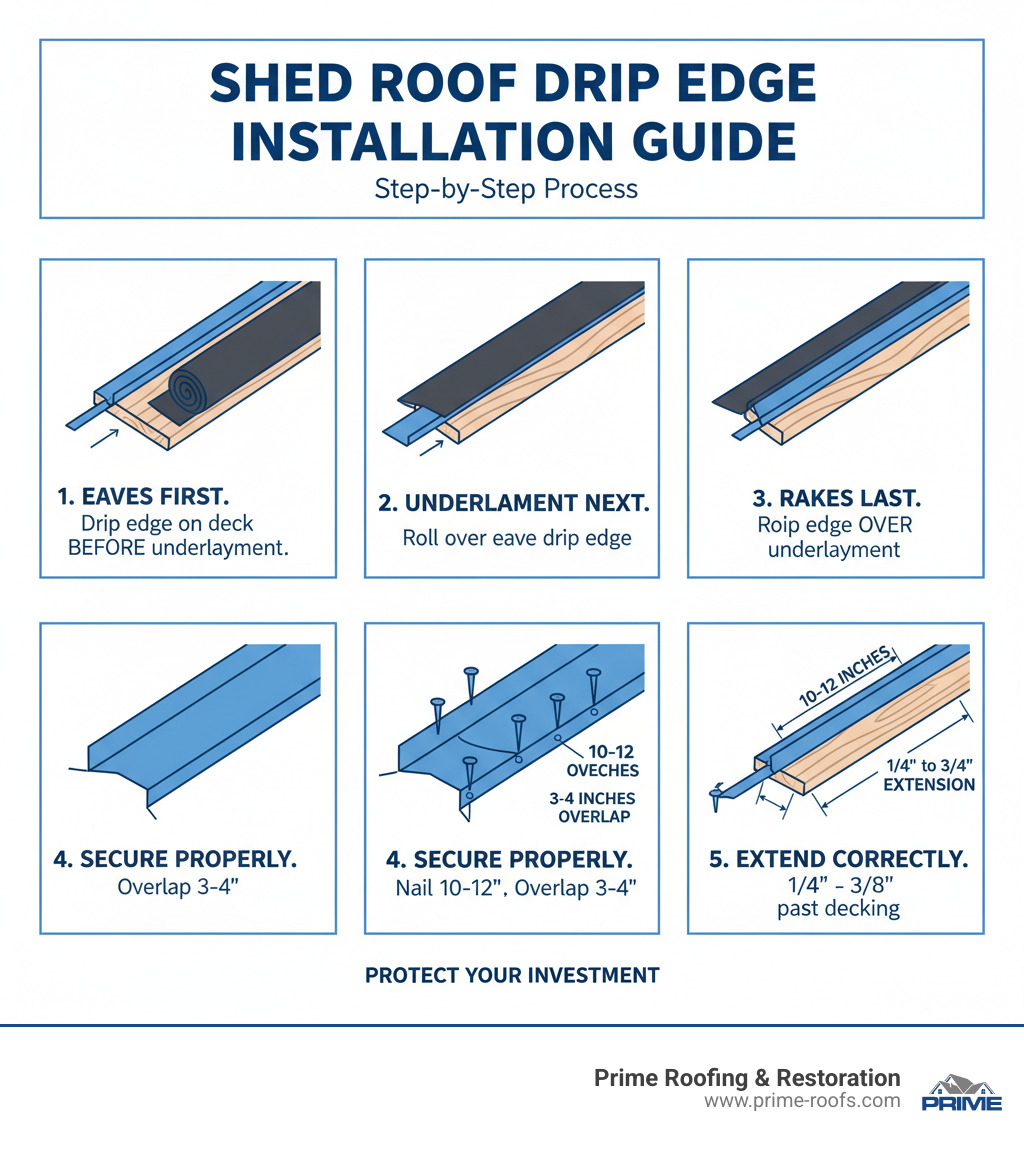
- Eaves First: Install drip edge directly on the roof decking before the underlayment.
- Underlayment Next: Roll roofing felt over the eave drip edge.
- Rakes Last: Install drip edge over the underlayment on the sloped sides (rakes).
- Secure Properly: Nail every 10-12 inches, overlapping joints by 3-4 inches.
- Extend Correctly: The drip edge should extend 1/4 to 3/4 inch past the roof decking.
Why It’s Essential:
- Prevents water from seeping under shingles and rotting the roof decking.
- Protects fascia boards from moisture damage and rot.
- Required by most North American building codes for proper water management. See: IRC R905.2.8.5 (Drip Edge) via UpCodes.
- Blocks pests and insects from entering through gaps at the roof’s edge.
- Extends the overall lifespan of your shed’s roofing system.
Without drip edge, water clings to the fascia and can cause rot or leak into the shed’s interior. Most building codes now mandate drip edge installation, recognizing that these inexpensive metal flashings make a substantial difference in roof performance. Whether you’re building a new shed or upgrading an existing one, proper drip edge installation is a small investment that prevents costly repairs.
As Bill Spencer, owner of Prime Roofing & Restoration with over five years of hands-on roofing experience across Alabama, I’ve seen countless sheds suffer premature deterioration because this step was skipped. This simple component is one of the most cost-effective protections you can add to any roofing system.
What is Drip Edge and Why is it Essential for Your Shed?
Drip edge is a non-corrosive metal flashing installed at the edges of a roof to control water flow. Its primary function is to direct water away from the fascia and prevent it from seeping underneath roofing materials, which protects the underlying roof decking and shed structure. Most building codes across North America now require drip edge installation because it prevents rot, protects shingles from wind uplift, and seals gaps that could otherwise become entry points for pests.
Without a drip edge, water clings to the fascia board, leading to wood rot in the fascia and roof decking, stained siding, and even foundational issues. With drip edge properly installed, water sheds off the roof and away from your shed’s vulnerable components, adding years to your structure’s lifespan.
Drip Edge Materials and Profiles
Understanding the variety of materials and profiles is key to choosing the right drip edge for your project.
Materials:
- Aluminum: The most popular DIY choice. It’s lightweight, corrosion-resistant, affordable, and easy to cut.
- Galvanized Steel: Offers superior durability and strength, standing up well to strong winds. A minimum of 24-gauge is recommended for robust protection.
- Copper: A premium, highly durable option that develops a beautiful patina over time. A minimum thickness of 0.69 mm (20 ounces) is standard.
- Vinyl/Plastic: Not recommended for roofing, as it can become brittle and crack with temperature changes.
Profiles:
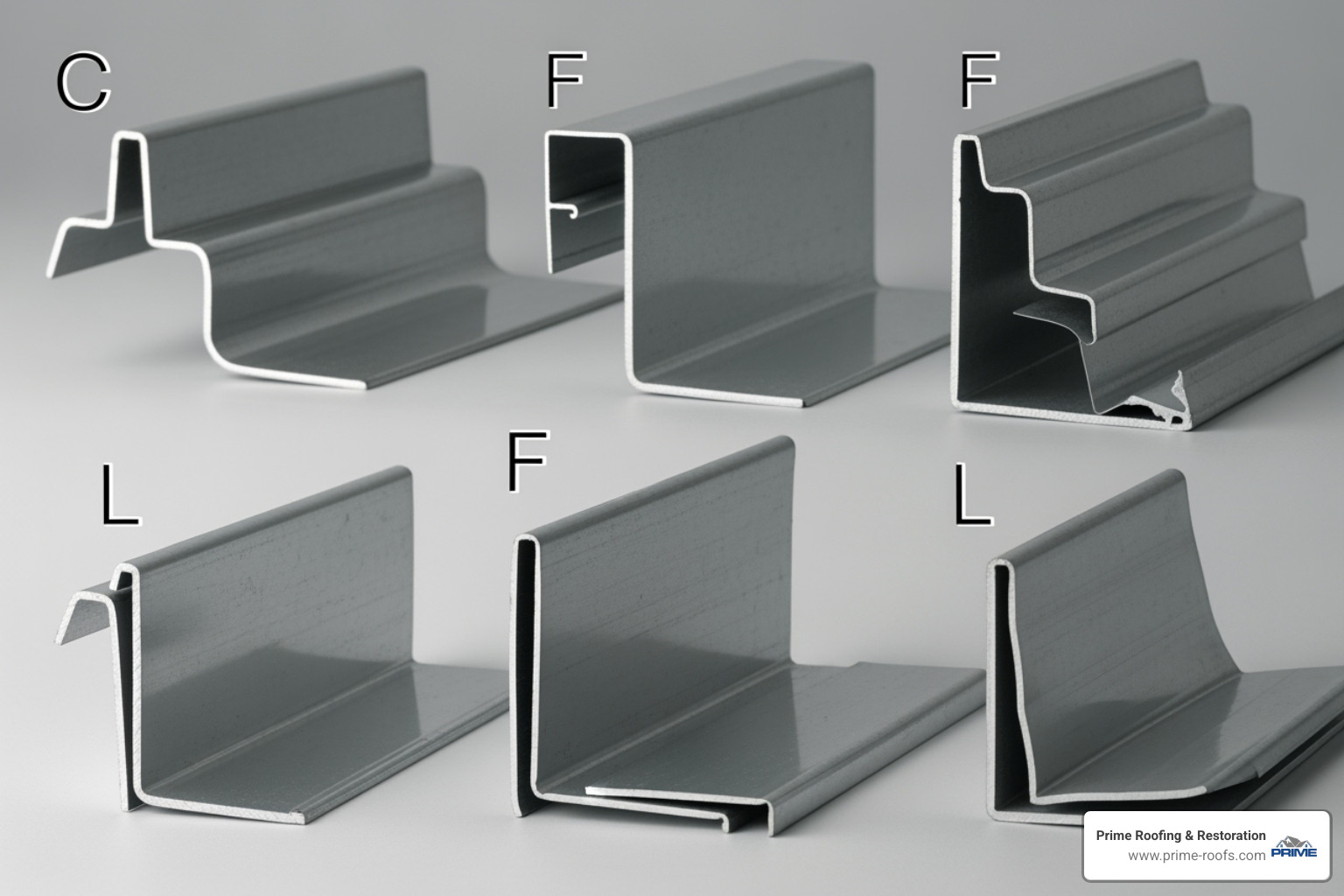
- Type C (L-style): A simple L-shaped profile that is effective but may require a furring strip to create proper water clearance.
- Type D (T-style): Also called D-metal, this profile has a longer lower flange that “kicks” water further away from the fascia. It is preferred by the Asphalt Roofing Manufacturers Association (ARMA) for its superior water diversion.
- Type F (Extended): Features an even longer lower flange for maximum protection in areas with heavy rain or wind.
Drip edges typically come in 10-foot lengths and are available in standard colors like white, brown, and charcoal. For more details on these types, this external resource is helpful: A detailed look at drip edge types.
The Long-Term Benefits of Drip Edge
Properly installing drip edge on a shed provides several crucial long-term benefits:
- Water Damage Prevention: This is the primary benefit. Drip edge acts as a barrier, preventing water from seeping under shingles and rotting the roof deck and fascia. Proper flashing can prevent up to 90% of water-related roof damage.
- Fascia and Decking Protection: By directing water clear of the fascia, drip edge prevents staining and rot. This protection extends to the roof deck, preserving the structural integrity of your shed’s roof for years.
- Shingle Protection: Drip edge provides a firm, clean edge for the starter course of shingles, preventing them from curling or lifting in high winds. This reduces the risk of wind-driven rain getting underneath.
- Pest Barrier: The sealed gap between the fascia and decking helps deter insects, rodents, and other critters from entering your shed through the roof edges.
Neglecting this component can turn a minor issue into a major repair. For more insights on protecting your roof, see our Damaged Roof Repair Guide.
Tools and Materials You’ll Need
Before you start installing drip edge on a shed, gathering the right tools and materials will make the process smooth and efficient. Most of what you need is readily available at a local home improvement store.

First, measure your shed’s perimeter to determine how much drip edge you need. It typically comes in 10-foot lengths, so plan for a 3-4 inch overlap at each joint and add a little extra for cuts.
Materials:
- Drip edge flashing (Aluminum or Galvanized Steel, Type D profile recommended)
- 1-inch corrosion-resistant roofing nails
- Roofing cement or sealant
Tools:
- Hammer
- Tape measure
- Tin snips or aviation snips
- Chalk line
- Safety glasses
- Work gloves
- Caulk gun
- Flat pry bar (for replacement projects)
Always wear work gloves and safety glasses when cutting metal, as the edges are extremely sharp. Having everything organized before you start will make the job safer and more enjoyable.
Step-by-Step Guide to Installing Drip Edge on a Shed
The proper sequence for installing drip edge on shed roofs is crucial for it to function correctly. The key rule is: drip edge goes under the underlayment at the eaves (horizontal bottom edges) and over the underlayment on the rakes (sloped side edges). This layering ensures water flows off the roof and away from the shed’s structure. Getting this sequence wrong is a common mistake that leads to water damage.
Step 1: Preparing for Installation
Proper preparation is the foundation of a successful installation. Start by measuring the length of all eaves and rake edges to calculate your material needs, remembering to factor in 3-4 inches for overlaps at each joint.
Next, clean the roof surface so it is dry and free of debris, old nails, or loose materials. A smooth surface is essential. While you’re up there, inspect the roof decking for any signs of rot or damage. Address these issues now, as they will be much harder to fix later.
For a new shed, your decking will be bare and ready. If you’re replacing drip edge on an existing roof, you’ll need to gently pry up the edge of the existing shingles with a flat pry bar to access the old drip edge. For more on this, our Expert Roof Replacement Guide offers valuable insights.
Step 2: Install Drip Edge on the Eaves
Begin your installation at the eaves, the horizontal edges of your shed roof.
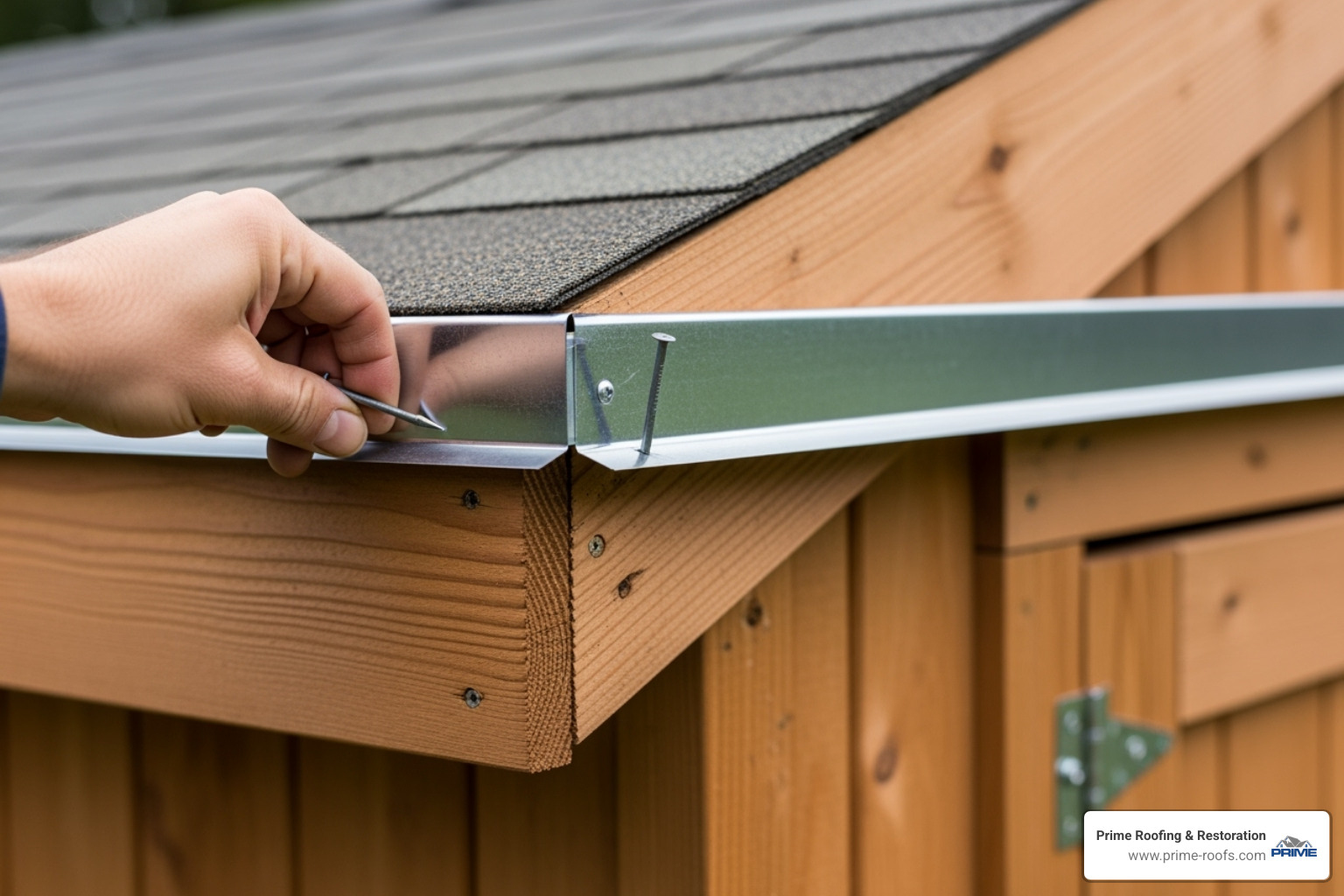
Start at a lower corner and position the drip edge flush against the fascia board, with the horizontal flange lying flat on the roof decking. The lower edge of the drip edge must extend 1/4 to 3/4 inch past the roof decking. This overhang creates a “kick” that directs water away from the wood.
Secure the drip edge with corrosion-resistant roofing nails spaced every 10 to 12 inches. Critically, do not nail through the vertical face of the drip edge, as this creates leak points. All nails must go into the top flange on the roof deck. When joining pieces, overlap them by at least 3 to 4 inches, ensuring the upper piece is on top of the lower piece to follow the direction of water flow.
Step 3: Install Underlayment and Rake Drip Edge
With the eave drip edge in place, the layering sequence changes.
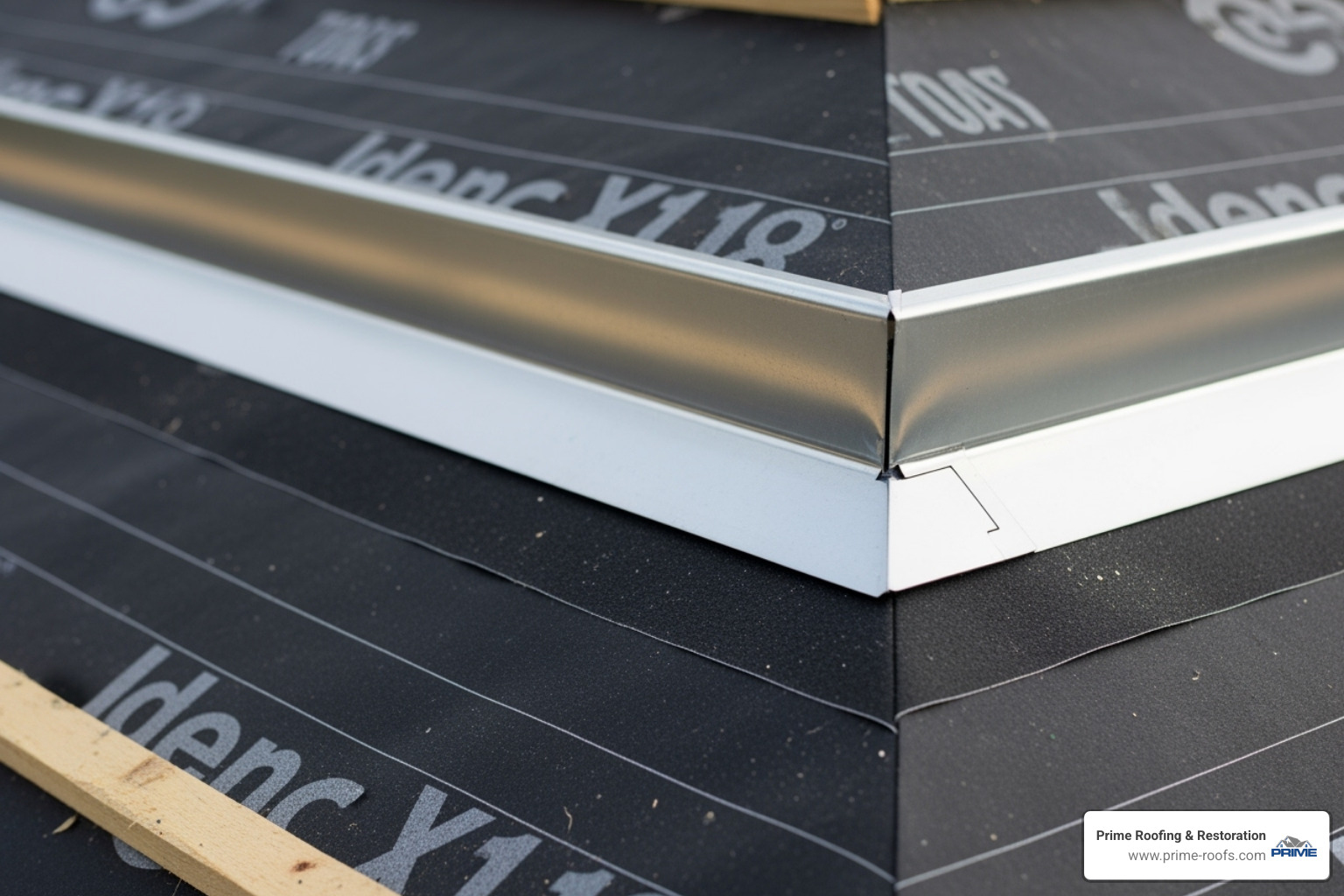
First, install your underlayment (roofing felt) over the eave drip edge you just installed. The underlayment should overlap the horizontal flange of the eave drip edge, creating a continuous waterproof barrier.
Next, move to the rake edges (the sloped sides). Here, the sequence is reversed: the rake drip edge is installed over the underlayment. This placement secures the underlayment and protects against wind-driven rain. At the corners, ensure the rake drip edge overlaps the eave drip edge to maintain a proper water-shedding path. Secure the rake drip edge with nails every 10 to 12 inches along the top flange.
Step 4: Cutting and Forming Corners
Clean corners require careful cutting and folding with tin snips.
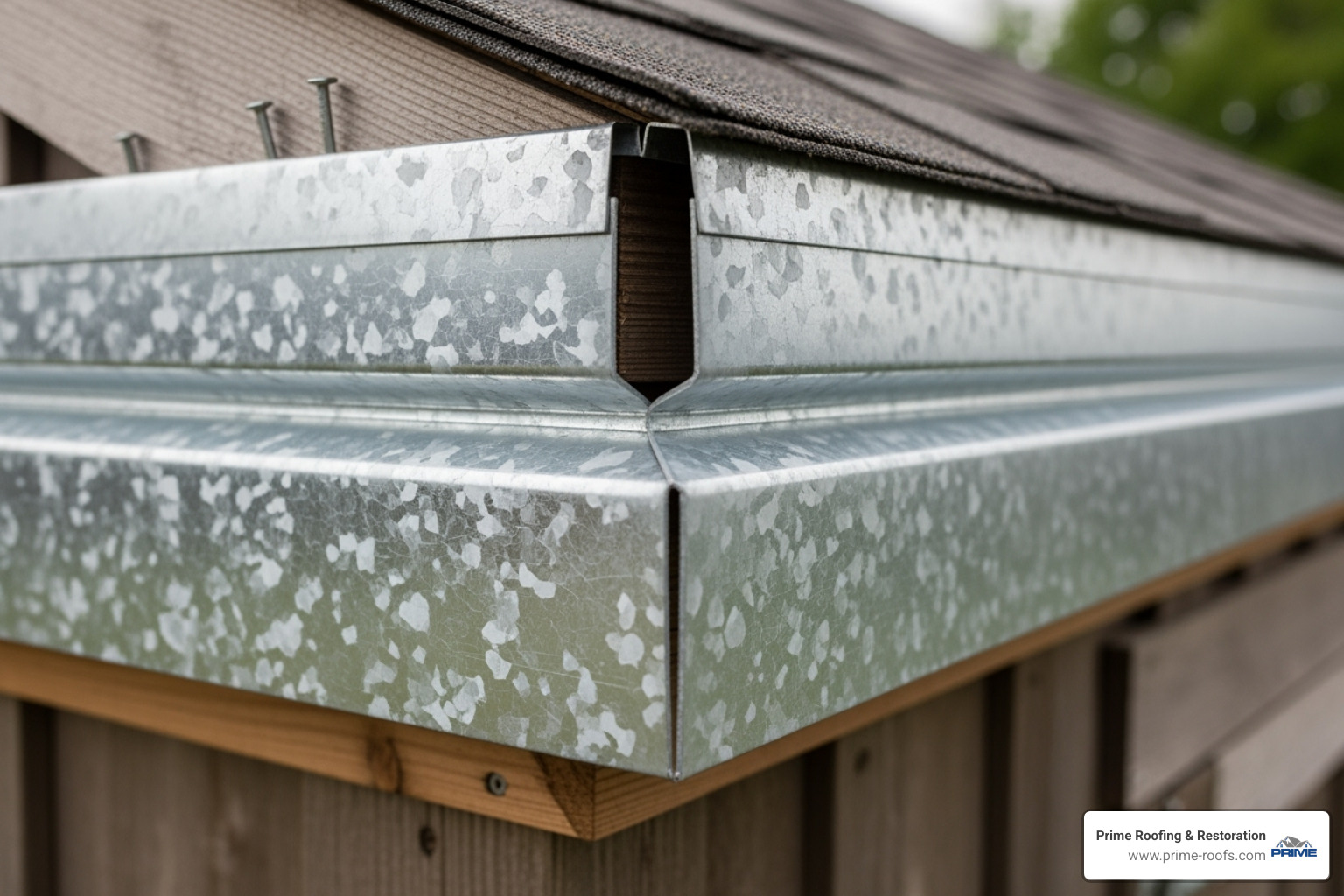
For outside corners, extend the first piece of drip edge beyond the corner. On the second piece, cut a 45-degree notch out of the top flange where it meets the corner. Then, bend the vertical face of the second piece around the corner, overlapping the first piece. A small nip in the lower edge may be needed for a clean bend. Nail it securely and apply a dab of roofing cement to the joint for extra waterproofing.
For inside corners, make a relief cut in the vertical flange of one piece and slide it underneath the other, overlapping the horizontal flanges. The goal is a continuous, gap-free surface. Seal all exposed joints with roofing cement for maximum protection. For a visual guide, we recommend watching a professional installation.
Common Mistakes to Avoid
Even a small misstep when installing drip edge on a shed can undermine its effectiveness and lead to water damage. Avoiding these common pitfalls is key to a successful, long-lasting installation. If you find significant rot or feel the job is beyond your comfort level, consulting a professional for roof repair in Alabaster is a wise decision.
Improper Overlapping or Sequencing
This is the most common and damaging mistake. Incorrect layering creates a water collection system instead of a diversion system.
- The Mistake: Installing drip edge over the underlayment at the eaves or under the underlayment on the rakes.
- The Fix: Always follow the golden rule: underlayment over eave drip edge, rake drip edge over underlayment.
- The Mistake: Insufficient overlap at joints (less than 3-4 inches).
- The Fix: Ensure a generous overlap of at least 3-4 inches on all joints, with the higher piece overlapping the lower one.
Nailing and Fastening Errors
How you secure the drip edge is just as important as its placement.
- Nailing on the vertical face: Driving nails through the vertical flange creates direct entry points for water. All nails must go through the top horizontal flange, where they will be covered by shingles.
- Using the wrong nails: Standard nails will rust and fail. Always use 1-inch corrosion-resistant roofing nails.
- Incorrect nail spacing: Spacing nails too far apart (more than 12-16 inches) allows the drip edge to warp or pull away. Secure it with nails every 10-12 inches for a firm hold.
Key Differences: Installing Drip Edge on a Shed vs. Replacing It
The approach for a new shed versus an existing one is quite different.
- New Installation: This is a straightforward process on bare roof decking. You have a clean canvas to align and install each layer correctly without obstruction.
- Replacement: This is a more delicate operation. It requires carefully lifting existing shingles, which can be brittle, especially in cold weather. You must pry out old nails without damaging the shingles, slide the old drip edge out, and maneuver the new piece into place. This is often a two-person job and may require roofing cement to re-secure the shingles. For more guidance, see our Shingle Roof Replacement Complete Guide.
Frequently Asked Questions about Shed Drip Edge
Here are direct answers to the most common questions we receive about installing drip edge on sheds.
How far should drip edge extend from the fascia board?
A drip edge should extend 1/4 to 3/4 of an inch away from the fascia board. This overhang creates a “kick” that forces water to drip clear of the wood, preventing surface tension from pulling moisture onto the fascia, which leads to rot and staining.
Can you replace a drip edge without replacing the shingles?
Yes, you can replace a drip edge without a full shingle replacement, but it requires care. The process involves gently lifting the shingle edges, using a flat pry bar to remove the old drip edge and its nails, sliding the new piece into place, and securing it. It is best done with two people to avoid cracking the shingles. A bead of roofing cement is often used to help reseal the shingle edge.
Are there building codes for installing drip edge on a shed?
Yes, most residential building codes, including the International Residential Code (IRC), now mandate drip edge installation on all structures, including sheds. This requirement reflects its critical role in protecting the roof system. Even if not strictly enforced for sheds in your specific area, installing it is a best practice that protects your investment. Always check with your local building authority for specific requirements. If you need help ensuring your shed is up to code, our team at Prime Roofing & Restoration can help. Give us a call at (205) 661-8190 for professional guidance.
Protect Your Shed with a Professional Touch
Installing drip edge on a shed is a manageable DIY project that significantly boosts your shed’s defense against the elements. By following the correct sequence—eaves first, then rakes—and paying attention to details like overlaps and nailing, you can ensure a watertight seal that protects your investment for years. The small cost and effort are minimal compared to the expensive repairs you’ll avoid.
However, if you uncover extensive rot or prefer the assurance of a flawless, professional installation, the experts at Prime Roofing & Restoration are ready to help. As licensed professionals serving Alabaster, Orange Beach, Hoover, and surrounding Alabama communities, we specialize in quality materials and durable solutions. We install to code and best-practice standards for long-term performance.
For a comprehensive assessment or professional roof installation, contact our team today. We are committed to protecting homes and families, one roof at a time.