
Why Proper Roof Flashing Installation Is the First Line of Defense Against Leaks
Knowing how to install roof flashing correctly is one of the most critical roofing skills a professional or dedicated DIYer can possess. In the world of residential construction, flashing failure is cited as one of the leading causes of premature roof failure and catastrophic water damage. Without these thin, strategically placed pieces of metal, water doesn’t just sit on your shingles; it actively seeks out every vulnerable joint, gap, and penetration on your roof, using gravity and capillary action to find its way into your home’s structural framing.
Here’s a comprehensive overview of the fundamental steps involved in how to install roof flashing:
- Prepare the surface — This involves more than just a quick sweep. You must clean the substrate, ensure the roof deck is structurally sound, and apply a high-quality, self-adhering waterproof underlayment (ice and water shield) to provide a secondary layer of protection.
- Measure and cut with precision — Flashing is not a “one size fits all” component. You must size each piece to fit the specific geometry of the chimney, vent, or wall intersection, accounting for necessary overlaps.
- Install from the bottom to the top — This is the golden rule of roofing. By working from the lowest point of the roof upward, you ensure that each subsequent layer of material sheds water onto the layer below it, rather than allowing water to seep behind the lower layer.
- Secure with appropriate fasteners — Use only compatible roofing nails. A critical rule is to nail flashing only to the roof deck, never to the vertical wall. This allows for the natural expansion and contraction of the building materials without buckling the metal.
- Overlap each piece by at least 2 to 4 inches — Depending on the slope and local weather patterns, a generous overlap is necessary to prevent wind-driven rain from being forced upward under the flashing.
- Seal all edges and joints — Use high-grade roofing cement or a compatible polyurethane sealant. Avoid cheap silicone that may degrade quickly under the intense Alabama sun.
- Test for leaks — Once the installation is complete, a water test (dousing the area for 15-20 minutes) can help identify any minor gaps before the next major storm hits.
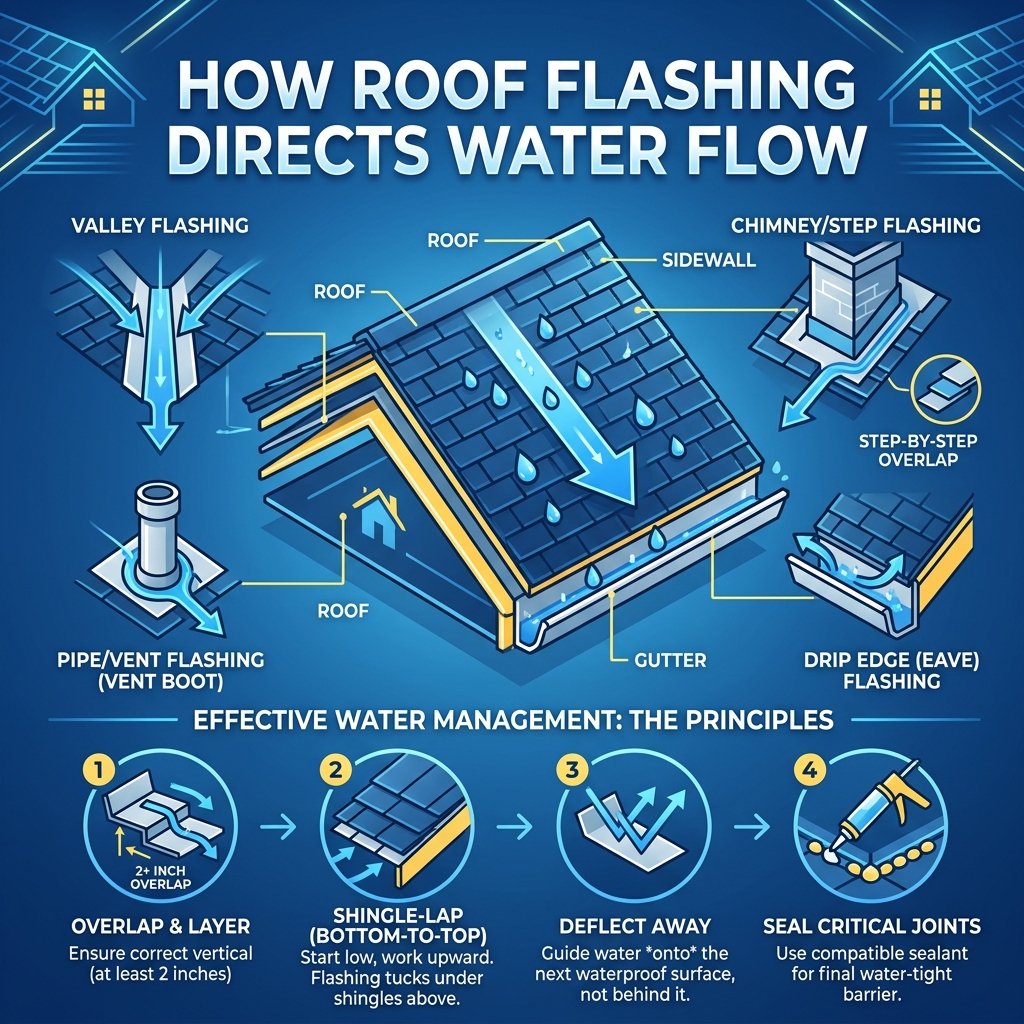
Roof flashing is typically made from thin metal—most commonly aluminum, galvanized steel, or copper. It is installed at every joint, edge, and penetration, acting as a sophisticated water redirect system. It guides rain and snowmelt away from the places where your roof is most vulnerable, such as valleys, dormers, and skylights.
Without proper flashing, even a brand-new roof can leak within months, leading to rot that compromises the integrity of your home.
The stakes are incredibly high for homeowners in Central Alabama. Water that bypasses failed flashing can lead to hidden mold growth, wood rot in the rafters, and expensive structural damage—problems that often cost ten times more to remediate than a proper initial installation would have cost.
If you’re a homeowner in Alabaster, Hoover, or Orange Beach dealing with storm damage or an aging roof, expert roofing solutions from a licensed contractor can provide the peace of mind you need. I’m Bill Spencer, Owner and President of Prime Roofing & Restoration. Over my years leading a dual-location roofing company serving the diverse climates of Alabama, I’ve personally overseen hundreds of flashing installations. Whether it’s a simple vent boot or a complex multi-layered chimney counter-flashing system, understanding how to install roof flashing correctly is a core pillar of our craftsmanship.
How to install roof flashing terms and related guides:
Understanding the Types and Materials of Roof Flashing
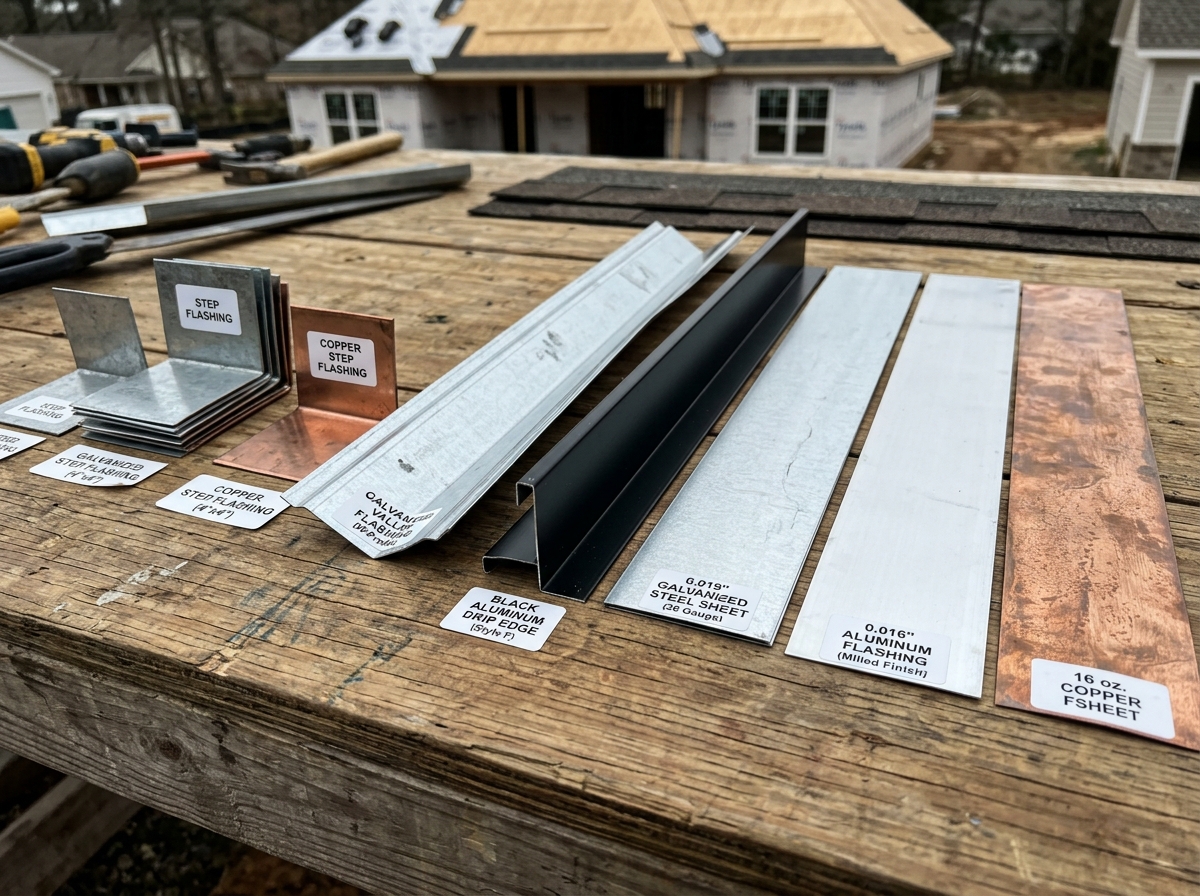
Before picking up a hammer, it is essential to understand the “what” and the “why” behind different flashing materials. Not all flashing is created equal, and using the wrong type for a specific application is a recipe for failure. Depending on the architectural features of your home in Alabaster or the coastal requirements in Orange Beach, you will need a specific combination of flashing types.
The Main Players in Flashing Types
- Step Flashing: These are small, L-shaped pieces of metal (usually 4x4x8 inches) installed in “steps” between every single course of shingles where the roof meets a vertical wall or chimney. This is the most effective way to prevent water from entering the wall-to-roof transition.
- Drip Edge: This is installed along the eaves and rakes of the roof. Its primary job is to direct water into the gutters and away from the fascia board. Without a drip edge, water can “wick” back onto the wood, causing rot. For smaller outbuildings, see our guide on installing drip edge on shed.
- Vent Pipe Boots: These are specialized flashing units, often with a rubber or neoprene collar, that create a watertight seal around plumbing stacks and electrical masts that penetrate the roof surface.
- Kickout Flashing: This is perhaps the most overlooked piece of flashing. It is a specialized diverter installed at the end of a roof-to-wall intersection to direct water away from the siding and into the gutter. We frequently perform repair kickout flashing roof services because many builders omit this critical component.
- Apron Flashing: Also known as “L-flashing,” this is used where a roof meets a vertical wall on the downward slope (such as the front of a dormer). It guides water safely onto the shingles below.
- Valley Flashing: This is a W-shaped or V-shaped metal channel installed in the valleys of a roof where two slopes meet. It handles a high volume of water and must be installed with extreme care.
- Chimney Flashing: This is a complex, multi-part system. It involves base flashing (at the bottom), step flashing (along the sides), and counter-flashing (which is embedded into the brick mortar joints). If you notice water stains near your fireplace, you likely need a chimney flashing repair orange.
Choosing Your Material: Durability vs. Cost
The material you choose impacts both the upfront cost and the long-term lifespan of your roof. In Alabama’s intense heat and high humidity, material durability is non-negotiable.
| Material | Typical Lifespan | Best Use | Pros/Cons |
|---|---|---|---|
| Aluminum | 20-25 Years | Residential roofs, DIY projects | Budget-friendly, easy to bend, but can react with treated lumber. |
| Galvanized Steel | 20 Years | Standard shingle roofs | Very strong and rigid, but can rust if the zinc coating is scratched. |
| Copper | 50-100 Years | Luxury homes, historic restoration | The gold standard. Extremely durable, develops a patina, but very expensive. |
| Stainless Steel | 50+ Years | Coastal environments (Orange Beach) | Impervious to salt spray and corrosion, but difficult to work with. |
| Lead | 30+ Years | Chimney transitions | Extremely malleable, fits into irregular masonry, but requires safety precautions. |
Pro Tip: The Danger of Galvanic Corrosion One of the most common technical errors in flashing installation is mixing incompatible metals. When two different metals (like aluminum and copper) touch in the presence of moisture, a chemical reaction called galvanic corrosion occurs. This causes the less noble metal to deteriorate rapidly. Always match your fasteners to your flashing material: use aluminum nails for aluminum flashing and copper nails for copper. This ensures the longevity of the entire system.
Essential Tools and Preparation for How to Install Roof Flashing
Preparation is 90% of the battle when learning how to install roof flashing. You wouldn’t attempt a complex engine repair without the right wrenches, and you shouldn’t attempt to waterproof a home without the proper specialized tools.
The Professional Roofer’s Toolkit
To achieve a professional-grade, watertight finish, you will need the following:
- Aviation Tin Snips: You should have three types: “Reds” (for left cuts), “Greens” (for right cuts), and “Yellows” (for straight cuts). These allow you to navigate complex corners without burring the metal.
- Hand Seamers: These look like wide-mouthed pliers and are used to create clean, crisp bends in the metal flashing on-site.
- Roofing Hammer: A 16oz or 20oz hammer with a milled face is standard for driving galvanized nails.
- Roofing Nails: Use 1-1/4 inch or 1-1/2 inch hot-dipped galvanized nails. For coastal areas like Orange Beach, stainless steel nails are often required by local building codes.
- High-Performance Sealant: Look for polyurethane-based sealants (like Vulkem or Solar Seal). These maintain flexibility through the extreme temperature swings common in Alabama.
- Chalk Line and Tape Measure: Precision is key. Flashing that is “close enough” is flashing that will eventually leak.
- Utility Knife: Essential for trimming shingles and cutting underlayment.
- Flat Bar (Pry Bar): Necessary for carefully lifting existing shingles without tearing them during a repair or retrofit.
Preparation and Safety Protocols
Before the first nail is driven, the work area must be prepared. On a new construction project, this is straightforward. However, on a re-roof or repair, it involves the meticulous removal of old, rusted metal and the cleaning of the wood deck.
International Residential Code (IRC) and Local Standards: We strictly adhere to the International Residential Code. While Alabama doesn’t face the same ice damming issues as the North, the IRC requirements for flashing at wall intersections and penetrations are universal. In Alabaster and Hoover, we emphasize the use of self-adhering membranes (ice and water shield) in all valleys and around all penetrations as a secondary defense against wind-driven rain.
Critical Considerations Before Starting:
- Roof Pitch: The steeper the roof, the faster the water velocity. This requires larger overlaps in the flashing to prevent water from “jumping” over the metal barriers.
- Substrate Integrity: Never install new flashing over rotted wood. If the decking is soft or stained, it must be replaced before the flashing is installed.
- Weather Window: Never open up a roof if there is a chance of rain within the next 4 hours. Even a small opening around a chimney can allow gallons of water into the home during a typical Alabama afternoon thunderstorm.
- Safety Gear: Always use a OSHA-compliant fall protection system, including a harness, lanyard, and roof anchor, especially on pitches steeper than 4:12.
Step-by-Step Guide: Executing the Installation Process
The fundamental philosophy of roofing is: Think like a raindrop. Water always follows the path of least resistance and always flows downward. Therefore, your flashing must be layered in a way that mimics the scales of a fish. If you understand this concept, you understand how to install roof flashing.
The General Sequence of Operations
- Eave Drip Edge: Install this first, directly onto the wood deck, before the underlayment. This ensures that any water that gets under the shingles but stays on the underlayment will flow over the metal and into the gutter.
- Underlayment: Lay your felt or synthetic underlayment over the eave drip edge.
- Rake Drip Edge: Install the drip edge on the sloped sides (rakes) over the underlayment. This prevents wind from lifting the underlayment edges.
- Starter Shingles and First Course: Begin your shingle installation.
- Integrated Flashing: As you reach walls, chimneys, or pipes, you must stop the shingle installation to integrate the flashing pieces.
Detailed Guide: How to Install Roof Flashing Around Plumbing Vents
Plumbing vents are one of the most common leak points. Follow these steps for a permanent seal:
- Shingle up to the pipe: Install shingles until the row reaches the bottom of the pipe. Cut the shingle so it fits snugly around the lower half of the pipe.
- Prepare the Boot: Ensure the rubber collar of the vent boot is the correct size for the pipe (e.g., a 3-inch boot for a 3-inch pipe). Apply a small amount of water-based lubricant to the pipe to help the boot slide down without tearing the rubber.
- Position the Flashing: Slide the boot down until the metal or plastic base sits flat on the shingles. The bottom half of the flashing base should sit on top of the shingles you just installed.
- Fasten the Base: Nail the top and sides of the flashing base to the roof deck. Crucial: Do not put nails in the bottom flange that is sitting on top of the shingles. This allows water to flow freely over the shingles.
- Shingle Over the Top: Continue installing shingles. The shingles in the rows above the pipe should be cut to fit around the pipe and must cover the top and side flanges of the boot. Only the bottom half of the boot should be visible when you are finished.
For more visual learners, the Oatey installation guide provides excellent diagrams of this layering process.
Step-by-Step: How to Install Step Flashing at Walls
Step flashing is the only reliable way to seal a roof-to-wall transition.
- Step 1: Place the first piece of step flashing (bent at a 90-degree angle) over the starter shingle at the bottom of the wall.
- Step 2: Nail the flashing to the roof deck only. Do not nail it to the wall. If you nail it to the wall, the flashing will buckle when the house settles or the wood expands.
- Step 3: Lay the next shingle course directly over the first piece of flashing.
- Step 4: Place the next piece of step flashing over that shingle, overlapping the previous piece of flashing by at least 2 inches.
- Step 5: Repeat this “shingle-flashing-shingle” sandwich all the way up the wall. This ensures that any water hitting the wall is diverted onto the shingle, then onto the next piece of flashing, and eventually off the roof.
The “Silva Gap” and Drip Edge Precision
A technique popularized by Tom Silva of This Old House involves leaving a 3/8-inch to 1/2-inch gap between the drip edge and the fascia board. This small air gap breaks the surface tension of the water, preventing it from “wicking” back behind the metal and rotting the fascia. This is a hallmark of a high-quality installation that we practice on every job in Alabaster.
If you are exploring modern roofing technologies, you might also be interested in our no mortar no problem a dry ridge installation walkthrough for advanced ridge ventilation techniques.
Common Mistakes and Maintenance for Long-Term Performance
Even with the best materials, a failure to understand the nuances of how to install roof flashing will lead to leaks. In Shelby County, we see the same mistakes repeated by inexperienced contractors and well-meaning DIYers alike.
Critical Mistakes to Avoid
- The “Double Nailing” Error: As mentioned, never nail flashing to both the roof deck and the vertical wall. A house is a living thing; it moves. When you pin the flashing to two different planes, the metal has nowhere to go when the temperature changes. It will warp, create “oil canning” ripples, and eventually pull the nails out, leaving a hole for water.
- Inadequate Overlap: In the heavy downpours we experience in Alabama, water can easily be blown upward. If your step flashing only overlaps by an inch, a strong wind can push water right over the top of the metal. We recommend a minimum 2-inch overlap, with 3-4 inches being ideal for lower-pitched roofs.
- Reusing Old Flashing: This is a common cost-cutting measure that backfires. Old flashing is often brittle, covered in old sealant, and full of previous nail holes. When you try to align new shingles with old flashing, the holes rarely line up, creating a “Swiss cheese” effect that is impossible to seal perfectly. For a professional roof replacement, always insist on new flashing.
- Over-Reliance on Caulk: Caulk and roofing cement are secondary seals. They are meant to be the “belt” to the flashing’s “suspenders.” If the metal isn’t layered correctly to shed water naturally, no amount of caulk will keep the roof dry for long. Caulk eventually dries, cracks, and fails under UV exposure.
- Missing Kickout Flashing: Without a kickout diverter at the end of a wall, water will run down the siding and often find its way behind the corner trim, leading to rotted wall sheathing and mold inside the wall cavity.
Maintenance Tips for Longevity
Most metal flashing is designed to last as long as your shingles (roughly 20-30 years), but it requires periodic check-ups to reach that lifespan.
- Bi-Annual Inspections: Every spring and fall, take a pair of binoculars and look at your roof. Check for any flashing that looks loose, rusted, or “popped.”
- Clear Debris Regularly: Valleys and the areas behind chimneys are notorious for trapping leaves and pine needles. This organic matter holds moisture against the metal, accelerating corrosion and creating “dams” that force water under the shingles.
- Sealant Refresh: Even high-quality polyurethane sealants will eventually dry out in the Alabama sun. Every 5-7 years, it is wise to have a professional inspect the sealant beads around vent pipes and chimney counter-flashing and re-apply as necessary.
- Check for Rust: If you have galvanized steel flashing, look for signs of orange rust. If caught early, you can wire-brush the area and apply a rust-inhibiting metal paint. If the rust has created pits or holes, the piece must be replaced.
Frequently Asked Questions About Roof Flashing
Can old roof flashing be reused during a re-roof?
While it is technically possible if the flashing is in pristine condition, we strongly advise against it. The process of removing shingles usually bends the flashing, and the existing nail holes create permanent weak points. To provide a 100% watertight warranty, we always install new flashing components. Reusing old flashing is one of the most common ways a “cheap” roof job ends up costing more in the long run.
Is roof flashing installation a DIY project?
Installing a simple vent boot on a shed is a great DIY project. However, installing step flashing on a two-story home or flashing a complex chimney is high-stakes work. If you make a mistake with a shingle, the roof might look slightly off. If you make a mistake with the flashing, you could end up with thousands of dollars in interior water damage. Because of the safety risks and the precision required, we recommend hiring a professional for any flashing work on your primary residence.
How do I detect and repair damaged roof flashing?
Look for these “red flags”:
- Water Stains on Ceilings: If the stain is near a wall or a chimney, the flashing is the primary suspect.
- Attic Inspection: Go into your attic during a rainstorm with a flashlight. Look for water tracking down the sides of vent pipes or the chimney masonry.
- Visible Gaps: If you can see daylight from inside the attic around a roof penetration, the flashing has failed.
- Corrosion: Any visible rust on metal flashing indicates that the protective coating has worn away and the metal is thinning.
How much does it cost to replace roof flashing?
If done as part of a full roof replacement, the cost is usually integrated into the square-foot price. For a standalone repair, costs can range from $300 for a simple vent boot replacement to $1,500+ for complex chimney counter-flashing. The price depends on the material (copper is significantly more) and the accessibility of the roof.
What is the best sealant for roof flashing?
Avoid standard silicone caulk found at big-box stores. For the Alabama climate, we recommend high-solids polyurethane sealants. These products offer superior adhesion to metal and masonry and can withstand the extreme thermal expansion and contraction of the roof deck without cracking.
Conclusion
Mastering how to install roof flashing is about more than just technical skill; it is about a commitment to protecting your home from the elements. Whether you are performing a minor repair or planning a comprehensive professional roof replacement, the details of the flashing installation will determine the success or failure of the entire project.
At Prime Roofing & Restoration, we pride ourselves on being the local roofing experts in Alabaster that homeowners can trust. We don’t cut corners on flashing because we know it’s the difference between a roof that lasts 30 years and one that fails during the first tropical storm of the season. Our team is trained in the latest IRC standards and manufacturer-specific installation techniques to ensure your home remains dry and secure.
We offer end-to-end roofing solutions, including emergency repairs, full replacements, and expert assistance with insurance claims. Our mission is to build lasting relationships with our neighbors in Alabaster, Hoover, and Orange Beach through quality work and 24/7 service.
Don’t wait for the next Alabama thunderstorm to test your roof’s integrity. If you suspect your flashing is failing, or if you’re ready for a professional, no-obligation inspection, give us a call today.
Prime Roofing & Restoration 1179 1st St N, Alabaster, AL 35007 205-623-0151 Licensed Experts | 24/7 Emergency Service View Our Location on Google Maps