
Why Those Orange Stains Mean Your Chimney Flashing Needs Immediate Attention
Chimney flashing repair Orange is a critical service for homeowners who notice rust-colored stains, water marks, or leaks around their chimney. These orange marks are more than cosmetic—they signal active corrosion and potential water intrusion that can lead to expensive structural damage if left unaddressed.
Quick Answer: What Orange Marks on Your Chimney Mean
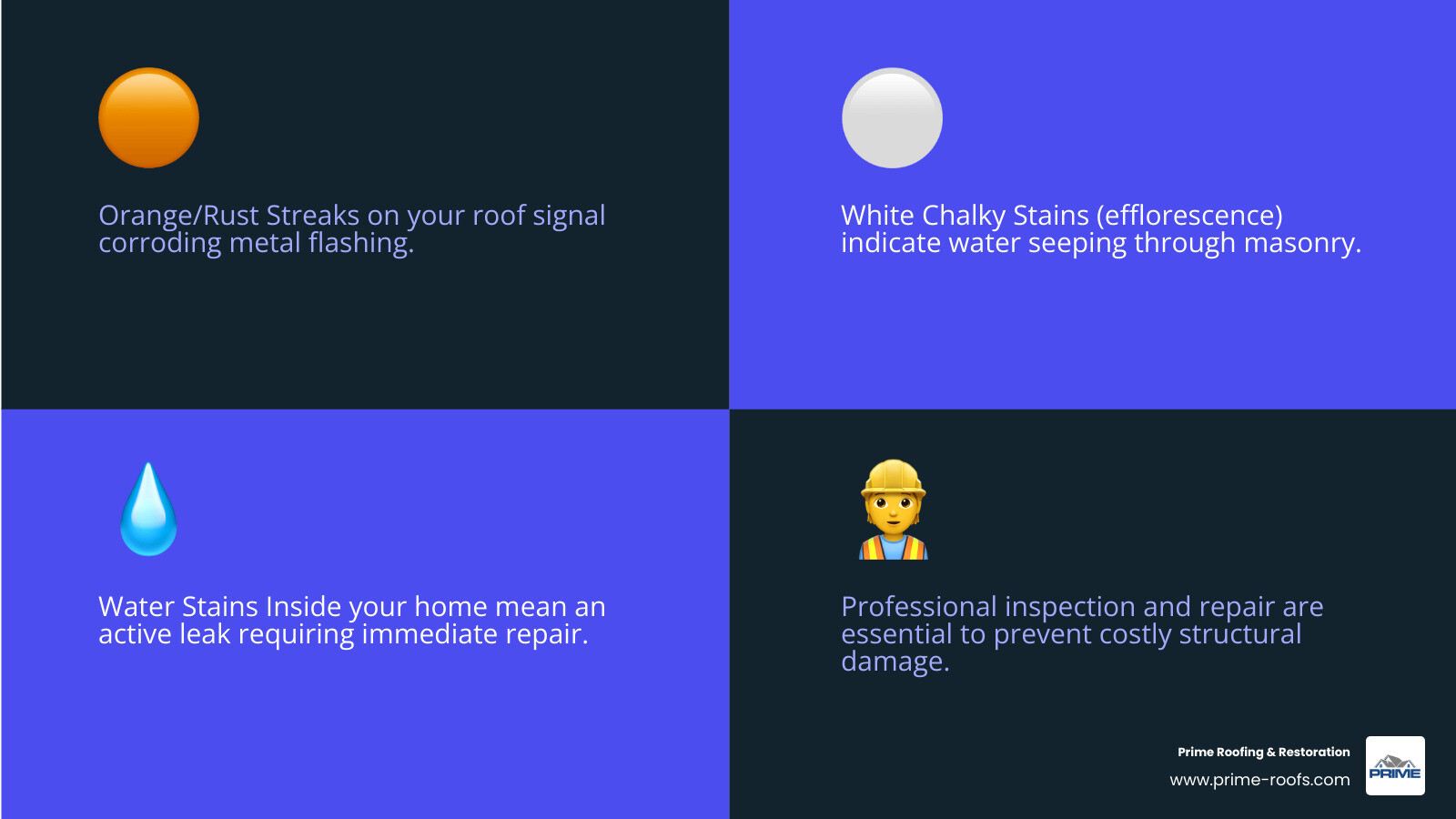
- Orange/Rust Streaks = Corroding metal flashing (usually galvanized steel)
- White Chalky Stains = Efflorescence from water seeping through masonry
- Water Stains Inside = Active leak requiring immediate repair
- Typical Repair Cost = $150-$500 for minor fixes, $400-$1,600 for full replacement
- Action Required = Professional inspection and repair to prevent mold, rot, and structural damage
You’re relaxing at home when you notice it—a rusty orange streak running down your roof from the chimney. That mark means trouble. Chimney flashing is the thin metal barrier that seals the vulnerable junction where your chimney meets your roof, and when it fails, water finds a way in. Ensuring your home has a sound roofing system is the first line of defense against the elements, and chimney flashing is a critical component. In Orange Beach’s salt-air climate, this deterioration happens faster, making vigilance essential.
Damaged chimney flashing accounts for the majority of chimney-related roof leaks. The orange stains you see are rust from corroding galvanized steel, a clear signal that your home’s waterproof seal has been compromised. Left unchecked, this small issue can escalate into rotted roof decking, damaged ceiling joists, and mold growth—repairs that can easily exceed several thousand dollars. Catching it early can prevent these costly consequences entirely.
As Bill Spencer, owner of Prime Roofing & Restoration, I’ve seen how coastal conditions accelerate flashing corrosion. My team specializes in the chimney flashing repair Orange Beach properties require—using corrosion-resistant materials and proven techniques that stand up to our unique climate.
Simple guide to Chimney flashing repair Orange:
What is Chimney Flashing and Why It’s Crucial for Orange Beach Homes
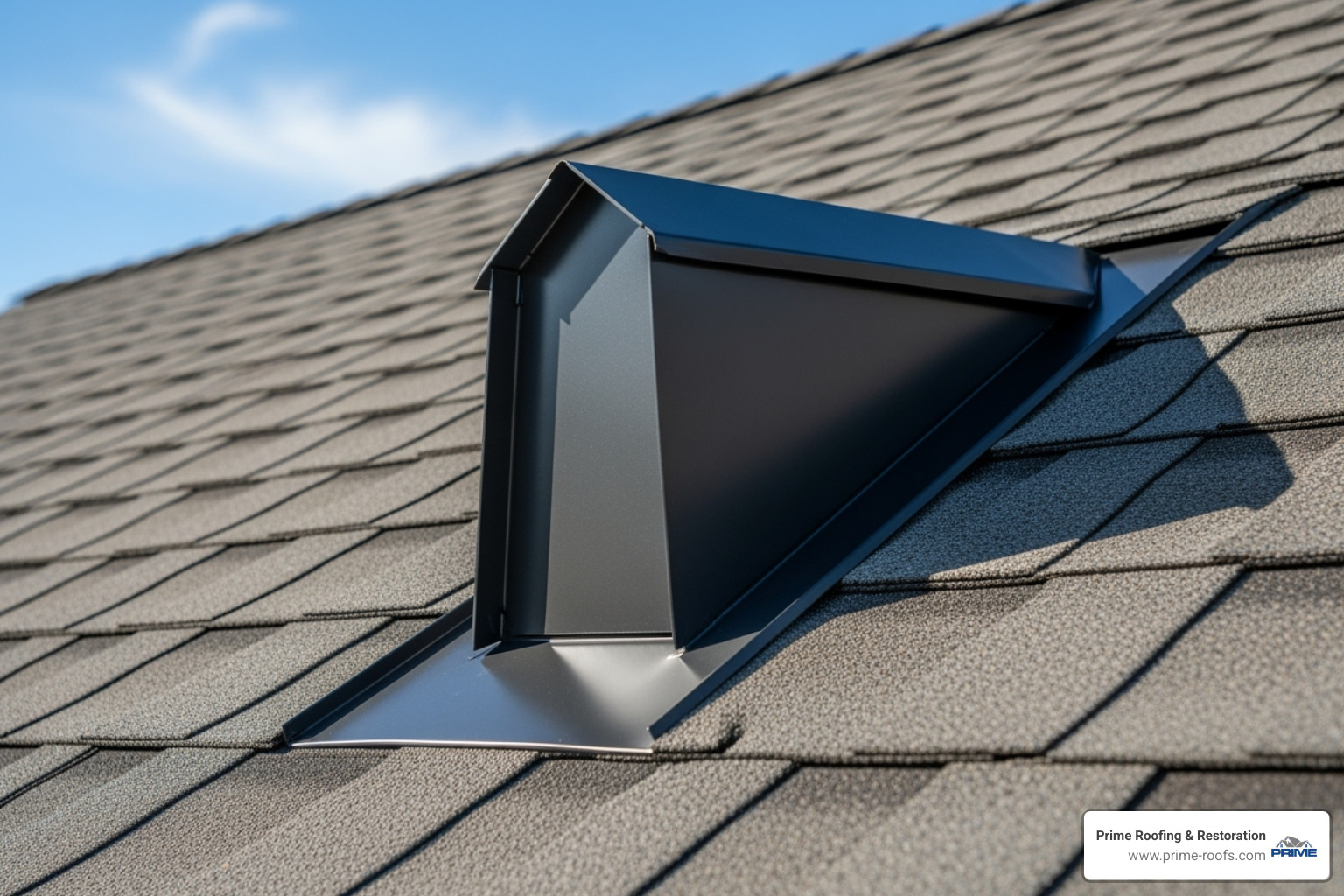
Think of chimney flashing as the unsung hero standing guard where your chimney meets your roof. This custom-fitted metal barrier has one critical job: direct water away from what’s essentially a hole in your roof. The point where your chimney connects with the roof represents one of the most critical zones for potential water entry, and without flashing, every rainstorm is a potential disaster.
A proper flashing system uses two distinct layers. Step flashing is woven directly into your shingles, moving up the sides of the chimney. Then, counter-flashing is embedded into the chimney’s mortar joints, overlapping the step flashing below. This double-layer approach creates a watertight seal, forcing water down and away toward your gutters.
Living in Orange Beach adds an extra layer of urgency. The constant exposure to salt air, high humidity, and heavy rainfall accelerates the corrosion of inferior flashing materials. What might last fifteen years inland could fail in just five to seven years here on the coast. That’s why chimney flashing repair Orange Beach homeowners need must use corrosion-resistant materials designed for coastal conditions.
When flashing fails—especially after significant Orange Beach Storm Damage—water seeps into your attic insulation, soaks ceiling joists, and creates the perfect environment for mold. An investment in quality flashing installation is a fundamental part of any robust roof repair strategy and one of the most cost-effective ways to protect your home’s structural integrity.
Decoding the Warning Signs: From Orange Stains to Obvious Leaks
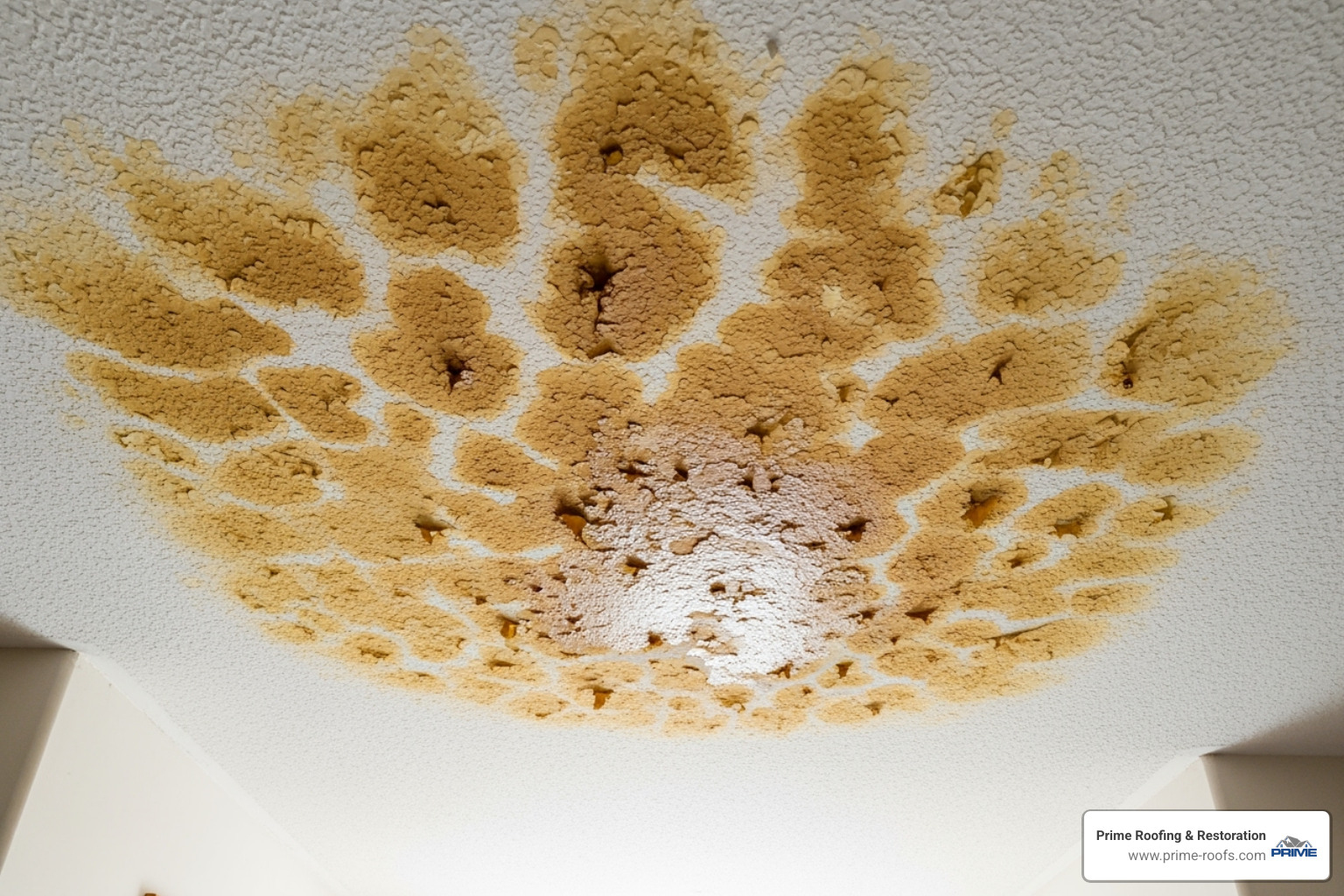
The “orange marks” that give this article its name are often the first and most obvious sign of a problem. These rust streaks are a clear indicator that your galvanized steel flashing is corroding. But your chimney speaks in other languages too, and learning to read these warning signs can save you thousands in repair costs.
- Orange or Reddish Stains: This is rust streaking from the flashing, meaning the metal barrier is actively corroding. In Orange Beach’s humid, salty air, this process is accelerated, and it means your watertight seal is compromised.
- White, Chalky Deposits: Called efflorescence, these powdery stains form when water penetrates your masonry, dissolves the salts inside, and evaporates on the surface. It’s evidence that water is getting where it shouldn’t be.
- Interior Water Stains: Water stains on your ceilings or walls near the fireplace mean the leak has progressed beyond your roof and is actively damaging your living space. By the time you see interior damage, the problem has likely been developing for weeks or months.
- Visible Gaps and Cracks: Any visible gaps, cracks, or holes in the metal or sealant are immediate red flags. Similarly, loose or bent flashing that has pulled away from the chimney can no longer properly divert water.
- Dripping Sounds or Moisture: Dripping sounds inside your firebox after rain are undeniable signs of an active leak. Discolored bricks or crumbling mortar around the chimney base also indicate prolonged water exposure.
A small leak today becomes a structural nightmare tomorrow. Rotted roof decking, compromised rafters, destroyed insulation, and toxic mold growth aren’t just expensive to fix—they can pose serious health risks. Homeowners who ignore early warning signs typically face repair bills three to five times higher than those who act quickly. Identifying these issues before they escalate into a major crisis requiring emergency roofing services is key. When it comes to chimney flashing repair Orange Beach homeowners need, early detection makes all the difference.
Your Complete Guide to Chimney Flashing Repair in Orange
When you spot the warning signs, taking swift action is key to preventing widespread damage. Repairing chimney flashing is a job that requires precision, as an improper fix can be worse than no fix at all. This guide covers the critical considerations for tackling a chimney flashing repair Orange area, from DIY vs. professional to costs and materials.
DIY vs. Professional: Making the Right Call
While a DIY approach might seem tempting, chimney flashing is a complex job. A minor repair, like reapplying sealant to a small, intact area, might be manageable. However, for any significant rust, gaps, or loose sections, a professional is the safest bet. Professionals have the safety equipment for working at heights, specialized tools, and the knowledge to ensure the repair is compliant with local building codes. An improper DIY installation can lead to worse leaks and more expensive damage, potentially voiding roof warranties. For a guaranteed, code-compliant fix that stands the test of time, it’s always best to contact experts in Roof Repair Orange Beach.
Choosing the Best Flashing Materials for Orange Beach’s Coastal Climate
The material used for your flashing has a massive impact on its longevity, especially in a salt-air environment. While galvanized steel is common and inexpensive, it is highly susceptible to rust in coastal regions like Orange Beach, which is often the source of those tell-tale orange streaks.
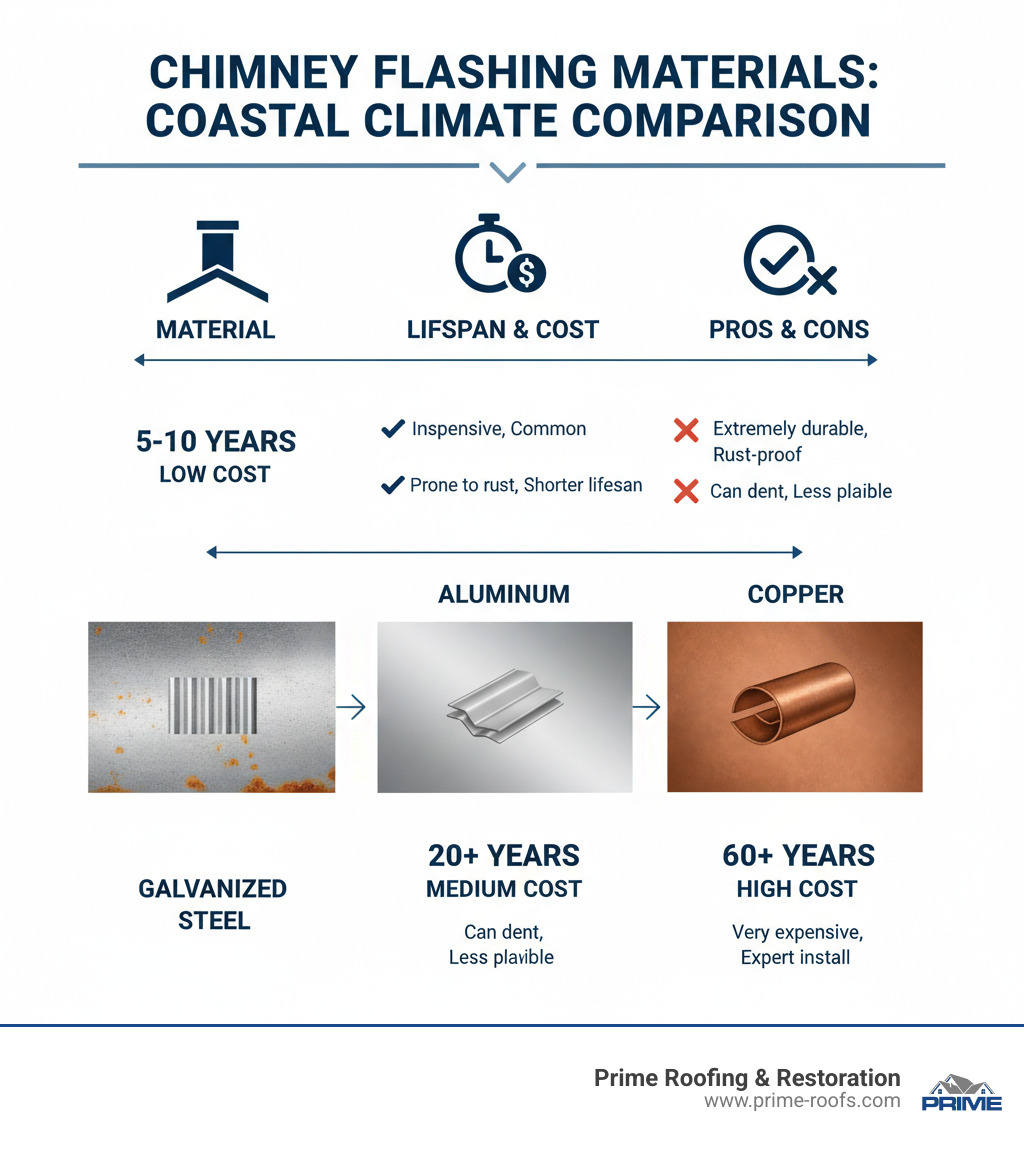
| Material | Average Lifespan (Coastal) | Cost | Pros | Cons |
|---|---|---|---|---|
| Galvanized Steel | 5-10 Years | Low | Inexpensive, common | Prone to rapid rust in salt air, shorter lifespan |
| Aluminum | 20+ Years | Medium | Excellent rust resistance, lightweight | Can be dented, requires proper coating, less pliable |
| Copper | 60+ Years | High | Extremely durable, rust-proof, aesthetic | Very expensive, requires expert installation |
| Lead | 50+ Years | High | Very pliable, excellent for complex shapes | Toxic, heavy, can be stolen (scrap value) |
For homes in Orange Beach, aluminum and copper are the superior choices for long-term protection. We recommend considering the long-term value over initial cost, especially given our unique climate. Your material choice is a key part of any successful project, as detailed in this Roofing Orange Beach, AL Guide.
Budgeting for Your Chimney Flashing Repair
The cost of chimney flashing repair Orange can vary widely. A minor repair, such as resealing small cracks, might cost between $150 and $500. However, a full replacement, which is often necessary for corroded or improperly installed flashing, typically ranges from $400 to $1,600. Some large or complex jobs can exceed $2,000. Factors that increase the price include extensive wood rot underneath, a steep roof pitch, a complex chimney structure, and the choice of premium materials like copper. The only way to get a precise figure is to obtain a detailed, written quote from a qualified local roofer.
The Professional Repair Process
Proper chimney flashing repair is a multi-step process that demands expertise. It’s far more than just applying caulk.
- Removal and Inspection: The process begins by carefully removing all old flashing, sealant, and felt paper to expose the roof deck. This allows for a thorough inspection of the underlying wood for rot or water damage, which must be repaired first.
- Layered Installation: A new, multi-layered system is installed. This includes an ice and water shield for extra protection, followed by base flashing, step flashing interwoven with each shingle course, and finally counter-flashing set into the chimney’s mortar joints.
- Water Diversion: For chimneys on the low side of a roof slope, a “cricket”—a small, peaked structure—is built behind the chimney to divert water and prevent pooling, a common cause of leaks.
- Sealing: All seams are sealed with a high-quality, durable sealant rated for exterior use to complete the waterproof barrier.
Attempting this without experience often leads to critical mistakes like ignoring wood rot, using improper materials, or failing to overlap layers correctly. For lasting results and peace of mind, professional expertise is invaluable.
Long-Term Maintenance Tips
Once repaired, proactive maintenance is key to ensuring longevity in Orange Beach’s climate.
- Inspect Twice a Year: In the spring and fall, check for any cracks, loose sections, or deteriorating sealant.
- Clear Debris: Regularly remove leaves and twigs that trap moisture against the flashing.
- Check Sealant: If you see any cracking or peeling caulk, reapply a fresh bead of exterior-grade sealant.
- Consider Masonry Sealer: Applying a silicone-based sealer to the bricks can reduce water absorption and prevent freeze-thaw damage.
By following these tips, you can significantly extend the life of your chimney flashing and prevent costly water damage.
Frequently Asked Questions about Chimney Flashing
We understand that chimney flashing repair Orange can raise a lot of questions. Here are direct answers to the most common concerns we hear from Orange Beach homeowners.
How long should chimney flashing last in a coastal area like Orange Beach?
The lifespan depends entirely on the material. Standard galvanized steel, common in older homes, often rusts and fails within 5 to 10 years in Orange Beach’s salt air. Upgrading to a high-quality, coated aluminum provides a much longer lifespan of over 20 years. For the ultimate long-term solution, copper flashing is the gold standard, lasting 60 years or more and often outliving the roof itself.
Can bad flashing cause damage inside my attic?
Yes, absolutely. The attic is the first place hidden damage from a flashing leak appears. Signs include damp or compressed insulation, dark water stains on the underside of the roof decking, and the growth of mold and mildew on wooden rafters near the chimney. This damage can compromise your home’s structure and air quality long before stains appear on your interior ceilings.
Are there specific building codes for chimney flashing in Orange Beach, AL?
Yes. Local and state building codes in Orange Beach have specific, mandatory requirements for how chimney flashing must be installed. These codes dictate the types of materials allowed, the required overlap between flashing layers, and how the system must integrate with the roof’s underlayment to create a waterproof seal. For larger chimneys, codes often require a cricket to divert water. A professional roofer is required to know and follow these standards, ensuring your repair is safe, durable, and compliant.
What is the typical cost range for repairing or replacing chimney flashing in Orange?
For a minor repair, such as resealing a small crack, costs typically range from $150 to $500. A full replacement, which is more common for corroded or failing flashing, generally costs between $400 and $1,600. The final price depends on the chimney’s size, roof pitch, chosen material, and whether there is underlying wood rot that also needs to be repaired. An official quote after an inspection is the only way to determine the exact cost.
When should I hire a professional versus attempting a DIY fix?
You should hire a professional for any issue beyond touching up a small, accessible spot of sealant. If you see active leaks, significant rust, loose flashing, or visible gaps, a professional repair is necessary. Chimney flashing involves working at dangerous heights and requires specialized tools and knowledge of building codes. An improper DIY fix can worsen the leak, leading to more extensive and costly water damage. The safety, expertise, and warranty provided by a professional offer critical peace of mind.
Protect Your Investment: Your Go-To Chimney Flashing Experts in Orange Beach
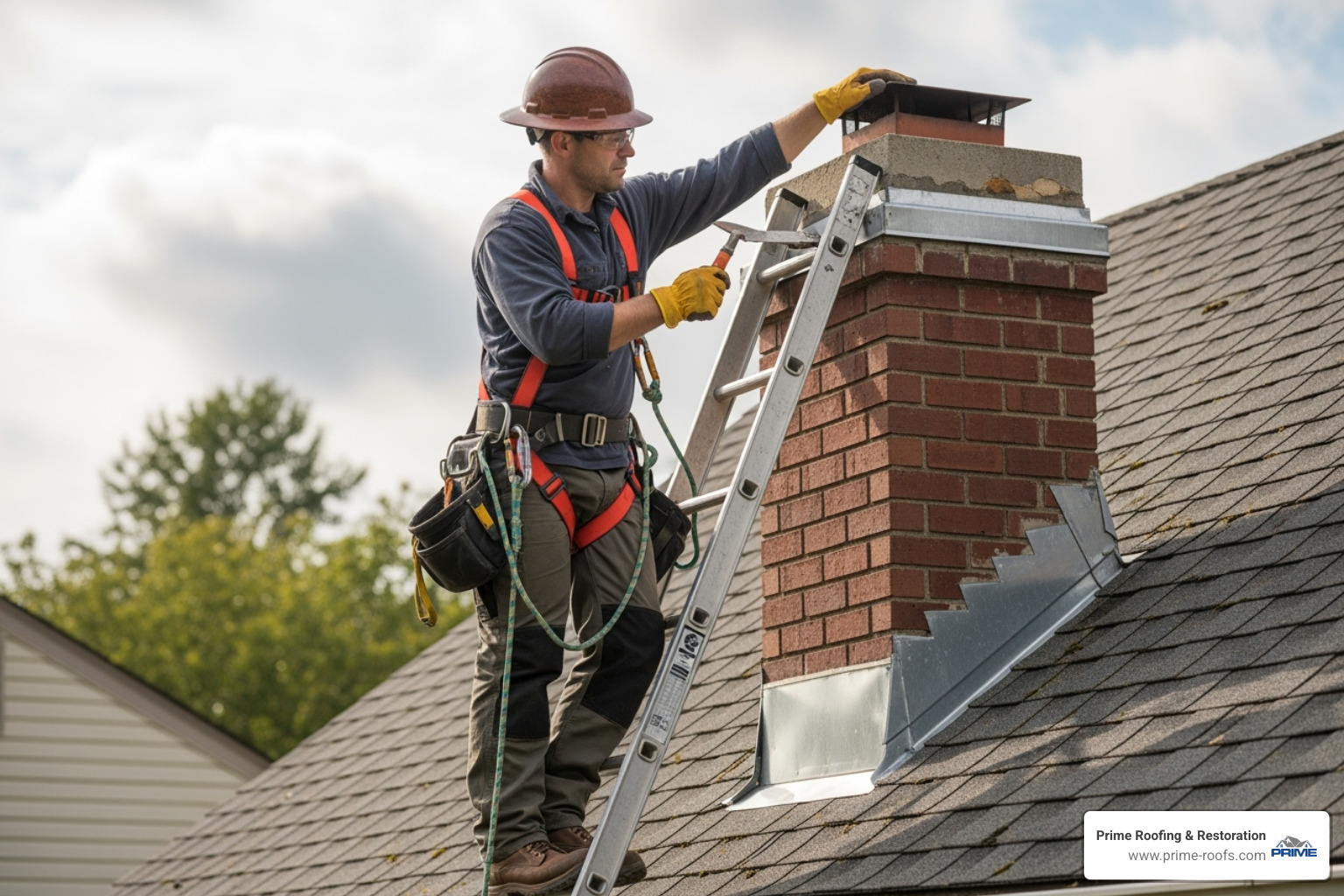
Ignoring the warning signs of failing chimney flashing—from subtle orange stains to an active leak—is a gamble no homeowner should take. What starts as a minor issue can quickly escalate into thousands of dollars in structural damage, wood rot, and mold remediation. Protecting your home means being proactive and addressing flashing problems with durable, professional solutions.
At Prime Roofing & Restoration, we understand the unique challenges that Orange Beach’s coastal climate poses to your roof. Our licensed experts specialize in diagnosing and performing lasting chimney flashing repair Orange properties require. We use high-quality, corrosion-resistant materials and proven installation techniques that stand up to the harsh salt air and heavy rainfall.
The benefits of choosing a professional are clear:
- Expert Diagnosis & Quality Materials
- Code-Compliant and Warrantied Work
- Safe, Professional Installation
- Comprehensive Solutions for Underlying Damage
Don’t let a small stain turn into a major disaster. If you’re seeing those tell-tale orange marks or suspect your chimney flashing is failing, act now. Contact us today for a comprehensive inspection and a free quote. Find your local roofers in Orange Beach, AL online to secure your home. We’re here to help you protect your biggest investment.