
Why Modern Roofs Are Moving Away From Mortar
Dry ridge system installation is a modern roofing method that uses mechanical fixings—such as clips, screws, and adhesive rolls—to secure ridge tiles without mortar. For homeowners seeking expert roof installation, this approach provides continuous ventilation, eliminates cracking, and ensures long-term weather resistance.
Quick Overview: Dry Ridge System Installation
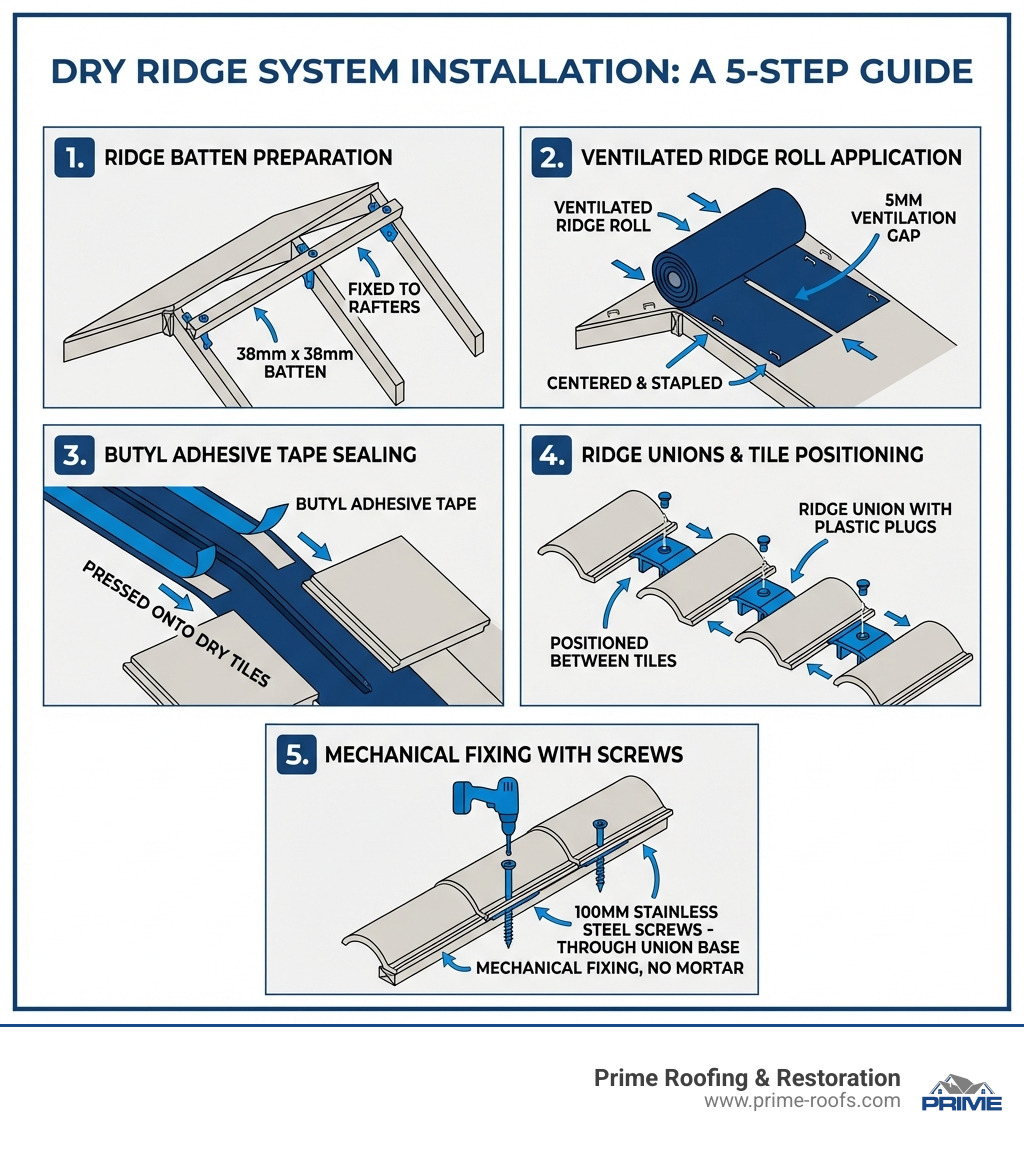
- Prepare the ridge batten – Install 38mm x 38mm battens securely along the ridge line
- Apply the ventilated ridge roll – Center and staple the roll, then peel the butyl tape backing
- Position ridge tiles – Place tiles over ridge unions with plastic plugs
- Secure with stainless steel screws – Use 100mm screws through the union base (never nails)
- Ensure proper ventilation – Maintain 5mm continuous airflow along the ridge
If you’ve ever dealt with a leaking ridge or watched mortar crumble after just a few Alabama winters, you already know the problem. Traditional mortar-based ridge installation requires specialist skills, cracks over time, and often comes with only a two-year guarantee. Dry ridge systems solve these issues by using mechanical fixings that flex with your roof, resist extreme weather, and typically carry a 10-15 year manufacturer warranty.
According to industry research, dry ridge systems provide 5mm of continuous ventilation along the roof ridge and deliver a net free ventilation area of 20,000mm²/m. This controlled airflow helps prevent moisture buildup, reduces attic temperatures, and protects your shingles from heat damage—critical benefits for Alabama homeowners facing humid summers and severe storm seasons.
Unlike mortar, which requires dry, warm conditions to cure properly, dry fix systems can be installed quickly in most weather conditions (as long as temperatures stay above 5°C or 40°F). They’re lightweight, easy to transport, and don’t require the messy mixing or heavy lifting associated with traditional methods. This means faster project completion, lower labor costs, and a roof system that accommodates the natural expansion and contraction of roofing materials.
I’m Bill Spencer, owner of Prime Roofing & Restoration, and over my years in the roofing industry across Alabama’s Gulf Coast, I’ve seen how dry ridge system installation transforms roof performance and longevity. Whether you’re building new or replacing an aging mortar ridge, understanding this modern approach will help you make informed decisions about protecting your home. If you need immediate assistance, call our team at 205-530-8111.
What is a Dry Ridge System?
A dry ridge system is a method of fixing ridge tiles to a roof peak using mechanical fasteners—screws, clamps, and unions—rather than traditional sand and cement mortar. While mortar has been the “old reliable” for centuries, it is inherently rigid. As your house settles or the Alabama heat causes your roof timbers to expand, mortar eventually cracks. Once it cracks, water gets in, and your ridge tiles become loose.
In contrast, a dry ridge system installation is designed to move with your home. It creates a “breathable” peak that meets BS 5250 compliance for moisture management. Proper attic ventilation is crucial for maintaining a durable roof, and these systems provide a continuous 5mm gap that allows hot, humid air to escape the attic space.
Comparison: Mortar vs. Dry Ridge Systems
| Feature | Traditional Mortar | Dry Ridge System |
|---|---|---|
| Fixing Method | Adhesive (Sand/Cement) | Mechanical (Screws/Clips) |
| Ventilation | None (unless vents added) | Continuous 5mm Airflow |
| Maintenance | High (re-pointing needed) | Virtually Maintenance-Free |
| Guarantee | Often 2 Years (Contractor) | 10-15 Years (Manufacturer) |
| Weather Resistance | Prone to frost/heat cracks | Resists wind uplift & thermal expansion |
| Installation Speed | Slow & weather-dependent | Fast & all-weather (above 5°C) |
By choosing a dry fix approach, you ensure your roof remains weathertight even during the high-wind events we often see in Orange Beach, AL. The mechanical nature of the system means wind uplift is virtually eliminated, as every tile is physically screwed into the roof structure.
Essential Tools and Materials for Dry Ridge System Installation
Before you climb onto the roof, you need to ensure you have a complete kit. Most manufacturers sell these as “Universal Dry Ridge Kits,” which take the guesswork out of roofing materials.
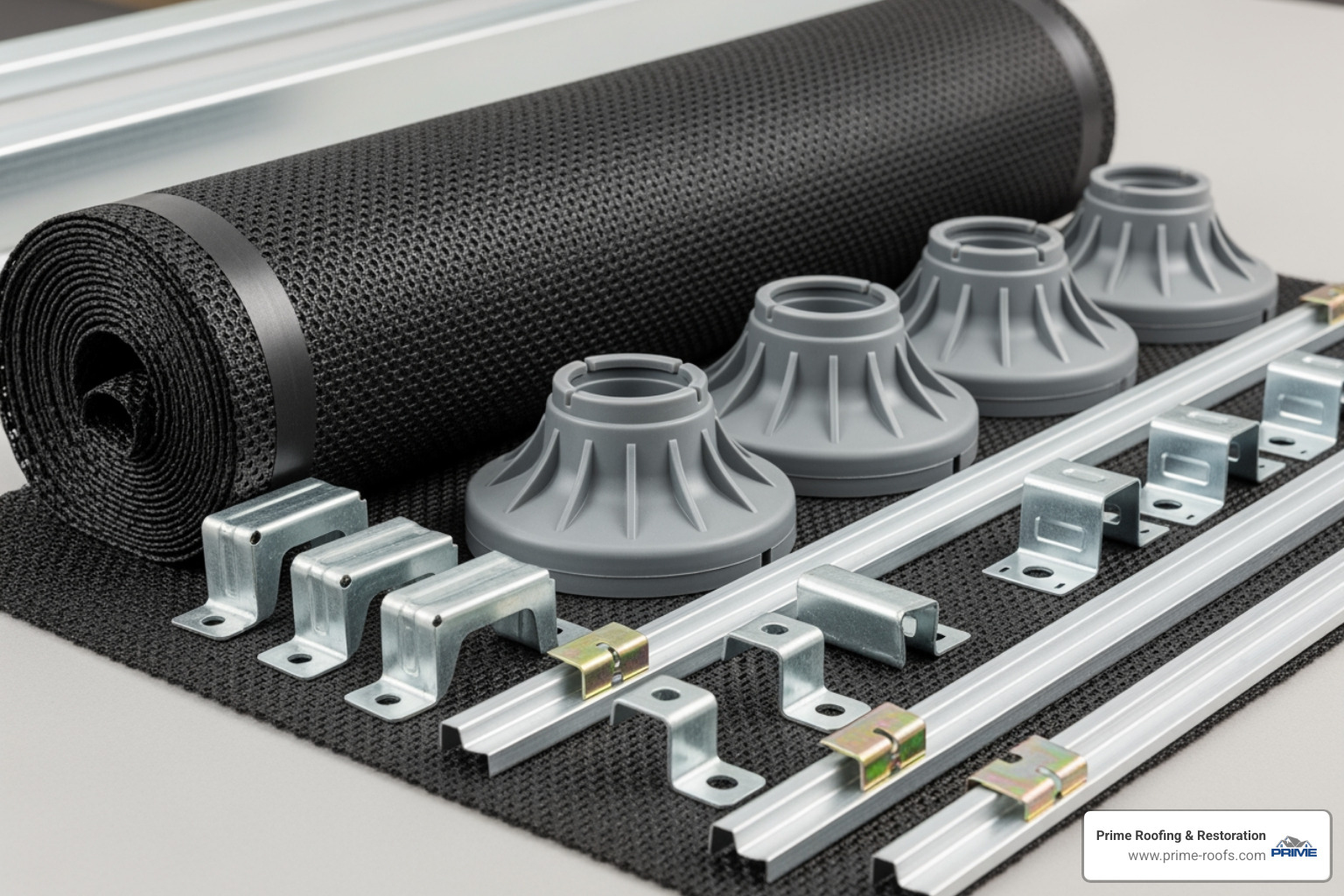
The core components include:
- Ventilated Ridge Roll: A 6-meter or 10-meter roll of water-resistant material with a net free ventilation area of 20,000mm²/m. It features butyl adhesive strips on the underside to bond to the tiles.
- Ridge Battens: Typically 38mm x 38mm timber battens that provide the anchor point for your screws.
- Batten Brackets (Ridge Trees): Galvanized steel brackets that hold the ridge batten at the correct height above the rafters.
- Ridge Unions & Seals: Plastic components that sit between ridge tiles to create a watertight joint.
- Stainless Steel Screws: 100mm screws with neoprene washers to prevent leaks at the entry point.
- Ridge Clips: Small metal or plastic clips that hook the edges of the tiles for extra security.
Required Tools:
- Hammer & Drill: For securing brackets and driving the 100mm screws.
- Measuring Tape: To ensure the ridge batten is at the perfect height.
- Builders Line: To keep the ridge perfectly straight across the roof.
- Safety Gear: A high-quality safety harness and sturdy ladder are non-negotiable.
Step-by-Step Guide to Installing a Dry Ridge System
Installing a dry ridge system is a systematic process. While it is faster than mortar, precision is key to ensuring the 5mm ventilation gap remains unobstructed.
1. Preparing the Roof and Ridge Battens
First, you must establish the height of your ridge. This is done using “ridge trees” or batten brackets.
- Fix the Brackets: Secure one bracket at each rafter or truss. You may need to bend the legs of the bracket to suit the pitch of your roof.
- Install the Batten: Push your 38mm x 38mm timber batten into the brackets. Use a builders line to ensure the batten is level across the entire length.
- Secure the Batten: Use stainless nails or screws to fix the batten to the brackets. Ensure at least 40mm of penetration into the wood for a secure hold. For more technical details on this phase, refer to Technical guidance on roll-out systems.
2. Applying the Ventilated Ridge Roll
The ridge roll is the “lungs” of your roof. It provides the weatherproofing layer while allowing air to circulate.
- Clean the Tiles: Ensure the top row of tiles is dry and free of dust. If the tiles are wet or the temperature is below 5°C (40°F), the butyl tape will not stick.
- Unroll and Center: Center the roll over the ridge batten. Secure it in place with staples or felt nails at 1-meter intervals.
- Adhere to Tiles: Peel off the protective backing from the butyl tape. Press the corrugated edges of the roll firmly into the profile of your tiles. This creates a watertight seal that prevents rain from blowing under the ridge.
- Overlap: If your ridge is longer than 6 meters, ensure a minimum 75mm overlap between rolls to maintain the barrier.
3. Securing Tiles with a Dry Ridge System Installation
This is where the mechanical fixing happens. Unlike mortar, which just sits on the tile, we are now clamping the tiles to the house.
- Position the First Tile: Place your first ridge tile (usually a full tile at the gable end) over the roll.
- Insert the Union: Slide a ridge union under the open end of the tile.
- Drive the Screw: Place the next ridge tile over the union. Insert a plastic plug into the center hole of the union and drive a 100mm stainless steel screw through the connector plate and into the ridge batten.
- Tighten Carefully: Tighten until the ridge tiles are firm and do not lift, but avoid over-tightening, which could crack the tile. DO NOT USE NAILS for this step; screws provide the necessary clamping force and allow for future repairs. For a deeper look at the full roofing process, see our home roof installation complete guide.
Handling Complex Roof Geometries: Hips, Gables, and Junctions
Not every roof is a simple straight line. When dealing with hips (the sloping ridges where two roof planes meet) or T-shaped junctions, the installation requires extra components.
- Hips: Use PVC hip trays to support the ridge tiles along the hip line. Ensure a 100mm lap on the trays as you work from the eaves upward.
- Cut Tiles: At junctions or valleys, you will often have small “sliver” tiles. Never place a cut tile at the very end of a ridge line. If a cut tile is less than 200mm long, use a “Kro Clip” or wire tie to secure it to the closest batten.
- Lead Saddles: At T-shaped or L-shaped intersections, a lead saddle must be installed to ensure a weathertight seal where the ridges meet. Follow Lead Sheet Association guidelines to ensure these are shaped correctly.
- Abutments: Where a ridge meets a vertical wall, turn the ridge roll up the wall by at least 70mm and finish with professional flashing.
If you are dealing with a complex roof structure in Alabaster, it’s often best to consult roofers near me in Alabaster, AL to ensure these tricky junctions don’t become leak points.
Common Mistakes and Maintenance Tips
Even with a “fast-fit” system, errors can happen. At Prime Roofing & Restoration, we often see these common pitfalls:
- Installing on Wet Tiles: If the tiles are damp, the adhesive on the ridge roll will fail within months. Always wait for a dry window.
- Using Nails Instead of Screws: Nails do not provide the “pull-down” force required to keep the unions tight. Always use the 100mm stainless screws provided in the kit.
- Blocking Ventilation: Ensure the underlay has a minimum 5mm gap at the ridge. If you pull the underlay tight over the peak, you negate the ventilation benefits.
- Neglecting Overlaps: Failing to overlap the ridge roll by at least 75mm can allow water ingress during heavy Alabama storms.
Maintenance Tips:
- Annual Inspection: While dry ridge systems are low maintenance, check for loose clips or debris every year.
- Check the Butyl Bond: Ensure the adhesive hasn’t lifted from the tile profile.
- Clear Blockages: Make sure leaves or moss aren’t blocking the 5mm ventilation gap.
For those in coastal areas, being storm ready means ensuring your mechanical fixings are tight before hurricane season hits.
Frequently Asked Questions about Dry Ridge Systems
Can I install a dry ridge system in the rain?
No. While the mechanical fixings (screws and clips) work in the rain, the butyl adhesive strip on the ventilated ridge roll requires a dry, dust-free surface to create a permanent, watertight bond with the roof tiles.
How much ventilation does a dry ridge system provide?
Standard systems are designed to provide 5mm of continuous ventilation along the entire ridge. This typically equates to a net free ventilation area of 20,000mm²/m, which significantly exceeds the requirements of BS 5250 for managing attic moisture.
Is a dry ridge system better than mortar?
Yes, in almost every measurable way. It is faster to install, requires significantly less maintenance, and accommodates the natural thermal expansion of the roof. Furthermore, dry ridge systems usually come with a 10-15 year guarantee, whereas mortar work may only be guaranteed for two years by most contractors.
Conclusion
Dry ridge system installation is the gold standard for modern, durable roofing. By eliminating the cracking and maintenance issues of mortar, you provide your home with a flexible, ventilated, and incredibly secure roof peak. At Prime Roofing & Restoration, we specialize in these advanced dry fix solutions to ensure your Alabaster or Orange Beach home is fully protected against the elements.
Whether you need a new installation, a repair of a crumbling mortar ridge, or assistance with insurance claims, our licensed experts are available 24/7 to assist. We pride ourselves on building lasting relationships and using only the highest quality materials to protect your family.
For a free estimate or to discuss your next roofing project, visit our office in Alabaster, AL today. Let us help you upgrade to a roof that breathes, flexes, and lasts.