
Does Home Insurance Cover Roof Damage? A Data-Backed Homeowner’s Guide
Home insurance does cover roof damage in many situations, but only when the cause is sudden and accidental rather than gradual wear. Industry data shows that severe weather events caused more than $9 billion in insured losses nationwide in 2024, nearly triple the prior year, and roofs are among the most frequently affected systems. For homeowners comparing options for professional roof repair and replacement services in Alabama, the core coverage details on our roofing services page explain how policies interact with real-world storm and hail damage.
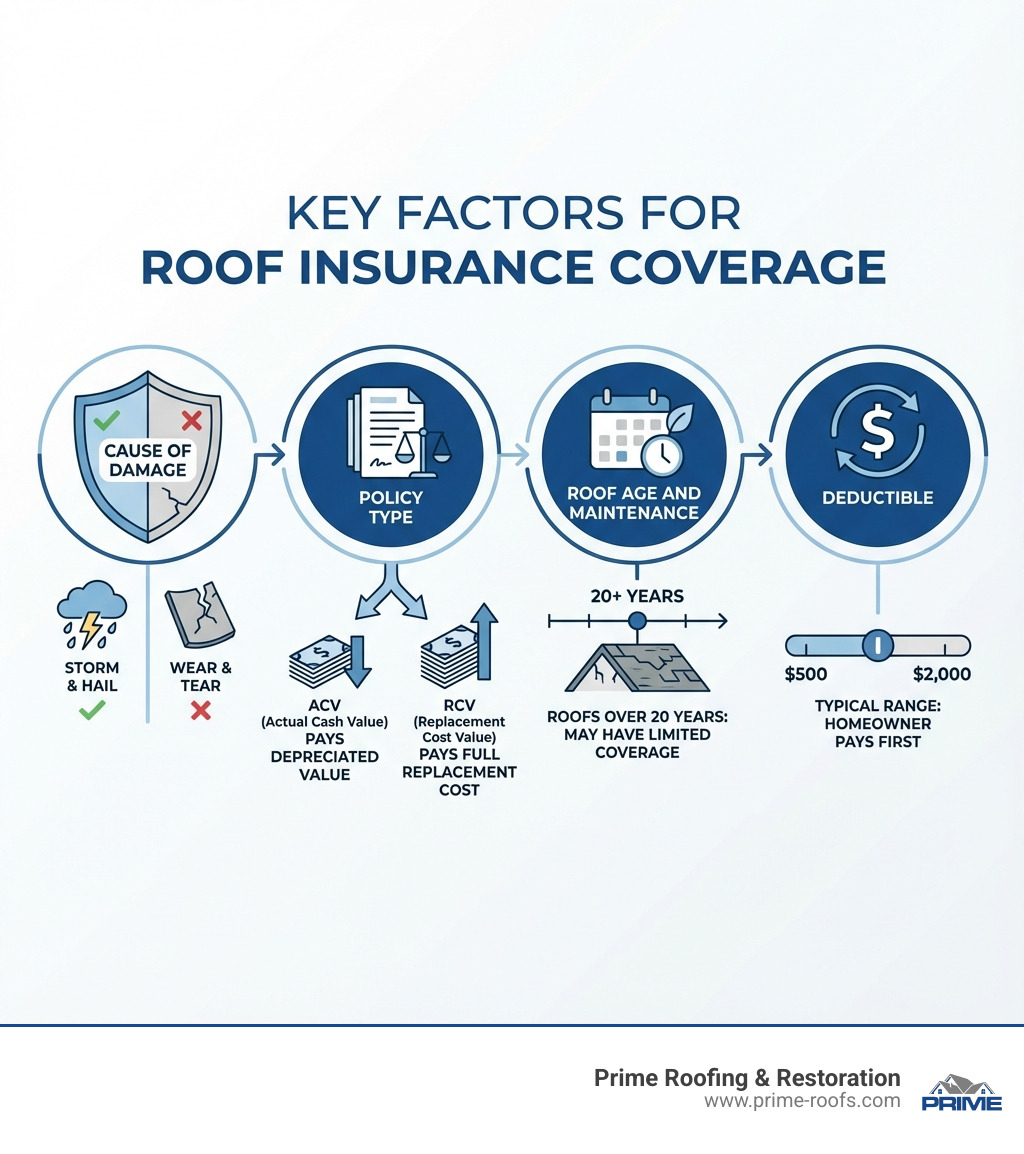
Here’s what you need to know:
- Covered: Sudden, accidental damage from windstorms, hail, fire, lightning, falling trees, and snow/ice weight
- Not Covered: Normal wear and tear, aging, poor maintenance, neglect, pest damage, floods, or earthquakes
- Coverage Type Matters: Replacement Cost Value (RCV) pays full replacement costs, while Actual Cash Value (ACV) deducts depreciation
- Your Deductible Applies: You’ll pay your deductible (typically $500-$2,000) before coverage kicks in
- Roof Age Impacts Claims: Roofs over 20 years old may have limited or no coverage
The most important factor is cause. Insurance covers sudden, accidental events, not gradual deterioration. A tree falling on your roof during a storm? Likely covered. Shingles slowly wearing out over 20 years? That’s on you.
When water damage and freezing account for 27.6% of all homeowners insurance claims, understanding your coverage isn’t optionalit’s essential. The average roof replacement costs $8,500, but re-roofing can exceed $10,000. Without the right coverage, you could face these costs entirely out-of-pocket.
However, your policy type, roof age, and maintenance history all affect claim approval and payout. Many homeowners find too late that their policy only provides partial payment due to depreciation, leaving them with major unexpected costs.
As Bill Spencer, Owner of Prime Roofing & Restoration, I’ve guided hundreds of Alabama homeowners through this complex process. My team works with adjusters to ensure our clients get fair settlements and high-quality repairs. Navigating the fine print of your policy can be difficult, but with expert insurance claims assistance, you can protect your home and finances.
So, Does Home Insurance Cover Roof Damage? Covered vs. Excluded Perils
The fundamental principle behind whether does home insurance cover roof damage revolves around the cause of the damage. Insurance policies are designed to protect you from sudden, unexpected events, often referred to as “perils.” They are not designed to cover the natural aging process or issues arising from a lack of upkeep. This distinction is crucial for every homeowner in Alabama to understand.
What’s Typically Covered by Home Insurance
When we talk about covered perils, we’re referring to events that are sudden, accidental, and often beyond your control. These are the scenarios where your homeowners insurance is most likely to step in and help with roof repairs or replacement.
- Sudden and Accidental Damage: This is the core principle. Damage from an unexpected event is generally covered. This can include resulting interior water damage from a covered roof leak, provided your policy has the appropriate endorsements.
- Windstorms: Damage from high winds that rip off shingles, damage flashing, or cause other structural issues is typically covered. This includes wind damage during blizzards or other severe weather.
- Hail Damage: Hailstorms can cause significant damage, from denting metal roofs to cracking asphalt shingles. Even if not immediately visible, hail can compromise your roof’s integrity. Hail Damage Roof Repair is usually a covered peril.
- Falling Objects: This often includes trees or limbs falling onto your roof during a storm. If a heavy branch causes structural damage, your insurance will likely cover the repairs.
- Fire and Lightning: As classic examples of sudden, catastrophic events, roof damage from fire or lightning is almost always covered.
- Weight of Snow and Ice: Standard home insurance policies cover roof damage from winter storms, including collapse due to heavy snow and issues caused by ice dams. If snow causes a collapse, damage to both the roof and property inside is typically covered. If you need assistance after a weather event, our team offers comprehensive Storm Damage Repair Services. For more detailed guidance, check out What to Do After a Storm Damages Your Roof.
Common Exclusions: When You’re Not Covered
It’s equally important to understand what your policy typically doesn’t cover. These exclusions often stem from the homeowner’s responsibility to maintain their property.
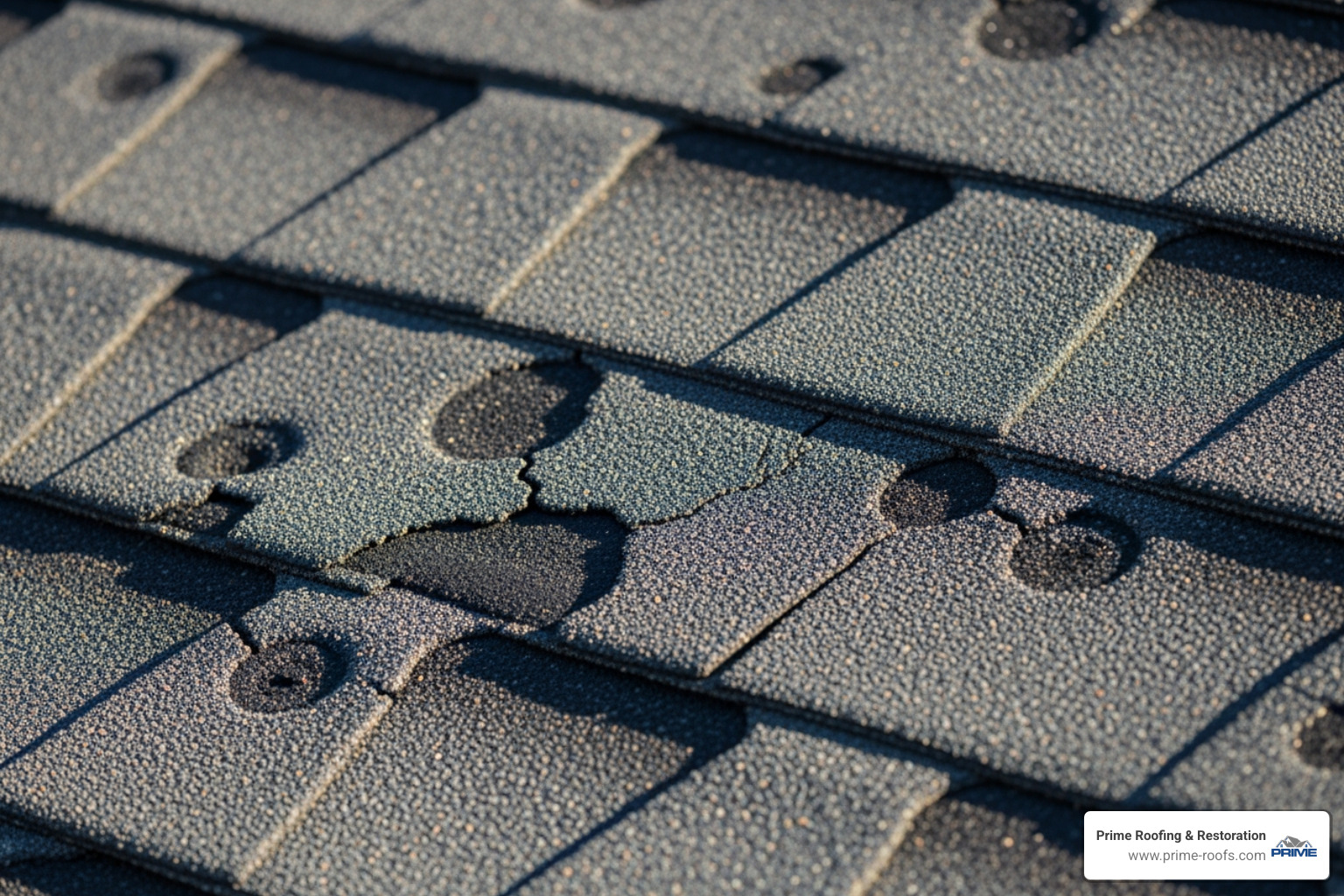
- Wear and Tear: Every roof has a lifespan (e.g., asphalt shingles 15-30 years, metal roofs 40-70 years). Damage from natural degradation due to age is considered wear and tear and is not covered.
- Neglect and Poor Maintenance: If damage could have been prevented by routine upkeep, your insurer will likely deny the claim. This includes issues like clogged gutters causing water damage or failing to repair known minor leaks.
- Old Age: If your roof is simply too old (often over 20 years for asphalt shingles), insurance companies may offer limited (ACV) or no coverage for replacement.
- Pest or Animal Damage: Damage from rodents, birds, or insects is typically considered a preventable maintenance issue and is usually excluded.
- Faulty Workmanship or Materials: If your roof was installed incorrectly or the materials were defective, this falls under the contractor’s or manufacturer’s warranty, not your home insurance.
- Floods and Earthquakes: Standard policies explicitly exclude damage from floods and earthquakes. These perils require separate, specialized insurance policies.
- Intentional Damage: Any damage you intentionally cause to your roof will not be covered.
- Mould and Rot (from gradual leaks): While mould from a sudden, covered leak might be covered, mould from long-term, unaddressed moisture is typically excluded as a maintenance issue.
Understanding these exclusions is just as important as knowing what’s covered. If you’re unsure about your roof damage, consult a reputable roofing contractor for an assessment. Knowing the 5 Signs You Need Roof Replacement can also save you headaches down the road.
The Money Question: ACV, RCV, and Your Out-of-Pocket Costs
Now that we understand what does home insurance cover roof damage, let’s talk about how much your insurance might actually pay. This is where Actual Cash Value (ACV) and Replacement Cost Value (RCV) become critical. The average cost to install a new roof is around $8,500, and re-roofing can exceed $10,000, so your policy type matters significantly.
Actual Cash Value (ACV) vs. Replacement Cost Value (RCV)
The type of coverage you have dramatically impacts your payout from an insurance claim, a common issue for homeowners in Alabama facing high repair costs.
- Actual Cash Value (ACV): This policy pays the cost to replace your roof minus depreciation. Depreciation is a reduction in value due to age and wear. ACV pays for the value of your roof at the time of damage, not the cost of a new one.
- Example: A 15-year-old roof (30-year lifespan) costs $20,000 to replace. An ACV policy might say it’s 50% depreciated, paying only $10,000 (minus your deductible). You’d owe the remaining $10,000.
- Replacement Cost Value (RCV): This is the gold standard. An RCV policy pays the full cost to replace your damaged roof with a new one of similar quality, without deducting for depreciation. You typically receive an initial payment (ACV), then a second payment once repairs are complete.
- Example: With the same $20,000 roof replacement, an RCV policy would pay the full $20,000 (minus your deductible), ensuring you’re not left with major out-of-pocket costs.
Here’s a quick comparison:
| Feature | Actual Cash Value (ACV) | Replacement Cost Value (RCV) |
|---|---|---|
| Definition | Pays for the depreciated value of the damaged roof. | Pays for the cost to replace the damaged roof with new materials. |
| Payout Calculation | Replacement Cost – Depreciation = Payout (minus deductible) | Full Replacement Cost = Payout (minus deductible) |
| Impact of Depreciation | Significant reduction in payout due to roof age and condition. | No reduction for depreciation; covers full cost of new roof. |
| Best For | Lower premiums, but higher out-of-pocket costs for replacement. | Comprehensive protection, lower out-of-pocket costs for replacement. |
Most homeowners prefer RCV coverage for a more complete financial recovery. If you have an ACV policy, consider discussing an upgrade to RCV with your provider. This is especially important if you need to file a claim and require comprehensive help with the insurance claims process. You can learn more about this by visiting Does Home Insurance Cover Roof Replacement?.
Understanding Deductibles and Premium Increases
Two other financial factors play a huge role in your roof claim: your deductible and the potential impact on your premiums.
- Deductible Definition: A deductible is the out-of-pocket amount you pay before your insurance coverage kicks in. It typically ranges from $500 to $2,000.
- How Deductibles Work: If your roof repair costs $7,000 and your deductible is $1,000, your insurer pays $6,000 (assuming a covered RCV claim). You pay the first $1,000.
- Standard vs. Separate Deductibles (Wind/Hail): In areas like Alabama, insurers may apply separate, higher deductibles for wind or hail. For example, you might have a 1% deductible for wind damage, which would be $3,000 on a home insured for $300,000. Always check your policy for these clauses.
- Impact on Premiums: Filing a claim can potentially increase your premiums upon renewal. While one claim might not have a major impact, multiple claims can lead to higher rates. If the repair cost is only slightly above your deductible, it may be more cost-effective to pay out-of-pocket. For more insights, Progressive offers some good answers on Does homeowners insurance cover roof damage?.
The Claims Process: A Step-by-Step Guide to Getting Your Roof Covered
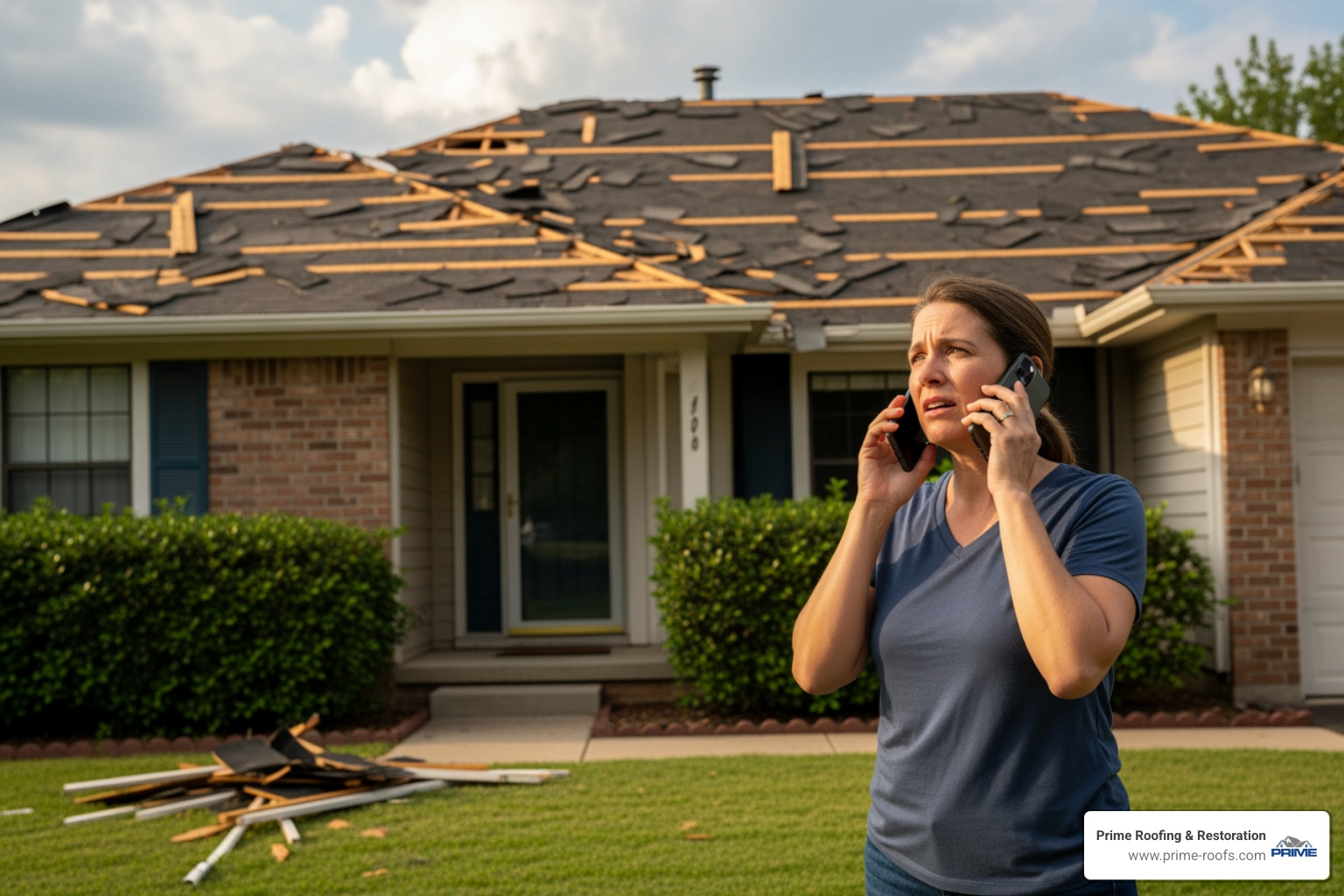
When your roof is damaged, navigating the insurance claims process can be daunting. With a clear plan, it doesn’t have to be. We’ve helped countless homeowners in Alabaster, Hoover, and throughout Alabama manage this process smoothly.
Step 1: Emergency Mitigation and Damage Documentation
Your first priority is safety and preventing further harm to your home.
- Safety First: Prioritize your family’s safety. Never go onto a damaged roof yourself; it’s extremely dangerous.
- Temporary Repairs: If safe, cover damaged areas with a tarp to prevent further water damage. Keep all receipts for materials, as these costs are often reimbursable.
- Photo and Video Evidence: Before any cleanup, document everything. Take clear, dated photos and videos of all damage, including the roof, interior stains, and personal property. More evidence strengthens your claim.
- Detailed Notes: Write down the date and time of the damage, weather conditions, and other relevant details. This information is vital for your insurer. For severe weather events, we’re here to help with Hail Damage Roof Repair and other storm-related damages.
Step 2: Review Your Policy and Contact Your Insurer
A little preparation before you call can go a long way.
- Policy Review: Find your homeowners policy and review the sections on dwelling coverage, perils, and roof clauses (ACV vs. RCV). Note your deductible, especially any specific wind/hail deductibles.
- Filing Deadlines: Policies have time limits for filing claims. Contact your insurer promptly to avoid having your claim denied for late filing.
- Contacting Your Agent: Reach out to your insurance agent or claims department with the damage details and your documentation. They will open a claim and guide you. For assistance with the entire process, including Getting a Roof Replaced on Insurance, our team is here to help.
Step 3: The Adjuster Inspection and Choosing Your Contractor
This step involves the insurance company’s assessment and your choice of repair professionals.
- Scheduling the Adjuster: Your insurer will send a claims adjuster to assess the damage and estimate repair costs.
- Being Present for Inspection: We highly recommend you and a reputable roofing contractor are present during the adjuster’s inspection. This ensures all damage is noted and you have an advocate on your side.
- Getting Multiple Estimates: You are not obligated to use your insurer’s preferred contractors. Get at least two to three detailed estimates from licensed, local roofing companies to ensure a fair price. Our team can provide a detailed Roof Repair Estimate that accurately reflects the needed work.
- Choosing Your Own Roofer: You have the right to choose your roofer. Select a contractor with a strong reputation and experience with insurance claims. Beware of door-to-door contractors after storms, as roofing scams are common. Always verify licenses and insurance.
Step 4: What to Do If Your Claim Is Denied
A denied claim isn’t always the final word.
- Common Reasons for Denial: Claims are often denied due to lack of documentation, uncovered perils (like wear and tear), pre-existing issues, late filing, poor maintenance, or damage costs falling below your deductible.
- Reviewing the Denial Letter: Carefully read the denial letter. It must state the specific reason and cite the relevant policy language. This is critical for an appeal.
- Appealing the Decision: If you believe your claim was wrongly denied, you have the right to appeal.
- Gather More Evidence: Get a detailed report from an independent roofing contractor explaining the cause of damage and refuting the insurer’s assessment.
- Submit a Formal Appeal: Write to your insurer explaining why the claim should be covered, referencing your policy and including all supporting documents.
- Consider a Public Adjuster: A public adjuster works for you, not the insurance company, to negotiate on your behalf.
- Legal Consultation: For large or complex claims, consulting an attorney specializing in insurance law may be necessary.
We offer comprehensive Insurance Claims Assistance to help you steer these complex situations and advocate for your best interests.
Proactive Protection: Roof Maintenance, Age, and Lowering Premiums
The condition of your roof before damage occurs plays an enormous role in whether does home insurance cover roof repairs and how much you’ll receive. Insurers view a well-maintained, newer roof as less of a risk, which can translate into better coverage and even lower premiums for homeowners in Alabama.
How Roof Age and Maintenance History Affect Coverage
Your roof’s age and maintenance history are two of the most critical factors insurance companies consider.
-
Roof Lifespan: Different roofing materials have varying lifespans that insurers use to assess risk:
- Asphalt Shingles: 15-30 years.
- Metal Roofs: 40-70 years.
- Slate Roofs: 75-100+ years.
- Tile (Clay/Concrete): 50-100 years.
- Wood Shingles/Shakes: 20-40 years.
- Flat Roof Materials (e.g., PVC): 20-30 years.
If your roof is near or past its expected lifespan (e.g., over 20 years for asphalt), insurers may only offer ACV coverage or deny coverage altogether.
- Maintenance Records: Keeping detailed records of inspections, repairs, and cleaning is invaluable when filing a claim. This documentation proves you’ve been proactive, strengthening your case against claims of neglect.
- Insurer Risk Assessment: Insurance companies continuously assess risk. A newer roof presents a lower risk, potentially leading to premium discounts. Conversely, an older roof is a higher risk, which can result in higher premiums or limited coverage. You can often Compare Rates and see how roof age impacts your premiums. Regular roof inspections are key to staying ahead of potential issues.
Preventative Tips to Protect Your Roof and Your Policy
The best defense against a denied insurance claim is a well-maintained roof. Proactive steps extend your roof’s lifespan and show your insurer you’re a responsible homeowner.
- Regular Inspections: We recommend professional roof inspections at least once a year, especially after severe weather, to spot minor issues before they become major problems.
- Clean Gutters: Regularly clear gutters and downspouts to prevent water backup, which can cause rot, ice dams, and leaks.
- Trim Trees: Cut back overhanging branches to prevent debris accumulation and reduce the risk of falling limbs during storms.
- Attic Ventilation Checks: Ensure your attic is properly ventilated to prevent heat and moisture buildup, which can prematurely age roofing materials and lead to mould.
- Prompt Minor Repairs: Address small issues like a loose shingle or cracked flashing immediately. Ignoring minor damage can lead to more extensive problems that insurers may attribute to neglect. To keep your roof in its best possible shape, inspect it regularly and address any maintenance and repairs quickly.
Frequently Asked Questions about Roof Insurance
We hear a lot of questions from homeowners in Alabama about their roof coverage. Here are some of the most common ones:
Does home insurance cover roof leaks?
Yes, home insurance typically covers a roof leak and the resulting water damage, but only if the leak was caused by a sudden, covered event like a storm, hail, or a falling tree. If your roof leaks because it’s old, worn out, or hasn’t been properly maintained, your insurance will generally not cover the damage. Water damage and freezing accounted for 27.6% of claims filed by homeowners in 2022, highlighting how common these issues are. The average roof leak repair costs between $360 and $1,550.
Will a new roof lower my home insurance?
Yes, a new roof often lowers your home insurance premium. Insurers see a new roof as lower risk for future claims like leaks or wind damage. Discounts can range from 5% to 35% depending on the materials used and your provider. For example, homes with a brand new roof can pay, on average, 19% less for insurance than those with a 20-year-old roof. Durable materials like metal roofs, which can last 40-70 years, are often seen as even lower risk and can lead to greater savings.
Can I choose my own roofing contractor for an insurance claim?
Absolutely. While your insurance company may provide a list of preferred contractors, you have the right to choose your own licensed and insured roofer. It’s wise to select a contractor experienced with the insurance claims process. A reputable local contractor, like us, can work directly with your insurance adjuster to ensure all damages are properly assessed and that you receive a fair settlement for quality repairs.
Secure Your Home with an Expert on Your Side in Alabaster, AL
Ultimately, whether does home insurance cover roof damage is a complex question. The answer hinges on a combination of critical factors: the specific cause of the damage, your policy’s fine print (ACV vs. RCV), the amount of your deductible, and your roof’s age and maintenance history. While sudden storm damage from wind or hail is often covered, problems that arise from neglect, poor maintenance, and old age are almost always the homeowner’s financial responsibility.
Navigating this intricate process alone can be overwhelming and may lead to a denied claim or an insufficient settlement. Partnering with an experienced, local team like Prime Roofing & Restoration provides you with an expert advocate from the initial inspection to the final repair. We understand the nuances of insurance policies and work tirelessly with adjusters to secure the best possible outcome for your claim, ensuring your home is protected with superior craftsmanship and materials.
If you’re in Alabaster, Hoover, or the surrounding Shelby and Jefferson County areas and are dealing with roof damage, don’t wait for the problem to worsen. Contact our team for a comprehensive inspection and expert insurance claims assistance. Let us help you protect your most valuable asset.
Prime Roofing & Restoration
1234 Main Street
Alabaster, AL 35007
(205) 555-0123
Visit our roofers near me in Alabaster, AL page to learn more about our local services or call us today for immediate assistance.