
Roofing Emergency Leaking: Act in 60 Minutes to Prevent Major Damage
A roofing emergency leaking event is more than just an inconvenience; it’s an active water intrusion that poses an immediate and escalating threat to your home’s structural integrity, your family’s safety, and your financial stability. The moment you see water dripping from your ceiling or running down a wall, a critical 60-minute window opens. Your actions within this first hour can mean the difference between a manageable repair and a catastrophic failure involving tens of thousands of dollars in damage. For fast, local support, you need trusted emergency roofing services to stop the leak, stabilize the area, and prevent the devastating domino effect of uncontrolled water. Unchecked, a single leak can lead to rapid mold growth in as little as 24 hours, irreversible damage to insulation, and the dangerous weakening of wooden framing and roof decking. The faster you respond, the more of your home’s structure and valuable contents you can save.
Key Signs of a Roofing Emergency
Recognizing a true emergency is the first step. Do not hesitate to call for professional help if you observe any of the following:
- Multiple Active Leaks: Water appearing in several spots simultaneously indicates a significant, widespread failure of your roofing system, not an isolated issue. This could be due to extensive storm damage or the failure of an aging roof.
- Sagging or Bulging Ceilings: A droop or bulge in your drywall or plaster ceiling is a terrifying sight for a reason. It signifies that a large volume of water has accumulated and is being held back only by the thin ceiling material. The weight is immense (a gallon of water weighs over 8 pounds), and a sudden, messy collapse is imminent.
- Water Near Electrical Outlets or Fixtures: This is the most dangerous sign, creating a severe risk of electrocution or an electrical fire. Water and electricity are a deadly combination that can cause short circuits and ignite surrounding building materials. Shut off power to the affected area immediately.
- Significant Shingle or Material Loss After a Storm: If you can see large patches of your roof’s underlayment or decking from the ground, or if your yard is littered with shingles, your home is exposed to the elements. The next rainfall will pour directly into your attic and home.
- Visible Structural Damage or a Punctured Roof: A hole in your roof from a fallen tree limb, collapsed chimney, or other impact is a clear and present emergency. It’s a direct gateway for water, pests, and further structural compromise.
Immediate Actions to Take: Your Emergency Checklist
- Prioritize Safety: Turn Off Electricity. Before you do anything else, go to your breaker box and shut off the power to all affected rooms and any circuits near the leak.
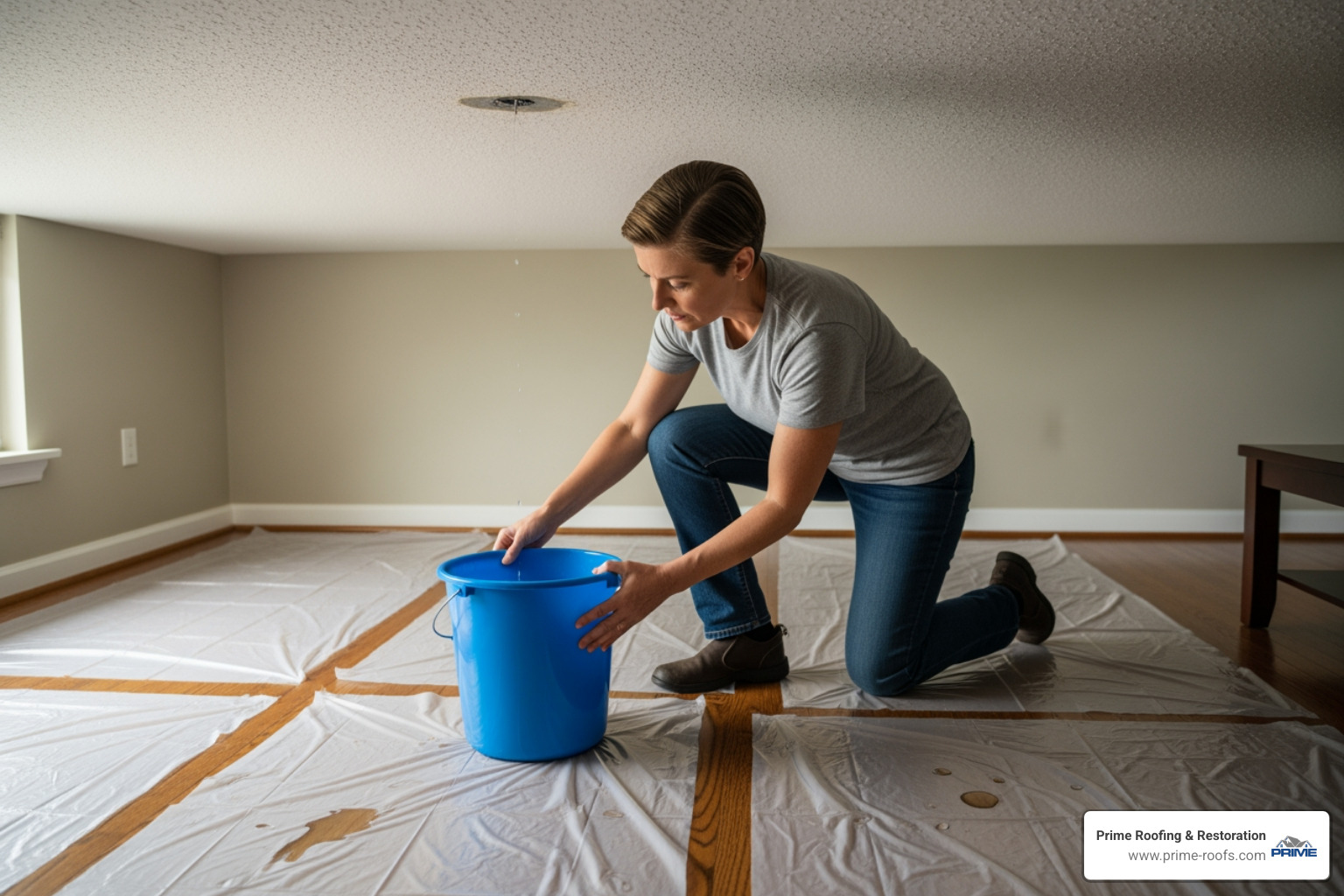
- Contain the Water: Place Buckets and Tarps. Place buckets, trash cans, or other waterproof containers directly under every leak. Use old towels or tarps to protect your floors from splashes.
- Protect Your Belongings: Move furniture, electronics, rugs, and any other valuables out of the affected area. If an item is too heavy to move, cover it securely with thick plastic sheeting.
- Document the Damage: Use your smartphone to take clear photos and videos of the active leaks, the water damage to ceilings and walls, and the damaged belongings. This evidence is crucial for your insurance claim.
- Call a 24/7 Emergency Roofing Contractor: Do not delay. Contact a professional with a dedicated emergency response team. A reputable 24/7 emergency roofing contractor can dispatch a team to perform a temporary repair, like tarping, to prevent further damage.
- Notify Your Insurance Provider: Once the immediate situation is stabilized, call your insurance company to open a claim. Inform them of the situation and the emergency measures you have taken.
In approximately 30% of roof leak cases, a permanent repair can be completed on-site during the initial emergency visit, but this is only possible if the conditions are safe and the damage is accessible. An immediate professional response is always the most critical factor in mitigating the outcome.
I’m Bill Spencer, owner of Prime Roofing & Restoration. With over five years of dedicated, hands-on experience serving communities across Central Alabama and the Gulf Coast, my team and I have built our reputation on rapid, reliable emergency response. We don’t just fix roofs; we restore homes and peace of mind. We specialize in storm damage assessment, navigating the complexities of the insurance claims process, and ensuring every homeowner we serve can get their life back to normal quickly and correctly. We are your neighbors, and we’re here to help you weather the storm.
Is It a Roofing Emergency or a Minor Leak? A Homeowner’s Guide
Not every drip or water spot signifies a five-alarm crisis, but understanding the critical difference between a minor issue and a full-blown roofing emergency leaking situation can save you thousands of dollars, prevent structural damage, and protect your family’s health. A true emergency involves an active, uncontrolled leak that directly compromises your home’s structure or electrical safety, demanding an immediate, professional response. Other issues, while still serious, can often be scheduled for a prompt inspection and repair without the need for a middle-of-the-night call. This guide will help you assess the severity and determine the right course of action.
| Emergency Signs (Call a 24/7 Roofer Now!) | Warning Signs (Schedule an Inspection This Week) |
|---|---|
| Multiple active leaks or a steady stream of water | A single, slow, intermittent drip |
| A sagging, bulging, or cracking ceiling | A small, isolated water stain that is not growing |
| Visible structural damage (e.g., a hole in the roof) | A few missing granules in your gutters or downspouts |
| Water dripping near or from electrical fixtures/outlets | Clogged gutters that are not yet causing an active leak |
| Significant shingle/tile loss after a storm | A handful of cracked or curled shingles (no active leak) |
| A fallen tree limb or large debris on the roof | Minor moss, algae, or lichen growth on shingles |
| Pests (raccoons, squirrels) actively entering the attic | Superficial dings or dents from a hailstorm (no active leak) |
Anatomy of a True Roofing Emergency
An emergency leak is defined by the immediate threat it poses to your home and family. If you witness any of these signs, it’s time to act decisively.
- Visible and Active Water Intrusion: Water that is actively dripping, streaming, or pouring into your living space is an undeniable emergency. Multiple leak points suggest a systemic failure of your roof’s defenses, and repair costs can multiply with every passing hour as more materials become saturated.
- Sagging or Collapsing Ceiling: A bulge in your ceiling is a sign of a large, hidden reservoir of water. Drywall and plaster are not designed to bear this load. A gallon of water weighs 8.34 pounds, and a sagging ceiling could be holding back 10, 20, or even 50 gallons. The risk of a sudden, catastrophic collapse is extremely high. Evacuate the area directly beneath the bulge and call for help immediately.
- Water Interacting with Electrical Systems: This is a life-threatening hazard. Water is an excellent conductor of electricity. If you see it dripping from a light fixture, running down a wall near an outlet, or hear crackling sounds, you are at risk of an electrical fire or electrocution. Your first move must be to shut off the power at the breaker box before doing anything else.
- Significant Storm Damage: High winds from a hurricane or severe thunderstorm can tear entire sections of shingles off your roof, leaving the vulnerable underlayment exposed. Large hail can pulverize shingles, creating hundreds of fracture points. If a recent storm has visibly scarred your roof, it’s an emergency, even if water hasn’t appeared inside yet. Our guide on 5 Signs You Need Roof Replacement can help you perform a safe, ground-level assessment.
- Major Structural Damage: A punctured roof from a fallen tree, a visibly warped or broken roof deck, or any hole you can see daylight through is an emergency of the highest order. This requires an immediate response to prevent massive water intrusion and further structural compromise.
- Pest Infestation via the Roof: If you hear or see animals like raccoons, squirrels, or opossums entering your attic, it’s not just a pest problem—it’s a roofing emergency. These animals don’t gently lift shingles; they tear holes, creating significant entry points for rain and snow.
When a Leak Can Wait (But Not for Long)
Some roofing issues are less urgent but still require prompt attention to prevent them from escalating into emergencies. These are serious warnings that should not be ignored.
- A Single, Slow Drip or a Small Water Stain: A small, discolored spot on your ceiling or a drip that only appears during heavy, wind-driven rain is a warning shot. While you may not need a 2 a.m. call, you should contain the drip and schedule a professional inspection as soon as possible. Left unaddressed, this will inevitably worsen.
- Excessive Granule Loss: The sandpaper-like granules on asphalt shingles are their primary defense against UV rays and weather. Finding a few in your gutters is normal, but if you see large accumulations, it means your shingles are nearing the end of their lifespan and becoming brittle. It’s time to start planning for maintenance or replacement, as explained in our guide on How Often Do Roofs Need to Be Replaced?.
- A Few Damaged or Missing Shingles: If you can spot a few cracked, curled, or missing shingles from the ground but there’s no active leak, you have a vulnerability. A strong gust of wind or a heavy downpour could turn this minor issue into a major leak. A quick, professional repair can prevent a future emergency.
Remember, even a seemingly minor leak can allow enough moisture to saturate wood and insulation, leading to mold growth in just 24 to 48 hours. If you see any of these signs, whether it’s an emergency or a warning, call us at (205) 684-7663 to have our experts assess the urgency and deploy the right solution to protect your home.
Your First 60 Minutes: Immediate Steps for a Leaking Roof
When you discover a leak, the clock starts ticking. The actions you take in the first hour are the most powerful form of damage control, significantly reducing the overall destruction and cost of the incident. Your goals are simple: ensure safety, control the water, and document the event until professionals arrive. Safety is the absolute first priority. Do not take any risks that could endanger yourself or your family.
Step 1: Prioritize Safety and Contain the Water
Before you grab a bucket, perform a quick safety assessment. If water is dripping from or near any light fixtures, electrical outlets, or smoke detectors, go directly to your home’s breaker box. Flip the circuit breaker for that entire area to the ‘OFF’ position. If you are unsure which breaker corresponds to the area, it is safest to turn off the main breaker, cutting power to the whole house. This single action can prevent a catastrophic electrical fire.
Next, begin aggressive water containment.
- Place Containers: Position buckets, pots, or even sturdy trash cans under every drip. If the dripping is noisy, you can place a small towel at the bottom of the bucket to muffle the sound or tie a string from the ceiling drip point to the bucket, allowing water to run silently down the string.
- Protect Floors and Furniture: Lay down old towels, blankets, or plastic tarps to catch splashes and prevent water from spreading across your floor. Water can quickly warp hardwood, delaminate vinyl, and saturate carpets and padding, leading to subfloor damage.
- Move Valuables: Immediately move all furniture, electronics, artwork, and other personal belongings out of the affected area. If an item is too large or heavy to move, cover it completely with a heavy-duty plastic tarp, securing it with tape if necessary.
Pro Tip: Dealing with a Ceiling Bulge: If you see a sagging bulge in your ceiling, it’s a water-filled blister on the verge of bursting. A controlled release is far better than a sudden collapse. If you can do so safely (away from any electrical wiring), place a large bucket or trash can beneath the lowest point of the bulge. Use a screwdriver or a sharp tool to carefully puncture a small hole in the center of the bulge. This will allow the water to drain in a controlled manner, relieving the immense pressure on the ceiling. For more detailed guidance, consult an expert guide on handling roofing emergencies before proceeding.
Step 2: Document Everything for Your Insurance Claim
While the water is being contained, start documenting. Meticulous documentation is your most powerful tool for a smooth and successful insurance claim. Insurers require proof of loss, and your initial evidence is invaluable.
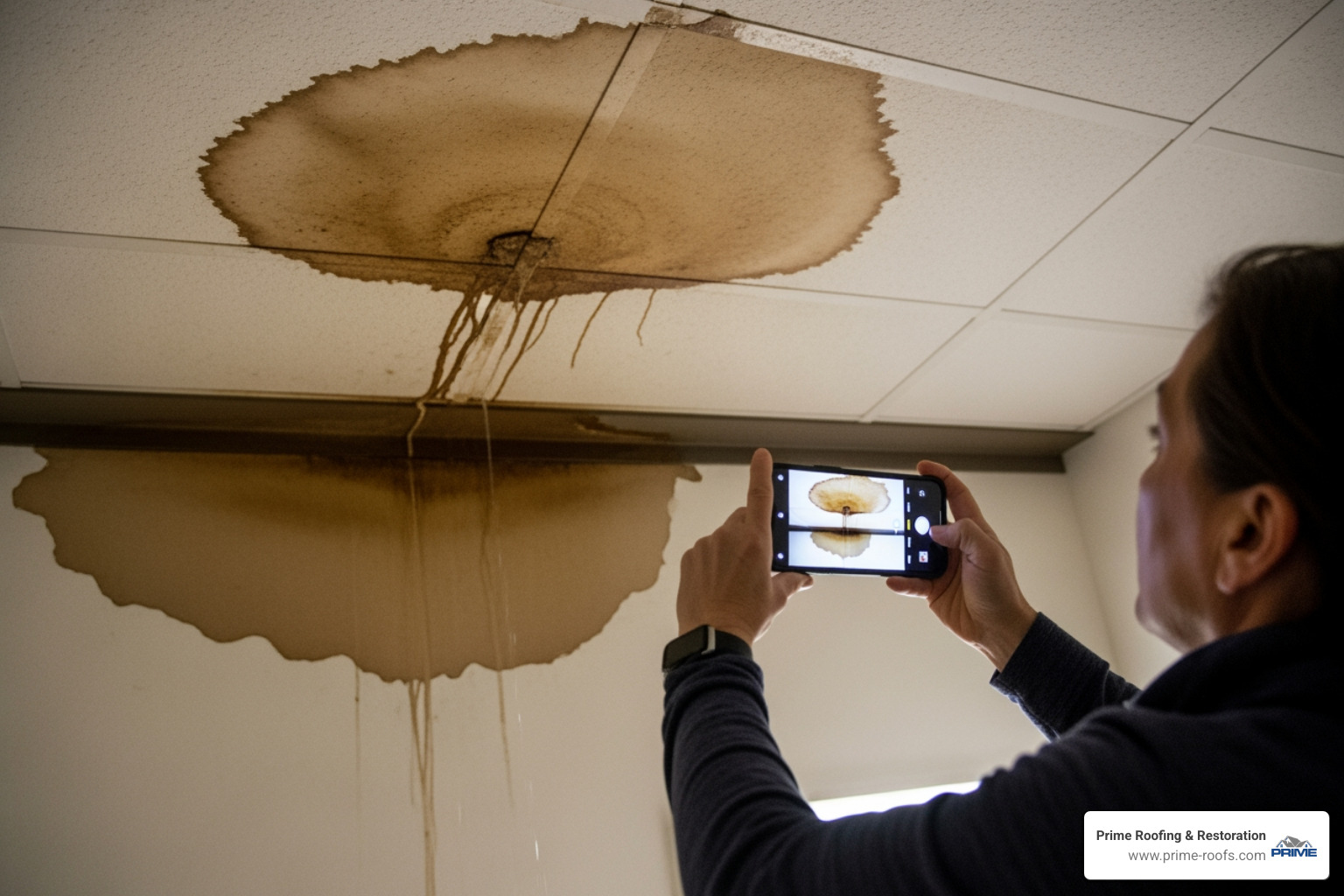
Use your smartphone to take timestamped photos and videos of everything:
- The Source: Capture the active drips and streams of water coming from the ceiling.
- The Damage: Photograph the water stains, peeling paint, sagging drywall, and any damage to your floors.
- Affected Property: Take pictures of any damaged furniture, electronics, or personal items.
- Scale: Place a ruler or tape measure next to stains or damage to provide a sense of scale for the adjuster.
- Exterior (If Safe): After the storm has passed and it is safe to go outside, photograph the exterior of your roof, showing any visible damage like missing shingles or fallen limbs.
In addition to photos, create a written log. Note the date and time you discovered the leak, the weather conditions, and a running inventory of all damaged items. Keep all receipts for any temporary supplies you purchase, such as tarps, buckets, or cleaning materials, as these are often reimbursable. Our Insurance Claims Assistance Complete Guide provides a comprehensive checklist of what your insurer will need.
Step 3: Attempt a Temporary Fix (Only If It Is 100% Safe)
This step comes with a critical warning: Never get on a roof during a storm, in high winds, at night, or if the surface is wet, snowy, or icy. Your safety is not worth the risk. These are temporary measures to buy time until a professional can arrive.
- Interior Fix (Attic Access): If you can safely access your attic, locate the source of the leak. It may be far from where the water is appearing downstairs. Look for wet insulation, dark stains on the underside of the roof deck, or a visible drip. If you find it, you can staple a large piece of heavy-duty plastic sheeting or a tarp to the rafters above the leak. Angle the plastic so that it creates a channel, directing the water down into a large, dedicated bucket. Check this bucket frequently.
- Exterior Tarping (Post-Storm): This is the most effective temporary solution but also the most dangerous to perform yourself. After a storm has completely passed and the roof is dry and safe to walk on, you can cover the damaged area with a heavy-duty waterproof tarp. The tarp should be large enough to extend several feet past the damaged area on all sides. Secure it firmly not with nails, but with 2×4 boards wrapped in the edges of the tarp and then nailed or screwed to the roof deck. This method prevents wind from getting under the tarp and tearing it loose. Our Emergency Tarping Complete Guide has detailed, step-by-step instructions. However, for safety and effectiveness, we strongly recommend professional tarping, which typically costs between $300 and $600 and is a covered expense in most insurance claims.
The Hidden Dangers: Why You Can’t Ignore a Roofing Emergency Leaking
Delaying professional repairs on a leaking roof is a high-stakes gamble against time and physics. Water is a relentless force of destruction, and what begins as a simple drip can quickly metastasize, compromising your home’s entire structural system and creating serious health hazards. Understanding the full scope of these risks underscores the absolute necessity of an urgent, professional response to any roofing emergency leaking event.
The Escalating Risks of a Delayed Repair
Ignoring a leak, even for a few days, allows a cascade of damage to unfold within your walls and attic. Here’s what’s at stake:
- Catastrophic Structural Rot: Water is the natural enemy of wood. When it soaks into the wooden rafters, trusses, and the OSB or plywood decking of your roof, it initiates a process of decay. This rot fundamentally weakens your roof’s framework, reducing its ability to carry weight. Over time, this can lead to dangerous sagging, or in a worst-case scenario, a complete structural collapse. Repairing rotted framing is exponentially more expensive than fixing a shingle.
- Destroyed Insulation and Skyrocketing Energy Bills: Most homes use fiberglass or cellulose insulation in the attic. When this material gets wet, it becomes compressed and matted, losing nearly all of its insulating properties (its R-value). Your home will struggle to stay warm in the winter and cool in the summer, causing your energy bills to spike. Furthermore, wet insulation rarely dries out properly and becomes a perfect, dense breeding ground for mold.
- Rapid Mold and Mildew Growth: According to the EPA, mold can begin to colonize damp materials in as little as 24 to 48 hours. Mold isn’t just an ugly stain; it actively digests organic materials like wood and drywall, causing further damage. More importantly, it releases microscopic spores into the air that can trigger severe respiratory issues, asthma attacks, allergic reactions, and other chronic health problems, especially in children and the elderly.
- Critical Fire Hazard: The space above your ceiling is often a web of electrical wiring. If water from a leak reaches this wiring, it can corrode connections and cause a short circuit. This can lead to an arc fault—a high-temperature electrical discharge that is a leading cause of house fires. The risk is severe and life-threatening.
- Exponentially Increased Repair Costs: The math of water damage is unforgiving. A leak that could have been fixed with a $500 shingle repair can, in a matter of weeks, become a $20,000 catastrophe requiring new roof decking, rafters, insulation, drywall, ceilings, flooring, paint, and professional mold remediation. Acting fast is the single most effective way to save money, as detailed in our guide on What to Do After a Storm Damages Your Roof.
Common Causes of a Roofing Emergency Leaking in Alabama
As local roofers serving Central Alabama and the Gulf Coast, we’ve seen firsthand how our unique climate and weather patterns contribute to roofing emergencies.
- Severe Weather Events: This is the number one cause. Hurricanes and tropical storms bring high-velocity winds that can lift and tear shingles directly off the roof. Severe thunderstorms produce hail that acts like a barrage of hammers, cracking and shattering shingles and compromising their protective granular layer. Our article on Hail Damage Roof Repair explains this in detail.
- Fallen Tree Limbs and Debris: Alabama’s beautiful, mature trees become a major threat during high winds. A large falling branch can easily puncture through shingles and decking, creating an immediate, large-scale entry point for torrents of water.
- Degradation of Aged Materials: No roof lasts forever. Years of exposure to intense sun, heat, and rain cause roofing materials to degrade. Asphalt shingles, in particular, become brittle, curl at the edges, and crack. A roof that is 15-25+ years old is living on borrowed time and is highly susceptible to failure during a storm.
- Clogged and Overflowing Gutters: When gutters and downspouts become clogged with leaves, pine needles, and other debris, they can no longer channel water away from the house. Rainwater backs up, pooling at the edge of your roof. This standing water then seeps underneath the shingles and behind the fascia boards, rotting the wood and causing leaks.
- Improper or Failed Flashing Installation: Flashing is the thin metal sheeting installed around any roof penetration—chimneys, vents, skylights, and where different roof planes meet. It is a critical component for waterproofing these vulnerable areas. If flashing is installed incorrectly, becomes damaged, or the sealant around it fails, it creates a direct and often hidden path for water to enter your home.
Navigating the Aftermath: Insurance and Professional Repairs
Once you have controlled the immediate crisis of a roofing emergency leaking, your focus must shift to securing a permanent, professional solution. This critical phase involves two parallel paths: navigating your homeowner’s insurance claim and selecting a qualified, local roofing contractor who can restore your home to its pre-loss condition and give you lasting peace of mind.
How to Choose the Right Emergency Roofing Contractor
In the chaotic aftermath of a leak, it’s easy to make a panicked decision. However, the contractor you choose will determine the quality and longevity of your repair. Avoid storm-chasing companies that appear overnight and look for a contractor with these essential qualifications:
- True 24/7 Availability: An emergency can happen at 3 a.m. on a Sunday. You need a contractor with a dedicated, in-house team that is genuinely available and ready to dispatch around the clock, not just an answering service that will take a message.
- Properly Licensed and Fully Insured: This is non-negotiable. Ask for proof of their state license and, crucially, their general liability and worker’s compensation insurance. This protects you from any liability for accidents that may occur on your property.
- Deep Local Expertise and Presence: A local contractor understands the specific challenges of Alabama’s weather, is familiar with local building codes, and has a vested interest in maintaining a good reputation in the community. They can also respond faster. If you’re in Alabaster, for example, find trusted professionals with our guide to Roofers Near Me: Alabaster AL.
- A Verifiable and Proven Reputation: Don’t just take their word for it. Check online reviews on Google, Yelp, and the Better Business Bureau. Ask for a list of recent references and take the time to call them. A strong track record of satisfied customers is the best indicator of future performance.
- Extensive Insurance Claims Experience: A contractor who is an expert in the insurance restoration process is your most valuable ally. They speak the same language as adjusters, use the same estimating software (like Xactimate), and can advocate on your behalf to ensure no damage is overlooked. Our guide on Choosing a Roofer offers more questions to ask.
- Clear, Detailed, and Transparent Communication: Insist on a comprehensive written estimate that itemizes the scope of work, the specific materials to be used (brand and type), labor costs, and a projected timeline. Vague contracts and high-pressure sales tactics are major red flags.
The Role of Insurance in Emergency Repairs: A Step-by-Step Process
Your homeowner’s insurance is designed for sudden, accidental events like storm damage. Following the correct process is key to a successful claim.
- Contact Your Insurer Immediately: As soon as you’ve addressed the immediate safety risks and called a roofer for emergency tarping, call your insurance company’s 24/7 claims hotline to report the damage and get a claim number.
- Understand Your Policy’s Coverage: Take a moment to review your policy, specifically the sections on ‘Coverage A – Dwelling’ and ‘Perils Insured Against.’ Understand your deductible (the amount you pay out of pocket). Most policies cover damage from wind, hail, and falling objects, but exclude damage from neglect, wear and tear, or flooding.
- Claim All Temporary Repair Costs: Your policy’s ‘Loss Mitigation’ clause requires you to prevent further damage. This means the cost of emergency tarping or other temporary repairs is almost always a reimbursable expense. Keep every single receipt. Our Insurance Claims Assistance Complete Guide provides more detail on this.
- Provide Your Thorough Documentation: This is where your hard work pays off. Send your insurance adjuster the timestamped photos, videos, damage inventory, and written timeline you created. This forms the foundation of your proof of loss.
- Schedule the Adjuster’s Visit and Have Your Contractor Present: The insurance company will send their own adjuster to inspect the damage. It is highly recommended that you have your chosen roofing contractor present for this inspection. Your contractor acts as your expert representative, pointing out damage the adjuster might miss (like subtle hail hits or wind-lifted shingles) and ensuring the scope of work is accurate. This single step is the best way to ensure a fair assessment and get the full coverage you are entitled to. Learn more in our guide on Getting a Roof Replaced on Insurance.
Frequently Asked Questions about a Roofing Emergency Leaking
Navigating a roofing emergency can be confusing and stressful. Here are answers to some of the most common questions we receive from homeowners in your situation.
Can I permanently fix a roof leak from the inside?
No. Any fix applied from inside your attic or to your ceiling is, at best, a temporary patch designed to manage water and buy you time. It does not solve the problem. A permanent, effective repair must be made on the exterior of the roof to address the actual source of the water intrusion. The entry point on your roof is often located far from where the drip appears inside, as water can travel along rafters and decking before finding a place to come through your ceiling.
How much does an emergency roof repair cost?
Costs vary widely based on the severity of the damage, the accessibility of your roof, and the materials required. An initial emergency service, like professional tarping to prevent further damage, may cost between $300 and $600. The cost of the permanent repair can only be determined after a thorough inspection. A minor fix might be a few hundred dollars, while extensive damage could lead to a full roof replacement costing thousands. A professional inspection is required to provide an accurate roof repair estimate. Remember, prompt action saves money by preventing costly secondary damage to insulation, drywall, and framing.
Will my homeowner’s insurance cover a temporary tarp or patch?
Yes, in almost all cases. Standard homeowner’s policies contain a “Loss Mitigation” or “Reasonable Repairs” clause. This not only allows but requires you to take reasonable steps to prevent further damage after a covered event (like a storm). This means the cost of professional emergency tarping is considered part of the claim and is typically fully reimbursable. Be sure to keep detailed receipts and photos documenting the necessity of the repair.
Is it safe to stay in my house with a leaking roof?
It depends on the severity. If the leak is minor and contained, and there is no water near electrical systems, it is generally safe. However, if you have a major leak, a sagging ceiling that could collapse, or water near any electrical wiring or fixtures, you should evacuate the affected area immediately. If you have any doubts about your safety, it is best to relocate temporarily and shut off power to the compromised areas of your home.
How can I find the source of the leak myself?
Finding a leak can be tricky. If you can safely access your attic, the easiest way is to go up there during a rainstorm with a flashlight and look for drips or wet spots on the underside of the roof decking. If it’s not raining, look for dark water stains, patches of mold, or areas of wet insulation. Trace these signs uphill to the highest point, as that is likely near the entry point. Never go on your roof to search for a leak, especially when it is wet. Leave the exterior inspection to a trained and insured professional.
My insurance claim was denied. What are my next steps?
Don’t give up. A denial is not always the final word. First, ask your insurer for a written explanation of the denial, referencing the specific language in your policy. If you believe the denial is unfair, you can request a second inspection from a different adjuster. You can also hire a public adjuster or consult with a contractor who specializes in insurance claims. They can review your claim, the adjuster’s report, and your policy to help you file an appeal. Having a reputable roofer on your side from the beginning can often prevent an improper denial in the first place.
Secure Your Home with an Expert You Can Trust
A roofing emergency leaking is one of the most stressful events a homeowner can face, but you do not have to face it alone. By quickly identifying the warning signs, taking swift and safe action to mitigate the immediate damage, and partnering with an experienced, trustworthy professional, you can protect your home from devastating long-term consequences and restore your family’s sense of security.
At Prime Roofing & Restoration, we are that trusted partner for homeowners throughout Alabaster, Orange Beach, Hoover, and across Central Alabama and the Gulf Coast. We are a local company built on a foundation of integrity and rapid response. We understand that emergencies require immediate action, which is why we offer true 24/7 emergency service. Our licensed, insured, and highly trained experts are always ready to deploy, stop the damage, secure your property, and get your life back to normal as quickly as possible.
We provide transparent, end-to-end solutions, from the initial emergency call and tarping to the final inspection of your new roof. Our deep expertise in insurance claims assistance means you won’t have to navigate the complex and often frustrating claims process alone. We advocate for you, ensuring you receive a fair assessment and the full compensation you deserve.
Don’t let a leak spiral into a catastrophe. When water threatens your home, trust the local experts who prioritize your safety, your property, and your peace of mind.
Contact Us for Immediate Help
For a rapid response to your roofing emergency leaking needs, call us day or night. We’re here to help you weather any storm.
Prime Roofing & Restoration
Address: 123 Main Street, Alabaster, AL 35007
Phone: (205) 684-7663
Contact us online to schedule an inspection or request emergency service.