
Understanding the Real Impact of Wind on Your Roof
Wind damage to roof shingles is one of the most common—and overlooked—threats to a home’s weatherproofing. After any storm, damage can exist even when nothing looks wrong from the ground. Left unaddressed, lifted tabs and missing shingles allow water to penetrate, leading to costly leaks and structural rot. As a trusted roofing contractor in Alabama, Prime Roofing & Restoration provides comprehensive roofing services to protect your home and family; learn more about our team and approach at our homepage: trusted roofing services in Alabama.
Your roof’s vulnerable zones are edges, ridges, and anywhere shingles are already loose. Small issues escalate quickly in Central Alabama’s spring and summer storms, so knowing what to look for is critical.
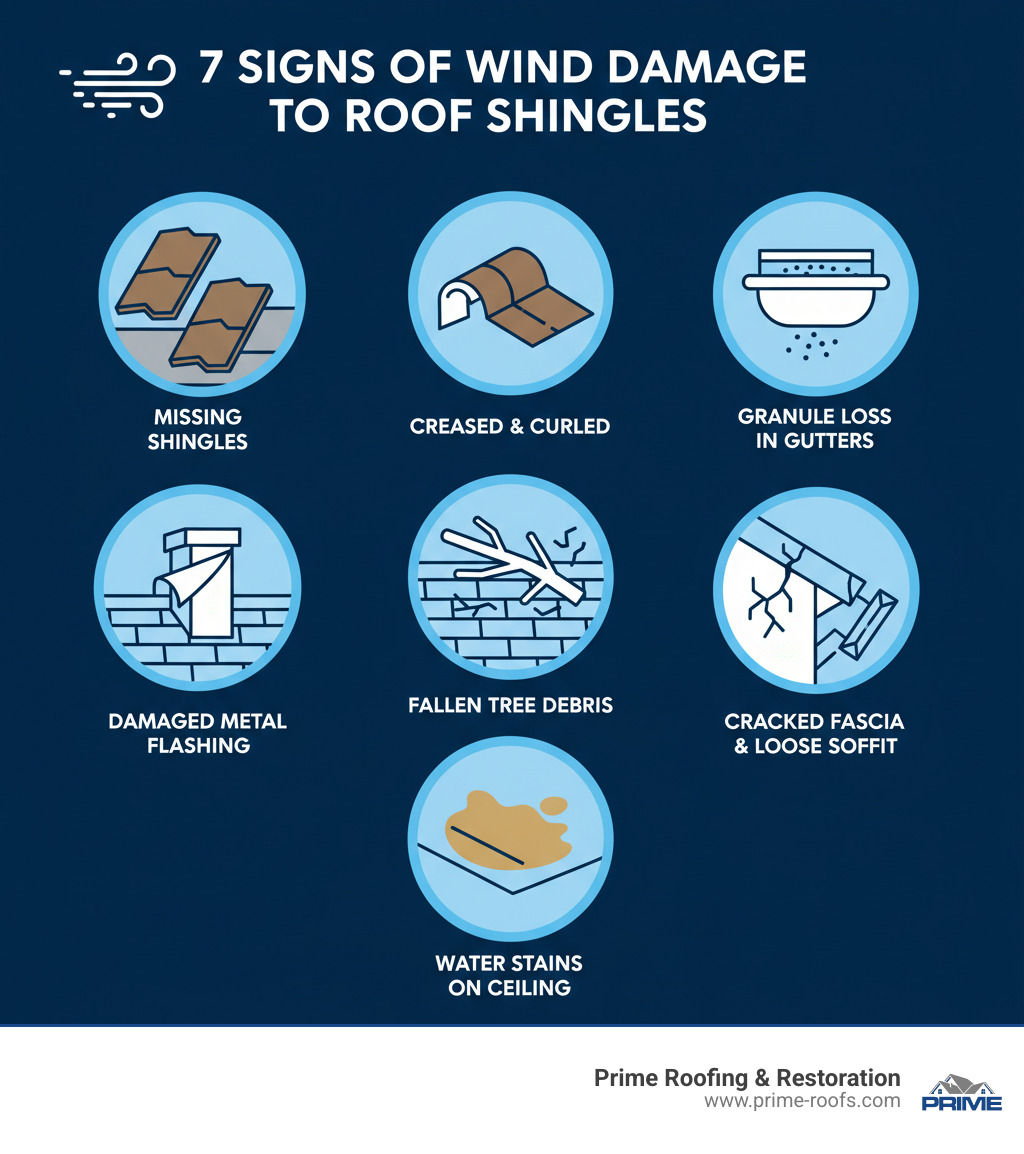
Quick Visual Guide: Signs Your Roof Has Wind Damage
- Missing or lifted shingles — especially along roof edges and ridges
- Creased or curled shingle tabs — bent by wind uplift
- Granules in gutters — exposing the asphalt underneath
- Damaged flashing around chimneys, vents, or skylights
- Debris on the roof — tree limbs or scattered materials
- Cracked fascia or loose soffit — showing wind pressure damage
- Water stains on interior ceilings — the ultimate red flag
I’m Bill Spencer, owner of Prime Roofing & Restoration. After inspecting hundreds of roofs across Central Alabama, I’ve seen how fast minor wind damage turns into major repairs. This guide shows exactly what wind damage looks like, how to spot it, and what to do next.
How Wind Speed Directly Impacts Your Roof
Wind damages roofs unevenly, targeting edges, ridges, and pre-loosened areas first. As speed increases, the destructive force rises exponentially—what survives a 30 mph gust can fail at 60 mph. Three factors largely determine outcomes: roof age, installation quality, and material type. Architectural shingles on a well-installed newer roof routinely outperform aging 3-tabs.
Wind concentrates on the windward edges, hips, ridges, and eaves, creating uplift that peels shingles like pages. Shingle sealant weakens after the first 4–5 years, so older roofs unseal more easily in moderate winds, which explains why neighbors can experience different outcomes in the same storm.
The Beaufort Wind Scale and Roof Damage
| Wind Speed (MPH) | Beaufort Scale Description | Potential Roof Damage |
|---|---|---|
| 45-57 mph | Strong Breeze/Gale | Considered non-severe, but can break tree branches and lift or remove shingles that are already loose or aged. This is the threshold where initial damage often begins, especially if shingles are already susceptible. |
| 58-74 mph | Severe Gale/Storm | Causes significant damage, ripping off sections of shingles, damaging chimneys, and uprooting smaller trees. Widespread roof damage is common, with shingles being torn off and issues arising with chimneys. |
| 75+ mph | Hurricane Force | Causes widespread, catastrophic damage. At this speed, even well-maintained roofs can suffer significant material loss, exposing the roof deck and leading to major water intrusion. This can result in significant roof damage to commercial buildings and homes alike. |
Damage can begin near 45 mph on aging or previously compromised roofs. The threshold from 57 to 58 mph is where isolated problems often become widespread. Regular inspections after significant weather help catch small issues before they evolve into major repairs.
The 7 Telltale Signs of Wind Damage to Roof Shingles
Answer first: if you see any of the signs below, your roof’s water-shedding system is compromised and the next storm will make it worse. After a quick ground-level scan with binoculars, document what you see. If anything looks off, schedule a professional roof inspection to verify the extent and prioritize repairs.
1. Missing or Lifted Shingles
Obvious bare patches expose underlayment; lifted edges signal broken seals and invite future blow-offs. Learn fixes in our guide to asphalt shingle repair.
2. Creased, Curled, or Torn Shingles
Horizontal creases and curled corners indicate wind uplift and seal failure. Torn tabs drastically reduce water-shedding ability and accelerate aging.
3. Excessive Granule Loss
Handfuls of sand-like granules in gutters/downspouts are a red flag. Bald spots lose UV protection and deteriorate faster. To tell it from hail, see how to spot roof hail damage.
4. Damaged or Loose Flashing
Bent, lifted, or missing metal at chimneys, vents, and skylights creates immediate water entry points.
5. Debris on the Roof
Fallen branches scuff off granules; heavy limbs puncture shingles. Debris traps moisture and can clog gutters.
6. Damaged Soffit, Fascia, or Drip Edge
Cracked fascia, loose soffit, or bent drip edge indicate edge-pressure damage and potential water paths into the attic.
7. Interior Signs of Leaks
Ceiling stains, peeling paint, and musty odors point to active water intrusion and hidden structural moisture.
1. Missing or Lifted Shingles
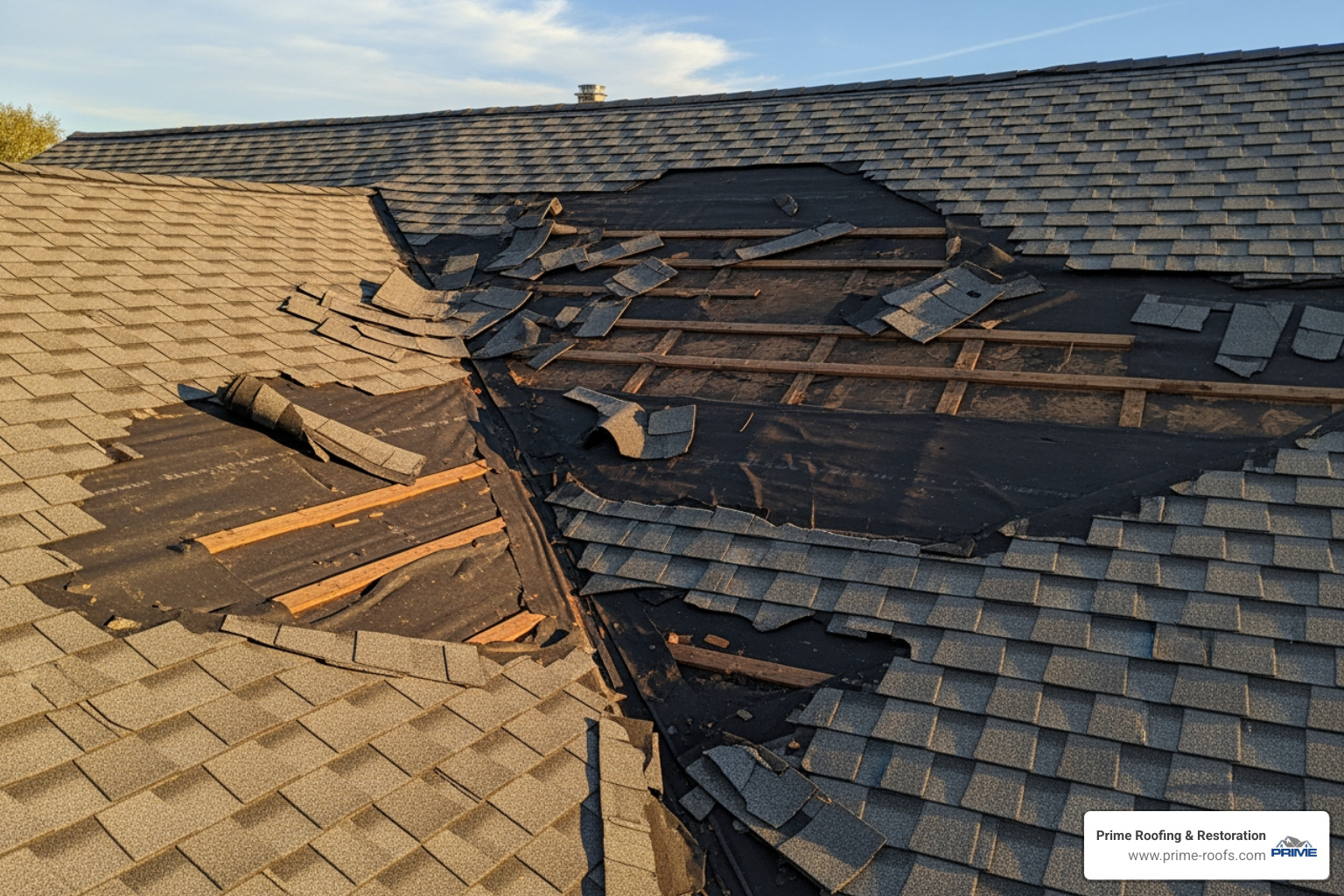
Missing shingles expose underlayment—and sometimes the deck—creating direct leak pathways. Once a shingle is gone, the nails beneath become water channels. Lifted shingles are just as serious: wind breaking the adhesive bond sets up the next storm to tear them away.
Damage spreads in a chain reaction along rows and edges. Underlayment is a temporary barrier, not a permanent fix, so timing matters. If you spot bare spots or edges lifting, the roof’s water-shedding function is already compromised. For repair approaches, see our guide to asphalt shingle repair.
2. Creased, Curled, or Torn Shingles
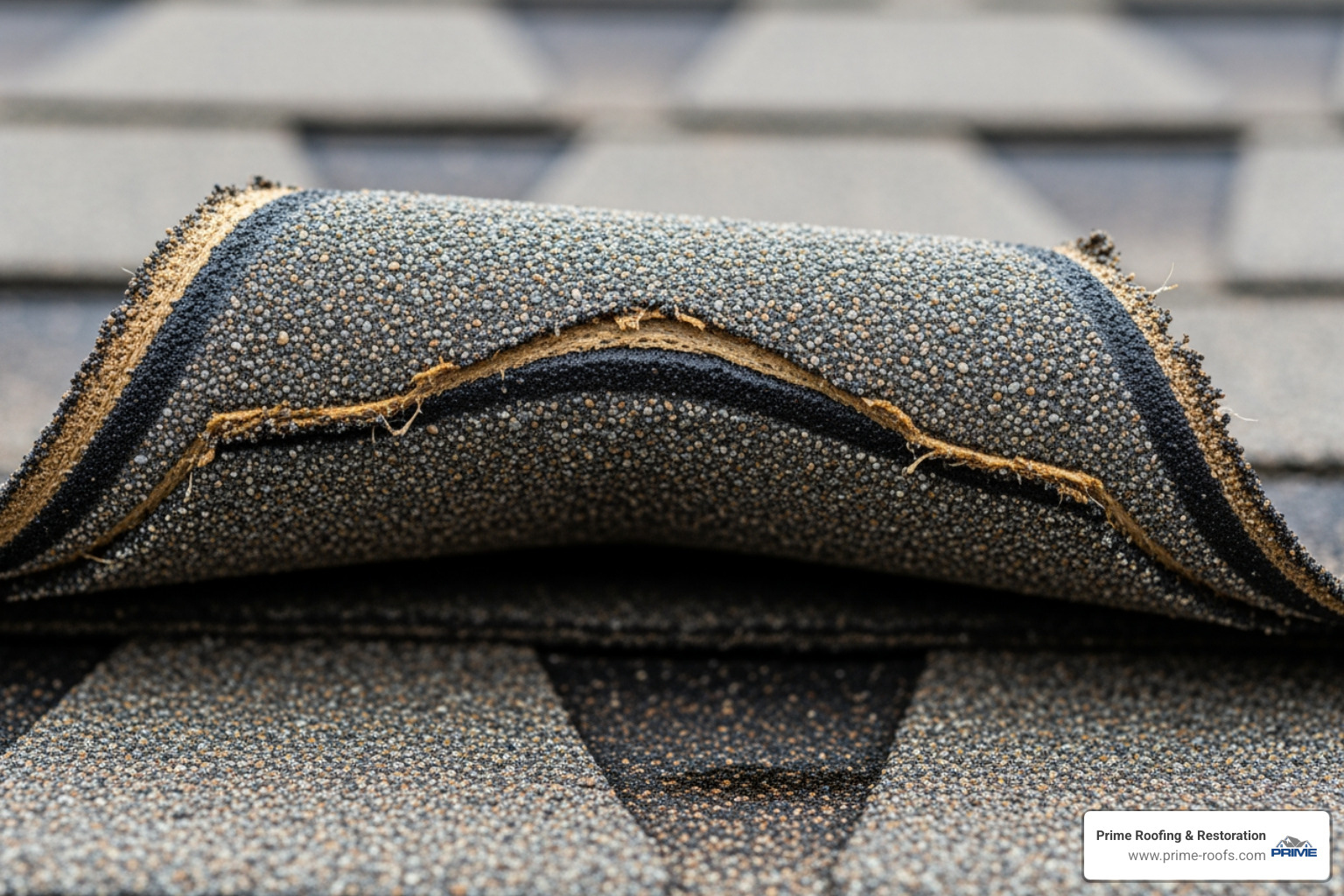
Wind often bends shingles back, then they settle with a visible horizontal crease. Curled corners and edges are classic signs that the sealant bond failed. Torn tabs or cracked mats sharply reduce water-shedding and invite infiltration.
Partial unsealing is common on aging roofs and dramatically increases uplift risk. Treat creases and curls as active failure points, not cosmetic blemishes.
3. Excessive Granule Loss
Granules protect asphalt from UV and add fire resistance. After high winds, excessive granules in gutters or around downspouts indicate surface erosion and emerging bald spots. Those areas heat, dry, and crack faster, shortening shingle life.
Wind-related granule loss is often widespread on exposed slopes, while hail damage typically shows localized bruising. If you’re pulling handfuls of grit from the gutters, prioritize an inspection and targeted repairs.
4. Damaged or Loose Flashing
Flashing seals vulnerable intersections—chimneys, vents, skylights—and directs water away. High winds can bend, lift, or detach metal or compromise the sealant. Even with intact shingles, a failed flashing detail is a direct leak path. Check these areas after storms and document any metal deformation or gaps.
5. Debris on the Roof
Branches scraping across shingles remove protective granules; heavy limbs can puncture and crack shingles outright. Debris that remains on the roof traps moisture and promotes algae/moss, while debris in valleys and gutters causes water to back up under edges. Safe, prompt removal and a follow-up inspection reduce secondary damage.
6. Damaged Soffit, Fascia, or Drip Edge
Edges take the highest wind pressures. Look for cracked or rotted fascia, loose or missing soffit panels, and bent or missing drip edge. These components protect the roof deck and walls by channeling water; once compromised, they become easy entry points for wind-driven rain.
7. Interior Signs of Leaks
Ceiling stains, peeling paint, bubbling drywall, or a musty attic odor indicate active water intrusion. Interior symptoms mean water has already reached the deck, insulation, or framing. Act quickly to limit rot and mold growth. For immediate next steps, see what to do after a storm damages your roof.
Your Action Plan: What to Do After a High-Wind Event
If you suspect wind damage to roof shingles, speed matters. A small opening can channel hundreds of gallons into your attic during the next storm.
Step 1: Perform a Safe Inspection and Document Everything
Stay on the ground. Use binoculars to scan edges, ridges, and penetrations. Photograph wide shots and close-ups; capture gutters, siding, fences, and any fallen shingles. Note storm date/time. For a complete checklist, use our free roof inspection guide.
Step 2: Mitigate Further Damage
Exposed underlayment or openings call for emergency protection. Proper tarping prevents interior damage while you arrange permanent repairs. Learn best practices in our emergency tarping services guide.
Step 3: Contact Your Insurance and a Trusted Roofer
Review your policy, then file a timely claim with clear documentation. Request a professional assessment and be present (or represented) during the adjuster’s visit to ensure subtle damage is recorded. We help homeowners steer the insurance claims process with thorough documentation and scope clarity.
How to Prevent Future Wind Damage to Roof Shingles
The best defense is a well-built, well-maintained roof. Three pillars—quality materials, expert installation, and regular maintenance—consistently predict storm survival.
Choose High-Wind-Resistant Roofing Materials
- Dimensional/architectural shingles: heavier, stiffer, and commonly rated to 110 mph or more.
- Impact-resistant shingles: improved flexibility and strength for wind and hail.
- Metal roofing: some systems withstand 150+ mph and often qualify for insurance discounts. See the benefits of metal roofing for Alabama homes.
Look for ASTM D3161 Class F (110 mph) or ASTM D7158 Class H (150 mph) ratings.
Ensure Proper Installation Techniques
Correct nailing patterns and fastener placement are non-negotiable. The National Roofing Contractors Association (NRCA) warns against vertical racking, which can compromise sealant engagement and omit fasteners. Starter strips and properly activated self-seal adhesive are critical at perimeters.
Schedule Regular Maintenance
- Bi-annual inspections (spring/fall) and post-storm checkups
- Keep gutters clear to prevent water backup under edges
- Fix minor issues promptly to avoid wind exploitation
- Plan for end-of-life replacement; see how often roofs need to be replaced
Frequently Asked Questions about Wind Damage
What are the consequences of ignoring wind damage to shingles?
Ignoring lifted or missing shingles allows water to reach the deck, causing wood rot, mold growth, ruined insulation, and interior damage. A few hundred dollars of repairs can quickly become a full replacement plus interior restoration.
Is wind damage typically covered by homeowners insurance?
Yes. Wind is a covered peril on most standard policies, subject to your deductible and roof condition. Document damage immediately and file promptly. Having a roofing professional involved during the adjuster inspection helps ensure all damage is properly scoped.
What is the difference between wind damage and normal wear and tear?
Wind damage leaves a directional pattern: missing shingles on the windward side, creased tabs, and lifted eaves/rakes. Normal wear is gradual and uniform—consistent granule loss and general fading across slopes over time.
Don’t Let Wind Compromise Your Home’s Safety
Catching wind damage to roof shingles early is the difference between a quick repair and major replacement. Even if your roof looks fine from the driveway, subtle seal failures and lifted tabs can allow hidden water intrusion.
For homeowners across Central Alabama, Prime Roofing & Restoration delivers thorough inspections, clear documentation for insurance, and reliable repairs that prioritize long-term performance. If you’re local, connect with our team of Alabaster, AL roofers for a no-obligation evaluation and guidance on next steps.
A resilient, well-detailed roof is your best defense against the next storm—and your fastest path to peace of mind.