
Why Your Eaves Are the Most Vulnerable Part of Your Roof
An eaves protection system is one of the most important and most overlooked defenses your roof has against water damage, rot, insects, and structural decay. If you are trying to prevent roof-edge leaks and hidden moisture damage, start with the eaves. For homeowners comparing long-term solutions, trusted Alabama roofing experts can help identify whether the edge detail is protecting the roof or quietly failing.
What is an eaves protection system? It is a combination of products installed at the lower edge of your roof that:
- Directs water off the roof deck and into the gutter
- Supports and shields the roofing underlay from sagging, UV exposure, and moisture
- Blocks insects, birds, and debris from entering the roof space
- Helps prevent ice dams and wind-driven rain from forcing water under shingles
Without this protection, the eaves – the overhang where your roof meets the outside wall – become an entry point for water, pests, and decay. Old or perished underlay at the eaves can sag into the gutter, trap standing water, and break down over time. That slow failure spreads inward, rotting timber, soaking insulation, and feeding mold. The repair bills climb fast: ice dam damage alone averages $8,000+ for roof repairs, $15,000+ for water damage, and up to $20,000+ for structural fixes.
For Alabama homeowners, the threat is real year-round. Summer storms can drive rain sideways under roof edges. Humid air accelerates rot and mold in roof timbers. Even mild winters can bring enough freeze-thaw cycling to stress unprotected eaves. If your roof is not protected at the edge, it is vulnerable at its weakest point – and that is where damage often starts.
If you are already seeing signs of trouble, our residential roofing services can help you assess the damage and find the right fix.
Prime Roofing & Restoration serves homeowners across Alabama’s Gulf Coast region, including Alabaster, Hoover, and Orange Beach. If you need help with roof-edge leaks, fascia rot, or a failing gutter-to-roof transition, visit Prime Roofing & Restoration or call (205) 201-8131 to schedule an inspection.
I am Bill Spencer, Owner and President of Prime Roofing & Restoration, with hands-on experience installing and inspecting eaves protection systems across Alabama’s Gulf Coast region, from Alabaster to Orange Beach. In this guide, I will walk you through what an eaves protection system does, why it matters, and how to protect your roof edge the right way.
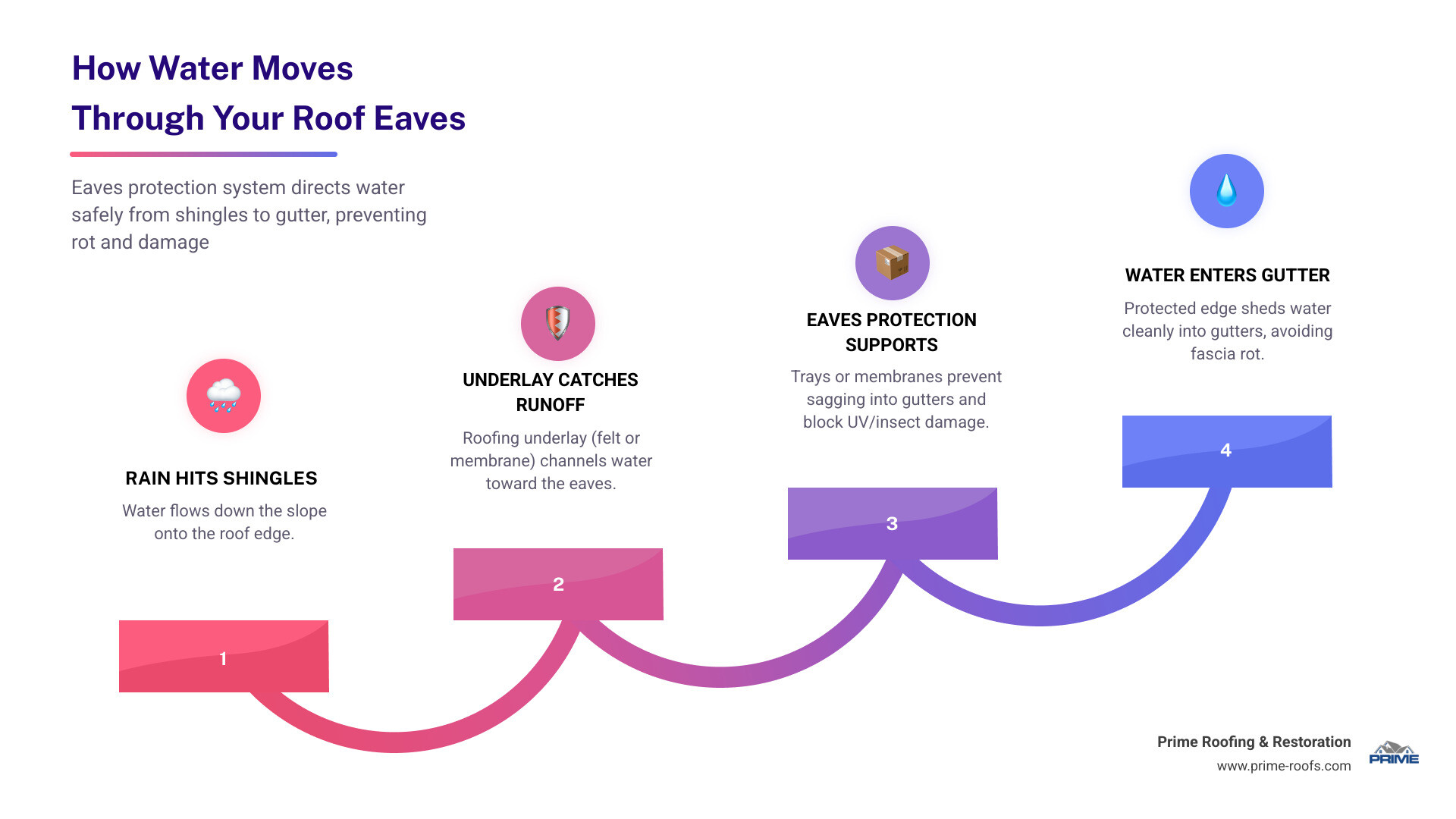
Eaves protection system terms you need:
What an Eaves Protection System Is and Why Every Roof Needs One
An eaves protection system is the roof-edge assembly that manages water, airflow, and durability where the roof meets the gutter and fascia. In plain English: it helps water go where it should, keeps the underlay supported, and stops the edge of the roof from turning into a soggy welcome mat for rot and bugs.
On most homes, this system is made up of some mix of:
- Self-adhered membrane at the eaves
- Drip edge or flashing
- Eaves tray or skirt to support underlay
- Ventilation pieces at the soffit or eaves
- Pest-blocking combs, grates, or screens
- Gutter interface details that carry water cleanly away
How an eaves protection system protects the most vulnerable part of the roof
The lower roof edge is where several things happen at once:
- Rainwater leaves the roof
- Underlay ends
- Gutters begin
- Ventilation often enters
- Sunlight can reach exposed materials
- Wind can push rain upward and sideways
That is a lot of work for one small area.
A good system creates a controlled transition from shingles to underlay to fascia to gutter. It keeps the underlay from drooping, makes sure water sheds into the gutter instead of behind it, and adds a secondary barrier if wind-driven rain gets under the roof covering. It also limits daylight exposure, which matters because underlay breaks down faster when left exposed to UV.
Why eaves failures lead to rot, mold, and expensive repairs
When eaves fail, the damage rarely stays at the edge. Water can move into:
- Fascia boards
- Soffits
- Roof decking
- Rafter tails
- Insulation
- Interior ceilings and walls
That is why small roof-edge defects can become big repair projects. Once moisture is trapped, mold growth and timber decay follow. The cost stats are a good reality check:
- $8,000+ average roof damage from ice dam events
- $15,000+ average water damage costs
- $10,000+ for mold removal
- $20,000+ for structural fixes
Even in Alabama, where ice dams are not the main villain, the same chain reaction happens with storm water, gutter overflow, and persistent humidity.
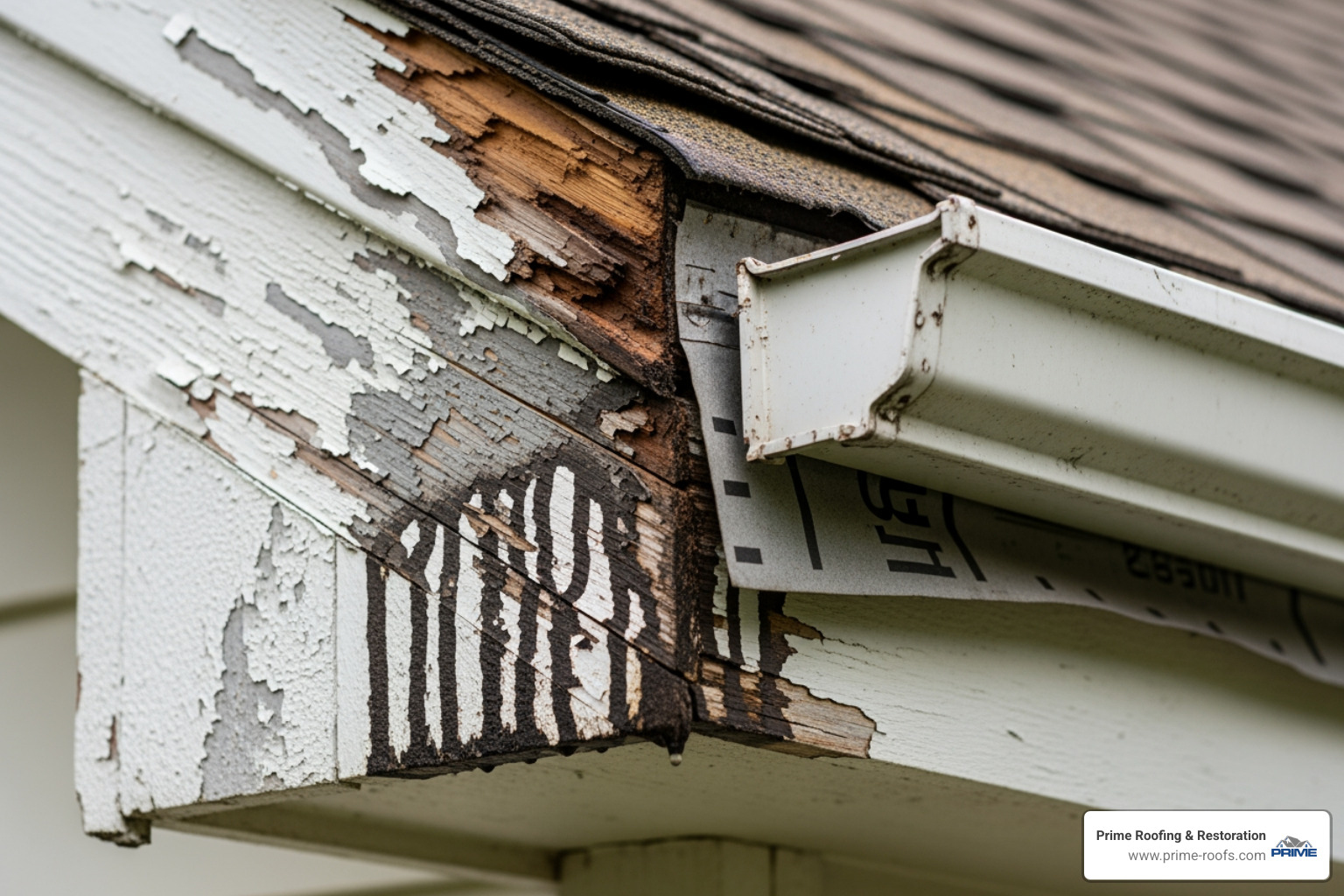
The warning signs your eaves are already failing
Watch for these red flags:
- Sagging or torn roofing felt at the edge
- Peeling paint on fascia or soffits
- Water stains on exterior trim
- Overflowing gutters during normal rain
- Mildew smell in attic spaces
- Wet insulation near the roof edge
- Birds, wasps, or rodents nesting near the eaves
- Dark streaks or rot at the fascia line
- Icicles or refreezing at the edge during cold snaps
The Main Causes of Eaves Damage Homeowners Miss
Most homeowners notice the symptom, not the cause. They see a stain, a wasp nest, or a peeling board. The real problem often starts with failed drainage, blocked airflow, or aging underlay.
Ice dams, condensation, and freeze-thaw cycles
Ice dams form when heat from the home warms the roof deck, snow melts, and that meltwater refreezes at the colder eaves. Water then backs up under shingles.
That is more common in cold regions than in Alabama, but freeze-thaw damage can still happen here during winter swings. More importantly for Alabama homes, condensation can mimic some of the same moisture problems. Warm, humid air that is not vented properly can condense near the eaves and keep materials damp.
This is why attic insulation and ventilation matter. Cold-climate solutions may include heated guards or self-regulating cables, but many Alabama homes benefit more from proper drainage, vent continuity, and gutter performance.
Water ponding, underlay sagging, and UV degradation at the fascia
This is one of the most common eaves failures. Older felt or underlay sags between supports, dips behind the fascia, and starts holding water instead of shedding it. Once that happens:
- Water ponds behind the fascia
- Underlay stays wet
- UV exposure speeds breakdown
- The edge rots away
- Leaks begin behind trim and into the deck
Rigid and semi-rigid eaves trays were developed to solve exactly this problem. They support the underlay and keep it aimed into the gutter for the life of the roof.
Insects, birds, and debris blocking airflow at the eaves
Your eaves are also an air intake zone. If that intake gets blocked, ventilation suffers and moisture builds up.
Common blockers include:
- Leaves and pine straw
- Bird nests
- Wasp nests
- Rodents
- Clogged vent grilles
- Insulation packed too tightly at the edge
That is why well-designed eaves systems use screens, grates, comb fillers, or vent components that allow airflow while keeping pests out.

Types of Eaves Protection System Products and What Each One Does
There is no one-size-fits-all product. A complete eaves protection system usually combines several components.
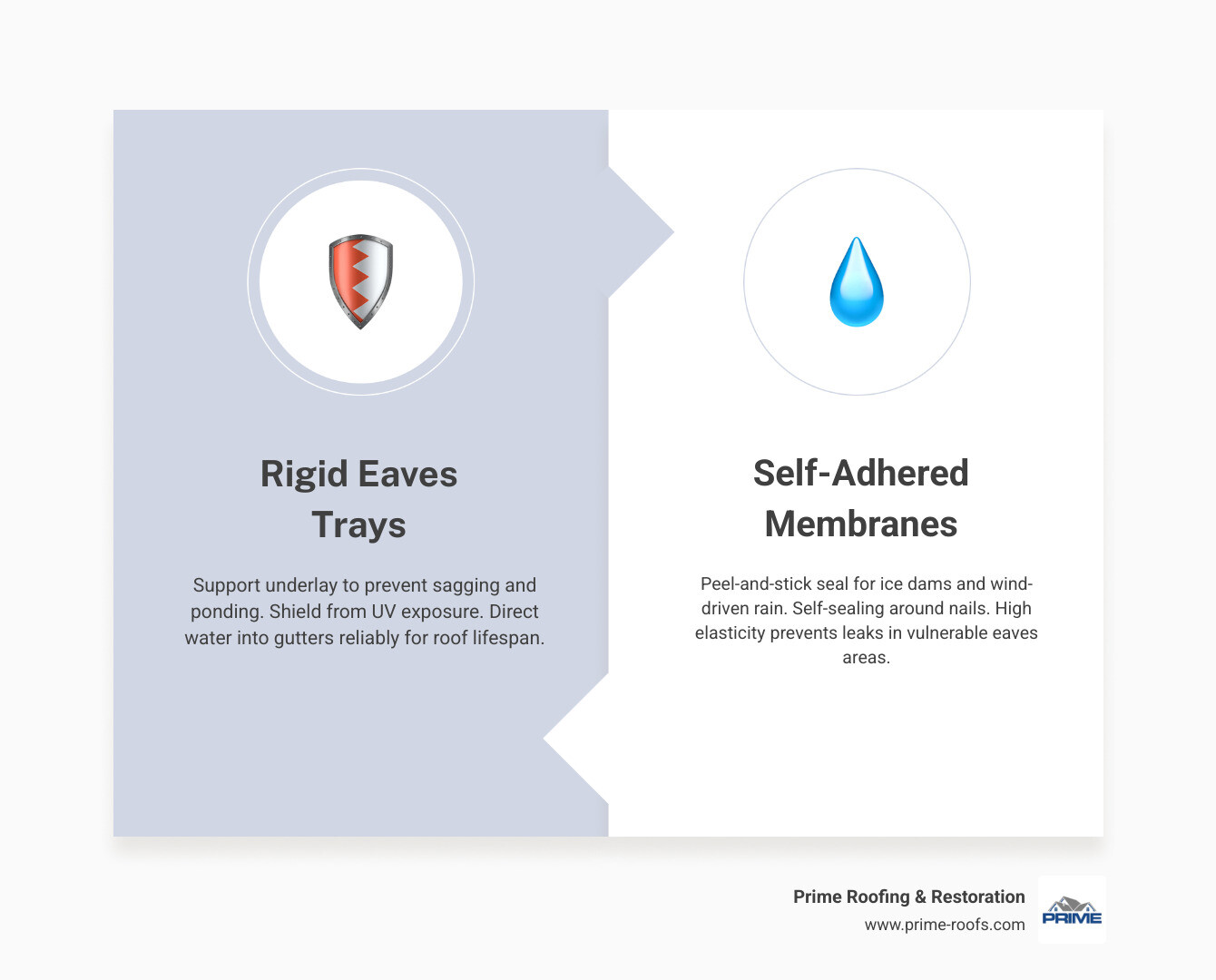
Self-adhered membranes for ice dams and wind-driven rain
These peel-and-stick membranes are installed directly to the roof deck in vulnerable areas such as:
- Eaves
- Valleys
- Rakes
- Around penetrations
- Roof-to-wall transitions
Their biggest advantage is self-sealing around nails. Many leading products meet ASTM D1970, which is the key standard for self-adhered polymer modified bitumen underlay used as an ice dam barrier. Research showed common thicknesses around 53 to 57 mils, which gives these membranes solid puncture resistance and waterproofing performance.
Examples from industry specs include roll sizes around 195 square feet per roll and multiple width options for different layouts. These products are especially valuable on steep-slope asphalt shingle roofs where wind-driven rain can get under the roof covering.
Rigid eaves trays and skirts for drainage and underlay support
Think of these as the bridge between underlay and gutter. They are often made from UPVC and installed on top of the fascia or fascia vent. Their job is to:
- Support the underlay
- Prevent sagging
- Stop ponding behind the fascia
- Shield underlay from daylight and UV
- Maintain a clear drainage path into the gutter
They are simple products, but they solve a very expensive problem. On refurbishment work, they are often the fastest way to replace rotted felt edges without pretending the old detail is still fine. Spoiler: it usually is not.
Ventilation components that keep air moving without letting pests in
Ventilation at the eaves is essential for managing heat and moisture. Products in this category include:
- Eaves vents
- Soffit vents
- Rafter ventilators
- Comb fillers
- Bird stops
- Insect screens
- Eaves grates
One useful benchmark from the research: a 25mm Eaves Vent System provides 25,000 mm2 of free ventilation area per linear metre. That is a clear, citation-worthy figure for roofs that need robust intake airflow.
For system-style ventilation components and eaves accessories, Eurovent eaves components show how grates, combs, and flashing can work together to protect airflow from birds, insects, and debris.
Heated guards and active systems for severe winter climates
Heated eaves and gutter-edge systems are specialized products for homes in heavy snow and recurring ice dam conditions. The research highlighted systems with self-regulating heat cables that activate at about 3 C and can operate in temperatures as low as -40 C. Some include GFCI protection and long warranties on both mesh and cable components.
For reference on how these systems work, see heated eaves protection technology.
For Alabama homeowners, these are rarely the first recommendation. They make the most sense only where recurring freeze issues, shaded roof edges, or unusual drainage patterns justify the added cost.
How to Install an Eaves Protection System the Right Way
Proper installation matters as much as product choice. Even the best materials fail when overlaps are wrong, vents are blocked, or the gutter alignment is off. If you need full roof-edge or reroof work, learn more about our roof installation services.
Step-by-step eaves protection system installation for asphalt shingle roofs
Here is the standard sequence for an asphalt shingle roof:
- Remove old roofing at the eaves as needed and inspect the deck.
- Replace any rotten decking, fascia, or soffit materials.
- Install drip edge in the correct sequence required by the roof system.
- Apply self-adhered membrane over clean, dry decking at the eaves, extending far enough inside the warm wall line where needed.
- Install the rigid eaves tray or skirt to support the underlay transition into the gutter.
- Add ventilation components so the intake path remains continuous and unobstructed.
- Check gutter position and clearance so runoff drops cleanly into the gutter, not behind it.
- Install starter strip and shingles with proper overhang and fastening.
- Confirm that underlay is not exposed to daylight and that no reverse laps or wrinkles remain.
If your roof has shingle-specific edge damage, our asphalt shingle repair guide explains related repair issues in more detail.
Common installation mistakes that cause early failure
These are the errors we see most often:
- Membrane installed on dusty or wet decking
- Product applied below the recommended temperature
- Wrong overlap direction
- Wrinkled membrane that channels water
- Tray sections gapped or unsupported
- Gutters set too low or too far from the roof edge
- Ventilation blocked by insulation
- Exposed underlay left in sunlight
- Pest screens omitted
Any one of those can undo the whole detail.
How eaves protection system details change by roof type and climate
Not every roof edge is detailed the same way.
- Asphalt shingles: usually use membrane, drip edge, tray, and vent coordination
- Tile roofs: often need profile-specific comb fillers and ventilation details
- Metal roofs: require careful flashing, thermal movement planning, and gutter interface
- Low-slope sections: need stronger emphasis on waterproof transitions and drainage control
- Rainy regions: benefit from extra attention to wind-driven rain and overflow management
- Humid Alabama conditions: require balanced ventilation, clean gutters, and decay-resistant edge details
In Alabama, our default priority is not usually snow load. It is moisture management from storms, humidity, debris, and aging trim.
Cost, Codes, Warranties, and Choosing the Best System for Your Roof
The right system is the one that matches your roof type, climate, and maintenance goals without skipping the boring-but-important code details.
How much an eaves protection system costs in 2026
In 2026, pricing depends on the components included. Typical cost drivers include:
- Linear footage of eaves
- Roof pitch and access difficulty
- New build vs. retrofit
- Amount of rotten wood replacement needed
- Membrane thickness and brand
- Ventilation components required
- Gutter adjustments or replacement
- Whether heated elements are included
As a practical guide:
- Basic eaves trays and drip-edge improvements are the lower-cost end
- Membrane plus tray plus ventilation upgrades are mid-range
- Heated systems are the premium option
On many homes, basic retrofit edge protection may run a few hundred to a few thousand dollars depending on access and repair scope, while larger reroof projects that include membrane upgrades, fascia replacement, ventilation corrections, and gutter adjustments can cost substantially more. The reason homeowners still choose to do it is simple: roof-edge repairs are usually far cheaper than replacing wet decking, damaged insulation, stained ceilings, and moldy wall cavities later.
The real financial case is repair avoidance. Preventing one hidden roof-edge leak can cost far less than replacing fascia, decking, insulation, drywall, and mold remediation later.
The standards and approvals that matter before you buy
These are the names worth looking for:
- ASTM D1970 for self-adhered ice and water protection membranes
- ASTM D5602 where referenced for additional membrane performance
- ICC evaluation reports for code acceptance
- Class A fire ratings where applicable
- Florida product approvals on some roofing products, which can be relevant for severe weather standards
- BS 5534 and NHBC guidance for UK ventilation references, useful as technical benchmarks though not Alabama code
The simplest rule: choose products with clear published testing, installation instructions, and warranty language. If the warranty sounds amazing but the install requirements are vague, read the fine print twice.
How to choose the right eaves protection system for your home
Start with these questions:
- Is your roof new, aging, or already leaking?
- Do you have adequate attic intake and exhaust ventilation?
- Are your gutters clean, aligned, and large enough?
- Do trees drop leaves or pine debris onto the roof?
- Has the fascia already started to rot?
- Do you want low maintenance or lowest upfront cost?
- Do you need a repair detail or a full roof-edge rebuild?
Also consider how long you plan to stay in the home. If this is your long-term house, spending more on a better membrane, rigid tray support, pest-resistant vent components, and proper gutter interface often pays off in lower maintenance and fewer emergency repairs. If you are preparing a home for sale, you still need a code-compliant, durable fix rather than a cosmetic patch. Buyers and inspectors notice roof-edge staining, soft fascia, and signs of moisture entry.
For many homes in Alabaster and Hoover, the best answer is a balanced system: membrane where needed, rigid support at the underlay edge, pest-safe ventilation, and gutter integration that actually works in heavy rain.
If your roof edge and drainage are both failing, our guides on gutter and roof repair and gutter repair services can help you understand the next steps.
Real-world examples of eaves protection preventing roof damage
The research included several strong use cases:
- Side-by-side winter comparisons where the protected roof edge stayed clear while the unprotected home formed icicles and water backup
- Refurbishment projects where old felt had rotted away at the gutter line, and rigid trays restored drainage
- Older homes upgraded with enclosed or better-managed gutter-edge designs to reduce overflow and maintenance
In Alabama, the same principle shows up after storms: homes with supported underlay, proper drip details, and clear ventilation are less likely to suffer fascia staining, soffit rot, and hidden leak spread after wind-driven rain.
Local service area, contact information, and map
If you want a local evaluation of your roof edge, Prime Roofing & Restoration serves homeowners in Alabaster and nearby communities throughout Alabama’s Gulf Coast region. For project questions, inspection scheduling, or roof replacement planning, visit Prime Roofing & Restoration or call (205) 201-8131.
You can also use the company website and local service page to confirm service coverage and request help:
- Main website: https://www.prime-roofs.com/
- Local page: https://www.prime-roofs.com/roofers-near-me/alabaster-al/
For map and location details, use the business website and local service profile above when scheduling your inspection or estimate.
Frequently Asked Questions About Eaves Protection Systems
Is an eaves protection system necessary in warm, rainy places like Alabama?
Yes. In Alabama, eaves protection matters for wind-driven rain, humidity, gutter overflow, insects, and rot even more than for ice. Warm climates do not eliminate roof-edge risk. They simply change what causes the damage.
Does eaves protection work with gutters, soffit vents, and roof maintenance plans?
Yes. A proper system should integrate all three.
- Gutters receive and carry runoff away
- Soffit or eaves vents supply intake air
- Ridge vents exhaust hot, moist air
- Seasonal maintenance keeps debris from blocking the system
That is why roof-edge work should never be treated as trim-only work. It is part of the whole roof assembly. For broader maintenance planning, see our roof repair complete guide.
How long does an eaves protection system last, and what maintenance does it need?
Service life depends on the materials and the installation quality. In general:
- Self-adhered membranes can last for decades beneath roof coverings
- UPVC trays and vent components are long-life products
- Premium systems may carry warranties up to 40 years on specific components
- Heated cable components usually have shorter electrical warranties than passive parts
Maintenance is simple but important:
- Clean gutters and roof valleys
- Check screens and vents for blockage
- Inspect fascia and soffits annually
- Look for lifted shingles or exposed underlay
- Verify water is entering the gutter, not bypassing it
If you want a professional roof-edge inspection in Alabaster, you can explore our local roofers near Alabaster page.
Can an eaves protection system be added during a repair, or do I need a full roof replacement?
In many cases, it can be added during a targeted repair if the roof covering still has useful life left and the deck at the edge is sound. However, if the shingles are brittle, the underlayment is failing across large sections, or the fascia and decking are already rotted, a broader reroof or roof-edge rebuild usually makes more sense. A contractor should inspect the decking, underlayment termination, gutter alignment, and vent path before recommending one option over the other.
What maintenance helps an eaves protection system last longer?
The biggest thing is keeping water and debris moving. Clean the gutters, remove leaf buildup at valleys and lower roof edges, and check after major storms to make sure branches or nests are not blocking intake vents. Annual inspections help catch small issues early, such as a lifted drip edge, loose gutter spikes, staining behind the fascia, or pests trying to enter the soffit line. Small corrections at the eaves are usually inexpensive compared with interior water damage.
Conclusion
An eaves protection system is not a small accessory. It is the roof-edge detail that keeps water moving off the roof, protects underlay from sagging and UV exposure, preserves airflow, and helps stop insects, rot, and mold before they start.
The best system for your home depends on your roof covering, attic ventilation, gutter condition, tree exposure, and Alabama weather patterns. But the core idea is always the same: support the edge, control the water, protect the intake, and do not leave the weakest part of the roof to fend for itself.
If your eaves are sagging, staining, leaking, or attracting pests, now is the time to fix the cause instead of repainting the symptom. When repairs are no longer enough, our roof replacement services can help you build a longer-lasting roof system from the edge up.