
Why 12 ft Metal Roofing Is the Smarter Choice for Your Home
12 ft metal roofing panels are one of the most efficient options available for residential and agricultural roofing projects. If you are looking for a trusted roofing contractor in Alabaster, choosing the right panel length is critical for long-term performance. In the humid and often volatile climate of Central Alabama, your roof is your first line of defense against severe thunderstorms, high winds, and the relentless Southern sun. Selecting the appropriate panel length, such as the versatile 12-foot option, can significantly impact the structural integrity and aesthetic appeal of your property.
Here is what matters most right away:
- Coverage: Each 12 ft panel covers up to 24-36 sq ft depending on width.
- Lifespan: Metal roofing commonly lasts 40-70+ years with proper installation and maintenance.
- Seam reduction: 12 ft panels can reduce seams by up to 50% compared to 8 ft panels, minimizing leak risks.
- Price range: Panels typically cost about $29-$70 per panel at major retailers and suppliers.
- Common gauges: 29-gauge and 26-gauge are the most widely available for residential and utility use.
- Minimum slope: Many corrugated profiles require a 3:12 roof pitch for proper drainage and warranty compliance.
- Materials: Common options include galvanized steel, Galvalume, and high-grade aluminum.
Fewer seams mean fewer leak points. That is the main reason longer panels are often the better choice for homeowners and contractors alike. On many roof layouts, moving from 8-foot panels to 12 ft metal roofing cuts the number of end laps substantially, which improves water shedding and creates a cleaner, more streamlined finished appearance. Whether you are replacing a storm-damaged roof in Central Alabama or building a new structure from scratch, panel length directly affects installation efficiency, maintenance demands, and long-term durability.
If you are comparing material options, our metal roofing services page is a strong starting point for understanding professional installation, system types, and what to expect in terms of performance and cost. For immediate assistance or to schedule a professional inspection, you can reach our team at Prime Roofing & Restoration by calling 205-555-0199.
I am Bill Spencer, Owner of Prime Roofing & Restoration, and over the years I have seen how the right 12 ft metal roofing panels can improve durability, reduce maintenance, and help homeowners get better long-term value from their investment. This guide is built to give you clear, practical information so you can make a confident decision for your home or business.
Understanding 12 ft Metal Roofing: Materials and Specifications
When we talk about 12 ft metal roofing, we aren’t just talking about a piece of tin. Modern engineering has turned these panels into high-performance shields for your home. Choosing the right material is the foundation of a roof that lasts half a century. In our experience working across Alabaster and Hoover, the material choice often depends on your specific budget, the architectural style of your home, and how close you are to the elements.
Sizing and Coverage for 12 ft Metal Roofing
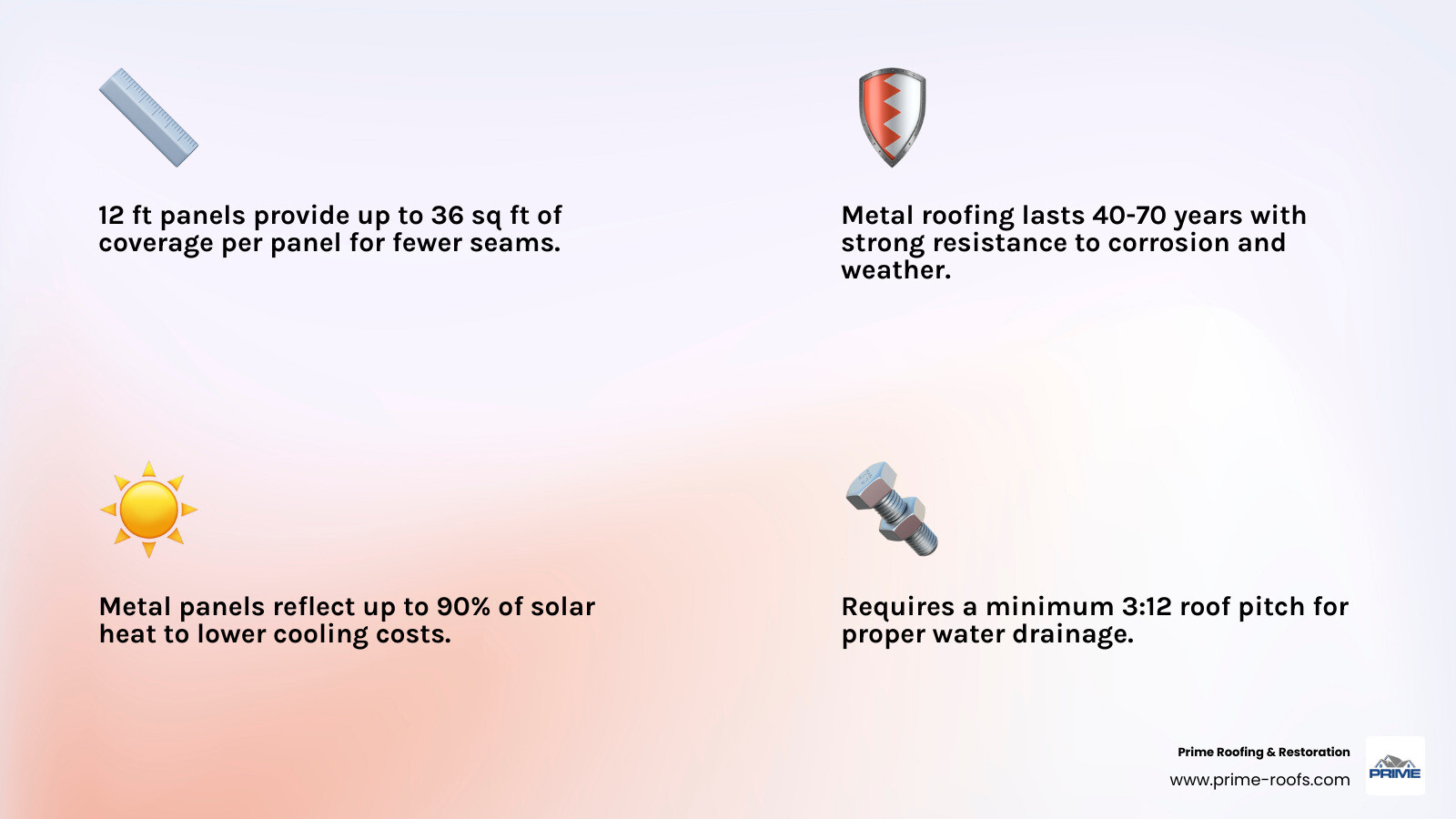
One of the biggest advantages of a 12-foot panel is the sheer math of it. A standard panel that is 2 feet wide and 12 feet long provides exactly 24 square feet of coverage. If you opt for a wider 3-foot panel, such as a PBR or Tuff Rib profile, you’re looking at 36 square feet of coverage per panel. This increased coverage means fewer panels to handle, fewer fasteners to drive, and a faster installation timeline.
Standard dimensions usually include:
- Length: 144 inches (12 feet).
- Width: Typically 26 inches (providing 24 inches of net coverage after overlap) or 38 inches (providing 36 inches of net coverage).
- Rib Height: Usually ranges from 1/2 inch for basic corrugated panels to 3/4 inch or 1.25 inches for PBR (Purling Bearing Rib) panels. Higher ribs generally offer better water-shedding capabilities and increased structural rigidity.
Material Durability and Longevity
The “big three” materials you’ll encounter are galvanized steel, Galvalume, and aluminum. Each has its own strengths and is suited for different applications:
- Galvanized Steel: This is steel coated in a layer of zinc. It’s a classic choice, often seen in products like the Metal Sales 2-ft x 12-ft Corrugated Galvanized Steel Roof Panel. It is budget-friendly and offers solid protection against rust. The zinc layer acts as a sacrificial anode, protecting the underlying steel from oxidation.
- Galvalume: This is a favorite for many Alabama homeowners. It uses a patented coating of aluminum and zinc (typically 55% aluminum and 45% zinc). This combination offers superior corrosion resistance, especially in humid climates like ours. Many mill-finish Galvalume panels come with a 25-year warranty right out of the gate, and painted versions can last even longer. According to the Steel Framing Alliance, Galvalume has shown exceptional performance in long-term atmospheric testing.
- Aluminum: While more expensive, aluminum is naturally rust-resistant. It’s an excellent choice if you want a lightweight panel that can handle coastal salt air or high-moisture environments. Aluminum is also highly reflective, which can contribute to better energy efficiency.
For utility structures like sheds or doghouses, a 12 ft. 30 Gauge Galvanized Corrugated Utility Roof Panel is often sufficient. However, for a primary residence, we typically recommend moving up to a 29-gauge or even a 26-gauge panel for better dent resistance and structural strength. The lower the gauge number, the thicker the metal. A 26-gauge panel is significantly sturdier than a 29-gauge panel and is better equipped to handle hail and falling debris.

Key Benefits of Using 12 ft Metal Roofing Panels
Why go through the trouble of hauling a 12-foot panel when an 8-foot one is easier to fit in a pickup truck? The answer lies in the performance of the finished roof. At Prime Roofing & Restoration, we’ve seen that the extra effort during transport and handling pays off for decades in the form of a tighter, more efficient home envelope.
- Reduced Seams: This is the “holy grail” of roofing. Every time you overlap two panels, you create a seam. Seams are where water likes to hide and where wind likes to catch. By using 12 ft metal roofing, you can reduce your vertical seams by up to 50% compared to shorter panels. This creates a much cleaner, more modern aesthetic and significantly drops the statistical chance of a leak. In areas prone to heavy rain, minimizing seams is the best way to ensure long-term watertight integrity.
- Thermal Performance: Metal is naturally reflective. High-quality panels can reflect up to 90% of solar radiant heat. In the middle of an Alabama July, that can mean the difference between an attic that feels like an oven and one that stays relatively cool, potentially lowering your cooling costs by up to 25%. You can learn more about this in our guide on the Benefits of Metal Roofing for Alabama Homes. Many metal roofing products are Energy Star certified, which may qualify homeowners for tax credits.
- Weather Resistance: Metal is non-combustible (Class A fire rated) and, when fastened correctly, offers incredible wind resistance. This is vital for our neighbors in Hoover and Alabaster who deal with heavy spring storms and the occasional threat of tornadic activity. Metal roofs are also highly resistant to hail damage, often receiving a Class 4 impact rating, which is the highest available.
- Sustainability: We love that metal is green. Most steel panels contain about 30% recycled content, and when the roof finally reaches the end of its life (in 70 years!), it is 100% recyclable. Unlike asphalt shingles, which contribute millions of tons to landfills every year, metal roofing is a circular product.
- Insurance Savings: Many insurance companies in Alabama offer discounts for homes with metal roofs due to their fire and wind resistance. It is always worth checking with your provider to see if an upgrade to 12 ft metal roofing could lower your premiums.
Installation Guide for 12 ft Metal Roofing
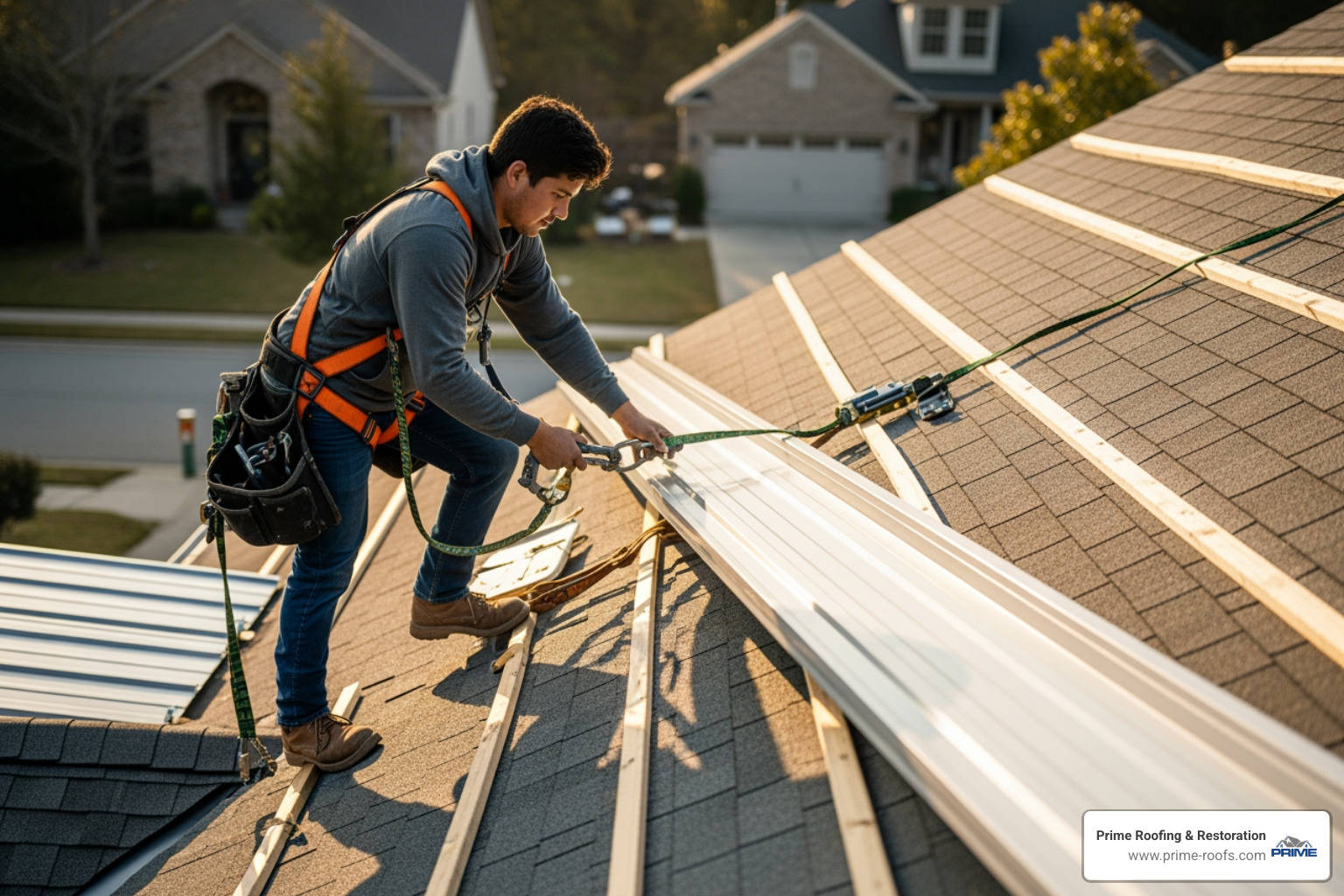
Installing 12 ft metal roofing is a rewarding DIY project for some, but it requires respect for the material. These panels are long, and in a light breeze, they can act like a sail. Safety isn’t just a suggestion; it’s a requirement. If you are unsure about any part of the process, please contact us at 205-555-0199 for a professional consultation.
Tools Needed for 12 ft Metal Roofing Projects
Before you climb that ladder, make sure you have the following:
- Metal Shears or Aviation Snips: For making precise cuts around vents, chimneys, or at the eaves.
- Impact Driver: With a magnetic hex head for driving self-tapping screws with EPDM washers.
- Chalk Line: To ensure your panels stay perfectly square as you move across the roof deck.
- Sealing Tape or Butyl Tape: Essential for sealing overlaps and preventing “capillary action” where water gets sucked between panels.
- Safety Harness: If you are working on anything higher than a garden shed, a harness is non-negotiable. Fall protection is a critical standard set by OSHA.
For smaller projects, you might find our guide on Installing Metal Roofing on a Shed helpful for a step-by-step breakdown.
Step-by-Step Installation Overview
- Preparation: Remove old roofing if necessary, or install a high-quality synthetic underlayment over existing shingles. Ensure the roof deck is smooth and free of debris.
- Layout: Start at the end of the building opposite the prevailing wind. This ensures that the overlaps face away from the wind, reducing the chance of water being blown under the seams.
- Squaring: Use the 3-4-5 triangle method to ensure your first panel is perfectly square. If the first panel is crooked, every subsequent panel will be off.
- Fastening: Use screws with neoprene or EPDM washers. Do not over-tighten; the washer should be compressed but not bulging or distorted. Follow the manufacturer’s specific fastening pattern, usually every 12-24 inches along the ribs.
- Overlapping: Apply butyl tape to the side laps. For 12 ft metal roofing, ensure the end laps (if any) are at least 6 inches and properly sealed.
- Finishing: Install ridge caps, gable trim, and eave flashing to create a complete, watertight system.
Professional Installation vs. DIY Challenges
While we support the DIY spirit, 12-foot panels present unique challenges. Their weight and length make them difficult to handle alone. A single gust of wind can bend a panel, ruining its profile and making it impossible to “nest” correctly with the next piece. Precision is also key. If your first panel is off by even a fraction of an inch, that error compounds as you move across the roof. By the time you reach the end, you could be inches out of alignment. If you’re feeling overwhelmed, checking out a Metal Roofers Birmingham AL Guide can help you decide if calling in the pros is the safer, more cost-effective route.
Cost and Availability: Where to Buy 12 ft Panels
In 2024 and looking toward 2026, finding 12 ft metal roofing is easier than ever, but prices still move with global steel and aluminum market conditions. Understanding the total cost of ownership is vital for budgeting.
- Retail Options: You can find 12 ft panels at major retailers like The Home Depot. Prices for standard 29-gauge or 30-gauge utility panels often fall in the $28.98 to $59.98 range. These are convenient for off-the-shelf purchases and same-day pickup for smaller projects like sheds or carports.
- Specialty Suppliers: If you need a specific color, a custom profile, or a thicker 26-gauge panel for a primary residence, regional suppliers are often the better fit. While freight shipping may apply because of the panel length, these suppliers usually offer more house-grade options than big-box inventory. They can also provide custom-cut lengths if 12 feet isn’t exactly what you need.
- Labor Costs: Professional installation typically adds $3.00 to $7.00 per square foot, depending on the complexity of the roof (valleys, dormers, pitch). While this increases the upfront cost, the warranty and peace of mind often outweigh the DIY savings.
- Local Expertise: For homeowners in Alabaster and nearby areas, working with a contractor can simplify sourcing, delivery, handling, and warranty compliance. If you are searching for roofers near me in Alabaster, AL, professional support can help ensure panels arrive undamaged and are installed to manufacturer specifications.
Before buying, confirm the panel profile, exposed fastener or concealed fastener system, gauge, coating type (SMP vs. Kynar 500), and warranty terms. Those details matter just as much as the 12-foot length when you are choosing a roof designed to last for decades. For a detailed quote, call Prime Roofing & Restoration at 205-555-0199.
Frequently Asked Questions about 12 ft Metal Roofing
How many square feet does a 12 ft metal roof panel cover?
It depends on the width. A 2-foot wide panel (like a standard corrugated panel) covers 24 square feet. A 3-foot wide panel (like a Tuff Rib or PBR panel) covers 36 square feet. Always remember to account for the “lap”—you’ll lose a few inches of width where the panels overlap to create a watertight seal. For example, a 38-inch panel usually provides 36 inches of actual coverage.
Can 12 ft metal panels be installed over existing shingles?
Yes, this is a common practice known as a “roof-over.” However, you must use a high-quality underlayment or a system of 1×4 wood furring strips (purling) between the old shingles and the new metal. This prevents the abrasive shingles from scratching the underside of the metal panels, which can lead to premature corrosion. You should also check your local building codes in Hoover or Alabaster to ensure the roof structure can handle the weight of two roofing layers.
What is the minimum roof pitch for 12 ft corrugated panels?
The industry standard is a 3:12 slope. This means for every 12 inches of horizontal distance, the roof must rise at least 3 inches. If your roof is flatter than this, water may not drain fast enough, leading to “ponding” and eventual leaks at the fastener holes. For very low slopes, we recommend looking into a low slope standing seam metal roof.
Is a metal roof noisier during rain?
This is a common myth. When installed with solid sheathing and proper insulation, a metal roof is no noisier than an asphalt shingle roof. The attic space and insulation act as sound barriers. In fact, many homeowners find the sound of rain on a metal roof to be quite soothing.
Does a metal roof attract lightning?
No. While metal conducts electricity, it does not “attract” lightning. Furthermore, because metal is non-combustible, it is actually a safer material if your home were to be struck by lightning compared to wood or asphalt shingles. The National Roofing Contractors Association (NRCA) provides extensive data on the safety and performance of metal systems.
How do I maintain my 12 ft metal roofing?
Maintenance is minimal. We recommend an annual inspection to clear debris from valleys and gutters, checking for any loose fasteners, and ensuring that sealants around vents and chimneys are still intact. If you have trees overhanging the roof, keep them trimmed to prevent branches from scratching the finish.
Conclusion
Investing in 12 ft metal roofing is a smart long-term move for many homes, barns, and utility buildings. The biggest advantages are simple: fewer seams, broad coverage, strong weather performance, and a service life that can reach 40-70+ years when the system is properly selected and installed. For Alabama property owners dealing with heat, storms, and year-round moisture, those benefits are significant and provide a high return on investment.
At Prime Roofing & Restoration, we proudly serve homeowners in Alabaster, Hoover, and surrounding Alabama communities. We focus on quality materials, careful installation, insurance claims support, and dependable service built around lasting relationships. If you want expert help choosing the right metal roof system for your property, visit our Roofing Materials Pillar Page.
Ready to upgrade your home with a roof built to last? Contact Prime Roofing & Restoration today for a professional consultation.
Contact Information
Prime Roofing & Restoration
1000 Corporate Dr, Suite 100
Alabaster, AL 35007
Phone: 205-555-0199
View our location on Google Maps