
The 40+ Year Solution: Why Low-Slope Standing Seam Metal Roofs Excel
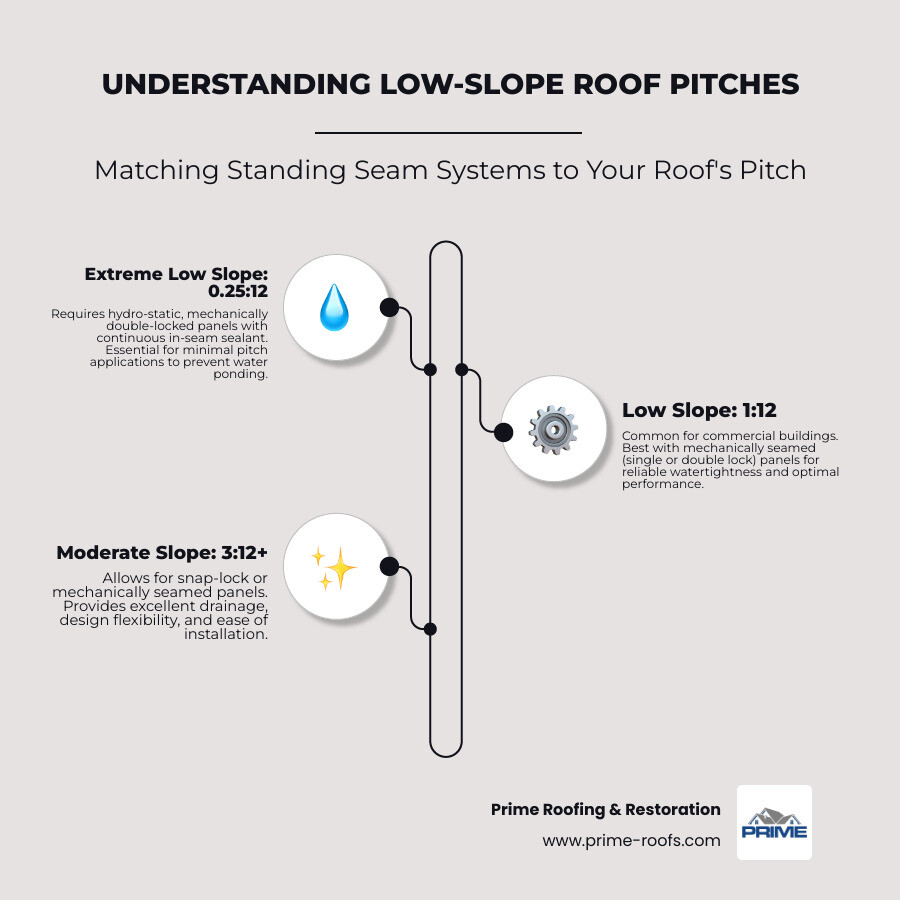
A low slope standing seam metal roof offers commercial property owners an exceptional combination of durability, energy efficiency, and long-term value. As a leading provider of expert roofing solutions in Alabama, we know these systems are engineered to perform where others fail. They work on roof pitches as low as 0.25:12 and provide superior weather protection through mechanically interlocked panels that create watertight seams.
Key Facts About Low Slope Standing Seam Metal Roofs:
- Minimum Slope: 0.25:12 to 1:12 depending on panel type and seam height
- Expected Lifespan: 40+ years (17-20 years longer than other systems)
- Energy Savings: Up to 40% reduction in cooling costs with reflective coatings
- Warranties: 20-40 year manufacturer warranties standard
- Best Panel Types: Mechanically seamed with 2-3 inch seam heights for optimal performance
For property owners in Central Alabama looking for a robust and long-lasting roofing solution, understanding your options is the first step toward protecting your investment. Standing seam metal roofs excel in Alabama’s challenging climate, offering superior wind resistance and the ability to shed water effectively even on minimal slopes.
The key to success lies in proper panel selection and installation techniques. While snap-lock systems work well on steeper slopes, mechanically seamed panels with double-lock construction provide the weather-tightness essential for low-slope applications.
I’m Bill Spencer, owner of Prime Roofing & Restoration, and I’ve seen how a properly installed low slope standing seam metal roof can transform a commercial property’s performance and reduce long-term maintenance costs. With over five years specializing in both residential and commercial roofing across Alabama’s Gulf Coast region, I understand the unique challenges our climate presents for low-slope roofing systems.
Why Choose Standing Seam? The Best Advantages for Low-Slope Roofs
When you’re looking at roofing options for your commercial building, especially one with a low slope, the material you choose can make or break your investment. A low slope standing seam metal roof consistently outperforms other systems, offering a winning combination of performance, longevity, and real economic benefits that smart property owners recognize.
What makes these roofs so special? They’re specifically engineered to tackle the unique challenges that low-pitch roofs face. While other roofing materials might struggle with water drainage or weather exposure on minimal slopes, standing seam metal systems are built to excel in exactly these conditions. When you choose professional metal roofing services, you’re investing in a solution that works with your building’s design, not against it.
Let’s explore the key advantages that make standing seam metal roofing such a smart choice for your low-slope commercial property.
Superior Durability and Lifespan
Here’s where a low slope standing seam metal roof really shines – these systems are built to last in ways that will genuinely surprise you. We’re not talking about minor improvements over other materials; we’re talking about dramatic differences that impact your bottom line for decades.
Exceptional longevity is perhaps the most impressive benefit. Metal roofs consistently deliver 40+ years of reliable service, which puts them roughly 17 years ahead of built-up roofs and a full 20 years beyond single-ply systems. Think about what that means for your business – fewer disruptions, fewer replacement costs, and decades of peace of mind. Manufacturers back up these claims with substantial warranties ranging from 20 to 40 years, showing their confidence in the product.
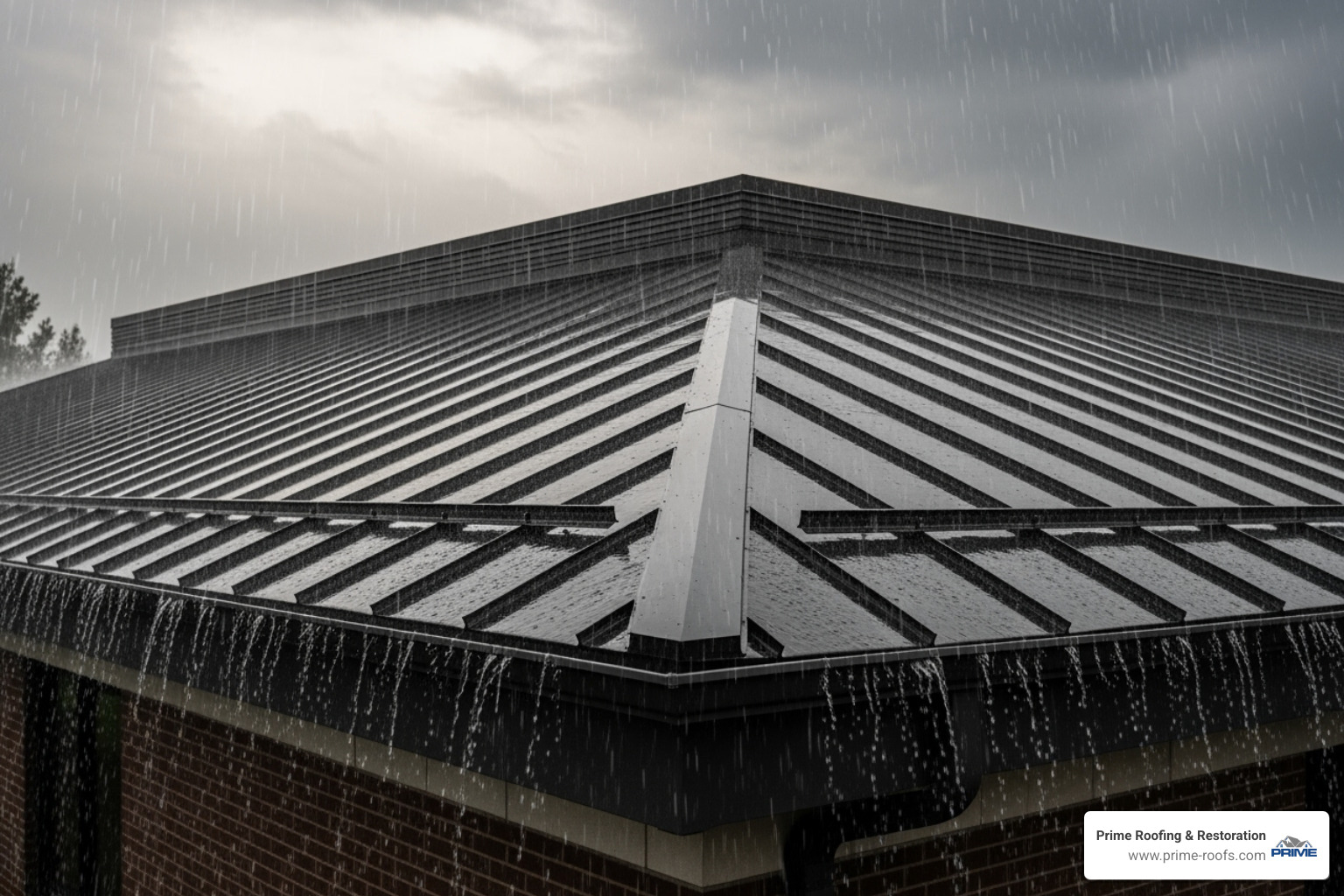
Weather resistance is where standing seam metal truly proves its worth in Alabama’s challenging climate. The continuous panels and raised seams create an incredibly effective barrier against water penetration, even during our heaviest downpours. Wind resistance is equally impressive – many systems meet rigorous standards like ASTM E1592 and UL 580, which test for severe wind and uplift conditions.
What’s particularly smart about metal roofing is how lightweight these systems are despite their incredible strength. At just 40 to 135 pounds per 100 square feet, they’re among the lightest commercial roofing options available. This means less stress on your building’s structure and often simpler installation processes. You can even install them directly over bar joists or purlins without needing additional substrate.
Significant Energy Savings and Eco-Friendly Benefits
Beyond lasting forever (well, almost), a low slope standing seam metal roof delivers impressive energy efficiency and environmental benefits that make both your accountant and your conscience happy.
Energy cost reductions are where you’ll see immediate returns on your investment. Heat-deflecting metal coatings can reflect up to 70% of solar radiant heat, which means dramatically less heat gain in your building. In Alabama’s warm climate, this translates to energy cost reductions of up to 40% or more. Your HVAC systems won’t have to work nearly as hard, leading to lower utility bills and a more comfortable environment for everyone inside.
Sustainability credentials are built right into metal roofing systems. Every metal roof contains at least 25% recycled content, and here’s the really impressive part – at the end of its 40+ year lifespan, the entire roof is 100% recyclable. Nothing goes to a landfill. This high recycled content and complete recyclability can help your building earn LEED credits, boosting your property’s green credentials and potentially its value.
Low maintenance requirements mean fewer headaches and lower costs over time. The smooth, hard surface naturally resists moss, mildew, and dirt buildup. The concealed fastener system eliminates many common leak points that plague roofs with exposed fasteners. Less maintenance means more money staying in your pocket and fewer disruptions to your business operations.
For more detailed information about how metal roofing performs in our region’s specific climate challenges, check out our comprehensive guide on the Benefits of Metal Roofing for Alabama Homes. You can also learn more about What are Low Slope Metal Roofs? from industry experts.
Understanding the Technicals of a Low Slope Standing Seam Metal Roof
Getting the technical details right makes all the difference when installing a low slope standing seam metal roof. It’s not just about picking any metal panel and hoping for the best—the success of your roofing system depends on understanding minimum slope requirements, choosing the right panel profiles, selecting appropriate seam types, and using proper installation methods to ensure complete watertightness.
Think of it this way: your roof is only as strong as its weakest technical detail. That’s why we always focus on the engineering behind every installation at Prime Roofing & Restoration.
What is the Minimum Slope for a Standing Seam Metal Roof?
The slope of your roof determines everything about how water behaves on its surface. Get this wrong, and you’ll have problems for decades. Get it right, and your low slope standing seam metal roof will shed water beautifully for 40+ years.
Understanding the basics starts with knowing that any roof with a pitch of 3:12 or less (rising 3 inches for every 12 inches of horizontal distance) counts as low-slope. But standing seam metal roofs can handle much flatter applications than that general guideline suggests.
Manufacturer specifications are your bible here, and they vary significantly based on panel design. Most standing seam systems require a minimum of 1:12 slope, but advanced systems like Central-Loc panels can work on slopes as low as 0.25:12 thanks to their 3-inch ribs and factory-applied sealant. Sheffield Metals’ 2.0-inch Mechanical Seam works on 0.5:12 pitch or greater, while their 1.5-inch system needs at least 1:12 pitch.
The key difference lies in understanding hydrostatic versus hydrokinetic systems. Hydrokinetic systems work on steep slopes above 3:12, where gravity quickly pulls water off the roof. Hydrostatic systems are designed for low slopes of 3:12 or less, where water might sit temporarily as it slowly drains away. This means your low slope standing seam metal roof needs superior seam integrity and sealing to prevent any water intrusion during those brief ponding periods.
Always check your specific panel’s data sheet and local building codes. For coastal areas, our Metal Roof Codes Orange Beach Guide provides valuable local insights.
Snap-Lock vs. Mechanically Seamed: Which is Best for Low Slopes?
Here’s where the rubber meets the road—or rather, where the metal meets the weather. The way your panels connect determines how well your roof performs, especially on low slopes where water moves slowly and has more time to find any weaknesses.
| Feature | Snap-Lock Standing Seam | Mechanically Seamed Standing Seam |
|---|---|---|
| Minimum Slope | Typically 1:12 or greater | As low as 0.25:12 to 0.5:12 |
| Weather Tightness | Good for steeper slopes | Superior for low slopes |
| Installation Complexity | Faster, simpler installation | Requires specialized seaming tools |
| Cost | Generally lower upfront cost | Higher cost but better long-term value |
| Best Use Case | Residential and light commercial | Commercial low-slope applications |
Snap-lock systems work by having one panel edge snap into the adjacent panel’s edge. They’re faster to install and work well on steeper slopes where water moves quickly. However, they rely more heavily on sealants for weather protection.
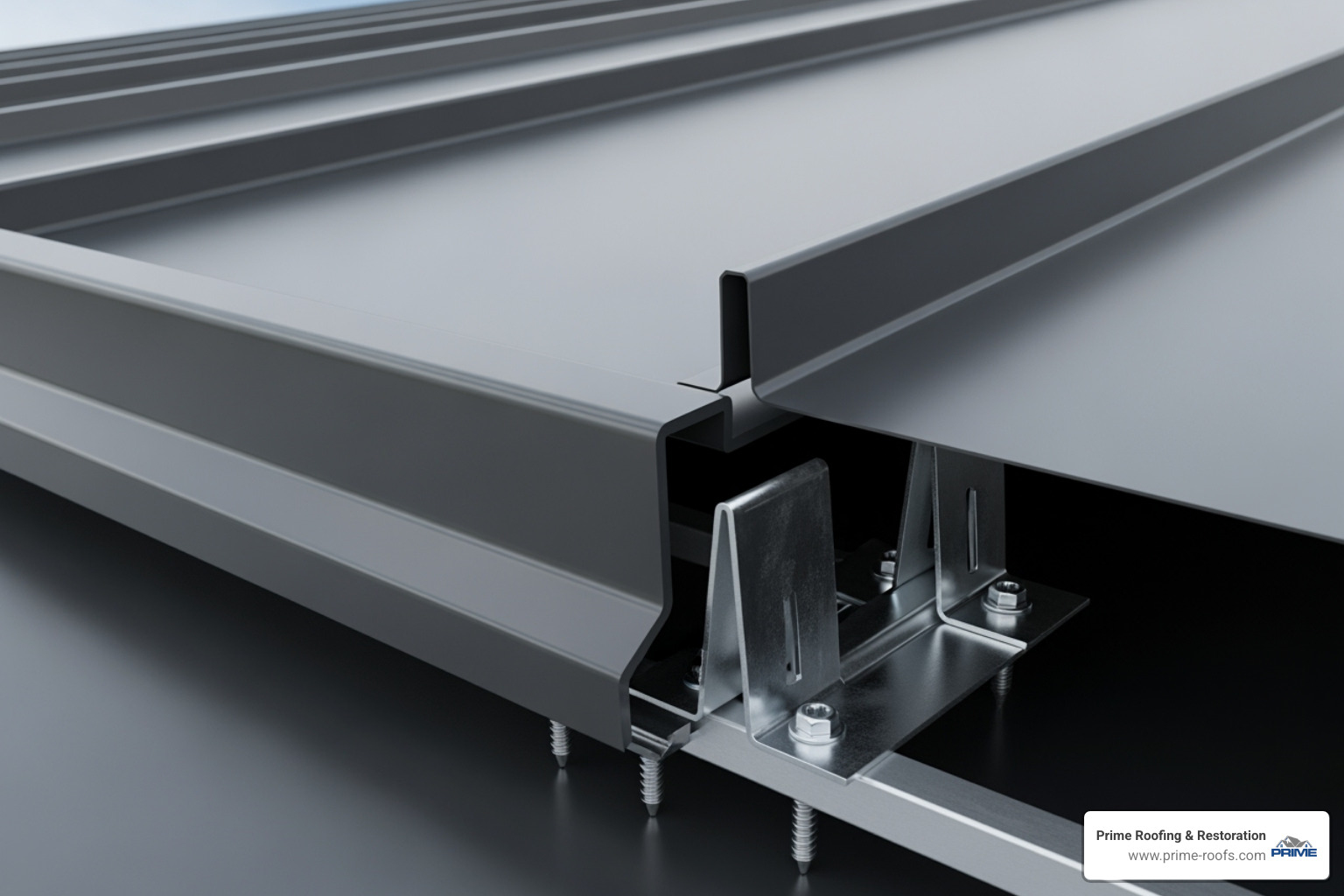
Mechanically seamed systems use specialized tools to crimp the panel edges together, creating either single-lock or double-lock seams. Double-lock seams provide the ultimate weather protection by creating two mechanical barriers against water intrusion. The seaming process actually folds the metal edges together multiple times, creating a virtually impenetrable barrier.
For low slopes, mechanically seamed wins every time. The mechanical connection combined with continuous in-seam butyl sealant creates the watertight barrier essential when water might pond temporarily on your roof. The taller seam heights (typically 2-3 inches) also provide better water barriers than the shorter seams found on snap-lock systems.
The Critical Role of Seam Height and Panel Profile
Seam height matters more on low slopes than most people realize. Think of your seam as a dam holding back water—the lower your slope, the taller your dam needs to be to prevent water from flowing over the top.
Two-inch seam heights work well for moderate low slopes around 1:12, but three-inch seam heights become essential as you approach the minimum slopes of 0.25:12 to 0.5:12. These taller seams create a more substantial barrier against water that might temporarily pond during heavy rainfall.
Panel profile selection goes hand-in-hand with seam height. Wider panels mean fewer seams per square foot, which translates to fewer potential leak points. However, the panel width must work with your building’s structural layout and thermal movement requirements.
The science behind it is straightforward: water follows gravity and finds the path of least resistance. On low slopes, that path moves slowly, giving water more time to test every seal and seam. Taller seams with proper mechanical connections and in-seam sealants create multiple barriers that prevent water ingress even under challenging conditions.
Proper technical execution makes the difference between a roof that lasts 15 years and one that protects your investment for 40+ years. For expert installation that accounts for the unique demands of Alabama’s coastal climate, contact our team in Orange Beach.
Prime Roofing & Restoration
Address: 25299 Canal Rd suite b-7, Orange Beach, AL 36561
Phone: (251) 210-2671