
Why Metal Roof Codes in Orange Beach Matter for Your Coastal Home
Metal roof codes in orange beach al are essential regulations that ensure your roofing system can withstand the unique challenges of coastal living. Orange Beach has adopted specific building codes designed to protect homes from hurricanes, salt air corrosion, and other Gulf Coast weather conditions. At Prime Roofing & Restoration, we believe understanding these codes isn’t just about compliance—it’s about protecting your investment and family. The research, much of it pioneered by organizations like the Insurance Institute for Business & Home Safety (IBHS), consistently shows that 70% to 90% of severe weather-related insurance claims include roof damage. This staggering statistic underscores a critical reality for coastal homeowners: your roof is the first and most important line of defense against catastrophic loss. When high winds and driving rain hit, any weakness in the roofing system can lead to a cascade of failures, resulting in extensive water damage to your home’s interior and structure. Therefore, making proper installation according to robust local codes isn’t just a suggestion; it’s the most crucial step you can take to protect your coastal property.
Quick Answer for Orange Beach Metal Roof Codes:
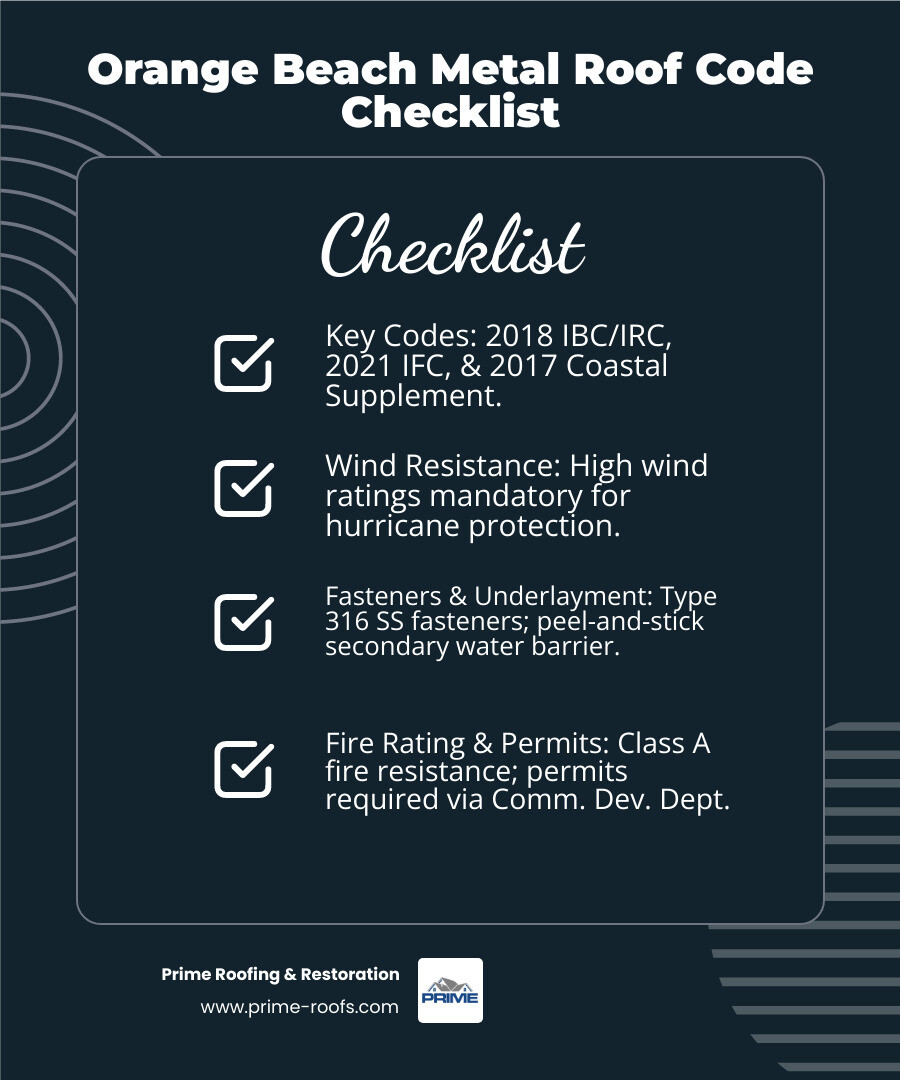
- Adopted Codes: 2018 International Building Code (IBC), 2018 International Residential Code (IRC), 2021 International Fire Code (IFC), and 2017 Coastal Code Supplement
- Wind Requirements: High wind resistance ratings mandatory for hurricane protection
- Fire Rating: Metal roofs must meet Class A fire resistance standards
- Fasteners: Type 316 stainless steel required within 15 miles of salt water
- Underlayment: Peel-and-stick membrane typically required as secondary water barrier
- Permits: Required through Orange Beach Community Development Department
Metal roofing offers excellent performance in Orange Beach’s challenging environment. These materials earn Class A fire ratings and provide superior wind resistance compared to traditional shingles. However, proper installation according to local codes is what makes the difference between a roof that performs and one that fails during the next storm.
When planning your metal roofing project, working with contractors who understand these specific coastal requirements becomes crucial. The 2017 Coastal Code Supplement adds extra protection layers beyond standard building codes.
I’m Bill Spencer, owner of Prime Roofing & Restoration, and I’ve spent over five years helping Orange Beach property owners steer metal roof codes in orange beach al to ensure their homes are properly protected. My team specializes in coastal roofing installations that exceed local code requirements while providing long-term durability in our unique Gulf Coast environment.
Understanding Orange Beach’s Adopted Building Codes
When you’re planning a roofing project in Orange Beach, understanding the local building codes isn’t just helpful – it’s absolutely essential. Think of it as your roadmap to a safe, durable, and legally compliant roof that can handle everything the Gulf Coast throws at it.
The City of Orange Beach has carefully selected a comprehensive set of building regulations designed specifically for our coastal environment. These aren’t arbitrary rules – they’re battle-tested standards that help homes survive hurricanes, resist salt air corrosion, and provide long-term protection for families.
Orange Beach operates under several key codes published by the International Code Council (ICC), which can be viewed publicly on their website. These include the 2018 International Building Code (IBC), which primarily governs commercial and multi-family structures; the 2018 International Residential Code (IRC), which is the foundational document for single-family homes; the 2021 International Fire Code (IFC), which details fire prevention and safety measures; and the critical 2017 Coastal Code Supplement. While Baldwin County has adopted newer versions of these codes, projects within Orange Beach city limits must follow the city’s specific adopted versions, making local expertise indispensable.
Finding official documentation is straightforward. You can visit the Community Development Department at Orange Beach City Hall for current code information. The Orange Beach Public Library also keeps copies of adopted codes available for public reference. For the most up-to-date information, check the Building & Fire Codes section on the city’s website.
At Prime Roofing & Restoration, we stay current with all local code requirements because compliance isn’t just about passing inspection – it’s about protecting your investment and your family’s safety.
The International Residential Code (IRC) and Roofing
For most residential properties, the 2018 International Residential Code (IRC) serves as the foundation for all roofing requirements. You can explore the specifics in the publicly accessible 2018 IRC provisions. IRC Chapter 9, titled “Roof Assemblies,” is particularly important. It provides exhaustive, detailed guidance for everything from material selection and compatibility to precise installation methods.
This chapter is incredibly thorough when it comes to weather protection requirements. It outlines precise specifications for flashing – those critical metal pieces that direct water away from vulnerable areas like chimneys, skylights, and roof valleys. Without proper flashing installed according to code, even the best roofing materials can fail during heavy rains.
Underlayment specifications are another crucial area covered in Chapter 9. This protective layer goes directly onto your roof deck before the final roofing material. In our humid, storm-prone climate, proper underlayment acts as a vital secondary barrier against water intrusion.
For metal roof codes in Orange Beach AL, the IRC also addresses material compatibility requirements. This ensures that all components work together harmoniously, preventing issues like galvanic corrosion that can occur when incompatible metals come into contact. Our team at Prime Roofing & Restoration follows these guidelines carefully to create roofing systems that perform reliably for decades. Learn more about our comprehensive metal roofing services.
The 2017 Coastal Code Supplement
Here’s where Orange Beach really shows its commitment to building resilience: the 2017 Coastal Code Supplement. This isn’t just a minor addition to standard codes – it’s a comprehensive set of amendments specifically designed for coastal construction in high-wind, salt-air environments.
This supplement adds crucial layers of protection beyond what you’ll find in standard building codes. It addresses hurricane preparedness by mandating higher wind load requirements that ensure roofs can withstand the intense pressures of tropical storms and hurricanes. When you consider that severe weather events regularly impact our area, these improved standards become invaluable.
The supplement also tackles the ongoing challenge of salt air corrosion. Our beautiful Gulf breezes carry salt that can gradually degrade building materials over time. The Coastal Code Supplement provides specific guidance for material selection and treatment to combat this corrosive environment.
Metal roofing excels in these conditions, especially when properly specified and installed according to coastal requirements. If you’ve recently experienced storm damage and need guidance on repairs or replacement, visit our Orange Beach storm damage resource page for immediate assistance.
Understanding and implementing these coastal-specific requirements isn’t optional – it’s the difference between a roof that survives the next major storm and one that becomes part of the damage statistics.
Hurricane-Ready: Special Requirements for Coastal Metal Roofs
Living on Alabama’s stunning Gulf Coast means enjoying endless beach days, spectacular sunsets, and yes – preparing for the occasional hurricane. That’s just part of coastal life, and Orange Beach’s building codes reflect this reality. The city has designed its regulations to make homes as hurricane-resistant as possible, with roofing taking center stage in these protective measures. When it comes to weathering these storms, metal roof codes in orange beach al favor metal roofing systems for their exceptional performance in extreme weather conditions.
Here’s a sobering reality: 70% to 90% of severe weather-related insurance claims include roof damage. That statistic alone shows why having a properly installed, code-compliant roof isn’t just recommended – it’s essential for protecting your family and investment. Metal roofing shines in these challenging conditions because of its inherent strength and wind resistance. Unlike traditional shingles that can lift and tear away in high winds, metal roofing systems use interlocking panels and robust fastening methods that create a unified barrier against hurricane-force winds.
The secret lies in how metal roofs resist wind uplift – that powerful suction force that tries to peel your roof off during storms. When installed according to Orange Beach’s stringent codes, metal panels work together as a single system rather than individual pieces. This integrated approach prevents the catastrophic failures we often see with other roofing materials when Mother Nature releasees her fury. If you’re dealing with storm damage and need guidance, our team has put together a comprehensive guide on what to do after a storm damages your roof.
Wind Resistance and FORTIFIED Standards
Orange Beach doesn’t settle for “good enough” when it comes to wind resistance – the codes demand high-performance roofing systems that can stand up to our coastal storms. Many homeowners and builders, including our team, take protection even further by following FORTIFIED Home™ standards developed by the Insurance Institute for Business & Home Safety (IBHS). Think of FORTIFIED as the gold standard for hurricane preparedness – it’s like giving your home a suit of armor.
What makes FORTIFIED special is that it’s built on real-world research, not just theory. IBHS scientists have studied thousands of storm-damaged homes and conducted extensive laboratory testing to understand exactly how buildings fail during severe weather. Their findings revealed that winds as low as 50 mph can cause enough damage to let water into your home, leading to devastating interior damage that far exceeds the initial roof problems.
A FORTIFIED Roof system addresses these vulnerabilities head-on. It requires a sealed secondary water barrier – typically a peel-and-stick underlayment applied directly to the roof deck. This creates a watertight seal that protects your home even if the primary roofing material gets damaged or blown away. The system also demands improved fasteners and improved roof deck attachment, often using ring-shank nails that grip much better than standard fasteners.
Alabama homeowners have additional reasons to consider FORTIFIED upgrades beyond the obvious safety benefits. Many insurance companies offer discounts for FORTIFIED homes, and there are often state and local programs that provide grants or other financial incentives for these improvements. It’s one of those rare situations where doing the right thing for safety also makes financial sense. You can learn more about the specific technical requirements and find certified professionals on the official FORTIFIED Home™ website. Furthermore, Alabama residents can seek financial assistance through the Strengthen Alabama Homes grant program, which helps offset the cost of upgrading to a FORTIFIED Roof. This program has been instrumental in helping thousands of Alabamians make their homes more resilient to hurricane-force winds.
Corrosion Resistance in a Salt-Air Environment
While hurricanes grab the headlines, there’s another coastal challenge that’s constantly working to damage your roof – salt air corrosion. That refreshing ocean breeze carries microscopic salt particles that can turn metal components into rusty, weakened shadows of their former selves. This is exactly why metal roof codes in orange beach al include specific requirements for corrosion-resistant materials.
The codes are very specific about material selection for our coastal environment. For metal roofing, this means choosing materials that can laugh in the face of salt spray. Aluminum is a popular choice because it naturally forms a protective oxide layer that shields the underlying metal. Galvanized steel with a robust G90 zinc coating is another excellent option – that “G90” designation indicates a heavy zinc coating that provides superior protection compared to lighter alternatives.
But it’s not just the big components that matter. The codes require that fasteners used within 15 miles of salt water – which definitely includes Orange Beach – must be Type 316 stainless steel. This specific grade of stainless steel is engineered to resist saltwater corrosion, ensuring that the critical connections holding your roof together won’t weaken over time. We’ve seen too many roofs where cheaper fasteners corroded away, leading to panel failures that could have been easily prevented.
Even with the best corrosion-resistant materials, a little maintenance goes a long way in our coastal environment. Periodically rinsing your roof with fresh water helps wash away salt deposits before they can cause problems. When you combine the right materials with proper installation according to these corrosion-resistant specifications, you get a roof that can provide decades of reliable protection. Our experience shows that understanding these requirements is crucial for long-term performance – you can read more about the many benefits of metal roofing for Alabama homes on our blog.
The Technical Nitty-Gritty of Metal Roof Codes in Orange Beach AL
Once we move beyond the general framework and coastal challenges, it’s time to roll up our sleeves and dig into the really important stuff the precise technical specifications that make or break your roofing project. This is where metal roof codes in orange beach al get wonderfully detailed, spelling out exactly how every component must come together. These aren’t just bureaucratic suggestions gathering dust in a filing cabinet; they’re your blueprint for a roof that will actually protect your family when Mother Nature decides to throw a tantrum.
Think of the permitting process as your project’s official seal of approval. Before any hammers start swinging in Orange Beach, you’ll need to secure a permit through the Community Development Department. This involves submitting detailed plans that showcase your materials, installation methods, and other critical details. It’s like showing your homework to the teacher except this teacher is making sure your roof won’t fly away in the next hurricane! Throughout construction, inspections happen at key stages to verify everything meets code. We handle all these permitting details for our clients because, honestly, most folks would rather spend their time planning their new roof’s color than deciphering municipal paperwork. If you’re curious about the ins and outs of this process, our comprehensive guide to roofing permits breaks it all down in plain English.
Fastening Methods and Underlayment Requirements
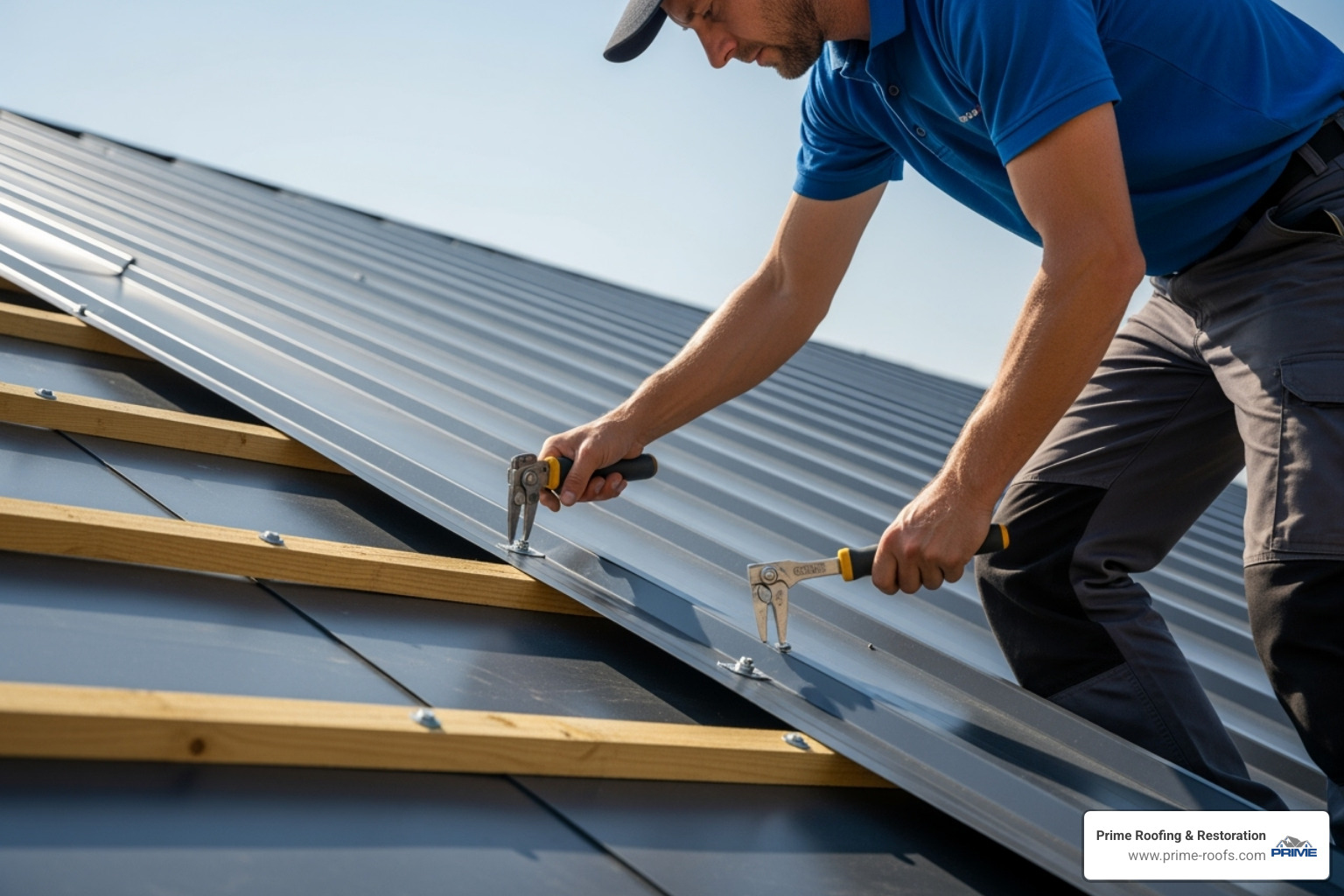
Here’s where the magic happens or where things go terribly wrong if you cut corners. Proper fastening is absolutely critical for wind resistance, and Orange Beach doesn’t mess around with this requirement. Imagine your roof panels as puzzle pieces that need to stay locked together during a hurricane. The codes specify exactly what type, size, and spacing of fasteners will keep that puzzle intact when 100-mph winds try to rearrange your home’s exterior.
For coastal installations within 15 miles of salt water (which definitely includes Orange Beach), the code mandates Type 316 stainless steel fasteners. This isn’t just a fancy upgrade; it’s essential protection against the relentless chloride corrosion that salt air causes. As detailed by industry resources like the American Iron and Steel Institute, Type 316 contains molybdenum, an element that significantly improves its resistance to pitting and corrosion in saltwater environments compared to more common grades like Type 304. This specific material choice is a perfect example of how coastal codes are engineered for long-term durability. These specialized fasteners must penetrate the roof sheathing by at least 3/4 inch, creating a grip strong enough to hold your roof together through whatever the Gulf throws at it.
But fasteners are only half the story. The secondary water barrier requirement is where coastal codes really shine. This “peel-and-stick” membrane gets applied directly to your roof deck before any metal panels go on. Picture it as a waterproof superhero cape for your home’s structure. Even if hurricane winds manage to damage or lift a metal panel, this underlayment prevents water from sneaking into your attic and causing thousands of dollars in interior damage.
Proper roof deck preparation is crucial for this underlayment to work effectively. The surface must be clean, dry, and smooth for the membrane to create that vital watertight seal. We’ve seen too many shortcuts taken in this area, and it always comes back to haunt homeowners during the next big storm. When you’re dealing with roof issues in our coastal environment, getting these details right from the start saves heartache later. If you’re facing roof problems right now, our Orange Beach roof repair services can help get your home protected quickly and correctly.
Fire Resistance Standards for metal roof codes in Orange Beach AL
While we spend a lot of time talking about hurricanes and salt air, fire safety deserves equal attention in Orange Beach’s building codes. This is where metal roofing really gets to show off, earning top marks for keeping your family safe from fire hazards.
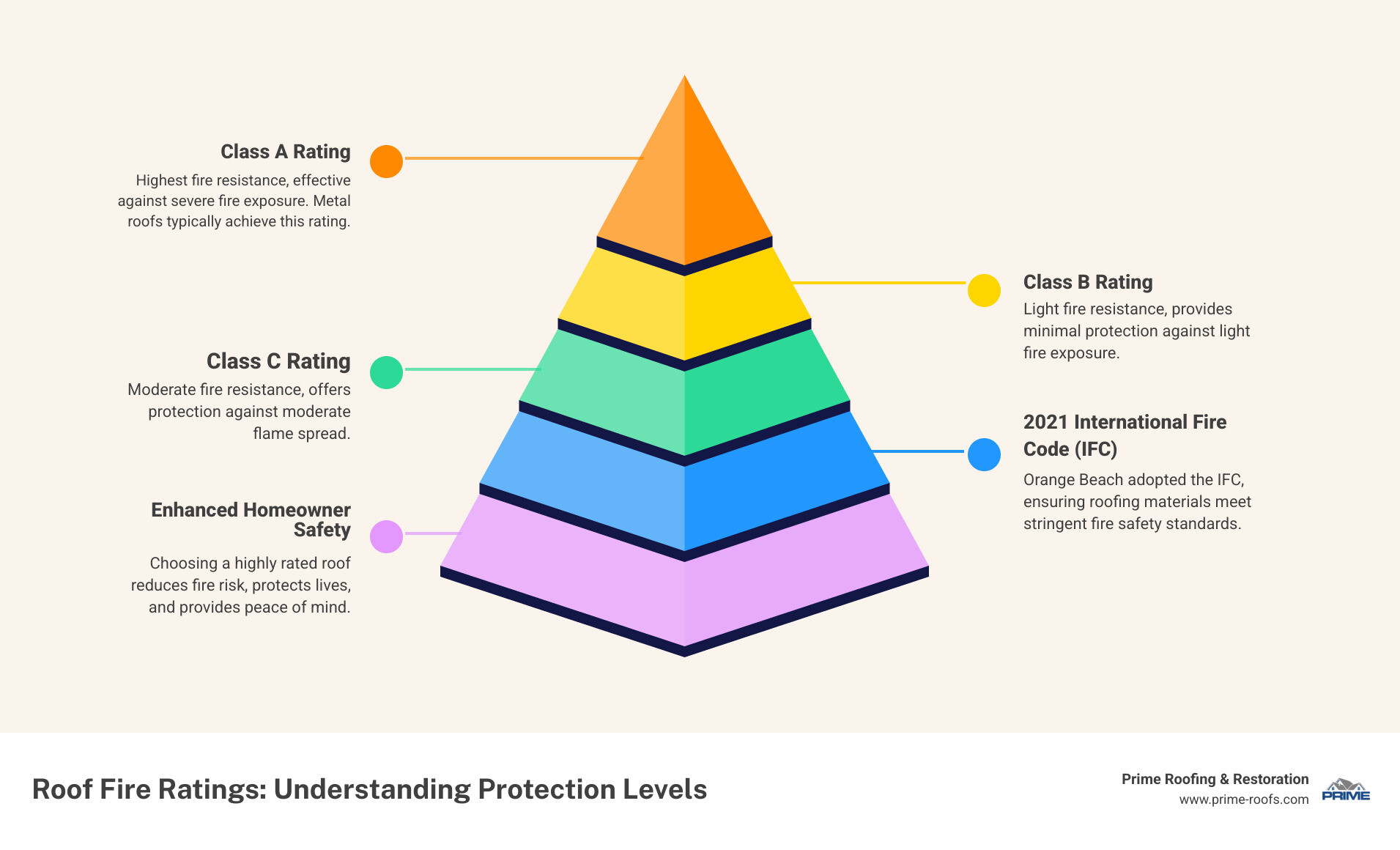
Metal roofing systems typically achieve a Class A fire rating the absolute highest rating available for roofing materials. This means your roof can handle severe fire exposure without contributing to the problem. Unlike materials that can ignite, melt, or warp under extreme heat, metal roofs are non-combustible. They won’t catch fire from flying embers during a wildfire or spread flames from one home to another during a neighborhood emergency.
The City of Orange Beach has adopted the 2021 International Fire Code (IFC), which sets these stringent fire resistance standards for all building components. These codes work in tandem with recommendations from organizations like the National Fire Protection Association (NFPA), the leading authority on fire safety. This isn’t just about checking boxes for compliance it’s about creating a layered defense system for fundamental homeowner safety. When fire trucks are racing through your neighborhood, you want a roof that’s part of the solution, not part of the problem.
The peace of mind that comes with a Class A rated metal roof is something many homeowners don’t fully appreciate until they see news footage of fires jumping from house to house. Your metal roof acts as a protective shield, giving firefighters a better chance to save your home and giving your family crucial extra time to stay safe.
Visit Our Orange Beach Office
Prime Roofing & Restoration
Address: 25299 Canal Rd suite b-7, Orange Beach, AL 36561
Phone: (251) 210-2671
Aesthetic and Architectural Guidelines for metal roof codes in Orange Beach AL
Orange Beach isn’t just concerned with keeping roofs attached and fire-resistant the city also cares deeply about maintaining the beautiful coastal character that makes this community so special. The City’s Zoning Ordinance Article 10 covers “Architectural Standards and Restrictions,” and while it won’t prevent you from choosing metal roofing, it does influence how your roof should look and blend with the neighborhood.
Here’s an important distinction that sometimes confuses homeowners: the ordinance typically restricts “metal-sided” buildings in residential and business districts. This rule targets utilitarian corrugated metal siding that might make your home look more like a warehouse than a beach house. However, this restriction doesn’t apply to metal roofing, which the city recognizes as an attractive, high-quality roofing material perfectly suited to coastal living.
What these guidelines do influence are roofline variations and material appearance. The code encourages designs that break up large, monotonous roof planes by incorporating features like parapets, overhanging eaves, or roofs with multiple slope planes. This means your metal roof should complement these architectural elements rather than fight against them.
When we help homeowners select metal roofing options, we often recommend standing seam profiles or metal shingle systems that add visual interest while meeting all technical requirements. The goal is creating a roof that not only survives hurricanes but also improves your home’s curb appeal and fits beautifully into Orange Beach’s charming coastal aesthetic. These choices help maintain property values while ensuring your home contributes positively to the community’s overall character.
For the complete details on these architectural requirements, you can review the Orange Beach Zoning Ordinance Article 10 directly from the city’s official documentation.
Hiring a Pro and Ensuring Long-Term Performance
When it comes to metal roof codes in orange beach al, the complexity can feel overwhelming. Between the International Building Code, the International Residential Code, the 2017 Coastal Code Supplement, and various local ordinances, there’s a lot to steer. From pulling the right permits to ensuring every single fastener meets code requirements and every piece of flashing is perfectly installed, working with a qualified contractor isn’t just helpful—it’s absolutely essential for your peace of mind and your home’s protection.
Think of it this way: you wouldn’t perform surgery on yourself, and you shouldn’t trust your home’s most critical protective barrier to guesswork. A professional roofing contractor brings years of specialized knowledge to your project. They understand not just the letter of the law, but the spirit behind it—why these codes exist and how to implement them for maximum protection. This expertise translates into a roof that doesn’t just pass inspection, but truly shields your family and investment for decades to come.
The right contractor will guide you through every step, from material selection that suits your home’s style and budget, to design considerations that complement Orange Beach’s architectural guidelines, to navigating the entire permitting and inspection process. What could be a months-long headache becomes a smooth, well-orchestrated project when you have the right team on your side.
Finding a Qualified Contractor in Orange Beach
So how do you separate the pros from the pretenders? The City of Orange Beach has done some of the heavy lifting for you by requiring all contractors to meet specific standards. Every contractor working in the city must be properly licensed and insured. For residential projects, this means holding a valid, current license from the Alabama Home Builders Licensure Board (HBLB). You can and should verify any contractor’s license status directly on the HBLB website before signing a contract. Additionally, they must carry adequate general liability and workers’ compensation insurance. You can ask for a certificate of insurance and even verify it with the issuing insurance agency, a process recommended by the Alabama Department of Insurance to protect homeowners from liability.
But don’t just take their word for it—always ask for proof and verify these credentials. It takes just a few minutes and can save you from costly headaches down the road. A legitimate contractor will gladly provide this documentation and won’t be offended by your diligence.
Beyond the basic licensing requirements, look for a qualified contractor in Orange Beach who demonstrates intimate familiarity with Orange Beach’s specific codes. They should speak confidently about the 2017 Coastal Code Supplement, understand why Type 316 stainless steel fasteners are required within 15 miles of salt water, and explain the importance of peel-and-stick underlayment for coastal resilience. If they can’t discuss these details knowledgeably, keep looking.
A quality local contractor should also handle the permitting process efficiently on your behalf and communicate clearly throughout the project. They understand that your home is likely your largest investment, and they treat it with the respect it deserves. We believe in transparent communication and keeping homeowners informed every step of the way. For guidance on what to look for in a roofing professional, check out our comprehensive guide on choosing a roofer.
Your Local Metal Roofing Experts
Here’s the good news: navigating metal roof codes in orange beach al doesn’t have to be complicated when you have the right partner. A durable, beautiful, and fully code-compliant metal roof is one of the smartest investments you can make in your coastal property. It’s protection, beauty, and peace of mind all rolled into one.
At Prime Roofing & Restoration, we’re not just contractors—we’re your neighbors who understand the unique challenges of Gulf Coast living. We’ve spent years mastering the intricacies of Orange Beach’s building codes, and we bring that expertise to every project. Our licensed professionals are committed to using only the highest quality materials and providing comprehensive solutions, including assistance with insurance claims when storms do strike.
We believe in building relationships that last as long as our roofs do. When you choose us, you’re not just getting a roofing contractor—you’re getting a partner who’s invested in your home’s long-term success. We handle everything from the initial consultation and design, through permitting and installation, to final inspection and beyond.
For expert guidance and professional installation of your metal roof that exceeds Orange Beach’s rigorous standards, contact us today. We’re ready to help protect your home and family with a roof built to weather any storm.