
Why Fast Action Matters During a Flat Roof Crisis
Flat roof emergency repair is critical when water drips through your ceiling or you notice sagging drywall after a storm. Unlike pitched roofs, flat roofs can pool water in damaged areas, turning a small breach into a major problem within hours. When a roof fails, costs multiply as water seeps in, materials get soaked, mold spreads, and structural components weaken. For homeowners and businesses needing expert roofing and restoration, acting fast is key.
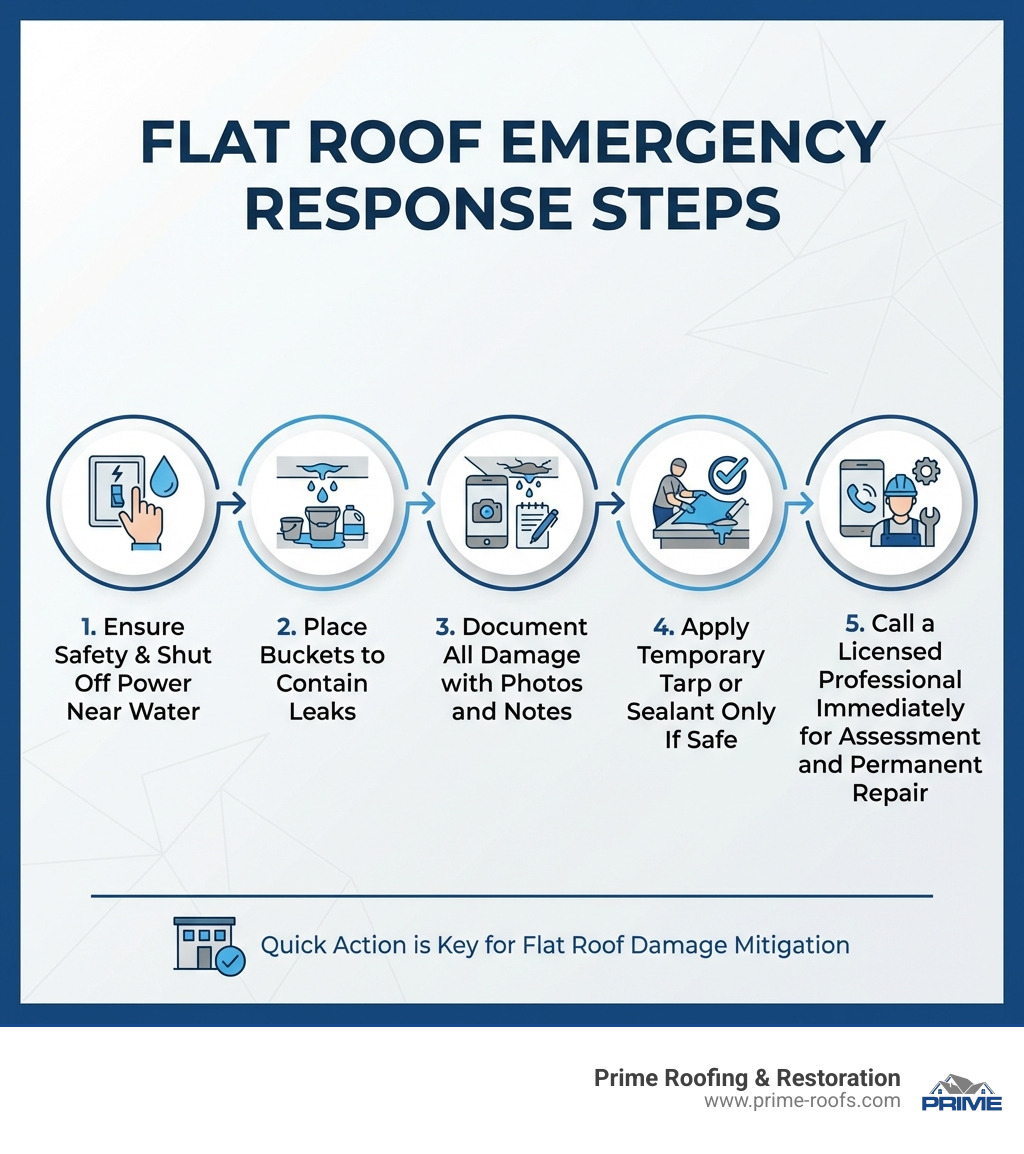
Here’s what to do immediately:
- Shut off power in rooms with active leaks.
- Contain water with buckets and tarps.
- Document damage with photos for insurance.
- Call a professional if you see sagging ceilings or significant ponding water.
- Apply temporary fixes like tarps or roofing cement only if it’s safe.
Emergency repair costs typically range from $500 for minor patching to $2,500 for extensive temporary stabilization. The first visible sign, like a ceiling stain, often appears long after the leak begins, meaning damage may already be significant.
In Central Alabama, our weather, with an average of 34 inches of annual rain, puts aging flat roofs to the test. A small crack can lead to pooling water, posing a major threat to your property.
As the owner of Prime Roofing & Restoration, I’ve led our teams through hundreds of flat roof emergencies across Alabama. My experience has taught me that speed and safety are everything when disaster strikes.
Quick flat roof emergency repair terms:
What Constitutes a Flat Roof Emergency & Your Immediate Response
A flat roof emergency repair situation is any roofing failure that can quickly cause interior damage, safety hazards, or structural problems if not addressed right away. Because flat roofs tend to hold water instead of shedding it, small issues can escalate within a single storm. For homeowners and businesses in Central Alabama, knowing when to act and who to call is just as important as the repair itself. If you are already seeing leaks or ceiling stains, the most reliable path to a lasting fix is to schedule a professional assessment through a trusted roof repair and restoration service that understands flat roof systems.
Emergency Signs: When Your Flat Roof Demands Immediate Attention
A flat roof emergency is not limited to a dramatic cave‑in. It often begins with subtle but urgent warning signs that should never be ignored:
- Active Leaks: Any water dripping from the ceiling during or shortly after rain is an emergency. It indicates the waterproofing layer has been breached and water is already inside your building envelope.
- Sagging Ceiling or Walls: Bulging, sagging, or heavily stained drywall points to prolonged saturation. This condition can rapidly progress to partial ceiling collapse.
- Visible Structural Damage: Torn, lifted, punctured, or missing sections of roof membrane expose the underlying deck and insulation, leaving the structure vulnerable to further water intrusion.
- Electrical Hazards: Leaks near outlets, light fixtures, junction boxes, or wiring introduce immediate fire and shock risks and should trigger an urgent shutdown of power to affected circuits. These are not minor inconveniences; they are life-threatening situations. The U.S. Occupational Safety and Health Administration (OSHA) provides strict guidelines for working near electrical hazards, underscoring the need for professional intervention. Never attempt to handle wiring or electrical components yourself when water is present.
The Silent Threat: Ponding Water Danger
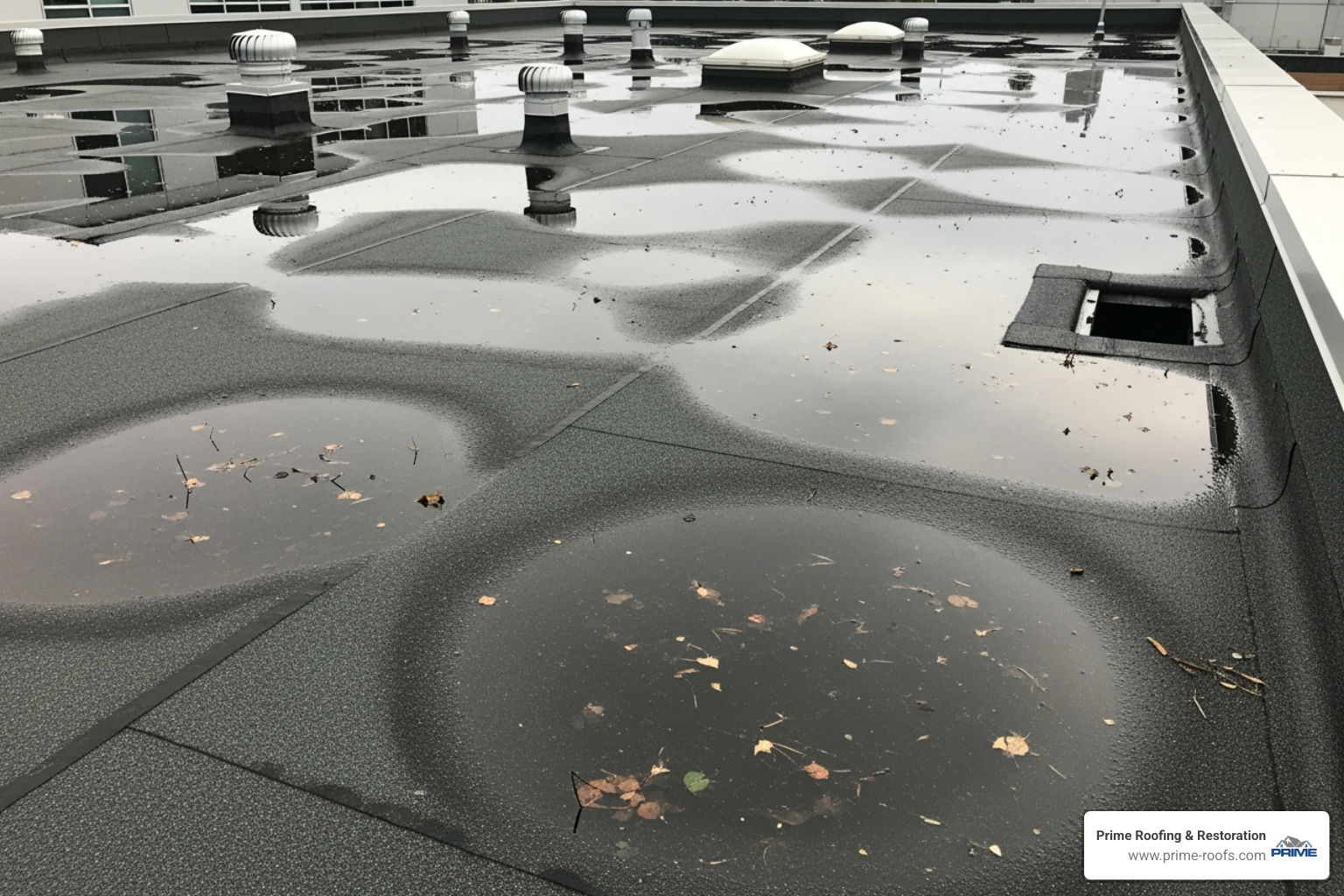
Ponding water is one of the most frequently cited root causes in flat roof failure investigations. Industry best practice uses the 72‑hour rule: any water that remains pooled on a flat roof surface for more than 72 hours after rainfall is considered a defect that must be addressed.
Persistent ponding leads to:
- Accelerated Material Degradation: Constant exposure to standing water and UV breaks down membranes, seams, and adhesives at a much faster rate than normal weathering.
- Increased Hydrostatic Pressure: The weight of even a shallow pond forces water sideways and downward into seams, fastener penetrations, and micro‑cracks.
- Structural Stress: A single 10‑by‑10‑foot area with 1 inch of standing water can add more than 500 pounds of live load to the structure, and deeper ponds can weigh several thousand pounds.
- Vegetation Growth: Standing water supports algae, moss, and organic buildup, and root structures from biological growth can physically penetrate or lift the membrane.
Addressing this issue is crucial for extending roof life. You can learn more about diagnosing and fixing these issues in our guide on flat roof ponding repair.
Immediate Steps: Safety First, Always
When a flat roof emergency strikes, safety comes before any repair attempts. Follow a calm, step‑by‑step approach:
- Prioritize People: Evacuate any room where the ceiling is sagging, bulging, or cracking, or where you see water near electrical components.
- Shut Off Power: If leaks are near fixtures, outlets, or wiring, shut off power to the affected area at the breaker panel until a professional confirms it is safe.
- Move Valuables: Relocate electronics, furniture, important documents, and inventory out of the leak path to reduce secondary losses.
- Contain Water: Place buckets, plastic bins, or tubs under active drips and use tarps or plastic sheeting to shield flooring and furnishings.
- Stay Off the Roof: Avoid climbing onto a damaged or wet roof, especially during a storm or at night. Flat roofs can hide soft spots and weakened decking that are not obvious until they give way.
Damage Documentation: Your Best Friend for Insurance
Once the immediate area is safe and water is contained as much as reasonably possible, begin documenting the event for insurance purposes. Thorough evidence often leads to smoother, faster claims.
- Photos and Videos: Capture wide shots and close‑ups of all visible damage, including roof surfaces (from the ground or a safe vantage point), ceilings, walls, flooring, and any damaged contents.
- Detailed Notes: Write down the time the leak was first noticed, the weather conditions, any sounds (like dripping inside walls or ceiling pops), and every step you took to protect the property.
- Keep Receipts: Save receipts for tarps, buckets, plastic sheeting, fans, dehumidifiers, or any temporary repair materials. Insurers frequently reimburse reasonable mitigation expenses.
Thorough documentation helps demonstrate that you acted promptly to limit damage. Many policyholders also benefit from professional support when preparing for a roof inspection for insurance to validate storm‑related or sudden accidental loss.
A Homeowner’s Guide to Temporary Flat Roof Emergency Repair
Temporary flat roof repairs are designed to control immediate damage, not to replace a professional fix. When a storm exposes a weakness in your roofing system, quick action can prevent thousands of dollars in additional interior repairs. Homeowners across Alabama regularly use short‑term measures like tarping or patching to bridge the gap until a licensed contractor arrives. However, the most reliable way to permanently stop a recurring leak is to schedule a comprehensive evaluation and repair through an experienced roof repair and restoration service that specializes in flat roofing systems.
DIY Limitations: A Word of Caution
Temporary fixes are not permanent solutions. They exist to slow or stop water intrusion until a professional can perform a proper repair or replacement. Misapplied DIY work can mask active leaks, void warranties, or create new failure points.
- Safety Warning: Never work on a roof if it is wet, icy, or windy, or if you do not have stable access and fall protection. Many roofing injuries happen during hurried emergency attempts.
- Temporary Nature: Most homeowner‑applied patches are only reliable for days or weeks, not months. Sun, standing water, and movement will quickly break down makeshift repairs.
- When to Avoid DIY: If you see structural deflection, large rips or blow‑offs, complex details around skylights or rooftop HVAC, or if water is near electrical systems, wait for a professional.
Locating the Leak Source on a Flat Roof
Finding the true source of a leak on a flat roof is more complex than following a drip straight up. Water often travels horizontally along the underside of the membrane, insulation, or decking before emerging inside.
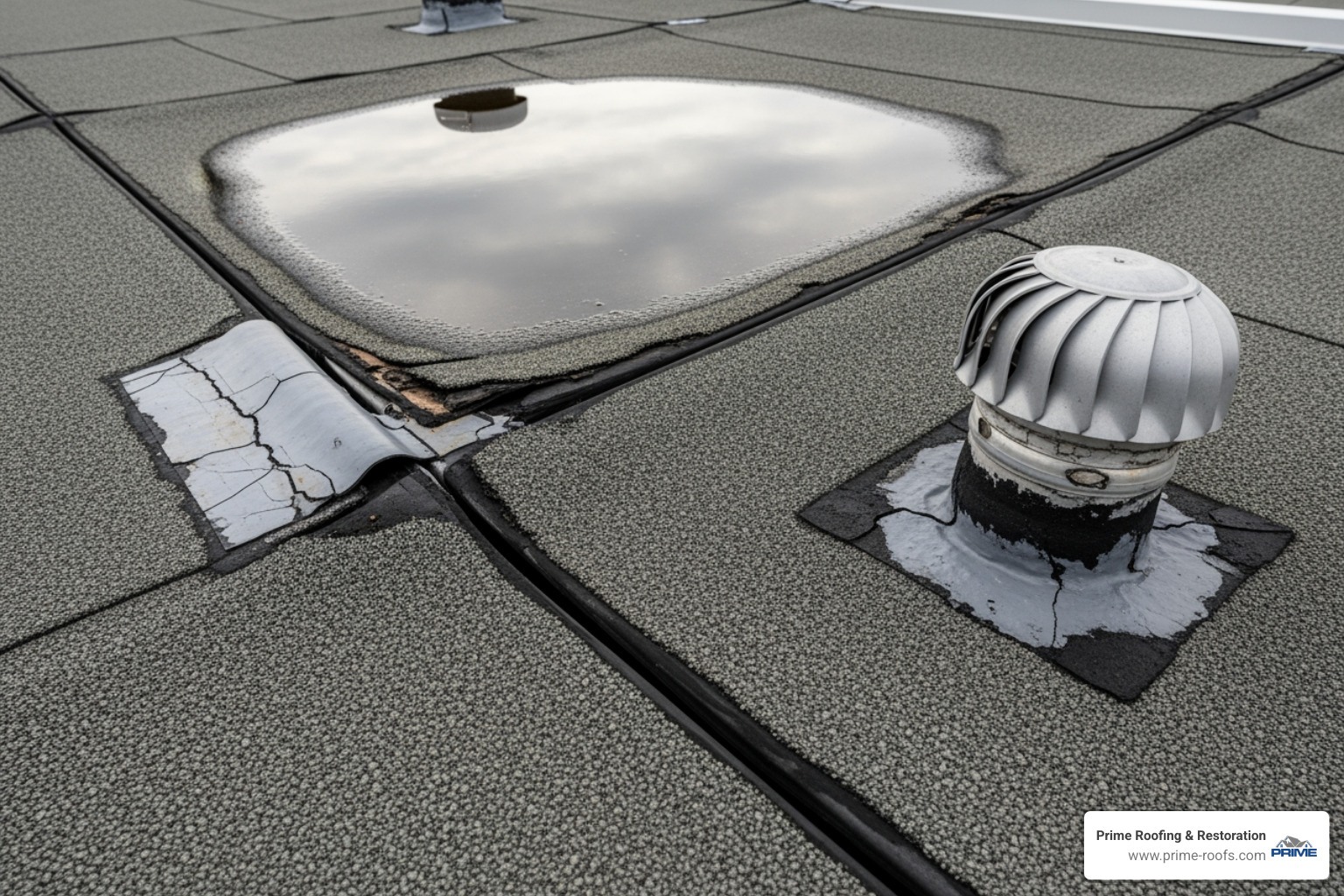
When conditions are safe and you can access the roof, visually check these common weak points:
- Ponding Water: Any area holding water is a high‑probability leak source, especially where the membrane shows discoloration, blisters, or alligatoring.
- Seams: Inspect all seams between rolls or sheets of membrane for gaps, lifted edges, visible cracks, or failed adhesive.
- Flashing: Examine transitions at walls, parapets, curbs, chimneys, and skylights. Look for splits, separations, or peeling where the membrane turns up vertical surfaces.
- Roof Penetrations: HVAC units, plumbing vents, conduit penetrations, satellite mounts, and other rooftop equipment often leak when their boots, pitch pans, or sealants deteriorate.
- Debris Clogs: Check drains, scuppers, and gutters for leaves, granules, or trash that could be backing water up onto the roof surface.
Temporary Patching Methods for a Flat Roof Emergency Repair
If the damage is limited and you can work safely, these temporary measures can reduce water intrusion until professional help arrives:
- Roofing Cement and Mesh: For small cracks or punctures in compatible materials, clean and dry the area as much as possible. Apply roofing cement, embed a strip of fiberglass mesh into it, then cover with an additional layer of cement, feathering the edges.
- Applying Sealant: For hairline cracks or minor separations at seams, a high‑quality elastomeric roofing sealant can provide a quick, flexible barrier. Only apply to clean, debris‑free surfaces.
- Using a Weighted Tarp: For larger damaged areas, a heavy‑duty tarp is often the safest homeowner option. Our emergency tarping complete guide outlines best practices, but the essentials are to extend the tarp well beyond the damaged zone and secure it with wood battens and fasteners or safe, evenly distributed weights.
- Specialty Products: Certain emergency patch products are engineered to adhere in damp or light‑rain conditions and can temporarily plug active leaks. Examples include wet‑applied mastics and granular compounds similar to Emergency roof patch powders. These products are stop‑gap measures only and must be followed by a professional, material‑specific repair.
What to Avoid During a DIY Emergency Repair
Avoiding common mistakes is just as important as choosing the right temporary fix. Missteps can worsen the problem or create new leak paths.
- Random Nailing: Do not pepper the membrane with nails or screws to hold patches or tarps in place. Each fastener hole is a new potential leak point.
- Using Interior‑Grade Materials: Household caulk, painter’s plastic, packing tape, or standard duct tape are not designed for UV, temperature swings, or standing water and will fail quickly.
- Blocking Drainage: Never place sandbags, boards, or patch materials in a way that blocks drains, scuppers, or gutters. Trapped water dramatically increases load and leak risk.
- Creating More Leak Paths: Avoid lifting or peeling back secured membrane edges unless you fully understand how they are flashed and sealed. Breaking existing bonds can turn a localized leak into a widespread failure.
When to Call the Pros: Professional Services and Costs
Professional intervention becomes critical when a flat roof emergency threatens structural integrity, safety, or business operations. Once you have contained immediate water intrusion as best you can, the next decisive step is to bring in a licensed roofing contractor with flat‑roof expertise. Property owners across Alabama consistently achieve better long‑term results when emergency work is integrated into a full roof repair and restoration service plan that includes inspection, documentation, and permanent repairs.
DIY vs. Professional: Knowing Your Limits
Not every situation is suitable for homeowner repairs. You should call a professional roofing company immediately if any of the following apply:
- The Risk Is Too High: The roof is more than one story high, access is limited, the surface is slick, or weather conditions involve lightning, high winds, or heavy rain.
- Damage Is Extensive: Large tears, widespread punctures, blown‑off membrane sections, or multiple active leaks across different areas of the building indicate systemic issues.
- There Are Structural Concerns: Any spongy areas underfoot, visible sagging, cracked rafters, or significant interior deformation (like bowed joists or framing) require expert evaluation.
Professional Services for Your Flat Roof Emergency
When you request emergency service, the goal is to stabilize the situation quickly and then plan durable, code‑compliant repairs. A comprehensive emergency roof service typically includes:
- Rapid Response: Priority dispatch of a trained crew to assess the site conditions, often within hours during active weather events.
- Immediate Damage Assessment: A structured inspection to locate the primary leak sources, identify hidden moisture, and evaluate any structural or safety hazards.
- Emergency Tarping & Temporary Repairs: Installation of heavy‑duty tarps, patching of obvious openings, reinforcement of edges, and other steps to stop active water entry.
- Water Damage Inspection: Interior checks for wet insulation, saturated framing, and hidden moisture in ceilings and walls, which are critical to preventing mold and long‑term structural decay.
- Planning for Permanent Solutions: A written scope of work and estimate for permanent repairs or, when appropriate, full roof replacement custom to the existing material and building use.
- Insurance Claim Assistance: Help with photos, diagrams, and documentation so that your insurance adjuster clearly understands the cause, extent, and urgency of the damage.
Emergency Repair Costs: What to Expect
The cost of a flat roof emergency repair is driven by the nature and severity of the event rather than a simple per‑square‑foot figure. In most residential and light commercial scenarios, emergency stabilization typically ranges from $500 for localized patching to over $2,500 for extensive temporary work such as large‑scale tarping, multiple patches, and detailed inspections.
Key cost drivers include:
- Damage Severity: Small punctures or seam splits require fewer materials and labor than large torn sections, blow‑offs, or structural issues.
- Roof Type and Materials: Different systems (TPO, EPDM, Modified Bitumen, PVC, or built‑up roofing) demand specific tools, adhesives, and techniques, which influence labor time.
- Accessibility: Accessibility is a major variable. A single-story commercial building with an open roof is far different from a multi-story residential complex in a dense urban area. Factors that increase costs include: the need for specialized lifts or cranes to move materials and personnel, navigating around power lines or other utilities, complex rooftop layouts crowded with HVAC units and vents, and local permit requirements for street or sidewalk access. Each of these challenges requires more planning, time, and safety protocols, which is reflected in the emergency service fee.
- Time of Call: Emergency calls outside of standard business hours (nights, weekends, holidays) naturally command a premium. This isn’t just about convenience; it covers the logistical costs of mobilizing a crew on short notice, paying legally required overtime wages, and the increased risk associated with performing complex repairs in the dark or during ongoing severe weather. A reputable contractor will be transparent about these premium rates upfront.
For a property‑specific number, the most reliable approach is to request a detailed, written roof repair estimate from a qualified contractor. Prime Roofing & Restoration provides transparent pricing and scope definitions so owners understand exactly what is included in their emergency and follow‑up work. You can learn more about cost expectations and planning through our online roof repair estimate resources.
From Patch to Plan: Long-Term Solutions & Prevention
Emergency patches are only the first chapter in restoring a flat roof; the real protection comes from well‑designed permanent repairs and consistent maintenance. Buildings that treat leaks as one‑off events often experience repeat failures, while those that move quickly from temporary fixes to comprehensive planning dramatically reduce long‑term roofing costs. For property owners in Alabaster, Orange Beach, and surrounding communities, integrating emergency work into a broader roof repair and restoration service strategy is the most reliable way to extend roof lifespan and protect interior spaces.
Permanent Repairs: Beyond the Patch
Once the immediate threat is under control, the focus should shift to durable, code‑compliant solutions that address root causes rather than symptoms.
- Material Matching: Every flat roof system has specific compatibility requirements. Long‑lasting repairs use membranes, adhesives, and flashing components designed for that exact system (TPO, EPDM, PVC, Modified Bitumen, or built‑up roofing).
- Addressing Underlying Issues: Permanent work should correct chronic problems such as inadequate slope, undersized or clogged drains, failed flashing details, or deteriorated insulation and decking.
- Considering Replacement: When a roof is near the end of its service life, has widespread damage, or requires frequent repairs, a full replacement can offer a better life‑cycle cost. Our commercial flat roof replacement guide explains how to evaluate replacement timing and material options.
Preventative Maintenance: Your Best Defense
Preventative maintenance is consistently shown to be one of the highest‑return investments in building envelope management. Regular inspections catch small issues early, long before they trigger emergencies.
- Regular Inspections: Inspect your flat roof at least twice a year and after major storms. Look for ponding water, membrane blisters, open seams, punctures, and loose flashing.
- Gutter and Drain Cleaning: Keeping drains, scuppers, and gutters clear of leaves and debris ensures proper water flow and reduces ponding and overflow risks.
- Debris Removal: Remove branches, trash, and organic matter from the roof surface to prevent punctures, unnecessary weight, and organic growth.
- Trim Overhanging Branches: Prune trees away from the roof edge to limit the chance of impact damage during high winds and to reduce leaf buildup.
Weather Impact: Alabama’s Unique Challenges
Alabama’s climate exposes flat roofs to frequent rainfall, intense sun, and periodic severe storms, all of which accelerate wear.
- Heavy Rains: Many areas of Alabama receive well over 50 inches of rain annually, putting sustained pressure on drainage systems and increasing the risk of ponding and intrusion.
- Hurricane Season (Orange Beach, AL): Coastal properties face tropical systems that can combine high winds, driven rain, and storm surge, all of which test flat roof attachment and flashing details.
- Hail and Wind Damage: Strong thunderstorms can produce hail that fractures membranes and winds that lift edges or dislodge flashing. We are experts in both roof repair wind damage and hail damage roof repair. After any major event, following best practices for what to do after a storm damages your roof helps protect your claim and your structure.
Flat Roof Material Comparison
Understanding how common flat roof materials differ in durability, cost, and repair characteristics helps owners make data‑driven decisions about upgrades and long‑term strategies.
| Material | Durability | Cost (Installation) | Repairability | Key Characteristics |
|---|---|---|---|---|
| TPO (Thermoplastic Polyolefin) | High | Moderate | Excellent | Heat‑reflective, energy‑efficient single‑ply membrane with welded seams that create strong, watertight bonds. Offers robust resistance to UV, ozone, and many chemicals. |
| EPDM (Ethylene Propylene Diene Monomer) | High | Moderate | Good | Synthetic rubber membrane known for exceptional weathering and flexibility. Typically installed with glued seams; long‑term UV exposure and movement can lead to shrinkage and edge stress. |
| Modified Bitumen | Moderate to High | Moderate | Good | Asphalt‑based system reinforced with fiberglass or polyester and modified with rubber or plastic polymers. Offers good flexibility and impact resistance; commonly installed via torch, cold‑adhesive, or self‑adhered methods. |
| PVC (Polyvinyl Chloride) | High | Moderate to High | Excellent | Single‑ply white membrane with welded seams, high reflectivity, and strong resistance to many chemicals and rooftop contaminants. Performs very well on commercial buildings but requires puncture protection in high‑traffic areas. |
Frequently Asked Questions about Flat Roof Emergency Repair
Flat roof emergencies often raise the same urgent questions, especially when water is already entering a building. The most effective responses combine rapid mitigation, careful documentation, and prompt coordination with a trusted roof repair and restoration service that can guide you from first drip to final inspection.
How much does a flat roof emergency repair cost?
Emergency repair costs typically range from $500 for minor patching to over $2,500 for extensive temporary stabilization, depending on the severity and location of the damage, roof height and access, and the materials involved. Costs can increase when multiple trips, specialized equipment, or after‑hours responses are required. A professional estimate for roof repair is the only reliable way to determine the expected expense for a specific property and event.
Will my insurance cover an emergency flat roof repair?
Most property insurance policies cover sudden, accidental damage caused by events such as windstorms, hail, falling objects, or lightning. Carriers typically expect owners to act quickly to mitigate further damage, and they often reimburse reasonable emergency measures taken to protect the structure. Claims may be limited or denied if an adjuster determines that the roof failed due to long‑term neglect, lack of maintenance, or pre‑existing deterioration. Thorough documentation and timely contact with your insurer are essential.
What are the most common causes of flat roof leaks?
The most common causes of flat roof leaks include chronic ponding water, aged or damaged membranes, failed seams, clogged or undersized drains and scuppers, and punctures from wind‑blown debris or rooftop activity. Additional contributors include thermal movement that stresses seams and flashings, improper installation at penetrations or walls, and deferred maintenance that allows small defects to expand into major failures. Regular inspections and proactive repairs significantly reduce the rate of emergency leaks on flat roofs.
Conclusion: Your Partner in a Roofing Crisis
A flat roof leak is a time-sensitive event that can escalate from a nuisance to a serious structural problem in a single storm cycle. Buildings that respond quickly—by protecting occupants, containing water, and engaging qualified professionals—suffer less damage and recover faster. For homeowners and businesses in Central Alabama, integrating emergency actions into a broader roof repair and restoration service plan is the most reliable way to protect both property and peace of mind.
Remember these critical steps:
- Act Fast: Address active leaks as soon as they appear; every hour of uncontrolled water intrusion increases repair costs.
- Prioritize Safety: Keep people out of rooms with sagging ceilings or electrical hazards, and avoid climbing onto wet or damaged roofs.
- Call for Help: Involve licensed roofers who can diagnose the full extent of the issue, install durable repairs, and assist with documentation for insurance.
Don’t wait for a small stain to become a structural catastrophe. For immediate, professional flat roof emergency repair in Central Alabama, contact the experts at Prime Roofing & Restoration. Our team is ready to deploy and protect your property. Reach out to us 24/7 using the contact information below.
Your 24/7 Emergency Roofing Partner in Central Alabama
When you’re facing a flat roof emergency, you need a reliable, local team you can trust. Prime Roofing & Restoration is proud to serve Central Alabama with rapid and professional emergency services.
Name: Prime Roofing & Restoration Address: 123 Commerce St, Montgomery, AL 36104 Phone: Call Us 24/7: (334) 555-1234
Find us on Google Maps: View Our Location
Our emergency crews are strategically located to serve communities throughout the region, including Montgomery, Prattville, Wetumpka, Millbrook, and the surrounding areas. If you’re in Central Alabama and have a roofing crisis, we are the team to call.
Contact us now to dispatch an emergency crew and begin the process of securing your property.