
Why EPDM Roof Replacement is Your Best Long-Term Investment
An EPDM roof replacement is a significant, strategic upgrade for any commercial or industrial property. It involves the complete removal of a failing roof system and the professional installation of a new ethylene propylene diene monomer (a high-performance synthetic rubber) membrane. This exceptionally durable material has become a leading choice for flat and low-slope roofs across the country, prized for its ability to provide decades of reliable, low-maintenance protection. When facing persistent roofing issues, savvy property owners and facility managers in Alabama recognize the value of a permanent solution and trust Prime Roofing & Restoration to deliver high-performance systems customized to our unique and demanding climate. With a potential lifespan of up to 50 years when properly installed and maintained, an EPDM system isn’t just a necessary expense; it’s a smart, long-term investment in your building’s structural integrity, operational continuity, and overall value.
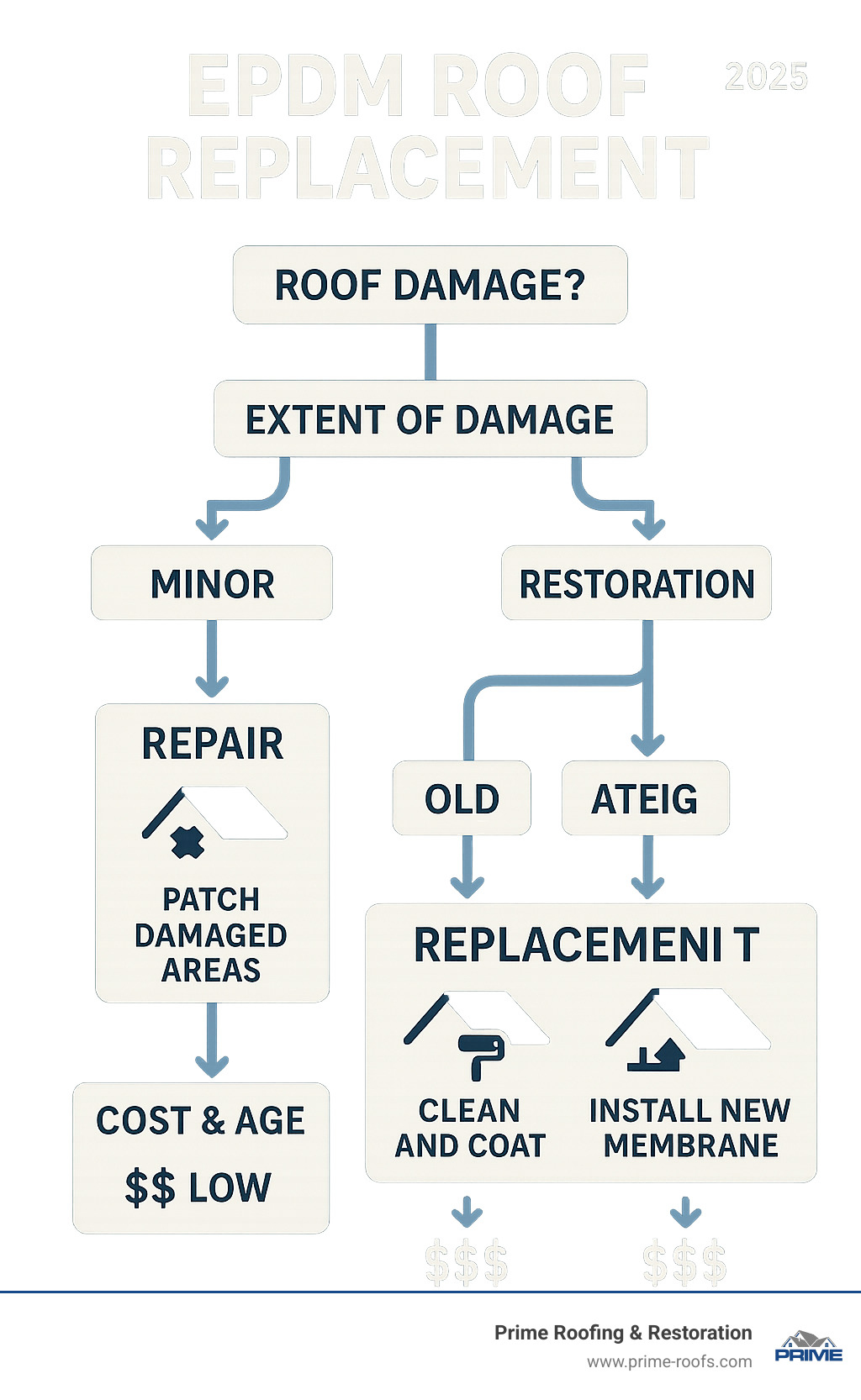
Deciding between a simple repair, a restorative coating, or a full replacement is a critical first step that has major financial and operational implications. A full replacement is not just a last resort but the most economically sound decision when you observe systemic failure. This is typically indicated by:
- Multiple Leaks or Widespread Water Damage: A single, isolated leak might be a simple fix. However, when leaks appear in multiple locations, it signals that the entire membrane or underlying system is failing. This widespread water intrusion can lead to catastrophic damage to the roof deck, insulation, and even the building’s interior structure and assets.
- Obvious Seam Separation or Membrane Shrinkage: The seams are the most vulnerable part of any roofing system. When they begin to pull apart, it’s a clear sign of adhesive failure or membrane aging. Likewise, if the EPDM membrane has started to shrink and pull away from curbs, walls, and penetrations, it has lost its flexibility and can no longer provide a waterproof seal.
- An Aging Roof (20-30+ Years) with a History of Problems: Every roof has a finite service life. An EPDM roof that is over 20 years old and has required numerous repairs is living on borrowed time. Continuing to patch an old roof is often a case of throwing good money after bad.
- Compromised Insulation or Structural Deck Damage: If moisture has penetrated the membrane and saturated the insulation, its thermal resistance (R-value) is destroyed. Wet insulation is a breeding ground for mold and mildew and can accelerate the decay of the wooden or metal roof deck beneath, posing a serious structural risk.
- Repair Costs That Are Becoming Uneconomical: When the cost of frequent repairs and the associated business disruptions (e.g., moving inventory, shutting down operations) begin to approach 30-50% of the cost of a new roof, a full replacement becomes the most financially prudent path forward.
Understanding these factors is key to making an informed, proactive decision. Engaging with professional expert commercial roofing solutions provides you with a thorough assessment, ensuring you choose the right path that maximizes the value and longevity of your significant investment.
Is It Time for a Replacement? Key Signs Your EPDM Roof is Failing
Your EPDM roof works tirelessly, day in and day out, to protect your building from the elements. But like any building component, it has a finite lifespan and will eventually show signs of wear and tear. Recognizing the warning signs of failure is crucial for preventing small, manageable issues from escalating into costly, catastrophic disasters. Ignoring these problems is a significant gamble that property owners and managers simply cannot afford to take, as it can lead to interior damage, operational downtime, and safety hazards.
The most obvious red flags are, of course, leaks and active water intrusion, which often manifest as unsightly stains on ceiling tiles, discoloration on walls, or puddles on the floor. However, many other, more subtle signs can indicate systemic failure long before water enters your building. A proactive inspection can identify these issues:
- Punctures and Tears: While EPDM is tough, sharp objects can compromise it. Small openings from dropped tools, HVAC maintenance foot traffic, storm-blown debris, or even pests can allow moisture to seep in, saturating the insulation below the membrane.
- Seam Separation: The adhesive- or tape-bonded joints between membrane sheets are critical points. Over decades of thermal cycling (expansion and contraction), these seams can be stressed, causing them to pull apart and create a direct pathway for water entry. This is often a sign of aging adhesive or improper initial installation.
- Shrinkage: As an EPDM membrane ages and loses its plasticizers due to UV exposure, it can contract and shrink. This process causes the membrane to pull away from the edges of the roof, parapet walls, drains, and pipe penetrations, leaving significant gaps and breaking the waterproof seal.
- Blistering or Bubbling: The appearance of bubbles or blisters on the roof surface indicates that air or moisture is trapped between the membrane and the substrate. As the sun heats the roof, this trapped vapor expands, pushing the membrane up. These blisters can eventually rupture, creating a hole.
- Ponding Water: If water remains on your roof for more than 48 hours after rainfall, it’s a sign of improper drainage. This constant standing water, known as ponding, accelerates the deterioration of the EPDM membrane, puts excessive weight stress on the roof structure, and creates a breeding ground for algae and vegetation.
- Brittleness and Crazing: Healthy EPDM is flexible and pliable. If the membrane feels stiff, hard, or cracks when you try to bend a corner, it has lost its elasticity and is at the end of its functional life. This brittleness, often accompanied by a network of fine cracks (crazing), means it can no longer withstand building movement or impacts.
If you notice any of these signs, it is imperative to get a professional roof repair estimate to accurately diagnose the extent of the damage and explore your options with a clear understanding of the roof’s condition.
Assessing Widespread Damage
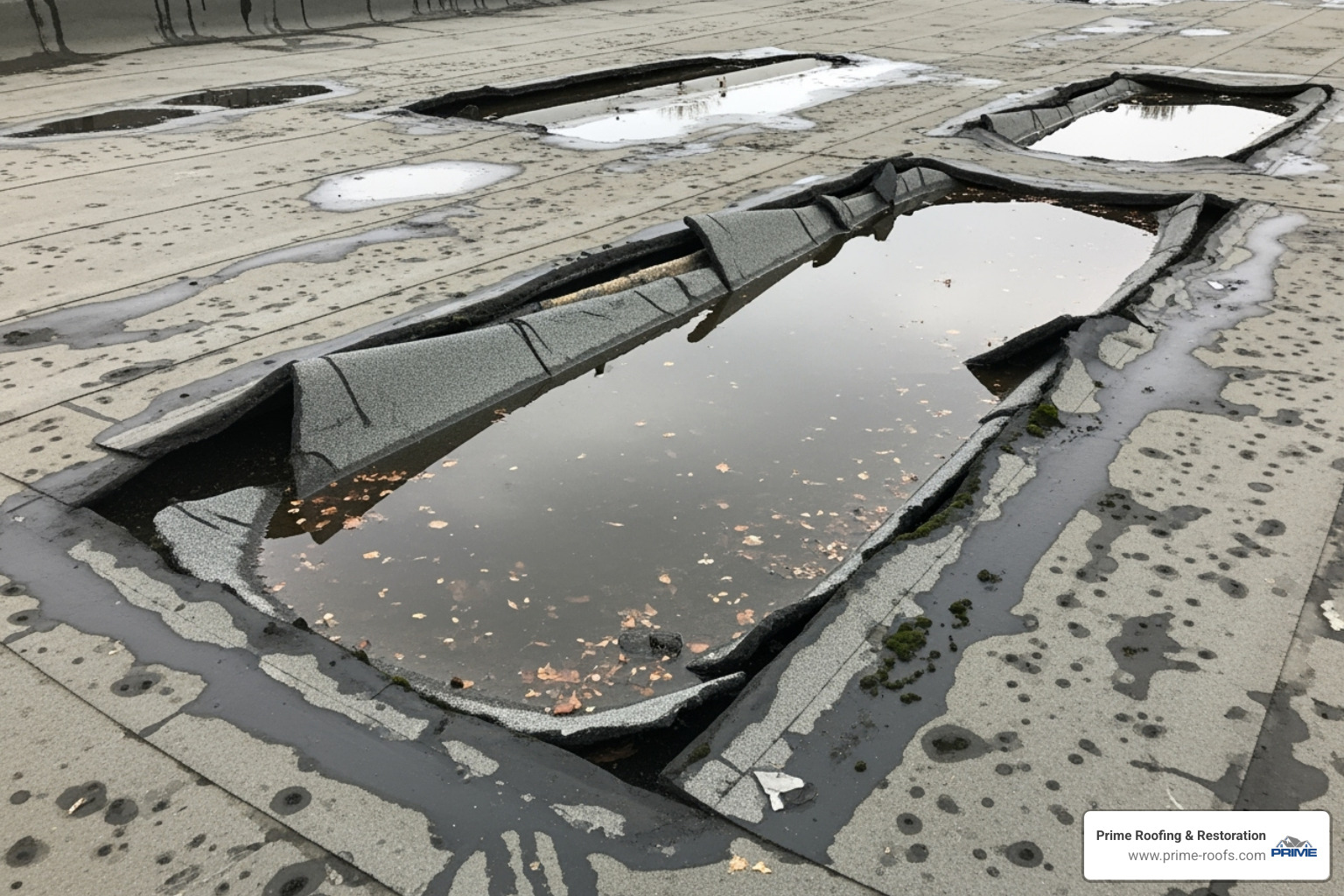
Sometimes, the damage is too extensive or systemic for simple repairs to be effective. When an inspection reveals widespread cracking across large sections of the roof, multiple active leaks in different areas, and core samples showing saturated, compromised insulation, the roof’s entire protective and thermal integrity is at risk. At this advanced stage of failure, continuing with patchwork repairs is a poor financial strategy. The escalating repair costs, combined with the constant threat of business disruptions from new leaks, often far outweigh the upfront price of a full replacement. A comprehensive EPDM roof replacement is the only solution that addresses all systemic failures at once, providing a clean slate, new insulation, and decades of guaranteed, worry-free protection.
The Age Factor: When Restoration Isn’t Enough
A well-maintained EPDM roof can reliably last 20-30 years, and in some cases, even longer. However, as a roof approaches this age bracket, especially if it has a history of neglected maintenance or multiple previous repairs, it is nearing the end of its service life. While a fluid-applied restoration coating can be a viable option to extend a roof’s life by 10-15 years at roughly half the cost of a replacement, it is only effective if the underlying membrane and insulation are in fundamentally good condition.
Comparing restoration vs. replacement requires an honest, professional assessment. A restoration coating is a new waterproofing layer, but it cannot fix underlying problems. If your roof has extensive seam failure, widespread wet insulation (typically more than 25% of the roof area), multiple layers from previous repairs, or structural deck issues, a coating is like painting over rot. It’s a temporary, cosmetic fix that will fail quickly because it’s bonded to a failing substrate. For a deeper dive into this critical decision, our EPDM Roof Repair Guide 2025 offers detailed guidance. When the foundation of the roof system is compromised, a full replacement is not just the best option—it’s the only responsible long-term financial decision.
Understanding EPDM Systems: Materials, Methods, and Comparisons
EPDM has rightfully earned its reputation as the durable workhorse of the commercial roofing industry. This synthetic rubber, which shares a similar chemical composition to tire rubber, is engineered to be exceptionally resilient against the harshest weather extremes, from the scorching UV radiation of Alabama summers to freezing winters and punishing hailstorms. Its proven track record is truly remarkable—some of the earliest EPDM roofs installed in the 1960s are still in service today, a testament to the material’s longevity. This long history of real-world performance makes an EPDM roof replacement a reliable, time-tested choice. Its enduring popularity stems from a powerful combination of unmatched durability, long-term cost-effectiveness, and minimal maintenance requirements.
But how does EPDM stack up against other common single-ply flat roofing materials like TPO (Thermoplastic Olefin) and PVC (Polyvinyl Chloride)?
| Feature | EPDM | TPO | PVC |
|---|---|---|---|
| Durability | Excellent UV and weather resistance, handles extreme temps. | Good puncture resistance, decent weathering. | Top-tier chemical resistance, very durable. |
| Cost | Most budget-friendly option. | Mid-range pricing. | Highest upfront investment. |
| Lifespan | 20-50+ years with proper care. | Typically 15-20 years. | 20-30+ years. |
| Energy Efficiency | Lower (black absorbs heat, though white is available). | High reflectivity reduces cooling costs. | Excellent energy savings. |
| Seam Strength | Strong with quality tapes and adhesives. | Heat-welded seams create superior bonds. | Heat-welded seams, very strong. |
While the table provides a quick overview, a deeper look reveals key distinctions. EPDM’s primary advantages are its superior lifespan and lower initial cost. For building owners focused on a long-term, durable asset with a predictable budget, EPDM is often the clear winner. TPO has gained popularity for its white, reflective surface, which can lower cooling costs, but its formulation has changed over the years, and it lacks the multi-decade proven track record of EPDM. PVC is a premium product known for its exceptional resistance to chemicals, grease, and fats, making it the ideal choice for restaurants or manufacturing facilities, though it comes with a higher price tag.
Types of EPDM Membranes
Not all EPDM is created equal. Understanding the different membrane options allows you to tailor the system to your building’s specific needs.
- Standard (Non-Reinforced) Membranes: This is the most common and cost-effective choice, typically available in 45-mil (0.045 inches) or 60-mil (0.060 inches) thicknesses. It provides excellent, proven waterproofing for the vast majority of commercial applications.
- Reinforced Membranes: For added toughness, an internal polyester fabric scrim is added to the membrane. This reinforcement provides significantly higher tear strength and puncture resistance, making it the ideal choice for roofs that experience regular foot traffic for equipment maintenance or in areas where hail is a frequent concern.
- Fleece-Backed Membranes: A layer of non-woven polyester fleece is laminated to the underside of the EPDM sheet. This fleece layer adds extra cushioning and puncture protection, and it allows the membrane to be installed using low-rise foam adhesive, which can help smooth out minor surface irregularities on the substrate.
EPDM Installation Methods
EPDM’s versatility extends to its installation methods, each with specific advantages suited for different building structures, climates, and budgets.
- Fully Adhered: In this premium method, the membrane is bonded directly to the insulation substrate using a specialized bonding adhesive. This creates a smooth, sleek, and highly wind-resistant finish that is ideal for uniquely shaped roofs or in high-wind zones. It provides the highest level of performance.
- Mechanically Fastened: The membrane is secured to the structural deck using screws and plates placed along the seams. Subsequent sheets are then overlapped to cover the fasteners. This method is fast and economical, making it a popular choice for large, open roof areas on wood or steel decks.
- Ballasted: The EPDM membrane is laid loose over the insulation and then weighted down with a layer of smooth, river-washed stone (typically 10-12 pounds per square foot) or large concrete pavers. This method offers excellent fire resistance and the best UV protection for the membrane, but it adds significant weight and is only suitable for buildings with the structural capacity to support it.
Matching the right membrane type and installation method to your building’s structure and use is critical for long-term success. That’s where our deep expertise in professional roofing solutions ensures you get a system designed for maximum value and performance. For more technical specifications, you can learn about EPDM systems from a leading manufacturer.
The EPDM Roof Replacement Process: A Meticulous 7-Step Guide
A full EPDM roof replacement is a complex construction project that demands a structured, professional approach to ensure safety, quality, and minimal disruption to your business. Our comprehensive commercial roofing services are built on a proven 7-step methodology that transforms a failing, liability-ridden roof into a durable, long-lasting asset.
Step 1: In-Depth Consultation and Roof Analysis
Before any work begins, our process starts with a thorough consultation to understand your needs, budget, and operational constraints. This is followed by a comprehensive on-site inspection, including core sampling to determine the existing roof composition and assess the condition of the insulation and deck.
Step 2: Strategic Project Planning and Material Staging
With a clear understanding of the project scope, we develop a detailed plan. This includes establishing a safety plan, ordering and verifying all materials (membrane, insulation, adhesives, fasteners), scheduling the crew and equipment (like cranes or debris chutes), and coordinating with you to create a work schedule that minimizes impact on your daily operations.
Step 3: Site Preparation and Safety Implementation
On day one, our priority is safety and property protection. We establish clear work zones, install perimeter flagging, and protect sensitive areas like HVAC units and landscaping with heavy-duty tarps. All crew members are equipped with and utilize full protective equipment, including mandatory fall protection gear compliant with OSHA standards.
Step 4: Full Tear-Off and Substrate Inspection
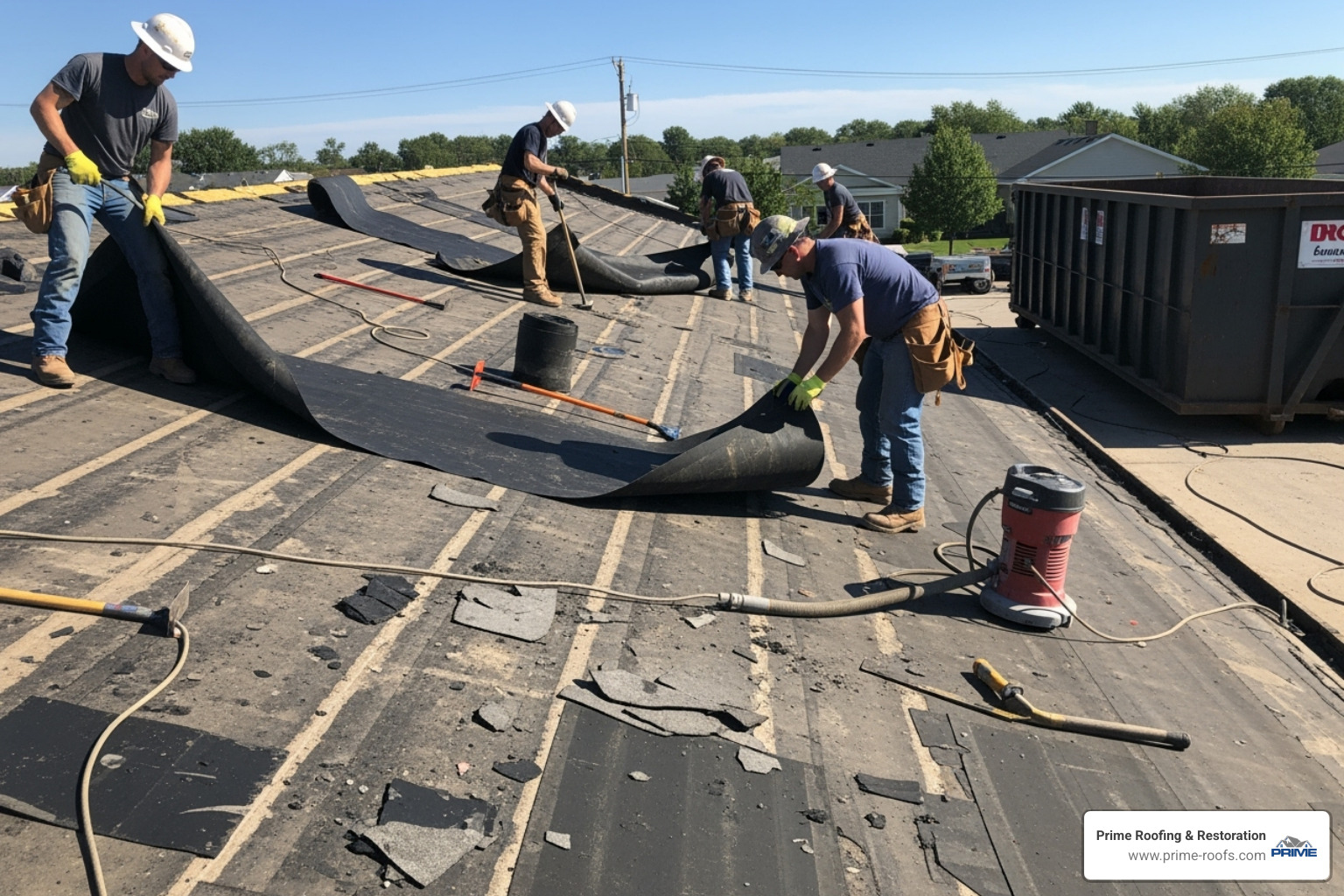
The process of removal begins. We carefully detach and temporarily set aside rooftop fixtures. Then, we systematically cut and remove all layers of the old roofing system down to the structural deck. As the deck is exposed, we conduct a rigorous inspection for any signs of water damage, rot, or corrosion, replacing any compromised sheathing or decking to create a solid, reliable foundation for the new system.
Step 5: Insulation and Membrane Installation
With a clean, sound deck, we install new, high-R-value polyisocyanurate insulation boards. The seams are staggered to prevent thermal bridging and maximize energy efficiency. These boards are securely fastened to the deck according to manufacturer and building code specifications for wind uplift resistance. Next, we roll out the new EPDM membrane, allowing it to relax. We then apply a specialized bonding adhesive to both the insulation and the back of the rubber. After the adhesive flashes off (becomes tacky), we meticulously lay the membrane, smoothing it with brooms to eliminate wrinkles and ensure a complete, void-free bond.
Step 6: Seam Sealing and Detail Work
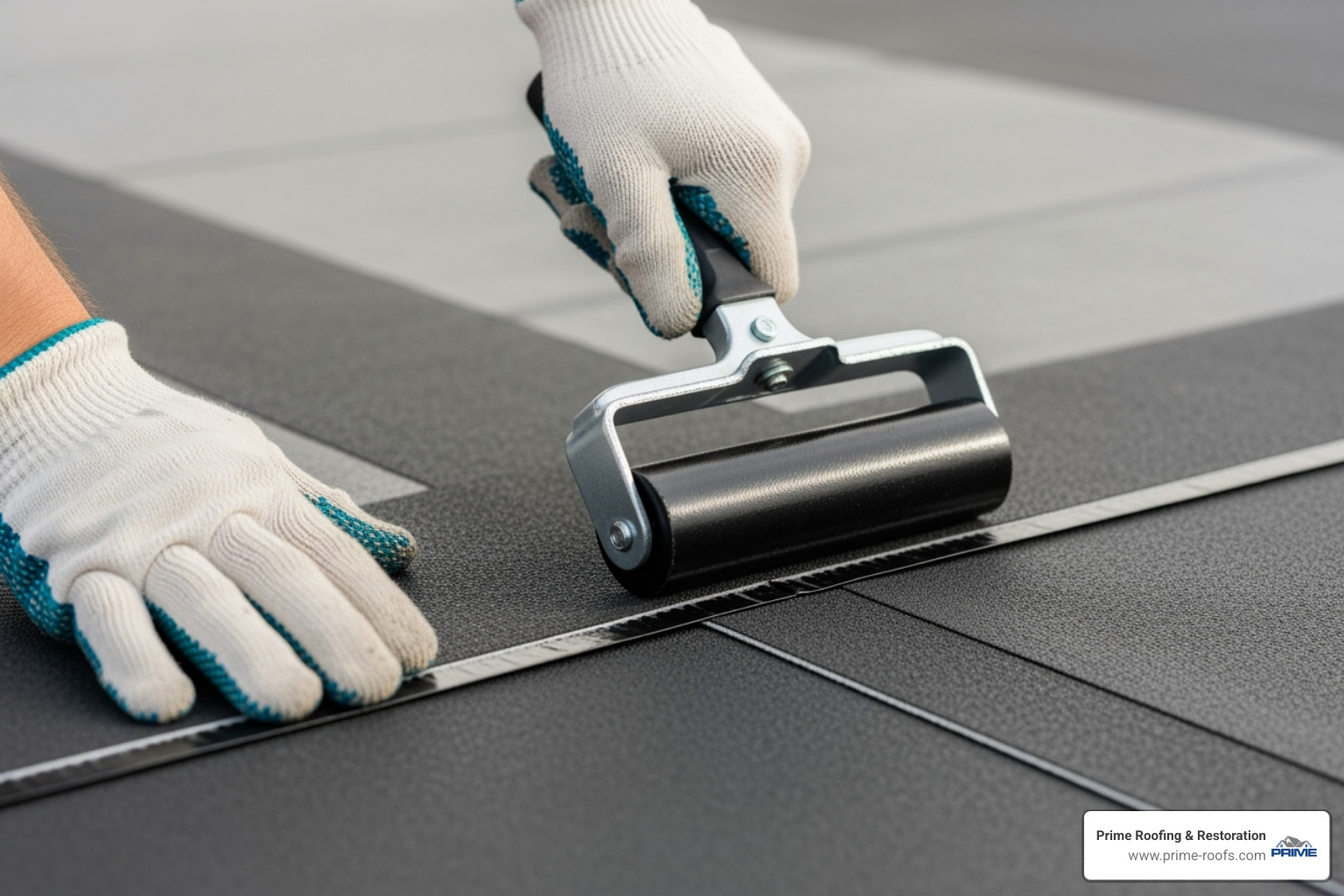
This is the most technically demanding phase, where expertise truly matters. We create a minimum 3-inch overlap for all seams. The area is cleaned with a special solvent, a seam primer is applied, and then specialized seam tape is installed. Using a steel seam roller, our technicians apply firm, consistent pressure to create a permanent, vulcanized, watertight bond. Every penetration—pipes, vents, drains, and skylights—receives custom flashing and boots. We finish by installing new edge metal and applying lap sealant at all critical transition points, creating a multi-layered, redundant defense against water intrusion.
Step 7: Final Inspection, Cleanup, and Project Closeout
Upon completion, our project manager conducts a detailed final inspection, checking every seam and detail against a comprehensive quality control checklist. We then conduct a final walk-through with you to ensure your complete satisfaction. Our crew performs a thorough cleanup of the roof and surrounding grounds, leaving your property cleaner than we found it. Only then do we demobilize and close out the project.
At Prime Roofing & Restoration, we have perfected this meticulous process on commercial buildings across central Alabama. Contact our Alabaster office to discuss your EPDM roof replacement project.
Prime Roofing & Restoration
Address: 5 Brown Cir, Alabaster, AL 35007
Phone: (205) 661-8190
Budgeting for Your EPDM Roof Replacement: Costs, Lifespan, and ROI
An EPDM roof replacement is a significant capital investment in your property’s long-term health, functionality, and value. Its exceptional durability and minimal maintenance requirements deliver a powerful and predictable return on investment (ROI). A professionally installed system can last anywhere from 20 to 50 years, offering decades of reliable protection from a single, well-executed project. This unparalleled combination of longevity, proven weather resistance, and low lifecycle costs makes EPDM a financially sound and intelligent choice for any building owner. For a detailed breakdown of specific costs, our Rubber Roof Replacement Cost guide explores the various factors that influence your final investment.
Factors Influencing Cost and Lifespan
The total cost for a turnkey EPDM roof replacement typically falls between $5 to $13 per square foot. However, this range is wide because several key variables can significantly affect the final price:
- Roof Size and Complexity: While larger roofs benefit from economies of scale (lower cost per square foot), a complex layout with numerous penetrations (pipes, vents, drains), skylights, HVAC units, or multiple levels dramatically increases the labor required for detailed flashing work, driving up the cost.
- Building Height and Accessibility: A single-story building with easy access will cost less than a multi-story structure that requires cranes, man-lifts, and extensive safety rigging to move materials and personnel, adding significant logistical costs.
- Material Thickness and Type: EPDM membranes are commonly available in 45-mil, 60-mil, and 90-mil thicknesses. Thicker membranes like 90-mil cost more upfront but provide superior durability, puncture resistance, and longer manufacturer warranties, extending the roof’s lifespan.
- Choice of Insulation: The type and thickness of the insulation board (e.g., Polyisocyanurate) will impact cost. Opting for a thicker insulation to achieve a higher R-value will increase material costs but will generate long-term energy savings.
- Installation Method: Fully adhered systems generally have higher material and labor costs than mechanically fastened systems but offer superior wind uplift performance. Ballasted systems can be cost-effective but require a structural analysis to ensure the building can handle the weight.
- Labor Costs and Contractor Quality: Rates vary by region, but more importantly, by the contractor’s experience and credentials. Investing in a skilled, manufacturer-certified crew prevents costly installation errors, ensures warranty compliance, and guarantees a long-lasting result.
Understanding Roofing Warranties
A crucial part of your investment is the warranty. There are two types:
- Contractor’s Workmanship Warranty: This is provided by the installer (like Prime Roofing & Restoration) and covers defects in installation. It typically lasts for 1-5 years and ensures that any leaks caused by improper workmanship are fixed at no cost to you.
- Manufacturer’s System Warranty: This is a much more comprehensive (and valuable) warranty provided by the material manufacturer (e.g., Carlisle, Firestone). These can range from 10 to 30 years and often come as “NDL” (No Dollar Limit) warranties. An NDL warranty means the manufacturer will pay whatever it costs to bring the roof back to a watertight condition, covering both materials and labor. Obtaining this type of warranty requires the roof to be installed by a certified contractor according to the manufacturer’s strict specifications.
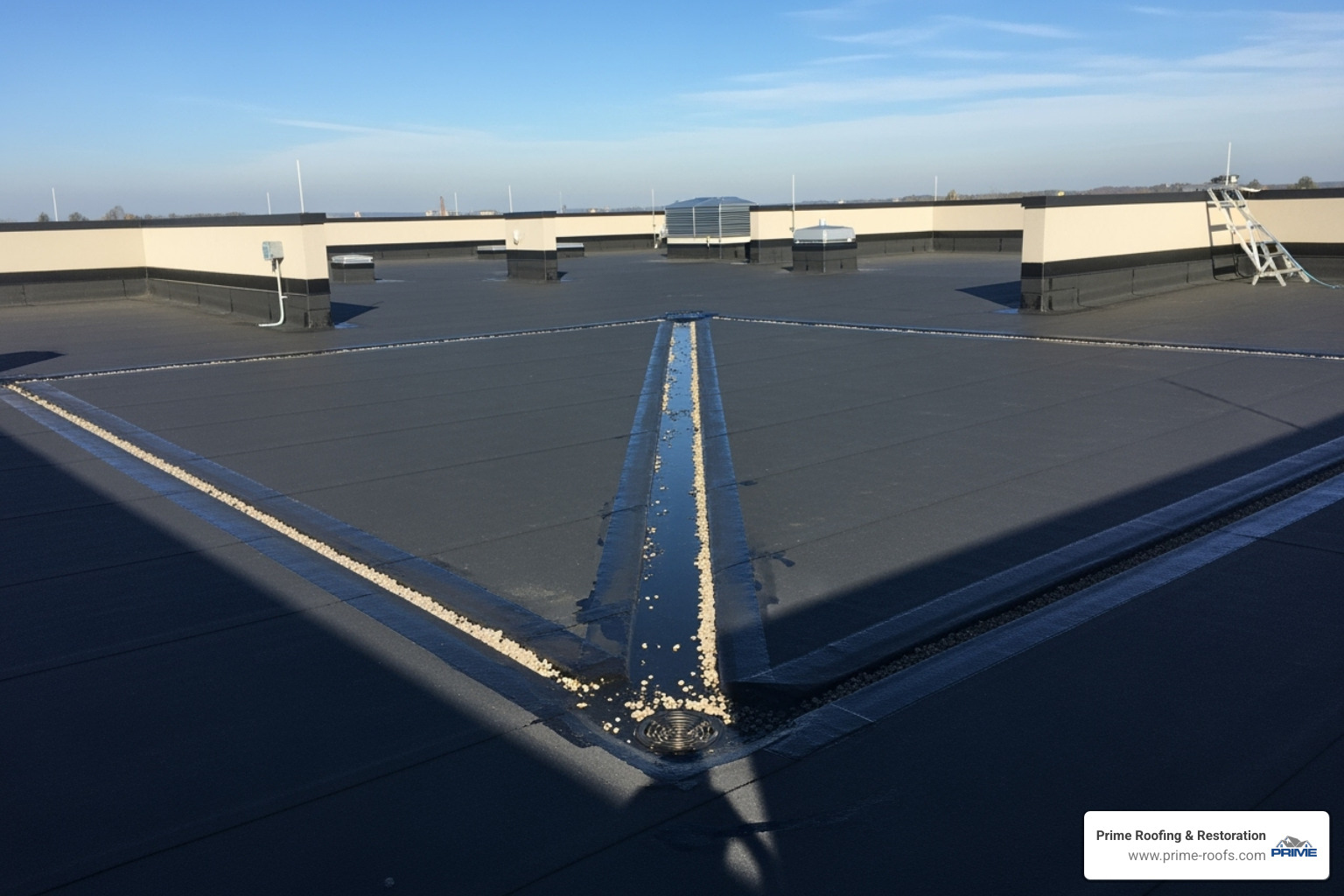
Proactive Maintenance and Energy Efficiency
EPDM is refreshingly low-maintenance, but “low” does not mean “no.” A simple, proactive maintenance plan is the key to protecting your investment and ensuring you get the maximum possible lifespan from your new roof.
- Semi-Annual Inspections: Have a professional inspect the roof every spring and fall to identify and address minor issues before they become major problems.
- Keep it Clean: Regularly remove leaves, branches, dirt, and other debris from the roof surface. This prevents clogs in drains and gutters, which is the primary cause of ponding water.
- Inspect Seams and Flashings: During your own walk-throughs, visually inspect seams for any signs of pulling and check the sealant around flashings (the seals around pipes and curbs) for any cracks or voids.
- Maintain Clear Drainage: Ensure all gutters, scuppers, and internal drains are clear and flowing freely. Proper drainage is the roof’s best friend.
From an energy efficiency standpoint, traditional black EPDM is advantageous in colder climates as it absorbs heat and can help reduce heating costs. In warmer climates like Alabama, white EPDM is an excellent choice. Its reflective surface can dramatically reduce roof surface temperatures, leading to lower air conditioning usage and significant energy savings. Furthermore, EPDM is a sustainable choice, as it is a highly durable material that is also recyclable at the end of its long service life, reducing the amount of waste sent to landfills.
Finding a Qualified EPDM Contractor in Alabaster, AL
Choosing the right commercial roofing contractor is just as important, if not more so, than choosing the right roofing material for your EPDM roof replacement. The highest-quality membrane in the world can fail prematurely if it is installed improperly. The success of your investment hinges on the skill, experience, and integrity of the team you hire. You need a contractor with proven, specialized expertise in EPDM systems.
When vetting potential contractors, look for these essential qualifications:
1. Verifiable, Specific EPDM Experience
EPDM installation is a specialized trade that requires deep knowledge of proprietary adhesives, seam taping techniques, and complex flashing details that differ significantly from other roofing types like asphalt or metal. Ask for a portfolio of completed EPDM projects similar in scope to yours. An experienced contractor can explain the nuances of adhesive flash-off times, proper seam rolling pressure, and how to custom-fabricate details for non-standard penetrations.
2. Proper Licensing and Full Insurance Coverage
This is non-negotiable. Verify that your contractor holds a valid Alabama state license for commercial roofing. Crucially, ask for certificates of insurance showing both general liability coverage (to protect your property from damage) and worker’s compensation coverage (to protect you from liability if a worker is injured on your site). Hiring an uninsured contractor exposes your business to immense financial and legal risk.
3. Manufacturer Certifications
Top-tier EPDM manufacturers like Carlisle, Firestone, and Johns Manville offer certification programs to roofing contractors. To become certified, a contractor must undergo extensive factory training, demonstrate financial stability, and have a proven track record of high-quality installations that are often inspected by the manufacturer’s own field representatives. This certification is your best assurance of a quality job and is often required to obtain the best manufacturer warranties.
4. A Strong and Deep Local Reputation
Look for a contractor with deep roots in your community. Check online reviews on platforms like Google and the Better Business Bureau, but also ask for a list of local references you can call. A contractor who has built a business in the area, like the expert roofers in Alabaster, AL, has a vested interest in protecting their reputation and is far more likely to stand behind their work for years to come.
Key Questions to Ask a Potential Contractor
- Can you provide current copies of your state license and insurance certificates?
- Are you certified by the manufacturer of the EPDM system you are proposing?
- Who will be the on-site project manager, and will they be present every day?
- What is your safety protocol for your crew and for protecting my property and employees?
- How do you handle unexpected substrate damage, like rotten wood decking, that is discovered during the tear-off?
- Can you provide a list of 3-5 local references for recent EPDM replacement projects?
Your Local EPDM Experts
At Prime Roofing & Restoration, we have built our reputation on superior quality EPDM installations for businesses and property owners across Alabama. We possess the licenses, insurance, and manufacturer certifications required to give you complete peace of mind. More importantly, we understand the unique demands of our local climate, from intense summer heat and UV exposure to the threat of severe storms and hail. Our team is committed to not only installing a technically perfect roof but also to building a lasting relationship with you through clear communication and professional service. We provide the expertise and dedication needed to protect your investment for decades to come.
Conclusion: Secure Your Investment with a Professional Upgrade
Opting for a full EPDM roof replacement is one of the most important strategic decisions a property owner can make to ensure the long-term durability, safety, and value of their building. This comprehensive guide has highlighted why EPDM stands as a superior choice for flat and low-slope commercial roofs, celebrated for its incredible longevity of up to 50 years, its formidable resistance to harsh weather, and its overall cost-effectiveness when viewed over the entire lifecycle of the roof.
We’ve covered the critical warning signs—such as widespread damage, persistent and multiple leaks, compromised insulation, and advanced age—that clearly indicate when a full replacement is the most sensible and financially responsible path forward. While the EPDM material itself is exceptionally robust, its ultimate performance is inextricably linked to the quality of the installation. A professionally installed EPDM roof is a decades-long asset; a poor installation can lead to premature failure, endless headaches, and wasted capital.
This is precisely why selecting a qualified, certified, and reputable contractor is the most critical step in the entire process. The right partner will not only use the best materials but will also follow a meticulous, step-by-step process, from the initial tear-off and substrate preparation to the final, crucial seam seal, ensuring every detail is executed to perfection. An investment in a quality installation is an investment in decades of peace of mind.
For expert guidance on your next commercial roofing project, trust the certified, experienced professionals at Prime Roofing & Restoration. We are here to help you navigate your options and deliver a seamless, professional upgrade that will protect your property and your investment for years to come.