
Why EPDM Roof Repair Is Essential for Your Property
EPDM roof repair is a critical skill for any property owner or manager responsible for a building with a low-slope or flat roof. This single-ply rubber membrane, known for its durability and cost-effectiveness, has been a mainstay in the commercial roofing industry since the 1960s. As a leading roofing company in Central Alabama, we at Prime Roofing & Restoration have seen how proper maintenance can push these systems to their maximum lifespan. While EPDM (ethylene propylene diene monomer) roofs can last up to 30 years, and sometimes even longer, the reality is that no roof is invincible. Punctures, tears, and seam failures are inevitable, but they don’t have to spell disaster.
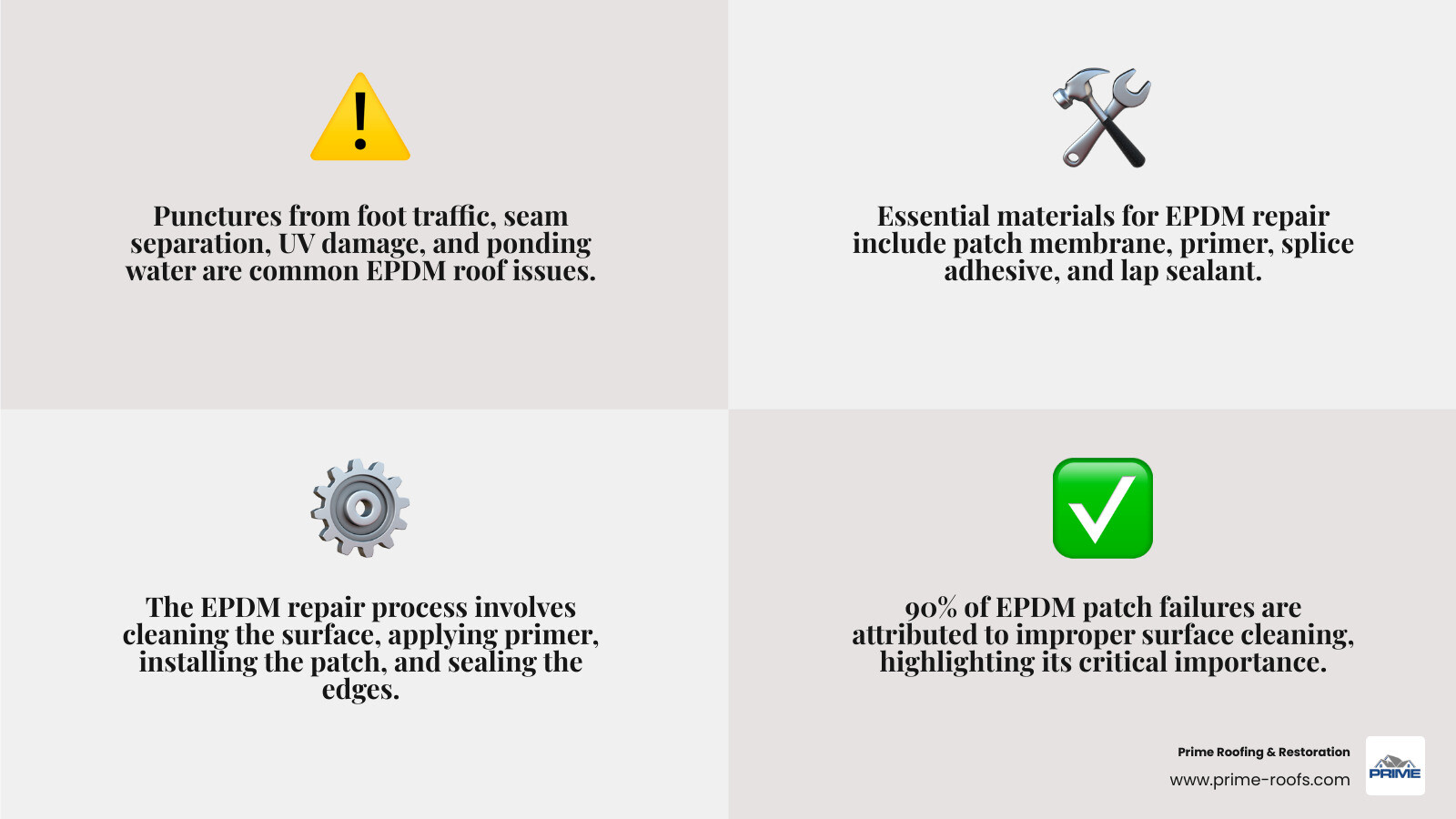
Quick EPDM Roof Repair Overview:
- Common Issues: Punctures from foot traffic or debris, seam separation due to age or shrinkage, UV degradation, and damage from ponding water.
- Essential Materials: EPDM-specific cleaner, primer, splice adhesive, EPDM patch membrane, lap sealant, and a seam roller.
- Repair Process: The success of any repair hinges on a meticulous four-step process: Thoroughly clean the surface, apply a specialized primer, install the patch correctly, and seal all edges with lap sealant.
- Patch Size: A cardinal rule is that the patch must extend a minimum of 2-3 inches beyond the damaged area on all sides to ensure a durable, watertight seal.
- Success Rate: An astonishing 90% of EPDM patch failures can be traced back to one single mistake: improper or incomplete surface cleaning.
EPDM roofs are particularly vulnerable to acute physical damage. As one roofing expert from the National Roofing Contractors Association (NRCA) noted, \”EPDM rubber roofs are fairly easy to puncture with dropped tools or careless foot traffic,\” making a solid understanding of repair techniques invaluable for property owners looking to avoid costly water intrusion.
The good news? EPDM is one of the easiest roofing materials to repair properly when you follow the correct procedures and use the right materials. Unlike many other roofing systems that can become brittle and difficult to work with over time, EPDM maintains its flexibility and chemical profile, making it highly receptive to patch repairs even decades after its initial installation. This unique characteristic is what makes targeted repairs so effective.
Understanding the nuances of the repair process can save you thousands, if not tens of thousands, in premature replacement costs. Professional flat roof services can be a significant investment, with daily costs for a crew ranging from $1,000 to $5,000 depending on the scope of work. This makes developing DIY knowledge for minor issues a particularly valuable asset for any facility manager or building owner.
I’m Bill Spencer, Owner and President of Prime Roofing & Restoration. With over five years of dedicated, hands-on experience in EPDM roof repair and installation across Alabama’s Gulf Coast region, I’ve seen it all. My expertise in single-ply and other flat roof systems has helped countless property owners steer the challenges of our unique climate—from intense UV exposure to the stresses of hurricane season—extending their roof’s lifespan through precise repair techniques and proactive preventive maintenance.
Understanding Your EPDM Roof: Signs and Causes of Damage
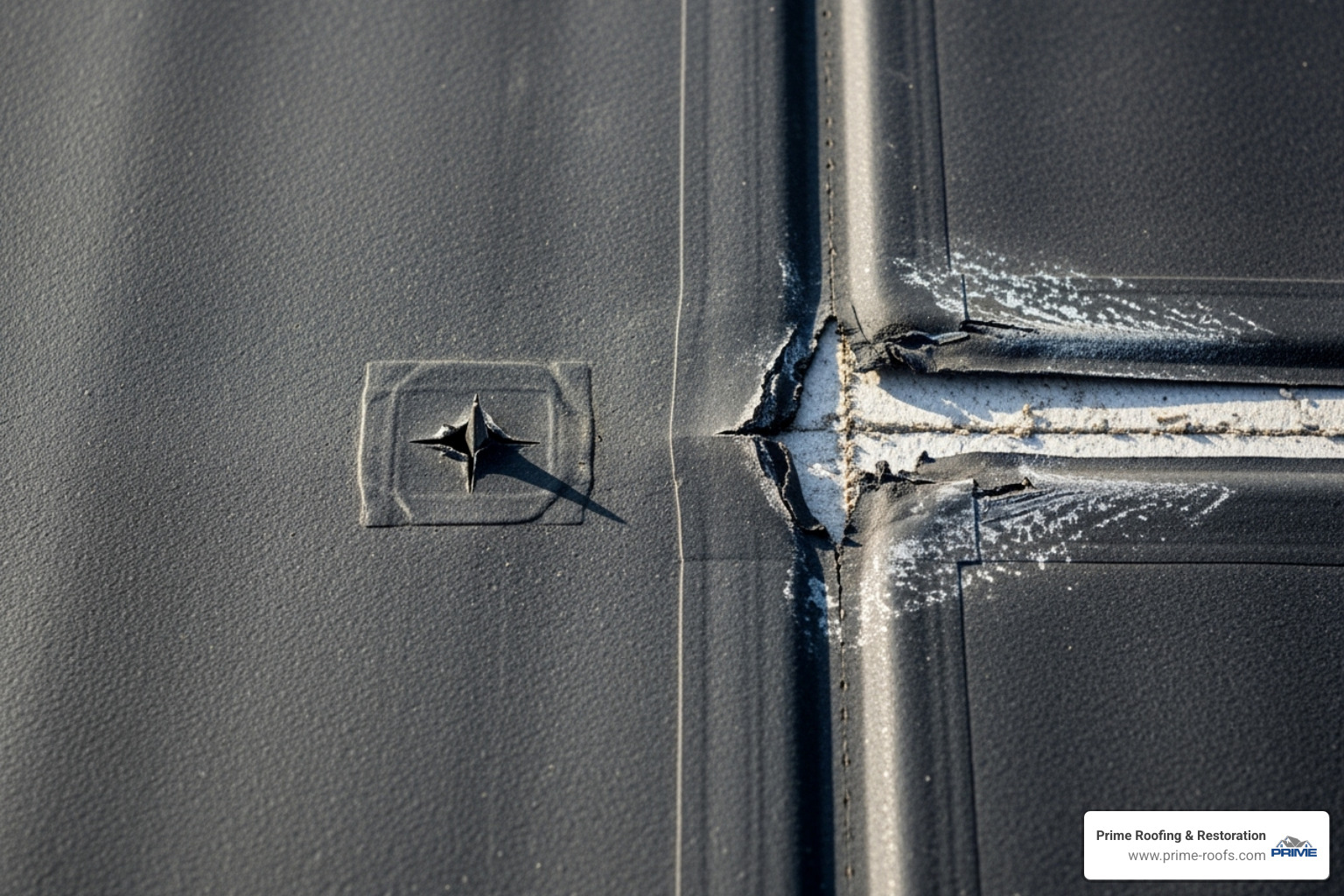
Before you can tackle any EPDM roof repair, you need to become a roof detective. You can’t prescribe the right cure without first diagnosing the illness, and that means understanding the material itself, what harms it, and how it shows signs of distress.
EPDM is a synthetic rubber membrane that’s engineered for longevity. This remarkable material can withstand decades of punishment from Mother Nature, often lasting 20 to 25 years, and sometimes even hitting the 30-year mark with proper care. Its defining characteristic is its flexibility. Unlike asphalt-based systems that can become brittle with age, EPDM maintains its rubber-like properties, allowing it to expand and contract with temperature fluctuations for years without cracking.
But even the most resilient materials have their vulnerabilities. The combination of age, extreme weather, and physical impacts will eventually take a toll on your roof. The key to maximizing its lifespan is catching problems early through regular inspections, long before a small, easily fixable issue evolves into a catastrophic failure that damages your building’s interior and structure.
What Causes EPDM Roof Damage?
Understanding the root causes of EPDM damage is the first step toward prevention. Punctures are by far the most common culprit, and they’re surprisingly easy to inflict. While EPDM is tough, it is not impervious to sharp objects.
- Foot Traffic: This is a major source of damage, especially from maintenance workers servicing rooftop HVAC units or other equipment. Hard-soled boots, especially when carrying heavy toolboxes, can easily cause abrasions or small punctures.
- Dropped Tools: A classic scenario. A screwdriver, utility knife, or hammer slipping from a worker’s hand can instantly pierce the membrane, creating a direct path for water.
- Falling Debris: After a storm, it’s crucial to inspect the roof for debris. Sharp branches, wind-blown metal flashing from adjacent buildings, or even large hailstones can cause significant puncture damage.
- Fasteners: Loose screws or nails from rooftop equipment or previous installations can be lifted by wind and tumble across the roof, leaving a trail of small holes.
Seam separation is the other primary concern for EPDM roofs. The roof is installed in large sheets, and the seams where these sheets are joined are inherent weak points.
- Adhesive Failure: The specialized adhesives used to bond seams can degrade over decades of exposure to UV radiation and extreme temperature swings (thermal cycling). This causes the adhesive to lose its strength, allowing seams to pull apart.
- Membrane Shrinkage: This is a natural and expected phenomenon. Over its life, an EPDM membrane can shrink by up to 3%. While this sounds small, it places constant tensile stress on the seams and flashings, which can eventually lead to separation if not properly installed or maintained.
UV degradation is a slow but relentless process. EPDM is formulated with a high concentration of carbon black, which is an excellent UV inhibitor. However, after 20+ years of direct sun exposure, the top layer of the polymer can begin to break down, losing some of its flexibility and becoming more susceptible to cracking or crazing.
Ponding water is a roof’s worst enemy. When poor drainage allows water to sit on the roof for more than 48 hours, it creates a host of problems. It magnifies the sun’s UV rays, accelerates the leaching of protective chemicals from the membrane, and provides a breeding ground for algae and other vegetation whose roots can compromise the roof surface.
Finally, improper installation is a frequent cause of premature failure. A roof’s lifespan begins on day one. Mistakes like inadequate surface preparation, applying adhesive in the wrong weather conditions, using the incorrect amount of adhesive, or sloppy flashing details around vents, pipes, and skylights can doom a roof to a short life of persistent leaks.
Telltale Signs Your Roof Needs an EPDM Repair
Your roof will communicate when it’s in trouble. You just need to learn its language. Look for these clear indicators during your routine inspections:
- Visible Cracks, Tears, or Holes: These are the most obvious red flags. Even a tiny pinhole can allow a surprising amount of water to enter your building, saturating insulation and leading to costly interior damage.
- Blistering or Bubbling: Raised, bubble-like areas on the membrane surface are a sign of trapped moisture or air between the membrane and the substrate. These blisters can grow over time and are highly susceptible to puncture.
- Pulled or Separated Seams: Carefully inspect the lines where EPDM sheets overlap. Look for any gaps, lifted edges, or areas where the adhesive bond has clearly failed. These are direct entry points for water and must be addressed immediately.
- Water Stains on Interior Ceilings: This is the most undeniable sign of a roof leak. If you see discoloration, damp spots, or peeling paint inside, water has already breached your roof system. Water can travel a long way from the entry point along roof decking or trusses, so the leak source may not be directly above the stain.
- Deteriorated Flashing: The seals around roof penetrations like vents, skylights, and HVAC curbs are often the first place leaks occur. Check for flashing that is cracked, loose, peeling away, or has gaps in the sealant.
- Clogged Drains or Gutters: While this is a maintenance issue, it’s also a sign of impending trouble. If drains are clogged, it will lead to ponding water, which, as we’ve discussed, is a major catalyst for EPDM deterioration.
The DIY EPDM Roof Repair Toolkit: Gathering Your Supplies
Having the right tools and materials is absolutely non-negotiable for an EPDM roof repair that will stand the test of time. Here’s a critical piece of information that could save you from a catastrophic failure: using the wrong products can cause irreversible damage. We cannot stress this enough—asphalt-based products like roof cement or tar are the mortal enemy of EPDM. These petroleum-based materials will cause the synthetic rubber membrane to swell, blister, and break down, turning a simple, repairable puncture into a large, contaminated area that requires costly replacement.
Think of it as a chemical allergy. EPDM is an oil-resistant polymer, but it is not compatible with the solvents found in asphaltic roofing materials. This contamination can spread over time, compromising the integrity of the membrane far beyond the original repair spot. The good news? When you use the correct, system-specific materials designed for EPDM, the repair process is remarkably straightforward and creates a permanent, monolithic bond.
Essential Tools and Materials
Before you set foot on a ladder, take the time to assemble your complete repair kit. There is nothing more frustrating or inefficient than being mid-repair on a roof and realizing you’re missing a crucial tool or material. Proper preparation saves time, reduces stress, and leads to a much higher quality result.
Core Toolkit:
- Cutting Tools: Precision is key. A sharp utility knife with a fresh blade and a pair of heavy-duty scissors are essential for making clean, straight cuts on your EPDM patch material. Ragged, torn edges are difficult to seal properly.
- Surface Preparation Tools: This is the most critical stage. You’ll need a soft-bristled scrub brush for cleaning and a large supply of clean, lint-free rags. A pro tip: never use a wire brush. While it may seem effective at removing dirt, it will abrade and damage the surface of the EPDM membrane, creating micro-scratches that can compromise the repair.
- Handheld Seam Roller: This small, simple-looking tool is the secret to a professional-grade repair. A 2-inch steel roller is ideal. It’s used to apply firm, even pressure to the patch, ensuring 100% contact between the adhesive surfaces and forcing out any trapped air bubbles that could lead to future failure.
- Safety Gear: Don’t overlook personal safety. Solvent-resistant rubber gloves are a must to protect your hands from cleaners and primers. Safety glasses are also essential. Wear soft-soled, non-slip shoes to protect the roof surface and ensure stable footing.
Essential Materials List:
- EPDM Patch Membrane: Ensure you get actual EPDM membrane, not another type of rubber. A thickness of 60-mil is standard for durable repairs.
- EPDM Cleaner / Weathered Membrane Cleaner: This is a specialized solvent (often heptane-based) designed to remove the oxidized layer of carbon black and other contaminants that form on an EPDM surface over time. This step is non-negotiable.
- EPDM Primer: This is not just a cleaner. The primer is a chemical agent that prepares the molecular structure of both the existing roof membrane and the patch, making them receptive to the adhesive for a true chemical weld.
- Splice Adhesive: Use only a splice adhesive specifically formulated for EPDM-to-EPDM bonding. This is typically a black, butyl-based adhesive. Do not confuse it with general-purpose roofing adhesives or bonding adhesives used to glue the entire membrane to the roof deck.
- Lap Sealant: This is a specialized, UV-stable caulk that is applied to the edges of the finished patch. It acts as a secondary seal, protecting the leading edge of the patch from water intrusion and sun damage.
- Caulk Gun: For applying the lap sealant neatly and evenly.
- Tape Measure: For accurately measuring the repair area and patch.
Pressure-Sensitive vs. Glue-Down Patches
When it comes to the patch itself, you have two primary options: modern pressure-sensitive (peel-and-stick) patches or the traditional glue-down method. Your choice will depend on the repair size, your skill level, and environmental conditions.
Pressure-sensitive patches are the most user-friendly option, ideal for DIYers. They come with the adhesive pre-applied to the patch. They are easy to use, requiring you to simply prime the roof surface, peel the release liner from the patch, and press it into place. You’ll need fewer materials: just the pre-made patch, EPDM cleaner, primer, your seam roller, and lap sealant. They adhere instantly, which is great for quick fixes but leaves little room for error in placement. These are perfect for small punctures, minor tears, and emergency repairs.
Glue-down patches represent the traditional, professional method. This approach offers superior strength and versatility. You’ll work with separate materials: a sheet of EPDM patch material, cleaner, primer, and splice adhesive. The process requires more patience and skill, as you must apply adhesive to both surfaces and wait for it to “flash-off” (usually 10-20 minutes) until it’s tacky but won’t transfer to your finger. Full cure takes 24-48 hours. However, this method is ideal for larger or irregularly shaped tears, extensive damage, or any repair where maximum durability and flexibility are the top priorities.
| Feature | Pressure-Sensitive Patches | Glue-Down Patches |
|---|---|---|
| Ease of Use | Very easy; prime, peel, and stick. Less forgiving if misplaced. | More complex; requires careful application of primer and adhesive, with a critical waiting period. |
| Required Materials | Pre-made patch, EPDM cleaner, EPDM primer, seam roller, lap sealant. | Separate EPDM patch material, EPDM cleaner, EPDM primer, splice adhesive, seam roller, lap sealant. |
| Cure Time | Adheres instantly upon pressure. Full bond strength develops over 24 hours. | Requires ‘flash-off’ time for adhesive (10-20 mins) before mating surfaces; full cure in 24-48 hours. |
| Best For | Small punctures (<6 inches), minor tears, quick fixes. Excellent for smaller DIY projects. | Larger tears, extensive damage, irregularly shaped repairs, or when maximum bond strength is required. |
| Cost | Higher cost per square foot for materials, but less labor/time. | Lower material cost, but requires more labor, time, and skill. |
The bottom line? For quick fixes on small punctures, pressure-sensitive patches offer convenience and excellent reliability. For larger, more complex damage, or for those who want the most robust bond possible, the traditional glue-down method is the professional standard and well worth the extra effort.
A Step-by-Step Guide to Flawless EPDM Roof Repair
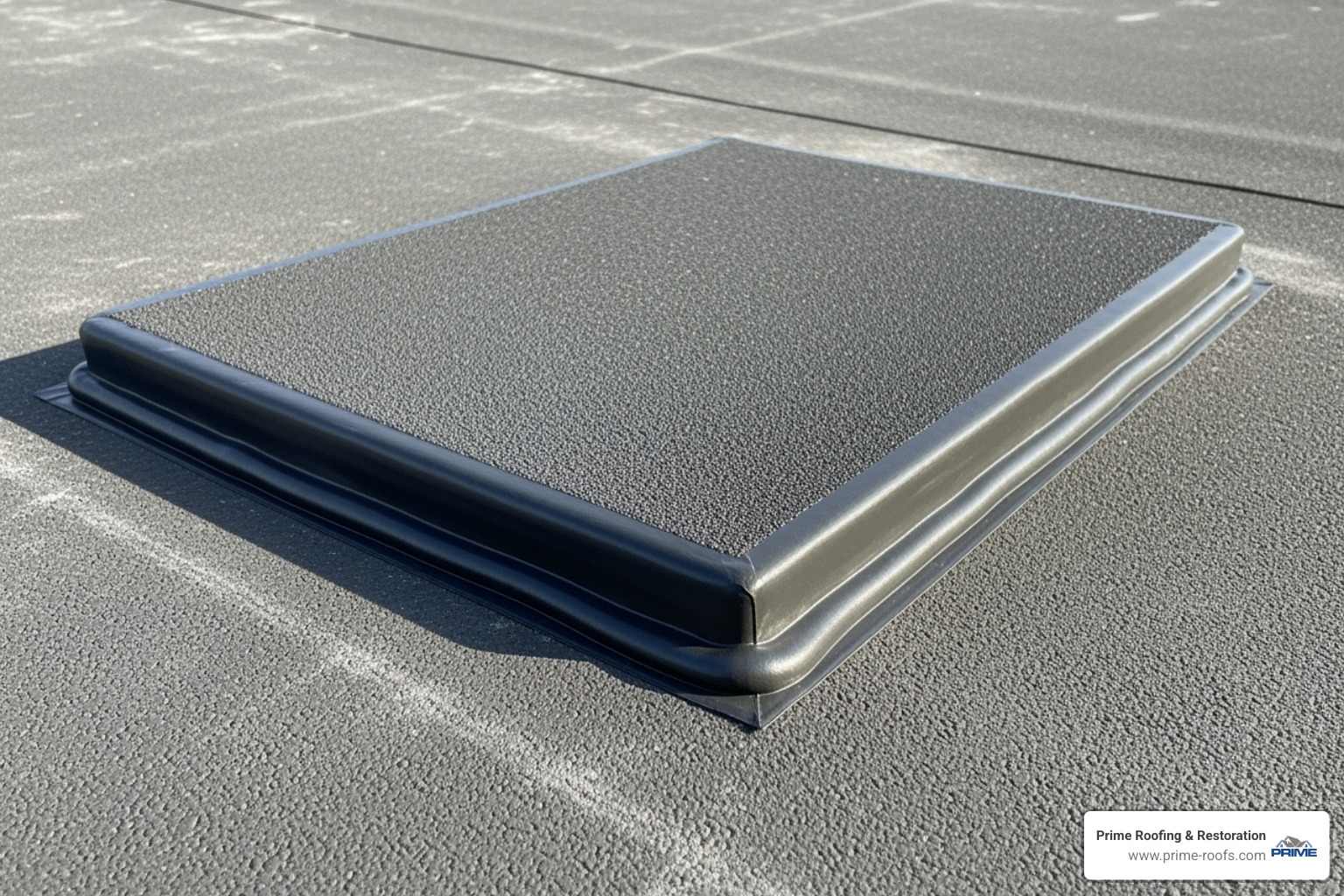
Now we get to the hands-on part—the actual repair that will restore the integrity of your roof. With your materials gathered and a suitable weather window chosen (always aim for a dry day with temperatures above 40°F for proper curing), you’re ready to perform a professional-quality EPDM roof repair.
Here’s a fact that might surprise you, but it’s the golden rule of EPDM repair: the most critical part of this entire process is not the patch application itself—it’s the surface preparation. We have seen countless repairs fail prematurely because this initial step was rushed or done incorrectly. Industry data consistently shows that 90% of patch failures happen because the patch’s adhesive sticks to a microscopic layer of dirt, oxidation, and grime instead of the actual EPDM membrane. Think of it like trying to apply a decal to a dusty car window—it’s destined to peel away.
Before we dive in, a word on safety. Working on any roof carries inherent risks. Please familiarize yourself with and follow proper roofing safety guidelines from OSHA. This includes using secure ladders, being aware of your surroundings, and wearing appropriate footwear. If you are not comfortable with heights or the repair seems more complex than you anticipated, there is no substitute for professional help. Knowing when to call in experts like Prime Roofing & Restoration is a sign of a smart property owner.
Step 1: Preparing the Surface for Your EPDM Roof Repair
This step is the foundation of your entire repair. Do not cut corners here. The time you invest in preparation will directly translate into the longevity of your patch.
- Clear and Clean the General Area: Start by clearing away all loose debris—leaves, twigs, dirt—from the damaged area and at least one foot beyond it in all directions. A leaf blower or soft broom works well.
- Scrub with Soap and Water: Next, grab your soft-bristled brush and a bucket of warm water with a mild, non-filming detergent (like dish soap). Thoroughly scrub the entire area you just cleared. You need to remove all surface dirt and grime. Don’t just focus on the puncture; clean the entire zone where your patch will sit.
- Rinse and Dry Completely: Rinse the area thoroughly with clean water to remove any soap residue. Now, let it dry completely. Any trapped moisture will prevent the primer and adhesive from bonding. Be patient; this can take 30 minutes to an hour on a sunny day. You can test for dryness by pressing a dry paper towel firmly onto the surface.
- Apply EPDM Cleaner: This is the crucial chemical cleaning step. Take a clean, lint-free rag, apply your specialized EPDM cleaner, and rub the repair area vigorously. You are removing the fine layer of carbon black material and oxidation that naturally forms on the membrane’s surface. You will see black residue coming off on the rag. Continue this process, switching to a fresh, clean section of the rag or a new rag, until the rag comes away clean. When no more black residue appears, the surface is truly clean. It should have a dull, almost matte appearance, not a shiny one. This is your visual confirmation that it’s ready for primer.
Step 2: Cutting and Applying the Patch
With a perfectly prepared surface, you’re ready to apply the patch.
- Measure and Cut the Patch: Carefully measure the damaged area. Your patch must extend a minimum of 2-3 inches beyond the damage in all directions. For a 1-inch tear, you need at least a 5×5 inch patch. When you cut your EPDM patch material, use a sharp utility knife and a straight edge for clean lines.
- Round the Corners: This is a pro tip that makes a massive difference in longevity. Use heavy-duty scissors or your knife to round all four corners of your patch. Sharp, 90-degree corners are natural starting points for peeling because stress concentrates at a single point. Rounded corners distribute that stress evenly, making the patch far more resistant to lifting over time.
- Prime the Surfaces: Apply the EPDM primer with a clean rag or the supplied applicator pad. You need to prime both the cleaned roof surface and the back of your patch (if using the glue-down method). Apply a thin, even coat. You want full coverage, not puddles. The primer chemically alters the surface to create a stronger bond.
- Apply the Patch: Let the primer dry completely until it is tacky to the touch but does not transfer to your glove.
- For a pressure-sensitive patch, carefully peel back the release liner, position the patch over the damage, and gently lay it down from the center outwards to avoid wrinkles. Once it touches the primed surface, the bond is instant, so position it carefully.
- For a glue-down patch, apply a thin, even layer of splice adhesive to both the primed roof surface and the primed back of the patch. Let the adhesive flash-off until it’s tacky. This can take 10-20 minutes depending on temperature and humidity. Test it by lightly touching it with a clean knuckle; it should feel sticky but not string or transfer to your skin. Carefully place the patch, again working from the center out.
Step 3: Sealing the Deal for a Watertight Finish
Your patch is down, but the job isn’t finished. This final step ensures a durable, watertight seal.
- Roll the Patch Firmly: Take your 2-inch steel seam roller and immediately begin rolling the patch with firm, steady pressure. Start from the center and roll outwards in all directions (up/down, left/right, and diagonally). Your goal is to eliminate every single air bubble and ensure maximum contact between the two adhesive surfaces. This step is what activates the bond.
- Apply Lap Sealant: After rolling, it’s best to let the patch set for at least 4 hours if possible. Then, apply a thick, continuous bead of lap sealant around the entire perimeter of the patch. The bead should be centered directly over the edge of the patch, covering both the patch edge and the existing roof membrane.
- Tool the Sealant: Using a plastic tool, an old credit card, or a gloved finger, smooth the bead of sealant down, feathering it out onto the surrounding roof surface. You want to create a smooth, ramp-like transition that is about 1-inch wide and completely covers the patch edge. This ensures water flows over the patch edge rather than getting caught on it, providing the final layer of protection against the elements.
And there you have it—a professional-grade EPDM roof repair that, if done correctly, will last for many years. The keys to success are patience and meticulous attention to detail, especially during the all-important cleaning and preparation phase.
Advanced Care and When to Call a Professional
A successful DIY EPDM roof repair is incredibly rewarding and can effectively address minor issues like small punctures or tears. However, a truly healthy EPDM roof system requires more than just reactive fixes. Long-term, proactive maintenance and professional oversight are what allow these durable rubber membranes to reach and even exceed their projected 30-year lifespan. Think of it like your personal health—you can handle cuts and scrapes with a first-aid kit, but you still need a doctor for annual check-ups and to address more serious conditions.
Knowing your own limitations is just as crucial as knowing how to use a seam roller. While EPDM is one of the most repair-friendly roofing materials available, there are clear situations where a DIY approach is insufficient. Recognizing these red flags and calling in a professional roofing contractor isn’t an admission of defeat; it’s a strategic decision to protect your building and your investment.
Best Practices for a Long-Lasting Repair
Your new patch looks great, but the work of maintaining your roof is ongoing. By adopting a simple, consistent maintenance routine, you can prevent future problems and ensure your roof remains in peak condition.
- Conduct Regular Debris Clearing: At least twice a year (spring and fall are ideal), clear your entire roof surface of leaves, branches, dirt, and other debris. This material clogs drains and holds moisture against the membrane, creating the perfect conditions for ponding water and accelerated wear.
- Perform Post-Storm Inspections: After any major weather event involving high winds, heavy rain, or hail, take a few minutes to perform a visual inspection from a safe location. Check your seams and the areas around rooftop equipment for any signs of stress or damage. Catching a small issue early is always better than finding a major leak later.
- Trim Overhanging Tree Branches: This is simple but effective preventive maintenance. Overhanging branches drop leaves and provide a pathway for animals, but more importantly, they can break during a storm and become projectiles that can easily puncture your EPDM membrane.
- Address Ponding Water Promptly: This is a critical warning sign. According to the National Roofing Contractors Association (NRCA), if water remains on a roof for more than 48 hours after rainfall, it constitutes ponding. This indicates a drainage problem that needs to be addressed by a professional, who may recommend solutions like adding tapered insulation to improve slope or installing new drains.
- Schedule Professional Roof Maintenance: While you can handle the basics, a professional brings a trained eye and specialized tools. An annual or bi-annual professional inspection should include probing seams, checking the condition of all flashings and sealants, and ensuring drains are clear. For older roofs, a professional can perform an infrared moisture survey to detect trapped water within the system that is invisible to the naked eye.
When to Call a Professional for Your EPDM Roof
Sometimes, a problem is simply too big or complex for a DIY repair. Recognizing these scenarios can save you from wasted time, money, and the frustration of a failed repair.
- Extensive or Widespread Damage: If you’re dealing with large tears (longer than 12 inches), multiple punctures scattered across a wide area, or significant blistering covering more than 5-10% of the roof surface, a simple patch won’t suffice. This often points to a more systemic issue that requires a professional diagnosis.
- Multiple or Persistent Leak Sources: If you fix one leak only to have another appear elsewhere, you’re likely dealing with more than just isolated damage. This pattern suggests a potential system-wide failure, such as widespread adhesive breakdown or issues with the underlying insulation or roof deck.
- Widespread Seam Failure: This is a major red flag. If multiple seams are separating, it indicates that the original adhesive system is reaching the end of its life. Spot repairs will only be temporary fixes. A professional may need to re-seam large sections or recommend a restorative roof coating to encapsulate the entire roof.
- The Roof is Nearing Its End of Service Life: As an EPDM roof approaches and surpasses the 20-year mark, the material naturally becomes less resilient. At this age, repairs become less effective and may only be a short-term solution. A professional can help you perform a cost-benefit analysis to determine if a full replacement is a more economical long-term investment than continuing with frequent repairs.
- Signs of Structural or Substrate Damage: If you notice sagging areas on the roof, feel spongy or soft spots when walking on it, or see significant water damage on the underside of the roof deck, the problem is far more serious than the membrane itself. This requires immediate professional assessment to ensure the structural integrity of your building.
- You Lack the Time, Tools, or Comfort Level: Your safety is paramount. If you are uncomfortable working at heights, don’t have the proper safety equipment, or simply feel the job is beyond your expertise, making the call for professional help is always the right decision.
For expert flat roof system services in Alabaster, AL, it’s time to call in the pros. We bring the specialized tools, safety protocols, and years of hands-on experience needed to tackle any EPDM roofing challenge, from complex, large-scale repairs to full system replacements.
Prime Roofing & Restoration
Address: 5 Brown Cir, Alabaster, AL 35007
Phone: (205) 661-8190
Conclusion
Mastering the art of EPDM roof repair is an achievable and highly valuable skill for any diligent property owner. It’s much like learning essential car maintenance; once you understand the system, have the correct tools, and respect the process, you gain the confidence to handle common issues yourself. By understanding the unique properties of the EPDM membrane, gathering the specific materials required, and committing to a meticulous surface preparation process (remembering that 90% of failures stem from improper cleaning), you can confidently and effectively tackle the minor punctures and tears that inevitably occur over a roof’s long life.
The true beauty of EPDM roof repair lies in the material’s forgiving and durable nature. Unlike more rigid roofing systems, EPDM’s inherent flexibility and chemical stability make it exceptionally well-suited for patch repairs, even decades after installation. Following the detailed techniques we’ve outlined—from the critical chemical cleaning with an EPDM solvent to the final, feathered application of lap sealant—ensures your repair isn’t just a temporary plug, but a permanent, monolithic bond that can genuinely extend your roof’s service life by years, saving you thousands in potential water damage and premature replacement costs.
However, the ultimate mark of a savvy property owner is wisdom—knowing not just how to perform a repair, but when. Recognizing the line between a manageable DIY task and a complex, systemic problem is crucial. Extensive damage across large sections of your roof, a frustrating pattern of recurring leaks, or widespread seam failure are all clear indicators that the problem has outgrown a simple patch. These are the moments when stepping back and calling a professional is the most cost-effective and responsible course of action.
At Prime Roofing & Restoration, we’ve built our reputation on this very principle: providing honest assessments and expert guidance. We understand precisely when a targeted repair makes sound financial sense and when a full replacement or restoration is the smarter long-term investment for your property. We are committed to delivering durable, high-quality roofing solutions that protect your most valuable asset and provide you with peace of mind. Our team fosters lasting relationships with clients throughout Central Alabama, built on a foundation of trust, superior materials, and licensed experts who understand the unique demands our local climate places on EPDM roofing systems.
Whether you’re facing a simple puncture you’re ready to tackle yourself or confronting complex issues that demand professional intervention, we are here to be your trusted resource. Contact us today for a free, no-obligation estimate, and let us provide the information you need to make the best possible decision for your property’s future.