
What Is Dry Verge Installation and Why Does It Matter?
Dry verge installation is the modern, mortar-free standard for securing roof edges against wind uplift and water ingress. For decades, the roofing industry relied on “wet verges”—a mixture of sand and cement used to seal the gap between the roof tiles and the gable wall. However, as building science has evolved, it has become clear that mortar is a temporary solution for a permanent structure. Unlike traditional wet verges that crack, crumble, and fall away over time due to the natural expansion and contraction of a home, a dry verge uses interlocking high-grade plastic units to create a weatherproof, maintenance-free seal along the gable end. For homeowners seeking professional roofing services in Alabaster, transitioning to a dry fix system ensures long-term durability, enhanced structural integrity, and a clean aesthetic finish that boosts curb value.
In the humid subtropical climate of Alabama, roofs are subjected to intense heat, heavy rainfall, and the occasional threat of high-wind events like tornadoes or severe thunderstorms. Traditional mortar simply cannot keep up with these environmental stressors. When mortar cracks, it allows moisture to seep into the roof battens and the underlayment, leading to rot and costly internal damage. Dry verge systems solve this by providing a mechanical fix that remains flexible and secure regardless of the temperature or weather conditions.
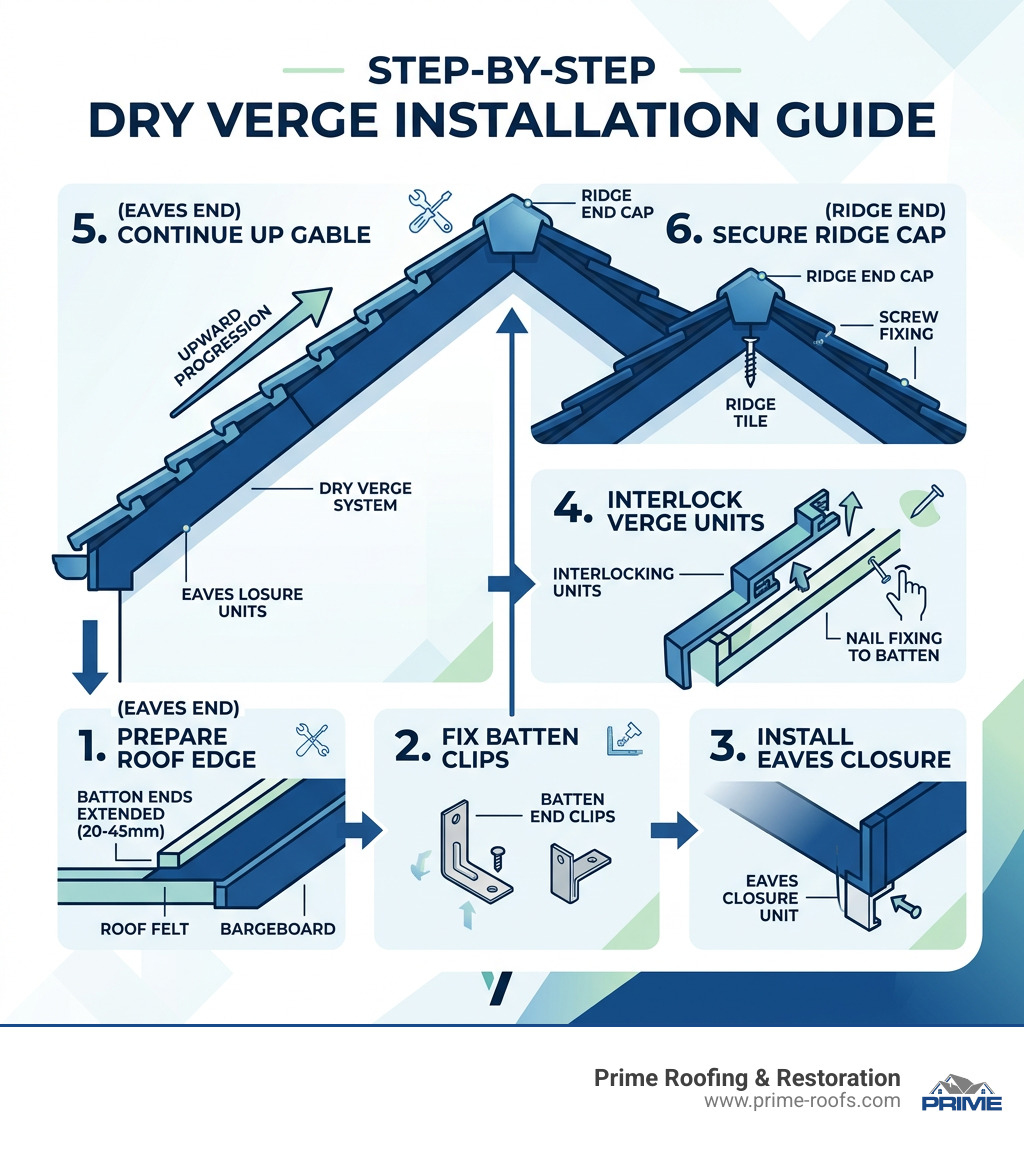
Here is a quick overview of how the professional installation process works:
- Remove any existing mortar, debris, or old undercloak from the batten ends to ensure a clean workspace.
- Extend roof battens 20–45mm beyond the bargeboard or outer wall to provide a solid anchoring point.
- Fix specialized batten end clips to each batten end to prevent the wood from splitting during the nailing process.
- Fit the eaves closure unit at the base of the roof to seal the first tile and prevent pest entry.
- Interlock individual verge units upward from the eaves to the ridge, mechanically fastening each one to the batten.
- Secure the ridge end cap at the apex with high-grade screws to complete the weatherproof seal.
Traditional mortar verges are notorious for their high maintenance requirements. They often crack within just a few years of installation, and homeowners can expect to pay between $600 and $2,500 to repoint a standard gable end. A dry fix system eliminates that cycle entirely. When correctly installed by a certified professional, a dry verge system lasts 10 to 15 years or more with virtually zero maintenance—making it one of the smartest upgrades for any pitched roof.
I’m Bill Spencer, owner of Prime Roofing & Restoration. With decades of hands-on experience in roof installation, repair, and weatherproofing systems across Alabama, I have seen firsthand how dry fix technology has revolutionized home protection. In this comprehensive guide, I’ll share the exact steps, technical standards, and professional tips our team uses to get a clean, durable result every time.
Key terms and related guides for dry verge installation:
Understanding Dry Verge Systems vs. Traditional Mortar
When we talk about the “verge” of a roof, we are referring to the outer edge where the tiles or slates meet the gable end. This is one of the most vulnerable areas of any roofing system because it is directly exposed to wind and driving rain. Historically, this gap was sealed with a “wet” mix of sand and cement (mortar). While this worked for a time, it has significant drawbacks that modern dry verge installation solves through superior engineering and material science.
Mechanical Fixing vs. Wet Bedding
The core difference lies in how the edge is secured. Traditional mortar relies on an adhesive bond that is notoriously brittle. As your house naturally settles or expands and contracts with the Alabama heat, that mortar cracks. Once it cracks, water gets in, and eventually, chunks of cement can fall off, leaving your roof vulnerable to wind uplift and pest infestation. In many cases, the mortar itself can become a projectile during high winds if it has detached from the tiles.
A dry verge system uses mechanical fixing. This means every unit is physically screwed or nailed into the roof structure. It doesn’t rely on a chemical bond, so it can handle thermal expansion without breaking. The units are typically made from UV-stabilized polypropylene or UPVC, which are designed to withstand decades of sun exposure without becoming brittle.
| Feature | Traditional Wet Verge | Modern Dry Verge System |
|---|---|---|
| Fixing Method | Mortar / Adhesive Bond | Mechanical (Nails/Screws) |
| Maintenance | High (Requires frequent repointing) | Extremely Low (Set and forget) |
| Installation Weather | Must be dry and above 40°F | Can be installed in any weather |
| Durability | Cracks over 5-10 years | 10-15+ years (UV Stable) |
| Pest Resistance | Prone to gaps and bird nesting | Integrated combs and closures |
| Aesthetics | Can look messy/dated over time | Clean, uniform, modern lines |
| Wind Resistance | Moderate (Subject to bond failure) | High (Mechanically locked) |
Compliance and Standards
Even though we are working here in Alabaster and Hoover, much of the high-end dry fix technology is designed to meet rigorous international standards. Systems often comply with BS 8612, which dictates the performance requirements for dry-fixed ridge, hip, and verge systems. This standard ensures that the plastic units can withstand specific wind loads and that they provide adequate drainage for water that might get behind the tiles. They also align with BS 5534, the code of practice for slating and tiling, which requires perimeter tiles to be double-fixed for safety. You can find more technical guidance on dry fix standards to see how these systems are engineered to withstand extreme wind loads and prevent the “zipper effect” where one loose tile leads to a total roof failure.
Benefits of Mechanical Fixing
Mechanical fixing is a game-changer for homeowners. Because each piece is interlocked and fastened to the batten, the risk of “wind uplift” is virtually eliminated. In Alabama, where storm seasons can bring sudden high winds, having a verge that won’t blow away is essential for peace of mind.
Furthermore, these systems provide built-in ventilation. This allows air to circulate under the tiles, reducing the risk of condensation and mold growth in your attic space. It’s no wonder these systems are Rated Excellent on Trustpilot by DIYers and professionals alike. The ventilation aspect is particularly important in the South, where trapped heat and moisture can significantly shorten the lifespan of your roof deck.
Compatibility and Roof Pitch
Dry verge systems are incredibly versatile. Most units are suitable for roof pitches ranging from 15 to 55 degrees. They are primarily designed for interlocking concrete and clay tiles, which are common in modern residential construction. When selecting your kit, you’ll need to check your batten gauge (the distance between the top of one batten and the top of the next), which typically falls between 260mm and 345mm. Using a universal dry verge kit can often simplify this process, as they are designed to accommodate a wide range of tile profiles and gauges.
Essential Tools and Materials for Dry Verge Installation
Before you climb that ladder, you need to make sure your workspace is ready and you have the correct components. Dry verge installation is straightforward, but it requires specific components to ensure a watertight seal that will last for decades.
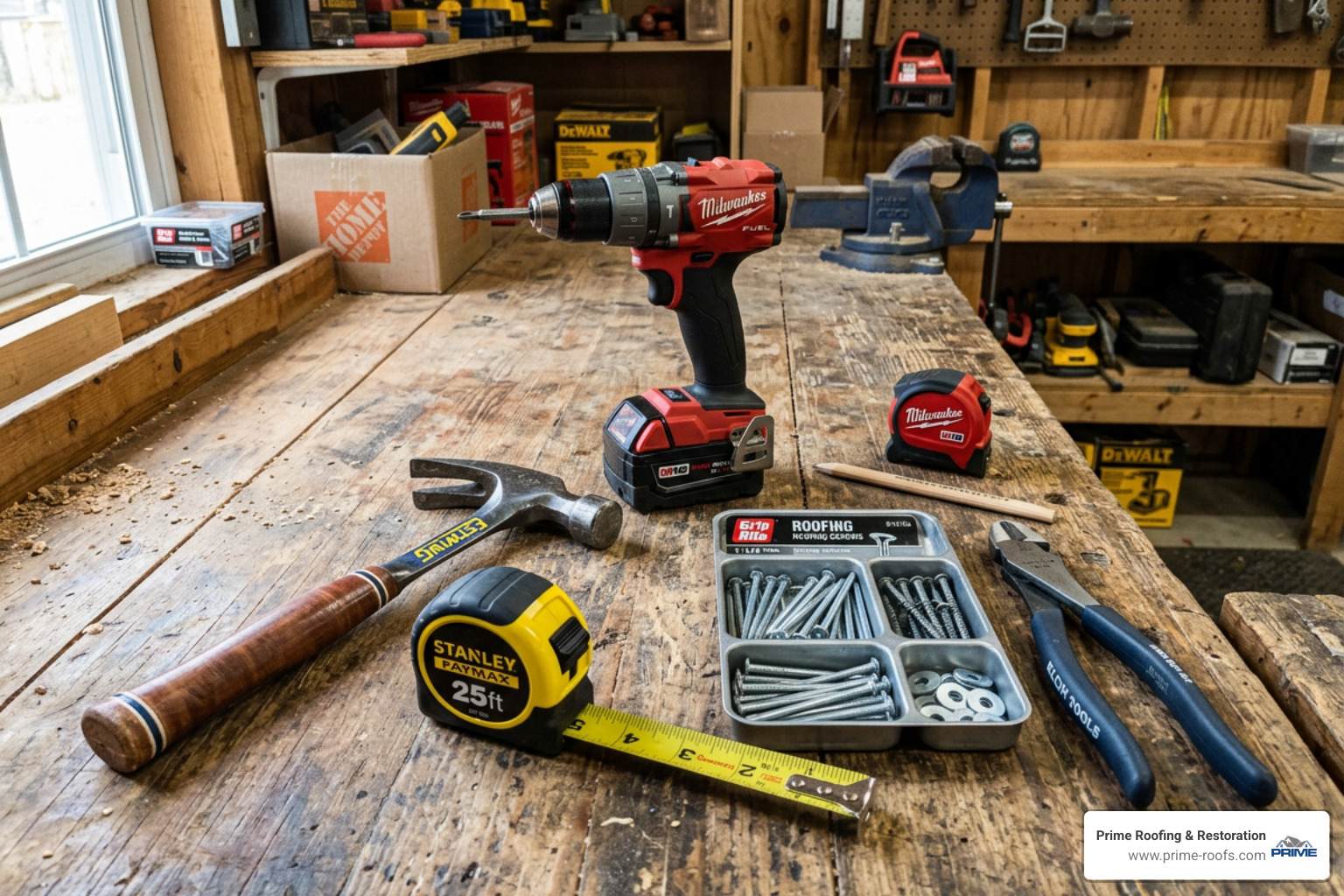
The Shopping List
- Verge Units: These are the main “caps” that cover the tile edges. Ensure you choose a color that matches your roof (typically grey, brown, or terracotta).
- Eaves Closures (Starter Inserts): These seal the very first unit at the bottom of the roof. They often include a “comb” to prevent birds and large insects from nesting under the tiles.
- Ridge End Caps: These provide a neat finish where the two sides meet at the top. You can choose between half-round or universal angled caps depending on your ridge tile shape.
- Batten End Clips: These slide onto the ends of your wooden battens. They are crucial because they provide a secure nailing point and prevent the wood from splitting when you drive in the fasteners.
- Fasteners: Use 30mm or 40mm stainless steel nails and high-quality wood screws. Stainless steel is non-negotiable; standard galvanized nails will eventually rust and leave streaks on your gable.
- Hand Tools: A sturdy hammer, a power drill with various bits, a utility knife for trimming underlay, and a tape measure.
- Chalk Line: Essential for ensuring your verge units form a perfectly straight line from eaves to apex. A crooked verge is a sign of poor workmanship.
For a deeper dive into the broader world of roof components and how they work together, check out our Expert Roof Installation Complete Guide.
Preparing the Roof for Dry Verge Installation
Preparation is 90% of the job. If you are working on a new build, ensure your tiling battens extend 45mm beyond the bargeboard or the outer edge of the wall. This extension is what the verge units will “clinch” onto. If the battens are too short, the units will not have enough surface area to grip, leading to instability.
If you are retrofitting an existing roof:
- Remove all old mortar: Use a hammer and chisel to carefully chip away the old cement. You need a clean, flat surface. Be careful not to damage the edges of the tiles during this process.
- Inspect the battens: If the existing battens don’t extend far enough (at least 20-45mm), you may need to install a new timber batten running from the eaves to the ridge to provide a fixing point. This is often called a “gable ladder.”
- Trim the Underlay: Ensure your roofing underlay is trimmed flush or slightly overlapping the edge. Using a self-stick underlayment over the verge area can provide an extra layer of moisture protection against driving rain.
Selecting the Right Verge Units
Not all verge units are created equal. Some are “handed” (meaning you need specific Left and Right units), while others are ambidextrous. Ambidextrous units are often easier for DIY projects because they feature snap-off tabs that allow them to be used on either side of the gable. Always look for UV-stable plastic to ensure the color doesn’t fade under the harsh Alabama sun. High-quality units will also feature internal drainage channels that direct water away from the wall and back onto the roof surface.
Step-by-Step Dry Verge Installation Process
Now for the main event. Installing a dry verge is often called “Click and Fix” because of the satisfying way the pieces interlock. However, precision is key to ensuring the system functions as intended.
Setting the Foundation with Eaves Closures
The first piece you install is the eaves closure (also known as a starter insert). This piece is critical because it sets the alignment for the entire run and prevents birds, squirrels, and large insects from entering the gap under your tiles.
- Position the Closure: Place the eaves closure against the end of the first tiling batten at the bottom of the roof (the eaves). It should sit snugly against the fascia board.
- Fix to Fascia: Secure it to the fascia board or rake board using stainless steel screws. Ensure it is level and flush with the bottom edge of your first tile. If your fascia is uneven, you may need to shim it to ensure a straight start.
- Alignment: This piece dictates the alignment for the rest of the run, so use your chalk line to ensure it’s positioned correctly. A mistake here will be magnified as you move up the roof.
If you’re in the local area and this feels a bit daunting, our team of roofers in Alabaster, AL can handle these technical details for you, ensuring a perfect fit that meets all local building codes.
Securing Units to the Roof Battens
Once the starter is in place, you can begin moving up the roof. This is where the “mechanical fixing” happens.
- Slide the First Unit: Take your first verge unit and slide it over the eaves closure. It should “click” or lock into place. Ensure the front lip of the unit is hooked over the edge of the tile.
- Nail to the Batten: Each verge unit has a nailing grid or a screw boss. Drive a stainless steel nail through the grid into the end of the batten (or into the batten end clip if you are using them). Do not over-tighten; the unit needs a tiny amount of room to expand in the heat.
- The Interlock: Take the next unit and slide it into the slots of the previous one. Most systems have a “tail” that fits into the “head” of the unit below it. This creates a continuous, overlapping shield against rain.
- The Wiggle Test: Before nailing the next unit, give it a small wiggle. It should feel secure and aligned with the edge of the tile. If it feels loose, check that the interlock is fully engaged.
- Repeat to the Apex: Continue this process until you reach the top of the gable. If the last unit is too long, you may need to mitre-cut it with a fine-toothed saw to fit flush against the ridge tile.
Finishing at the Ridge
At the very top, where the two sides of the gable meet, you’ll install the ridge end cap. This is the final piece of the puzzle and ensures that water cannot enter the very top of the roof structure.
- Place the cap over the gap between the two top-most verge units. It should overlap both units slightly.
- Some caps feature “flap technology” or flexible gaskets that contour around the verge units for a perfect, airtight seal.
- Secure the cap into the ridge batten using long wood screws. If your ridge batten is recessed, you may need to install a small block of wood to provide a solid fixing point.
- Check that the cap is centered and that there are no visible gaps where water could be driven in by the wind.
Common Mistakes and Troubleshooting Your Roof Verge
Even with a “Click and Fix” system, things can go wrong if you rush the process or ignore the manufacturer’s instructions. Avoiding these common pitfalls will save you from having to redo the work in a few years.
Inadequate Fixings and Mortar Residue
One of the most common mistakes is trying to install a dry verge over old mortar. Never do this. The mortar creates an uneven surface, preventing the units from interlocking properly. This leads to “wavy” lines and gaps that wind can catch. Furthermore, the mortar will continue to degrade underneath the plastic, potentially causing the units to shift or pop off.
Another issue is using the wrong fasteners. Standard steel nails will rust within a few seasons, leaving ugly orange streaks down your gable wall and eventually failing. Always use stainless steel. It is also important to ensure the nails are long enough to penetrate at least 25mm into the timber batten for maximum pull-out resistance.
Fixing Leaks and Wind Noise
If you hear “tile chatter” (the sound of tiles clicking against each other in the wind) after an installation, it usually means the units aren’t tight enough against the tile head laps.
- The Fix: Ensure each unit is pressed firmly down onto the tile before nailing. The unit should act as a clamp, holding the tile edge securely against the batten.
- Drainage: If you notice water ponding or leaking behind the verge, check the drainage channels inside the units. Debris from trees (like pine needles or oak tassels) can sometimes clog these small channels. A quick spray with a garden hose can usually clear them out.
Retrofitting to Existing Roofs
When retrofitting, the biggest challenge is often the batten condition. If your batten ends are rotten, they won’t hold a nail. In these cases, we recommend cutting back the old battens and installing a new “gable ladder” or a continuous timber batten to provide a fresh, solid fixing point. This ensures the mechanical fix is actually anchored into sound wood. For more on these types of structural repairs, see our professional roof installation services. Ignoring rotten battens is a safety hazard, as the entire verge could blow off during a storm.
Cost, Maintenance, and Longevity of Dry Fix Systems
Investing in a dry verge system is a move toward long-term savings and home protection. While the initial material cost is higher than a bag of mortar, the labor and longevity factors tip the scales heavily in favor of dry fix.
Longevity and Maintenance
A properly installed dry verge system should last 10 to 15 years, and often much longer depending on the quality of the plastic used. Maintenance is minimal compared to mortar:
- Seasonal Inspections: Take a look at your gable ends every spring and autumn. Look for any units that might have shifted or any signs of impact damage from falling branches.
- Debris Clearance: Ensure your gutters near the eaves closures are clear so water can flow away from the verge freely. If water backs up in the gutter, it can seep behind the starter unit.
- Post-Storm Checks: After a major Alabama storm, do a quick visual check from the ground to ensure the ridge caps are still securely in place and that no units have been unclipped by extreme wind gusts.
Factors Affecting Installation Price
The cost of dry verge installation varies based on several factors that a professional roofer will evaluate during a site visit:
- Roof Height: Higher roofs (two or three stories) require more scaffolding or specialized lift equipment, which adds to the labor and safety costs.
- Gable Length: Naturally, a larger home with longer gables will require more units and more labor time. A steep pitch also increases the difficulty and time required for installation.
- Access Difficulty: If your home is close to a neighbor’s or has complex landscaping (like a pool or expensive gardens), it may take longer to set up safe access for the crew.
- Retrofit vs. New: Retrofitting is generally more expensive because it involves the labor-intensive removal of old mortar and potential repairs to the underlying timber structure.
On average, a retrofit for a single gable can range from $750 to $1,400, while a full single-family home with multiple gables might reach $2,400. While these are industry benchmarks, they represent a one-time investment that saves you from the recurring $600-$2,500 cost of repointing every few years. Furthermore, many insurance companies look favorably on dry fix systems because they significantly reduce the risk of storm-related damage claims. If your roof is reaching the end of its life entirely, you might consider this as part of a larger roof replacement project to maximize your ROI.
Frequently Asked Questions about Dry Verge Installation
Can I install dry verge over existing mortar?
No, all existing mortar must be removed to expose the batten ends. Installing over mortar prevents the units from sitting flush and compromises the mechanical fixing required for wind resistance. It also looks unprofessional and can lead to units popping off in high winds. A clean surface is essential for a watertight seal.
How long does a dry verge system last?
A correctly installed dry verge system typically lasts 10 to 15 years or more. Because they are made from UV-stabilized polymers, they do not crack, crumble, or degrade like traditional sand and cement mixtures. High-end systems can often last as long as the tiles themselves.
Do I need a professional for dry verge installation?
While DIY is possible for those with roofing experience and the right safety equipment, professional installation is highly recommended. Professionals ensure compliance with standards like BS 8612, handle the dangerous height work safely, and guarantee that the system is perfectly level and watertight. Most professional installations also come with a warranty.
Will birds still get into the eaves?
Not if you use a proper eaves closure unit. These components are designed with integrated combs or solid barriers that seal the entry point while still allowing for necessary ventilation. This is a major advantage over mortar, which often leaves small gaps that birds can exploit.
Can dry verge be used on any roof?
Most systems are designed for interlocking concrete or clay tiles. They are generally not suitable for natural slate or very flat tiles unless a specific universal kit or trim is used. If you have a slate roof, you may need a “continuous dry verge” system which is a long, extruded profile rather than individual interlocking units.
Does it come in different colors?
Yes, dry verge units are typically available in a variety of colors to match common roof tiles, including Black, Grey, Brown, and Terracotta. The plastic is color-fast, meaning it won’t peel or flake like painted mortar might.
Conclusion
Dry verge systems represent a significant upgrade for any pitched roof, offering superior protection against the elements with minimal maintenance. By moving away from brittle mortar and embracing the “Click and Fix” mechanical method, you protect your home from water damage, wind uplift, and pests for over a decade. In an era where extreme weather is becoming more common, the peace of mind provided by a mechanically fixed roof edge is invaluable.
In Alabama, our roofs face everything from scorching summer heat to intense thunderstorms. A dry verge system provides the durability and peace of mind that traditional methods simply can’t match. By following the correct preparation steps—ensuring proper batten extension and removing all old debris—you can achieve a crisp, modern look that adds real value to your property. Whether you are building a new home or upgrading an existing one, dry fix technology is the gold standard for modern roofing.
At Prime Roofing & Restoration, we are committed to building lasting relationships with our neighbors in Alabaster and Hoover through quality craftsmanship and honest advice. We understand the local climate and the specific challenges it poses to your home’s exterior. If you’re ready to upgrade your roof or need a professional eye to inspect your current verge, we are here to help.
Contact Information
Prime Roofing & Restoration
131 Market Center Dr Ste 102, Alabaster, AL 35007
Phone: 205-236-1222
Website: www.prime-roofs.com
Our Service Area:
We proudly serve Alabaster, Hoover, Pelham, Helena, and the surrounding Birmingham metro area.
For professional assistance, a comprehensive roof inspection, or a detailed quote on your dry verge installation, contact our licensed experts today at 205-236-1222. Let us help you protect your home with a roof that’s built to last.