
Why Understanding Hail Damage in Alabama Matters for Your Home
Hail damage Alabama homeowners face is more than an inconvenience—it’s a recurring threat that can compromise your property’s integrity. In the past year alone, Alabama has experienced 89 separate hail events severe enough to warrant official mapping. Each storm impacted at least 500 homes with hail measuring 1 inch or larger, leaving thousands dealing with costly repairs. For homeowners in affected areas, understanding potential damage and acting fast is critical. Partnering with a trusted local roofing expert ensures you receive a thorough assessment and quality repairs that protect your investment.
If you’re concerned about hail damage in Alabama, here’s what you need to know:
- Frequent Storms: 89 severe hail maps were generated for Alabama in the last year.
- Destructive Hail: Hail has ranged from 1-inch to golf ball-sized, with a state record of 5.38 inches.
- Typical Damage: Includes roof and siding damage, broken windows, and vehicle dents.
- Affected Regions: Central Alabama, including Cullman, Jefferson, and Mobile counties.
- Key Actions: Document damage, call a professional for an inspection, and file your insurance claim.
The state’s vulnerability to severe weather is well-documented. On March 19, 2018, Cullman County experienced Alabama’s largest recorded hailstone at 5.38 inches in diameter—nearly the size of a softball. More recent storms on April 27, 2025, and May 8, 2025, brought quarter to golf ball-sized hail across multiple counties. When these storms strike, they affect roofs, siding, windows, and vehicles, and can lead to water intrusion if not addressed quickly.
I’m Bill Spencer, Owner of Prime Roofing & Restoration. For over five years, my team has helped Alabama homeowners recover from storm damage. We conduct post-storm inspections across Central Alabama and the Gulf Coast, working with insurance adjusters to ensure you receive fair compensation and expert restoration.
Recent Hail Storms Pummel Alabama: A Look at the Latest Events
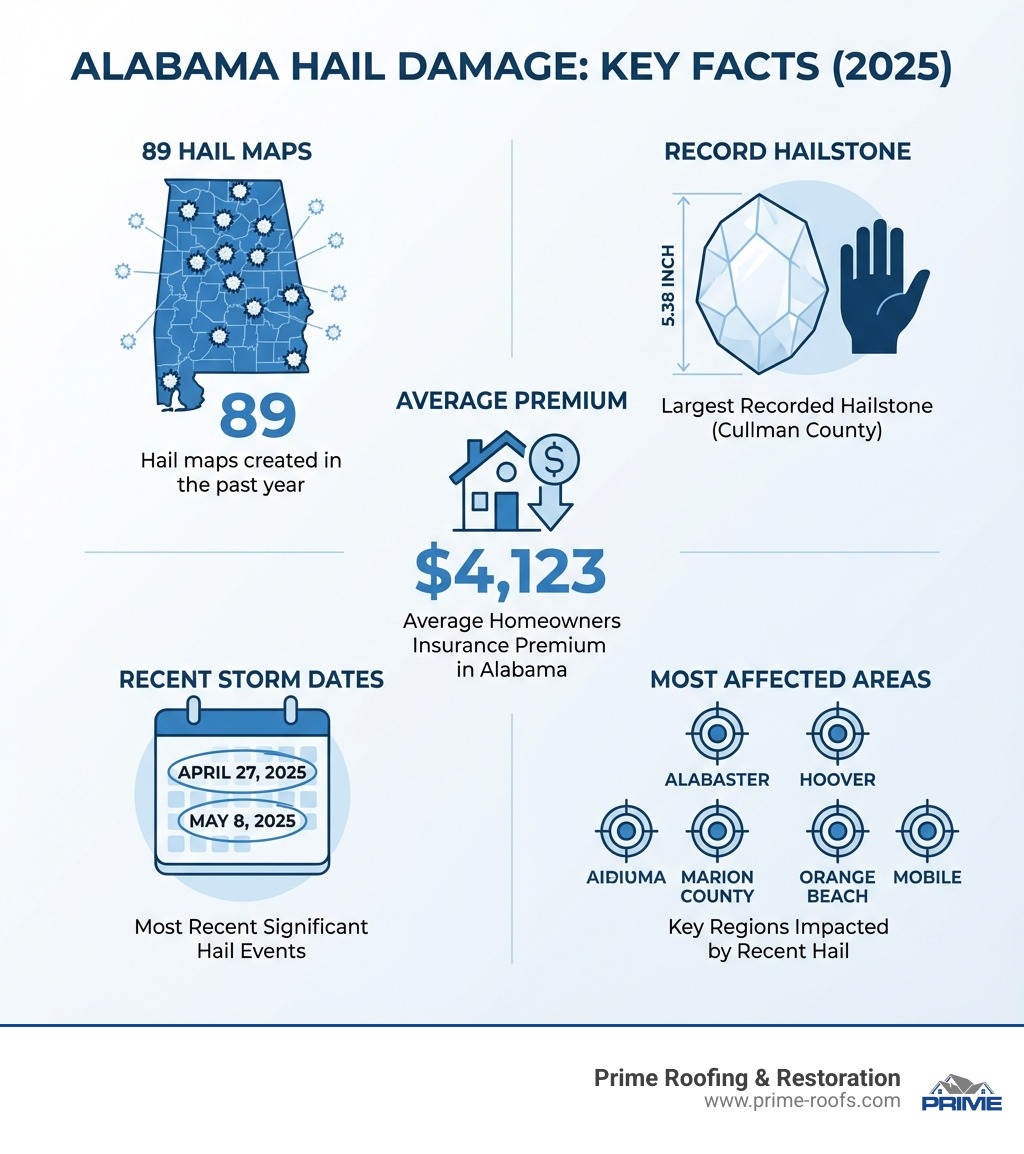
Alabama has seen significant storm activity, generating a remarkable 89 hail maps in the past year. This number signifies 89 distinct events where at least 500 homes in a metro region were impacted by hail measuring 1 inch or larger, highlighting the widespread potential for roof damage.
The latest mapped event occurred on April 27, 2025, indicating a very active storm season and keeping the threat of hail damage Alabama homeowners face current. Furthermore, a National Weather Service (NWS) report highlighted another significant hail event on May 8, 2025, impacting Marion, AL. These storms underscore the unpredictable nature of Alabama’s weather.
These severe weather events often bring a dangerous combination of damaging hail, powerful winds, and the threat of tornadoes. For instance, reports from Mobile, AL, have consistently shown severe thunderstorms accompanied by 60 mph wind gusts and quarter-sized hail. Tornado warnings issued with these events emphasize the comprehensive threat posed by these storm systems.
Areas Most Affected by Recent Hail
While hail can strike anywhere, central Alabama has recently borne the brunt of these powerful storms. The April 27, 2025, hail maps pinpointed significant activity in Alabaster, Hoover, Orange Beach, and Gulf Shores. These communities are unfortunately highly susceptible to severe weather.
Beyond these cities, the broader central Alabama region, including counties like Marion, Jefferson, and Cullman, has also seen substantial hail activity. The May 8, 2025, storm specifically mentioned quarter-sized hail in Marion, AL. According to radar data, Mobile has also been under frequent severe weather warnings, with 20 on-the-ground hail reports in the past 12 months.
These localized impacts highlight why understanding the specific risks to your community is so important. If you live in or around these areas, knowing about recent storm activity can help you stay prepared. For those in Alabaster, more detailed information on local storm impacts can be found in our Alabaster Storm Damage guide.
Timeline of Significant Hail Events
To grasp the scope of recent hail damage Alabama has endured, it’s helpful to look at the timeline. The past year’s 89 hail maps indicate that severe storm activity is a consistent pattern for the state.
The most recent available hail map was for April 27, 2025, impacting several metro regions. Just over a week later, on May 8, 2025, the NWS confirmed quarter-sized hail in Marion, AL. These recent dates are critical for homeowners, as damage often isn’t immediately apparent.
Looking back, the record-breaking 5.38-inch hailstone that fell in Cullman County on March 19, 2018, serves as a powerful reminder of the extreme hail events Alabama can experience. The sheer volume of recent hail maps paints a clear picture of frequent and significant storm activity, meaning homeowners across the state should remain vigilant.
Understanding the Impact: Hail Size, Associated Dangers, and Damage Types
When a hailstorm rolls through, its destructive power is a combination of hail size, wind speed, and the potential for tornadoes. Reports from central Alabama consistently show hail ranging from 1-inch (quarter-sized) to golf ball-sized. A quarter-sized hailstone can cause significant damage to roofs and vehicles, while golf ball-sized hail can shatter windows and severely compromise roofing materials.
These storms are often embedded within larger, more violent weather systems. High winds, sometimes gusting to 60 mph or more, frequently accompany hailstorms. These winds can strip shingles and drive hail with greater force, increasing its destructive impact. The threat of tornadoes adds another layer of danger and potential for catastrophic damage.

The Dangers of Hail and Associated Weather
The combination of hail, high winds, and potential tornadoes creates a multi-faceted threat. High winds alone can strip shingles and tear off gutters. When coupled with hail, the damage is far more severe, as wind-driven hailstones impact surfaces with greater force. Flying debris is another major concern, as strong winds can turn everyday objects into dangerous projectiles that cause additional damage to cars, windows, and siding.
Structural compromise becomes a real possibility when high winds and large hail combine. A weakened roof deck or damaged flashing can lead to leaks and a domino effect of costly water damage inside your home.
Common Types of Hail Damage in Alabama
When hail damage Alabama homeowners face becomes a reality, it often appears in several key areas. Understanding these common damage types helps you identify issues quickly.
-
Roof Damage: This is the most frequent and critical issue.
- Granule Loss on Shingles: Hail impacts knock off the protective granules from asphalt shingles, exposing the underlying asphalt. This exposure accelerates aging from UV rays and weather, shortening your roof’s lifespan.
- Dents and Cracks: Hail creates dents or “bruises” on asphalt shingles that weaken them and lead to cracks. On metal roofs, it causes dents that affect appearance and integrity. Large hailstones can crack or break tile roofs, allowing water to enter.
- Compromised Flashing and Vents: Metal flashing and plastic roof vents are easily dented or cracked by hail. Damaged components can cause leaks even if the main roofing material seems fine.
-
Siding Damage: Vinyl siding can crack or chip, while aluminum siding can easily dent. This damage is not only unsightly but can also compromise your home’s protective barrier.
-
Broken Windows: Large hailstones, especially when driven by strong winds, can crack or shatter windows and skylights, exposing your home’s interior to the elements.
-
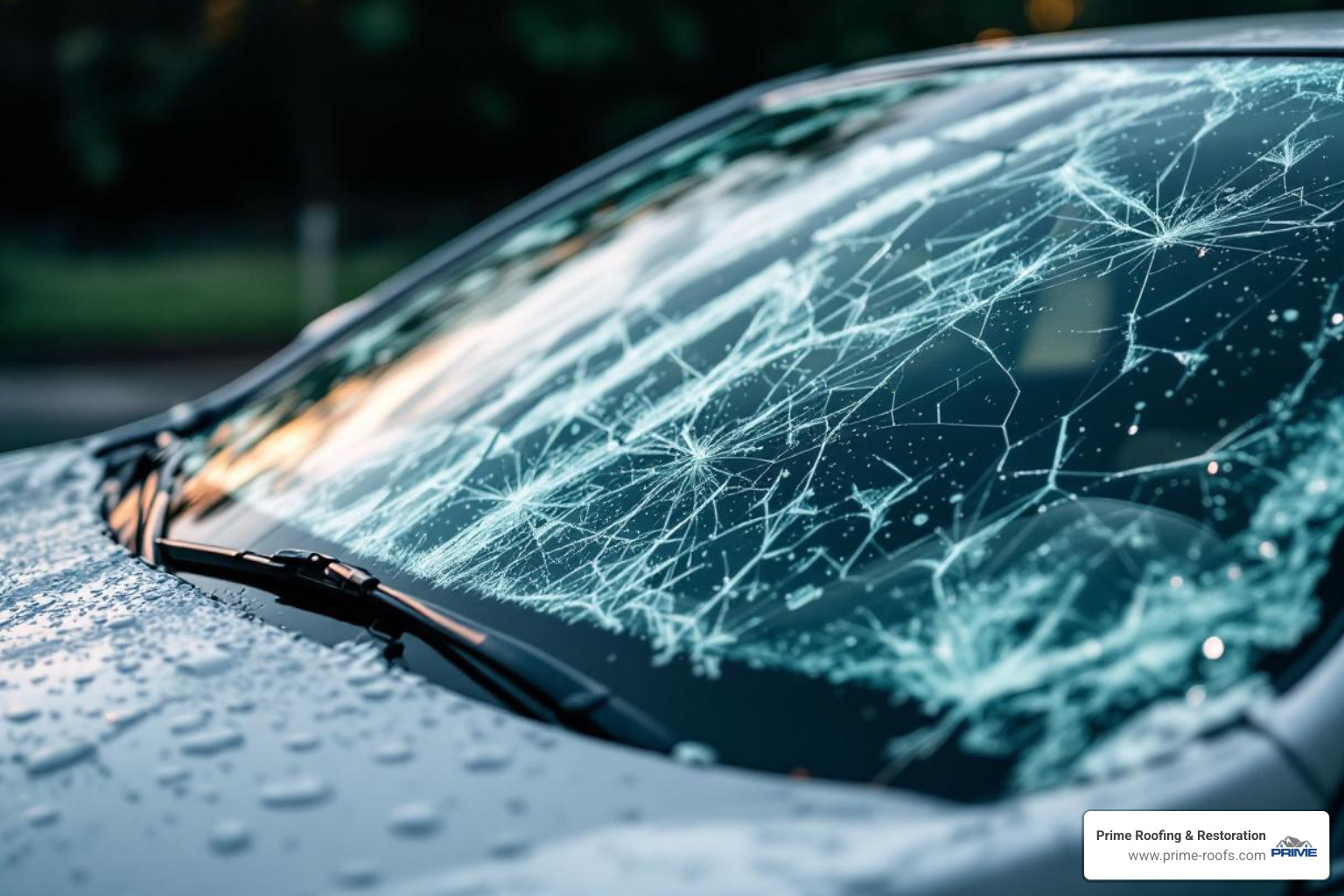
Vehicle Damage: Dents on car bodies and cracked windshields are common signs of hail. If your car is damaged, your roof likely suffered impacts as well.
-
Gutter Damage: Gutters and downspouts can be dented, bent, or torn off by hail and strong winds, impairing their ability to direct water away from your home.
Hail damage isn’t always obvious from the ground. Many forms of damage, especially to roofing, require a professional eye. That’s why we recommend a thorough inspection after any significant hailstorm. For more detailed information, check out our guide on How to Spot Roof Hail Damage.
Decoding the Data: How Hail Damage in Alabama is Tracked and Measured
Understanding the impact of hail damage Alabama experiences involves analyzing how meteorological services track and report these events. This data is crucial for assessing storm severity and helping communities prepare.
The National Weather Service (NWS) plays a pivotal role, issuing official Local Storm Reports (LSRs) that detail storm paths and hail sizes. For instance, the NWS Birmingham office issued a report on May 8, 2025, detailing quarter-sized hail in Marion, AL, based on public input and radar.
Beyond individual reports, specialized hail maps are a key tool. These maps are generated for a metro region when 500 or more homes are impacted by at least 1-inch hail. This threshold highlights significant events likely to cause widespread damage. The fact that 89 such maps were created for Alabama in the past year speaks volumes about the frequency of severe storm activity.
Official Reports and the Hail Damage Scale
Official reports are the backbone of our understanding of hail events. The NWS and the National Centers for Environmental Information (NCEI) collect and share extensive storm data, including spotter reports, radar information, and historical archives. This data provides critical context for current weather events.
One method used to assess the broader impact of hail is the Hail Damage Scale. This scale quantifies the potential for widespread disruption by considering not just the size of the hail, but also the population density in its path. It provides a valuable metric for understanding a hail event’s overall severity from a societal perspective.
These official reports also detail record-breaking events. We know Alabama has a state record for its largest hailstone because it was officially measured and certified, ensuring we have accurate data on extreme weather. You can read the Official report on the record hailstone in AL for more details.
Alabama’s Record-Breaking Hail
When we talk about the intensity of hail damage Alabama can experience, we inevitably come back to the state’s record-breaking hail event. On March 19, 2018, Cullman County was the site of the largest hailstone ever recorded in Alabama.
This colossal piece of ice was officially measured at a staggering 5.38 inches in peak width and weighed 9.8 ounces—nearly the size of a softball. The NWS Huntsville, in collaboration with the NCEI and the Alabama State Climatologist, certified this hailstone as the largest on record for the state.
The powerful supercell thunderstorm that produced this monster hailstone caused extensive damage to vehicles, homes, and roofs in Cullman County. While not an everyday occurrence, this record-breaking event serves as a stark reminder of the extreme weather potential in Alabama and highlights why understanding hail size is so critical for homeowners.
Your Post-Storm Action Plan: From Inspection to Insurance Claims
After a severe storm involving the hail damage Alabama residents know well, taking prompt and correct action is crucial to prevent further issues and streamline recovery. A well-executed post-storm plan can make all the difference.
Your first priority is always safety. Once the danger has passed, carefully document any damage. This visual evidence is invaluable. Following that, contact a professional for a comprehensive assessment. We strongly advise against climbing on your roof for safety reasons—leave that to the experts.
Navigating insurance claims can feel daunting, but with proper documentation and a detailed inspection report from a licensed expert, you’ll have the leverage needed for a successful claim. A professional can help bridge the gap between your goal of full restoration and the insurance company’s goal of settling the claim.
Step 1: Ensure Safety and Document Everything
When the storm clears, your family’s safety is paramount.
- Stay Safe: Check for downed power lines, gas leaks, or structural hazards. If your home seems unsafe, evacuate and contact emergency services. Never walk on a wet or damaged roof.
- Document Thoroughly: Once it’s safe, use your phone to take extensive photos and videos of all visible damage to your roof, siding, windows, and gutters. Capture clear shots of any hail remnants on the ground.
- Note Details: Make a written log of the storm’s date and time. Note the approximate hail size you observed. This detailed record will be invaluable for your insurance claim.
The more evidence you have, the smoother your claim process will be.
Step 2: Get a Professional Assessment for Hail Damage in Alabama
After documenting what you can from the ground, call in the professionals. Do not attempt to climb on a wet or damaged roof yourself—it’s incredibly dangerous.
- Contact a Licensed Roofer: Call a reputable, licensed roofing contractor with experience in assessing hail damage. A local company with a track record in storm restoration is your best choice.
- Comprehensive Inspection: A professional inspection goes beyond what’s visible from the ground. An expert will examine every roof component for granule loss, dents, cracks, and damage to flashing and vents, often using tools like drones to find hidden issues.
- Written Damage Report: After the inspection, you should receive a detailed damage report with photos, descriptions, and a repair estimate. This document is your most powerful tool for your insurance claim.
A professional assessment ensures all damage is identified, providing an accurate picture of what needs to be done.
Step 3: Navigating Your Insurance Claim
Filing an insurance claim doesn’t have to be a maze with the right preparation and support.
- Contact Your Insurance Provider Promptly: As soon as you have your documentation and have scheduled your professional assessment, contact your insurance company to initiate a claim.
- Provide Documentation: Share your photos, videos, and the comprehensive written damage report from your roofer with your insurance adjuster. This evidence substantiates your claim.
- Understand Your Policy: Review your homeowner’s insurance policy to understand your coverage, deductible, and any clauses related to storm damage. This knowledge empowers you to advocate for your rights.
- Professional Advocacy: We recommend having your roofing contractor present during the adjuster’s visit. An expert can point out subtle damage the adjuster might miss, ensuring all aspects of the hail damage Alabama storm caused are noted. This collaborative approach can significantly improve your claim’s outcome.
You don’t have to go through this alone. Our Storm Damage Repair Services are designed to guide you through every step, from initial inspection to final repairs.
Frequently Asked Questions about Alabama Hail Damage
We know that when hail strikes, homeowners have a lot of questions. Here are some of the most common ones we hear regarding hail damage Alabama homeowners experience.
How often does Alabama get significant hail?
Alabama experiences frequent severe weather. In the past year alone, 89 separate hail maps were created for the state, each signifying an event where at least 500 homes were impacted by hail measuring 1 inch or larger. This data indicates that significant hail is a regular threat for Alabama homeowners.
What is the largest hailstone ever recorded in Alabama?
The largest hailstone on record in Alabama fell in Cullman County on March 19, 2018. It was officially measured at a massive 5.38 inches in diameter and weighed nearly a pound, setting a new state record and highlighting the extreme weather potential in the region.
What should I do immediately after a hailstorm damages my roof?
First, ensure your family’s safety by staying clear of hazards like downed power lines. Second, safely document all property damage from the ground with photos and videos, noting the storm’s date and time. Third, contact a trusted, licensed roofing professional for a thorough inspection. They can provide a repair estimate and apply an emergency tarp if needed to prevent water damage. A professional assessment is key to identifying all damage.
Conclusion: Protecting Your Home from Alabama’s Severe Weather
The frequency and intensity of hail storms in Alabama underscore the importance of being prepared and acting decisively when damage occurs. Understanding the impact of recent storms and navigating the inspection and insurance process is your best defense. We’ve seen that hail damage Alabama homeowners face is a recurring challenge, but one that can be managed with the right approach.
By following a clear action plan—prioritizing safety, documenting damage, and securing a professional assessment—you can ensure your home is restored correctly. Addressing hail damage promptly is crucial to prevent minor issues from escalating into major, costly problems. Partnering with certified experts like us means you have a dedicated team on your side, committed to quality materials and transparent service.
If your property has sustained damage, don’t wait for the problem to worsen. Contact the professionals at Prime Roofing & Restoration to secure your home today. We’re here to help you weather the storm and protect what matters most: your home and your family.