
Why Fast, Reliable Storm Damage Cleanup Makes All the Difference
When disaster strikes your Central Alabama property, the world can feel like it’s been turned upside down. The sight of a damaged roof, a flooded basement, or a tree resting in your living room is overwhelming. In these moments, finding a fast, reliable storm damage cleanup company is the first and most critical step toward recovery. The actions you take—and the partners you choose—in the immediate aftermath of a storm will determine the cost, timeline, and stress level of your entire restoration journey.
Central Alabama is no stranger to severe weather. From the violent winds of hurricanes and tornadoes to the destructive force of hailstorms and torrential downpours, our homes are constantly at risk. The financial toll is staggering. According to the National Oceanic and Atmospheric Administration (NOAA), a single severe storm event can cause billions of dollars in damage. For an individual homeowner, water damage restoration alone averages $3,500, but severe storm damage involving structural repairs can easily escalate to $15,000, $30,000, or more. The difference between a manageable recovery and a prolonged financial and emotional nightmare often comes down to the speed and expertise of your chosen local restoration partner.
Quick Action Guide for Storm Damage:
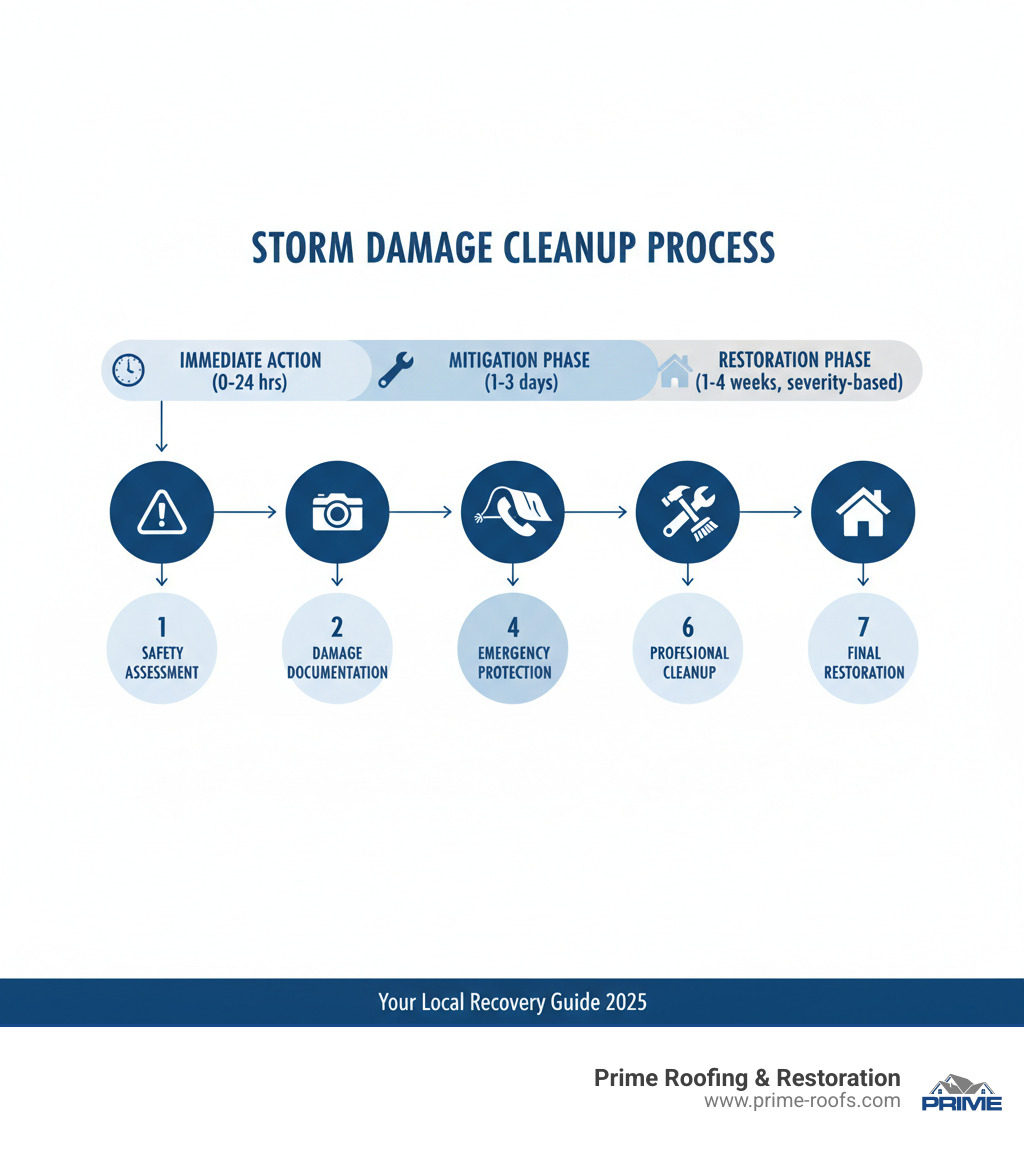
- Ensure Safety First: Before you do anything else, assess the area for immediate dangers. Look for downed power lines, listen for hissing sounds that could indicate a gas leak, and check for structural instability like sagging ceilings or cracked walls. Do not enter if you suspect any of these hazards.
- Document Everything Extensively: Once it’s safe, use your phone to take comprehensive photos and videos of all damage. Capture wide shots for context and close-ups of specific problems. This evidence is invaluable for your insurance claim.
- Contact Your Insurance Company: Report the damage to your insurance provider as soon as possible, ideally within 24-48 hours. This officially starts the claims process.
- Find a Licensed, Certified Local Contractor: Search for a local company with IICRC certification, a valid Alabama license, and a 24/7 emergency response team. A local expert understands regional building codes and has established relationships with insurance adjusters.
- Get Emergency Protection: Immediately request services like roof tarping or window board-ups. This is a crucial step to mitigate further damage from water intrusion, which can lead to mold and more extensive structural problems.
A reliable company doesn’t just clean up debris—they act as your project manager, guiding you through the complex insurance claims process, preventing costly secondary damage like mold, and meticulously restoring your property with trusted storm damage repair services.
I’m Bill Spencer, Owner and President of Prime Roofing & Restoration. My team and I have dedicated our careers to helping hundreds of Central Alabama property owners navigate the chaotic aftermath of hurricanes, tornadoes, and hailstorms. We’ve seen firsthand how the first 48 hours can make or break a recovery. Our mission is to bring order to the chaos, providing expert guidance from the initial insurance documentation to the final nail in your complete reconstruction.
First Steps: What to Do Immediately After Storm Damage
In the chaotic moments after a storm, when you’re facing scattered shingles across your lawn or a discolored, leaking ceiling, it’s easy to feel paralyzed by stress. However, the specific actions you take in these first few hours are the most powerful you have, directly influencing the success of your insurance claim and the speed of your recovery.
1. Prioritize Safety Above All Else
Before you even think about searching for storm damage cleanup near me, you must confirm your property is safe to enter. Storms leave behind a host of hidden dangers. Follow this safety checklist:
- Electrical Hazards: Look for downed or sparking power lines outside. Never approach them. Inside, if there is standing water, avoid turning on lights or appliances, as water and electricity are a lethal combination. If the power is still on and you can safely access your breaker box without stepping in water, shut off the main power.
- Gas Leaks: If you smell gas (often like rotten eggs) or hear a hissing sound, evacuate the property immediately. Do not use your phone, turn on lights, or do anything that could create a spark. Call your gas company or 911 from a safe distance.
- Structural Integrity: Scan for sagging ceilings, cracked walls, or a visibly damaged foundation. Listen for unusual creaking or groaning sounds. These are signs of potential collapse. If you have any doubts, stay out and wait for a professional assessment.
- Contaminated Water: Be aware that floodwater can be contaminated with sewage, chemicals, and bacteria. Avoid contact with it whenever possible. For more detailed safety information, consult resources from authorities like FEMA’s guide on post-storm safety.
2. Document Everything—Become a Forensic Expert
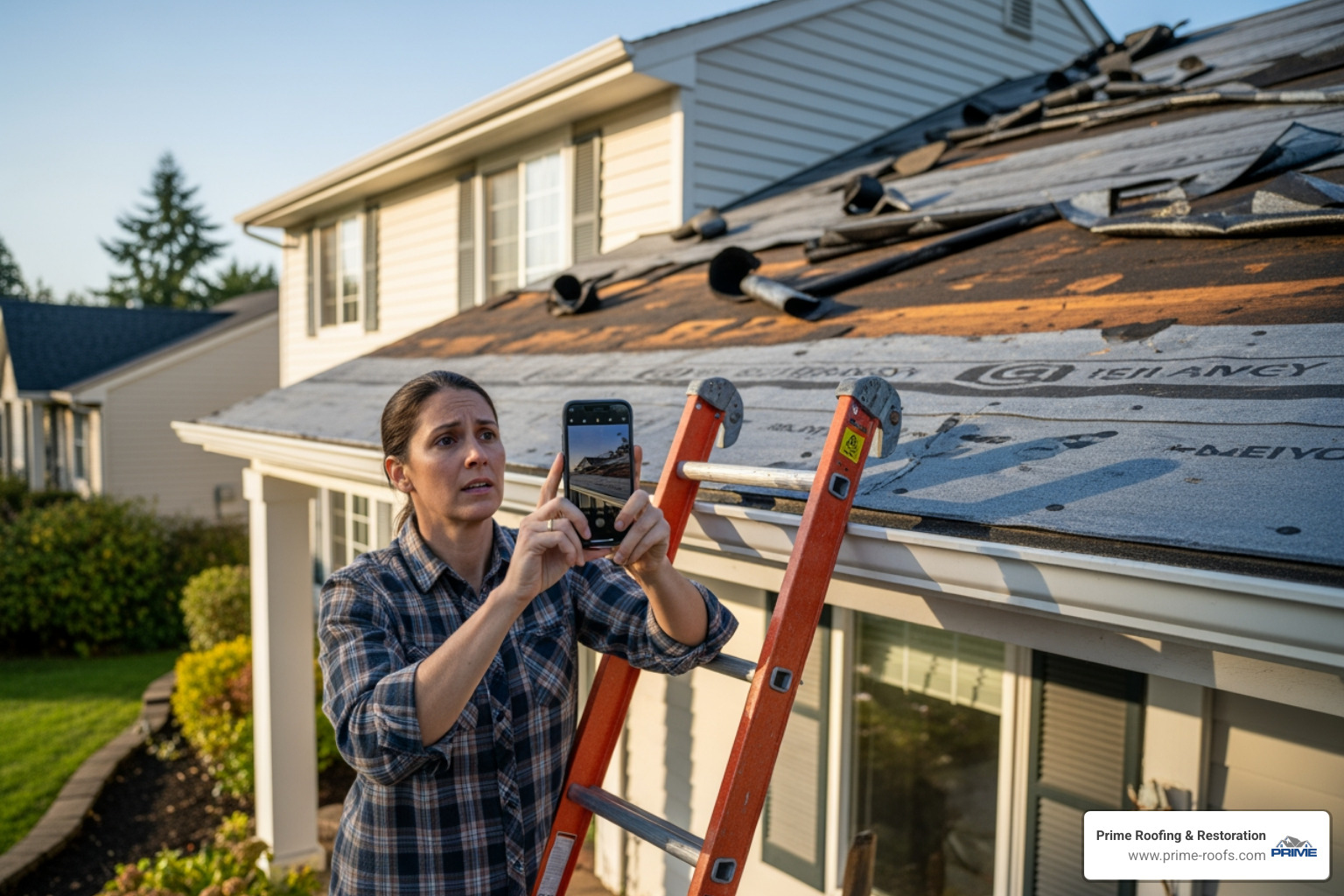
Once you’ve confirmed the area is safe, your smartphone becomes your most important tool. Your goal is to create a comprehensive visual record of the damage before any cleanup or repairs begin. This evidence is non-negotiable for your insurance company.
- Go Broad and Go Deep: Take wide-angle photos and videos of each side of your house to show the overall scene. Then, move in for detailed close-ups of specific issues: missing shingles, dented gutters, cracked windows, water stains on ceilings, and damaged siding.
- Document the Interior: Inside, photograph any water damage, including stains on walls and ceilings, warped flooring, and damaged furniture or belongings. Open cabinets and closets to check for hidden damage.
- Create an Inventory: Make a list of damaged personal property. Include the item, its approximate age, and what you paid for it, if known. Photos of model and serial numbers on appliances are also helpful.
3. Contact Your Insurance Company Promptly
Notify your insurer of the damage within 24 to 48 hours. Any significant delay can raise red flags and potentially complicate your claim. When you call, have your policy number ready. Briefly describe the damage you’ve observed but avoid speculating on the cause or extent of the problem. Stick to the facts. The insurer will assign you a claim number and an adjuster and will outline the next steps you need to take.
4. Secure Your Property with Emergency Protection
A hole in your roof or a broken window is a gaping wound that leaves your home vulnerable to further harm. Rain, wind, and pests can enter, causing secondary damage that is often more expensive to fix than the original problem. Emergency mitigation is essential.
- Roof Tarping: Professional storm damage companies offer 24/7 emergency services to install heavy-duty tarps over damaged roof sections. This creates a temporary waterproof barrier, preventing further water intrusion that leads to mold, ceiling collapse, and ruined insulation. Learn more in our Emergency Tarping Complete Guide.
- Board-Up Services: Boarding up broken windows and doors secures your property from both the elements and potential theft or vandalism.
Taking these four steps—prioritizing safety, documenting damage, notifying your insurer, and protecting your property—lays a solid foundation for a smooth and successful recovery. For more guidance, see our detailed article on What to Do After a Storm Damages Your Roof.
Understanding the Damage: Common Types of Storm-Related Issues
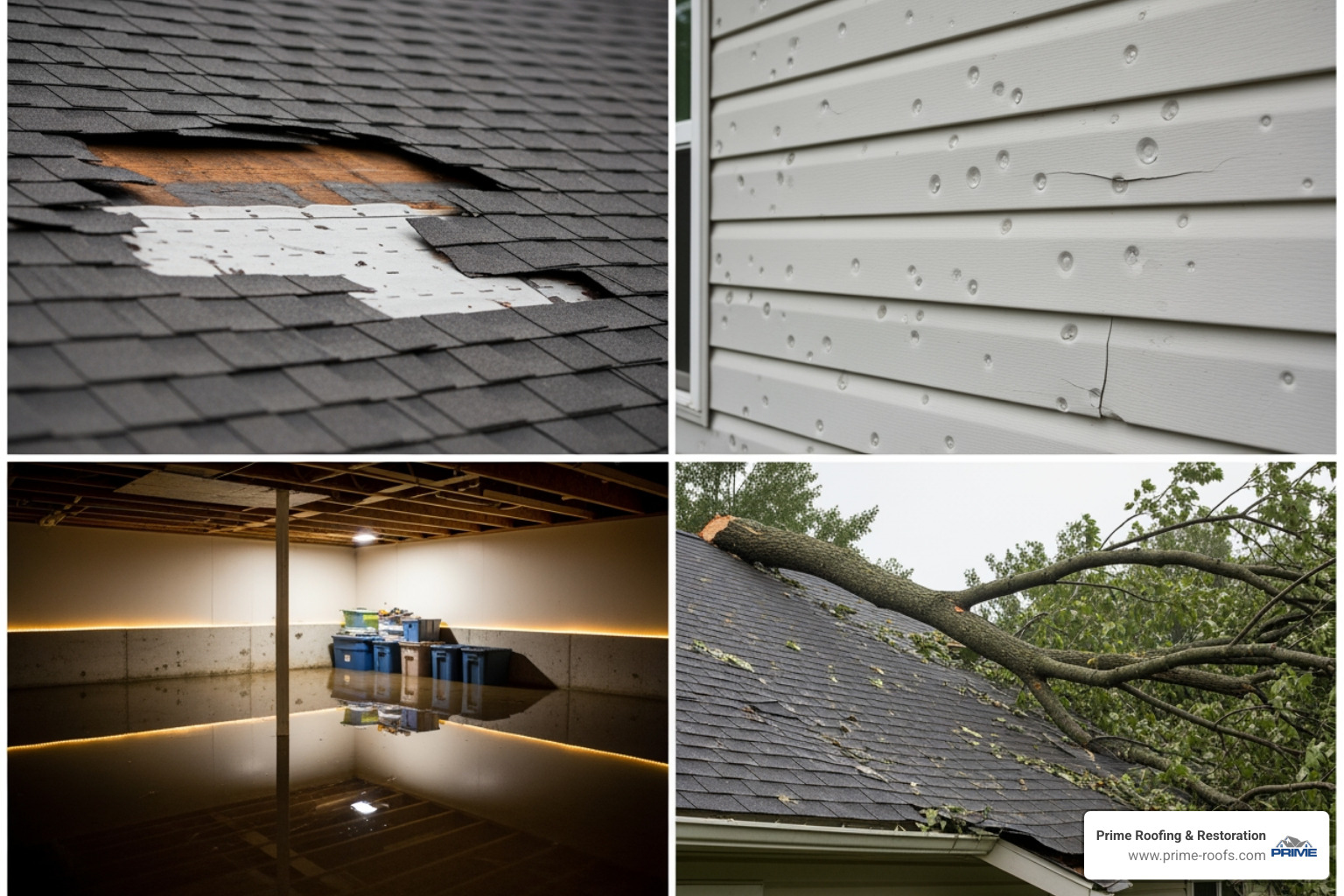
Storms are complex weather events that unleash a variety of destructive forces. The damage they cause can be immediately obvious, like a fallen tree, or subtle and hidden, like micro-fractures in shingles. A proper restoration plan begins with correctly identifying every type of damage your property has sustained. In Central Alabama, we consistently see four primary categories of storm-related issues.
-
Wind Damage: High-velocity winds from tornadoes, hurricanes, and severe thunderstorms don’t just blow things around; they create powerful pressure differentials. As wind flows over your roof, it creates an uplifting force, similar to an airplane wing, that can peel back, lift, and tear off shingles, leaving the underlying roof deck exposed. Wind can also turn small objects into high-speed projectiles, causing damage to siding, windows, and vehicles. It can snap large tree limbs or uproot entire trees, leading to catastrophic impact damage.
-
Water Intrusion: Where there’s wind, there’s often rain. Heavy, wind-driven rain is relentless in its search for any vulnerability in your home’s exterior. It can seep under lifted shingles, penetrate through damaged window seals, and find its way into walls and foundations. Once inside, water can saturate insulation, stain drywall, warp wood framing, and compromise electrical systems. If not addressed immediately, this moisture creates the perfect breeding ground for mold, which can begin to grow in as little as 24-48 hours. According to the IICRC, this water can be classified into three categories, from clean water (Category 1) to grossly contaminated black water (Category 3), each requiring a different cleanup protocol.
-
Hail Damage: Hail can be one of the most deceptive forms of storm damage. From the ground, your roof might look perfectly fine. However, upon closer inspection, hailstones can leave behind significant damage. On asphalt shingles, hail creates dark “bruises” where the protective granules have been knocked off, exposing the underlying matting to UV rays and moisture. This drastically shortens the shingle’s lifespan. On metal roofs, siding, and gutters, hail causes dents and dings that compromise the material’s integrity and protective coatings, leading to premature rust and failure.
-
Impact Damage: This is the most visually dramatic type of damage, occurring when a solid object strikes your home. Most often, this involves falling trees or large branches brought down by high winds or soil saturation. The force of impact can puncture a roof, shatter trusses, and even cause walls to collapse. This type of damage almost always involves a serious structural compromise that requires immediate professional assessment to ensure the home is safe to occupy.
What may appear to be a minor issue, like a few missing shingles, can be a symptom of a much larger problem. A thorough, professional inspection is the only way to understand the full extent of the damage and develop a comprehensive plan for repair. For property owners in the Alabaster, AL area, our Alabaster Storm Damage Complete Guide provides a detailed local overview of how to respond effectively to severe weather events.
Finding “Storm Damage Cleanup Near Me”: How to Choose a Reliable Company
When you search online for storm damage cleanup near me, you’ll be met with a deluge of options. In the wake of a major storm, the market is often flooded with both legitimate local experts and opportunistic “storm chasers.” Knowing how to distinguish a true professional from a potential scam is crucial for protecting your property and your finances.
Key Qualifications for a Restoration Expert
A trustworthy restoration contractor is more than just a crew with a truck. They are a licensed, certified, and insured local business with deep roots in your community. Here’s a checklist of what to demand:
- Verifiable Local Reputation: A local company has a physical office, a permanent phone number, and a reputation to uphold in the community. They understand Alabama’s specific weather challenges, building codes, and insurance landscape. Their established relationships with local suppliers and adjusters translate to a faster, smoother, and more accountable service for you.
- Proper Licensing and Insurance: These are non-negotiable. A contractor must hold a current license from the Alabama Home Builders Licensure Board. For major projects, an unlimited home builder’s license signifies the highest level of competency. Furthermore, demand to see their certificates of insurance, which should include both General Liability (to cover your property) and Worker’s Compensation (to cover their employees). Without this, you could be held liable for accidents on your property.
- IICRC Certification: The Institute of Inspection, Cleaning and Restoration Certification (IICRC) is the global gold standard for the restoration industry. This certification ensures that technicians are rigorously trained in the science of restoration. Look for specific certifications like Water Damage Restoration Technician (WRT) and Applied Microbial (Mold) Remediation Technician (AMRT).
- 24/7 Emergency Response: Storms don’t operate on a 9-to-5 schedule, and neither should your restoration company. A reliable partner will answer the phone 24/7/365 and have crews ready to dispatch immediately for emergency mitigation like tarping and water extraction. This rapid response can save you thousands by preventing secondary damage.
- Proven Experience and Transparent Reviews: Look for a company with a long track record and a wealth of positive online reviews from local customers. Testimonials provide insight into how a company communicates, solves problems, and handles the insurance process. Our Best Roofing Contractor Guide offers more tips on vetting professionals. As a licensed roof contractor, we proudly meet all these demanding standards.
Red Flags: How to Spot and Avoid a “Storm Chaser”
- High-Pressure Sales Tactics: They urge you to sign a contract on the spot.
- Vague Contact Information: They use a P.O. box or have out-of-state license plates.
- Large Upfront Payment: They demand a large deposit or full payment in cash before work begins.
- Offers to Waive Your Deductible: This is a common scam and constitutes insurance fraud.
- Unsolicited Door-to-Door Visits: They show up unannounced, claiming to have noticed damage from the street.
DIY vs. Professional Storm Damage Cleanup
The instinct to start cleaning up immediately is strong, but it’s vital to know your limits and understand the risks.
- What You Can Safely DIY: If the damage is minor and the water is clean (e.g., from a small roof leak), you can take some initial steps. This includes clearing small branches and light debris from your yard (wear gloves and sturdy shoes), moving undamaged furniture and belongings to a dry area, and blotting wet carpets with towels.
- When to Call a Pro Immediately: Any of the following situations require immediate professional intervention: large fallen trees (especially on the house), any visible structural damage (sagging roof, cracked foundation), significant water intrusion or flooding, or any sign of sewage backflow or mold. The risks of electrocution, structural collapse, or long-term health issues from mold are far too great.
Professionals bring more than just manpower; they bring science and technology. They use specialized equipment like thermal imaging cameras to find hidden moisture pockets, commercial-grade dehumidifiers and air movers to dry the structure efficiently, and air scrubbers with HEPA filters to remove contaminants from the air. Their expertise in documenting damage for insurance purposes is also a critical asset that ensures you receive a fair and complete settlement.
If you’re facing a storm damage emergency, don’t take chances. Call us at (205) 579-8316 anytime for a rapid, professional response.
The Restoration Journey: From Cleanup to Rebuilding
The road from a storm-damaged property to a fully restored home is a structured, multi-phase journey. While it can seem daunting, partnering with a full-service professional restoration company provides a clear roadmap, expert project management, and peace of mind from start to finish.
The Professional Restoration Process Explained
A comprehensive restoration project is a systematic process designed to return your property to its pre-storm condition safely and efficiently.
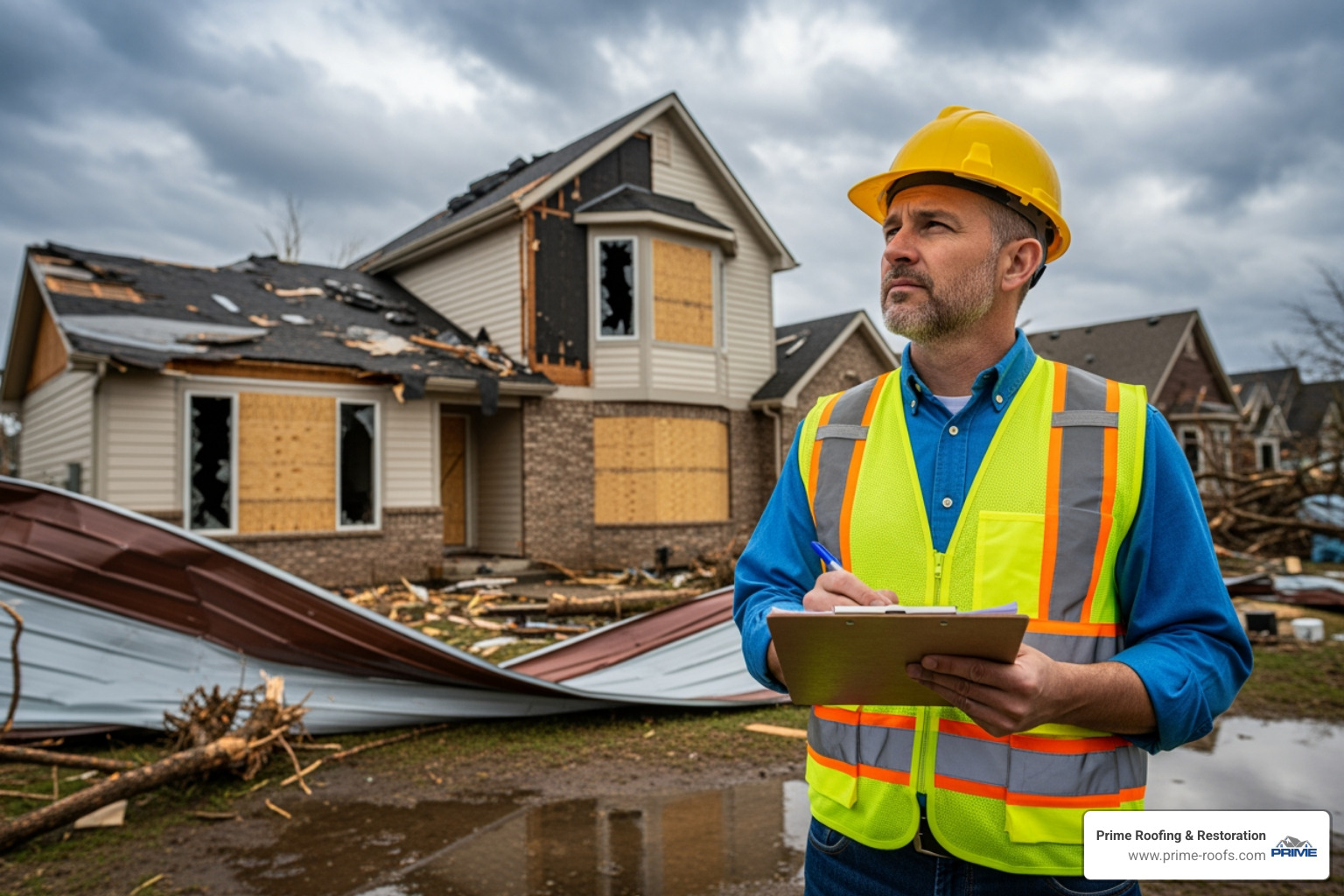
- Initial Inspection and Damage Assessment: This is the foundation of the entire project. A project manager will conduct a meticulous inspection, using tools like moisture meters and thermal cameras to identify all obvious and hidden damage. They document everything with photos and detailed notes, creating a comprehensive scope of work that will be used for both the repair plan and the insurance claim.
- Emergency Mitigation Services: This immediate phase is all about damage control. The goal is to stop the bleeding and prevent the situation from getting worse. This includes emergency roof tarping, boarding up broken windows and doors, extracting standing water, and installing temporary structural supports (shoring) if there is a risk of collapse.
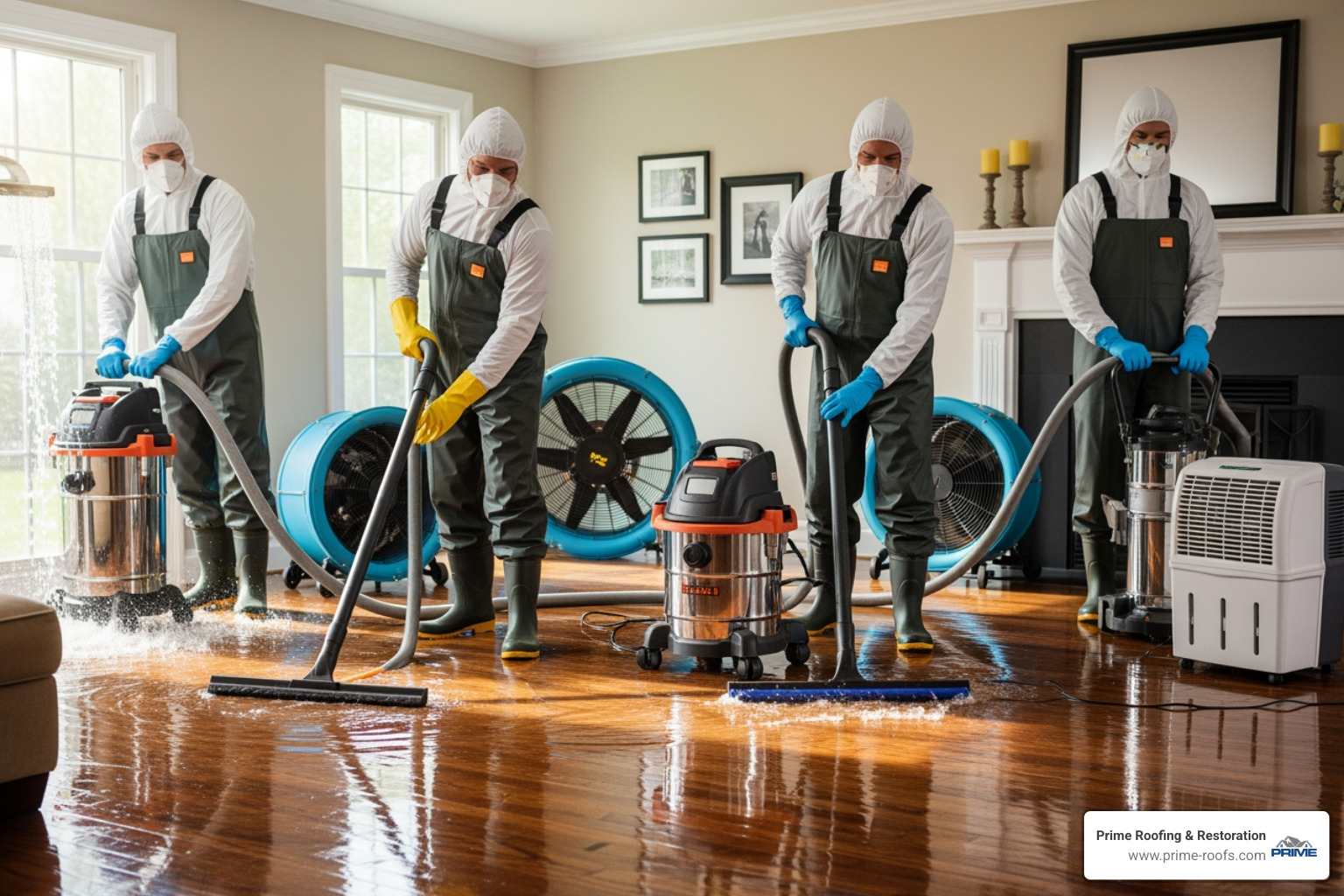
- Water Extraction and Structural Drying: Using powerful, truck-mounted pumps and portable extraction units, technicians remove all standing water. Following extraction, they strategically place industrial-grade air movers, dehumidifiers, and sometimes heaters to create an environment that promotes rapid drying. They monitor the drying process daily with specialized meters to ensure the structure, including wall cavities and subfloors, reaches its established drying goals. This scientific approach is critical to preventing mold growth.
- Debris Removal and Demolition: All storm-related debris—from fallen trees and broken glass to water-damaged building materials like drywall, carpet, and insulation—is safely removed and hauled away. This demolition phase removes unsalvageable materials to prepare the area for reconstruction.
- Cleaning, Sanitizing, and Deodorizing: Affected areas and contents are thoroughly cleaned and treated with antimicrobial agents to prevent mold and bacteria growth. Specialized techniques, such as air scrubbing and thermal fogging, may be used to remove lingering odors from smoke or mold.
- Repairs and Reconstruction: Once the property is clean, dry, stable, and sanitized, the rebuilding process begins. This is where your home is put back together. It can involve anything from minor repairs like replacing drywall and painting to major reconstruction like rebuilding a roof system, installing new flooring, and replacing siding and windows. A quality contractor will ensure all repairs meet or exceed current local building codes and will work to match new materials to your home’s existing finishes.
Navigating Insurance Claims for Storm Damage
For most homeowners, dealing with the insurance company is the most confusing and stressful part of the storm recovery process. An experienced restoration partner acts as your advocate, helping you navigate the complexities to ensure a fair and complete settlement.
- ACV vs. RCV Coverage: Understanding your policy is crucial. Actual Cash Value (ACV) pays for the depreciated value of your damaged property. For example, if your 10-year-old roof is destroyed, ACV might only pay 50% of its replacement cost. Replacement Cost Value (RCV) is far superior, as it covers the full cost to replace the property with new, similar materials, minus your deductible. Most homeowner’s policies are RCV, but you must complete the repairs to receive the full amount.
- Understanding Your Deductible: Your deductible is the amount you pay out-of-pocket. Be aware that many policies have a separate, higher hurricane or named storm deductible, which is often a percentage (e.g., 1-5%) of your home’s total insured value. A 2% deductible on a $300,000 home is $6,000, a significant out-of-pocket expense.
- Working with Adjusters: Your contractor should meet the insurance adjuster on-site to review the damage together. By providing their own detailed scope of work and estimate (like our Estimate for Roof Repair), the contractor can ensure no damage is overlooked. This collaborative approach minimizes disputes and speeds up claim approval.
- The Flood Damage Exception: It cannot be overstated: standard homeowner’s policies do not cover flood damage from rising surface water (e.g., overflowing rivers, storm surge). This requires a separate policy, typically from the National Flood Insurance Program (NFIP). There is usually a 30-day waiting period for these policies to take effect, so you must plan ahead. Learn more at FloodSmart.gov.
A professional team doesn’t just restore your property; they provide the documentation, expertise, and advocacy needed to restore your finances. For 24/7 emergency help and expert insurance claim assistance, call us at (205) 579-8316.
Frequently Asked Questions about Storm Damage Cleanup
Navigating the aftermath of a storm brings up many questions. Here are answers to some of the most common concerns we hear from Central Alabama homeowners.
How much does storm damage cleanup cost?
This is the most common question, but it has no single answer. The cost of storm damage cleanup varies dramatically based on the severity and type of damage. A minor cleanup might be a few hundred dollars, while a major event can easily exceed $15,000 – $25,000 or more.
Key factors that influence the final cost include:
- Extent of Damage: A small roof leak affecting one room is far less costly than a whole-house flood or a tree collapsing through the roof.
- Type of Water: Cleanup costs are tiered based on water contamination levels. Clean water from a supply line (Category 1) is the least expensive to mitigate. Grey water with some contaminants (Category 2) is more. Black water from sewage or flooding (Category 3) is the most expensive due to the biohazards involved.
- Materials Affected: Replacing high-end hardwood floors and custom cabinetry is more costly than replacing standard carpet and drywall.
- Accessibility: Damage in a tight crawlspace or high, steep roof can increase labor costs.
- Mold Growth: If mold is present, a separate remediation process is required, adding significant cost.
The only way to get an accurate price is through a detailed, on-site assessment. A reputable contractor will provide a line-item estimate using industry-standard software like Xactimate, which is what most insurance companies use. This helps ensure the estimate is fair and comprehensive.
How long does the restoration process take?
The restoration timeline is directly proportional to the scope of the damage.
- Minor Damage (3-7 days): A small, contained water leak can often be dried and repaired within a week. The professional drying process itself typically takes 3-5 days, followed by a day or two for minor repairs like replacing a section of drywall and painting.
- Moderate Damage (2-4 weeks): A more significant issue, like a roof leak that affects an entire room or two, might require a few weeks for drying, mold checks, and more substantial interior repairs.
- Major Damage (Weeks to Months): Extensive damage involving a full roof replacement, structural repairs (e.g., from a fallen tree), and significant interior reconstruction is a multi-phase project. The timeline can be several weeks to many months, often influenced by factors like insurance claim approval speed, material availability (which can be strained after a major storm), and permit processing.
Your contractor should provide a projected timeline after their initial inspection and communicate clearly about any potential delays.
Will my homeowner’s insurance cover all storm damage?
Generally, yes, but with critical exceptions. Most standard homeowner’s policies (HO-3 policies) do cover damage from wind, hail, and falling objects, which are the most common causes of storm damage in Alabama. This includes damage to your dwelling, other structures (like a shed), and personal property.
However, there are crucial exclusions:
- Flood Damage: Damage from rising surface water (storm surge, overflowing rivers, heavy ground saturation) is not covered. This requires a separate flood insurance policy.
- Neglect or Wear and Tear: Insurance is for sudden and accidental damage. If a claim investigation reveals that the damage was due to a pre-existing issue—like a 25-year-old roof that was already failing—the claim may be denied. This is why regular home maintenance is so important.
- Earth Movement: Damage from earthquakes or landslides is typically excluded unless you have a specific endorsement.
Can my contractor pay my insurance deductible?
No. If a contractor offers to waive, cover, or rebate your deductible, it is a major red flag. This practice is illegal in many states, including Alabama, and is considered insurance fraud. The contractor is essentially inflating the claim to the insurance company to cover the deductible amount. This can put you in legal jeopardy and is a hallmark of a dishonest “storm chaser.” Your deductible is your contractual obligation in the insurance agreement. Always plan to pay it directly to the contractor.
Always review your policy documents and speak with your agent to understand your specific coverage, deductibles, and exclusions. If you need help documenting damage for a claim, call us at (205) 579-8316.
Your Local Central Alabama Storm Restoration Partner
When your home is damaged, you need a team that’s not just qualified, but also local and accountable. Prime Roofing & Restoration is proud to be a part of the Central Alabama community, providing rapid, reliable service when our neighbors need it most.
Contact Us for Immediate Help
For 24/7 emergency service or to schedule a free, no-obligation damage inspection, contact our team today.
- Company: Prime Roofing & Restoration
- Address: 123 Main Street, Alabaster, AL 35007 (Example Address)
- Phone: (205) 579-8316
Our Service Area
We provide comprehensive storm damage cleanup and restoration services throughout Central Alabama, including but not limited to:
- Alabaster
- Birmingham
- Hoover
- Pelham
- Vestavia Hills
- Mountain Brook
- Trussville
- And surrounding communities
Business Hours
- Office Hours: Monday – Friday, 8:00 AM – 5:00 PM
- Emergency Services: Available 24 Hours a Day, 7 Days a Week
Find Us in Alabaster
(Placeholder for an embedded Google Map showing the business location)
Choosing a local contractor means choosing a partner who is invested in the community and will be here long after the storm has passed. We stand behind our work and are committed to restoring not just your property, but your peace of mind.
Conclusion: Restoring Your Property and Your Peace of Mind
Recovering from a storm is a marathon, not a sprint, but you don’t have to run it alone. The journey from chaos to normalcy is built on a foundation of smart, decisive actions taken in the critical hours and days after the event. By prioritizing the safety of your family, meticulously documenting the damage, and immediately engaging a qualified, licensed, and local professional, you can take control of the process and steer it toward a successful outcome. Acting quickly is the single most effective way to mitigate secondary damage, protect the value of your home, and accelerate your return to everyday life.
At Prime Roofing & Restoration, we understand that we’re not just fixing what’s broken—we’re helping you piece your world back together. We are more than just a cleanup crew; we are your project managers, your insurance advocates, and your partners in restoration. For homeowners needing comprehensive storm damage repair services in Alabaster, AL, and across Central Alabama, we offer the 24/7 emergency response, IICRC-certified expertise, and dedicated insurance claim assistance you need to navigate this challenge.
When you search for storm damage cleanup near me, you’re looking for more than a service—you’re looking for a solution and a partner you can trust. Don’t wait for water damage to turn into a mold problem or for a small leak to become a structural crisis. Our team is standing by, ready to respond to your emergency and begin the process of restoring your property and your peace of mind.
Call us now at (205) 579-8316 for immediate, professional help.