
Why Finding the Right Roofing Company in Alabama Matters
Roofing companies in Alabama are on the front lines of a constant battle against some of the nation’s most challenging weather, a reality that directly impacts your home’s protection, value, and longevity. The state’s unique climate profile presents a formidable test for any roofing system. With cities like Birmingham receiving an average of 55.4 inches of precipitation annually—well above the national average—the risk of water intrusion is perpetually high. Add to this the official Atlantic hurricane season running from June to November, which frequently brings high-speed winds and torrential downpours to the Gulf Coast and inland areas, and a peak tornado season from March to May that places much of the state within the notorious “Dixie Alley.” It becomes clear that your roof doesn’t just sit there; it actively defends your home against a relentless barrage of environmental threats. Choosing the right team to install and maintain this critical shield is paramount, and for homeowners across the state, finding trusted local roofing contractors is the first and most important step toward securing lasting peace of mind.
A top-tier roofing company in Alabama offers more than just shingles and nails; they provide a comprehensive service designed to protect your investment. Here’s what sets the best apart:
-
Free, No-Obligation Roof Inspections and Estimates: A reputable contractor understands that trust begins with transparency. They will offer a thorough inspection of your entire roofing system—not just a quick glance from the ground—to accurately assess storm damage, age-related wear, and potential vulnerabilities. This is followed by a detailed, itemized estimate that clearly outlines the scope of work and associated costs, empowering you to make an informed decision without pressure.
-
Expert Insurance Claims Assistance: Navigating the complexities of a homeowner’s insurance claim can be daunting. The best roofing companies have extensive experience working with insurance adjusters. They act as your advocate, ensuring all damage is properly documented and accounted for, helping you steer the repair process and maximize the settlement you are rightfully owed.
-
A Wide Array of Material Options: Alabama’s diverse architecture and climate demand a versatile approach to materials. Leading companies offer multiple options, including the ever-popular asphalt shingles, highly durable metal roofing, and specialized systems like TPO and EPDM for flat or low-slope applications. They can explain the pros and cons of each in the context of your specific needs and budget.
-
Elite Manufacturer Certifications: Credentials like GAF Master Elite® or CertainTeed ShingleMaster™ are not just fancy titles. They are earned through rigorous training, a proven track record of quality installations, and a commitment to professional excellence. These certifications grant the contractor access to superior, extended warranties that are unavailable to standard roofers, providing you with an unparalleled level of protection.
-
Verifiable Licensing and Full Insurance Coverage: This is non-negotiable. A professional roofer must hold a current Alabama State Certification for roofing. They must also carry substantial general liability insurance to protect your property from accidental damage and workers’ compensation insurance to cover their crew in case of injury. Without this, the liability could fall on you.
-
Comprehensive Material and Workmanship Warranties: A quality job is backed by a solid guarantee. This includes a manufacturer’s warranty on the materials themselves and a separate workmanship warranty from the contractor that covers the quality of the installation. A contractor who stands behind their work will have no hesitation in providing a clear, long-term warranty.
-
24/7 Emergency Repair Services: Storms don’t operate on a 9-to-5 schedule. When a tree branch punctures your roof or high winds cause a major leak in the middle of the night, you need immediate help. Top companies offer emergency tarping and repair services to mitigate damage and protect your home until a permanent solution can be implemented.
The chasm between a certified, professional roofing company and a transient, “fly-by-night” contractor can translate into thousands of dollars in future repairs and years of stress. Licensed contractors with elite certifications not only deliver superior installation quality but also unlock enhanced warranty protections that provide true long-term value.
Key factors to verify before you hire any roofing company:
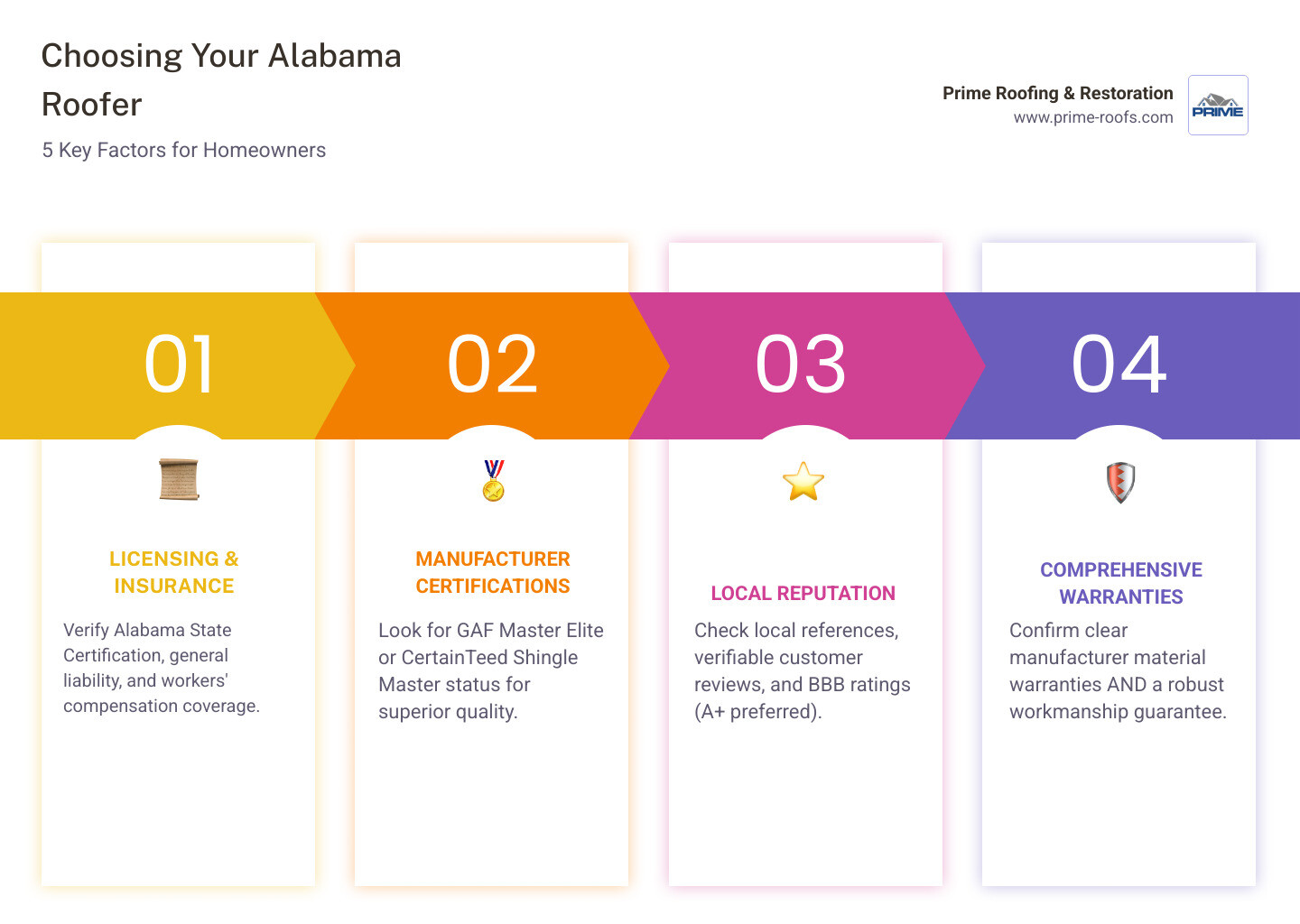
- Alabama State Roofing Certification: Ask for their license number and verify it with the state’s official licensing board.
- Current General Liability and Workers’ Comp Insurance: Request a certificate of insurance (COI) and confirm it is valid for the duration of your project.
- Local References and Verifiable Customer Reviews: Look for a long history of satisfied customers in your community. A physical office and local phone number are good signs of an established presence.
- Manufacturer Certifications (GAF, CertainTeed, etc.): These demonstrate a higher level of skill and allow for better warranty options.
- Clear, Written Warranty Terms: Ensure you receive and understand the terms for both the materials and the contractor’s labor.
As Bill Spencer, Owner and President of Prime Roofing & Restoration, I’ve dedicated over five years to helping Central Alabama homeowners navigate the complex and often confusing process of selecting from the many roofing companies in Alabama. My team and I have successfully guided hundreds of property owners through everything from minor repairs to full roof replacements and complex storm damage claims. Our A+ accreditation with the Better Business Bureau is a testament to our unwavering commitment to quality, transparency, and customer satisfaction.
Your Roof vs. Alabama Weather: Materials & Telltale Damage Signs
Alabama’s climate is a beautiful but brutal adversary for your roof. The combination of intense subtropical heat and humidity, severe thunderstorms with hail, and the seasonal threats of hurricanes and tornadoes creates a uniquely challenging environment for any building material. The state’s average annual rainfall of 55.4 inches, combined with the relentless dance of hurricane season (June to November) and the peak tornado season (March to May), means your roof endures far more stress than those in milder, drier climates. This constant exposure to moisture, high winds, and extreme temperature fluctuations significantly impacts a roof’s longevity and maintenance requirements. A standard asphalt shingle roof that might last 30 years in a less demanding climate could see its functional lifespan cut by a third or more here if the material isn’t specifically designed for these conditions and properly maintained. The intense solar radiation and high UV index also work to degrade materials over time, making material selection a critical decision for every Alabama homeowner.
Best Roofing Materials for the Alabama Climate
When selecting a roofing material in Alabama, the primary considerations must be durability, moisture resistance, wind performance, and energy efficiency. We’ve installed thousands of roofs across the state and have seen firsthand how the right material can make all the difference in long-term performance and value.
-
Asphalt Shingles: These remain the most popular roofing choice in Alabama, primarily due to their affordability, wide availability, and versatility. However, not all shingles are created equal. For our climate, it’s essential to look beyond basic 3-tab shingles and consider architectural or dimensional shingles. These are thicker, heavier, and offer a multi-layered design that provides significantly better wind resistance and a more aesthetically pleasing, textured look. Many modern shingles from top manufacturers like GAF and Tamko also come with special features crucial for Alabama, such as algae-resistant coatings (often labeled “AR”) to prevent the ugly black streaks caused by blue-green algae growth in our humid environment. Look for shingles with a high wind rating (Class H or F) and strong warranties.
-
Metal Roofing: An increasingly popular and excellent option for Alabama, metal roofs offer exceptional longevity, often lasting 40 to 70 years or more. They are superior in resisting high winds—a critical feature during hurricanes and severe thunderstorms—and are highly resistant to hail and fire. Furthermore, metal roofs are a leader in energy efficiency. Their ability to reflect solar radiant heat can significantly reduce cooling costs during our scorching summers, a benefit detailed in our guide to the Benefits of Metal Roofing for Alabama Homes. Key options include:
- Standing Seam Metal: Considered the premium choice, this system features vertical panels joined by raised, interlocking seams. This design conceals the fasteners, protecting them from the elements and minimizing potential leak points, which is a huge advantage in our high-rainfall climate.
- Rib Panel Metal (5V Crimp/PBR-Panel): A more economical option, these panels use exposed fasteners with rubber washers to seal the screw holes. Modern systems use high-quality, fade-resistant paint systems to ensure long-lasting color and protection. It’s a durable, time-tested solution for both residential and agricultural buildings.
-
TPO & EPDM: These single-ply membrane systems are the go-to solution for flat or low-slope roofs, which are common on commercial buildings and some residential additions or carports.
- TPO (Thermoplastic Polyolefin): This is a heat-welded, single-ply membrane known for its excellent durability, puncture resistance, and energy efficiency. White TPO is highly reflective, making it an ideal choice for reducing heat absorption and lowering cooling bills in Alabama.
- EPDM (Ethylene Propylene Diene Terpolymer): Essentially a synthetic rubber roofing membrane, EPDM is renowned for its long lifespan and superior resistance to weathering and temperature fluctuations. While traditionally black, it is also available in white for better solar reflectivity. Its flexibility makes it highly resistant to damage from hail.
-
Clay and Concrete Tiles: While more expensive, tile roofing offers a classic aesthetic and exceptional durability, with a lifespan that can exceed 50 years. Tiles are fireproof and resistant to rot and insects. Their weight is a significant consideration, and a structural engineer may need to verify that the roof framing can support the load. However, their performance in high winds and resistance to the coastal salt spray make them a viable, albeit premium, option for some Alabama homes.
Choosing the right material is a balance of budget, aesthetics, and performance needs. However, prioritizing materials known for their resilience against wind, water, and heat is always the wisest investment for an Alabama homeowner.
5 Signs You Need Roof Replacement or Repair
Your roof works tirelessly to protect your home, but even the most robust systems will eventually show signs of wear. Ignoring these red flags can lead to catastrophic and costly damage. We urge homeowners to perform a visual inspection from the ground at least twice a year and after every major storm. Here are the key indicators that your roof needs professional attention:
- Active Leaks & Interior Water Stains: This is the most urgent and obvious sign. Water spots on your ceilings, discoloration running down walls, or dampness in your attic are clear evidence of a breach in your roofing system. Even a small leak can lead to widespread mold growth, rotted wood framing, and compromised insulation if not addressed immediately.
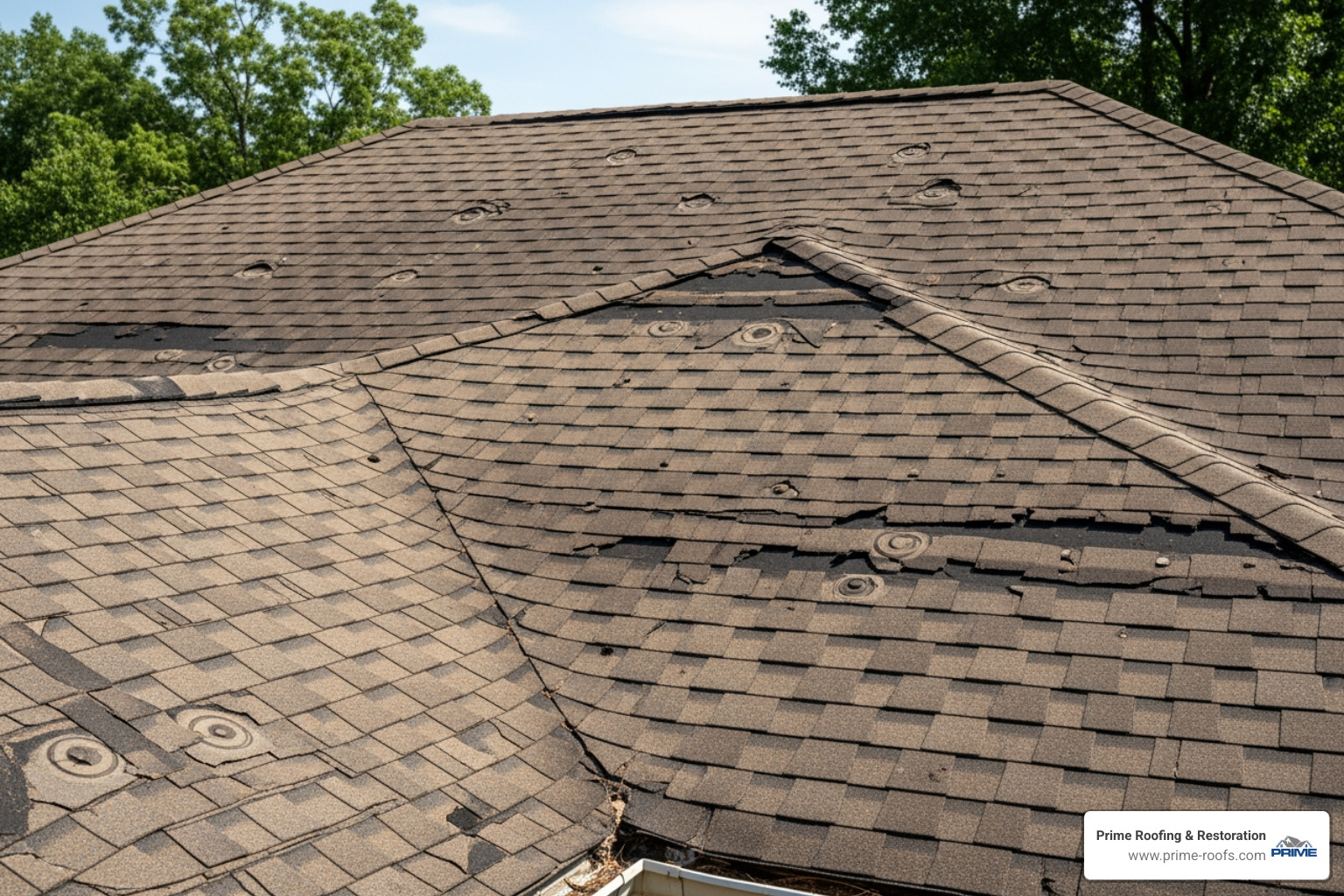
- Missing, Cracked, or Damaged Shingles: High winds can easily lift and tear off shingles, leaving your roof’s underlayment exposed. Hail can create cracks, bruises (soft spots), or punctures. Look for shingles that are curled at the edges, buckled (wavy), or clawing (middle curling up). These are all signs that the shingles have reached the end of their functional life and are no longer providing adequate protection.
- Excessive Granules in Gutters and Downspouts: The sand-like granules on asphalt shingles are their primary defense against UV radiation and weathering. As shingles age, they naturally shed some granules. However, if you find large accumulations in your gutters, it’s a sign of advanced deterioration. A shingle that has lost its granules is brittle and vulnerable to cracking and water penetration.
- A Sagging or Drooping Roof Deck: A visibly sagging roofline is a major structural red flag that requires immediate professional assessment. This often indicates that the underlying decking is waterlogged and rotting, or that there are issues with the rafters or trusses in the attic. A sagging roof is a compromised roof and can be a serious safety hazard.
- Age of the Roof: Every roofing material has an expected lifespan. If your asphalt shingle roof is approaching 15-20 years old, it’s time to start budgeting for a replacement, even if there are no obvious signs of failure. In Alabama’s harsh climate, it’s risky to push a roof far beyond its intended service life. Knowing the age of your roof is a critical piece of information. Our Alabama Roof Repair Guide 2025 provides more detailed insights into what to look for during your inspections.
Catching these signs early can often be the difference between a simple, affordable repair and a full, expensive replacement. When in doubt, a professional inspection from a trusted contractor provides definitive answers and peace of mind.
Vetting the Pros: How to Choose from the Top Roofing Companies in Alabama
Finding a reputable, skilled, and trustworthy contractor from the sea of roofing companies in Alabama is the most critical step in any roofing project. This decision goes far beyond simply getting a new roof; it’s a long-term investment in the safety, structural integrity, and value of your home. While the task can feel daunting, a methodical approach will help you identify a true professional you can count on for years to come.
First and foremost, prioritize deep local experience. A company that has been operating in your specific region of Alabama for many years possesses invaluable institutional knowledge. They understand the nuances of local building codes, which can vary significantly from coastal areas with stringent wind-load requirements to northern counties. They have established relationships with local suppliers, ensuring timely access to materials, and they have a verifiable physical address, distinguishing them from the out-of-state “storm chasers” that descend after a major weather event. A company with a long history in Alabama has a reputation to uphold and a vested interest in the community.
Next, conduct a thorough investigation of their reputation through customer reviews and third-party ratings. Transparency is a hallmark of a reliable company. Look for a high volume of recent, positive reviews on independent platforms like Google, and check their standing with the Better Business Bureau (BBB). A company boasting nearly 500 5-star Google reviews, for instance, demonstrates a consistent pattern of customer satisfaction. An A+ rating with the BBB is another powerful indicator of ethical business practices and a commitment to resolving customer issues. Don’t just read the five-star reviews; pay close attention to how a company publicly responds to any negative feedback. A professional, solution-oriented response is a sign of a company that values customer care and stands behind its work.
Finally, adopt the industry best practice of getting at least three detailed estimates. A reputable contractor will always provide a free, comprehensive quote that does more than just list a bottom-line price. It should be an itemized document detailing the scope of work, specific materials to be used (including brand and type), labor costs, tear-off and disposal fees, permit costs, and warranty information. This allows you to compare services and pricing on an “apples-to-apples” basis, helping you identify the best value, not just the lowest price.
The Non-Negotiables for roofing companies in Alabama: Licensing, Insurance, and Bonding
Before allowing any contractor to set foot on your property, you must verify that they meet three essential legal and protective requirements. These are not bureaucratic formalities; they are critical safeguards for you, your home, and the workers performing the job.
- Alabama State Certified Roofer: In Alabama, roofing is a licensed profession. Any roofing project valued over a certain amount requires the contractor to hold a state license issued by the Alabama Licensing Board for General Contractors, often with a specific roofing sub-specialty. Ask for their license number and verify its status on the Board’s official website. This confirms they have met the state’s standards for experience, financial stability, and professional conduct. Our guide on finding a Licensed Roof Contractor offers more detail on this process.
- General Liability Insurance: This is your protection against accidental property damage. If a contractor’s crew accidentally drops a bundle of shingles on your car or damages your neighbor’s fence, their general liability policy covers the repair costs. Without it, you could be sued for the damages. Ask for a Certificate of Insurance (COI) and ensure the policy limits are substantial (e.g., $1,000,000 or more) and that the policy is active.
- Workers’ Compensation Insurance: Roofing is an inherently dangerous job. Workers’ compensation insurance protects the contractor’s employees if they are injured while working on your property. It covers their medical bills and lost wages. If a contractor does not carry this insurance, you, the homeowner, could be held personally liable for any on-the-job injuries, a risk that could lead to financial ruin.
- Bonding: While not always required for residential projects, a bonded contractor provides an extra layer of financial protection. A surety bond is a three-party agreement between you (the homeowner), the contractor, and a surety company. It guarantees that the contractor will fulfill their contractual obligations. If they fail to complete the job or pay their suppliers, you can file a claim against the bond to recover your financial losses.
Any trustworthy roofing company will be upfront and transparent about their licensing, insurance, and bonding. Do not hesitate to ask for proof and take the extra step to verify it independently.
Understanding Certifications and Warranties
Beyond the essential legal requirements, elite manufacturer certifications and robust warranties are what separate the good contractors from the great ones. These credentials signify a deep commitment to quality and provide homeowners with superior, long-term protection.
- GAF Master Elite® Benefits: GAF is North America’s largest roofing manufacturer, and their Master Elite® designation is their highest level of certification. It is awarded to only 2% of all roofing contractors nationwide. To earn this status, a contractor must be fully licensed and insured, have a proven reputation for providing quality roofing services, and be committed to ongoing professional training. The primary benefit to homeowners is access to GAF’s strongest warranties, such as the Golden Pledge® Limited Warranty, which covers both material defects and the contractor’s workmanship for an extended period—a level of protection standard roofers cannot offer.
- CertainTeed ShingleMaster™: Similar to GAF’s program, CertainTeed, another leading manufacturer, offers the ShingleMaster™ credential to contractors who demonstrate a high degree of skill and knowledge in installing CertainTeed products. This certification ensures the installation adheres to the manufacturer’s strict specifications and can give homeowners access to enhanced SureStart™ PLUS warranty coverage.
- Manufacturer Warranties: These warranties, provided by the material producer (e.g., GAF, CertainTeed), cover defects in the roofing products themselves. For example, if a batch of shingles is found to have a manufacturing flaw that causes them to fail prematurely, this warranty would cover the cost of the materials. The strength and duration of these warranties often depend on the contractor’s certification level. You can Learn more about GAF’s warranty options by reviewing their official documentation.
- Workmanship Guarantees: This is the contractor’s personal promise to you. It covers the quality of the installation itself. If a leak occurs due to improperly installed flashing or a nail-pop, the contractor is responsible for the repair at no cost to you. A reputable company will offer a clear, written workmanship warranty of at least 5-10 years, with some top-tier companies offering even longer terms. We pride ourselves on offering comprehensive material and workmanship warranties because we are confident in the quality of our work and the products we install.
By understanding these certifications and the critical distinction between manufacturer and workmanship warranties, you can make a truly informed decision that secures your investment for decades to come.
The Roof Replacement Roadmap: Costs, Timelines, and Services
Embarking on a full roof replacement can feel like a monumental undertaking, but with a clear, well-defined roadmap, it becomes a structured and manageable process. Our goal is to demystify the experience, ensuring it is as smooth and stress-free as possible for every client. A typical residential roof replacement project in Alabama, under optimal weather conditions, is a matter of days, not weeks. The precise timeline is influenced by the roof’s size and complexity (steep pitches or numerous dormers take longer), the chosen materials, and the crew’s schedule. A skilled, efficient crew can often strip an old roof and install a new one in just 1-3 days. However, speed should never come at the expense of quality. We follow a meticulous, step-by-step process:
- Initial Consultation & Thorough Inspection: The process begins with an in-depth discussion of your needs, concerns, and budget, followed by a comprehensive on-roof and attic inspection to assess the current system’s condition.
- Detailed Proposal & Contract: We provide a transparent, itemized proposal outlining all costs, materials, and the scope of work. Once you approve, we execute a clear contract that protects both parties.
- Material Ordering & Scheduling: We coordinate the delivery of all materials and schedule the project at a time that is convenient for you, keeping a close eye on the weather forecast.
- Site Preparation: On day one, our crew takes extensive measures to protect your property. This includes covering landscaping, A/C units, and siding with tarps and moving any vulnerable items away from the work zone.
- Tear-Off of Old Roofing: We completely remove all old roofing materials down to the wooden roof deck. This is a critical step that allows for a thorough inspection of the underlying structure.
- Deck Inspection & Repair: With the deck exposed, we inspect it for any soft, rotted, or damaged wood, replacing any compromised sections to ensure a solid foundation for the new roof.
- Installation of the New Roofing System: This is a multi-layered process, starting with an ice and water shield in valleys and around penetrations, followed by a high-quality synthetic underlayment over the entire deck. Then comes the installation of the primary roofing material (shingles, metal, etc.), along with new flashing, pipe boots, and proper ventilation components.
- Thorough Site Cleanup: At the end of each day, and especially upon completion, we conduct a meticulous cleanup of the entire work area, including using magnetic rollers to pick up stray nails.
- Final Inspection & Walkthrough: Once the project is complete, a project manager will perform a final quality inspection and then walk the property with you to ensure your complete satisfaction.
This end-to-end project management philosophy ensures consistency, accountability, and the highest quality result, giving you ultimate peace of mind.
Budgeting for Your New Roof: Costs and Financing in Alabama
One of the first and most important questions homeowners have is, “What will a new roof cost?” The cost of a roof replacement in Alabama is a variable figure influenced by several key factors:
- Roof Size and Complexity: The total square footage of your roof is the primary driver of cost. Complex roofs with steep pitches, multiple gables, valleys, dormers, and skylights require more labor and specialized techniques, increasing the price.
- Material Choice: As discussed, architectural asphalt shingles are generally the most budget-friendly option. Premium designer shingles, standing seam metal, or tile roofing represent a significantly higher upfront investment but offer longer lifespans and different aesthetic and performance benefits.
- Labor and Old Roof Removal: The cost to tear off and dispose of the old roof is a major component. If there are multiple layers of old shingles, this cost will increase. Labor rates vary based on the contractor’s experience, crew size, and the project’s difficulty.
- Underlying Deck Condition: The cost of replacing rotted or damaged decking wood is typically not included in the initial base quote, as the condition is unknown until the tear-off. This is usually charged on a per-sheet basis.
- System Components: The final cost includes not just the shingles but the entire system: underlayment, ice and water shield, starter strips, hip and ridge caps, ventilation, and flashing. Upgrading these components will affect the price but can greatly enhance the roof’s longevity.
To get an accurate understanding of the investment required, we always recommend a free, detailed estimate. A transparent breakdown from a reputable company is essential for effective budgeting. Our guide to the roof replacement process provides further insight into these costs.
For homeowners concerned about the upfront expense, financing options are widely available. Many established roofing companies, including ours, partner with financial institutions to offer flexible payment plans. These can include options like low monthly payments or 0% interest for a promotional period, with solutions available for various credit situations. Some even offer a “soft pull” pre-qualification that won’t impact your credit score. Don’t let a perceived high cost deter you from addressing a critical need; always ask your contractor about the financing solutions they offer.
Beyond the Shingles: Services roofing companies in Alabama Offer
While roof installation and repair are the core of our business, many comprehensive roofing companies in Alabama provide a full suite of exterior services. This holistic approach ensures that your home’s entire protective envelope is sound, functional, and aesthetically cohesive.
- Gutter Installation and Repair: Gutters are the essential partner to your roofing system. They collect the massive volume of water shed by the roof and safely divert it away from your home’s foundation, preventing soil erosion, basement flooding, and damage to siding and landscaping. We offer seamless gutter installation (custom-fit to your home to eliminate leaky seams), gutter guard systems to prevent clogs from leaves and pine needles, and repair services. The synergy between your Roof and Gutters cannot be overstated.
- Siding Installation and Repair: Siding is your home’s primary vertical shield against wind, rain, and impacts, and it plays a huge role in its curb appeal and energy efficiency. Many full-service roofing contractors also specialize in installing and repairing various siding materials, including durable and low-maintenance vinyl siding, premium fiber cement siding (like James Hardie), and traditional wood siding.
- Attic Insulation: A properly insulated attic is critical for maintaining a comfortable home and managing energy costs in Alabama’s climate. In the summer, it prevents scorching attic heat from radiating down into your living spaces. In the winter, it keeps heated air from escaping. Many roofing contractors offer attic insulation services, as it is directly related to the roof’s overall performance and ventilation system.
- Commercial Roofing & Coatings: For business owners and property managers, services extend to specialized low-slope and flat roofing systems like TPO, EPDM, and Modified Bitumen. Additionally, advanced roof coating systems can be applied to existing metal or flat roofs to seal leaks, extend their lifespan, and dramatically improve energy efficiency by reflecting solar heat.
- Comprehensive Storm Restoration: This is a specialized service that goes beyond a simple repair. It involves a complete assessment of all storm-related damage to your home’s exterior—roofing, gutters, siding, windows—and managing the entire restoration project, often working directly with your insurance company to ensure a complete and proper recovery.
By choosing a company that offers these comprehensive exterior solutions, you can streamline your home improvement projects, ensuring consistent quality and a single point of contact for protecting your entire home.
After the Storm: A Homeowner’s Guide to Roof Damage & Insurance Claims
Living in Alabama means accepting severe weather as a fact of life. Our long hurricane season, from June to November, brings the perennial threat of destructive high winds and torrential rain, while the volatile spring season, from March to May, places us in the heart of “Dixie Alley,” a region known for powerful tornadoes and large hail. It’s not a matter of if a storm will impact your roof, but when and how severely. Knowing What to Do After a Storm Damages Your Roof is a critical skill for every Alabama homeowner, enabling you to protect your property from further harm and confidently navigate the recovery process.
The immediate aftermath of a severe storm can be chaotic. Your first priority is always safety. Once the storm has passed and it’s safe to go outside, perform a visual inspection of your roof from the ground. Look for obvious signs of damage like missing shingles, large dents in gutters or roof vents, or fallen tree limbs. Take photos of anything you see. If you observe significant damage, such as a large hole or a tree resting on your roof, it’s crucial to contact a reputable roofing company immediately for emergency services. Many top roofing companies in Alabama offer 24/7 emergency response to tarp the damaged area. This temporary fix is a critical first step to prevent water from pouring into your home and causing catastrophic interior damage. Most insurance policies cover the cost of these reasonable, temporary repairs designed to mitigate further loss.
Navigating Your Insurance Claim with Confidence
Filing an insurance claim for roof damage can be a complex, confusing, and often stressful process. We specialize in assisting homeowners through every step, leveraging our expertise to ensure your claim is handled fairly and you receive the full coverage you are entitled to under your policy. Here is a step-by-step guide:
- Document Everything: Before you move anything, document the damage thoroughly. Take clear, well-lit photos and videos of all visible damage from multiple angles. On the exterior, photograph missing/lifted shingles, hail impacts (which may look like dark bruises or dents), damaged flashing, and dented gutters or vents. On the interior, document any water stains on ceilings or walls, active drips, or peeling paint. The more evidence you collect, the stronger your claim will be.
- Review Your Policy & Contact Your Insurer: Locate your homeowner’s insurance policy and review your coverage for wind and hail damage. Take note of your deductible amount. Then, contact your insurance provider’s claims department as soon as possible to report the damage and initiate a claim. You will be assigned a claim number—keep this handy for all future correspondence.
- Schedule a Professional Roof Inspection: Contact a trusted, local roofing contractor to perform their own detailed inspection. A trained roofer can identify subtle but significant damage that is often missed by an untrained eye, such as creased shingles from wind uplift or microscopic hail fractures that will lead to future leaks. Their detailed report and estimate will be invaluable.
- Meet the Adjuster with Your Contractor: Your insurance company will schedule a time for an adjuster to visit and inspect the damage. It is highly recommended that you have your chosen roofing contractor present for this meeting. Your roofer can walk the roof with the adjuster, point out all the damage they identified, and ensure nothing is overlooked. They speak the same language as the adjuster and can advocate on your behalf, ensuring a comprehensive and accurate assessment.
- Compare Scopes and Settle the Claim: The adjuster will create a “scope of loss” detailing the repairs the insurance company has agreed to cover. Your contractor will compare this to their own estimate. If there are discrepancies—such as the adjuster missing key components or underestimating costs—your contractor can submit a supplement to the insurance company with supporting evidence to negotiate a fair settlement. We work with a wide range of insurance companies, from USAA and Alfa to State Farm and Progressive, and can liaise directly with them on your behalf. Our goal is to remove the burden from you. After you file the initial claim, we can handle the bulk of the communication and paperwork. This comprehensive support is why we provide a Insurance Claims Assistance Complete Guide to all our clients.
Choosing a roofing company with deep experience in storm damage restoration and insurance claims is arguably the most important decision you can make after a storm. It can significantly reduce your stress and is the surest way to achieve a fair and complete settlement.
Frequently Asked Questions about Alabama Roofing
As a leading roofing contractor serving communities from Alabaster to Orange Beach, we field a lot of questions from concerned homeowners. Understanding the basics of roofing in our unique climate is key to making smart decisions. Here are detailed answers to some of the most common inquiries we receive:
How long does a typical roof last in Alabama?
A roof’s lifespan in Alabama is a moving target, heavily influenced by the material quality, installation expertise, and the relentless weather. Here’s a general breakdown:
- Standard 3-Tab Asphalt Shingles: These are the most basic option and typically last 10-15 years in our climate before showing significant signs of wear.
- Architectural/Dimensional Asphalt Shingles: A much better choice for Alabama, these thicker shingles generally last 20-25 years, and sometimes up to 30 with proper maintenance and ventilation.
- Metal Roofs: A properly installed standing seam or high-quality rib panel metal roof is a lifetime investment, often lasting 40-70 years or even longer. Their resistance to high winds and hail makes them exceptionally durable here.
Regular maintenance and inspections are crucial to maximizing the lifespan of any roof in a state with such intense sun, high humidity, and frequent severe storms.
How much does a full roof replacement cost in Alabama?
This is the most common question, but it’s like asking the cost of a car without specifying the make or model. The price varies significantly based on several key factors: the home’s size (roof square footage), the roof’s complexity (steepness and number of valleys/dormers), the material you choose (asphalt vs. metal vs. tile), the number of old roof layers to be removed, and the condition of the underlying wood decking. Because of these variables, any contractor who gives you a price over the phone or without a thorough inspection is not a true professional. The only way to get an accurate price is to schedule a free, on-site evaluation. Most reputable contractors will provide a detailed, itemized roof repair estimate that breaks down all the costs for your specific project.
What is the difference between a manufacturer warranty and a workmanship warranty?
This is a critical distinction that every homeowner must understand. They are two separate but equally important protections:
- A Manufacturer Warranty is provided by the company that made the materials (e.g., GAF, CertainTeed, Tamko). It covers defects in the products themselves. For example, if a batch of shingles was produced with a flaw that causes them to become brittle and crack prematurely, the manufacturer would be responsible for providing new materials.
- A Workmanship Warranty (or labor warranty) is provided by the roofing contractor who installed your roof. It covers errors in the installation process. If your roof leaks because the flashing around the chimney was installed incorrectly or shingles were improperly nailed, your contractor is responsible for fixing the problem at their own expense.
It is vital to have both for complete protection. The best roofing systems come with strong, long-term warranties for both materials and labor, often available only through manufacturer-certified installers.
Can I just install a new roof over my old shingles?
While some building codes may permit one layer of new shingles to be installed over an existing single layer (a “roof-over” or “layover”), it is almost always a bad idea, especially in Alabama. A tear-off is superior for several reasons: 1) It allows the contractor to inspect the underlying wood decking for rot or damage, which is a common issue in our humid climate. 2) It ensures the new shingles lay flat and seal properly, providing better wind resistance. 3) It doesn’t add excess weight to your roof structure. 4) Most manufacturer warranties are voided if the shingles are not installed on a clean, properly prepared roof deck. A complete tear-off is the only way to ensure a quality, long-lasting roofing system.
What is roof ventilation and why is it so important here?
Roof ventilation is a system of intake and exhaust vents that allows air to move through your attic space. It is absolutely critical in Alabama’s hot and humid climate. A properly ventilated attic accomplishes two things: 1) In the summer, it allows super-heated air to escape, which reduces the strain on your air conditioning system and lowers energy bills. 2) In all seasons, it helps exhaust moisture that migrates into the attic from the living space below. This prevents condensation and the growth of mold and mildew, which can rot your roof’s wooden structure from the inside out. An unbalanced or non-existent ventilation system can drastically shorten the life of your shingles and void your manufacturer’s warranty.
Crown Your Home with Confidence
Choosing the right roofer in Alabama is not just a transaction; it’s a crucial investment in your home’s long-term safety, structural integrity, and overall value. The process requires diligence and a clear understanding of the factors at play. By taking the time to verify a contractor’s credentials, understanding the best materials for our state’s uniquely challenging weather, and knowing how to prepare for and respond to storm damage, you can make an informed decision that will protect your family and your biggest financial asset for decades to come. A quality roof is more than a shield; it’s peace of mind. We believe in providing superior installations that not only look great but provide the critical functionality your home deserves, always ensuring we operate as a fully licensed, bonded, and insured professional company.
For homeowners in Central and Southern Alabama seeking a reliable, transparent, and highly-skilled partner, Prime Roofing & Restoration offers comprehensive, end-to-end solutions built on a foundation of quality and integrity. Our mission is to build lasting relationships with our clients by using the best materials, employing licensed experts, and providing responsive 24/7 service to protect homes and families. If you’re ready for a comprehensive inspection from a partner you can trust with all your roofing needs in the Alabaster area and beyond, we invite you to take the next step.
Contact Prime Roofing & Restoration
Ready to secure your home with a roof built to last? Contact our team today.
Address:
Prime Roofing & Restoration
123 Main Street
Alabaster, AL 35007
Phone:
Click to call: (205) 555-0199