
Roof Replacement Estimate Guide: Real Costs, Data, and How to Compare Quotes
Getting a roof replacement estimate can feel overwhelming when you see numbers ranging from $7,000 to $30,000 or more. Before you decide, compare apples to apples and lean on a trusted Alabama roofing contractor for guidance so you don’t overpay or miss critical scope details. Here’s what you need to know:
Key Components of Every Roof Replacement Estimate:
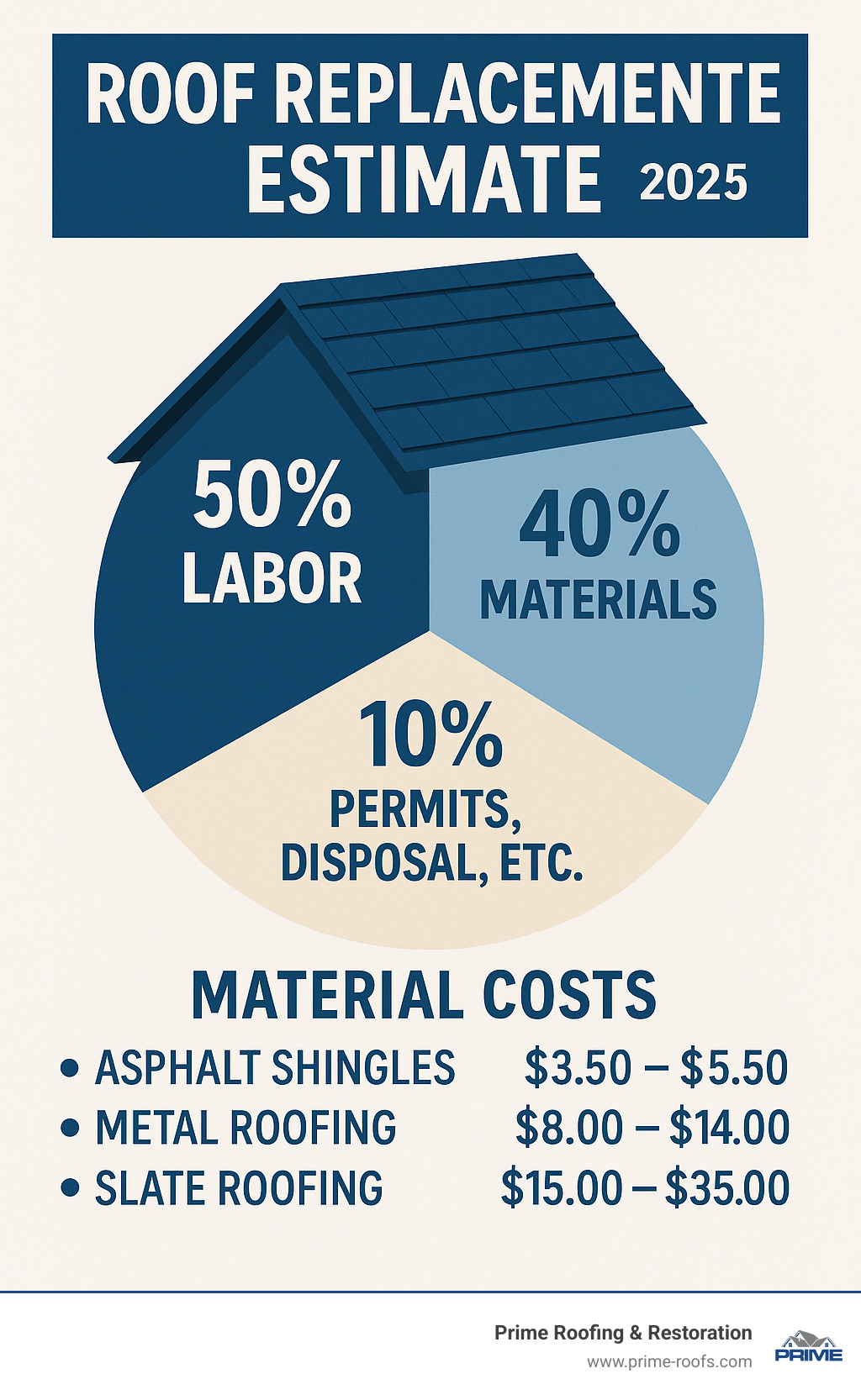
- Labor costs: 50-60% of total project cost
- Materials: Varies from $3.50/sq ft (asphalt) to $35/sq ft (slate)
- Roof size: Measured in “squares” (100 sq ft each)
- Additional costs: Permits, disposal, underlayment, flashing
Average Costs by Material Type:
- Asphalt shingles: $6,000 – $11,000
- Metal roofing: $15,000 – $30,000
- Slate roofing: $20,000 – $50,000
When facing storm damage or an aging roof, understanding what drives these costs helps you make smart decisions about your home’s protection. The national average roof replacement cost sits around $11,000, but your actual price depends on factors like roof size, material choice, and local labor rates.
Getting multiple detailed estimates from qualified roof replacement contractors ensures you’re not overpaying while still getting quality work that protects your investment.
As Bill Spencer, owner of Prime Roofing & Restoration with over five years of experience helping Alabama homeowners steer insurance claims and roof replacement estimates, I’ve seen too many property owners get caught off guard by unexpected costs. My goal is to break down these estimates in simple terms so you can make confident decisions about your roof replacement project.
Deconstructing Your Roof Replacement Estimate: What Are You Paying For?
When you receive a roof replacement estimate, you’re looking at much more than just the price of shingles stacked on your roof. Think of it like a recipe – every ingredient matters, and understanding each component helps you make the best decision for your home and budget.
Labor costs are the biggest slice of your roofing pie, typically eating up 50-60% of your total project cost. This isn’t just someone hammering nails for a few hours. Your roofing team handles the careful tear-off of old materials, precise installation of new ones, and thorough cleanup that leaves your property looking better than before. These skilled professionals work in challenging conditions, often on steep slopes and in Alabama heat, which is why their expertise commands a significant portion of your investment.
The materials you choose create the second major cost category, and boy, do your options vary! Budget-conscious homeowners often love asphalt shingles at around $3.50 to $16.00 per square foot installed. If you’re dreaming of something more durable, metal roofing runs $4.00 to $40.00 per square foot, while premium slate can reach $20.00 to $35.00 per square foot. Each material brings its own personality – and price tag – to your home.
Don’t forget about the tear-off and disposal fees, which can add $1 to $5 per square foot to your project. Removing old roofing isn’t like tossing out yesterday’s newspaper. It requires careful work to protect your home’s structure, plus proper disposal of materials that can’t just go in your regular trash pickup.
Finally, a quality estimate includes warranty details for both materials and workmanship. This isn’t just fine print – it’s your protection for years to come.
Understanding Material and Labor Costs in Your Estimate
Let’s roll up our sleeves and dig into the real numbers behind your roof replacement estimate. Understanding these costs helps you spot a fair deal and avoid surprises down the road.
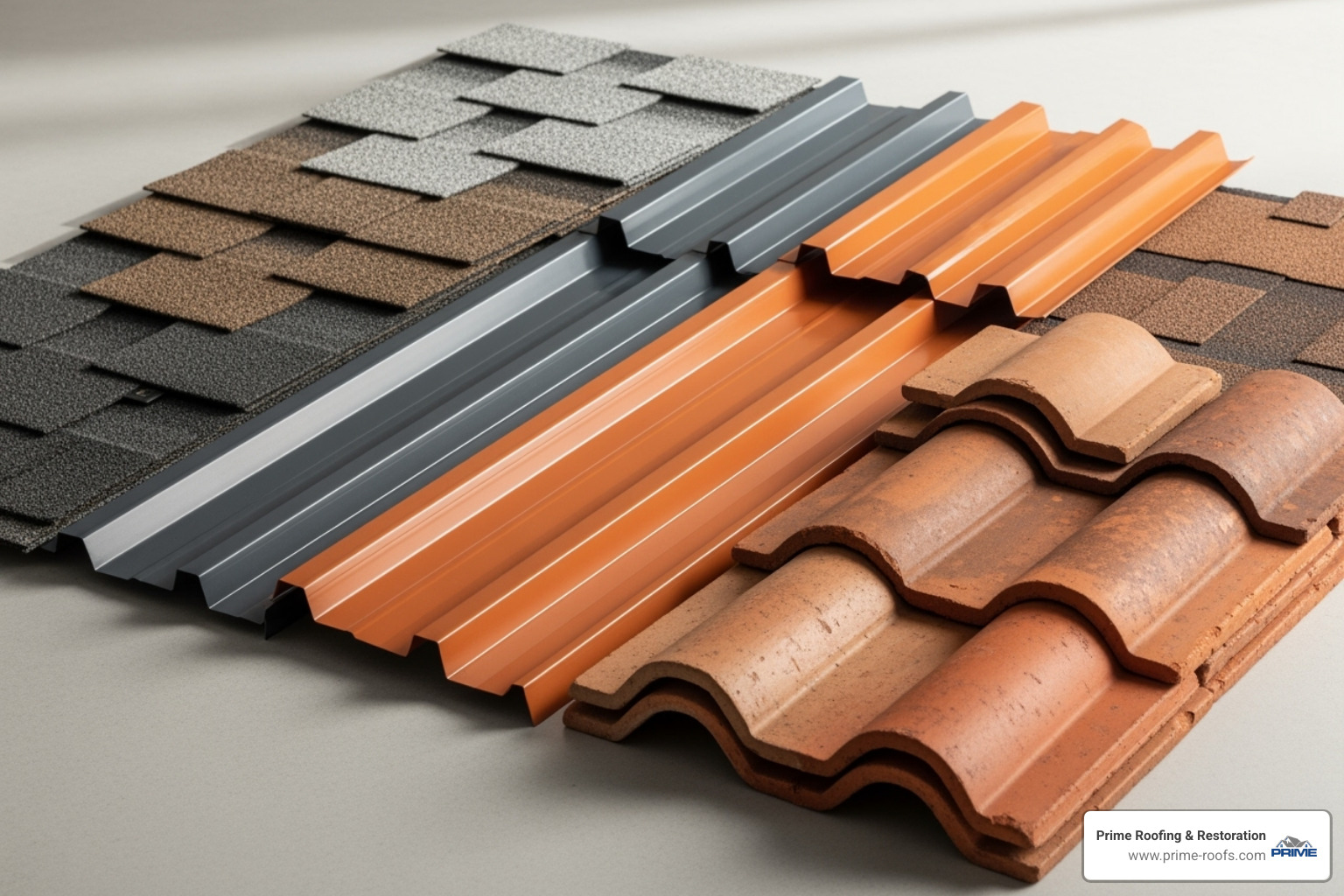
Asphalt shingles remain America’s sweetheart for good reason – they balance cost and performance beautifully. 3-tab shingles are your budget-friendly option at $3.50 to $5.00 per square foot installed, lasting about 20-25 years. Step up to architectural shingles for $4.00 to $8.50 per square foot, and you’ll get a dimensional look plus 30-50 years of protection. For homeowners wanting the ultimate in asphalt technology, premium designer brands can reach $16.00 per square foot while mimicking expensive materials like wood shake or slate.
Metal roofing deserves serious consideration if you’re thinking long-term. Yes, the upfront cost is higher, but these roofs laugh at Alabama storms for 40-70 years. Steel roofing typically runs $7.00 to $12.00 per square foot, while aluminum costs $8.00 to $15.00 per square foot. If you want to make a statement, copper roofing at $15.00 to $30.00 per square foot develops a beautiful patina over time. Standing seam metal is particularly popular, with materials costing $18.11 to $24.50 per square foot to install.
For homeowners drawn to tile roofing, you’re investing in both beauty and incredible longevity. Concrete tiles run $10.70 to $27.50 per square foot installed and can last 50-100 years. Clay tiles offer similar pricing at $11.00 to $22.00 per square foot with the same impressive lifespan.
Wood shakes and shingles bring natural beauty at $6.00 to $16.00 per square foot installed, lasting 20-40 years with proper maintenance. And if you’re dreaming of the ultimate roofing material, natural slate at $20.00 to $35.00 per square foot can protect your home for 75-200 years – truly a lifetime investment.
Labor rates reflect the skill and risk involved in roofing work. Professional roofers can earn around $130 per hour, and that expertise shows in every properly sealed seam and perfectly aligned shingle. Most contractors quote by the “square” (100 square feet), with roof replacement projects averaging $3.50 to $6.00 per square foot for asphalt installations.
The magic happens when you consider lifespan versus cost. That expensive slate roof might make you gulp at first, but when you divide the cost by 100+ years of protection, it often beats replacing asphalt shingles multiple times. For more detailed information about your options, check out our detailed guide to roofing materials.
Why a Detailed Roof Replacement Estimate Matters
Imagine buying a car where the salesperson just says, “Transportation: $25,000.” You’d probably walk away, right? The same logic applies to your roof replacement estimate – details matter tremendously.
A line-item breakdown transforms a scary big number into understandable pieces. You’ll see exactly what you’re paying for materials, labor, permits, disposal, and any extras. This transparency isn’t just nice to have – it’s essential for making smart decisions about your home.
When comparing quotes from different contractors, detailed estimates become your best friend. You can spot whether one contractor included tear-off costs while another “forgot” to mention them. A suspiciously low estimate often signals problems – maybe they’re uninsured, inexperienced, or planning to cut corners you’ll regret later.
Detailed estimates also help you avoid surprises mid-project. While no one can predict every issue hiding under old shingles, a good estimate addresses common problems like decking repair. This preparation keeps your project on track and your stress levels manageable.
Finally, understanding the scope of work prevents misunderstandings. Your estimate should clearly spell out everything from initial tear-off to final cleanup, so everyone knows exactly what’s included.
At Prime Roofing & Restoration, we believe in estimates as clear as a beautiful Alabama morning. We’ve found that homeowners appreciate knowing exactly what they’re investing in, and it helps us build the lasting relationships we’re known for. For insights into what your roof inspection should reveal, see what to look for in a roof inspection.
Key Factors That Drive Your Roof Replacement Cost Up or Down
Not all roofs are created equal, and several factors beyond materials will impact your final cost. Think of it like buying a car – a compact sedan costs less than an SUV, and the same principle applies to roofing. Understanding these key drivers helps you see why your neighbor’s roof replacement estimate might be completely different from yours, even if you live on the same street.
The size of your roof, measured in “squares” (100-square-foot areas), is the primary cost driver. It’s simple math – more roof area means more materials and more labor hours. A typical 1,700 square foot home might cost between $6,000 to $9,000 for asphalt shingle replacement, while a larger 3,300 square foot home can range from $9,939 to $30,928 depending on materials and complexity.
But here’s where it gets interesting. Roof pitch, or steepness, plays a huge role in your final bill. Picture this: would you rather walk across a gentle slope or climb a steep mountain? Your roofing crew faces the same challenge. A low-slope roof is like a pleasant stroll – safer, faster, and requiring minimal safety equipment. Labor costs might run $1.50–$3.00 per square foot.
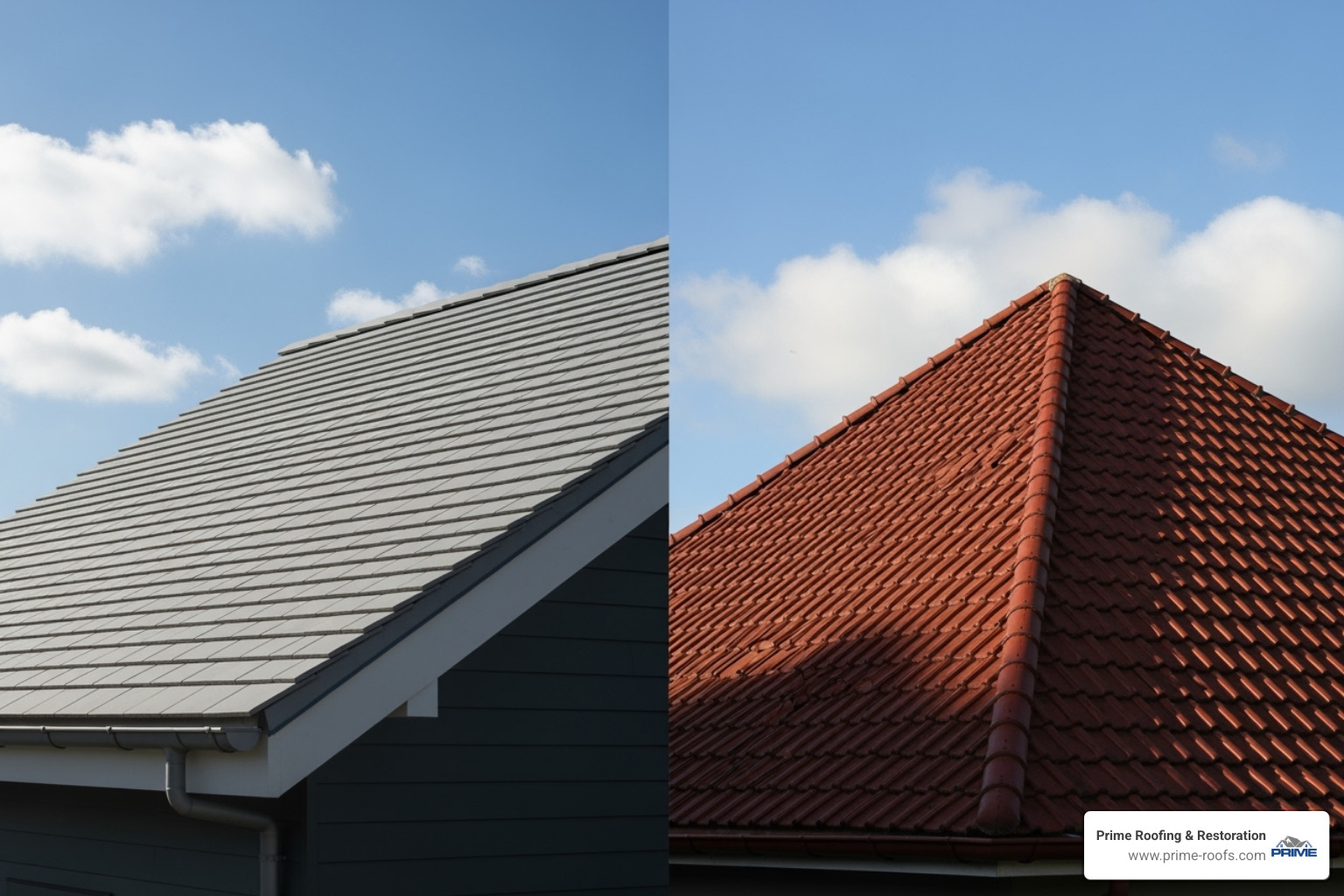
A steep roof, however, is like rock climbing with shingles. It’s more dangerous, requires specialized safety equipment, and slows down the entire process. Labor costs can jump to $3.00–$6.00 per square foot. Every step takes longer when you’re working at a 45-degree angle while carrying materials.
Roof complexity adds another layer to your estimate. A simple gable roof (think basic triangle shape) is straightforward to replace. But add dormers, valleys, chimneys, or skylights, and suddenly your roof becomes a puzzle with many pieces. Each architectural feature requires precise cutting, custom flashing, and careful sealing. Skylights alone can add $63.00 – $85.00 each for pipe boots, while flashing runs $9.00 – $11.00 per linear foot. More complexity equals more time, more materials, and inevitably, higher costs.
Your geographic location might surprise you as a cost factor, but it’s huge. Labor rates in urban areas can range from $4.00 to $7.50 per square foot due to higher living costs and demand. Rural areas often see more competitive pricing. Regional building codes also matter – coastal Alabama requires hurricane-resistant installations, while northern climates demand different snow load requirements.
Here’s something that might make you feel better about the investment: homeowners can recoup up to 60% of their roof replacement cost at resale. A new roof doesn’t just protect your family; it significantly boosts your home’s value and curb appeal. For detailed research on this return on investment, check out how homeowners can recoup up to 60% of their roof replacement cost at resale.
Understanding these factors helps explain why roofing isn’t a one-size-fits-all pricing game. Your roof’s unique characteristics – its size, pitch, complexity, and location – all combine to create your specific estimate. It’s not just about covering your house; it’s about creating a custom solution that protects your investment for decades to come.
Hidden Costs and Unexpected Expenses to Budget For
A common homeowner mistake is failing to budget for potential issues found after the old roof is removed. It’s a bit like opening a wall for a renovation and finding unexpected plumbing issues – sometimes, what’s underneath tells a different story than what you see from the curb!
Here’s the reality: even the most thorough roof replacement estimate can’t predict everything that lies beneath your current shingles. That’s why experienced contractors like us always recommend setting aside a contingency fund of 10-15% of your total project cost. It might seem like extra money sitting on the sidelines, but trust me – it’s far better to have it and not need it than to face an unexpected expense mid-project.
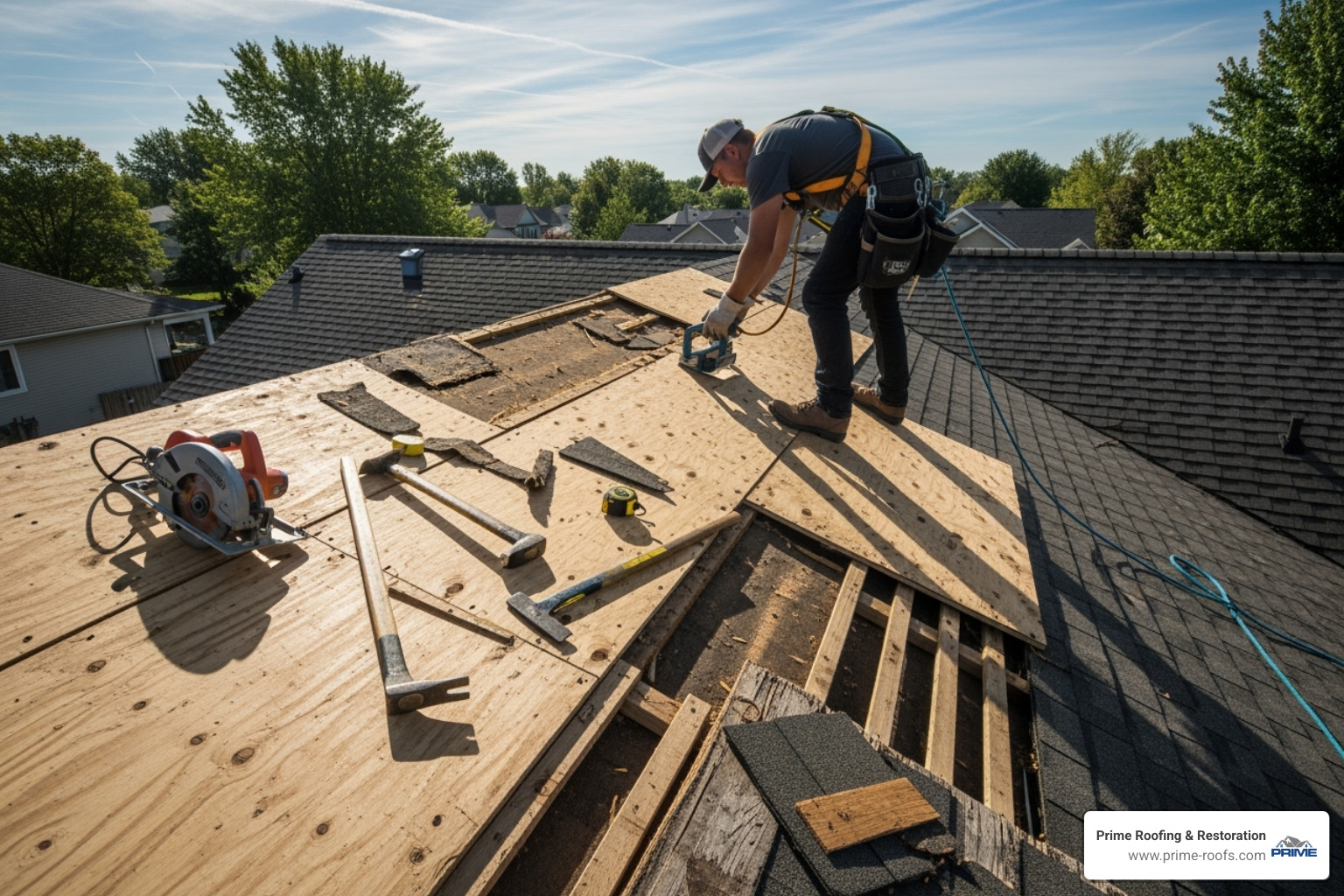
The most frequent surprise we encounter is rotten or damaged roof decking. Your roof’s decking – that’s the plywood or OSB sheathing beneath the shingles – might look fine from above, but water damage, rot, or simple age deterioration often becomes apparent only after the old roofing is stripped away. When this happens, replacement isn’t optional; it’s essential for a safe, secure installation. Decking replacement typically runs $2.20 to $3.00 per square foot, but it’s a critical investment in your roof’s structural integrity.
Underlayment upgrades represent another potential cost increase. While basic underlayment is usually included in standard quotes, you might find the existing material is damaged or that upgrading to high-quality synthetic underlayment makes sense for your climate. This protective barrier between your decking and shingles typically adds $1.50 to $2.10 per square foot.
Even in Alabama’s relatively mild climate, ice and water barriers can be worth considering for extra protection in vulnerable areas like valleys and eaves. These self-adhering membranes help prevent water intrusion during heavy storms, costing $1.87 to $2.53 per square foot for materials.
Flashing replacement is another common surprise expense. This critical component – the metal material that directs water away from chimneys, skylights, vents, and wall junctions – often needs updating during a roof replacement. Old or improperly installed flashing is frequently the culprit behind mysterious leaks. Plan for $9.00 to $11.00 per linear foot for new flashing, while pipe boots that seal around vent pipes run $63.00 to $85.00 each.
Don’t overlook your roof’s edges either. Fascia and soffit repair might become necessary if these components show water damage, rot, or pest infestation. New fascia boards cost $4.25 to $8.62 per linear foot, while soffit replacement runs $2.80 to $5.28 per linear foot.
Local building permits are a necessity, not an option. These typically range from $100 to $500 depending on your location, ensuring your project meets safety codes and passes required inspections. For more details on this important step, check out The importance of local roofing permits.
Finally, waste disposal fees for removing your old roof can add $0.40 to $2.00 per square foot to your project cost. That old roofing material has to go somewhere, and proper disposal is both environmentally responsible and often legally required.
The bottom line? These aren’t “gotcha” costs designed to inflate your bill – they’re legitimate expenses that arise when we find issues that simply can’t be seen until the work begins. By budgeting that extra 10-15% upfront, you’ll have peace of mind knowing your project can proceed smoothly regardless of what surprises we might uncover.
Making the Smart Choice: Repair vs. Replacement & Saving Money
Before committing to a full replacement, it’s worth considering whether a targeted repair might suffice. Think of it like deciding between patching a small hole in your favorite jeans versus buying a whole new pair – sometimes a simple fix is all you need!
Minor, isolated damage on a relatively new roof can often be fixed effectively. If your roof is less than 15 years old and you’re dealing with just a few missing shingles after a small storm, or perhaps a localized issue with flashing around your chimney, a repair might be the smart financial move. These targeted fixes can extend your roof’s life and save you thousands of dollars.
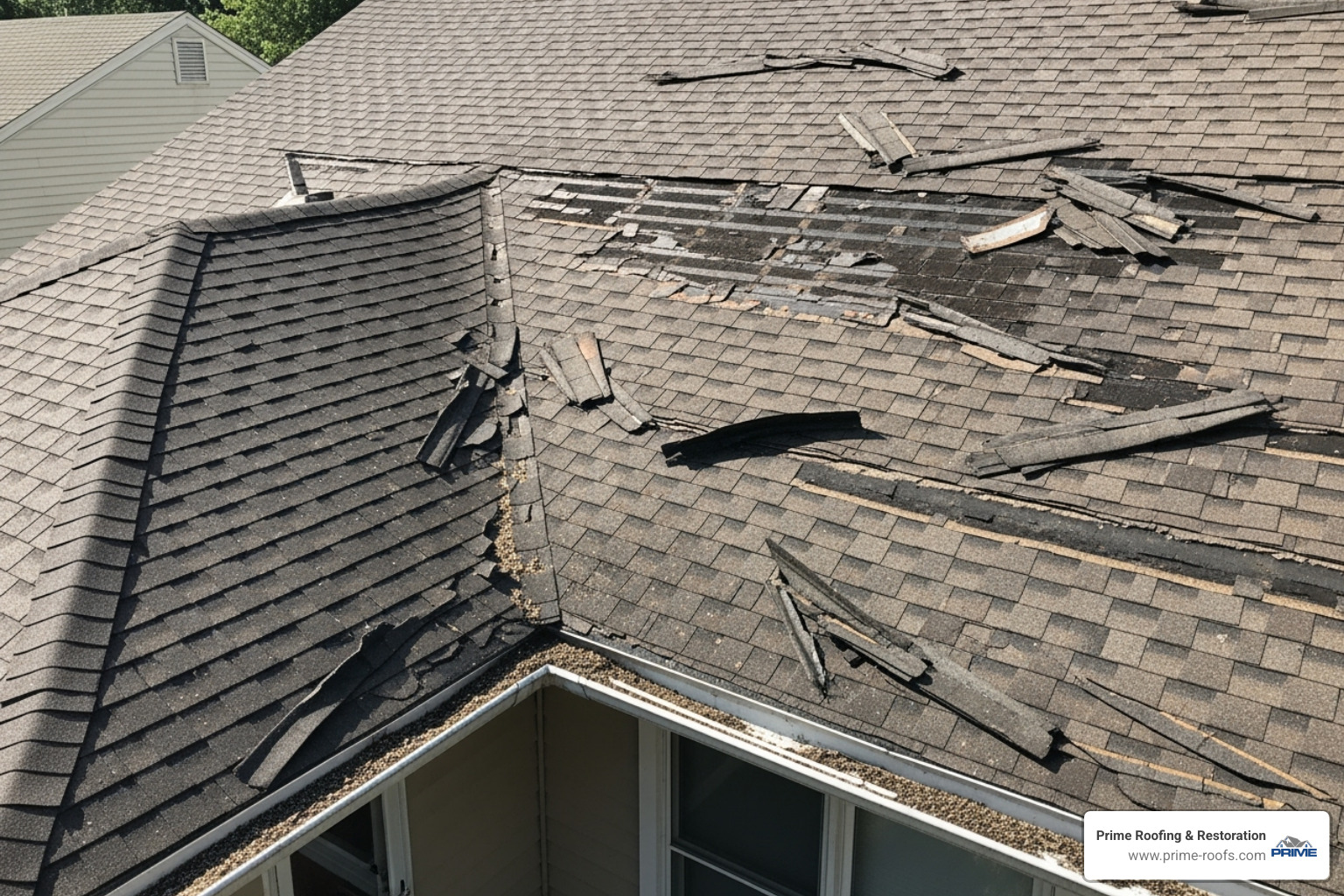
However, if your roof is over 20 years old, shows widespread issues like curling shingles, or has multiple leaks popping up like whack-a-mole, a replacement becomes the more cost-effective long-term solution. At this point, you’re not just fixing problems – you’re preventing bigger, more expensive headaches down the road.
Age is often the biggest factor in this decision. Most asphalt shingle roofs are designed to last 20-25 years, so if yours is nearing or past this milestone, it’s likely time to start planning for replacement. Widespread damage across large portions of your roof – like extensive curling, cracking, or missing granules – signals that your roof’s protective capabilities are failing system-wide.
Persistent leaks are another red flag. If you’ve had repairs done but water keeps finding its way in, it usually means the underlying roofing system has reached the end of its useful life. Similarly, if you notice visible sagging between rafters or find excessive granules in your gutters, these are clear indicators that replacement is necessary.
For homeowners wondering about the specific warning signs, we’ve put together a comprehensive guide: 5 Signs You Need Roof Replacement. If you’re still on the fence about whether a repair might work, check out our resource on When to choose a roof repair estimate instead.
How to Get an Affordable Roof Replacement Estimate
Even when a full replacement is necessary, you don’t have to break the bank. There are several smart strategies to manage costs while ensuring you get quality work that protects your investment.
Timing can save you money. If your situation isn’t an emergency, consider scheduling in the off-season during late fall or early spring. Contractors often have lower demand during these periods, which can translate to more competitive pricing. Just like booking a vacation during shoulder season, you might find better deals when everyone else isn’t clamoring for the same service.
Material choices make a huge difference in your roof replacement estimate. While premium materials like metal or slate offer longer lifespans, asphalt shingles remain the most budget-friendly option that still provides excellent protection. Think of it as choosing between a luxury sedan and a reliable compact car – both will get you where you need to go safely.
Getting multiple quotes is absolutely crucial, and I can’t stress this enough. Always obtain at least 2-3 written estimates from licensed and insured roofing companies. But here’s the key: don’t just compare the bottom-line numbers. Look at the detailed breakdown of materials, labor, and scope of work. A significantly lower bid might be a red flag indicating corners being cut or important work being omitted.
Insurance can be your best friend when it comes to managing replacement costs. If your roof damage resulted from a covered event like a storm, your homeowner’s insurance might cover a significant portion of the expense. Understanding whether you have Actual Cash Value (ACV) or Replacement Cost Value (RCV) coverage is vital – RCV policies offer much better financial protection by paying the full replacement cost after work completion, while ACV only covers depreciated value.
Navigating insurance claims can feel overwhelming, but we help homeowners maximize their benefits and understand their coverage options. For detailed guidance on this process, see our comprehensive guide: Getting a roof replaced on insurance.
Finding a Trustworthy Contractor & Financing Your Project
Choosing the right contractor is as important as choosing the right materials. Look for licensed and insured professionals with a strong local reputation and positive reviews. A trustworthy contractor will provide a detailed estimate, explain your options, and offer solid warranties on both materials and workmanship. If the upfront cost is a concern, many companies offer financing options to make the project more manageable. For homeowners in Alabaster, AL, finding a reliable local expert is key.
When you’re searching for the perfect roofing partner, think of it like choosing a doctor for your family – you want someone with credentials, experience, and a bedside manner that puts you at ease. The same principle applies to your roof replacement estimate and the contractor who’ll bring it to life.
Licensing and insurance should be your first checkpoint. Always verify that any contractor you’re considering is fully licensed and insured. This isn’t just bureaucratic red tape – it’s your financial shield. Hiring insured contractors protects you from liability for accidents, damages, and worker injuries, and ensures your home insurance doesn’t refuse claims related to the roof replacement. Think of it this way: would you let an unlicensed driver borrow your car? The same logic applies to your roof.
A strong local reputation speaks volumes about a contractor’s quality and reliability. Look for companies with positive reviews and references from past clients in your area. When a contractor has been serving the same community for years, like we have in Alabaster, AL, it’s a good sign they’re doing something right. Happy customers tend to stick around and refer their neighbors.
The detailed estimate we’ve been discussing throughout this article? That’s another hallmark of a trustworthy contractor. If someone hands you a napkin with a single number scrawled on it, run the other way. A professional will break down every cost, explain your material options, and help you understand exactly what you’re getting for your investment.
Warranties are where the rubber meets the road – or in this case, where the shingles meet the weather. Inquire about both material warranties from the manufacturer and workmanship warranties from the contractor. A good warranty provides long-term peace of mind, with roofing warranties typically ranging from 5-10 years, and some premium materials offering much longer guarantees. It’s like having a safety net for your safety net.
Don’t underestimate the importance of clear communication throughout the process. A reliable contractor will keep you informed, answer your questions promptly, and make sure you’re comfortable with every step of the project. After all, this is your home we’re talking about – you deserve to know what’s happening on top of it.
For a comprehensive guide on selecting the best professional for your roofing needs, check out our detailed resource: A guide to choosing a roofer.
If the upfront cost of a roof replacement has you feeling like you need to choose between a new roof and your firstborn child’s college fund, don’t panic. Many homeowners explore financing options to make this essential home improvement more manageable. Contractor financing plans are increasingly common, with many reputable roofing companies partnering with lenders to offer special terms like 0% interest for promotional periods or low monthly payments. You might also consider home equity loans, lines of credit, or personal loans from banks or credit unions.
We understand that a new roof represents a significant investment, and we’re committed to helping you steer the entire process – including discussing financing solutions that fit your budget and lifestyle.
For homeowners in and around Alabaster, AL, Prime Roofing & Restoration is your trusted local expert. We’re committed to protecting homes and families with quality materials and licensed professionals who treat your home like it’s their own.
Prime Roofing & Restoration
Address: 5 Brown Cir, Alabaster, AL 35007
Phone: (205) 661-8190
If you’re in the Shelby County area and looking for a reliable roofing partner, you can Find qualified roofers in Alabaster, AL through our services.
Conclusion
Understanding your roof replacement estimate empowers you to make a smart, confident investment in your home’s safety and value. Think of it like learning to read a restaurant menu – once you know what everything means, you can order with confidence instead of just pointing at random items and hoping for the best!
We’ve walked through the entire process together, from deconstructing the costs that make up your estimate to anticipating those sneaky hidden expenses that can pop up like uninvited guests at a barbecue. You now know that labor typically accounts for 50-60% of your total cost, why a steep roof costs more than a gentle slope, and why that contingency fund of 10-15% isn’t just a suggestion – it’s your financial safety net.
The repair vs. replacement dilemma doesn’t have to keep you up at night anymore. If your roof is over 20 years old or showing widespread damage like curling shingles or multiple leaks, replacement is usually the smarter long-term investment. And when it comes to choosing a reputable contractor, you know to look for proper licensing, insurance, detailed estimates, and solid warranties – not just the lowest price.
A new roof is indeed a significant undertaking, but with the right knowledge, you can steer the process smoothly without getting soaked by unexpected costs or shoddy workmanship. This isn’t just an expense – it’s an investment that can help you recoup up to 60% of the cost when you sell your home.
If you’re ready to get a clear, comprehensive estimate for your project, contact the experts at Prime Roofing & Restoration for a professional roof assessment. We’re here to help you protect your biggest investment with the same care and attention we’d give our own homes.