
Roof Replacement 101: A Data-Backed Guide to Protecting Your Home
Roof replacement is one of the top three most expensive home improvements in the United States, with most homeowners investing between $5,700 and $12,300 for a standard residential roof. According to industry data, more than 70% of residential roofing work each year is full replacement rather than repair, which underscores how critical it is to choose the right system and contractor the first time. If you are evaluating options for a professional roof replacement service, start with the core details outlined on our dedicated service page, then use this guide to understand costs, timelines, and technical requirements.
Whether you’re dealing with storm damage, an aging roof, or persistent leaks, understanding the complete roof replacement process helps you make informed decisions and avoid costly mistakes. As a leading professional roofing and exterior restoration company, Prime Roofing & Restoration has created this guide to help homeowners steer this critical project and ensure their home receives the protection it deserves.
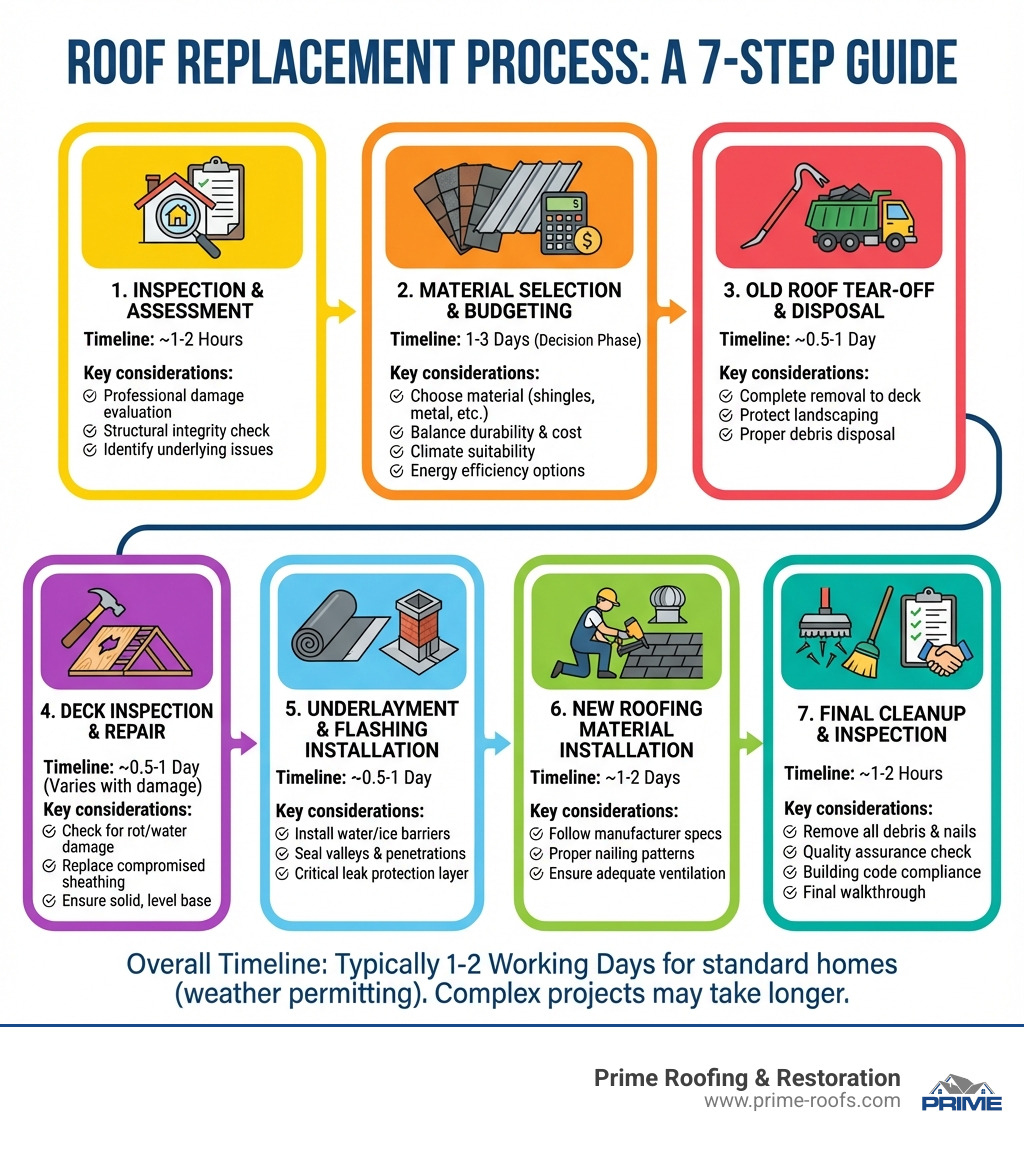
The roof replacement process typically follows these key steps:
- Initial Inspection – Professional assessment of damage and structural integrity
- Material Selection – Choosing shingles, metal, or other roofing materials based on budget and climate
- Tear-Off – Complete removal of old roofing materials down to the deck
- Deck Repair – Replacing damaged plywood or sheathing
- Underlayment Installation – Adding water and ice barriers for leak protection
- New Roof Installation – Installing shingles or materials according to manufacturer specs
- Final Inspection – Building code compliance check and quality assurance
Most roof replacements take between 1-2 working days for a typical single-family home, though complex projects or weather delays can extend this timeline. Labor accounts for approximately 60% of the total cost, with materials making up the remaining 40%.
For Central Alabama homeowners, understanding this process is especially critical given the region’s exposure to severe storms, high winds, and intense summer heat—all of which accelerate roof deterioration. A properly installed roof not only protects your property but can also qualify for insurance discounts and improve energy efficiency by up to 15% with the right materials.
When to Replace Your Roof: 7 High-Confidence Warning Signs
Knowing when to repair versus replace your roof starts with a thorough inspection. Industry studies show that once more than 25-30% of a shingle roof is compromised, full replacement is more cost-effective than repeated spot repairs over a 5-10 year period. A roof is a critical building system engineered to manage wind, water, and heat, and in regions like Alabaster and Orange Beach, Alabama, severe weather accelerates wear more than in milder climates.
Here are the key warning signs that your roof may need replacement:
- Roof Age: Asphalt shingles typically last between 20 and 25 years. If your roof is nearing or exceeding this age, it’s wise to consider replacement, even if visible damage isn’t immediately apparent.
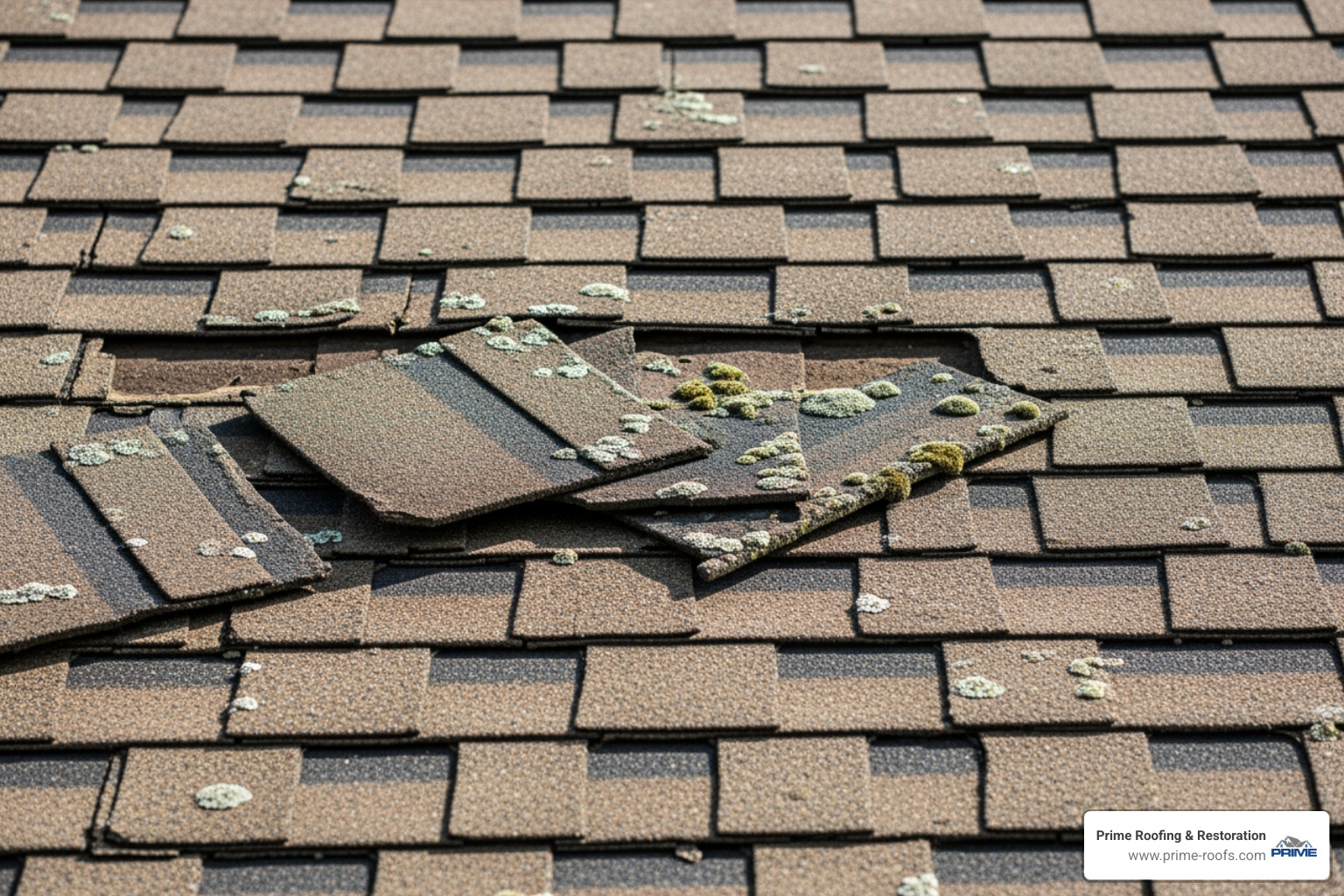
- Curling or Cupping Shingles: Shingles that are curling at the edges or cupping in the middle indicate that the shingle’s seal has broken down, making your roof vulnerable to wind and water damage.
- Cracked Shingles: Cracks or thermal splitting in asphalt shingles mean they are no longer effectively diverting rainwater and moisture, significantly increasing the risk of leaks.
- Bald Spots & Granules in Gutters: If you notice dark “bald spots” on your roof where granules are missing, or find significant amounts of shingle granules accumulating in your gutters, your shingles are losing their protective layer and nearing the end of their lifespan.
- Water Damage Inspection: Signs like streaks, stains, or water spots on your ceiling, upper walls, or in the attic are strong indicators of a roof leak. If you suspect water intrusion, a thorough water damage inspection is crucial.
- Sagging Roof Deck: A visibly sagging roofline indicates significant structural issues, possibly due to a water-soaked roof deck or framing problems. This level of damage almost always necessitates a full roof replacement.
- Neighbors Getting New Roofs: If your neighbors with similar-aged homes are replacing their roofs, it’s a good indicator that your roof is also approaching its end of life.
If you observe any of these signs, it’s time to contact a professional. While we can sometimes repair just a section of a roof, widespread issues often make a full roof replacement the more prudent and long-lasting solution.
Roof Replacement Costs: Numbers, Drivers, and Budget Ranges
The average roof replacement cost for a single-family home in the U.S. is about $9,000, with most projects ranging from $5,700 to $12,300 when you hire a professional contractor. Roofing consistently ranks among the highest return-on-investment projects, with national remodeling reports showing 55-65% ROI at resale. About 40% of the total cost typically goes toward materials, while labor accounts for roughly 60%.
Several critical factors determine the final price tag for your new roof:
- Roof Size: The larger your roof’s surface area, the more materials and labor will be required. Roofers often price by the “square,” which is 100 square feet. Each roofing square can cost $150 to $1,500 for materials alone.
- Roof Pitch: The steepness of your roof significantly impacts installation costs. A steeper roof (e.g., 7:12 slope or higher) requires more safety precautions and slower work, leading to higher labor costs. Learn more about roof pitch and its implications.
- Roof Complexity: Features like multiple valleys, dormers, chimneys, and skylights increase the cutting, flashing, and sealing work required.
- Material Choice: The type of roofing material you select is a primary cost driver. Asphalt shingles are generally the most affordable, while metal, tile, or slate can be significantly more expensive.
- Labor Rates: Labor costs vary based on your geographic location and the complexity of the job. In Alabama, labor often represents 40-50% of the total roof quote.
- Permit Fees: Local building codes in areas like Alabaster and Orange Beach require permits for roof replacement projects.
- Old Roof Removal: If your existing roof has multiple layers of shingles, a full tear-off is necessary, adding to labor cost and disposal fees.
- Hidden Costs: Damaged or rotted roof decking revealed during tear-off adds both material and labor costs.
For a comprehensive understanding of what to expect, see our guide on how much a new roof costs.
| Material Type | Average Cost per Square Foot (Installed) | Lifespan | Pros | Cons |
|---|---|---|---|---|
| Asphalt Shingles | $3 – $6 | 20-25 years | Most affordable, wide variety of colors/styles, easy installation | Shorter lifespan, susceptible to granule loss |
| Metal Roofing | $4 – $11 | 40-75 years | Excellent durability, fire-resistant, minimal maintenance | Higher initial cost, can be noisy during rain |
| Tile | $12 – $18 | 50+ years | Very long lifespan, aesthetic appeal, fire-resistant | Very heavy, brittle, high initial cost |
Choosing Roof Materials: Comparative Data on Performance and Longevity
Roofing material selection is the single largest driver of both upfront cost and long-term performance. Asphalt shingles still cover over 70% of U.S. homes, but metal, tile, and advanced systems like solar shingles are gaining share each year as homeowners look for durability and energy savings. A data-driven material choice can increase effective roof lifespan by 50–200% compared to builder-grade options, while reducing energy consumption in hot climates like Alabama.
The material you choose is the biggest factor in your roof’s cost, longevity, and appearance. From budget-friendly asphalt to long-lasting metal and premium slate, each option has distinct advantages. Modern options also include energy-efficient “cool roofs” and solar shingles that can generate power for your home.
Asphalt Shingles: The Popular & Affordable Choice
Asphalt shingles remain the most common type of residential roofing in the U.S., largely due to their affordability and versatility. They are a value leader for most neighborhoods and offer a wide range of styles and colors to complement any home.
- Types:
- 3-Tab Shingles: These are the most basic and affordable, characterized by their flat, single-layer appearance. They typically have a lifespan of about 20 years.
- Architectural Shingles (Laminated/Dimensional): These are thicker, multi-layered shingles that create a more textured, dimensional look, often mimicking the appearance of wood shakes or natural slate. They offer better wind resistance and a longer lifespan, typically 25-30 years, with some premium options lasting up to 50 years. Architectural shingles, like GAF Shingles (such as GAF Timberline HDZ), are among the most popular for mid-range homes.
- Lifespan: Generally, asphalt shingles last between 20 and 25 years. With proper maintenance and quality installation, some premium architectural shingles can last longer.
- Pros: Most budget-friendly option, wide variety of colors and styles, relatively easy to install, good wind resistance (especially architectural options).
- Cons: Shorter lifespan compared to other materials, prone to granule loss over time, can absorb heat, and may require more frequent maintenance in harsh climates.
We work with leading manufacturers to provide high-quality asphalt shingle options that are durable and aesthetically pleasing. You can learn more about these materials from the Asphalt Roofing Manufacturers Association.
Metal Roofing: Durability and Longevity
Metal roofing has seen a surge in popularity, especially in areas like coastal Alabama prone to severe storms. Its inherent advantages—including resistance to leaks and wind uplift, and durability against the elements—make it an attractive option for homeowners seeking long-term protection.
- Types:
- Standing Seam: This is the most popular and often most expensive type of metal roofing, featuring vertical panels with raised seams that lock together. It’s highly weather-resistant and often roll-formed on-site for a custom fit.
- Metal Shingles, Shakes, and Tiles: These options are designed to mimic the appearance of traditional asphalt, wood, or tile roofs but with the superior performance of metal.
- Materials: Common metals include galvanized steel, Galvalume steel, aluminum, zinc, and copper. Aluminum and zinc are excellent choices for coastal areas like Orange Beach due to their corrosion resistance.
- Lifespan: Metal roofs typically last from 40 to 75 years, often outliving the home itself. This exceptional longevity is a key benefit.
- Pros: Outstanding durability, excellent wind resistance (up to 150 mph), fire-resistant, minimal maintenance, energy-efficient (reflects solar radiant heat), often made with recycled materials (at least 30%). Finishes like Kynar 500 and Hylar 5000 offer 30-year warranties.
- Cons: Higher initial cost than asphalt shingles, can be noisy during heavy rain, requires specialized installation, and repairs can be more complex.
For homes in Alabaster and Orange Beach, the benefits of metal roofing for Alabama homes are particularly compelling due to the need for resilience against severe weather.
Sustainable Options: Cool Roofs and Solar
As homeowners become more environmentally conscious and seek ways to reduce energy costs, sustainable roofing options are gaining traction.
- Cool Roofs: These roofs are designed to reflect more sunlight and absorb less heat than traditional roofs. A light-colored roof, for instance, can reflect 60 to 90 percent of sunlight, significantly reducing the energy and cost needed to cool your home by up to 15 percent. This is particularly beneficial in warm climates like Alabama, where summers can be long and hot. While white roofs are best, “cool colored” roofs use specialized pigments to reflect 30 to 60 percent of sunlight. You can learn about cool roof benefits and find certified products through the Cool Roof Rating Council.
-
Solar Shingles/Panels: Solar roofing options are expanding rapidly, with major manufacturers like GAF, CertainTeed, and Tesla introducing photovoltaic (solar) roofing shingles. These integrated systems generate electricity, helping to offset your home’s energy consumption. A significant incentive for considering solar roofing is the federal tax credit of 30 percent of the project cost, available through the Inflation Reduction Act of 2022. This credit is available through the end of 2025, offering a limited-time opportunity to invest in clean energy.
-
FORTIFIED122 Standards: For homeowners in storm-prone regions, embracing resilience programs like FORTIFIED122 Standards is an excellent investment. FORTIFIED122 roofs are built to a higher standard, with improved deck attachment, sealed roof decks, and reinforced edges, making them more resistant to high winds, hail, and wind-driven rain. While these upgrades may add to the initial cost, they can significantly reduce the risk of damage during severe weather events, potentially leading to insurance discounts and greater peace of mind. The 2025 FORTIFIED122 standard, for instance, tightens deck attachment and ventilation requirements.
Roof Replacement Step-by-Step: From Tear-Off to Final Inspection
A professional roof replacement follows a predictable, evidence-based sequence that minimizes leak risk and structural failure. Field data from major shingle manufacturers shows that improper underlayment, flashing, or ventilation is responsible for over 80% of premature roof failures, not the shingles themselves. A qualified crew prevents these avoidable problems by following a precise order of operations that aligns with building codes and manufacturer specifications.
A professional roof replacement is a systematic process designed to protect your home at every stage. A qualified crew will follow a precise order of operations to ensure your new roof is watertight, durable, and installed according to manufacturer specifications and local building codes.
Here’s a step-by-step look at what you can expect during a typical roof replacement:
- Site Preparation: Before any work begins, our team will take measures to protect your property. This includes covering landscaping, bushes, and outdoor furniture with tarps. We’ll also coordinate the delivery of materials and a dumpster for debris, ensuring minimal disruption to your daily life.
- Old Roof Tear-Off: This is where the old roof is completely removed down to the roof deck. We always recommend a full tear-off rather than overlaying new shingles over old ones. While some building codes allow two layers, a tear-off allows us to inspect the underlying structure thoroughly.
- Decking Inspection & Repair: Once the old materials are gone, the roof deck (usually plywood or OSB) is fully exposed. Our team will inspect for any signs of rot, water damage, soft spots, or structural issues. Any damaged sections will be repaired or replaced to ensure a solid, stable foundation for your new roof.
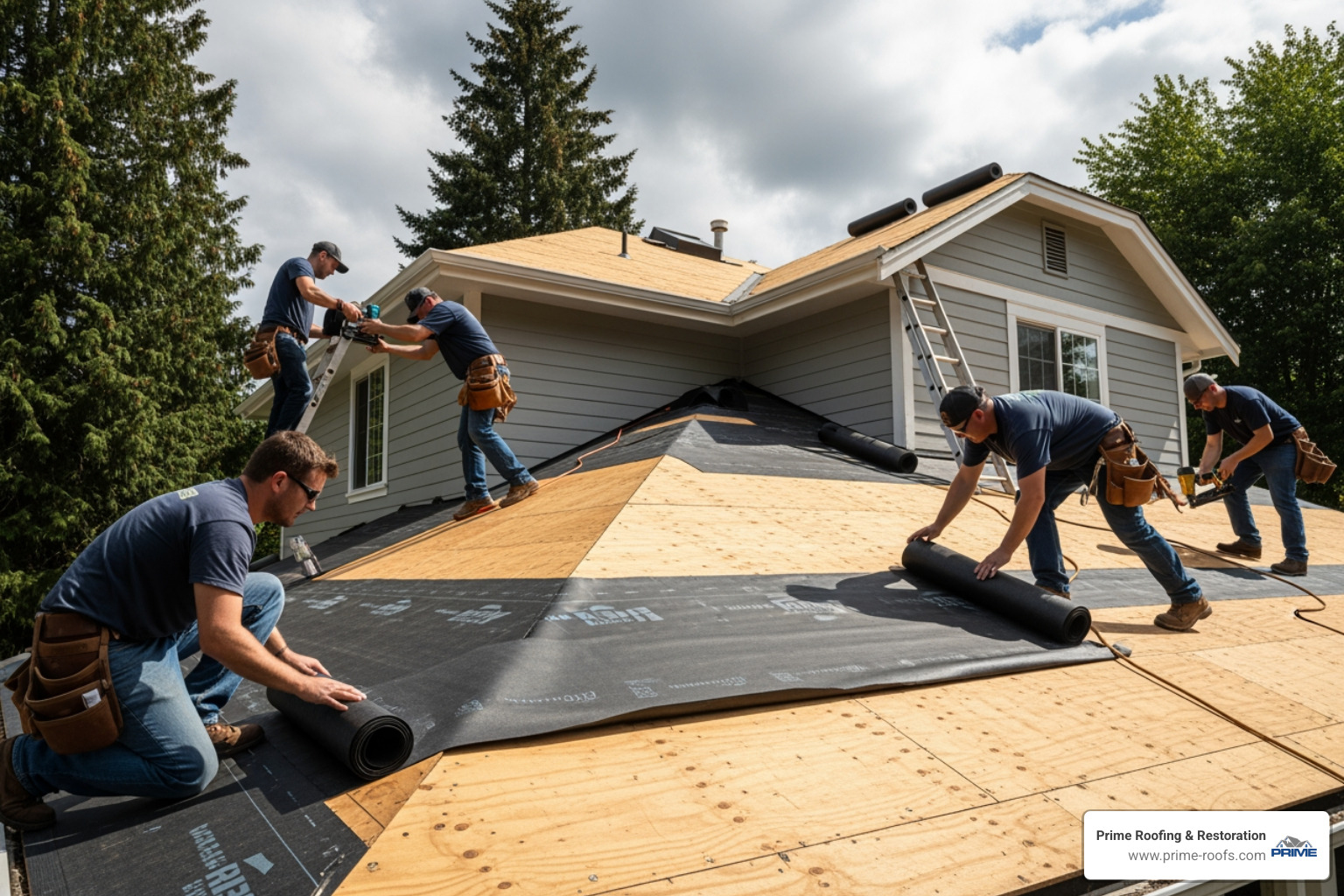
- Underlayment & Ice Shield Installation: This is a crucial step for preventing leaks.
- Underlayment: A protective layer, typically synthetic, is rolled out over the entire roof deck. Synthetic underlayments, like GAF DeckArmor or Owens Corning ProArmor, offer superior moisture resistance, breathability, and tear resistance compared to traditional asphalt felt. This serves as a secondary barrier against moisture.
- Ice & Water Shield: In areas prone to heavy rain or potential ice dams, a self-adhering ice and water barrier is installed along the eaves, valleys, and around penetrations like chimneys and skylights. This provides an extra layer of waterproofing in the most vulnerable areas of your roof.
- Flashing & Drip Edge:
- Drip Edge: Metal drip edge is installed along the perimeter of your roof. This directs water off the roof and into the gutters, preventing it from running down fascia boards and protecting the edge of the roof deck.
- Flashing: New metal flashing is installed around chimneys, skylights, vent pipes, and in valleys where two roof planes meet. Flashing is critical for preventing water intrusion at these junctions, which are common points of leaks.
- Ventilation System: Proper attic ventilation is essential for the longevity of your roof and the energy efficiency of your home. We’ll install or upgrade components like ridge vents (along the peak of the roof) and soffit vents (under the eaves) to ensure continuous airflow. This helps remove heat and moisture from your attic, preventing premature shingle deterioration and reducing cooling costs.
- New Roofing Material Installation: This is where your chosen roofing material is expertly installed. Shingles are typically laid starting from the eaves and working upwards towards the peak, following manufacturer specifications to ensure proper alignment and watertight seals.
- Ridge Capping: Once the main roofing material is installed, specially designed cap shingles or tiles are applied along the ridge of the roof. This seals the highest point of the roof, providing an additional layer of protection against weather elements.
- Site Cleanup: After installation, our crew will perform a thorough cleanup of your property. This includes removing all old roofing debris, nails (often with magnetic sweepers), and packaging materials. We strive to leave your property cleaner than we found it.
- Final Inspection: Once the project is complete, we conduct a final inspection to ensure that all work meets our high-quality standards, manufacturer specifications, and local building codes. This may also include a municipal building inspector’s sign-off, if required, for your home roof installation.
How to Hire a Roof Replacement Contractor You Can Trust
Hiring the right roofing contractor directly determines roof lifespan, warranty validity, and long-term maintenance costs. Industry loss data shows that improper installation can cut a roof’s service life by 30–50%, even when premium materials are used. Roof replacement is a hazardous, code-sensitive project that should always be handled by insured professionals with verifiable local experience and written workmanship warranties.
While a DIY approach may seem tempting, roof replacement is a hazardous and complex job best left to professionals. Hiring a qualified contractor ensures the job is done safely, correctly, and is backed by warranties. Vetting your contractor is the most important step in the entire process.
Roofing work involves significant risks, including falls, electrical hazards, and heavy lifting. Attempting a DIY roof replacement without proper training, equipment, and insurance can lead to serious injury, costly mistakes, and voided material warranties. Professionals have the expertise, tools, and safety protocols to complete the job efficiently and safely.
How to Choose a Qualified Roofing Contractor
Choosing the right roofing contractor is paramount to the success and longevity of your new roof. Here’s what to look for:
- Licensing & Insurance: Always verify that the contractor is properly licensed in Alabama and carries both workers’ compensation and liability insurance. This protects you from financial responsibility if an accident occurs on your property or if there’s damage during the project. Ask for proof of insurance (policy declarations page).
- Local Reputation: Look for a contractor with a strong local presence and positive reviews in areas like Alabaster and Orange Beach. Ask friends, family, and neighbors for recommendations. Check online reviews on platforms like BBB, Google, and Yelp.
- Written Estimates: Obtain detailed, itemized written estimates from at least three different contractors. These estimates should clearly break down costs for materials, labor, permits, debris removal, and any additional components. Be wary of estimates that are significantly lower than others, as they may indicate cutting corners or hidden costs.
- References: Ask for local references and follow up with them. Inquire about their experience with the contractor, the quality of the work, adherence to timelines, and how any issues were resolved.
- Experience with Your Chosen Materials: Ensure the contractor has extensive experience installing the specific type of roofing material you’ve chosen, especially for specialized systems like metal or tile.
- Contract Agreement: A comprehensive contract should outline the scope of work, materials to be used (including brand and color), start and completion dates, payment schedule, cleanup procedures, and warranty information.
- Communication: A good contractor maintains open communication throughout the project, keeping you informed of progress and any unexpected issues.
For more in-depth guidance, consult our choosing a roofer guide. If you’re in the Alabaster area, we encourage you to find a local contractor in Alabaster, AL who understands the local climate and building requirements.
Understanding Warranties, Permits, and Building Codes for your roof replacement
These critical elements protect your investment and ensure your roof is compliant and durable.
- Material Warranty: Provided by the manufacturer, this warranty covers defects in the roofing materials themselves. Lifespans vary by material, with asphalt shingles often carrying 20-30 year warranties, and metal or tile extending to 50 years or more. Some premium asphalt shingles even boast “lifetime” warranties (typically max 40-50 years). It’s crucial to understand what voids these warranties (e.g., improper installation, inadequate ventilation, pressure washing).
- Workmanship Warranty: This warranty is provided by your roofing contractor and covers the quality of the installation. A reputable contractor will offer a workmanship warranty, typically for at least 12 months, ensuring that any issues arising from installation errors are corrected. Combined with a strong material warranty, this provides comprehensive protection.
- Local Building Codes: In Alabaster, Orange Beach, and surrounding areas, roof replacement projects must adhere to specific local building codes. These codes dictate everything from the type of materials allowed to installation methods, ensuring the roof meets minimum safety and structural standards, especially in hurricane-prone regions. We ensure all our projects are compliant with current regulations.
- Roofing Permits: Obtaining a permit from your local municipality is generally required before starting a roof replacement. This permit ensures that the work will be inspected and approved by local authorities, verifying compliance with building codes. Failure to secure a permit can lead to fines, project delays, or even the requirement to remove newly installed work.
- Final Inspections: Once the roof replacement is complete, a final inspection by the local building department is often required. This ensures that the work was performed according to code and the permit’s specifications. A successful final inspection provides official approval of your new roof.
Secure Your Home with a Professional Roof Replacement
A well-planned roof replacement is one of the most effective ways to protect a home’s structure, increase resale value, and stabilize long-term maintenance costs. In storm-prone markets like Central Alabama, homeowners who install modern, code-compliant roofing systems reduce the likelihood of catastrophic water intrusion and structural damage during major weather events by a meaningful margin, especially when paired with improved nailing patterns and sealed roof decks.
A roof replacement is a critical investment in your home’s safety and value. By understanding the signs of failure, budgeting for costs, choosing the right materials, and hiring a trusted professional, you can ensure your new roof provides decades of protection. For homeowners in the greater Alabaster and Orange Beach areas, the licensed experts at Prime Roofing & Restoration are ready to provide end-to-end solutions, from initial inspection to final cleanup.
We pride ourselves on building lasting relationships, using quality materials, and providing 24/7 service with licensed experts to protect homes and families across Alabaster and Orange Beach, Alabama. We’re here to guide you through every step, ensuring a smooth, stress-free roof replacement experience.
Ready to protect your home with a flawless new roof? Contact us today for a free, no-obligation estimate. Our roofing specialists are ready to help.