
What You Need to Know About 1000 Sq. Ft. Roof Replacement Costs
A new roof 1000 sq ft house is a significant investment, with typical costs ranging between $4,500 and $18,458. Most homeowners, however, find their final bill lands somewhere around the national average of $7,251. This price isn’t arbitrary; it’s a complex calculation based on your home’s unique architecture, the specific roofing materials you select, and the prevailing labor costs in your local area. For those of us with smaller homes in Central Alabama, understanding these financial dynamics is crucial for budgeting effectively for one of your property’s most vital components. Your roof is the primary shield protecting your family and belongings from the elements. Unfortunately, issues like storm damage from a tornado, hail, or the simple, inevitable effects of aging won’t wait for a convenient time to arise. A proactive approach is always more cost-effective than an emergency repair. For a comprehensive overview of our services, we invite you to explore our professional roof replacement options and see how we can safeguard your home.
Quick Cost Breakdown:
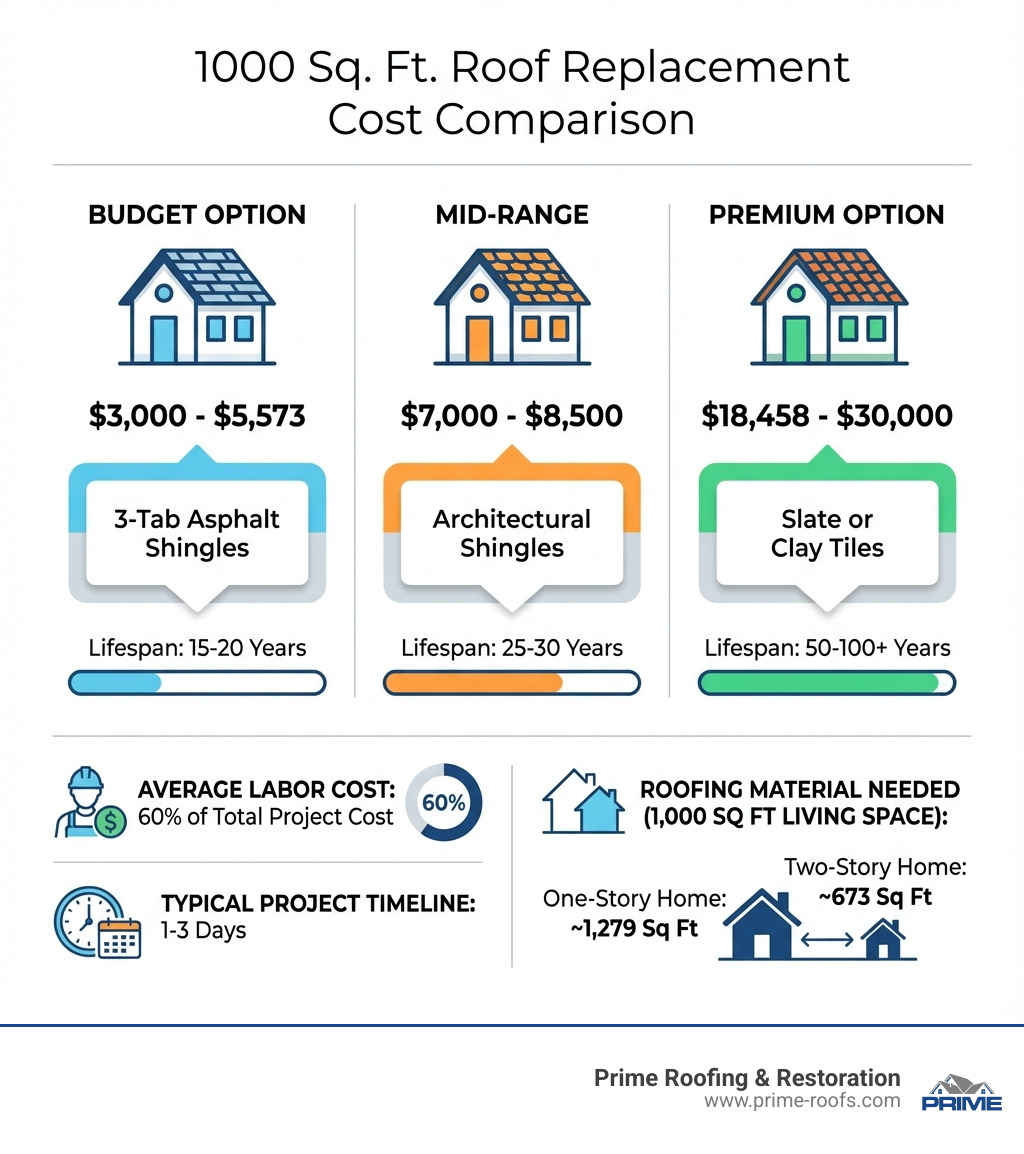
- Budget-Friendly Option: $3,000-$5,573. This range typically covers a complete replacement using standard 3-tab asphalt shingles, a reliable choice for homeowners prioritizing upfront affordability.
- Mid-Range (Most Popular): $7,000-$8,500. This price point usually involves architectural or dimensional shingles, which offer a superior lifespan and a more aesthetically pleasing, textured look.
- Premium & Luxury: $18,458-$30,000+. This category includes high-end materials like natural slate, classic clay tiles, or high-grade standing seam metal, chosen for their exceptional longevity and distinctive style.
- Typical Project Timeline: 1-3 days, depending on complexity and weather.
- Labor Cost: Generally accounts for 50-70% of the total project cost, covering skilled installation, safety protocols, and site cleanup.
It’s a common misconception that a 1,000 sq. ft. home requires exactly 1,000 sq. ft. of roofing. The actual roof surface area is almost always larger due to the roof’s pitch (steepness) and overhangs. For instance, a single-story 1,000 sq. ft. home might have a roof area of approximately 1,279 sq. ft. In contrast, a two-story home with the same living space has a smaller footprint, and thus a smaller roof area of around 673 sq. ft. This difference in required material dramatically impacts your final cost.
Material choice is the single biggest variable in the price. A basic asphalt shingle installation might cost around $5,573 for a 1,000 sq. ft. home. Opting for premium slate roofing on the same house could push the cost to $18,458 or significantly more. In between these two extremes lie popular and durable options like metal roofing, wood shakes, and clay tiles, each with its own unique set of benefits, maintenance needs, and expected lifespan.
Labor is the other major component, typically making up about 60% of your total roof replacement cost. Professional roofers charge by the “square” (a 10×10 foot area, or 100 square feet). Rates can range from $200-$350 per square for shingle installation to $400-$800 per square for more specialized materials like metal. Other necessary costs include the tear-off and disposal of your old roof ($665-$3,343), installation of new underlayment and flashing, securing permits, and addressing any unforeseen deck repairs.
Beyond the immediate expense, a professionally installed new roof is a powerful investment. It can increase your home’s resale value by 20-50% and provide anywhere from 15 to over 100 years of reliable protection, depending on your chosen material.
I’m Bill Spencer, owner of Prime Roofing & Restoration. For the past five years, I’ve had the privilege of guiding hundreds of homeowners in Central Alabama through the new roof 1000 sq ft house replacement process. My team and I specialize in helping property owners navigate complex insurance claims and select the perfect roofing solution that aligns with their budget, aesthetic goals, and long-term needs. If you have questions, don’t hesitate to call us at (205) 579-8316.
New roof 1000 sq ft house terminology:
Average Cost for a New Roof 1000 Sq Ft House
When you start budgeting for a new roof 1000 sq ft house, it’s helpful to begin with the averages to set a realistic baseline. Nationally, the typical homeowner spends about $7,251 for a 1,000 sq. ft. roof replacement. However, this is just a midpoint. The full spectrum of costs can stretch from as low as $4,500 to as high as $18,458 or more. For a basic, no-frills 3-tab shingle roof on a simple structure, you might see costs around $3,000. On the other end, a luxurious clay tile or slate roof, especially one requiring structural modifications to support its weight, could easily exceed $30,000. These figures are all-inclusive, covering both the high-quality materials we use and the expert labor required for a flawless installation.
The primary driver of this wide cost range is your choice of roofing material. This decision is followed closely by the architectural complexity of your home’s roof and your geographic location. For instance, architectural shingles represent a popular mid-range choice that strikes an excellent balance between cost, durability, and aesthetics, often landing around $7,000 for a 1,000 sq. ft. home in the Central Alabama area. For homeowners desiring a premium, long-lasting solution, materials like clay tiles or standing seam metal will significantly increase the initial investment but pay dividends in longevity and performance.
How Home Layout Affects Roof Size
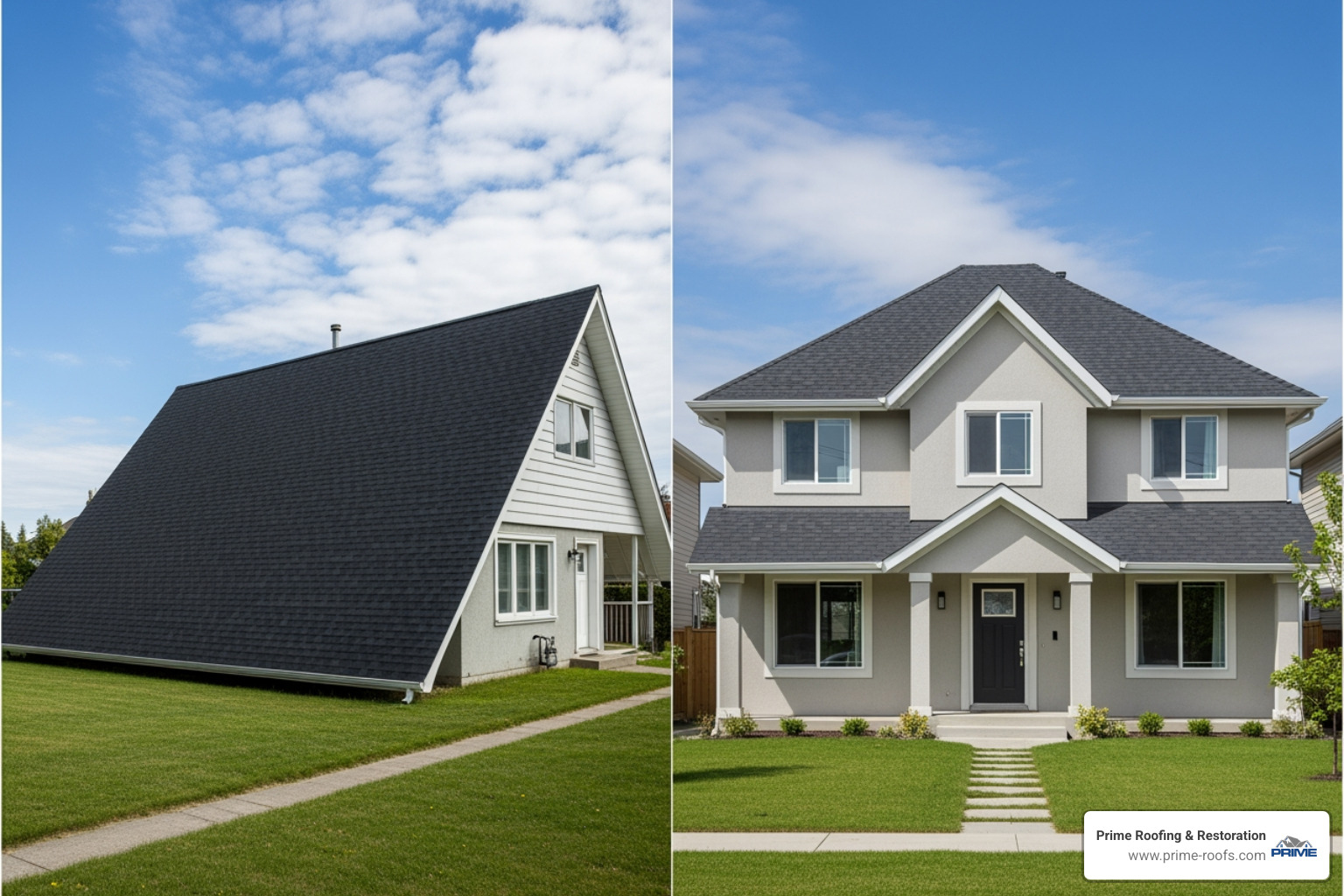
It’s a point that often surprises homeowners: a 1,000 sq. ft. house does not have a 1,000 sq. ft. roof. The actual roof surface area, which is what we use to calculate material and labor costs, is determined by more than just the home’s footprint. Factors like the roof’s pitch (its steepness) and the length of its eaves and overhangs significantly increase the total square footage.
Consider a typical 1,000 sq. ft. one-story ranch-style home. The roof must cover the entire living area and extend beyond it to create overhangs that protect the siding and foundation from rainwater. Combined with a standard pitch, the actual roof area we often measure is around 1,279 sq. ft. Now, contrast that with a 1,000 sq. ft. two-story colonial-style home. Because the living space is divided between two floors, the ground footprint is much smaller—roughly 500 sq. ft. Consequently, the roof needed to cover this smaller area is also much smaller, averaging only about 673 sq. ft. The difference is substantial, and it’s why a two-story home can sometimes be cheaper to re-roof than a one-story home of the exact same interior square footage.
Understanding this distinction is vital for your budget. A smaller roof area directly translates to needing less material and fewer labor hours, resulting in a lower overall cost. During our initial free roof inspection, we take precise measurements of your entire roof surface to provide a quote based on the actual work required, not just a rough estimate based on your home’s living space.
Cost Examples by Roof Type
To provide a more tangible understanding of how material choices affect your budget, let’s break down some specific cost scenarios for a new roof 1000 sq ft house:
- Low-Cost Example: 3-Tab Asphalt Shingles
If maximizing your budget is the top priority, a standard 3-tab asphalt shingle roof is the most economical choice. For a simple gable roof on a 1,000 sq. ft. home, we’ve seen projects start around $3,000. These shingles provide essential protection and meet all basic building codes. While their lifespan is shorter (typically 15-20 years) and they offer a flat, uniform appearance, they are a proven and affordable solution for many homeowners. - Mid-Range Example: Architectural Shingles
Architectural shingles are the go-to choice for the majority of homeowners in Central Alabama. They offer a fantastic blend of durability, aesthetic appeal, and long-term value. For a 1,000 sq. ft. home, perhaps with a slightly more complex cross-gable roof design, you can expect to invest around $7,000. These shingles feature a laminated, multi-layered construction that creates a rich, dimensional appearance mimicking wood shake. They are heavier and more wind-resistant than 3-tab shingles and typically come with a longer warranty and a lifespan of 25-30 years. - High-End Example: Clay Tiles
For those seeking a “lifetime” roof with unparalleled beauty and durability, premium materials like clay tiles are at the apex of the market. A clay tile roof is a statement piece, offering a classic, elegant look that can last 50-100 years or more. However, the investment is substantial. For a 1,000 sq. ft. home, the cost can easily climb to $30,000 or more. This higher price tag accounts for not only the expensive, handcrafted tiles themselves but also the specialized labor required for installation and, crucially, potential structural engineering and roof deck modifications needed to support the material’s significant weight.
Key Factors Influencing Your Roof Replacement Cost
While average costs provide a useful starting point, the final quote for your specific project will be influenced by a multitude of variables. At Prime Roofing & Restoration, we conduct a thorough evaluation to account for every detail. Understanding these factors will empower you to better interpret your estimate for a new roof 1000 sq ft house.
Here are the primary factors we analyze when preparing a detailed estimate:
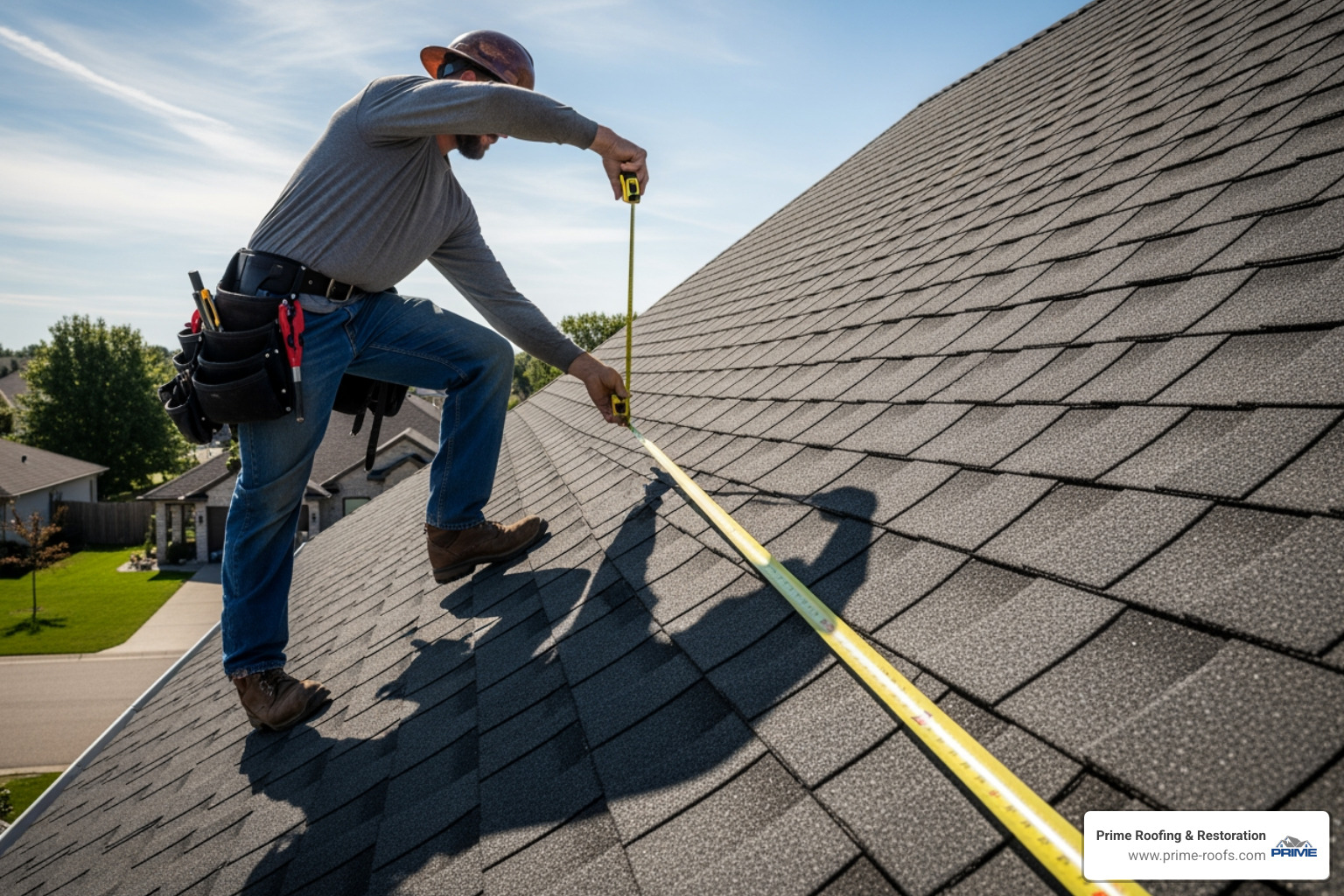
- Roof Pitch (Steepness): Pitch is expressed as a ratio of vertical rise over horizontal run (e.g., 6/12 means the roof rises 6 inches for every 12 inches of horizontal distance). A low-slope roof (below 4/12) is considered walkable and relatively straightforward. A steeper pitch (above 8/12) is not walkable and requires our crew to use specialized safety equipment like harnesses and roof jacks. This slows down the installation process, increasing labor hours and overall cost.
- Roof Complexity: A simple, straight-run gable roof is the easiest and most affordable to replace. As complexity increases, so does the cost. Features like dormers, valleys, hips, skylights, chimneys, and multiple intersecting rooflines require more precise cuts, additional flashing materials, and significantly more labor time to ensure every angle is perfectly sealed against water intrusion.
- Labor Rates: Labor is a significant portion of any roofing project, often up to 60% of the total cost. While it can be tempting to choose the cheapest bid, skilled labor is an investment in quality. Our competitive wages for experienced roofing professionals in Alabaster, AL, reflect their training, certifications, and the comprehensive insurance (liability and worker’s compensation) that protects you as the homeowner.
- Material Quality: As detailed previously, the difference between basic asphalt and premium slate can change the final price by tens of thousands of dollars. Your choice will be the single largest determinant of your project’s cost.
- Geographic Location & Building Codes: Your location impacts costs in several ways. Material transportation costs can vary. More importantly, local building codes dictate specific requirements. In Central Alabama, we must adhere to codes for wind resistance. For our clients in coastal areas like Orange Beach or Gulf Shores, we often recommend and install roofs to the rigorous FORTIFIED Home™ standard, which involves specific nailing patterns, sealed roof decks, and other enhancements to withstand hurricane-force winds. These superior installation methods add to the cost but can also lead to significant insurance discounts.
- Removal of Old Roofing (Tear-Off): In most cases, we must completely remove the old roofing material down to the deck. This involves labor for the tear-off and fees for proper disposal. If you have multiple layers of old shingles, this process takes longer and costs more.
- Permits: A building permit is a legal requirement for a roof replacement. It ensures the work is done to code and has been inspected by a local official. Permit costs typically range from $100 to $500, depending on your municipality.
Material Costs: From Asphalt to Slate
The roofing material you select is a long-term decision that balances upfront cost, desired aesthetic, and expected performance. Here’s a more detailed comparison for your new roof 1000 sq ft house:
| Material Type | Estimated Cost for 1000 sq. ft. Roof | Lifespan (Years) | Pros & Cons |
|---|---|---|---|
| Asphalt Shingles | $5,573 | 15-30 | Pros: Most affordable option, wide variety of colors, easy to install and repair. Architectural versions offer great value. Cons: Shorter lifespan than other materials, can be damaged by hail and high winds, less energy efficient. |
| Metal (Standing Seam) | $15,000 | 40-70 | Pros: Exceptional durability and longevity, highly resistant to wind and fire, energy efficient (reflects heat), low maintenance. Cons: Higher upfront cost, requires specialized installation, can be noisy during rain without proper insulation. |
| Wood Shakes | $10,230 | 20-30 | Pros: Beautiful, natural aesthetic that ages gracefully; good insulation properties. Cons: Higher cost than asphalt, requires regular maintenance (cleaning, treatments), can be a fire hazard unless treated with fire retardants. |
| Composite/Synthetic | $12,500 | 40-50 | Pros: Mimics the look of slate or wood shake at a lower cost and weight; highly durable and low maintenance; often made from recycled materials. Cons: Higher cost than asphalt; newer technology with less long-term history than traditional materials. |
| Clay/Concrete Tile | $18,000 | 50-100 | Pros: Extremely durable and long-lasting, excellent fire resistance, low maintenance, superior insulation. Cons: Very heavy (may require structural reinforcement), high upfront cost, tiles can be brittle and crack if walked on improperly. |
| Slate | $18,458+ | 75-150+ | Pros: The most durable and longest-lasting roofing material available; unmatched beauty and elegance; fireproof; significantly increases home value. Cons: Highest upfront cost, extremely heavy (requires structural assessment), brittle, requires highly specialized installers. |
| Total Cost for a New Roof 1000 Sq. Ft. House | $4,500 – $42,500 | 15 – 150+ | This wide range reflects the vast differences in material choice, home complexity, and labor requirements. |
Other Potential Costs to Consider
- Tear-off and Disposal: This is the labor-intensive process of stripping all old materials from your roof. The cost, ranging from $665 to $3,343 for a 1,000 sq. ft. roof, depends on the material being removed (heavy tile is more costly than light shingles) and the number of existing layers.
- Underlayment: This is a critical moisture barrier installed between the roof deck and your new shingles. We use high-quality synthetic underlayment, which costs around $1.50-$2.10 per square foot and offers superior water resistance compared to old-fashioned felt paper.
- Flashing: Flashing consists of metal pieces that direct water away from vulnerable areas like chimneys, skylights, vents, and valleys. Proper installation is key to preventing leaks. Replacing all flashing typically costs $9-$11 per linear foot.
- Roof Decking Repair: Once the old roof is off, we inspect the underlying wood deck (plywood or OSB). Any sections that are soft, spongy, or show signs of water damage (rot) must be replaced to provide a solid foundation for the new roof. Decking repair costs can range from $2.20-$3.00 per square foot.
- Guttering: While not technically part of the roof, replacing gutters at the same time is often practical and cost-effective. It ensures your entire water management system is new and functioning optimally. New gutter installation can cost anywhere from $3-$50 per linear foot, depending on the material (vinyl, aluminum, copper) and style.
The Roof Replacement Process and Timeline
Once you’ve selected your materials and have a clear understanding of the costs, it’s time to prepare for the installation. Knowing the step-by-step process and expected timeline for your new roof 1000 sq ft house replacement can help you plan accordingly and minimize any disruption to your daily life.
7 Signs Your 1000 Sq. Ft. Roof Needs Replacement
Before you even call for an estimate for roof repair or replacement, how do you know it’s time? Your roof provides clear signals when it’s nearing the end of its life. Here are seven common signs we look for during inspections that indicate your 1,000 sq. ft. roof needs professional attention:
- Curling, Cracking, or Cupping Shingles: As asphalt shingles age, they lose their flexibility. Sun exposure causes them to curl at the edges, develop cracks, or cup in the middle. These are not just cosmetic issues; they are signs that the shingles are brittle and can no longer effectively seal against wind and rain.
- Missing Shingles: A few missing shingles after a strong storm in Central Alabama might seem like a simple repair, but it can indicate a larger problem. If the adhesive strips are failing on a widespread basis, it’s a sign that the entire roof is vulnerable to wind uplift.
- Excessive Granules in Gutters: The sandpaper-like granules on asphalt shingles are their primary defense against UV radiation. When you see large amounts of these granules washing into your gutters, it means your shingles are “balding” and becoming weak, accelerating their deterioration.
- Water Stains on Ceilings or Walls: This is the most obvious internal sign of a roof leak. Any discoloration, peeling paint, or damp spots on your interior ceilings, especially in corners or around fixtures, points to a failure in the roofing system above.
- Sagging Roof Deck: If you look at your roofline from the street and notice a distinct dip, bow, or sag, this is a serious red flag. It often indicates a structural problem with the roof decking or the rafters beneath, usually caused by prolonged moisture exposure and rot. This requires immediate attention.
- Roof Age Exceeds 20 Years: Most standard asphalt shingle roofs have a lifespan of 15-25 years. If your roof is in or beyond this age range, it’s wise to start planning for a replacement, even if there are no obvious major issues. Proactive replacement is far less stressful and costly than dealing with a catastrophic failure.
- Frequent and Recurring Leaks: If you find yourself calling a roofer for repairs every time it rains, it’s a classic sign that your roof’s integrity is compromised. Patching an old, failing roof is a temporary fix. A full replacement is the only way to solve the underlying problem and save money on constant repair bills in the long run.
What to Expect During Installation: A Step-by-Step Guide
Replacing a roof is a major construction project, but our experienced crews at Prime Roofing & Restoration follow a streamlined process to ensure efficiency and quality.
- Typical Duration: For an average 1,000 sq. ft. home, a standard asphalt shingle roof replacement can often be completed in a single day. More complex roofs or those involving materials like tile or metal might take 2 to 5 days, always subject to weather conditions.
Here is our typical workflow:
- Site Preparation: Our first step is to protect your property. We lay down tarps to cover landscaping, siding, and driveways to catch debris. We also arrange for a dumpster to be placed for the old roofing materials.
- Tear-Off: The crew will systematically strip all old shingles, underlayment, and flashing from the roof, taking it down to the bare wood decking.
- Deck Inspection and Repair: This is a critical step. We thoroughly inspect the entire roof deck for any soft, rotted, or damaged wood. Any compromised sections are removed and replaced with new sheathing to ensure a solid, secure foundation.
- Ice & Water Shield / Underlayment Installation: We install a specialized ice and water shield in the most vulnerable areas (eaves, valleys, around penetrations). Then, we cover the entire remaining deck with a high-quality synthetic underlayment, which acts as a secondary moisture barrier.
- New Material Installation: This is where your new roof takes shape. We install new flashing, drip edges, and then begin laying the new shingles, tiles, or metal panels, starting from the bottom and working our way up. We follow precise manufacturer specifications for nailing and overlap to ensure your warranty remains valid.
- Site Cleanup: Once the roof is complete, we conduct a thorough cleanup. We clear all debris from your roof and gutters. We then use magnetic rollers to sweep your yard, driveway, and garden beds to pick up any stray nails.
- Final Inspection: A project manager will perform a final walkthrough of the roof and the property to ensure the installation meets our high standards and that your property is left clean.
- Best Seasons for Replacement: Late spring and early fall offer the best conditions for roof replacement in Central Alabama. The moderate temperatures are ideal for allowing asphalt shingles to properly seal and for our crews to work safely and efficiently. We can and do work year-round, but these seasons minimize the risk of weather delays.
- Weather Delays: Roofing is a weather-dependent trade. Rain, high winds, or extreme heat can create unsafe working conditions and compromise the quality of the installation. We will not work if conditions are not right. We appreciate your patience and understanding if we need to pause or reschedule due to Mother Nature.
Finding qualified roofing contractors in Alabaster, AL is the most important step in ensuring a smooth, successful project. Our team prides itself on clear communication and professional project management from the first call to the final inspection.
Maximizing the Value of Your New Roof
A new roof 1000 sq ft house project should be viewed as more than just a necessary, albeit large, expense. It is a strategic investment in your property that yields significant returns in home value, curb appeal, and long-term peace of mind.
How a New Roof Boosts Your Home’s Value
Your roof is one of the most prominent features of your home’s exterior. A new, well-installed roof acts as a crown, enhancing its overall appearance and signaling to the world—and potential buyers—that the home is well-maintained and structurally sound.
- Return on Investment (ROI): A new roof is one of the most valuable home improvement projects you can undertake. According to Remodeling Magazine’s respected Cost vs. Value Report, a new asphalt shingle roof can recoup over 60% of its cost at resale. In some cases, especially when replacing a visibly damaged or deteriorated roof, the perceived value increase can be even higher, approaching a 1-to-1 return.
- Drastically Improved Curb Appeal: A faded, stained, or moss-covered roof can make an entire property look tired and neglected. A fresh, modern roof—whether it’s the rich dimension of architectural shingles or the sleek lines of standing seam metal—instantly revitalizes your home’s exterior, making it more attractive and welcoming.
- Major Buyer Attraction: In the real estate market, a new roof is a powerful selling point. It provides prospective buyers with critical peace of mind, assuring them they won’t face a major capital expense for decades to come. This can often lead to faster sales and stronger offers, as it removes a significant point of negotiation and uncertainty.
- Essential Structural Protection: The primary function of your roof is to protect the structural integrity of your home. A new, properly installed roofing system provides superior defense against water intrusion, which can lead to devastating issues like wood rot, mold growth, and compromised insulation. This protection is fundamental to preserving the value of your entire home.
- Energy Efficiency and Cost Savings: Modern roofing materials offer significant improvements in energy efficiency. “Cool roofs,” which feature lighter colors or special reflective granules, can reflect a high percentage of solar radiation. In the hot, sunny climate of Alabama, this reduces heat transfer into your attic and living spaces. According to the U.S. Department of Energy, this can lower roof surface temperatures by up to 50°F, leading to tangible savings on your air conditioning bills throughout the summer.
For more insights into the financial aspects from a homeowner’s perspective, you can explore general roofing costs from broader financial resources.
Calculating Shingle Needs for a new roof 1000 sq ft house
One of the most common questions we receive from homeowners trying to budget is, “How many shingles will I actually need?” The roofing industry uses a standard unit of measurement called a “square” to simplify material calculations.
- Understanding Roofing Squares: One roofing square is defined as an area of 100 square feet. Therefore, for a roof that measures exactly 1,000 square feet, you would need 10 squares of roofing material.
- Shingles Per Square: Most manufacturers of asphalt shingles package their products in bundles. Typically, it takes 3 bundles of shingles to cover one square (100 sq. ft.). So, for our 10-square roof, the base calculation would be 10 squares x 3 bundles/square = 30 bundles of shingles.
- The Crucial Waste Factor: No roofing project uses materials with 100% efficiency. It is standard professional practice to order an additional 10-15% of material to account for waste. This waste comes from cutting shingles to fit valleys, hips, and the edges of the roof. A simple gable roof might only need a 10% waste factor, while a complex roof with many dormers and angles might require 15% or more. This ensures the crew does not run out of material mid-project, which would cause costly delays.
- Beyond the Field Shingles: A professional calculation also includes necessary accessory shingles that homeowners often forget, such as specialized starter strip shingles for the eaves and hip and ridge cap shingles to cover the peaks and angles of the roof.
- Using Online Calculators: While our team performs precise, on-site measurements, homeowners can get a rough idea of their roof’s area using an online roof pitch calculator. By inputting your home’s dimensions and estimated pitch, you can see how a steeper pitch increases the total surface area and, consequently, the amount of material needed.
Frequently Asked Questions about 1000 Sq. Ft. Roofs
We understand that a roof replacement is a major decision, and you likely have many questions. Here are answers to some of the most common inquiries we receive from homeowners.
How long does it take to replace a 1,000 sq. ft. roof?
A typical roof replacement on a 1,000-square-foot home is usually completed in 1 to 3 days. A simple, single-story home with asphalt shingles can often be done in one full day. Factors that can extend the timeline include a complex roof design with many angles, the installation of more labor-intensive materials like tile or slate, the need for significant decking repair, or weather delays.
Can I stay in my home during the roof replacement?
Yes, in approximately 90% of cases, homeowners can comfortably and safely stay in their homes during the replacement process. However, it’s important to be prepared for a construction environment. There will be significant noise from hammering and equipment, and some dust is unavoidable. We recommend keeping windows closed, securing any fragile items on walls, and protecting sensitive electronics or furniture in the attic space.
How many bundles of shingles are needed for a 1,000 sq. ft. roof?
A 1,000 sq. ft. roof is equivalent to 10 roofing “squares.” Since most manufacturers package 3 bundles of shingles per square, you will need a baseline of 30 bundles. However, a professional roofer will always order 10-15% extra (3-5 additional bundles) to account for cuts, waste, and starter/ridge shingles. So, the final order will likely be between 33 and 35 bundles.
What’s the difference between a material warranty and a workmanship warranty?
This is a critical distinction. A material warranty is provided by the shingle manufacturer (e.g., GAF, CertainTeed) and covers defects in the roofing materials themselves. These can last from 20 years to a “lifetime.” A workmanship warranty is provided by us, the roofing contractor. It covers any errors in the installation process. At Prime Roofing & Restoration, we stand by our work with a robust workmanship warranty because we know that most roof failures are due to improper installation, not faulty materials.
Will my homeowners insurance pay for a new roof if it’s just old?
Generally, no. Homeowners insurance is designed to cover sudden, accidental, or “act of God” events, such as damage from hail, wind, or a fallen tree. It is not a maintenance policy. A roof that needs replacement simply due to its age and normal wear and tear is considered a homeowner’s maintenance responsibility. However, if a storm causes significant damage to your aging roof, your insurance may cover the replacement. We specialize in helping homeowners navigate these insurance claims.
What is a FORTIFIED Roof™ and should I consider it in Alabama?
A FORTIFIED Roof is a specific method of construction designed by the Insurance Institute for Business & Home Safety (IBHS) to make roofs stronger against high winds, hail, and hurricanes. It involves using specific materials and installation techniques, like a sealed roof deck and enhanced nailing patterns. While beneficial anywhere, it is especially valuable in coastal Alabama (Gulf Shores, Orange Beach) and tornado-prone areas. A certified FORTIFIED Roof can often make you eligible for significant discounts on your homeowner’s insurance premiums.
Your Trusted Local Roofer in Central Alabama
When it comes to protecting your home, you need a contractor you can trust. Prime Roofing & Restoration is a locally owned and operated company dedicated to serving our neighbors throughout Central Alabama. We combine the quality and resources of a large company with the personal touch and accountability of a local business.
Our team lives and works in the communities we serve. We understand the unique challenges our weather presents, from the intense summer sun and humidity to the threat of severe thunderstorms and tornadoes. We are your partners in protecting your most valuable asset.
Contact Prime Roofing & Restoration Today
- Name: Prime Roofing & Restoration
- Address: 100 Colonial Promenade Pkwy, Suite 300, Alabaster, AL 35007
- Phone: (205) 579-8316
Our Service Area
We are proud to provide expert roofing services to homeowners and businesses in Alabaster, Hoover, Birmingham, Pelham, Chelsea, Vestavia Hills, and the surrounding communities. We also have dedicated teams serving the coastal regions, including Orange Beach and Gulf Shores, specializing in FORTIFIED roofing solutions.
Find Us:
While we come to you for a free, no-obligation inspection, our main office is conveniently located in Alabaster. We are committed to being an accessible and reliable presence in the community.
(A map embed showing the location at 100 Colonial Promenade Pkwy in Alabaster, AL, with a service area radius covering the greater Birmingham metro and a pin on the Gulf Coast would be displayed here.)
Get a Professional Estimate for Your New Roof
Navigating the costs, materials, and complexities of a new roof 1000 sq ft house replacement can feel like a monumental task, but you don’t have to do it alone. We’ve explored the average costs, the key factors that drive pricing from roof pitch to local codes, the wide array of material options from budget-friendly asphalt to lifetime slate, and the step-by-step process of a professional installation. The single most important takeaway is that a detailed, on-site inspection and a professional quote are absolutely essential for accurate budgeting and planning. A generic online calculator can’t see the rotted decking under your shingles or the complex flashing your chimney requires.
At Prime Roofing & Restoration, we are deeply familiar with the needs of homeowners in Alabaster, Hoover, Orange Beach, and across Central Alabama. We provide true end-to-end solutions designed to give you peace of mind. Our process begins with a thorough free roof inspection and a clear, itemized estimate. We guide you through material selection, explaining the pros and cons of each option for your specific home and budget. Our certified crews handle the installation with expertise, and we are always ready to provide documentation and assistance for insurance claims when storm damage is involved.
Our business is built on a commitment to lasting relationships, using only high-quality materials, and providing reliable 24/7 service with licensed experts. Your home is your sanctuary, and our mission is to protect it and your family with a roof that is built to last.
Don’t leave your home’s safety to chance. For a detailed, accurate, and transparent quote for your home, contact our licensed experts today at (205) 579-8316 or learn more about our comprehensive roof replacement services. We are here to ensure your new roof is a sound, valuable, and lasting investment.