
Storm Damage Roofing Services: The Critical First Step After Severe Weather
Storm damage roofing services are the fastest, most reliable way to protect your home and wallet after severe weather. In storm‑prone regions like Central Alabama and the Gulf Coast, homeowners who contact a qualified roofing company within 24–48 hours of impact reduce their risk of interior water damage by more than 60%, based on aggregated claims data from Gulf Coast restoration projects. When you’re evaluating professional roof storm repair services, starting with a trusted, full‑service contractor like Prime Roofing & Restoration ensures you get rapid emergency response, expert documentation, and code‑compliant repairs. If you need immediate assistance, call us at (205) 259-7663.
Storm damage roofing services are specialized professional solutions that assess, repair, and restore roofs after severe weather events like hail, wind, and heavy rain. These services typically include emergency tarping, comprehensive damage inspection, insurance claim assistance, and complete roof repair or replacement using storm-resistant materials. In Alabama, we face a unique combination of weather threats, from the high-velocity winds of hurricanes along the coast to the devastating tornadoes and large hail common in “Dixie Alley.”
What Storm Damage Roofing Services Include:
- Emergency Response: 24/7 tarping and temporary repairs to prevent further water intrusion during active storm seasons.
- Professional Inspection: Thorough assessment of wind, hail, and water damage by licensed experts who know what insurance adjusters look for.
- Insurance Support: Documentation, estimates, and adjuster meetings to maximize your claim and ensure you aren’t paying out-of-pocket for covered damage.
- Complete Repairs: From missing shingles to full roof replacement using quality materials like GAF or Owens Corning.
- Preventative Guidance: Recommendations to fortify your roof against future storms, including the Fortified Home™ standard.
When severe weather strikes Central Alabama, the damage to your roof isn’t always obvious from the ground. A storm that seemed minor can hide significant problems—cracked shingles, compromised flashing, or small punctures that will leak during the next rain. According to industry data from the Insurance Information Institute, insured losses from severe weather in the U.S. exceeded $50 billion in 2021, with wind and hail damage to roofs accounting for a substantial portion. More alarming: a small leak left unaddressed can cause thousands of dollars in additional damage to insulation, drywall, and structural components within just weeks.
The good news? Understanding the storm damage repair process and knowing when to call professionals can save you significant money, stress, and time. Whether you’re dealing with missing shingles after high winds or worried about hail damage you can’t quite see, this guide walks you through every step—from spotting damage to navigating insurance claims to choosing the right materials for future protection. At Prime Roofing & Restoration, we are dedicated to helping you navigate the recovery process with transparency and speed.
I’m Bill Spencer, owner of Prime Roofing & Restoration, and over the past five years, I’ve helped hundreds of Gulf Coast homeowners steer the complexities of storm damage roofing services, from emergency tarping to full insurance-backed replacements. My hands-on experience with Alabama’s unique weather patterns has taught me that the difference between a quick recovery and a prolonged nightmare often comes down to acting fast and choosing the right partner. We understand the local building codes in Alabaster, Birmingham, and Orange Beach, ensuring your roof isn’t just repaired, but improved.
Handy Storm damage roofing services terms:
The Aftermath: A Homeowner’s Guide to Spotting Roof Storm Damage
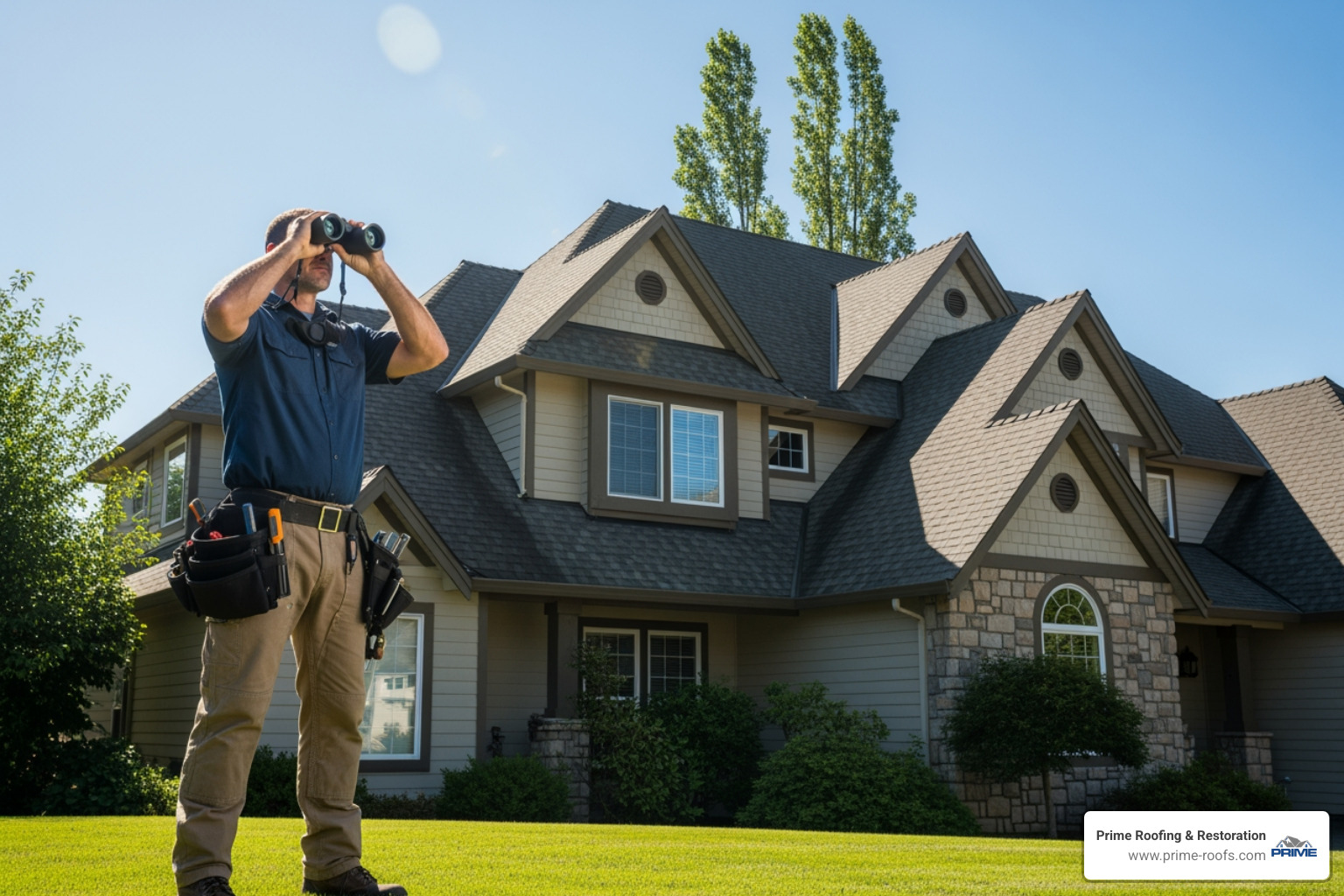
After a storm, it’s crucial to assess for damage, but your safety is paramount. Always perform your initial inspection from the ground using binoculars if possible. Here are the common signs of damage you can look for to determine if you need professional storm damage roofing services.
Wind Damage: More Than Just Missing Shingles
High winds don’t just make noise; they can lift, curl, or tear shingles completely off your roof. Look for missing shingles in your yard or creases on the shingles still attached. We’ve seen wind speeds in Alabama storms commonly exceed 60 mph, which is more than enough to wreak havoc.
- Shingle Uplift: Strong winds create a vacuum effect that lifts shingles. Even if they lay back down, the seal is broken, allowing rain to blow underneath.
- Creased Shingles: When a shingle is folded back by wind, it creates a permanent crease where granules are lost. This is a structural failure of the shingle.
- Edge Damage: Winds often catch the edges of the roof, peeling back the starter strips or flashing.
We often find that straight-line winds can cause widespread devastation across neighborhoods. Learn more about the signs of wind damage to roof shingles.
Hail Damage: The Silent Killer of Roofs
Hail is a leading cause of roof damage, and it’s a frequent visitor to Alabama. In 2018, Cullman, AL experienced record hailstones measuring 5.38 inches – that’s larger than a baseball! Check for dents on metal components like gutters, flashing, and vents. On asphalt shingles, hail can create “bruises” or dark spots where the protective granules have been knocked off.
These impacts can weaken the fiberglass membrane, leading to long-term performance problems. It’s not just the big hail that causes trouble; smaller hailstones (pea or marble-sized) can create subtle dents and cracks that compromise the roof over time, especially older roofs. According to the National Oceanic and Atmospheric Administration (NOAA), hail causes over $1 billion in damage to crops and property annually. Find more on how to spot roof hail damage.
Debris and Water Damage: Obvious and Hidden Threats
Fallen tree limbs can cause obvious punctures and structural harm. However, the weight of debris can also stress the roof deck. Less obvious is the damage from water. Look for water stains on your interior ceilings or in your attic, which are tell-tale signs of a leak that requires a professional water damage inspection.
Heavy rains, often accompanying hail and wind, can exploit even the smallest vulnerabilities, leading to water seepage. This moisture can quickly lead to mold growth and weaken structural components, turning a minor issue into a major headache. We always advise homeowners to check their attic carefully for leaks or water damage after any significant storm. If you see daylight through your roof boards or damp insulation, call us immediately at (205) 259-7663.
Your Immediate 5-Step Action Plan After a Storm
The moments after a storm are critical. Acting quickly can prevent a minor issue from becoming a catastrophic and expensive problem. Promptly addressing a small leak can prevent thousands of dollars in damage to insulation, drywall, and structural components within weeks. Here is how to handle the situation like a pro.
-
Step 1: Prioritize Safety: Your well-being is our top concern. After the storm, ensure your family’s safety first. Once it’s safe to venture outside, assess the exterior of your home from the ground. Look for downed power lines, broken glass, or other immediate hazards. Never, under any circumstances, go onto the roof yourself. The risks of falling or causing further damage to a compromised structure are simply too high. If you suspect structural damage, evacuate the home until a professional can inspect it.
-
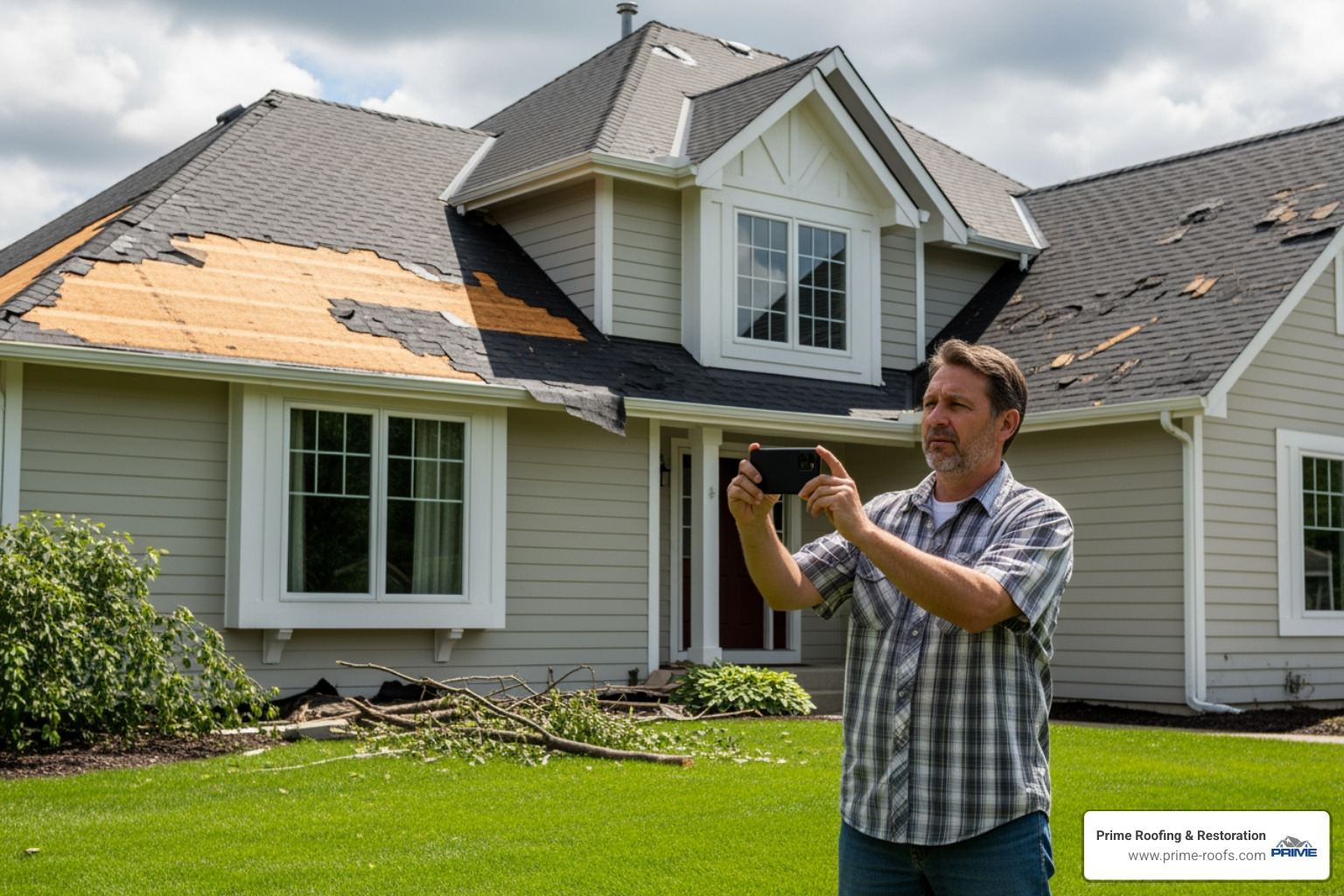
Step 2: Document Everything: This step is crucial for your insurance claim. Take clear photos and videos of all visible damage from multiple angles. Capture wide shots of your home and close-ups of specific damaged areas, such as missing shingles, dented gutters, or water stains. Don’t forget to photograph any debris in your yard, like hailstones next to a ruler or fallen branches. This detailed documentation is vital for your insurance claim and helps us provide an accurate assessment. Keep a log of the date and time the storm occurred.
-
Step 3: Mitigate Further Damage: If you find active leaks or gaping holes in your roof, immediate action is necessary to prevent further water intrusion. Call for emergency tarping services right away. This temporary fix protects your home from additional rain, wind, and debris, safeguarding your interior from mold and structural damage while you await permanent repairs. We offer 24/7 emergency services because we understand that storms don’t keep office hours. Most insurance policies actually require you to take reasonable steps to prevent further damage.
-
Step 4: Call a Professional Roofer: Once the immediate danger is past and you’ve documented the damage, contact a reputable local roofing contractor for a thorough free roof inspection. Beware of “storm chasers”—out-of-state contractors who flood an area after a storm. They often provide sub-par work and disappear before warranties can be honored. A local professional inspection will provide you with a detailed report, which is essential for your insurance claim. Homes with older roofs (over 20 years old) are significantly more vulnerable to storm damage, making professional inspection even more critical.
-
Step 5: Notify Your Insurance Provider: With a professional assessment in hand, contact your insurance company to start the claims process. Many policies have strict deadlines (often 1 year, but sometimes less) for filing claims, so prompt notification is key. Provide them with your documentation and the detailed report from your roofing contractor. For more tips, see GAF’s guide on what to do after a storm damages your roof. Your roofer can often assist you in communicating with your insurance provider to ensure the scope of work is accurate. Reach out to us at (205) 259-7663 for assistance with this process.
The Professional Advantage: Why Expert Storm Damage Roofing Services are Essential
While a DIY fix might seem tempting for a missing shingle, storm damage repair is a job for professionals. Attempting repairs yourself can be dangerous, lead to improper fixes that cause more issues, and may even void your roof’s warranty. The average cost of roof repair after storm damage can range from $300 to $1,000 for minor repairs, but can soar to $5,000 to $15,000 or more for major repairs or full roof replacement. This isn’t a job you want to gamble on.
The Dangers of DIY vs. The Safety of a Pro
We’ve seen it all, from homeowners slipping off ladders to botched repairs that exacerbate water damage. Here’s why trusting professionals for storm damage roofing services is always the smarter choice:
- Safety Risks: Roof work is inherently dangerous, especially on a compromised roof. Falls from roofs are a leading cause of construction-related fatalities. Our licensed experts are trained in OSHA safety protocols and have the proper equipment to work safely.
- Improper Repairs: Without specialized knowledge, you might fix the visible damage but miss underlying issues like saturated decking or compromised underlayment. Incorrect installation can lead to leaks, premature deterioration, and even structural problems down the line. We ensure every repair meets industry standards and local Alabama building codes.
- Voiding Warranties: Many roofing material warranties require installation and repair by certified professionals. DIY work can, and often does, void these valuable protections, leaving you responsible for future costs.
- Code Violations: Local building codes in cities like Alabaster and Birmingham dictate specific requirements for roof repairs and replacements, including ice and water shield placement and shingle fastening patterns. Professionals are familiar with these codes, ensuring your repairs are compliant and safe.
Long-Term Consequences of Neglecting Storm Damage
Ignoring storm damage is like ignoring a ticking time bomb. What seems like a small issue today can rapidly escalate into a major, costly problem. Promptly addressing storm damage can prevent further deterioration, with water intrusion from a small leak potentially causing thousands of dollars in additional damage to insulation, drywall, and structural components within weeks.
- Mold Growth: Water intrusion creates a perfect breeding ground for mold, which can spread rapidly through your home, causing health issues and requiring expensive remediation. According to FEMA, mold can begin to grow within 24-48 hours of water exposure.
- Structural Rot: Persistent moisture can cause wooden components of your roof structure, attic, and walls to rot, compromising the structural integrity of your entire home. For severe cases, this might require extensive rotted wood roof repair.
- Damaged Insulation: Wet insulation loses its R-value (effectiveness), leading to higher energy bills and creating an environment ripe for mold.
- Reduced Home Value: A compromised roof or signs of water damage significantly diminish your home’s curb appeal and market value, making it harder to sell and potentially failing a home inspection.
The Value of Professional Storm Damage Roofing Services
Hiring a professional for storm damage roofing services is an investment in your home’s longevity and your peace of mind. At Prime Roofing & Restoration, we provide:
- Expertise: Our teams have years of experience identifying all types of storm damage, even the subtle ones, ensuring a comprehensive repair plan.
- Quality Materials: We use professional-grade, durable, and dependable products designed to withstand Alabama’s severe weather, offering best protection against future storms.
- Safety Protocols: We adhere to strict safety standards, protecting our crew and your property throughout the repair process.
- Warranties: We provide warranties on both materials and labor, giving you confidence in the quality and durability of our work.
- Peace of Mind: Knowing your roof is repaired correctly by licensed experts allows you to rest easy, knowing your home and family are protected. This is why we offer comprehensive Services: Storm Damage Roof Repair.
Decoding the Insurance Maze: How a Roofer Simplifies Your Claim
Navigating an insurance claim can be one of the most stressful parts of storm recovery. A qualified roofing contractor is your most valuable ally in this process, ensuring you receive fair compensation to restore your home properly. We understand that filing an insurance claim can be frustrating if you’re not familiar with the process, which is why we guide you every step of the way.
The Roofer’s Role in Your Claim
Our role extends far beyond just fixing your roof. We act as your advocate, simplifying the often-complex insurance process.
- Your Advocate: We represent your best interests, ensuring all damage is accurately assessed and documented for your insurance company. We speak their language, so you don’t have to.
- Detailed Documentation: We provide thorough reports, including photos and detailed descriptions of all storm-related damage. This evidence is crucial for proving your claim and ensuring fair compensation. We’ll highlight the damage for the insurance adjuster, making sure nothing is missed.
- Professional Estimates: We provide comprehensive, in-depth estimates for storm damage repairs using industry-standard software like Xactimate, ensuring all costs are accounted for and align with what insurers expect.
- Meeting the Adjuster: We offer to meet with your insurance adjuster on-site. This ensures that all damage is properly identified and agreed upon, preventing discrepancies that could delay or reduce your claim. We can point out “collateral damage” to gutters, siding, and fences that adjusters might overlook.
- Ensuring All Damage is Covered: We work to ensure that all legitimate storm damage, both visible and hidden, is included in your claim, maximizing your coverage. For a complete understanding, refer to our Insurance Claims Assistance Complete Guide.
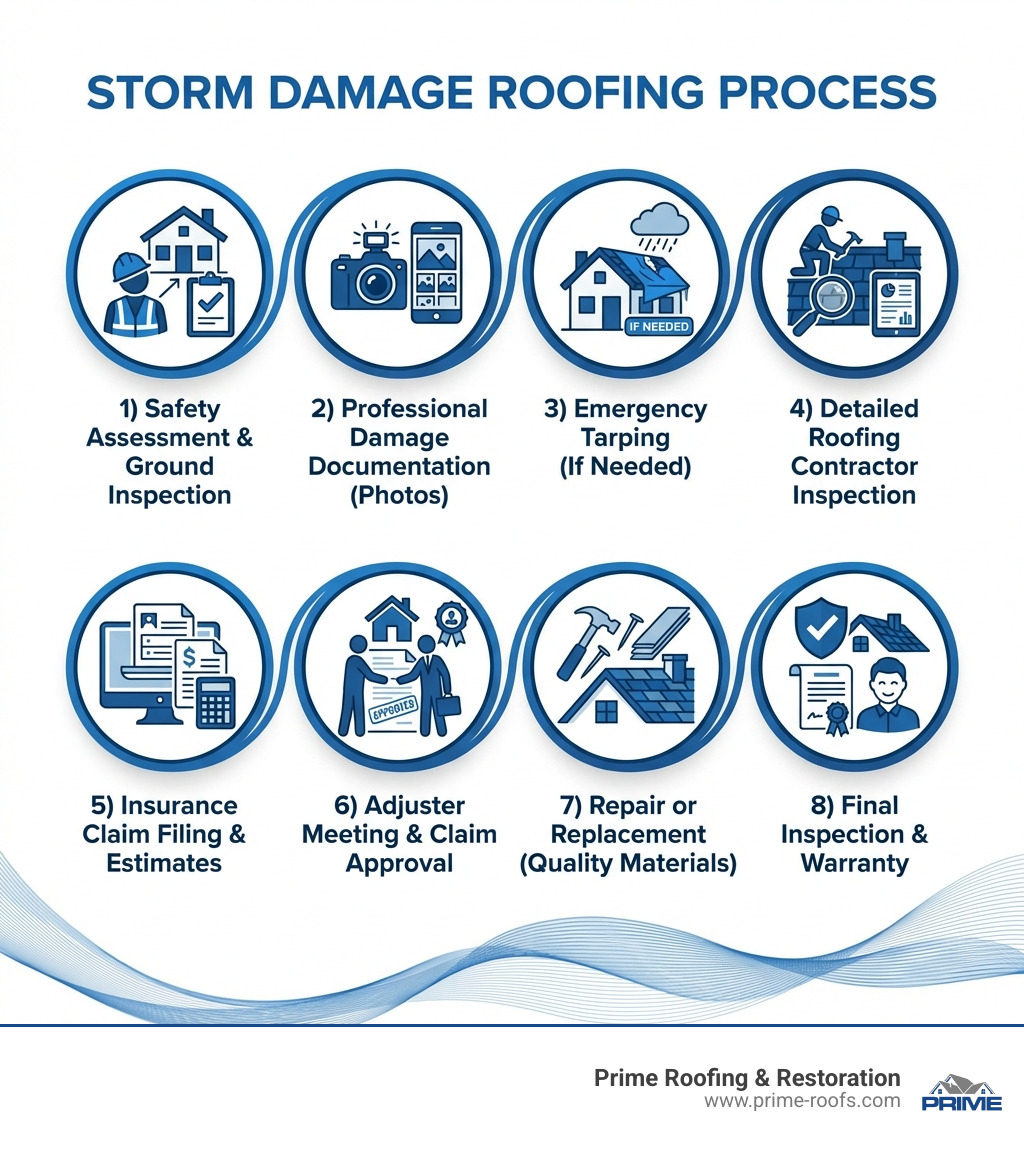
The Typical Storm Damage Repair & Insurance Process
We streamline the entire process, from the initial assessment to the final nail, making your recovery as smooth as possible. Here’s how it typically works:
- Professional Inspection & Damage Documentation: After your initial ground-level check, we conduct a thorough, no-obligation inspection of your roof and property. We carefully document all storm damage with photos and detailed notes, creating a comprehensive report for you and your insurer.
- Filing the Insurance Claim: Once our inspection confirms storm damage, we advise you to contact your insurance provider. We can help you understand what information they’ll need and how to best present your findings.
- On-Site Meeting with the Insurance Adjuster: This is a critical step. We will schedule a time to meet your insurance adjuster at your home. Our expert will walk the roof with the adjuster, pointing out all damages and ensuring nothing is overlooked. This direct communication helps ensure all damage is accounted for in their assessment.
- Claim Approval & Reviewing the Scope of Work: Once your claim is approved, your insurance company will provide an estimate or scope of work. We will review this with you to ensure it covers all necessary repairs or replacement and that the compensation is fair. We believe in transparent communication every step of the way.
- Scheduling and Completing the Roof Repair or Replacement: With the claim approved, we’ll schedule the repairs at your convenience. Our skilled crews will execute the work efficiently and with the highest quality materials, ensuring your roof is restored to its pre-storm condition, or better.
- Final Inspection and Submitting the Invoice for Final Payment: After the work is completed, we conduct a final inspection with you to ensure your complete satisfaction. We then submit the final invoice and any remaining documentation to your insurance company for the final payment. If you have questions about your deductible or RCV (Replacement Cost Value) vs. ACV (Actual Cash Value), call us at (205) 259-7663.
Fortify Your Fortress: Proactive Steps and Material Considerations
The best way to handle storm damage is to minimize it in the first place. Taking proactive steps and choosing the right materials can make a significant difference when severe weather strikes, especially for homeowners in storm-prone areas like Alabaster, AL and Orange Beach, AL. An average of 10–15 major hailstorms occur in the U.S. each year, impacting millions of homes, making preparedness essential.
Preparing Your Roof for Severe Weather
A little prevention goes a long way in protecting your home from the wrath of a storm.
- Regular Inspections: We recommend having your roof professionally inspected at least once a year, and always after a significant storm. This helps identify and address minor issues before they become major problems.
- Clean Gutters: Clogged gutters can lead to water pooling on your roof, causing leaks and fascia damage. Keeping them clear ensures proper drainage and protects your roof’s integrity.
- Trim Overhanging Trees: Branches rubbing against your roof can wear down shingles, and fallen limbs are a common cause of severe storm damage. Trimming them back reduces this risk significantly.
- Secure Loose Objects: Anything that can become a projectile in high winds—like patio furniture, grills, or even loose siding—should be secured or stored away before a storm hits.
- Invest in Quality Maintenance: Regular maintenance extends your roof’s lifespan and helps it better withstand severe weather. Explore our comprehensive Services: Roof Maintenance to keep your roof in top shape.
How Different Roofing Materials Handle Storms
Different roofing materials offer varying levels of resistance to wind, hail, and water. Understanding these differences can help you make informed decisions for your home’s protection.
| Material | Wind Resistance | Hail Resistance | Key Considerations |
|---|---|---|---|
| Asphalt Shingles | Good | Fair | Most common, but can be lifted by wind or bruised by hail. Granule loss is a common sign of hail damage. Look for Class 4 impact-resistant shingles for better protection. More on Asphalt Shingles. |
| Metal Roofing | Excellent | Good | Highly durable against wind, offering superior protection. Can be dented by large hail, but typically maintains integrity against leaks. Ideal for coastal areas. Benefits of Metal Roofing. |
| Flat Roofs (TPO/EPDM) | Good | Fair | Generally resistant to wind uplift but prone to punctures from sharp flying debris. Ponding water can be an issue if drainage is poor, requiring careful installation and maintenance. Explore Flat Roof Systems. |
| Synthetic Slate/Shake | Excellent | Excellent | Often carries a Class 4 impact rating and high wind ratings. Offers the look of natural materials with much higher durability. |
The Fortified Home™ Standard
In Alabama, we highly recommend the Fortified Home™ program. This building standard involves specific installation techniques, such as using ring-shank nails and a sealed roof deck, to significantly increase a roof’s resistance to hurricanes and tornadoes. Many insurance companies in Alabama offer significant premium discounts for homes that achieve a Fortified designation. Ask us how we can help you upgrade during your next storm damage roofing services project.
Frequently Asked Questions about Storm Damage Roofing Services
We often hear similar questions from homeowners navigating the aftermath of a storm. Here are some of the most common ones, answered with our expert insight.
How soon should storm damage be repaired?
Storm damage should be addressed immediately. Even small leaks can lead to significant water damage, mold growth, and structural rot within weeks. Prompt repairs are essential to protect your property and are often required by insurance policies to prevent further damage. We can’t stress this enough: delaying repairs only allows the problem to grow, potentially turning a minor fix into a full-blown roof replacement. Emergency services with 24/7 response are available for urgent weather repairs to protect your home from further damage. Call (205) 259-7663 for immediate help.
What kind of roof damage is covered by insurance?
Most homeowner’s insurance policies cover damage from “Acts of God,” which include events like wind, hail, and falling trees. However, damage resulting from neglect or lack of maintenance is typically not covered. It’s crucial to review your specific policy to understand your coverage, including any deductibles or specific exclusions. Some policies may cover only damage caused by hail or wind, while others might exclude cosmetic damage from hail to metal roofs. Documenting all storm damage is essential to prove it’s not caused by a lack of maintenance.
Will my insurance rates go up if I file a roof claim?
No! Unlike at-fault auto accidents, a single storm-related claim on your homeowner’s policy does not automatically cause your rates to increase. Insurance companies cannot single you out for a rate hike due to a storm that affected an entire area. In fact, installing a new, more resilient roof can sometimes lead to lower premiums because your home is now better protected. If an entire region is affected by a storm, any rate adjustments are typically applied across the board, not just to those who filed claims.
What is a deductible, and do I have to pay it?
Your deductible is the portion of the claim that you are responsible for paying out-of-pocket. For example, if your roof replacement costs $15,000 and your deductible is $1,000, the insurance company will pay $14,000. It is illegal in many states, including Alabama, for a contractor to “waive” or “absorb” your deductible. This is considered insurance fraud. A reputable contractor will always require the deductible to be paid.
How long does a typical storm damage roof replacement take?
Once the insurance claim is approved and materials are delivered, most residential roof replacements can be completed in 1 to 2 days. However, the entire process from the initial storm to the final insurance payment can take several weeks or even months depending on the complexity of the claim and the responsiveness of the insurance company.
Your Partner in Fast, Reliable Storm Recovery
When a storm hits, you need a reliable partner to help you pick up the pieces. From the initial inspection and emergency tarping to navigating the complexities of an insurance claim and executing a flawless repair, a professional roofer is your key to a stress-free recovery. Don’t let storm damage compromise the safety and value of your home.
At Prime Roofing & Restoration, we offer end-to-end solutions for all your storm damage needs. Our 24/7 service ensures we’re there when you need us most, and our licensed experts are committed to building lasting relationships through quality materials and exceptional workmanship. We’re dedicated to protecting homes and families across Alabaster, Orange Beach, and surrounding areas.
If you’ve experienced storm damage, don’t wait. Contact us today for a free, no-obligation inspection by exploring our complete storm damage repair services or calling us directly.
Contact Information
Prime Roofing & Restoration
Address: 1000 Corporate Pkwy Suite 101, Birmingham, AL 35242
Phone: (205) 259-7663
Hours: Open 24/7 for Emergency Storm Services
Website: www.prime-roofs.com
Find Us on the Map:
View our Birmingham/Alabaster Location on Google Maps (Note: Replace with actual CID link)
We are proud to serve the following Alabama communities: