
When Disaster Strikes: Why Fast Action Matters Most
Storm damage home repair begins the moment a storm passes. For homeowners in Central Alabama, facing threats from 60+ mph winds and large hail, the actions taken in the first 72 hours are critical. At Prime Roofing & Restoration, we provide comprehensive roofing and restoration solutions to protect your home and family. Quick, decisive action can be the difference between a minor repair and a major reconstruction project.
Immediate Action Checklist:
- Ensure Safety: Check for downed power lines, gas leaks, and structural hazards before entering.
- Document Everything: Take photos and videos of all damage before any cleanup.
- Contact Insurance: Report the claim within 24-48 hours, as most policies require prompt notice.
- Prevent Further Damage: Tarp exposed areas, board up openings, and remove standing water.
- Hire a Licensed Contractor: Get multiple written estimates from reputable, local professionals.
When your roof fails, water intrusion can lead to mold growth within 24-48 hours, turning a manageable repair into a costly ordeal. Delayed action not only increases the damage but can also give your insurance company grounds to dispute your claim. Navigating the path from disaster to restoration requires understanding three phases: immediate safety, the insurance process, and professional repairs.
I’m Bill Spencer, owner of Prime Roofing & Restoration. For over five years, I’ve helped hundreds of Alabama homeowners through the complex process of storm damage home repair. Our licensed team has handled every imaginable storm damage scenario, providing expert guidance from start to finish.
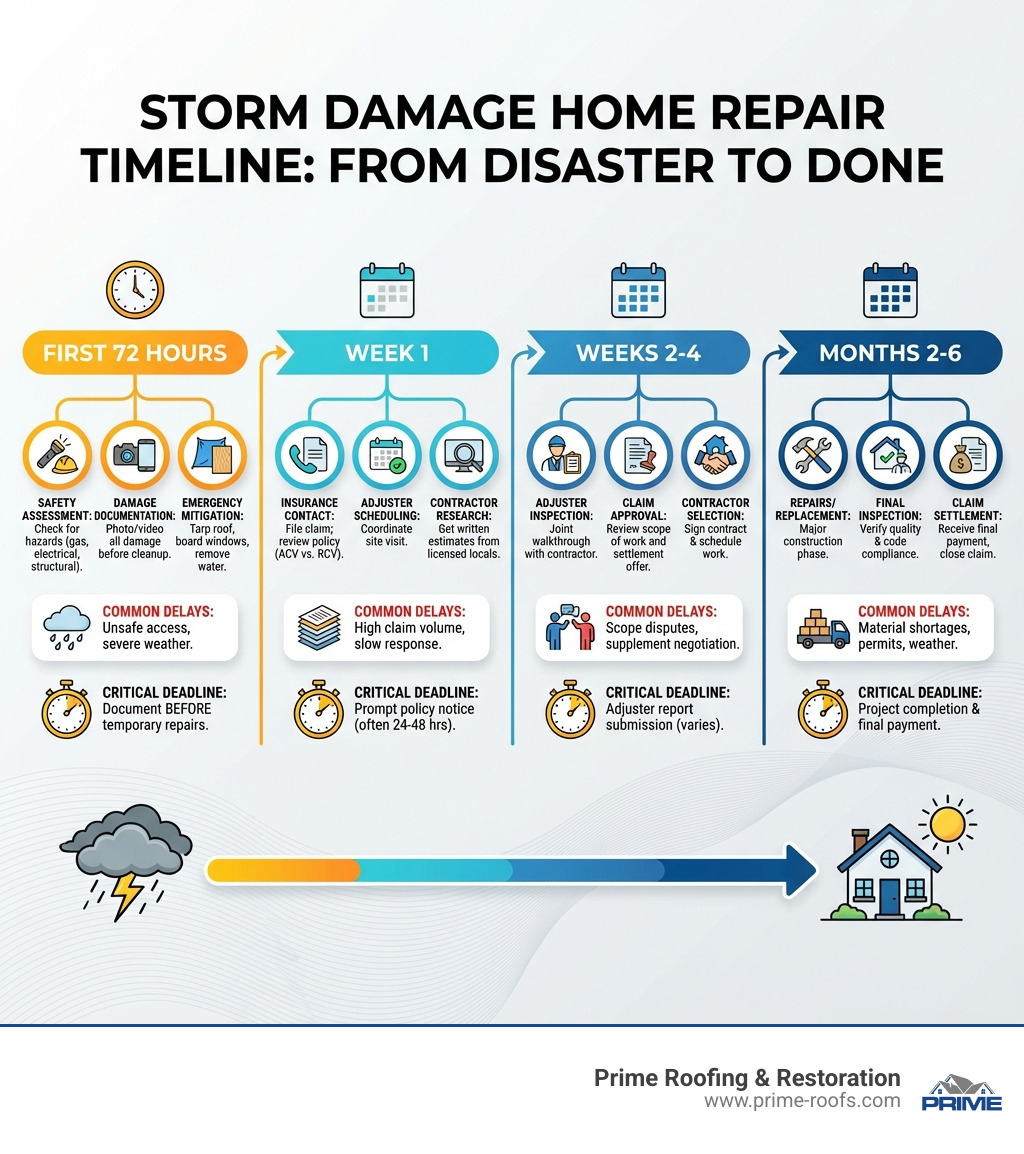
Simple guide to storm damage home repair:
First 72 Hours: Immediate Steps for Safety and Damage Control
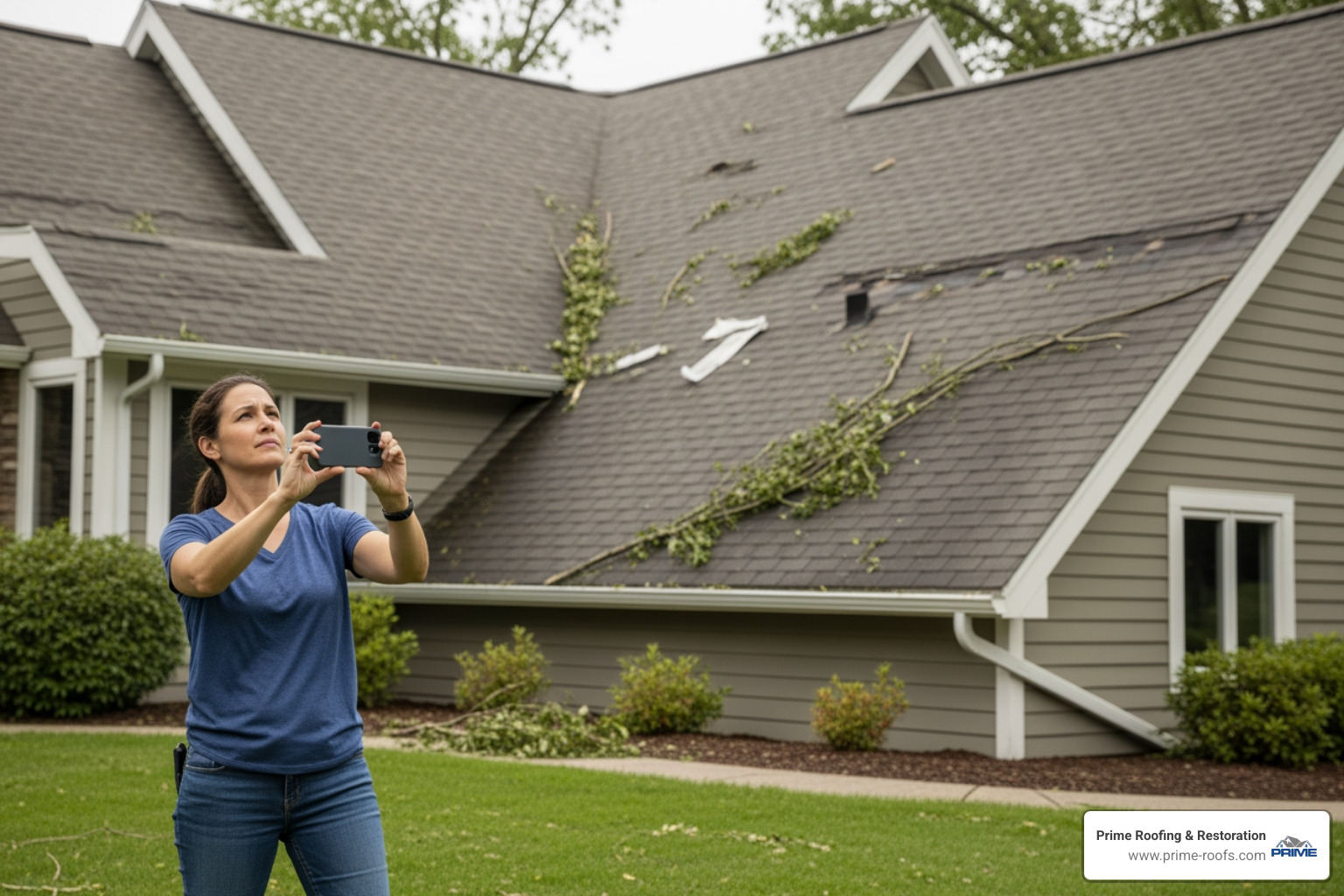
Your first actions after a storm are critical for both your safety and a successful insurance claim. Prioritize personal safety above all else, as hazards like downed power lines and structural instability are common. Once the area is secure, shift your focus to preventing further damage and carefully documenting the initial impact.
Assess Safety and Secure Your Property
After a storm, your home can be a hazardous environment. Prioritize the safety of your family above everything else.
- Check for Utility Hazards: Never approach downed power lines; report them to your utility company. If you smell gas or hear a hissing sound, leave immediately and call for help from a safe distance. If possible, shut off the main gas line.
- Assess Structural Integrity: Look for leaning walls, sagging ceilings, or shifted foundations. If you see any of these signs, do not enter. A professional should inspect the structure first.
- Beware of Water Hazards: Standing water can hide electrical or structural dangers. Avoid walking through flooded areas, especially if the power is on.
- Turn Off Utilities: If your home has significant damage or standing water, shut off the electricity, gas, and water to prevent accidents.
- Wear Protective Gear: When assessing damage, wear sturdy shoes, gloves, and safety goggles to protect yourself from debris.
Document the Damage Thoroughly
Proper documentation is essential for a smooth insurance claim and helps avoid disputes. Document everything before you clean up or make repairs.
- Use Photos and Videos: Take clear photos of all damaged areas, both inside and out. Record video walkthroughs, narrating the damage as you go to provide a comprehensive record.
- Create an Inventory: List all damaged items with details like brand, cost, and estimated loss. This includes personal property.
- Keep All Receipts: Save receipts for emergency repairs, temporary housing, and other storm-related expenses, as they may be reimbursable.
- Do Not Discard Damaged Items: Wait for the insurance adjuster to inspect damaged items. If you must discard something for safety reasons, photograph it first.
- Get a Professional Assessment: A free roof inspection can help document the full extent of the damage, especially for areas you can’t safely access.
Prevent Further Damage
Once safety is secured and damage is documented, your next priority is mitigation—preventing the damage from getting worse.
- Cover All Openings: Use plywood to board up broken windows and doors. If your roof is damaged, emergency roof tarping is a vital first step to prevent water intrusion.
- Remove Excess Water: Quickly remove any water that has entered your home using mops or a wet vacuum. Prop up wet cushions and place foil under furniture legs to prevent staining.
- Salvage Valuables: Move important items like documents, electronics, and art to a dry, secure location.
- Prevent Mold: Mold can grow within 24-48 hours. Dry affected areas as quickly as possible to minimize its spread.
- Make Only Temporary Repairs: Perform only essential, temporary repairs to prevent further damage. Keep all receipts, as your policy may cover these costs.
Navigating the Insurance Maze: From Filing to Payout

The insurance process can be daunting, but understanding your policy is key to a fair settlement. Most policies require you to notify your provider immediately after a storm. Your goal is to work with your insurer to restore your home to its pre-storm condition.
Contacting Your Insurer and Filing a Claim
Promptly filing a claim is a crucial step in your storm damage home repair journey.
- Notify Your Agent: Contact your insurance company to report the loss. Have your policy number ready.
- Get a Claim Number: You’ll be assigned a claim number; keep it for all future communications.
- Keep a Communication Log: Document every conversation with your insurer, including the date, time, and person you spoke with.
- Ask About Additional Living Expenses (ALE): If your home is uninhabitable, your policy may cover temporary housing and other costs. Inquire about this coverage.
Understanding if your home insurance covers the roof is a critical first step in this process.
Understanding Your Coverage and Homeowner Rights
Knowing your policy’s specifics is vital for a successful claim.
- Wind vs. Flood Damage: Standard homeowners insurance covers wind damage, but flood damage requires a separate policy. Water entering through a damaged roof is typically considered wind damage, while water rising from the ground is flood damage. FEMA guidance on wind vs. flood claims can clarify this.
- Deductibles: This is the out-of-pocket amount you pay before coverage begins. Some policies have separate, higher deductibles for wind or hurricane damage.
- RCV vs. ACV:
- Replacement Cost Value (RCV): Pays to replace damaged property with new materials of like kind and quality, without deducting for depreciation.
- Actual Cash Value (ACV): Pays the depreciated value of the damaged property, accounting for age and wear.
- Ordinance and Law Coverage: This helps pay for the extra costs of bringing your home up to current building codes during repairs.
- Know Your Rights: Familiarize yourself with homeowner rights regarding insurance claims. The NAIC Post-Disaster Claims Guide is an essential resource for homeowners.
Working with the Adjuster
The insurance adjuster is key in determining your payout. Effective communication is crucial.
- Be Present for the Inspection: We strongly recommend you are present for the adjuster’s inspection to point out all documented damage.
- Types of Adjusters: Your insurer will send a company or independent adjuster. You can also hire a public adjuster to represent your interests, though they charge a fee.
- Review the Settlement Offer: Carefully review the adjuster’s estimate. If it seems too low, you have the right to dispute it by providing your contractor’s detailed estimate.
- Beware of Scammers: Be cautious of anyone asking for personal information or money. Official adjusters will not ask for payment.
- Get Professional Help: Our team offers complete insurance claims assistance to guide you through this complex process.
The Ultimate Guide to Storm Damage Home Repair
Once your claim is approved, the repair phase begins. This involves hiring a qualified contractor, understanding the scope of work, and making key decisions about materials. Choosing the right team is the most important step in ensuring a quality, lasting repair.
Hiring a Reputable Contractor and Avoiding Scams
After a storm, “storm chasers” often prey on vulnerable homeowners. Choosing the right local contractor is critical for your storm damage home repair.
- Licensed and Insured: Verify the contractor has proper licensing, worker’s compensation, and liability insurance.
- Local Reputation: Hire a local company with a proven track record. Find trusted roofers in Alabaster, AL, and check online reviews and references.
- Get Multiple Written Estimates: Obtain at least three detailed written estimates to compare scope, materials, and price.
- Avoid “Storm Chasers”: Be wary of contractors who show up uninvited, use high-pressure tactics, or demand large upfront payments. These are major red flags, as noted in FEMA’s advice on avoiding post-disaster scams.
Common Types of Storm Damage and Their Repairs
Storms can inflict a wide range of damage. Understanding the common types helps in discussions with contractors.
- Roof Damage (Wind, Hail, Debris):
- Wind Damage: High winds can lift, curl, or tear off shingles and damage flashing. Repairs may involve replacing shingles or, for extensive damage, a full roof replacement. Repairing wind damage to your roof is a common need.
- Hail Damage: Hailstones can dent or crack shingles and knock off protective granules, leading to premature aging and leaks. Learning how to spot roof hail damage is a crucial skill.
- Debris Damage: Falling trees or branches can puncture the roof and damage its underlying structure, often requiring structural repairs.
- Water Intrusion: A common result of roof damage, water can ruin ceilings, walls, and flooring and lead to rapid mold growth. Repairs involve drying, mold remediation, and replacing interior finishes.
- Siding and Window Damage: Wind can rip off siding, and flying debris can shatter windows. Repairs range from replacing panels to full window replacements.
- Gutter Damage: Storms can tear off, dent, or clog gutters, preventing them from directing water away from your foundation.
Repair vs. Replace: Making the Right Decision
This choice impacts cost, longevity, and future resilience. We help homeowners weigh their options.
| Feature | Repair | Replace |
|---|---|---|
| Pros | Lower upfront cost, quicker turnaround for minor issues. | Long-term investment, improved durability, new warranties, upgrade opportunities. |
| Cons | May not address underlying issues, potential for mismatched materials. | Higher upfront cost, longer project timeline. |
| Best For | Minor, localized damage on newer components. | Extensive damage (over 50%); older components; seeking long-term resilience. |
| Insurance | Typically covered for specific damaged areas. | Often covered if damage is widespread or repair is not feasible. |
- Extent of Damage (50% Rule): If over 50% of a component like a roof is damaged, replacement is often the more practical long-term solution.
- Age of Materials: If your roof is near the end of its lifespan, replacement may be a better investment even for minor damage.
- Long-Term Value: Replacement allows you to upgrade to more durable, energy-efficient materials.
- Warranty: New materials come with new warranties. Can you repair just a section of a roof? Yes, but it depends on the damage and may not be the best long-term solution.
Rebuilding Stronger: Future-Proofing Your Home
A storm damage event is an opportunity to rebuild with greater resilience. By incorporating modern building techniques and materials, you can significantly reduce the risk of future damage and potentially lower your insurance premiums.
Mitigation Techniques for a More Resilient Home
Investing in mitigation is about building back stronger to protect your home from future severe weather.
- Impact-Resistant Shingles: These shingles are designed to better withstand hail and high winds.
- Reinforced Roofing: Adding a secondary water barrier and sealing roof penetrations provides extra protection against water intrusion.
- Hurricane Straps: These metal connectors secure your roof to the walls, dramatically improving resistance to wind uplift.
- Protect Openings: Upgrading to a high-wind-rated garage door and installing storm shutters or impact-resistant windows are crucial for preventing catastrophic failure.
- Flood Mitigation: In flood-prone areas, lift essential systems (HVAC, electrical) and grade your yard to improve drainage.
- Insurance Discounts: Many insurers offer discounts for homes with wind mitigation features. Check with your provider to see if your upgrades qualify. For more technical details, consider resources like FEMA’s technical guidance on rebuilding after a tornado.
The Role of FEMA and Other Assistance
When private insurance is insufficient, agencies like FEMA can provide support.
- FEMA Eligibility: Assistance is generally available to homeowners in a federally declared disaster area whose primary residence is unsafe and whose insurance does not cover the damage.
- Types of Aid: FEMA may provide grants for essential repairs to make a home habitable. The Small Business Administration (SBA) also offers low-interest disaster loans for more extensive repairs. Non-profit organizations often provide additional support.
- How to Apply: After a major disaster, FEMA sets up Disaster Recovery Centers where you can apply for assistance and get information.
Best Practices for Your Storm Damage Home Repair
Ensuring a high-quality repair requires adherence to standards and proper planning.
- Adhere to Building Codes: All repairs must comply with current local building codes for safety and legality.
- Obtain Necessary Permits: Your contractor should handle obtaining any required building permits for significant repairs.
- Final Inspection: Consider a final inspection by an independent professional to ensure work meets quality standards.
- Warranties and Maintenance: Understand the warranties on workmanship and materials, and implement a regular home maintenance plan to catch issues early.
Frequently Asked Questions about Storm Damage Repair
How much does storm damage repair typically cost?
The cost to repair storm damage can range from $1,000 for minor issues to over $50,000 for severe damage from a hurricane or tornado. The final cost depends on the extent of damage (roof, structural, interior), materials, and local labor rates. Emergency services and additional needs like mold remediation can add several thousand dollars to the bill.
How long does the storm damage repair process take?
The timeline varies widely. Minor repairs, like replacing a few shingles, may take a few days. Major restoration involving structural work or a full roof replacement can take several weeks to many months. Delays can be caused by contractor availability, material shortages, permit approvals, and the insurance claims process.
What if my insurance settlement isn’t enough to cover the repairs?
If your initial settlement is too low, you can appeal the decision. Provide your insurer with a detailed estimate from a licensed contractor that justifies the higher cost. If the appeal is unsuccessful, consider hiring a public adjuster to negotiate on your behalf. You can also explore supplemental financing options, such as a home equity loan or a low-interest disaster loan from the Small Business Administration (SBA).
Your Partner in Storm Recovery
Navigating the aftermath of a storm is a complex journey, but you do not have to do it alone. By following these steps—prioritizing safety, documenting thoroughly, working diligently with your insurer, and hiring a trusted professional—you can turn a disaster into a successfully completed restoration. For expert guidance and reliable storm damage repair services, the licensed team at Prime Roofing & Restoration is ready to help you rebuild.