
Why Finding the Right Commercial Roofers in My Area Matters More Than You Think
If you need commercial roofers in my area fast, here’s what to look for right now:
| What to Check | Why It Matters |
|---|---|
| Licensed & insured | Protects you from liability and ensures legal compliance in Alabama |
| Local experience | Familiarity with regional weather, humidity, and building codes |
| Workmanship warranty | Up to 15-20 years from reputable contractors like Prime Roofing |
| 24/7 emergency response | Minimizes damage from leaks and storms during critical hours |
| Free inspection offer | Lets you assess the contractor’s professionalism before committing |
A commercial roof is one of the largest capital investments a business owner makes. It is the primary shield protecting your inventory, your employees, and your operational continuity. And yet, most people pick a contractor the same way they order takeout — by grabbing the first result that pops up on a search engine.
That’s a costly mistake that can lead to premature failure, voided warranties, and thousands of dollars in avoidable repairs. Commercial roofing is fundamentally different from residential work. It requires specialized systems, certified installers, and a deep understanding of how flat roofs behave under real-world stress — especially in climates like Central Alabama, which are characterized by heavy rain, high wind, and extreme temperature swings.
The wrong contractor can leave you with a roof that fails in five years instead of thirty. The right one gives you decades of protection, backed by real warranties and a team that picks up the phone when a storm hits at midnight. When searching for commercial roofers in my area, you aren’t just looking for a laborer; you are looking for a long-term asset manager.
This guide cuts through the noise so you can make a confident, informed decision — not just a fast one. If you’re in Central Alabama, Prime Roofing & Restoration’s expert roofing services are built specifically for property owners who need durable, long-term solutions. We understand the nuances of the Birmingham metro area, from the industrial corridors of Alabaster to the retail hubs of Hoover.
I’m Bill Spencer, Owner and President of Prime Roofing & Restoration, and with over five years leading commercial and residential roofing projects across Alabama — including flat roof systems, TPO installations, and emergency storm response — I’ve seen what separates a great commercial roofing contractor from a costly one. When it comes to finding commercial roofers in my area, the checklist below is exactly what I’d hand to any property owner before they sign a single contract. We believe in transparency, education, and the kind of quality that stands up to the toughest Alabama weather.
Similar topics to commercial roofers in my area:
5 Critical Factors When Vetting Commercial Roofers in My Area
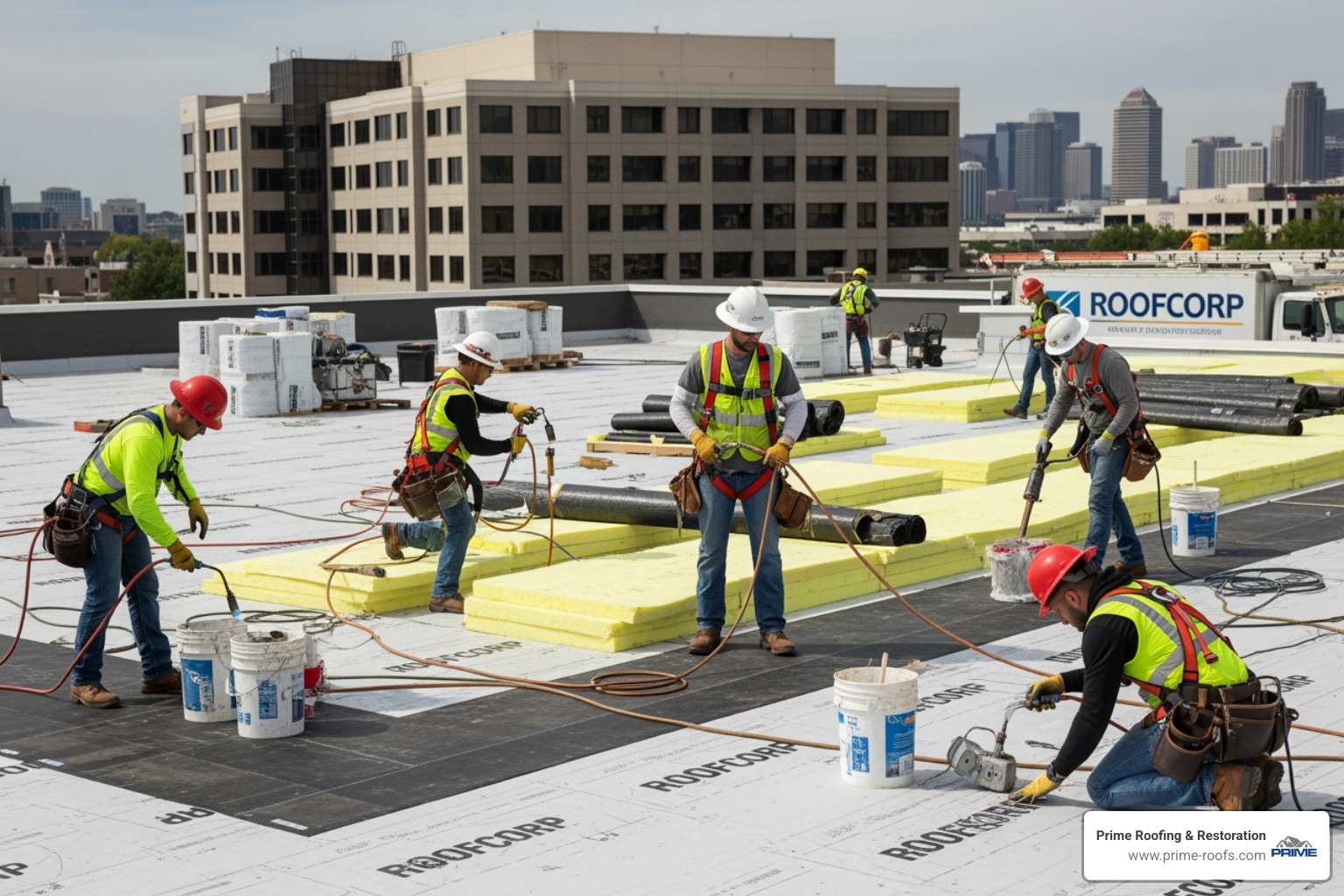
When you start the hunt for commercial roofers in my area, the sheer number of results can be overwhelming. However, not all roofing companies are created equal. Commercial buildings, whether they are warehouses, retail centers, or office complexes, have structural requirements that residential shingles simply can’t handle. Vetting a contractor is about more than just checking a price tag; it’s about verifying their ability to protect your business operations for the next 20 to 30 years.
Here are the five non-negotiable factors we recommend every Alabama business owner verify before hiring a team.
1. Proper Licensing and Insurance
A reputable commercial roofer must be fully licensed to operate in Alabama and carry robust insurance. This includes general liability and, crucially, workers’ compensation. In Alabama, the Alabama Licensing Board for General Contractors sets strict standards for commercial work. Without these protections, a single accident on your property could lead to a devastating legal and financial nightmare for your business. Always ask for a Certificate of Insurance (COI) sent directly from their agent to you.
2. Strict OSHA Compliance
Safety isn’t just a buzzword; it’s a legal requirement that protects everyone on-site. Commercial roofs often involve heights, heavy machinery, and hazardous materials. The best contractors follow comprehensive OSHA Safety Guidelines and Protocols to prevent accidents and ensure that the job site remains professional and secure. A company with a high safety rating often has lower overhead costs, which translates to better value for you.
3. Comprehensive Workmanship Warranties
A material warranty from a manufacturer (like GAF or Firestone) is standard, but a workmanship warranty is what truly protects you. Look for contractors who stand behind their labor for 10 to 20 years. This ensures that if a leak develops due to an installation error — such as a poorly welded seam or improper flashing — the roofer returns to fix it at no cost to you. At Prime Roofing & Restoration, we pride ourselves on warranties that offer real peace of mind.
4. Local Reputation and References
National chains often lack the personal touch and regional knowledge required for Alabama’s unique climate. They may use subcontractors who aren’t invested in the local community. Ask for a database of local references. A contractor who has successfully completed projects in Alabaster, Pelham, or Hoover will understand our local building codes and weather patterns better than a fly-by-night operation. Check reviews on platforms like the Better Business Bureau and Google to see how they handle both successes and challenges.
5. Specialized Commercial Expertise
Residential roofers often try to “moonlight” in commercial work during slow periods, but flat roofing requires entirely different tools, training, and safety equipment. Ensure your partner specializes in single-ply membranes like TPO and EPDM. These systems require heat-welding or specialized adhesives that shingle-focused crews might not master. You don’t want your commercial facility to be a “learning experience” for a residential crew.
Understanding the Best Materials for Commercial Roofers in My Area
Choosing the right material is the foundation of your roof’s success. In Central Alabama, our roofs face intense UV radiation, high humidity, and sudden, heavy downpours that can lead to ponding water.
- TPO (Thermoplastic Polyolefin): This is currently the gold standard for commercial buildings. It is highly reflective, which helps lower cooling costs during our sweltering Alabama summers. Its heat-welded seams are incredibly strong, making it highly resistant to leaks. For many businesses, TPO roofing is the most cost-effective and durable choice.
- EPDM (Ethylene Propylene Diene Monomer): Often called “rubber roofing,” EPDM is known for its incredible elasticity and durability. It handles thermal expansion (the way a roof grows and shrinks with temperature changes) exceptionally well, which is vital in regions where the temperature can drop 30 degrees in a single afternoon.
- PVC (Polyvinyl Chloride): PVC is highly resistant to chemicals, grease, and fire. This makes it a top choice for restaurants or manufacturing facilities where exhaust might contain oils that could degrade other roofing types. It is also highly reflective and durable.
Verifying Experience and Industry Longevity
You don’t want your commercial roof to be a “learning experience” for a new company. Longevity in the industry is a primary indicator of quality. When we talk about experience, we look for teams that have spent decades refining their craft. Established contractors often hold “Master Contractor” awards or are certified installers for major manufacturers. These certifications mean the manufacturer has inspected their work and trusts them to install their products correctly. At Prime Roofing & Restoration, we leverage years of local expertise to ensure every project meets these high industry standards. A contractor with a deep legacy isn’t just a business; they are a staple of the community that you can trust to be there when you need a follow-up inspection five years down the road.
Top Commercial Roofing Systems for Longevity and Performance
To help you visualize the differences, we’ve put together a quick comparison of the most common systems installed by commercial roofers in my area. Choosing the right system involves balancing upfront costs with long-term maintenance requirements and energy savings.
| Feature | TPO | EPDM | Modified Bitumen | Metal Roofing |
|---|---|---|---|---|
| Primary Benefit | Energy Efficiency (UV Reflective) | Extreme Durability & Elasticity | High Traffic Resistance | Longest Lifespan |
| Seam Method | Heat-Welded (Strongest) | Adhesive or Tape | Heat-Applied or Cold Adhesive | Mechanical Fasteners |
| Average Lifespan | 20–30 Years | 25–35 Years | 15–20 Years | 40-60 Years |
| Typical Color | White, Light Gray | Black | Black or Granulated Colors | Various Colors |
| Best For | Retail, Offices, Warehouses | Large Industrial Spaces | Roofs with Heavy Foot Traffic | Sloped Commercial Buildings |
For a deeper dive into these systems, check out our Commercial Roofing Complete Guide.
Why TPO is the Leading Choice for Modern Facilities
TPO has surged in popularity because it hits the “sweet spot” of performance and price. Because it is naturally reflective, it bounces solar energy away from the building, significantly reducing the “Urban Heat Island” effect and lowering your monthly power bills. This is particularly important for large warehouses where HVAC costs can be astronomical.
The installation process involves heat-welding the seams, creating a monolithic layer that is virtually puncture-resistant. This is vital for facilities that house expensive inventory or sensitive equipment. When you hire commercial roofers in my area to install TPO, you are investing in a system that requires minimal maintenance while providing maximum protection. Furthermore, TPO is 100% recyclable, making it an environmentally conscious choice for modern businesses.
The Durability of Modified Bitumen and BUR
While single-ply membranes are popular, traditional multi-ply systems like Modified Bitumen and Built-Up Roofing (BUR) still have their place. These systems use multiple layers of asphalt-coated fabric (felts) and are often topped with a gravel surface or a reflective coating.
The primary advantage here is redundancy. If the top layer is damaged, several layers underneath still provide protection. These systems are incredibly “tough” and can withstand heavy foot traffic from HVAC technicians or maintenance crews better than thinner membranes. However, they are heavier and can be more labor-intensive to install and repair. They are often the preferred choice for older buildings that require a more traditional roofing approach.
Metal Roofing: The 50-Year Solution
For commercial buildings with a slope, metal roofing is often the best long-term investment. While the initial cost is higher than TPO or EPDM, the lifespan can exceed 50 years with minimal maintenance. Metal roofs are also highly resistant to fire and wind, which is a significant advantage in Alabama’s storm-prone environment. Modern metal roofing systems come in a variety of finishes that can enhance the aesthetic appeal of your commercial property while providing superior protection.
Why Local Expertise Trumps National Chains for Flat Roof Maintenance
It might be tempting to call a massive national roofing corporation with a fancy website, but local expertise is invaluable when things go wrong. A national chain might send a crew from three states away who doesn’t understand the specific soil conditions, humidity levels, or storm patterns of Alabaster, Alabama. Local knowledge isn’t just about geography; it’s about understanding how the local environment interacts with roofing materials over time.
Local expert roofers in Alabaster, AL live in the community they serve. We see the same storms you do. When a hurricane-force wind or a massive hailstorm rolls through Central Alabama, we are already on the ground, ready to respond. We don’t have to wait for a travel crew to be dispatched; we are your neighbors.
Navigating Regional Weather Challenges
In the South, our biggest enemies are heat and humidity. These factors cause “thermal shock,” where a roof expands rapidly under the afternoon sun (reaching temperatures of 150+ degrees) and then contracts quickly during a sudden afternoon thunderstorm. This cycle can cause seams to pop and flashings to pull away if the roof wasn’t installed with these specific challenges in mind.
While some northern regions worry about winter roofing myths and facts, our “winter” issues usually involve heavy rainfall and clogged drainage systems. A local expert knows to check for these specific regional issues during seasonal inspections. We also understand the impact of local flora, such as pine needles and oak leaves, which can quickly clog commercial drainage systems and lead to structural damage from water weight.
The Importance of a 2-4 Hour Emergency Response
When your warehouse roof is gushing water onto $500,000 worth of inventory, you don’t have time to wait for a service representative in another time zone to return your call. You need a 2-4 hour emergency response guarantee. Rapid mobilization is the difference between a minor cleanup and a total business shutdown.
Local commercial roofers in my area maintain dedicated service teams that can be on-site quickly to perform leak mitigation and temporary repairs, ensuring business continuity while we prepare a long-term fix. This rapid response is a hallmark of Prime Roofing & Restoration. We understand that for a business, time is literally money, and a leaking roof is a liability that needs immediate attention.
Understanding Alabama Building Codes
Building codes vary significantly from state to state and even between municipalities like Birmingham and Alabaster. Local contractors are intimately familiar with the International Building Code (IBC) as it is applied in Alabama. This ensures that your roof replacement or repair is fully compliant, which is essential for insurance purposes and future property sales. A national company might overlook a small but critical local requirement that could lead to fines or insurance claim denials down the road.
Essential Services Your Commercial Roofing Partner Must Provide
A true roofing partner does more than just “fix holes.” They should offer a suite of services designed to manage your roof as a long-term asset. This proactive approach saves money by identifying small issues before they become catastrophic failures. This includes:
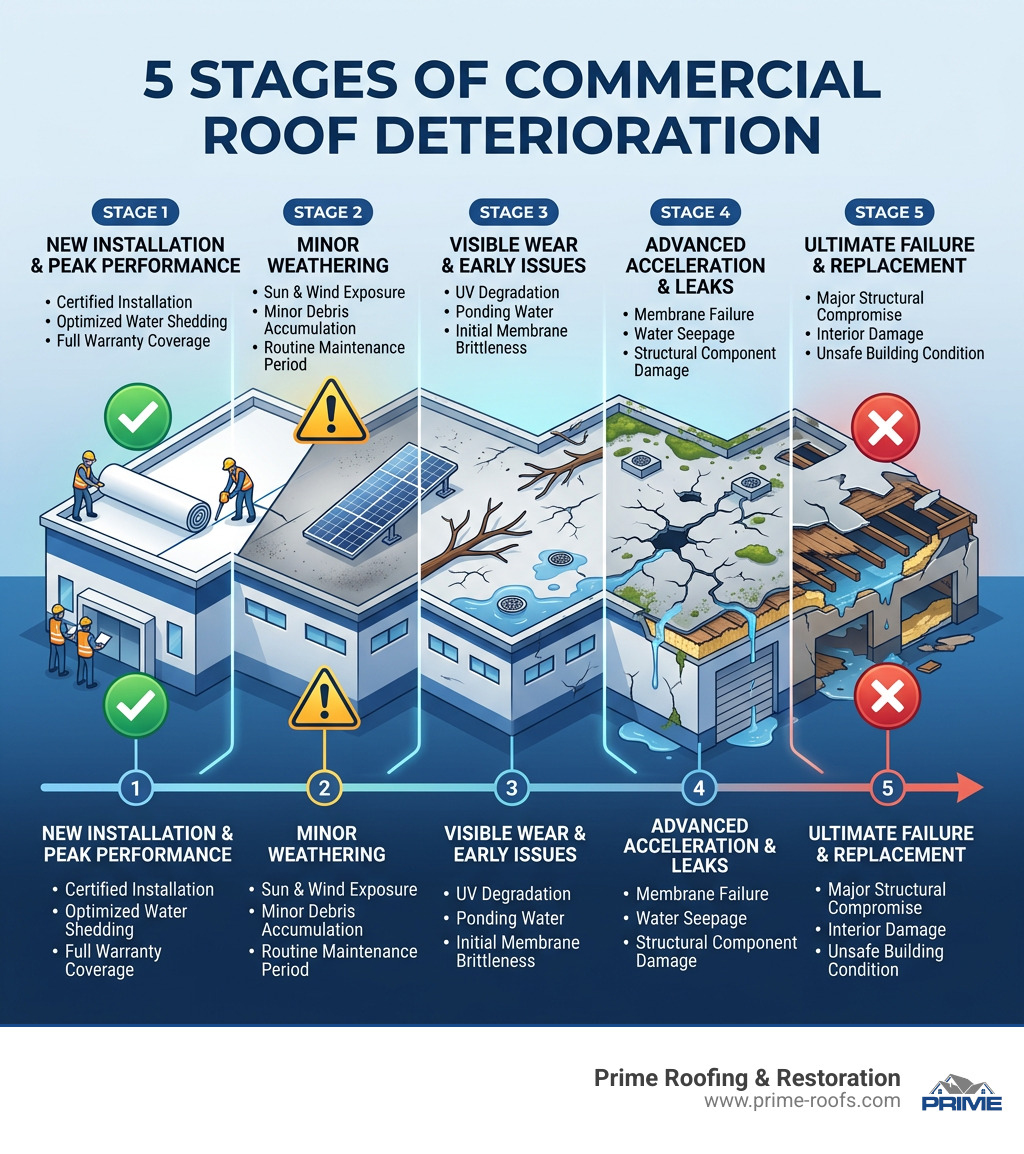
- Preventative Maintenance Programs: Regular cleaning of gutters, drains, and downspouts is essential. Debris like branches and leaves can create “dams” that cause water to pool, leading to premature roof failure. Our programs include detailed reports and photo documentation of every inspection.
- Infrared Thermography: Modern roofers use infrared moisture scans to “see” under the surface of your roof. This allows us to identify wet insulation and hidden leaks before they become visible inside your building. This technology can save a roof that might otherwise be slated for a full replacement.
- Metal Roof Recovers: If your building has a deteriorating metal roof, you might not need a full replacement. We can often install a specialized membrane system directly over the existing metal, saving you thousands in labor and disposal costs while adding significant insulation value.
- Roof Coating Systems: Silicone or acrylic coatings can extend the life of an aging roof by 10-15 years. These coatings are applied as a liquid and cure into a seamless, waterproof membrane that reflects UV rays and seals minor leaks.
You can learn more about these strategies in our Commercial Roof Maintenance Guide.
Maximizing ROI with Professional Commercial Roofers in My Area
Your roof can actually help your bottom line if managed correctly. By performing 100-point seasonal inspections, you can extend the lifespan of your roof by several years. This “life extension” significantly lowers the annualized cost of your roofing system.
Furthermore, professional roofers can assist with asset management and documentation. Having a detailed history of repairs and inspections is vital for insurance claims and can even help with tax depreciation strategies. We treat your roof like the major investment it is, helping you squeeze every bit of value out of every square foot. A well-maintained roof also increases the resale value of your commercial property, providing a clear record of care to potential buyers.
Sustainable Options: Green Roofing and Solar Integration
Sustainability is no longer just for “green” companies; it’s a smart business move. Options like “cool roofs” (highly reflective coatings) can drastically reduce energy consumption and improve the comfort of your building’s occupants.
For businesses looking to go further, we offer:
- Solar Integration: Installing photovoltaic panels on a flat roof is simpler and more efficient than on sloped residential roofs. We work with solar installers to ensure that the roof’s integrity and warranty are maintained during the process.
- LEED Points: Many modern roofing systems contribute to LEED certification, which can lead to tax breaks and improved brand reputation. We can help you select materials that meet these rigorous standards.
- Daylighting: Installing prismatic skylights can reduce the need for artificial lighting, further lowering your operational costs and creating a better environment for employees. Studies show that natural light increases productivity and morale in the workplace.
Frequently Asked Questions About Hiring Commercial Roofers
How long does a typical commercial roof last?
A commercial roof’s lifespan depends on the material: TPO and EPDM typically last 20 to 30 years, while metal roofing systems can exceed 50 years with proper maintenance. Regular bi-annual inspections are the most effective way to reach the upper limit of these estimates. Factors like Alabama’s extreme heat and high humidity can accelerate aging, making proactive maintenance even more critical than in milder climates.
What should be included in a commercial roofing warranty?
Reputable contractors offer two types of protection: a manufacturer’s warranty covering material defects and a workmanship warranty (often up to 15 or 20 years) covering the installation. Always look for “single-source” warranties that streamline the claims process, ensuring you aren’t stuck in the middle of a dispute between the material supplier and the installer. Make sure the warranty is transferable if you plan to sell the building.
Can commercial roof repairs be performed in the winter?
Yes, professional crews use specialized cold-weather techniques and materials, such as low-temperature adhesives and heat-welding, to perform emergency repairs and even full replacements during winter months to prevent interior water damage. While it’s better to perform major installations in milder weather, we are fully equipped to handle emergency leaks 365 days a year. In Alabama, winter is often our rainiest season, making leak response critical.
How do I know if I need a repair or a full replacement?
A professional inspection is the only way to know for sure. Generally, if more than 25% of the roof is damaged or if the insulation underneath is saturated, a replacement is more cost-effective in the long run. However, many roofs can be saved through targeted repairs or a roof coating system if the issues are caught early enough. We use infrared technology to make this determination accurately.
What is ponding water, and why is it dangerous?
Ponding water is water that remains on a roof for more than 48 hours after a rain event. It is dangerous because the weight can stress the building’s structure, and the standing water can degrade roofing materials and adhesives. It is often a sign of poor drainage or structural sagging and should be addressed immediately by commercial roofers in my area.
Does my insurance cover commercial roof damage?
Most commercial policies cover damage from sudden events like wind, hail, or fire. However, they rarely cover damage resulting from neglect or lack of maintenance. This is why keeping detailed maintenance records is so important for your insurance claims. We can assist you in documenting damage and providing the necessary information for your adjuster.
Conclusion
Selecting the right contractor is the difference between a roof that lasts 30 years and one that fails in ten. For businesses in Alabaster and the surrounding areas, Prime Roofing & Restoration provides the licensed expertise, 24/7 emergency response, and high-quality materials necessary to protect your commercial investment. We understand that your roof is more than just a cover; it is a critical component of your business’s success.
We don’t just want to fix your roof; we want to build a lasting relationship based on transparency, trust, and superior craftsmanship. Whether you need a minor leak repair, a 100-point inspection, or a full TPO replacement, our team is ready to help you protect what matters most. Our commitment to the Alabama business community is reflected in every project we complete.
Don’t leave your facility’s safety to chance. Contact our experts today for a comprehensive, free roof evaluation and discover why so many local business owners trust us to keep them covered. We are ready to provide the long-term solutions your property deserves.
Contact Information
Prime Roofing & Restoration
Location: Alabaster, AL and surrounding Central Alabama areas
Phone: 205-623-0151
Website: www.prime-roofs.com
Find Us on the Map:
View our Alabaster, AL Service Area
Prime Roofing & Restoration is a proud member of the local business community, dedicated to providing the highest standard of commercial roofing services in Central Alabama.