
Why Commercial Roof Services Are Critical to Your Property’s Value
Your commercial roof is one of your most significant assets, and neglecting it can lead to costly damage and business interruptions. Professional commercial roof services are the foundation of protecting that investment, covering everything from routine inspections to full system replacements. For businesses in Alabama, partnering with a contractor who understands our unique climate challenges is crucial for maximizing a roof’s lifespan. Prime Roofing & Restoration provides expert commercial roofing services custom to withstand the region’s intense sun, severe storms, and high humidity.
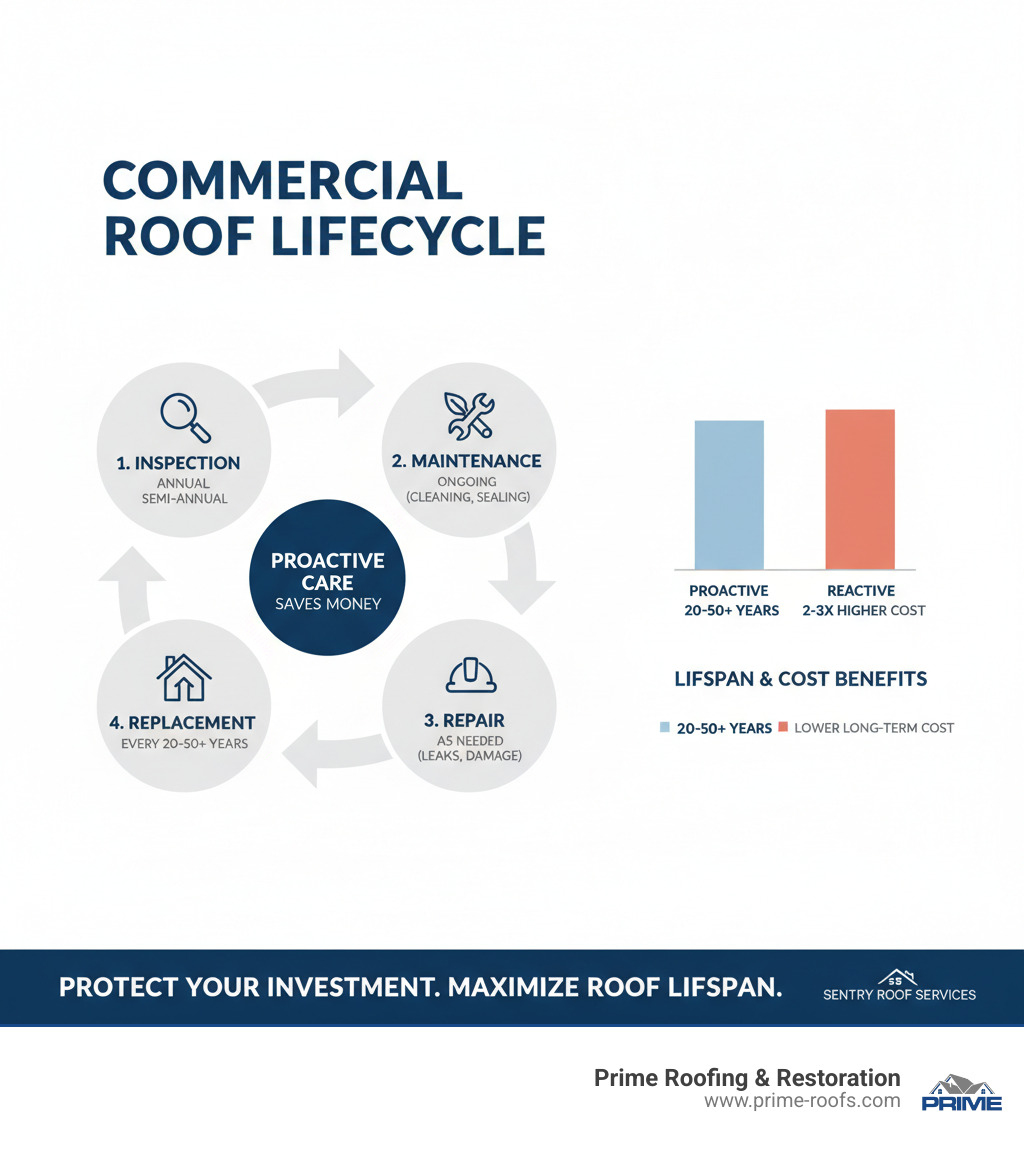
According to industry data, a properly maintained commercial roof can last 20 to 50+ years, while a neglected one may fail in half that time. The key difference lies in the quality of materials, contractor expertise, and consistent maintenance. Ignoring minor issues like ponding water or damaged flashing can quickly escalate into catastrophic failures.
Key commercial roof services include:
- Roof Inspections: Proactive assessments to identify potential issues.
- Preventative Maintenance: Cleaning, sealing, and minor repairs to extend roof life.
- Leak Detection & Repair: Rapid response to water intrusion.
- Roof Restoration: Coatings and overlays to refresh aging systems.
- Full Roof Replacement: Complete tear-off and installation of new roofing.
- Storm Damage Response: Emergency repairs and insurance claim assistance.
I’m Bill Spencer, Owner and President of Prime Roofing & Restoration. With over five years of specialized experience in Alabama, my team has helped hundreds of property managers protect their investments with proactive maintenance, expert repairs, and high-performance installations.
Important Commercial roof services terms:
Decoding Commercial Roofing: Systems, Lifespan, and Costs
Your commercial roof is a complex system impacting your building’s energy costs, efficiency, and value. The right roofing system balances your budget, durability needs, and energy goals, especially in Alabama’s demanding climate. With lifespans ranging from 20 to over 50 years, this decision will protect your investment for decades.
Primary Types of Commercial Roofing Systems
Most commercial properties in Alabama feature one of these six primary roofing systems.
TPO Roofing: A popular choice for flat and low-slope roofs, Thermoplastic Olefin (TPO) is a single-ply membrane known for its cost-effectiveness and energy efficiency. Its wide sheets mean fewer seams and faster installation. The white, reflective surface lowers cooling costs, and its heat-welded seams create a strong, watertight bond.
EPDM Roofing: Known as “rubber roofing,” Ethylene Propylene Diene Monomer (EPDM) is a durable and flexible synthetic membrane. It resists UV radiation and handles temperature changes without cracking, offering a reliable service life of 25-35 years at a cost-effective price point. It is a popular choice for warehouses, schools, and office buildings. For more details, see our complete guide to EPDM roofing.
PVC Roofing: Polyvinyl Chloride (PVC) is a premium single-ply membrane ideal for facilities exposed to grease or chemicals, such as restaurants. Its molecular structure is naturally resistant to oils, chemicals, and fire. Like TPO, its reflective surface improves energy efficiency, and its heat-welded seams provide a durable, watertight barrier that can last 40 years or more.
Metal Roofing: Representing the peak of longevity, metal systems (steel, aluminum) can last 40 to 70+ years. Metal is exceptionally resistant to fire, wind, and hail. Modern systems often include reflective coatings that deflect solar heat, making them highly energy-efficient. For businesses with a long-term perspective, metal roofing often delivers the best overall value. You can find more authoritative information on metal roofs to understand their long history of performance.
Built-Up Roofing (BUR): A traditional system, BUR consists of multiple layers of bitumen (asphalt) and reinforcing fabrics, topped with gravel. This multi-ply design creates a redundant waterproofing system that is highly durable and well-suited for roofs with heavy foot traffic.
Modified Bitumen: This system improves traditional built-up roofing with polymer-modified asphalt, improving flexibility and elasticity. Mod-Bit systems typically have a base sheet and a cap sheet, offering excellent waterproofing and durability for low-slope roofs.
Lifespan and Cost of Commercial Roofing Materials
Let’s talk numbers—because at the end of the day, you need to know what you’re getting for your investment. The table below compares the most popular commercial roof services materials based on what matters most: how long they’ll last, what they’ll cost, what makes them special, and where they shine brightest.
| Material | Average Lifespan (Years) | Installation Cost (per sq. ft.) | Key Benefits | Best Use Cases |
|---|---|---|---|---|
| TPO | 20-30 | $5.00 – $10.00 | Energy-efficient, durable, lightweight, heat-welded seams | Flat/low-slope roofs, commercial, industrial, retail |
| EPDM | 25-35 | $4.50 – $9.00 | Cost-effective, durable, flexible, UV resistant, easy to repair | Flat/low-slope roofs, warehouses, schools, offices |
| PVC | 25-40 | $6.00 – $12.00 | Chemical/grease resistant, fire-resistant, strong seams | Restaurants, chemical plants, buildings with chemical exposure |
| Metal | 40-70+ | $8.00 – $18.00 | Exceptional longevity, fire/wind resistant, recyclable | High-end commercial, industrial, architectural roofs |
| Built-Up (BUR) | 15-30 | $6.00 – $12.00 | Multi-layered protection, fire-resistant, excellent waterproofing | Flat roofs, heavy foot traffic, industrial facilities |
| Modified Bitumen | 15-25 | $5.50 – $11.00 | Flexible, strong, good waterproofing, easy to repair | Flat/low-slope roofs, smaller commercial buildings |
These costs are estimates based on typical installations. Your actual investment can vary based on your location, the complexity of your roof design, accessibility challenges, and specific project requirements like insulation upgrades or drainage improvements.
Innovations in Commercial Roofing Technology
Modern technology offers smarter ways to protect your investment and improve performance.
Cool Roofs: These systems use reflective materials (like white TPO or special coatings) to lower roof surface temperatures by 50-60°F. This reduces strain on HVAC systems and can cut cooling costs by up to 40% annually in hot climates like Alabama.
Reflective Coatings: Applied over an existing roof, these coatings create a seamless, reflective membrane that can extend a roof’s life by 10-15 years. It’s a cost-effective way to gain the benefits of a cool roof without a full replacement.
Green Roofs: These living systems feature vegetation over a waterproofing membrane, managing stormwater, reducing urban heat, and improving air quality.
Solar-Ready Systems: Modern roofs can be designed with reinforced membranes and attachment points to accommodate future solar panel installations without compromising the roof’s integrity.
Drone Inspections: Drones with high-resolution and thermal cameras provide fast, safe, and accurate assessments. They can identify moisture intrusion and heat loss invisible to the naked eye, enabling more effective preventative maintenance.
The Power of Proactive Care: Maintenance, Inspections, and Climate
Reactive repairs are always more expensive than proactive maintenance. A scheduled maintenance plan is a strategic investment that prevents major issues, upholds manufacturer warranties, and extends the life of your roof, saving you significant money over the building’s lifecycle. Just as a car needs regular oil changes, a roof requires routine attention to keep small problems from becoming costly disasters.
Benefits of Regular Commercial Roof Maintenance
Investing in routine maintenance for your commercial roof services is one of the smartest financial decisions you can make as a property owner. Properly maintained roofs can last their full expected lifespan (20-50+ years), while neglected ones often fail in half that time.
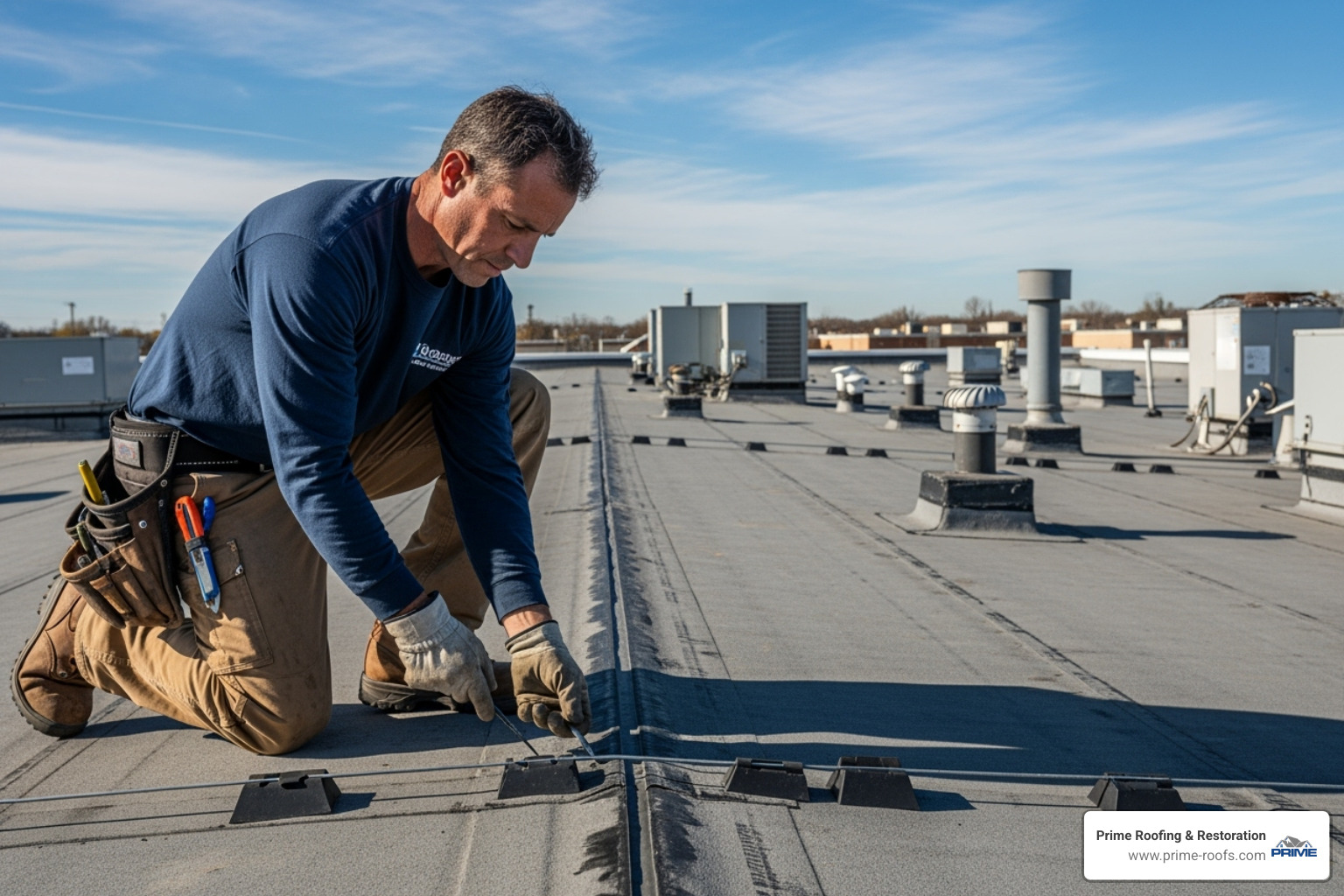
- Cost Savings: Addressing minor issues like small leaks or punctures can save thousands annually compared to the cost of emergency repairs and interior restoration.
- Warranty Compliance: Most manufacturers require documented regular maintenance to keep warranties valid. Neglecting this can void your coverage entirely.
- Extended Lifespan: Routine cleaning, minor repairs, and protective coatings can add 10-15 years to your roof’s service life, maximizing your initial investment.
- Prevents Business Interruption: Proactive maintenance minimizes the risk of sudden roof failures that can halt operations, damage inventory, and lead to lost revenue.
- Improved Safety: A well-maintained roof prevents hazards like standing water, structural weaknesses, and interior mold growth, protecting employees and customers.
Identifying Early Signs of Potential Roof Problems
The difference between a minor repair and a major disaster often comes down to one thing: catching problems early. Property owners and facility managers who know what to look for can save their companies significant money and headaches. Here are the five most critical warning signs that your commercial roof needs attention:
- Persistent ponding water 24-48 hours after rain, indicating poor drainage or structural sagging.
- Cracks, blisters, or punctures in the roof membrane, which are direct entry points for water.
- Damaged or separated flashing around vents, pipes, and HVAC units—one of the most common sources of leaks.
- Unexplained water stains on interior ceilings or walls, a sign that water has already infiltrated the building.
- Loose seams or deteriorating sealants, which compromise the entire waterproofing system.
How Local Climate Impacts Your Commercial Roof
Your commercial roof doesn’t exist in a vacuum—it faces a daily battle against the specific climate conditions of your region. Here in Alabama and across the Gulf Coast, we experience a unique combination of environmental factors that can dramatically accelerate roof aging and create maintenance challenges.
- UV Degradation: Intense Southern sun breaks down roofing materials at a molecular level, causing them to become brittle and crack.
- Freeze-Thaw Cycles: Trapped moisture that freezes and thaws expands and contracts, widening cracks and causing material fatigue.
- High Winds: Severe thunderstorms and hurricanes create uplift forces that can peel back membranes and tear away flashing.
- Heavy Rainfall: Intense downpours can overwhelm drainage systems, leading to ponding water that adds weight and exploits weak points.
- Hail Impact: Hail can dent metal, puncture membranes, and crack coatings, creating damage that shortens a roof’s lifespan.
Comprehensive Commercial Roof Services: From Leaks to Replacement
Even with diligent maintenance, issues can arise from severe weather, accidents, or simple aging. Knowing when to repair versus when to replace is a critical financial decision that requires a professional assessment. A qualified contractor provides a range of commercial roof services to address any situation effectively.
Common Issues That Require Commercial Roof Services
Understanding these common problems helps you spot trouble before it escalates into an emergency.
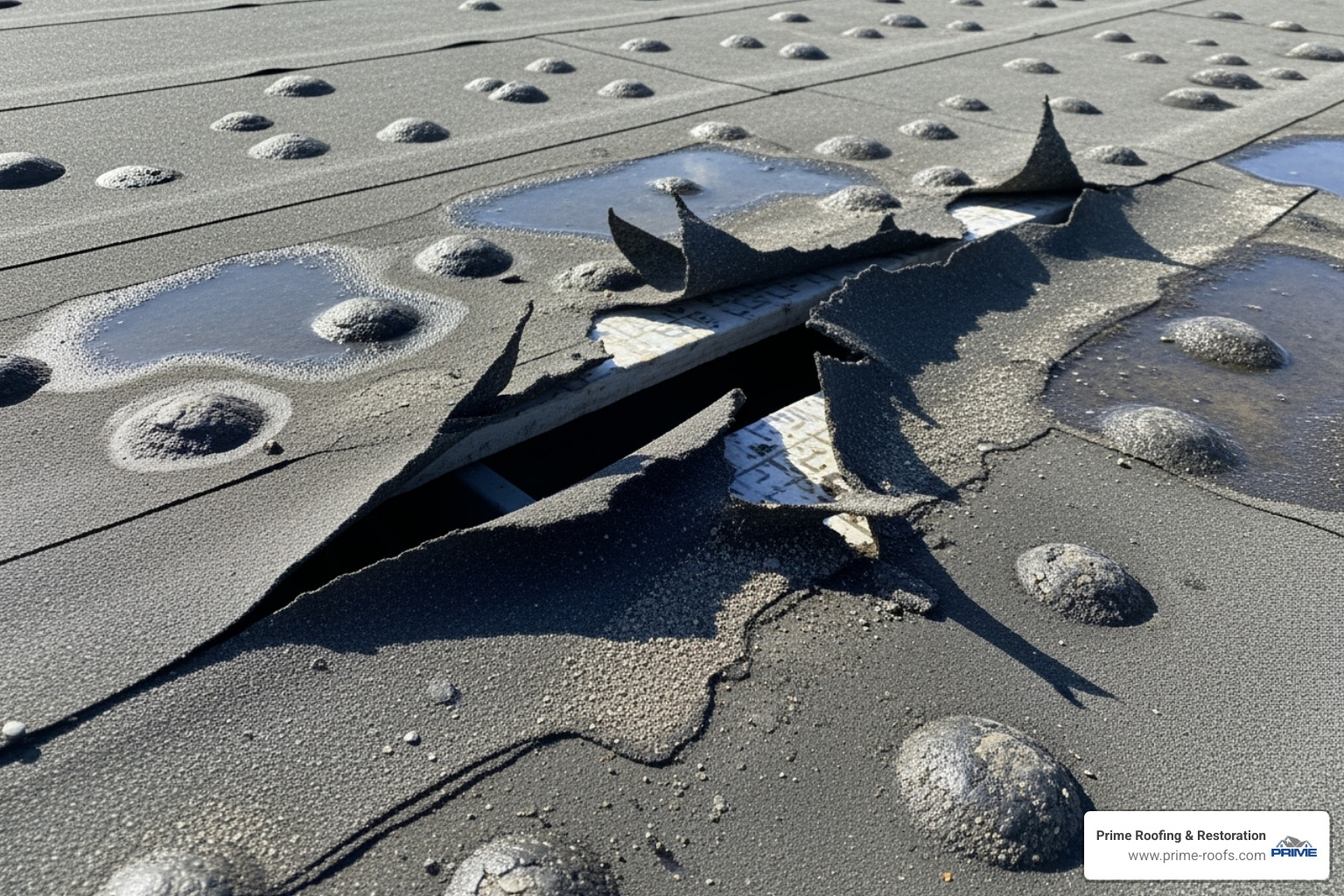
- Leaks and Moisture Intrusion: The most urgent issue, leaks can originate from cracks, punctures, or faulty flashing, threatening inventory, equipment, and structural components.
- Punctures from Debris: Falling branches, dropped tools, or wind-blown objects can tear roofing membranes, creating an immediate path for water.
- Membrane Shrinkage: Over time, some materials contract and pull away from edges and penetrations, stressing seams and causing tears.
- Damaged Flashing: As the seal around vents, pipes, and HVAC units, flashing is a vulnerable point. If it cracks, corrodes, or pulls away, leaks are almost certain.
- Clogged Drains: Gutters and drains blocked by debris cause water to accumulate, adding immense weight and accelerating material decay. A simple blockage can lead to thousands in damages.
For more information on handling weather-related issues, expert guidance on storm damage provides valuable insights from industry leaders.
Deciding Between Repair and Replacement
The “repair or replace” question keeps many property owners awake at night. It’s a decision that impacts your budget, your operations, and your property’s value for years to come. There’s no universal answer—every situation requires careful professional evaluation. Here’s how we help our clients steer this critical choice.
- Age of Your Roof: If a roof is near or past its expected lifespan (typically 15-30 years), replacement is often more cost-effective than continuous repairs on a failing system.
- Extent of Damage: Small, isolated issues are good candidates for repair. However, widespread damage, saturated insulation, or a failing structural deck usually necessitates a full replacement.
- Frequency of Repairs: If you are constantly calling for repairs, the cumulative cost can quickly approach that of a new roof. This is a clear sign that the system is failing.
- Future Budgeting: A new roof is a significant capital expense, but it provides predictable performance and long-term warranties. Constant repairs create unpredictable costs that drain budgets.
- Energy Efficiency Goals: Replacing an old, inefficient roof with a modern, energy-efficient system can generate substantial savings on cooling costs, helping to offset the initial investment over time.
Choosing Your Partner: The Professional Contractor Process
The success of any commercial roofing project hinges on the quality of your contractor. Hiring a certified, experienced, and insured professional ensures code compliance, access to the best materials, and peace of mind through robust warranties. A contractor’s longevity is also a key factor; you need a company that will be around to honor its warranties.
The Inspection and Estimate Process
When you reach out to us for commercial roof services, our process is designed to be thorough, transparent, and efficient.
- On-Site Assessment: Our experts conduct a comprehensive inspection of the entire roof system, examining membranes, seams, flashing, drains, and penetrations to identify both obvious and subtle issues.
- Advanced Technology: For large or complex roofs, we may use drone technology with high-resolution and thermal imaging to detect hidden moisture and assess the roof’s overall condition safely and efficiently.
- Core Sampling: In some cases, we take core samples to inspect underlying layers and check for trapped moisture, ensuring a sound foundation for any work.
- Detailed Estimate: We provide a detailed, no-obligation written estimate that clearly outlines the scope of work, materials, timeline, and all costs, with no hidden fees.
Advantages of a Certified Commercial Roofing Contractor
Choosing a reputable, certified contractor for your commercial roof services protects your investment in several critical ways.
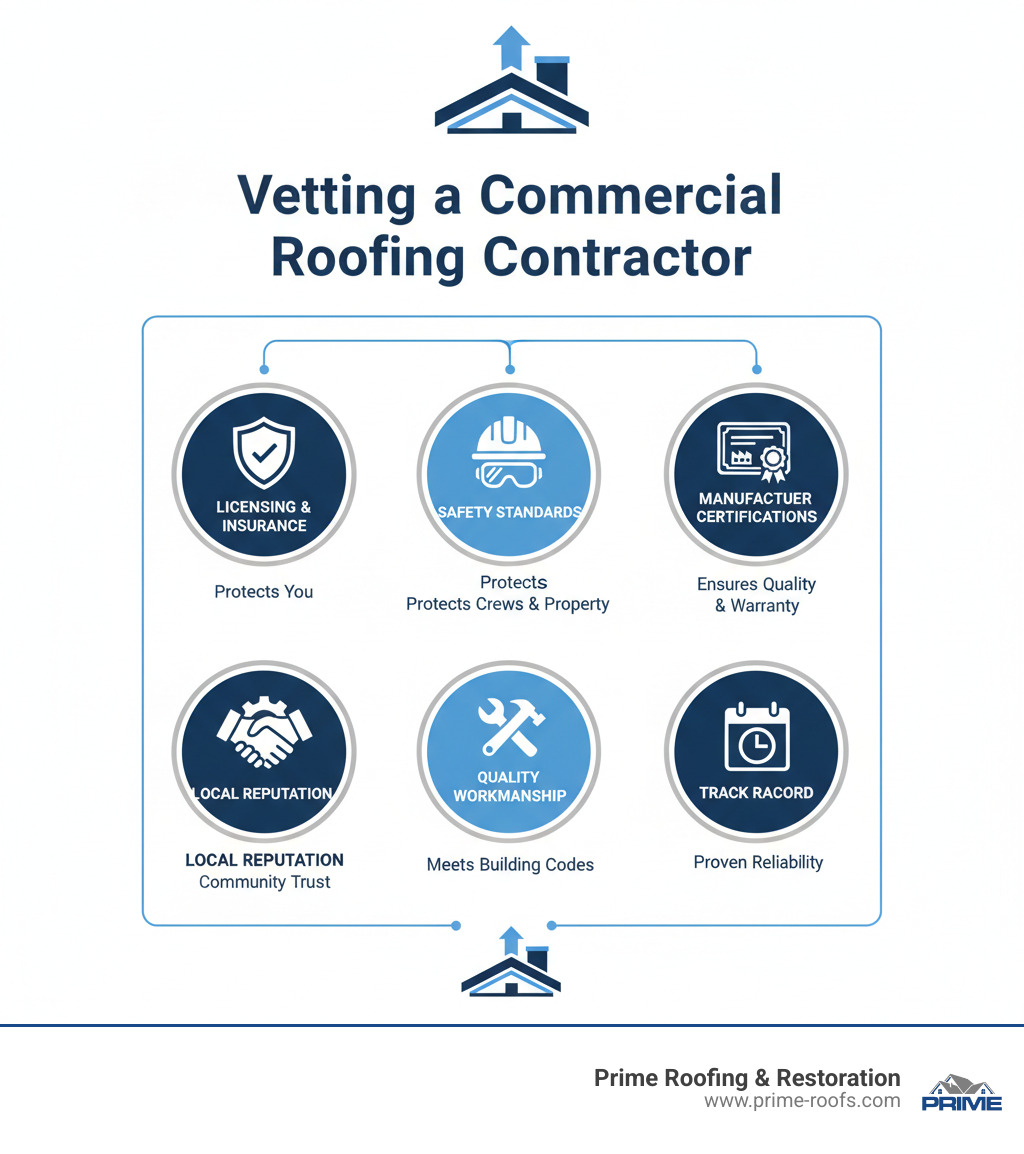
- Proper Licensing and Insurance: A licensed contractor adheres to state and industry standards. Full liability and worker’s compensation insurance protect you from financial risk in case of accidents.
- Manufacturer Certifications: We hold certifications from leading manufacturers, which means we are trained to their strict installation standards. This ensures your roof is installed correctly and qualifies for the best warranties.
- Adherence to Safety Standards: Certified contractors prioritize safety with strict protocols and ongoing training, protecting both their crews and your property.
- Quality Workmanship: Our experienced professionals are dedicated to superior craftsmanship, ensuring every project meets or exceeds building codes and industry standards.
- Local Reputation: As a contractor invested in the local community, our reputation is built on customer satisfaction and long-term performance.
Understanding Warranties for Commercial Roof Services
Warranties are your long-term protection. There are a few key types to understand.
- Manufacturer’s Warranty: This covers defects in the roofing materials themselves for a specified period.
- Contractor’s Workmanship Warranty: This covers the quality of the installation. We stand by our work and offer a solid warranty on our repairs and replacements.
- NDL (No Dollar Limit) Warranties: Considered the gold standard, an NDL warranty covers both materials and labor without a monetary cap for the warranty’s duration, offering the most comprehensive protection.
- Pro-Rated vs. Full Coverage: A full coverage warranty maintains its value throughout the term, while a pro-rated warranty’s coverage decreases over time. We explain all options clearly so you can make an informed decision.
Frequently Asked Questions about Commercial Roofing
When it comes to commercial roof services, we hear the same thoughtful questions from property owners and facility managers time and again. Let’s tackle the most common ones—because understanding your roof is the first step to protecting your investment.
How do energy-efficient roofing options impact a commercial building’s operating costs?
Energy-efficient roofing can dramatically lower operating costs, with some businesses reporting savings of up to 40% on annual cooling expenses. “Cool roofs” with reflective membranes (like TPO or PVC) bounce solar radiation back into the atmosphere instead of absorbing it as heat. This significantly reduces the load on your HVAC system, leading to lower energy bills, less equipment strain, and a smaller carbon footprint. In a hot climate like Alabama’s, the return on investment can be surprisingly fast.
What is the typical lifespan of different commercial roofing materials?
The lifespan of your commercial roof depends heavily on the material you choose and how well you maintain it.
- TPO & EPDM: 20-30 years
- PVC: 25-40 years
- Metal: 40-70+ years
- Built-Up (BUR) & Modified Bitumen: 15-25 years
Consistent maintenance is the single most important factor in achieving or exceeding these lifespans. A well-cared-for roof will significantly outlast a neglected one.
What are the key differences between commercial and residential roofing projects?
Commercial and residential roofing differ in scale, design, materials, and complexity. Commercial roofs are typically large, flat or low-sloped systems requiring specialized drainage and materials like single-ply membranes or metal. Residential roofs are usually steep-sloped and use materials like asphalt shingles. Commercial projects also involve more complex challenges, including numerous rooftop penetrations (HVAC units, vents), foot traffic requirements, and stricter building codes and safety regulations.
Your Partner for Long-Term Roof Performance
A commercial roof is a complex asset that demands professional expertise. Partnering with a qualified contractor for material selection, proactive maintenance, and flawless execution of repairs or replacements is the most important decision you can make for your property. A durable, well-maintained roof is not an expense—it’s a fundamental investment in your property’s value and your business’s success.
For property owners in Alabaster, AL, and the surrounding areas, Prime Roofing & Restoration provides comprehensive commercial roof services backed by years of specialized expertise in Alabama’s demanding climate. We build lasting relationships with our clients by using quality materials and providing reliable service when you need it most. Our goal is to protect your commercial investment for decades to come.
If you’re looking for roofers near me in Alabaster AL who truly understand commercial roofing, you’ve found the right team.
Ready to protect your investment? Explore our Commercial Roofing Services or Contact Us today for a free, no-obligation inspection and assessment.