
Why Storm Damage Hoover AL Demands Immediate Attention
Storm damage Hoover AL is not just a passing concern—it’s a recurring reality for homeowners in this area. When severe weather strikes, understanding your immediate next steps can mean the difference between a simple repair and a complete roof replacement.
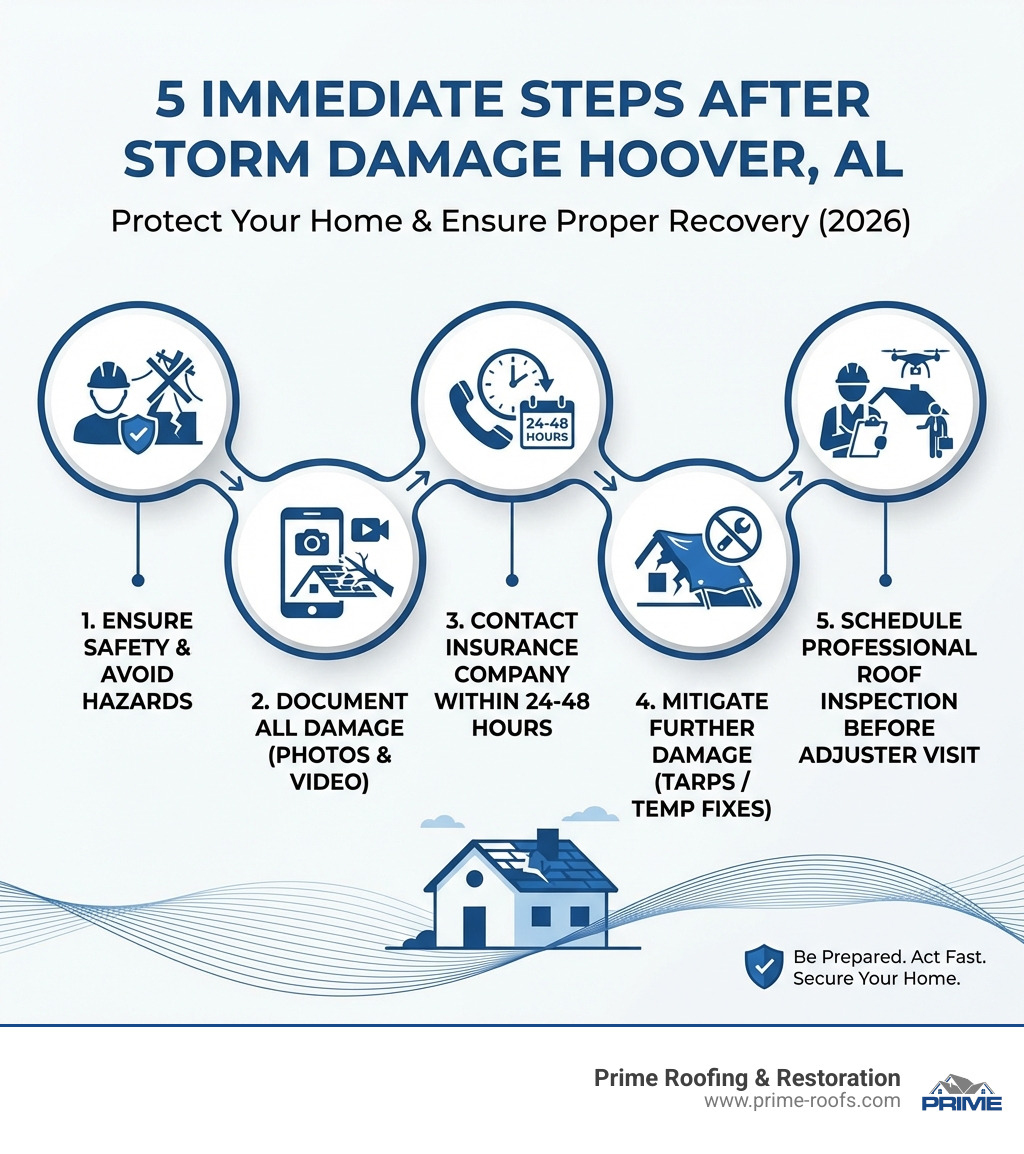
Immediate Actions After Storm Damage in Hoover:
- Ensure Safety First – Stay away from downed power lines and unstable structures
- Document All Damage – Take photos and videos of roof, siding, and property damage before any cleanup
- Contact Your Insurance – Report the claim within 24-48 hours
- Prevent Further Damage – Cover holes with tarps, but avoid permanent DIY repairs
- Call a Licensed Roofer – Get a professional inspection before the insurance adjuster arrives
Severe weather is a familiar reality for Hoover residents, with recent storms in areas like Bluff Park leaving behind a trail of fallen trees, damaged homes, and power outages affecting over 20,000 people. When winds gusting between 50 and 70 mph strike, your roof is the first line of defense. The city has been under severe weather warnings 58 times in the past 12 months alone, and Doppler radar has detected hail near Hoover on 120 separate occasions. This consistent pattern makes understanding how to respond after a storm crucial for protecting your property and family.
For homeowners navigating the aftermath, securing prompt and professional roofing services in Hoover is the first step toward restoration and peace of mind. Whether you’re dealing with missing shingles, fallen trees, or suspected hail damage, this guide provides a clear, step-by-step plan for identifying damage, ensuring your family’s safety, and navigating the repair process effectively.
I’m Bill Spencer, Owner and President of Prime Roofing & Restoration, and over the past five years, I’ve helped hundreds of Alabama homeowners recover from storm damage Hoover AL and surrounding areas, guiding them through insurance claims and delivering lasting repairs. My team and I understand the urgency and stress that comes with storm damage, which is why we offer 24/7 emergency response and free inspections to get your home protected as quickly as possible.
A past EF-0 tornado, while sounding minor, brought estimated maximum wind speeds of 75 mph that caused considerable damage. It snapped and uprooted trees and led to major roof damage at apartment complexes when brick firewalls collapsed. No injuries or fatalities were reported in that specific event, but the impact on property was undeniable. The damage path, though short at 0.2 miles with a maximum width of 30 yards, was a clear reminder of nature’s power.
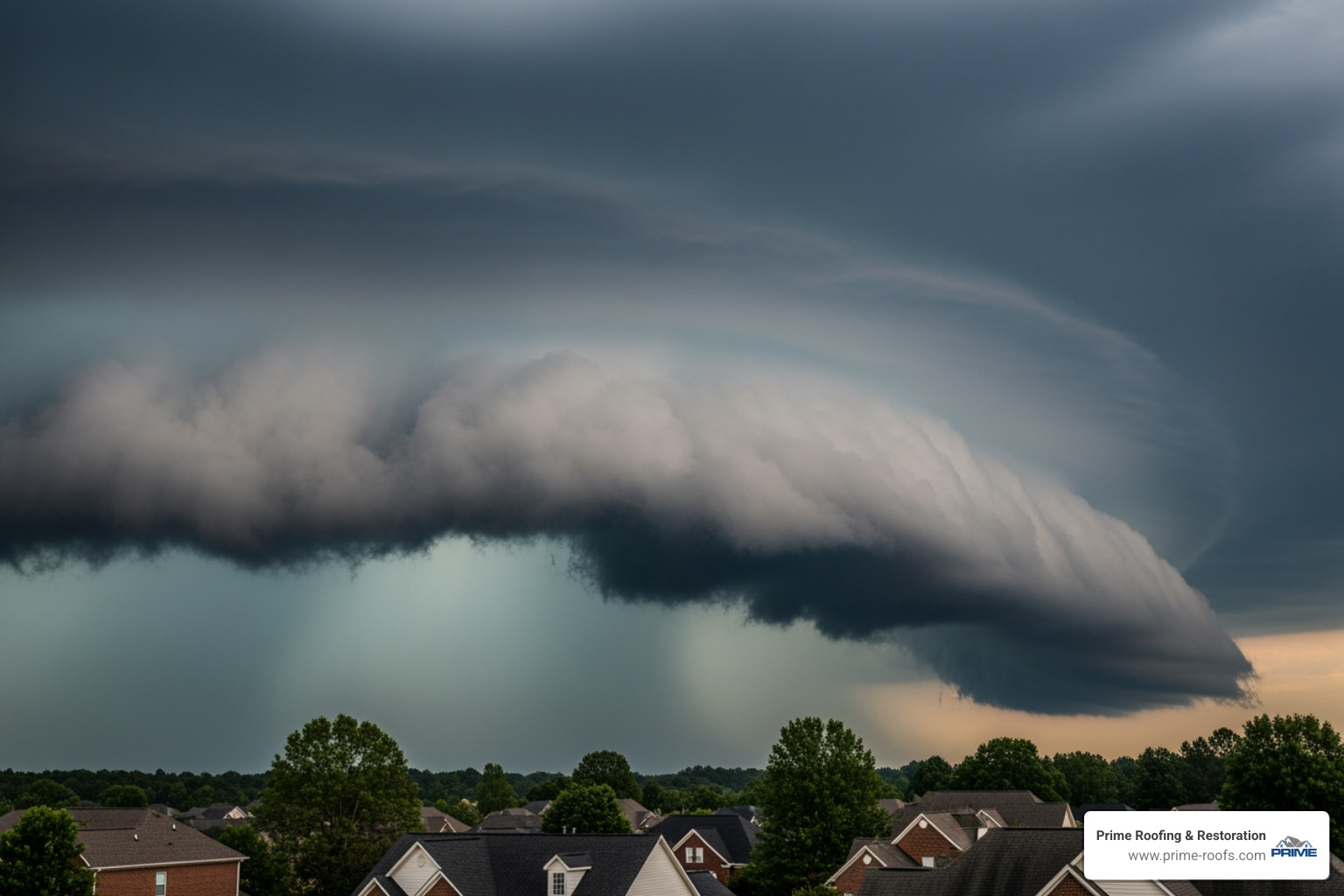
Beyond tornadoes, Hoover regularly contends with hail. Doppler radar has detected hail near Hoover on 120 separate occasions, with 4 of those occurring in the past year alone. While trained spotters haven’t reported on-the-ground hail in the last 12 months, the radar detections indicate the frequent presence of hail-producing storms. These storms bring winds strong enough to cause significant damage to roofs, siding, and trees. This consistent pattern of severe weather makes understanding your roof’s vulnerability and having a post-storm plan absolutely essential for every Hoover homeowner. It’s not a matter of if a storm will hit, but when, and whether your home is prepared.
Common Types of Storms Affecting Hoover
Hoover experiences a variety of severe weather phenomena, each posing unique threats to your home. Understanding these can help you anticipate potential damage.
- Severe Thunderstorms: These are our most frequent visitors, often bringing widespread heavy rain, strong winds, and sometimes flash flooding. Wind gusts from severe thunderstorms in Hoover can range from 60 mph to 70 mph, capable of causing considerable tree damage, and impacting mobile homes, roofs, and outbuildings. We’ve seen numerous reports of trees down, power lines snapped, and even trees falling on houses across Hoover, particularly in areas like Bluff Park, Shannon, and along Shades Crest Road.
- High Winds: Even without a tornado, high straight-line winds from thunderstorms can wreak havoc. These winds can lift shingles, detach gutters, and send debris flying, leading to costly damage. During recent storm events, areas of Chapel Road and Park Avenue in Bluff Park experienced extensive damage from high winds.
- Tornadoes: Though less frequent than thunderstorms, tornadoes are incredibly destructive. As seen with the 2008 EF-0 tornado, even a lower-rated tornado can cause significant structural damage. We’ve also seen reports of potential tornadoes in the past, causing widespread tree damage and impacting homes. The danger of flying debris during a tornado is paramount, posing a threat to both property and personal safety.
- Hail Storms: Hail can be deceptive. While large, visible hail (like golf ball or half-dollar size) immediately signals damage, smaller hail can still cause significant, often unseen, harm to your roof and siding over time. Hail has been detected near Hoover on many occasions, and while on-the-ground reports are less common, the risk of damage remains high.
Understanding the Data: Hail and Wind Risk
The data clearly indicates that Hoover, AL, is a high-risk area for both hail and wind damage. The frequency of severe weather warnings and radar-detected hail events means that your roof is regularly put to the test.
- Hail Reports: Although on-the-ground hail reports by trained spotters have been zero in the past 12 months, Doppler radar has detected hail at or near Hoover, AL, on 120 occasions, including 4 times in the past year. This persistent presence of hail-producing storms means that your roof is likely absorbing impacts you might not even realize. These impacts can compromise the integrity of your shingles, leading to premature aging and potential leaks down the line. The largest hail reported near Hoover was 3.00 inches, which is certainly enough to cause significant damage to roofs, vehicles, and windows.
- Wind Gust Potential (60-80 mph): Many storms that move through Hoover bring wind gusts exceeding 50 mph, often reaching 60 to 80 mph. These winds are strong enough to cause substantial damage. We’ve seen numerous accounts of extensive tree damage, power lines down, and structural impacts. For example, during recent storms, winds exceeded 50 miles per hour, contributing to power outages for more than 20,000 people and widespread fallen trees. Such wind speeds can lead to:
- Roof Damage: Lifting, tearing, or creasing shingles, especially on older or improperly installed roofs.
- Siding Damage: Dents, cracks, or complete detachment of siding panels.
- Tree Damage: Uprooted trees falling on homes, cars, or blocking roads, as frequently reported across Hoover’s neighborhoods.
To truly understand the historical context and specific events, you can view official Alabama Storm Data compiled by the National Weather Service. This data underscores why proactive roof maintenance and a rapid response to storm damage are crucial for Hoover residents.
A Homeowner’s Guide to Identifying Post-Storm Damage
After a storm has passed and the immediate danger has subsided, your next crucial step is to assess the damage to your home. We understand that this can feel overwhelming, but a systematic approach will help you identify issues that might otherwise go unnoticed.
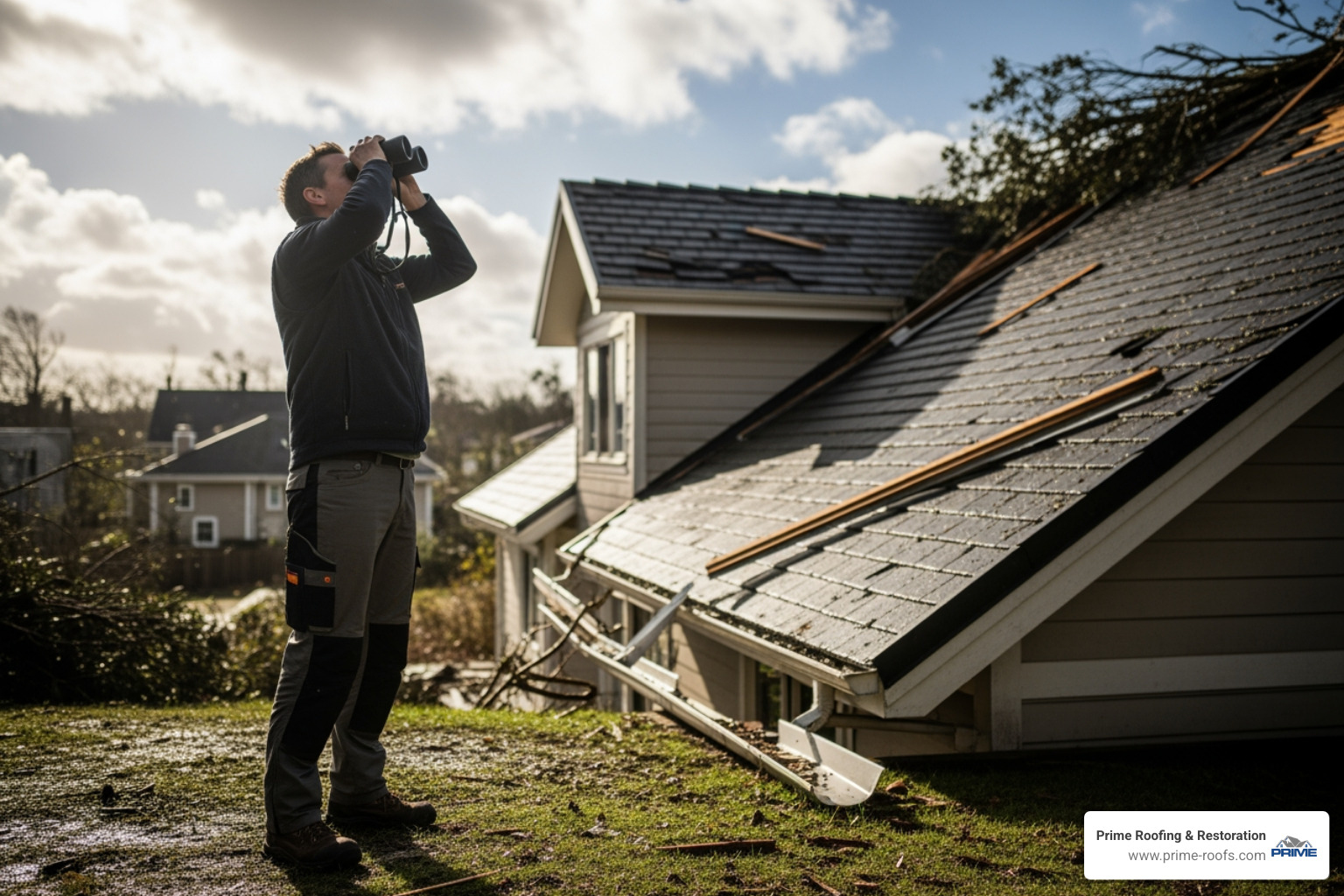
Start your inspection from the safety of the ground. Never climb onto your roof immediately after a storm, especially if you suspect structural damage or there are downed power lines nearby. Use binoculars to get a closer look at your roof. Look for obvious signs of trouble like missing shingles, torn flashing, or large fallen branches. However, don’t stop there. Be aware that less apparent issues can lead to major problems if not addressed promptly.
Inside your home, pay close attention to your ceilings and attic spaces. Water stains, drips, or peeling paint on your ceiling are clear indicators of a potential roof leak. In the attic, look for wet insulation or water marks on the wooden trusses and decking. A small leak might seem minor, but it can quickly escalate, compromising your home’s structural integrity, fostering mold growth, and leading to far more costly repairs down the road.
Assessing Wind and Debris Damage
Wind and debris are two of the most common culprits behind storm damage Hoover AL. High winds can be surprisingly destructive, even without direct impact from falling objects.
- Fallen Trees and Debris: While large fallen trees are an obvious primary cause of catastrophic roof damage, smaller branches and airborne debris can also cause significant impact damage, puncturing shingles or creating weak spots. We’ve seen many instances where trees have fallen directly onto homes in Hoover, causing severe structural issues.
- Wind Damage to Shingles: High winds can lift, curl, or even tear off shingles, exposing the underlying roofing materials to the elements. Look for:
- Missing Shingles: These are the easiest to spot and clearly indicate a breach in your roof’s protection.
- Creased or Bent Shingles: Even if not missing, shingles that are creased or bent indicate that the shingle’s seal has been broken. Once this seal is compromised, the shingle is no longer effectively protecting your home from water intrusion.
- Granule Loss: Strong winds can scour the protective granules from asphalt shingles, leaving behind smooth, dark patches. This weakens the shingle and reduces its lifespan.
- Flashing Damage: It’s also critical to inspect the flashing around chimneys, vents, skylights, and along roof valleys. Flashing is designed to create a watertight seal in these vulnerable areas. If it’s bent, torn, or dislodged by wind, it becomes a common source of leaks.
For a comprehensive checklist and detailed guidance on what to look for, we recommend reviewing what to do after a storm damages your roof
Immediate Actions for Storm Damage Hoover AL
The moments immediately following a severe weather event are critical. Your primary focus should always be on safety, followed by damage documentation and mitigation. Taking these steps correctly can protect your family and your ability to file a successful insurance claim for storm damage Hoover AL.
Step 1: Ensure Safety and Document Everything
Before you do anything else, prioritize the safety of everyone in your household.
- Personal Safety: Stay inside until the storm has completely passed and it’s safe to venture out. Be aware of your surroundings once outside.
- Electrical Hazards: Assume any downed power lines are live and extremely dangerous. Keep a significant distance and report them immediately to Alabama Power and emergency services.
- Structural Stability: If your home has sustained significant structural damage, or if you smell gas, evacuate immediately and call 911. Do not re-enter until emergency responders deem it safe.
- Taking Photos and Videos: Once it’s safe, and before any cleanup or temporary repairs begin, thoroughly document all damage. Use your smartphone or camera to take clear photos and videos of:
- Your entire property, including the roof (from the ground, if possible), siding, windows, and any outdoor structures.
- Close-ups of specific damage points: missing shingles, dents, punctures, fallen trees, interior leaks.
- Any debris that caused damage.
- Even areas that appear undamaged, as this provides a baseline.
- Detailed notes: Jot down the date, time, and specific observations about the damage. This evidence is absolutely vital for your insurance claim and will help us advocate on your behalf.
Step 2: Mitigate Further Damage with Temporary Fixes
After documenting the damage, your next step is to take reasonable measures to prevent further damage to your home. This is called “mitigation,” and it’s often a requirement of your insurance policy. However, we strongly advise against making extensive or permanent repairs yourself, especially if it involves climbing on a damaged roof. Leave that to the professionals.
- Tarping the Roof: If your roof has a hole or significant damage, placing a tarp over the affected area is crucial to prevent rain from entering your home and causing more extensive interior damage. If you are not comfortable or equipped to do this safely, our team can provide emergency tarping as part of our storm damage repair services. We have the expertise and safety equipment to perform temporary tarping quickly and securely.
- Boarding Windows: If windows are broken, temporarily boarding them up will protect your home from further weather intrusion and improve security.
- Removing Debris Safely: Carefully remove any debris that poses an immediate threat, such as small branches or loose items that could cause more damage in subsequent winds. However, for large trees or debris on your roof, it’s best to wait for professional assistance. Our team can also help with debris removal as part of the repair process.
A critical piece of advice we offer every homeowner: it is highly recommended to have a trusted, local roofing contractor present when the insurance adjuster inspects your property. Why? Because an experienced roofer, like our team at Prime Roofing & Restoration, can identify subtle damage that an adjuster might miss, ensuring that all aspects of the storm damage Hoover AL are properly identified and included in your claim. We can speak the same language as the adjuster and advocate on your behalf, ensuring you receive a fair assessment and the funds needed for a complete and proper repair, not just a patch-up. This step is crucial for securing the funds needed for a comprehensive and proper restoration.
How to File a Successful Insurance Claim for storm damage Hoover AL
Filing an insurance claim can feel like navigating a maze, but with the right approach and support, you can achieve a successful outcome.
- Contacting Your Agent Promptly: The sooner you report the damage, the better. Most policies require you to report damage within a specific timeframe. Provide your agent with all the documentation you collected (photos, videos, notes).
- Understanding Your Policy: Take some time to review your homeowner’s insurance policy. Pay close attention to your deductible, coverage limits, and what types of storm damage are covered. For clarity on what your policy entails, especially regarding roof damage, review our guide on Does Home Insurance Cover Roof.
- Meeting the Adjuster: Your insurance company will send an adjuster to assess the damage. Be present for this appointment and provide them with all the documentation you gathered in the immediate aftermath.
Choosing the Right Contractor for Your storm damage Hoover AL repair
Selecting a reputable contractor is the most important decision you’ll make in the storm recovery process. Here’s what to look for:
- Local, Licensed, and Insured: A local company with a proven track record in Hoover is familiar with local building codes and weather patterns. Always verify their license and insurance to protect yourself. Check online reviews, ask for references from previous clients, and view examples of their past projects. Our over five years of experience helping hundreds of Alabama homeowners recover from storm damage speaks to our commitment.
- Detailed, Written Estimate: A trustworthy contractor will provide a clear, itemized, and written estimate that outlines all costs, materials, and the scope of work. Be wary of contractors who pressure you into signing contracts before an insurance settlement or offer vague pricing.
- Expertise in Storm Damage: Ensure the contractor specializes in storm damage Hoover AL repair and insurance claims. They should be knowledgeable about different types of damage (wind, hail, debris) and how to properly document them for insurance purposes.
- Communication and Transparency: Choose a contractor who communicates clearly, answers your questions patiently, and keeps you informed throughout the project. Transparency builds trust.
A trustworthy contractor will guide you through the entire process, from the initial inspection and insurance claim assistance to project completion, ensuring quality workmanship and your peace of mind. For expert help with any type of storm damage Hoover AL, consider a provider of comprehensive storm damage repair services.