
What to Do After a Hail Storm: Filing Your Insurance Claim the Right Way
A hail damage insurance claim is a formal request for financial coverage following storm-related property destruction. To ensure a successful payout, homeowners must document damage immediately, mitigate further loss, and partner with a reputable Alabaster roofing company to identify hidden structural issues. If you need immediate assistance, you can reach our team at 205-453-1803.
In Central Alabama, hail storms are not just a seasonal nuisance; they are a significant threat to property integrity. From Alabaster to Hoover, the volatile weather patterns of the Southeast can produce hailstones ranging from pea-sized to baseball-sized in a matter of seconds. When these ice projectiles strike your home, they can compromise the protective layers of your roof, leading to leaks, mold, and long-term structural decay. Navigating the aftermath requires a strategic approach to ensure your insurance provider honors the terms of your policy.
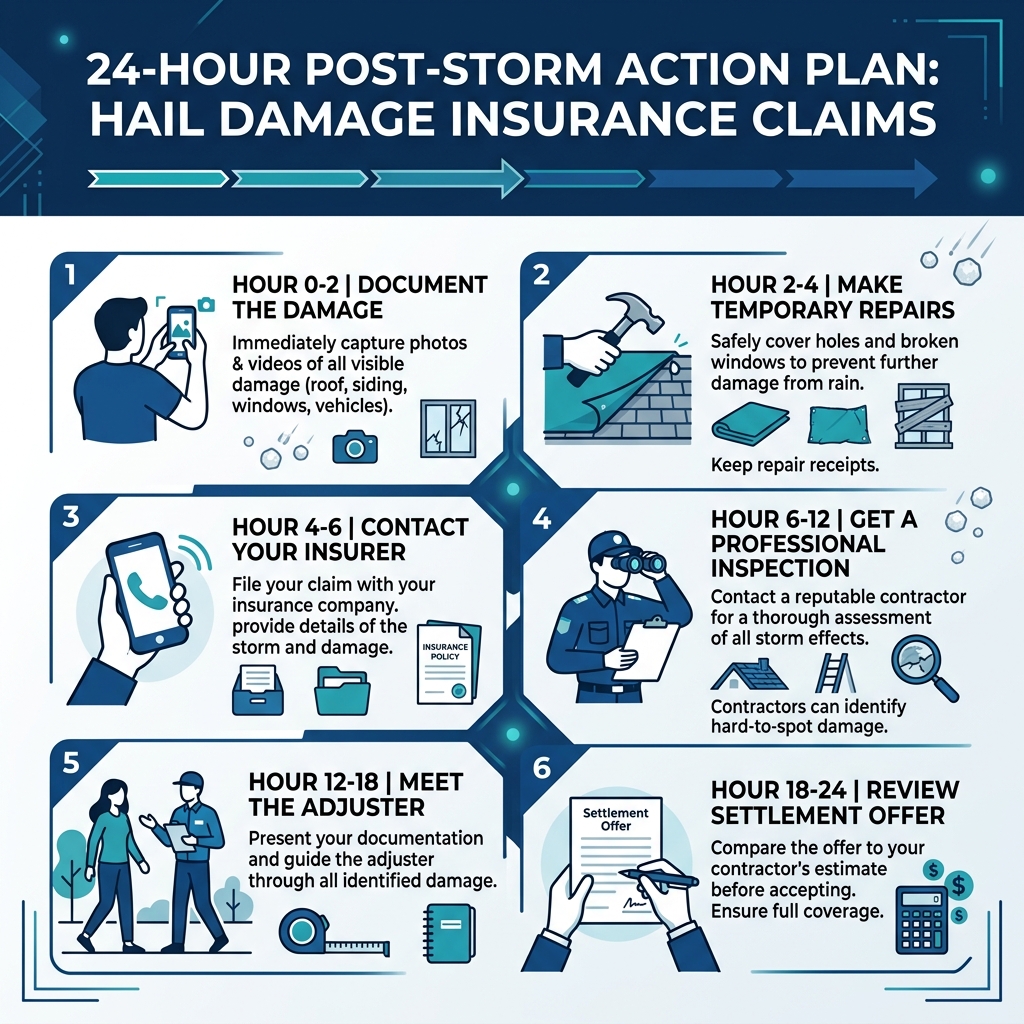
The Immediate 6-Step Action Plan
- Document the damage – Take high-resolution photos and videos immediately after the storm. Focus on the roof, siding, gutters, and any personal property like patio furniture or vehicles.
- Make temporary repairs – Your policy likely requires you to prevent “consequential damage.” This means covering holes in the roof with tarps or boarding up broken windows to prevent rain from entering the interior.
- Contact your insurer – File your claim as soon as possible. While most policies have a 1-2 year window, waiting can lead to “latent damage” claims being denied because the insurer may argue the damage was caused by wear and tear rather than a specific storm event.
- Meet with the adjuster – When the insurance company sends their representative, walk them through all visible damage. However, do not assume they will find everything.
- Get a professional inspection – A licensed roofing contractor with experience in storm restoration can identify subtle structural issues that adjusters often miss, such as fractured fiberglass mats under shingles.
- Review the settlement offer – Before signing any checks or contracts, ensure the payout covers the full scope of repairs, including labor, materials, and local building code requirements.
Standard homeowners insurance covers hail damage to your roof, siding, and other structures under Dwelling Coverage. For vehicles, you need comprehensive auto coverage. Both are subject to deductibles – and in hail-prone states like Alabama, those deductibles can be significantly higher than your standard deductible due to the high frequency of claims.
Hail storms are deceptively short – most last only 5 to 6 minutes – but the kinetic energy of a 1-inch hailstone falling at 40 mph is enough to crack vinyl siding and bruise asphalt shingles. In fact, nearly 735,000 automotive hail damage claims were filed between 2017 and 2019 alone, according to a 2020 NICB report. That number doesn’t even count the countless homeowner claims filed after those same storms.
If your Central Alabama home or roof was recently hit, getting a professional inspection is the fastest way to understand what you’re dealing with before you call your insurer. I’m Bill Spencer, Owner and President of Prime Roofing & Restoration, and I’ve guided hundreds of Alabama homeowners through every stage of the hail damage insurance claim process – from spotting hidden roof damage to negotiating with adjusters for a fair settlement. In this guide, I’ll walk you through exactly what to do, step by step.
Hail damage insurance claim terms to know:
- Storm damage roofing services
- Storm damage home repair
- Rapid recovery: Finding expert storm damage repair professionals
Understanding Your Coverage: Home and Auto Policies
When it comes to a hail damage insurance claim, the first thing we need to determine is what specific part of your policy is actually paying for the repairs. Not all insurance is created equal, and understanding these “buckets” of coverage is essential for managing your out-of-pocket costs.
Dwelling Coverage (A) and Other Structures (B)
For your home, hail is almost always a covered peril under a standard HO-3 policy. Coverage A (Dwelling) protects the main structure of your home, including your roof, siding, and attached garage. If a hailstone cracks a shingle or dents your aluminum siding, this is where the money comes from. It is important to note that most policies cover the “Replacement Cost Value” (RCV), but some older or budget policies may only cover “Actual Cash Value” (ACV), which factors in depreciation.
Coverage B (Other Structures) applies to detached parts of your property. This includes your backyard shed, a detached garage, or even that beautiful new fence. If the storm wreaks havoc on these, they are typically covered up to a certain percentage of your total dwelling limit (usually 10%). For example, if your home is insured for $300,000, you likely have $30,000 in coverage for other structures.
Comprehensive Auto Coverage
If your car was left out in the driveway during the storm and now looks like the surface of a golf ball, you need Comprehensive Coverage. Liability insurance and collision insurance will not cover hail damage. Comprehensive insurance covers “acts of God,” which include hail, fire, and falling trees.
According to Hail damage insurance claim: A complete guide, insurers will pay up to the vehicle’s actual cash value (ACV) for repairs. If the cost to fix those hundreds of tiny dents exceeds a certain percentage of the car’s value (usually 70-80%), the insurance company may declare the vehicle a total loss. In Alabama, where humidity can lead to rapid rust on exposed metal, getting these dents sealed or repaired quickly is vital for maintaining the vehicle’s resale value.
Wind and Hail Deductibles: The Alabama Reality
This is where many Alabama homeowners get a surprise. In many states, including Alabama, insurance companies have moved away from a flat $500 or $1,000 deductible for storm damage. Instead, they use a Wind and Hail Deductible, which is often a percentage of your home’s total insured value. This change was implemented by many carriers following the devastating storm seasons of the last decade to offset the rising costs of claims.
| Deductible Type | How it Works | Example Cost (on $300k Home) |
|---|---|---|
| Standard Flat Deductible | A fixed dollar amount you pay out of pocket. | $1,000 |
| 1% Percentage Deductible | 1% of your Dwelling Coverage (A) limit. | $3,000 |
| 2% Percentage Deductible | 2% of your Dwelling Coverage (A) limit. | $6,000 |
| 5% Percentage Deductible | 5% of your Dwelling Coverage (A) limit. | $15,000 |
As you can see, a 2% or 5% deductible can mean a significant out-of-pocket expense before your hail damage insurance claim kicks in. Always check your policy declarations page to see which one applies to you. If you have a percentage deductible, it is even more critical to have a contractor like Prime Roofing & Restoration provide a detailed estimate to ensure you aren’t paying more than necessary.
How to File a Hail damage insurance claim Step-by-Step
Filing a claim can feel like a full-time job, but we’ve broken it down into a manageable process. The key is to act quickly. After a major storm in Alabaster or Hoover, contractors and adjusters book up fast. If you wait, you might be looking at months of delays while your roof continues to deteriorate.
Step 1: Immediate Mitigation and Safety
Your insurance policy is a contract that requires you to prevent further damage. This is known as the “duty to mitigate.” If hail broke a skylight or a window, you must cover it. If you don’t, and rain gets in and ruins your hardwood floors or causes mold growth in the attic, the insurance company might deny the water damage portion of your claim because you failed to take reasonable steps to protect the property. Always prioritize safety; do not climb onto a steep or slippery roof yourself. Call a professional for emergency tarping services.
Step 2: Temporary Repairs and Documentation
Make only the necessary temporary repairs to keep the home safe and dry. Save every single receipt for plywood, tarps, or professional labor. These costs are generally reimbursable as part of your claim. Take photos of the damage before you cover it up, and take photos of the temporary repairs themselves. This creates a clear timeline for the adjuster.
Step 3: Contact Your Insurer and Open the Claim
Call your insurance company’s claims hotline or use their mobile app. You will need:
- Your policy number.
- The date and time the storm occurred (be specific).
- A brief description of the damage (e.g., “hail dents on gutters and suspected roof damage”).
- Your contact information and availability for an inspection.
For more hands-on help, we offer expert support to help you navigate these initial conversations and ensure you don’t say anything that could accidentally jeopardize your coverage, such as attributing the damage to “old age” rather than the storm.
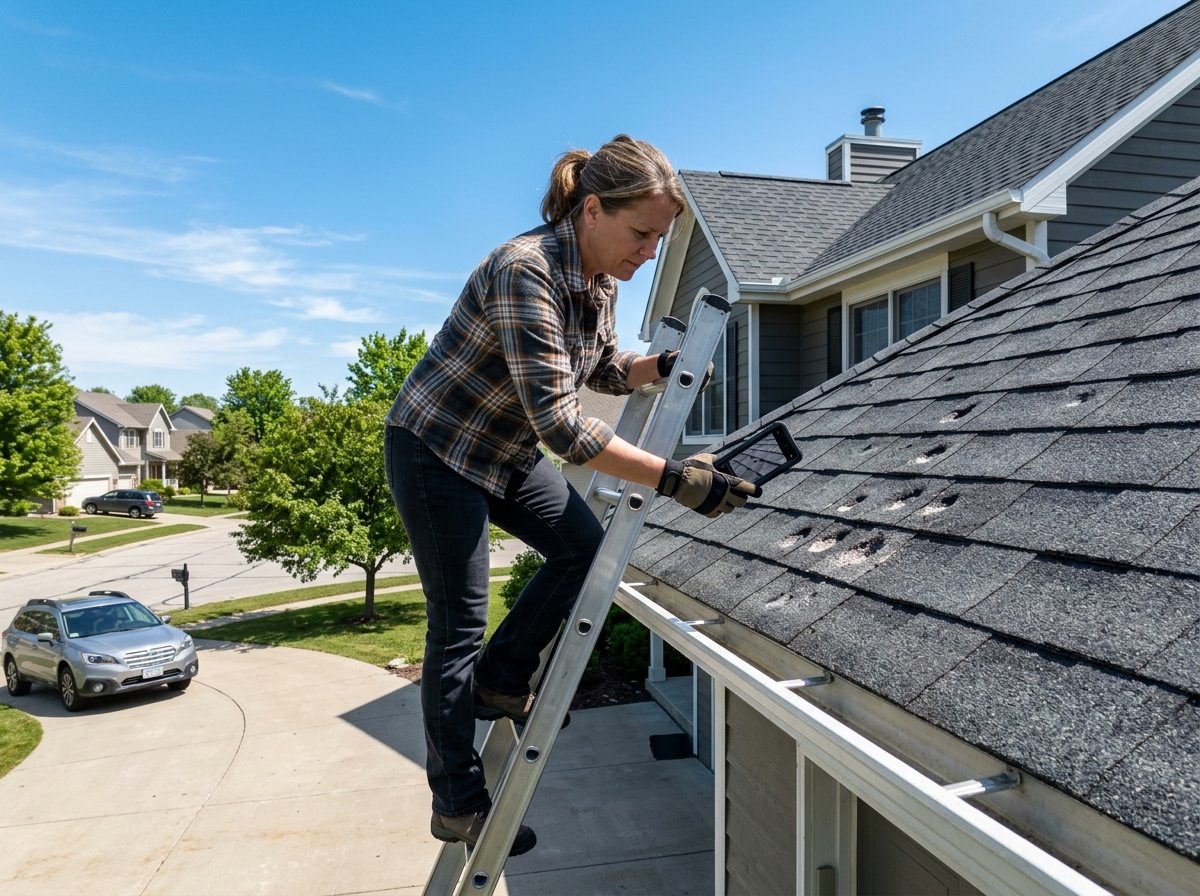
Documentation Needed for Your Hail damage insurance claim
Documentation is the “evidence” that wins your case. The more you have, the harder it is for an insurance company to undervalue your claim.
- Photos and Videos: Take wide shots of the house and close-ups of specific dents or bruises. Don’t forget the “soft metals” like gutters, downspouts, and AC condensers, which show hail impact clearly.
- Inventory List: If hail damaged personal property (like patio furniture, grills, or outdoor electronics), list the brand, age, and estimated replacement cost.
- Date of Loss: Use a weather app or local news report to confirm exactly when the hail hit. This proves the damage happened during a specific covered event. In Alabaster, we often see localized cells that hit one neighborhood but miss the next.
- Communication Log: Keep a notebook. Write down every person you talk to, their employee ID, the date, and what was discussed. This is invaluable if you need to escalate the claim later.
When to File a Hail damage insurance claim
While most policies allow you 1 to 2 years to file a claim, we strongly recommend filing within the first 30 to 60 days. Why? Because as time passes, it becomes harder to prove that the damage was caused by that specific storm and not just general wear and tear or a subsequent smaller event. Furthermore, if you wait until you see a leak, you might have already developed mold or structural rot, which are much more expensive to remediate. Filing a claim for wind or hail damage promptly ensures that the insurance company covers the full scope of the restoration before things get worse.
Spotting the Signs: Roof and Vehicle Damage Assessment
Hail damage isn’t always as obvious as a shattered window. Often, it’s subtle and requires a trained eye to spot. If you aren’t sure what you’re looking for, it’s easy to miss signs that could lead to a total roof failure years down the road. This is particularly true for asphalt shingles, where the damage is often internal to the shingle’s structure.
Identifying Roof Damage
On an asphalt shingle roof, hail damage looks like “bruising.” When a hailstone hits a shingle, it knocks off the protective granules and fractures the fiberglass mat underneath. This creates a weak spot where water can eventually seep through.
- Circular Bruising: Dark spots that feel soft to the touch, like a bruise on an apple. These spots indicate where the asphalt has been compressed.
- Granule Loss: Large amounts of granules collecting in your gutters or at the bottom of downspouts. Granules protect the shingle from UV rays; without them, the shingle will brittle and crack quickly.
- Dented Flashing and Vents: Look at the metal vents, chimney flashing, and valley tins on your roof. If they have dings, your shingles likely do too. Metal doesn’t “heal,” so these dents are permanent evidence of the storm’s intensity.
- Cracked Siding: Vinyl siding may have holes or “starred” cracks where stones impacted. Fiber cement siding (like Hardie Board) may show chips or cracks along the edges.
For a deeper dive, check out our guide on how to spot roof hail damage.
Identifying Vehicle Damage
Vehicles are often the first thing people notice after a storm because the damage is at eye level. Look for:
- Non-uniform Dents: Unlike a door ding from a shopping cart, hail dents are scattered randomly across the hood, roof, and trunk. They often vary in size based on the angle of the wind.
- Shattered Glass: Windshields and side mirrors are highly susceptible to large hail. Even a small chip can quickly spider-web across the entire glass surface due to temperature changes.
- Water Intrusion: If a seal was broken or a window cracked, check for damp carpets or upholstery. Water damage inside a vehicle can lead to electrical issues and mold.
The good news for car owners is that many of these dents can be fixed using Paintless Dent Repair (PDR). This method uses specialized tools to “massage” the metal back into place from the inside, preserving your car’s original factory paint and avoiding the need for body filler or repainting. According to Nationwide, PDR is the industry-preferred method for cosmetic hail damage because it maintains the vehicle’s structural integrity and value.
Payouts, Deductibles, and Dealing with Claim Denials
Understanding how the money flows is the most confusing part of a hail damage insurance claim. Most homeowners are surprised to receive a check that is much lower than their contractor’s estimate. This is usually due to how the policy is structured and the timing of the payments.
Actual Cash Value (ACV) vs. Replacement Cost Value (RCV)
- ACV Policies: The insurer pays you what your roof is worth today, accounting for age and wear (depreciation). If you have a 20-year-old roof with a 30-year lifespan, you might only get 33% of the cost of a new one. This can leave homeowners with a massive bill.
- RCV Policies: This is the gold standard. The insurer pays to replace the roof at today’s market prices, regardless of the roof’s age. However, they usually pay in two stages to ensure the money is actually used for repairs.
Recoverable Depreciation and Supplements
In an RCV claim, the insurance company will first send you a check for the ACV (the “depreciated” value). Once the work is finished and we send them a final invoice and photos of the completed job, they release the remaining funds, known as recoverable depreciation.
Additionally, contractors often find “hidden” damage once they start tearing off the old roof. In these cases, we file a supplement. This is an additional request for funds to cover items the adjuster missed or that weren’t visible during the initial inspection. We handle this negotiation directly with your insurer to ensure you aren’t left holding the bill for necessary repairs.
Managing the Adjuster Meeting
When the insurance adjuster comes to your home, you shouldn’t be alone. We always recommend having your hail damage roofer present. Why? Because adjusters are often spread thin after a big storm and might miss subtle damage. We provide a professional perspective, pointing out damaged flashing, soft-metal dings, and shingle bruising that might be overlooked. We work alongside them to ensure every “bruise” is documented in their report from day one.
Appealing a Denied Claim
If your claim is denied or “undervalued,” don’t panic. You have rights under Alabama law.
- Request a Re-inspection: You can ask for a different adjuster to come out. Sometimes a fresh set of eyes makes all the difference.
- Provide More Evidence: Sometimes a more detailed estimate, high-resolution drone footage, or better photos from a contractor can change the outcome.
- Hire a Public Adjuster: If you are at a total standstill, a public adjuster can represent you. They are independent professionals who work for you, not the insurance company, though they typically take a percentage (usually 10-15%) of the final payout.
- Independent Appraisal: Many policies have an “appraisal clause” where two independent appraisers and an umpire decide the final value. This is a binding process that avoids the need for a lawsuit.
For tips on avoiding common pitfalls, see this guide on Alabama hail damage claims.
Frequently Asked Questions about Hail Damage Claims
Will filing a hail claim increase my rates?
This is the number one question we hear in Alabaster and Hoover. In most cases, insurance companies cannot single you out for a rate increase because you filed a claim for an “Act of God,” like a hail storm. However, if a massive storm hits the entire Birmingham area, the insurance company may raise rates for the entire zip code to account for the increased risk. You might see your premium go up regardless of whether you file a claim, so you might as well get your roof fixed and protect your investment!
Does insurance cover matching siding or roofing?
This is a tricky area. If hail only damages the north side of your house, the insurance company wants to only pay for the north side. But what if that siding is 10 years old and the color has faded? A new patch will look terrible and decrease your home’s value. Some policies have a “matching clause” that requires the insurer to replace undamaged areas to ensure a uniform appearance. Without this clause, you might be stuck with a two-tone house unless you can prove the materials are no longer manufactured. You can read more about this in our article on getting a roof replaced on insurance.
How do I avoid “storm chaser” scams?
After a storm, “storm chasers” from out of state will flood Alabaster and Hoover, knocking on doors and promising “free roofs.”
- Check for a Local Address: Do they have a physical office in Alabama? Storm chasers disappear once the check clears.
- Verify Licensing: Are they licensed and insured in the state of Alabama? Ask for their license number and verify it with the Alabama Home Builders Licensure Board.
- Read Reviews: Look for long-term reputations on Google and the BBB. A company with only 2-week-old reviews is a red flag.
- Never Pay Upfront: A reputable contractor will never ask for the full payment before work begins. Payment is typically made in installments as milestones are met.
Can I choose my own roofing contractor?
Yes. You are not required to use the “preferred contractors” suggested by your insurance company. In fact, it is often better to hire an independent local contractor who works for you, not the insurance company. Your contractor should be your advocate throughout the process.
How long does the claim process take?
From the initial inspection to the final roof installation, the process typically takes 4 to 8 weeks. This depends on the responsiveness of your insurance company and the availability of materials. During peak storm season, this timeline can extend, which is why filing early is so important.
What if my roof is old? Will they still cover it?
If you have an RCV policy, the age of the roof doesn’t matter as long as the damage was caused by a covered peril (hail). However, if the roof is in extremely poor condition due to neglect, the insurer may argue that the damage was inevitable. This is why regular maintenance and inspections are so important. For more advice, see our homeowner’s guide to roofing insurance claims.
Conclusion
Navigating a hail damage insurance claim doesn’t have to be a nightmare. By documenting the damage early, understanding your policy limits, and working with a trusted local partner, you can ensure your home is restored to its original condition (or better!) with minimal stress. The key is to be proactive and informed. Don’t let the insurance company’s initial assessment be the final word on your home’s safety.
At Prime Roofing & Restoration, we take pride in being more than just a roofing company. We are your advocates. Based right here in Alabaster, AL, we serve our neighbors in Hoover and across Central Alabama with 24/7 emergency service and expert insurance assistance. We use only the highest quality materials and focus on building lasting relationships with every family we help. We understand the local building codes and the specific challenges that Alabama weather presents.
Don’t let hidden storm damage compromise your home’s safety or resale value. Whether you need a simple hail damage roof repair or a full restoration, we are here to help you every step of the way. Let us handle the adjusters while you focus on getting your life back to normal.
Ready to get started? Call us today for a free, no-obligation inspection or visit our Alabaster location page to learn more about our local services. Let’s get your home back to its best!
Company Information
Prime Roofing & Restoration
Address: 131 9th Ave SW, Alabaster, AL 35007
Phone: 205-453-1803
Website: www.prime-roofs.com
Find Us on Google Maps: