
What Does a Dry Ridge System Installation Really Cost?
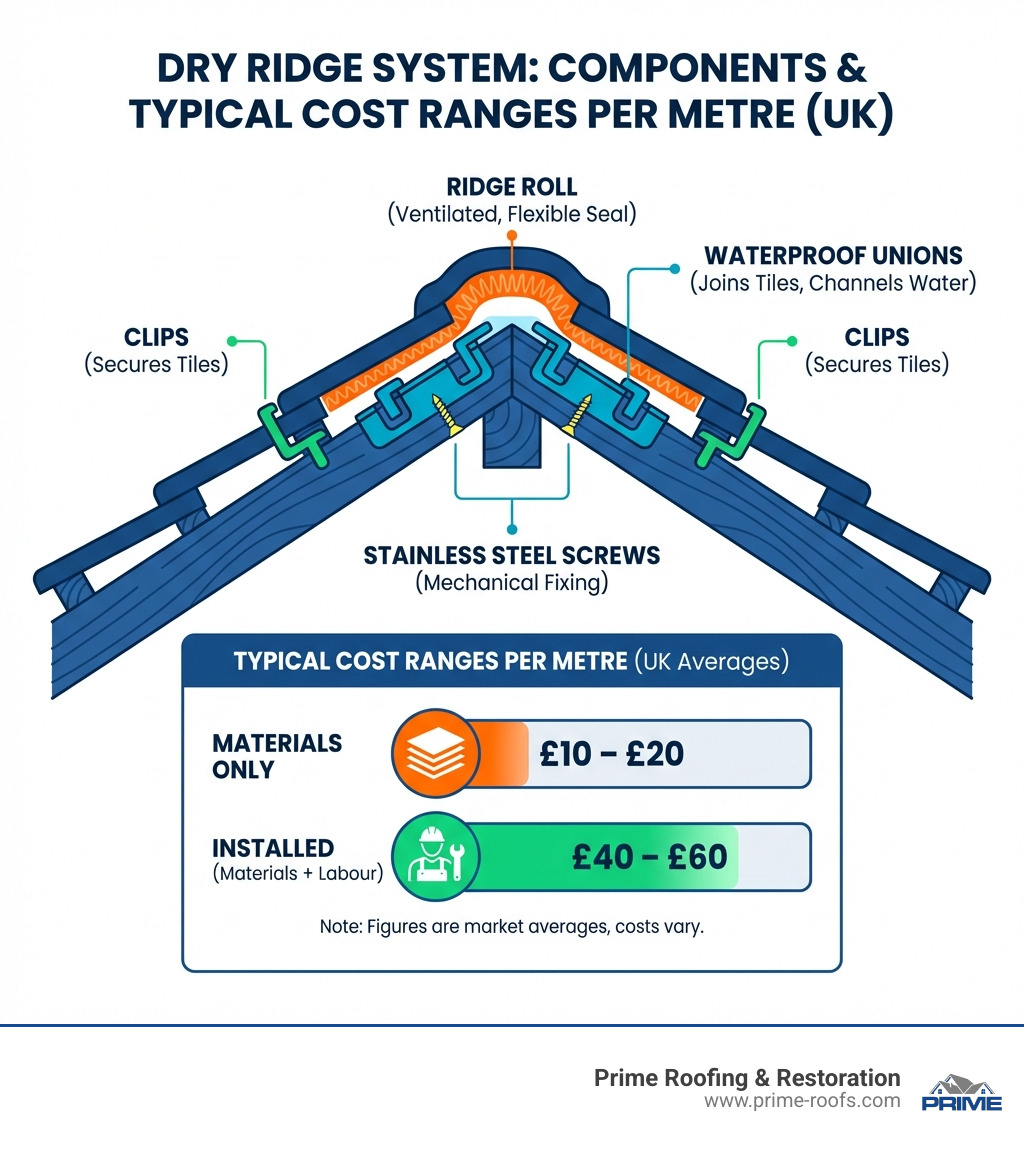
Determining the dry ridge system installation cost is a critical step for any homeowner looking to modernize their roof’s structural integrity and ventilation. On average, a professional installation for a standard residential home typically ranges from £500 to £1,500, which translates to approximately £40 to £60 per linear metre. As a leading roofing company in Alabama, Prime Roofing & Restoration understands that while the terminology might vary slightly between the UK and the US (where we often refer to ridge vents and mechanical fastening), the core principles of durability and long-term value remain the same.
A dry ridge system utilizes high-grade mechanical fixings—such as stainless steel screws, waterproof unions, and ridge rolls—to secure ridge tiles. This modern approach replaces the traditional mortar bedding method, which has been the industry standard for decades but is notoriously prone to cracking, shrinking, and weather-induced degradation. In the UK, the shift toward dry fix systems was solidified by BS 5534, the British Standard for slating and tiling, which now mandates mechanical fixing for all new roof installations to ensure safety against increasing storm intensities.
Quick Cost Breakdown Table
| Project Component | Typical Cost Range (UK/Global Avg) | Alabama/US Equivalent (Est.) |
|---|---|---|
| Average Total Project | £500 – £1,500 | $700 – $2,000 |
| Per Linear Metre (Installed) | £40 – £60 | $15 – $25 per linear foot |
| Materials Only (Per Metre) | £10 – £20 | $5 – $10 per linear foot |
| Labour (Per Hour/Per Person) | £30 – £50 | $45 – $75 |
| Standard Semi-Detached House | ~£800 | $1,100 |
| Dry Hip Ridge (Per Hip) | £300 – £400 | $400 – $550 |
These figures reflect market averages as of 2024. However, your specific dry ridge system installation cost will fluctuate based on several variables: the pitch of your roof, the height of the building (which dictates scaffolding needs), your geographic location, and whether the existing ridge tiles can be salvaged or require full replacement.
The Evolution of Ridge Security
For over a century, sand and cement mortar was the only way to keep ridge tiles in place. While effective in the short term, mortar is a “wet” trade that is highly dependent on weather conditions during installation. If it rains too soon, the mix washes away; if it’s too hot, it dries too quickly and cracks. Furthermore, as a house naturally settles and the roof timbers expand and contract with temperature changes, the brittle mortar inevitably fails.
A dry ridge system solves these issues by providing a flexible, weather-resistant barrier. It includes a ventilated ridge roll that sits under the tiles, allowing air to escape from the attic while preventing rain and pests from entering. This is why many homeowners now view the dry ridge system installation cost not as an expense, but as a long-term investment in their home’s health.
As someone who has spent years assessing and repairing roofs across Alabama with Prime Roofing & Restoration, I’m Bill Spencer, and I’ve seen firsthand how traditional methods fail under the pressure of high winds and humidity. Whether you are in Birmingham, Hoover, or Alabaster, the principles of evaluating material quality and labor expertise are universal. In the following sections, we will dive deep into the technical benefits, the granular cost factors, and why this system is the gold standard for modern roofing.
Handy dry ridge system installation cost terms and related guides:
Understanding the Dry Ridge System and Its Technical Benefits
At its core, a dry ridge system is a “mechanical fix” solution. Unlike the old-school method where ridge tiles are bedded into a heavy mound of sand and cement (mortar), the dry fix method uses stainless steel screws, clamps, and waterproof unions to hold everything in place. It is essentially a high-performance assembly for the peak of your home, designed to withstand the elements for decades.
Superior Ventilation and Attic Health
One of the primary reasons we recommend these systems during a professional roof replacement is the integrated ventilation. Traditional mortar creates an airtight seal at the ridge. While that might seem protective, it actually traps moisture-laden air inside your attic. This moisture comes from everyday activities like showering, cooking, and even breathing.
When this warm air hits the cold underside of your roof deck, it condenses into water droplets—a phenomenon known as “attic sweat.” Over time, this leads to mold growth, wood rot in your rafters, and a decrease in the effectiveness of your insulation. A dry ridge system features a breathable ridge roll that allows this moisture to escape while keeping the exterior weather-tight. According to Angi, proper ridge ventilation is one of the most cost-effective ways to extend the life of your entire roofing system.
Wind Resistance and Structural Movement
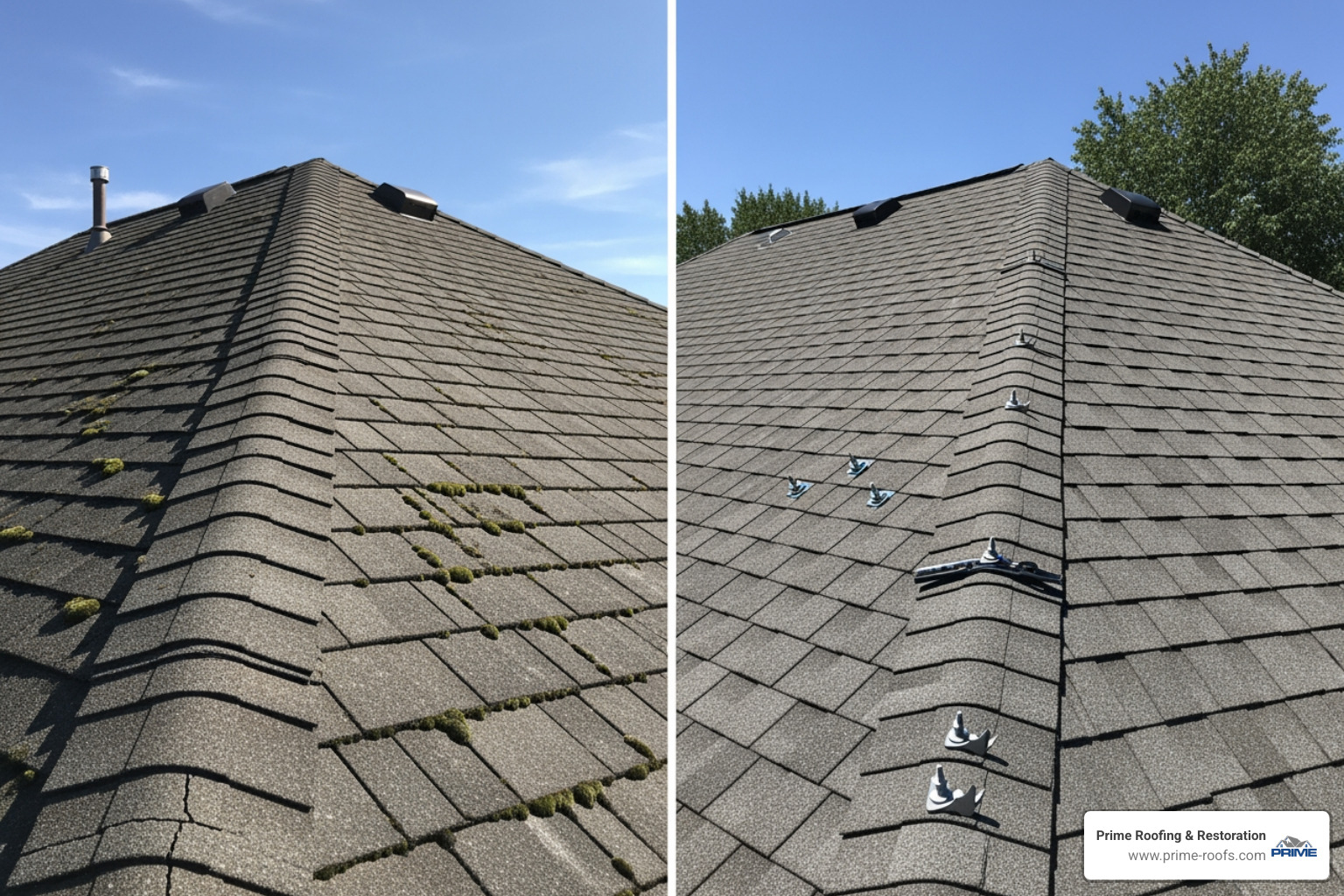
Roofs are dynamic structures. They expand in the summer heat and contract in the winter. In Alabama, where we experience rapid temperature swings and intense storm seasons, this movement is significant. Mortar is a rigid material; it cannot flex. When the roof moves, the mortar cracks. Once a crack forms, wind can get underneath the ridge tile, creating a “wing” effect that can lift the tile off the roof entirely.
Dry ridge systems are designed to be flexible. The mechanical fixings allow for subtle movements without compromising the seal. This makes them significantly more resistant to high winds and gale-force storms. In fact, many insurance companies look favorably upon dry fix systems because they are far less likely to result in “blown-off” tile claims during a hurricane or severe thunderstorm.
Maintenance-Free Longevity
If you have ever had to hire a roofer to “re-point” your ridge tiles, you know how annoying (and expensive) that recurring maintenance can be. Re-pointing involves scraping out old, crumbling mortar and applying a new layer. It is a temporary fix that usually needs to be repeated every 10 to 15 years.
With a dry fix system, there is no mortar to degrade. The stainless steel screws and UV-stabilized plastic components are built to last as long as the tiles themselves. This “fit and forget” nature is a major selling point for homeowners who want to minimize their long-term home maintenance budget. This durability is why modern building standards like BS 5534 now mandate these systems for new builds and major refurbishments.
Breaking Down the Dry Ridge System Installation Cost
When you receive a professional roof estimate, the dry ridge system installation cost is usually broken down into three main categories: materials, labor, and overhead (such as scaffolding and waste disposal). Understanding these components helps you identify where your money is going and ensures you aren’t being overcharged.
Detailed Component Pricing
| Component | Estimated Cost | Details |
|---|---|---|
| Materials (Per Metre) | £10 – £20 | Includes ridge roll, unions, screws, and clips. |
| Labor (Per Metre) | £20 – £30 | Based on standard installation difficulty and height. |
| Total (Per Metre) | £40 – £60 | The “all-in” price for the ridge itself. |
| Total Project (Average) | £500 – £1,500 | Range for most residential homes (10m – 20m). |
| Hourly Labor Rate | £18 – £25 | Per roofer (usually a two-person team is required). |
For a more comprehensive look at how these prices fit into a larger renovation, you can check out this detailed cost guide for roofing projects.
Average Cost per Metre and Property Type
If you are measuring your own roof to get a ballpark figure, use the £50 per linear metre average. However, the type of property you own will significantly impact the final bill:
- Terraced House: Usually has a shorter ridge line (approx. 5-7 metres). You might expect a cost of £400 – £600.
- Semi-Detached House: Typically features a 8-12 metre ridge. Expect £600 – £900.
- Detached House: Can have ridge lines exceeding 15-20 metres, often with multiple hips. Costs can range from £1,000 – £2,000+.
Factors Influencing Your Quote
No two roofs are exactly alike, and several variables can push your quote higher or lower:
- Roof Size and Complexity: A simple straight ridge is the most straightforward to install. If your roof has multiple “hips” (the sloping joints where two roof planes meet), you will need a dry hip system. These are more complex because each hip tile must be individually secured with specialized clips and trays, typically costing £300 – £400 per hip.
- Access and Scaffolding: This is often the “hidden” cost that surprises homeowners. If your home is three stories tall, has a steep pitch, or has a conservatory or extension that prevents ladder access, your roofer will need scaffolding. This can add anywhere from £300 to £1,000 to the total bill depending on the complexity of the rig.
- Geographic Location: Labor rates vary by region. In major metropolitan areas like London or Birmingham (UK), or even Birmingham, AL, labor costs are higher than in rural areas due to overhead and demand.
- Condition of Existing Tiles: If your existing ridge tiles are in good shape, we can often clean and reuse them. However, if they are cracked or the old mortar is fused to them so tightly that they break during removal, you’ll need to budget for new tiles, which adds roughly £5-£10 per tile to the material cost.
If you’re looking for local expertise in our neck of the woods, our expert roofers in Alabaster, AL can provide a localized breakdown of these costs and help you navigate the best options for your specific roof type.
Dry Ridge vs. Traditional Mortar: A Long-Term Cost Analysis
It is tempting to choose a traditional mortar fix because the initial dry ridge system installation cost can be slightly higher than a simple re-pointing job. However, looking at the “life-cycle cost” tells a much more compelling story for the dry fix method.
The Mortar Maintenance Cycle
Mortar is a sacrificial material. It is designed to be the “weak link” that takes the brunt of weather damage. Consequently, it usually needs professional attention every 10 to 15 years. In areas with high heat, frequent storms, or heavy frost-thaw cycles, that interval can be even shorter. Every time you hire someone to patch up cracked mortar, you are paying for labor, materials, and often scaffolding. Over a 30-year period, you might pay for three or four repair jobs, each costing several hundred pounds/dollars.
The Dry Fix Financial Advantage
A dry ridge system is designed to last as long as the roof tiles themselves—often 30 to 50 years. Because it is a mechanical attachment, it doesn’t suffer from the “freeze-thaw” cycle where water enters small cracks, freezes, expands, and destroys the bond.
- Initial Cost: £800 (Dry Ridge) vs. £400 (Mortar)
- Maintenance over 30 years: £0 (Dry Ridge) vs. £1,200+ (Multiple mortar repairs and re-pointing)
- Total Savings: ~£800 over the life of the roof.
Protecting Your Interior
Beyond the ridge itself, a failing mortar ridge is a primary entry point for water. A single leak can damage attic insulation, rot structural timbers, and ruin interior ceilings. When you consider that a failing mortar ridge can lead to a much higher estimate for roof repair for your home’s interior, the dry ridge system is the clear winner for value and peace of mind. It eliminates the risk of a ridge tile blowing off and causing secondary damage to your car, your property, or even a passerby.
Additional Expenses to Factor Into Your Budget
When budgeting for your dry ridge system installation cost, it is important to look beyond just the ridge line. There are several “add-ons” and potential complications that often pop up during a professional inspection:
- Dry Hip Systems: As mentioned, these cover the diagonal edges of your roof. They require extra components like hip trays and special clips to ensure they are watertight. Because they are more labor-intensive to align, they carry a premium price.
- Old Tile Removal and Disposal: If your current ridge is bedded in heavy mortar, that old concrete has to be chipped away and disposed of. Some contractors include waste disposal in their quote; others charge a “skip hire” fee or a disposal fee per ton. Always ask if waste removal is included.
- Structural Timber Repairs: Sometimes, once the old ridge tiles are removed, we find that the “ridge tree” (the main timber beam) or the top battens have suffered from rot due to previous leaks. Fixing this before the new system goes on is essential for safety but will add to the labor and material total.
- Replacing Shingles or Slates: It is common for a few field tiles (the main roof tiles) to break during the removal of old, stubborn mortar. You may need to factor in the cost to replace roof shingles or slates near the peak to ensure the new ridge roll has a clean, flat surface to bond to.
- Dry Verge Systems: While you are having the ridge done, many homeowners choose to install a “dry verge” system on the gable ends of the roof. This provides a similar maintenance-free finish for the edges of the roof and usually costs between £15 and £25 per linear metre.
Frequently Asked Questions about Dry Ridge Systems
Is a £2,500 quote reasonable for a 15m ridge?
A £2,500 quote can be reasonable if it includes full scaffolding, the removal of very thick/difficult mortar, and significant structural repairs to the ridge timber. While a standard 15m installation often costs between £750 and £1,200, premium quotes usually account for difficult access (like a three-story height) or the replacement of numerous damaged tiles. Always ask for a line-item breakdown to see where the costs are allocated.
Do dry ridge systems comply with building regulations?
Yes, dry ridge systems are mandatory for compliance with modern building codes like BS 5534 in the UK. They satisfy requirements for both mechanical fixing (ensuring tiles don’t blow off) and roof space ventilation (preventing rot). In the US, while not always “mandatory” by code in every state, they are considered best practice by the National Roofing Contractors Association (NRCA).
Can I install a dry ridge system myself to save money?
DIY installation is not recommended for several reasons. First, working at the peak of a roof is inherently dangerous and requires specialized safety equipment. Second, the precision required for a watertight seal is high. Improperly aligned ridge rolls or incorrectly seated unions will lead to leaks that are difficult to trace, potentially voiding your roof warranty and causing expensive internal damage. If you have specific questions about your roof’s condition, you can reach a licensed professional at 205-530-0130 for guidance.
How long does the installation take?
For a standard semi-detached home, a professional two-person team can usually complete a dry ridge installation in one working day. This includes removing the old mortar, cleaning the tiles, and installing the new mechanical system. If scaffolding needs to be erected and struck, add another day to the timeline.
Will a dry ridge system work on any roof?
Dry ridge systems are compatible with most concrete and clay ridge tiles. However, they may not be suitable for very old, handmade tiles that are irregular in shape, or for certain types of stone slate roofs. A professional roofer can determine compatibility during an initial inspection.
Conclusion: Is the Dry Ridge System Worth the Investment?
Investing in a dry ridge system is one of the smartest upgrades you can make for your home’s longevity. While the initial dry ridge system installation cost might seem like a significant upfront expense compared to a quick mortar patch, the combination of storm resistance, attic ventilation, and zero maintenance makes it the most cost-effective choice over the life of your property.
At Prime Roofing & Restoration, we pride ourselves on being licensed experts who treat your home like our own. We understand that a roof is more than just shingles and tiles; it is the primary shield protecting your family and your investment. Whether you are in Alabaster, Hoover, Birmingham, or the surrounding Alabama areas, we offer 24/7 service and use only the highest quality materials to ensure your roof is built to last.
Don’t wait for your old mortar to crumble and cause a leak. Budget for a permanent solution today and enjoy the peace of mind that comes with a mechanically secured, ventilated roof.
Ready to secure your home? Schedule your expert roof assessment online or call us directly. We are here to help you protect what matters most.
Contact Information
Prime Roofing & Restoration
3500 Blue Lake Dr Suite 225, Birmingham, AL 35243
Phone: 205-530-0130
View our location on Google Maps