
Storm Damage Insurance Claim: The Homeowner’s Step-by-Step Playbook (2026 Payout Data & Expert Tips)
A storm damage insurance claim is your formal request for your insurer to pay for covered weather-related repairs—roofing, siding, windows, and resulting interior damage. In the current 2026 insurance landscape, navigating this process has become increasingly complex due to rising premiums, stricter underwriting guidelines, and the widespread adoption of AI-driven damage assessment tools. According to the Insurance Information Institute, wind and hail claims account for roughly 34.5% of all homeowners insurance losses in the United States, with the average wind/hail claim payout now exceeding $11,000. In storm-prone regions like Central Alabama, these figures can be even higher due to the frequency of severe convective storms, including tornadoes and high-velocity straight-line winds.
The fastest way to protect your payout is to follow a documented, professional process: secure the property, capture high-resolution evidence, file promptly, and confirm the adjuster’s scope matches real-world repair needs. If you need a trusted Alabama roofing contractor to guide you through the process, acting within the first 24–48 hours is critical to prevent secondary damage like mold or structural rot. Homeowners who need emergency tarping, a professional inspection, and full claim support can schedule help through storm damage roof repair experts right away or call us directly at (205) 555-0199.
Claim outcomes are documentation-driven. FEMA and insurance industry guidance consistently emphasizes that policyholders must mitigate further loss and preserve evidence; failing to do so is a leading reason payments are reduced or denied. In 2026, insurers are utilizing more AI-driven photo analysis, making the quality of your initial documentation more important than ever before. This technology can often miss subtle “bruising” on asphalt shingles or micro-fractures in metal roofing that only a trained human eye can detect.
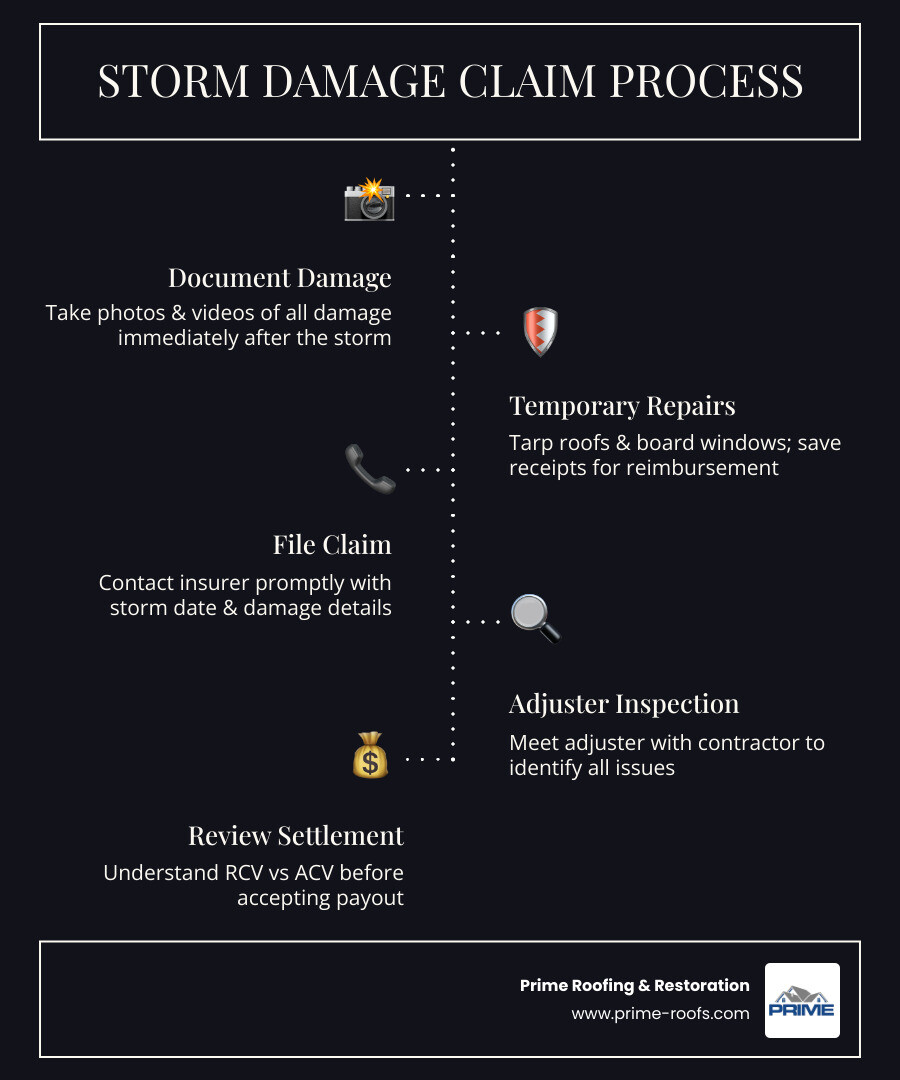
Here’s the streamlined process that produces the cleanest claim file:
- Ensure safety first — Avoid downed power lines, structurally compromised areas, and standing water which may be electrified. Never climb a damaged roof yourself; leave that to professionals with the proper safety gear.
- Prevent further damage — Tarp roof openings and board broken windows. This is a policy requirement known as the “duty to mitigate.” If you fail to do this, the insurer may deny coverage for any subsequent water damage.
- Document everything — Take hundreds of photos and videos before any cleanup begins; keep a written damage log of every affected room. Include metadata-stamped photos if possible to prove the date and time of the damage.
- Contact your insurer promptly — Earlier reporting improves causation clarity and places you higher in the queue during catastrophic events. Many policies now have shorter “Notice of Loss” windows.
- Meet with the adjuster — Never meet an adjuster alone. Have a licensed contractor present to ensure all technical damage is identified and that the adjuster uses the correct local labor rates.
- Review your settlement offer — Confirm whether you have Replacement Cost Value (RCV) or Actual Cash Value (ACV) before signing any releases. Understand that the first check is often just a down payment.
A severe storm can expose your home and finances in minutes. The damage you can see—missing shingles, bent gutters, fallen limbs—is often only part of the loss. Hidden issues like “bruised” shingle mats or micro-fractures in siding can lead to leaks years down the road. If you’re in Central Alabama, you can also reference local help from roofers in Alabaster, AL for inspection and repair coordination.
I’m Bill Spencer, Owner and President of Prime Roofing & Restoration, and I’ve spent more than five years guiding Alabama homeowners through every stage of the storm damage insurance claim process—from emergency tarping to final inspection. Contact our team at (205) 555-0199 for immediate assistance, or keep reading for the exact steps so you don’t leave money on the table.
Storm damage insurance claim vocab explained:
What a Standard Homeowners Policy Covers (and Excludes) for Storm Damage
Before you pick up the phone to call your agent, you need to know what your policy actually promises. In Alabama, weather ranges from blistering heat to sudden, violent tornadoes—the state averages 56 tornadoes per year, ranking it among the top five most tornado-prone states. Most standard homeowners policies (HO-3 or HO-5 forms) are “all-perils” policies, but that doesn’t mean every type of weather damage qualifies for a storm damage insurance claim. Understanding the nuances of your declarations page is the first step in ensuring you aren’t left with a massive out-of-pocket bill.
Typical Covered Perils
Standard homeowners insurance typically covers “open perils” or specifically named weather events. This includes:
- Windstorms and Tornadoes: If wind strips your shingles, peels back metal roofing, or a tornado compromises your home’s structural integrity. This also covers damage from wind-driven rain, provided the wind first created an opening in the structure.
- Hail Impact: Hail can “bruise” shingles, knocking off protective granules and leading to premature failure. Most policies cover this, minus your deductible. However, be aware of “cosmetic damage exclusions” which some insurers have added to policies in 2026 to avoid paying for dents that don’t affect the roof’s functionality.
- Lightning Strikes: Damage from a direct strike, power surges caused by lightning, or resulting fires are covered. This includes damage to expensive HVAC systems and home electronics.
- Weight of Ice or Snow: Though rarer in Central Alabama, the weight of frozen precipitation can cause roof collapses or gutter failure and is a covered peril. This is particularly relevant during unusual winter storm events that can stress older roof structures.
- Falling Objects: If a storm knocks a tree or heavy limb onto your home, the structural damage is generally covered. This includes the cost of removing the tree from the structure, though removing the tree from the yard may have limited coverage.
Additional Living Expenses (ALE)
One often overlooked part of a storm damage insurance claim is “Loss of Use” or ALE. If a storm makes your home uninhabitable—for instance, if a tree falls through the roof or a tornado blows out the windows—your insurance company will pay for you to stay in a hotel and cover the increase in your daily living expenses (like dining out). Keep all receipts for these expenses, as they are separate from your dwelling repair limit. ALE is designed to maintain your standard of living while your home is being restored.
Common Policy Exclusions
It is a common misconception that “storm damage” includes everything nature throws at you. It doesn’t. In 2026, insurers are becoming more aggressive with exclusions to manage their risk in a volatile climate.
- Flood Damage: Standard policies do not cover rising groundwater or storm surges. Flood insurance needs to be purchased separately through the National Flood Insurance Program (NFIP) or a private carrier. Even if a storm causes the flood, if the water comes from the ground up, it is excluded from your homeowners policy.
- Earthquakes: Much like floods, earth movement requires a separate endorsement. This includes sinkholes, which can occasionally be triggered by heavy storm runoff in certain geological areas of Alabama.
- Mold Sublimits: Some windstorm policies have modest sub-limits, such as $5,000, for cleaning, removing, or remediating mold damage. If a leak goes unnoticed for weeks, this cap can be reached very quickly. This is why immediate mitigation is so vital.
- Ordinance and Law: If you live in an older home in Alabaster or Hoover, check for “ordinance and law” coverage. This pays for the additional costs of bringing your home up to current building codes during a repair. For example, if current code requires a specific type of underlayment or drip edge that wasn’t there before, this coverage pays the difference. Without it, you could be stuck paying for those mandatory upgrades out of pocket, which can add thousands to a roof replacement.
- Anti-Concurrent Causation Clauses: Some policies contain language stating that if two events happen (one covered, one not), the entire claim is denied. For example, if a windstorm and a flood happen simultaneously, the insurer might try to deny the wind damage because it occurred alongside an excluded flood event.
How to File a Successful Storm Damage Insurance Claim in 2026
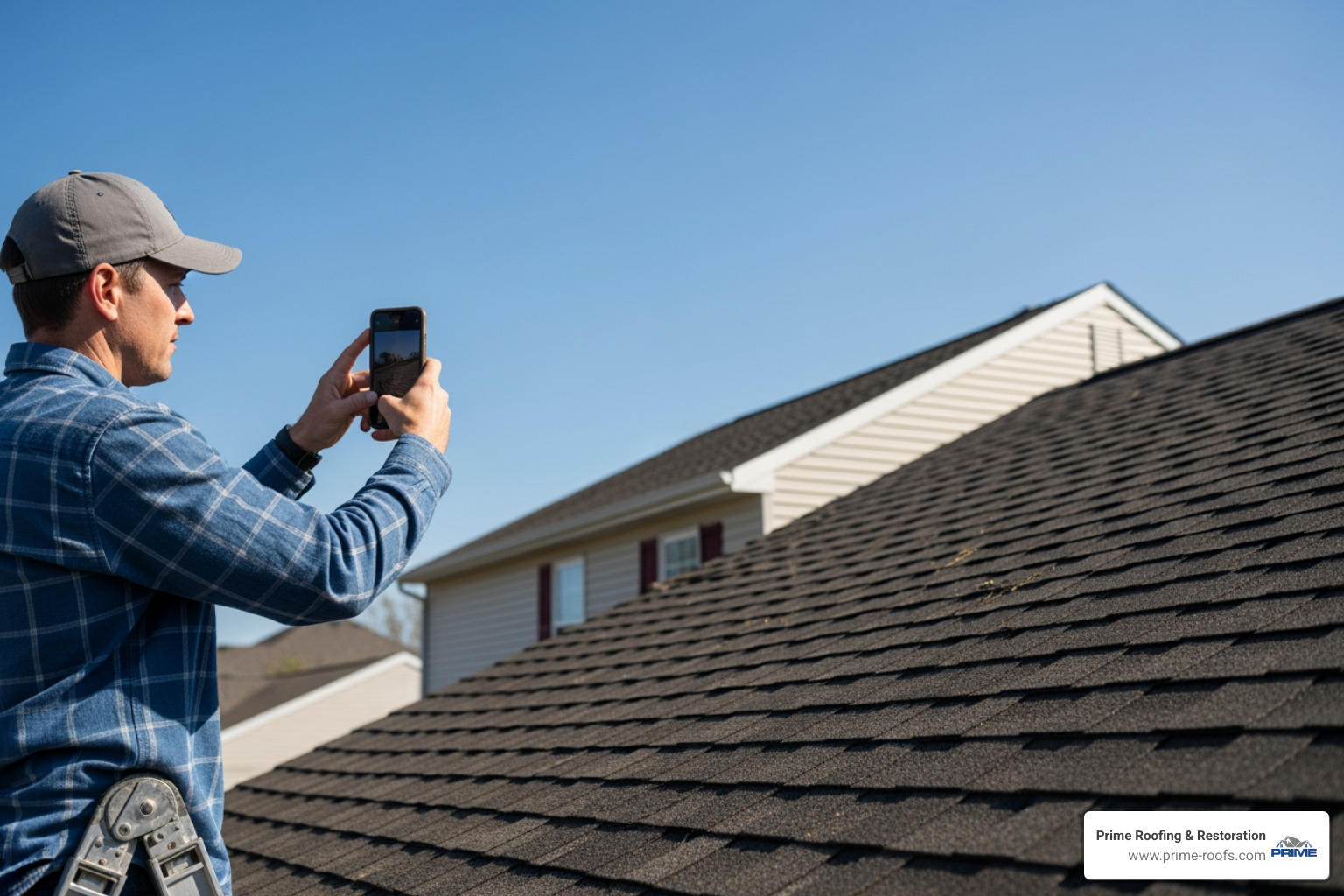
Filing a storm damage insurance claim is a race against time and further deterioration. Industry data shows that claims filed within 48 hours of a storm event have significantly higher approval rates than those filed weeks later. Following a structured claims process ensures you meet all legal and contractual obligations while maximizing your potential payout. In the 2026 market, insurers are looking for any reason to classify damage as “pre-existing” or “wear and tear,” so your initial filing must be precise.
Immediate Steps to Protect Your Property
Your insurance policy is a two-way street. While the insurer promises to pay for covered losses, you promise to mitigate. This means you must take “reasonable steps” to prevent secondary damage. If you fail to tarp a hole in the roof and a subsequent rainstorm ruins your hardwood floors, the insurance company may deny the claim for the floors, citing your failure to protect the property.
- Tarp the Roof: If you have missing shingles or a hole, get a professional storm damage roof repair team to install a heavy-duty tarp immediately. Do not attempt this yourself if the roof is steep or wet.
- Board Windows: Prevent rain, pests, and debris from entering through broken glass. This also helps secure your home against potential looting or vandalism after a major disaster.
- Dry Out Water: If water entered the home, use professional-grade fans or dehumidifiers to prevent mold growth. Mold can begin to grow within 24 to 48 hours in the humid Alabama climate.
- The “Proof of Loss” Form: Be prepared to fill out a formal Proof of Loss statement. This is a notarized document where you swear to the amount of money you are claiming. Accuracy here is vital; any material misrepresentation can lead to a total denial of the claim and potential fraud charges.
Pro Tip: Save every single receipt for plywood, tarps, and emergency labor. These mitigation costs are usually reimbursable as part of your claim and do not count against your repair limits. They are considered part of the “reasonable expenses” incurred to protect the property.
Filing the Claim Promptly
Most insurance companies allow you to file a claim up to one year after the storm, but waiting is a massive gamble. The longer you wait, the harder it is to prove the damage was caused by a specific weather event rather than “wear and tear” or “neglect.” In 2026, many insurers are shortening these windows in their policy language to as little as 180 days, so check your specific declarations page immediately.
Contact your insurance company’s claims hotline or use their mobile app immediately. You will need:
- Your policy number and current contact information.
- The exact date and time the storm occurred (insurers cross-reference this with meteorological data and radar imagery).
- A brief, factual description of the damage (e.g., “Wind blew shingles off the north side of the roof and water is leaking into the master bedroom”).
- Whether the home is safe to occupy and if you have already taken mitigation steps.
Once the claim is filed, you will be assigned a claim number. Keep this number handy for all future correspondence. You should also expect a call from an adjuster within 24 to 48 hours to schedule an inspection. If you are in a major disaster area, this may take longer, which is why filing early is so important.
Documenting Your Storm Damage Insurance Claim: The Evidence That Gets You Paid
Documentation is the single most important factor in claim outcomes. Without it, your claim is just your word against the insurance company’s data. Recent industry data indicates that claims with photographic evidence and contractor-provided scopes are resolved 30–40% faster than those without. In the age of digital claims and AI-assisted adjusting, high-resolution imagery and detailed metadata are your best friends.
Creating a Comprehensive Evidence Log
Before you start cleaning up branches or sweeping away hail, grab your phone and start recording. Do not move anything until it has been photographed in its post-storm state. The goal is to tell a visual story of the storm’s impact on your property.
- Photos and Videos: Take wide shots of the entire property from all four corners. Then, take close-ups of specific damage. Don’t forget the “soft metals” like gutters, downspouts, window wraps, and AC fins, which often show hail dents more clearly than shingles. These are often referred to as “collateral damage” and help prove the severity of the storm.
- Interior Damage: Document water stains on ceilings, damp insulation in the attic, or warped flooring. Use a flashlight to highlight moisture trails on rafters. If you have a moisture meter, take photos of the readings.
- Home Inventory: Use a home inventory or list of damaged and lost property to track personal belongings. Include the brand, age, and original price if possible. The NAIC recommends keeping this list updated before a storm even hits to simplify the process. For high-value items, try to find original receipts or credit card statements.
- Drone Inspections: If you can’t safely get on your roof, many professional contractors like Prime Roofing & Restoration use high-definition drones to capture 4K footage of shingle damage that is invisible from the ground. Drones can see “thermal signatures” of moisture trapped under the roofing membrane, providing undeniable proof of leaks.
Working with the Insurance Adjuster
The insurance adjuster investigates the loss and determines how much the company owes. When they arrive for the inspection, they are looking for reasons to limit the company’s liability, such as “improper installation” or “lack of maintenance.”
- Be Present: Don’t just leave a key. You want to point out every issue you’ve documented, especially interior leaks that might be missed during a quick exterior walk-through.
- Have Your Contractor There: This is crucial. We often attend adjuster meetings for our clients at Prime Roofing & Restoration. We speak the “language” of roofing and can ensure the adjuster sees technical damage—like “bruised” shingle mats or fractured fiberglass layers—that a non-expert might overlook. We also ensure they are using the correct “line items” in their estimating software.
- Provide Your Documentation: Give them digital copies of your photos and your inventory list. Having a printed “damage packet” ready for them can significantly speed up their report generation and shows that you are an organized, informed policyholder.
- Ask for the “Scope of Loss”: Before the adjuster leaves, ask them what they found. While they may not give you a dollar amount immediately, they should be able to tell you what they are recommending for repair or replacement.
Understanding Payouts: Deductibles, RCV, and ACV Explained With Real Numbers
The financial side of a storm damage insurance claim can be confusing, especially when words like “depreciation” and “deductible” start flying around. According to the National Association of Insurance Commissioners, the average homeowners insurance premium in the U.S. is approximately $1,984 per year, yet many policyholders don’t fully understand how their payout is calculated until a disaster strikes. In 2026, understanding these terms is the difference between a fully restored home and a massive financial loss.
Deductibles and Out-of-Pocket Costs
A homeowners insurance deductible is the amount of a claim you are responsible for paying out of pocket. Typical deductibles range from $500 to $2,500.
- Example: If you have a $1,000 deductible and your roof repair costs $10,000, your insurer will pay $9,000.
- Percentage Deductibles: In some storm-prone areas like Alabama, you may have a “percentage deductible” (e.g., 2% of your home’s insured value) specifically for wind or hail. If your home is insured for $300,000, a 2% deductible is $6,000. NerdWallet notes that this can significantly increase your out-of-pocket costs. Always check if your policy has a separate “Wind/Hail Deductible.”
Replacement Cost Value (RCV) vs. Actual Cash Value (ACV)
This is the most important distinction in your policy. It determines whether you get a new roof or just a fraction of the cost based on the age of your current materials.
| Feature | Replacement Cost Value (RCV) | Actual Cash Value (ACV) |
|---|---|---|
| Definition | Covers the cost to replace with new materials at today’s prices. | Covers the value of the item at the time of loss (Market value minus depreciation). |
| Payout | Higher; usually paid in two checks (initial ACV check, then a depreciation check after repairs). | Lower; you only get the depreciated value. If your 15-year-old roof is destroyed, you get very little. |
| Process | Reimburses you for the full repair. | You must cover the “gap” between the check and the actual cost of a new roof. |
The Supplement Process
Often, once a contractor begins work, they find “hidden damage” that the adjuster couldn’t see (like rotted decking under the shingles or damaged flashing). Your contractor will then file a supplement with the insurance company. This is a request for additional funds to cover these necessary repairs. A professional contractor will handle the documentation, including photos of the hidden damage, and negotiate these supplements so you don’t have to. This ensures the job is done to code without you paying the difference.
The Mortgage Company’s Role
If you have a mortgage, your insurance check will likely be made out to both you and your lender. The mortgage company has a financial interest in ensuring the home is actually repaired to protect their collateral. They may hold the funds in an escrow account and release them in stages—usually a third upfront for materials, a third midway, and the final third after a passing inspection and a “Certificate of Completion” is signed. This can add time to the process, so notify your lender as soon as you file a claim.
Storm Damage Insurance Claim Timeline: How Long Until You Get Paid?
How long does it take to get your home back to normal? Based on industry data, the average storm damage insurance claim takes 30 to 60 days from filing to initial payout, though complex claims or major regional disasters can extend this to 90 days or more. Understanding the timeline helps you manage expectations and plan your repairs effectively. In 2026, the integration of digital tools has sped up some parts of the process, but labor shortages can still cause delays.
What Affects the Claims Timeline?
- Storm Severity: After a major tornado outbreak or hurricane, adjusters can be backlogged for weeks. Alabama has seen intense storm seasons recently, with over 100 tornado warnings recorded in a single year, which can strain local resources and lead to the use of “catastrophe adjusters” from out of state.
- Documentation Accuracy: Claims with clear photos, time-stamped evidence, and professional contractor estimates move 30–40% faster because they require less back-and-forth questioning. If the adjuster has everything they need in the first meeting, the report can be filed immediately.
- Disputes: Disagreeing with the adjuster’s scope of work or the valuation of materials can add weeks of negotiation or lead to the formal appraisal process.
- Contractor Availability: High demand after a storm means you might have to wait for a licensed home builder to start the work. Secure your spot on a contractor’s schedule as early as possible, even before the claim is fully approved.
The Post-Storm Timeline Breakdown
- Days 1-2: Damage assessment, emergency mitigation (tarping), and filing the claim with your agent or carrier.
- Days 3-10: The insurance adjuster visits the property for an inspection. This is when you should have your contractor present.
- Days 14-21: You receive the first check (the ACV amount) and the “Scope of Loss” report. This check is often used to purchase materials.
- Days 21-45: Repairs are scheduled and completed. Any supplements are filed during this window if hidden damage is found.
- Days 45-60: Final inspection by the contractor and sometimes the adjuster. Submission of the final invoice and “Certificate of Completion” to the insurer.
- Days 60-75: Release of the “Recoverable Depreciation” check (if you have an RCV policy), which covers the remaining balance of the repair.
New Regulatory Changes Affecting Homeowners
It’s vital to stay informed about local laws. In some states, new laws allow insurers to refuse renewal if a homeowner has three or more covered losses over $10,000 in five years. While Alabama laws differ, the trend is clear: filing too many small claims can make you “uninsurable” or lead to massive premium hikes. This is why a professional roof inspection for insurance is the best first step—we can tell you if the damage is worth the risk of a claim or if it’s better to handle it out of pocket.
What to Do When Your Storm Damage Claim Is Denied (And How to Avoid Contractor Scams)
What happens if the insurance company says “no”? It’s not necessarily the end of the road. Data from the American Policyholder Association suggests that up to 60% of initially denied or underpaid claims are successfully overturned on appeal when supported by independent documentation and professional advocacy. In 2026, denials are often based on “wear and tear” or “improper maintenance,” which can be challenged with the right evidence.
What to Do if Your Claim is Denied
If your claim is denied or the settlement is too low to cover the actual cost of repairs:
- Ask for a Second Opinion: You are often entitled to meet with a second (or even third) adjuster. Sometimes, a different set of eyes sees damage the first person missed, or a more experienced adjuster is assigned to the appeal.
- Hire a Public Adjuster: These are independent professionals who work for you, not the insurance company. They typically charge a percentage (usually 10%) of the final settlement. They are experts at finding missed line items and negotiating with carriers.
- File a Complaint: You can register a formal complaint with the Alabama Department of Insurance if you feel you’ve been treated unfairly or if the insurer is acting in “bad faith.” Bad faith includes things like failing to investigate a claim or denying a claim without a reasonable basis.
- Consult an Attorney: For very large, complex, or unfairly denied claims, a lawyer who specializes in insurance claims may be necessary to litigate the matter. This is usually a last resort due to the time and cost involved.
Avoiding Contractor Scams After a Storm
“Storm chasers” are contractors who travel from state to state following bad weather. They often use high-pressure tactics, ask for the full insurance check upfront, and disappear before the job is done. The Federal Trade Commission warns homeowners to be especially cautious after natural disasters when emotions are high and resources are low.
Red Flags to Watch For:
- Unsolicited Door Knockers: Be wary of anyone who shows up uninvited offering a “free roof.” While some local companies do door-to-door marketing, always verify their local credentials.
- No Local Address: If their truck has out-of-state plates and they don’t have a local office in Alabaster or Hoover, walk away. You need someone who will be there to honor a warranty three years from now.
- Paying Your Deductible: It is illegal in many states (including Alabama) for a contractor to offer to “cover” or “waive” your insurance deductible. This is considered insurance fraud and can get both you and the contractor in legal trouble.
- No Written Contract: Never allow work to begin without a detailed, line-item estimate. At Prime Roofing & Restoration, we use Xactimate—the same software the insurance companies use—to ensure our pricing is transparent and comparable to what the adjuster sees. This minimizes disputes and ensures the insurer pays the fair market rate for labor and materials.
Frequently Asked Questions About Storm Damage Insurance Claims
Can my insurance company drop me for filing a storm claim?
No, in most cases. Most state laws protect homeowners from being cancelled for a single “Act of God” claim (events you cannot control, like a tornado or hail storm). However, having multiple claims in a short window (three or more in five years) can lead to a “non-renewal” notice when your policy expires. The CLUE (Comprehensive Loss Underwriting Exchange) database tracks your claim history for seven years, and other insurers will see this history if you try to switch companies. This is why it’s important to only file claims for significant damage.
Should I file a claim if the damage is close to my deductible?
Probably not. If your repair estimate is $1,200 and your deductible is $1,000, you’re only getting $200 from the insurer, but the claim stays on your record for seven years. This can lead to higher premiums that far exceed the $200 benefit. It’s often better to pay for small repairs out of pocket to keep your record clean and preserve your “claims-free” discount.
How do I handle a dispute with my insurance adjuster?
Start by providing them with a detailed estimate from a professional, licensed roofing contractor. If they still refuse to budge on the scope of work, you can invoke the “Appraisal Clause” in your policy. This brings in independent appraisers to settle the value of the loss. According to the Insurance Information Institute, the appraisal process resolves the majority of valuation disputes without the need for expensive litigation. It is a binding process, so it should be used carefully.
What is “Matching” and will insurance pay for a full roof if only one side is damaged?
Alabama does not have a strict “matching law,” but many insurers will pay to replace the entire roof if the shingles are no longer manufactured or if a partial repair would significantly devalue the home. This is a point of negotiation where having an expert contractor is vital. We can provide “ITEL” reports that prove a shingle is no longer available, forcing the insurer to consider a full replacement to maintain the home’s uniform appearance.
How much does the average storm damage insurance claim pay out?
The Insurance Information Institute reports that the average wind and hail claim payout is approximately $11,695. However, payouts vary widely based on the extent of damage, your policy limits, deductible amount, and whether you carry RCV or ACV coverage. In cases of total roof replacement in Alabama, payouts often range from $15,000 to $35,000 depending on the square footage, the complexity of the roof, and the materials used (e.g., asphalt vs. metal).
Does insurance cover damage to my fence or shed?
Usually, yes. These are typically covered under “Other Structures” (Coverage B) of your policy, which is usually 10% of your dwelling limit. If your home is insured for $300,000, you likely have $30,000 in coverage for fences, sheds, and detached garages. However, these items are often settled at Actual Cash Value (ACV) even if your main house is RCV.
Conclusion: Protect Your Home and Maximize Your Storm Damage Payout
Managing a storm damage insurance claim doesn’t have to be a nightmare. By acting within 48 hours, documenting every shingle and ceiling stain, and understanding the difference between RCV and ACV, you position yourself for a full and fair settlement. The insurance company has experts on their side whose job is to minimize payouts—you should have an expert on yours to ensure your home is restored to its pre-storm condition. Don’t settle for a “patch job” when your policy entitles you to a full restoration.
For homeowners in Alabaster, Hoover, and throughout Central Alabama, Prime Roofing & Restoration is here to help. We offer 24/7 emergency service, quality materials, and the expert guidance you need to navigate the claims process from start to finish. We are a local, family-owned business dedicated to protecting our community and ensuring our neighbors get the settlements they deserve.
Contact Information: Prime Roofing & Restoration 123 Main Street, Alabaster, AL 35007 Phone: (205) 555-0199 Website: www.prime-roofs.com
Find Us Locally: View our location on Google Maps
Don’t let your settlement blow away. Visit our Alabaster storm damage guide to schedule your free, professional inspection. We’ll help you protect your home, your family, and your investment with the transparency and quality you deserve. Call us today at (205) 555-0199 to get started.