
When Disaster Strikes: Understanding Your Path to Recovery
A damaged roof replacement is an urgent priority when storms or age compromise your home. In Alabama, where the weather can shift from intense heat to severe thunderstorms and tornadoes in a matter of hours, your roof is the primary shield for your family and your largest financial investment. Delaying action leads to secondary damage like mold, structural rot, and electrical hazards that can exponentially increase repair costs. If you’re facing roof damage in Alabama, partnering with a trusted Central Alabama roofing company is the first step to securing your home. You can reach our experts immediately at (205) 555-0123 for a rapid response.
Alabama homeowners face unique challenges. From the humidity of the Gulf Coast to the wind-prone regions of North Alabama, roofing systems are under constant stress. This region is part of “Dixie Alley,” an area known for frequent and violent tornadoes. A single hailstorm can compromise the integrity of your shingles, even if the damage isn’t visible from the ground. This is why understanding the nuances of a damaged roof replacement is critical. It’s not just about putting on new shingles; it’s about restoring the structural integrity of your home and ensuring it meets modern building codes and safety standards. Furthermore, the high humidity in Alabama often leads to the growth of Gloeocapsa magma, a type of algae that feeds on the limestone in asphalt shingles, weakening them over time and making them more susceptible to storm damage.
Quick Action Guide for Damaged Roofs:
- Safety First: Check for hazards like sagging ceilings, water near electrical outlets, or fallen power lines before approaching damaged areas. If the structure feels unstable, evacuate immediately.
- Document Everything: Take clear photos and videos of all damage from the ground. Document interior leaks, damaged personal property, and any debris on your lawn. This evidence is vital for your insurance claim.
- Mitigate Further Damage: Place buckets under leaks or call for emergency tarping. Most insurance policies require homeowners to take reasonable steps to prevent further damage. Failure to do so could result in a partial denial of your claim.
- Call a Professional: Schedule an inspection with a local roofer who understands Alabama’s specific climate challenges. They can identify hidden damage like “bruised” shingles or compromised flashing. Call us at (205) 555-0123 to schedule.
- Contact Your Insurance: File your claim promptly. Provide them with your documentation and the professional assessment from your contractor.
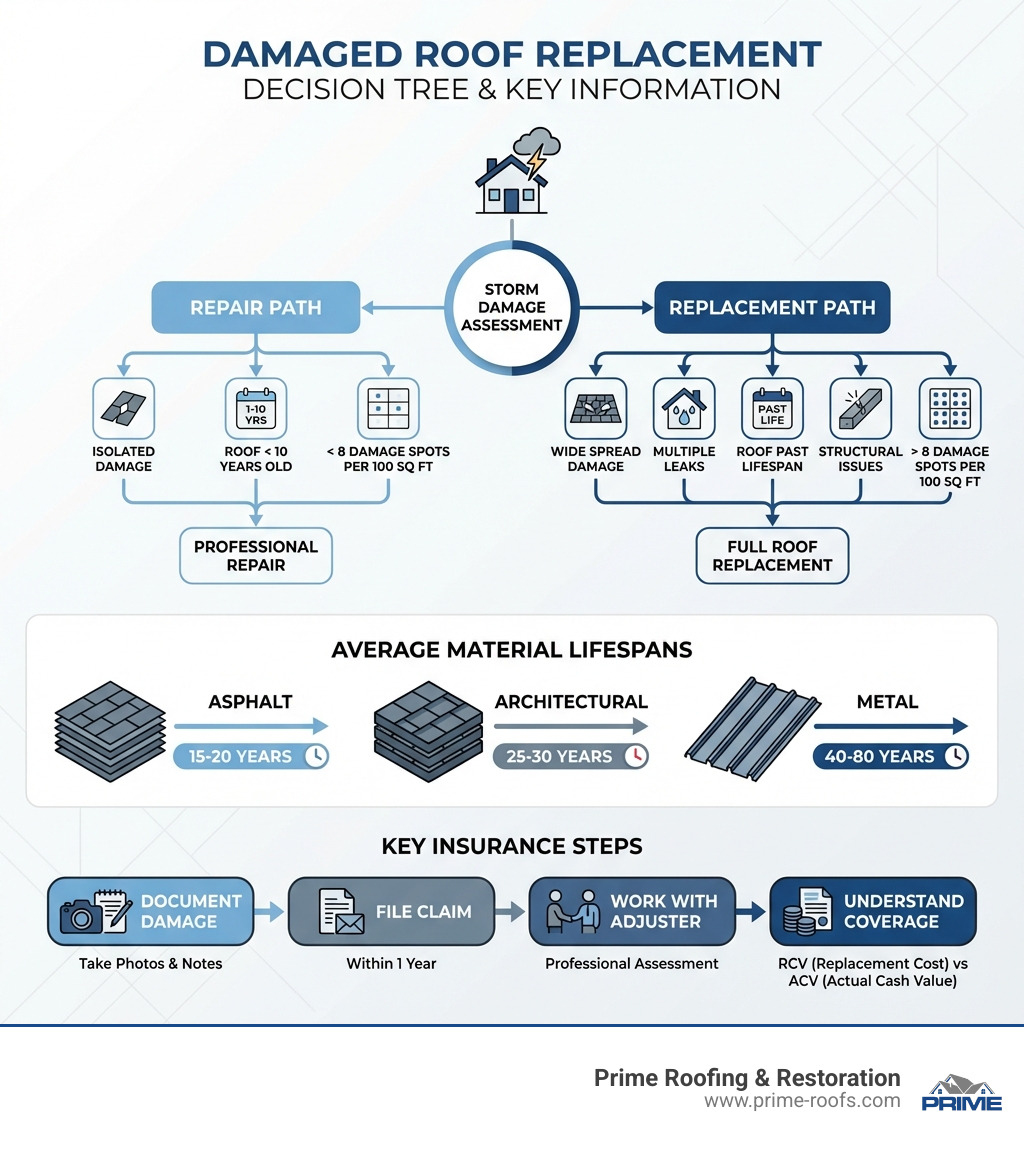
- Decide: Repair or Replace: If damage is widespread, if the roof is past its 15-20 year lifespan, or if the cost of repairs exceeds a significant portion of the replacement cost, a full replacement is the most cost-effective long-term choice.
Standard asphalt roofs in the South typically last 15-20 years due to high UV exposure and thermal expansion. However, severe weather events—common in Alabaster, Birmingham, and Orange Beach—can compromise them instantly. Addressing problems early reduces the risk of catastrophic failure during the next storm season. A proactive damaged roof replacement can also improve your home’s energy efficiency, as modern materials are designed to reflect more sunlight and reduce the load on your HVAC system during Alabama’s sweltering summers.
“At Prime Roofing & Restoration, we guide homeowners through every nuance of the damaged roof replacement process,” says Bill Spencer. “We don’t just patch holes; we turn storm damage stress into an opportunity to install a stronger, more resilient roofing system. By utilizing high-quality materials and adhering to the latest safety standards, we provide a roof backed by industry-leading warranties that will protect your home for decades.”
First Steps: Assessing the Damage After a Storm
After a severe weather event hits Alabaster, Birmingham, or Orange Beach, safety must be your absolute priority. Storms in Alabama often bring more than just rain; they bring high-velocity winds, microbursts, and hail that can cause significant structural issues. Once the storm has passed and it is safe to go outside, a preliminary ground check helps you communicate effectively with your roofer and insurance agent. If you suspect damage, don’t wait; call us at (205) 555-0123 for a professional evaluation.
Immediate Actions for Homeowner Safety
- Check for Structural Hazards: Look for a sagging roofline, cracked exterior walls, or leaning chimneys. If you see these, the structural integrity of the home may be compromised. Evacuate and contact emergency services or a structural engineer.
- Beware of Fallen Power Lines: Alabama storms frequently knock down trees and power lines. Assume all fallen lines are live and extremely dangerous. Keep a safe distance (at least 30 feet) and report them to Alabama Power or your local utility company immediately.
- Look for Ground Hazards: Wear sturdy, closed-toe shoes. Storms often leave behind sharp debris like roofing nails, broken glass, and splintered wood.
- Turn Off Utilities: If you notice water leaking near light fixtures, electrical panels, or appliances, shut off the main power at the breaker box to prevent electrical fires or shocks.
- Emergency Tarping: For active leaks, emergency tarping is essential to prevent water from destroying your drywall, insulation, and flooring. We offer 24/7 emergency roofing services to secure your home before the next rain cloud arrives. Call (205) 555-0123 for immediate assistance.
Documenting damage immediately is critical for a successful insurance claim. Our guide on what to do after a storm damages your roof offers a detailed checklist to ensure you don’t miss any vital steps.
Identifying Common Types of Storm Damage
When assessing your roof, stay on the ground. Never climb onto a damaged or wet roof. Use binoculars to get a closer look at the following indicators:
- Missing or Lifted Shingles: High winds create “uplift,” which can rip shingles entirely off the roof or break the adhesive seal. Even if the shingle is still there, a broken seal allows water to seep underneath during the next rain. This is particularly common on the windward side of the house or along the ridges and eaves.
- Dented Flashing and Vents: Hail often leaves its mark on the softer metal components of your roof. Check the metal flashing around chimneys, valley liners, and roof vents for dents or punctures. According to the National Oceanic and Atmospheric Administration (NOAA), hail can reach speeds of over 100 mph, easily piercing metal and asphalt.
- Significant Granule Loss: Look for dark, bald spots on your shingles or an accumulation of granules in your gutters and at the base of downspouts. Granules protect the asphalt from UV rays; without them, the shingle will brittle and fail rapidly. In Alabama, the intense sun accelerates this degradation once the granules are gone.
- Punctures and Holes: Fallen tree limbs are a common sight after Alabama storms. Even small branches can puncture the roof deck, creating a direct path for water to enter your attic.
- Curled or Cracked Shingles: Wind can catch the edges of shingles, causing them to curl. Hail impact can cause circular cracks (often called “bruising”) that are hard to see but devastating to the shingle’s lifespan. These bruises often lead to leaks months or even years after the storm.
- Sagging Areas: Dips in the roofline often indicate that the wooden decking underneath has become saturated and is beginning to rot or fail structurally. This requires immediate attention to prevent a total collapse.
- Interior Water Stains: Check your ceilings, walls, and the inside of your attic for new yellow or brown stains, peeling paint, or damp insulation. Use a flashlight to look for “shining” spots on the rafters, which indicate active moisture.
For more specific details, see our guides on how to spot roof hail damage and wind damage to roof shingles.
Why a Professional Roof Assessment is Non-Negotiable
While a ground-level check is a great start, it cannot replace a professional inspection. Many forms of storm damage are invisible to the untrained eye but will lead to a damaged roof replacement within a few years if left unaddressed. Our team at Prime Roofing & Restoration has the expertise to spot these subtle signs.
- Hidden Damage: We identify subtle hail bruises that haven’t yet lost their granules but have fractured the fiberglass mat inside the shingle. This fracture is the “death knell” for a shingle.
- Diagnostic Tools: Our team uses advanced moisture meters and thermal imaging to detect water intrusion behind walls and under shingles that isn’t visible to the eye.
- Structural Integrity Check: We don’t just look at the shingles; we assess the decking, rafters, and trusses for signs of rot, mold, or structural weakness caused by long-term leaks.
- Comprehensive Insurance Documentation: We provide a photo-documented report, including measurements and damage tallies, which streamlines the claim process with your insurance adjuster.
Our free roof inspection ultimate guide explains our thorough process. Identifying these problems early can significantly lower the average cost of repair and prevent the need for a more expensive emergency replacement later. Contact us today at (205) 555-0123 to book your inspection.
Repair or Replace? Key Factors in Your Decision
Deciding between a simple repair and a full damaged roof replacement is one of the most significant financial decisions a homeowner will make. While a repair might seem like the more economical choice in the short term, it can often be a “band-aid” on a much larger problem. In Alabama, where building codes are becoming stricter to combat storm damage, a full replacement is often the only way to bring a home up to modern safety standards. If you are unsure, call us at (205) 555-0123 for an honest assessment.
Signs That Point to a Full Damaged Roof Replacement
- The 30% Rule: Generally, if more than 30% of the roof surface is damaged, a full replacement is more cost-effective. Patching large areas creates multiple seams that are prone to future leaks and often results in a mismatched aesthetic that lowers curb appeal.
- The 10% Rule for Insurance: Many insurance companies and local building codes (like those in Alabaster) require a full replacement if more than 10% to 25% of the roof is damaged, as it becomes difficult to ensure the integrity of the remaining old shingles. Furthermore, matching shingles for a repair is often impossible due to weathering and discontinued colors.
- Widespread Granule Loss: If the majority of your shingles have lost their protective granules due to a hailstorm, the entire system is compromised. A repair cannot fix systemic UV vulnerability.
- Multiple Leaks: If you have leaks in different rooms or on different sides of the house, it suggests the underlayment or the shingles themselves have reached the end of their functional life.
- Sagging Roof Deck: Spongy or dipping areas in the roof indicate that the plywood decking is rotting. To fix the decking, the shingles must be removed, making it the perfect time for a full replacement.
- Roof Past Its Lifespan: If your asphalt roof is 15-20 years old, the shingles are likely brittle. Attempting to repair a brittle roof often causes more damage to the surrounding shingles as they are lifted to install new ones.
Check our 5 signs you need roof replacement for a deeper dive into these indicators.
The Role of Roof Age and Material
Understanding the lifespan of your roofing material is crucial for determining if a damaged roof replacement is a wise investment. In the harsh Alabama climate, materials often age faster than the manufacturer’s “ideal conditions” rating due to the extreme heat and humidity.
| Roofing Material | Average Lifespan (Years) | Notes for Alabama Climate |
|---|---|---|
| Asphalt Shingles | 15 to 20 | Most common; vulnerable to high winds and hail. Heat causes rapid granule loss. |
| Architectural Shingles | 25 to 30 | Thicker, multi-layered, and much better wind resistance (up to 130 mph). |
| Metal Roofing | 40 to 80+ | Excellent for wind and hail; reflects solar heat to lower cooling costs. |
| Clay/Concrete Tile | 50 to 100 | Extremely durable but very heavy; requires reinforced roof framing. |
If an 18-year-old asphalt roof is damaged by a storm, the insurance company will often factor in depreciation, but the homeowner should view it as an opportunity to upgrade. Our guide on how often do roofs need to be replaced? provides more detail on these timelines.
Proactive Replacement Benefits
Choosing a full replacement over a repair offers several long-term advantages:
- Prevent Catastrophic Failure: A new roof ensures your home is ready for the next hurricane or tornado season, preventing the stress of emergency leaks.
- Lower Insurance Premiums: Many Alabama insurers offer significant discounts for new roofs, especially those that meet FORTIFIED Roof™ standards or use Class 4 impact-resistant shingles. This can save you hundreds of dollars annually.
- Boost Home Value: A new, warrantied roof is a major selling point. It increases curb appeal and gives potential buyers peace of mind, often providing a high return on investment (ROI) of 60-70%.
- Improved Energy Efficiency: Modern roofing systems include better ventilation and “cool roof” technologies that can significantly lower your Alabama Power bills during the sweltering summer months.
Investing in an affordable roof replacement now can save you thousands in future repairs and energy costs. Call us at (205) 555-0123 to discuss your options.
Navigating the Insurance Claim Process for Your Damaged Roof
Managing a damaged roof replacement claim can be overwhelming. Insurance policies are filled with complex jargon like “recoverable depreciation” and “ACV vs. RCV.” At Prime Roofing & Restoration, we specialize in helping homeowners in Alabaster, Birmingham, and Orange Beach navigate this process to ensure they receive a fair settlement that covers the true cost of a quality roof. For expert guidance, call us at (205) 555-0123.
Step 1: Documenting Damage and Filing Your Claim
- Photo Evidence: Capture wide-angle shots of the entire house and close-ups of specific damage. Don’t forget to photograph interior water damage, as this proves the roof leak is active and caused by the storm.
- Detailed Log: Keep a notebook of the storm date, the time it occurred, and a log of every conversation you have with your insurance company. Note the claim number and the name of every representative you speak with.
- Prompt Filing: Most policies have a statute of limitations (often 1 year) for filing a storm damage claim. Contact your agent as soon as damage is suspected. Waiting too long can give the insurer grounds to deny the claim based on “wear and tear” rather than storm damage.
Step 2: Understanding Your Policy (RCV vs. ACV)
This is the most critical part of your claim. Knowing which type of coverage you have determines your out-of-pocket costs.
- Replacement Cost Value (RCV): This is the gold standard. It pays to replace your roof at today’s market prices, regardless of how old the roof was. You typically receive an initial check for the “actual value,” and then a second check for the “recoverable depreciation” once the work is completed and invoiced. This ensures you aren’t stuck with a massive bill for a new roof.
- Actual Cash Value (ACV): This policy only pays for what your roof was worth at the time of the damage. If your 20-year roof is 15 years old, the insurance company will deduct 75% of the value for depreciation, leaving you with a massive out-of-pocket bill. Many older homes in Alabama are moved to ACV policies without the homeowner realizing it.
Example Scenario: On a $20,000 damaged roof replacement with a $2,000 deductible:
- ACV Policy: If the roof is 50% depreciated, the insurance pays $8,000 ($10k minus $2k deductible). You must pay the remaining $12,000.
- RCV Policy: You get $8,000 initially. Once the roof is installed, the insurance pays the remaining $10,000 of depreciation. Your total out-of-pocket is only your $2,000 deductible.
We provide expert insurance claims assistance and a comprehensive guide on getting a roof replaced on insurance.
Step 3: Working with the Insurance Adjuster
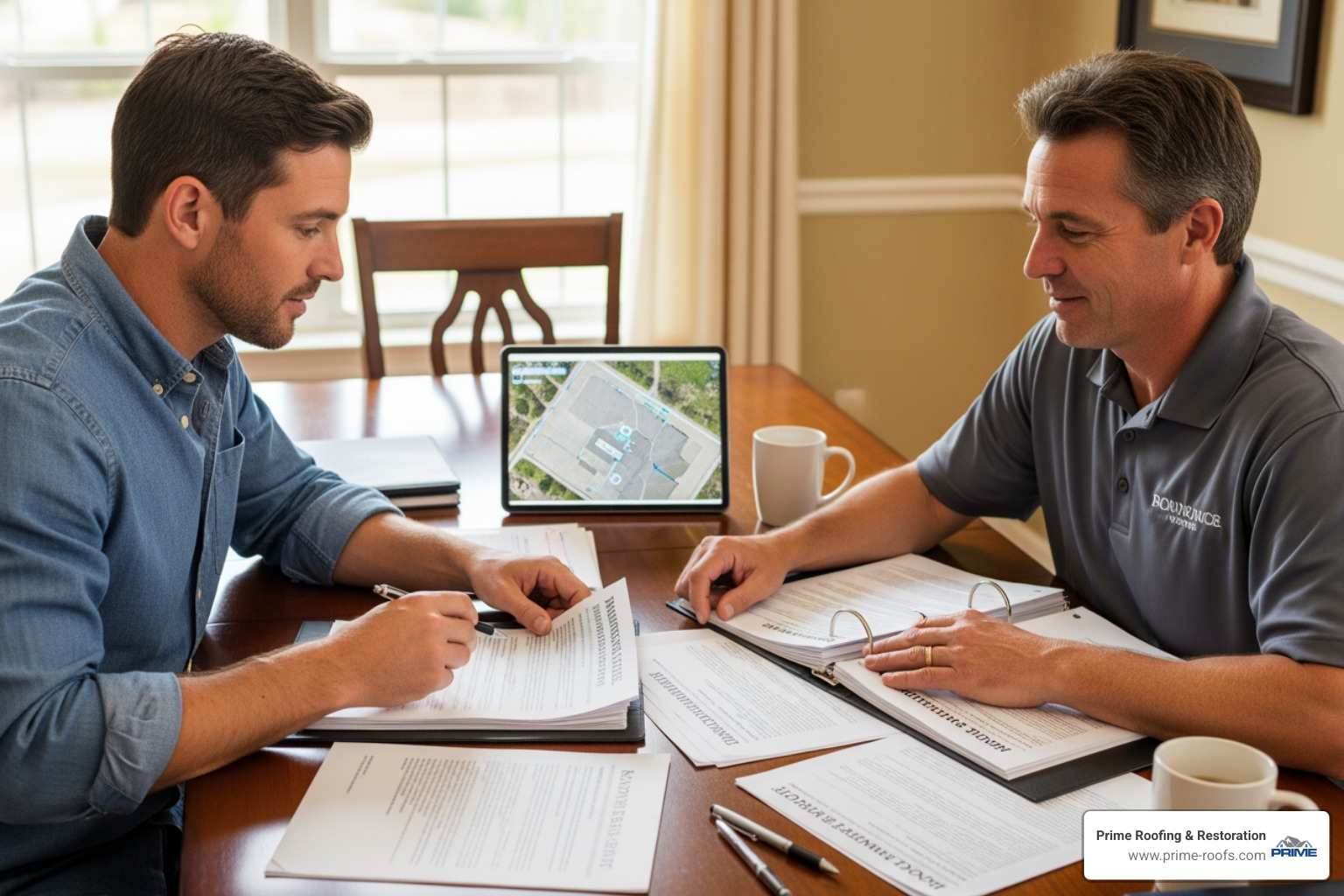
When the insurance company sends an adjuster to your home, it is vital to have your roofing contractor present. Call us at (205) 555-0123 as soon as you have an adjuster meeting scheduled.
- Joint Inspection: We walk the roof with the adjuster to ensure they don’t miss subtle hail damage or necessary “code upgrades” (like drip edge or ice and water shield) that your local Alabama municipality may require. Adjusters are often under pressure to move quickly; we ensure they take the time to see everything.
- Review the Scope of Work: Adjusters use software like Xactimate to estimate costs. We compare their report to our professional estimate to ensure all materials and labor steps are accounted for. If there is a discrepancy, we provide the necessary documentation to justify the higher cost.
- The Supplement Process: It is common to find more damage (like rotted decking) once the old shingles are removed. We handle the “supplemental claim” process, sending photos and invoices to your insurer to ensure these extra costs are covered. This is a standard part of the damaged roof replacement process that we manage for you.
We offer a specialized roof inspection for insurance to ensure your claim is backed by professional data and high-resolution imagery.
The Damaged Roof Replacement Process and Fortifying Your Home
A damaged roof replacement is more than just a repair; it’s an opportunity to fortify your home against future Alabama storms. By following a rigorous installation process and choosing superior materials, we ensure your new roof is a long-term asset. A professional roof replacement follows a specific, high-standard sequence. For a free estimate, call us at (205) 555-0123.
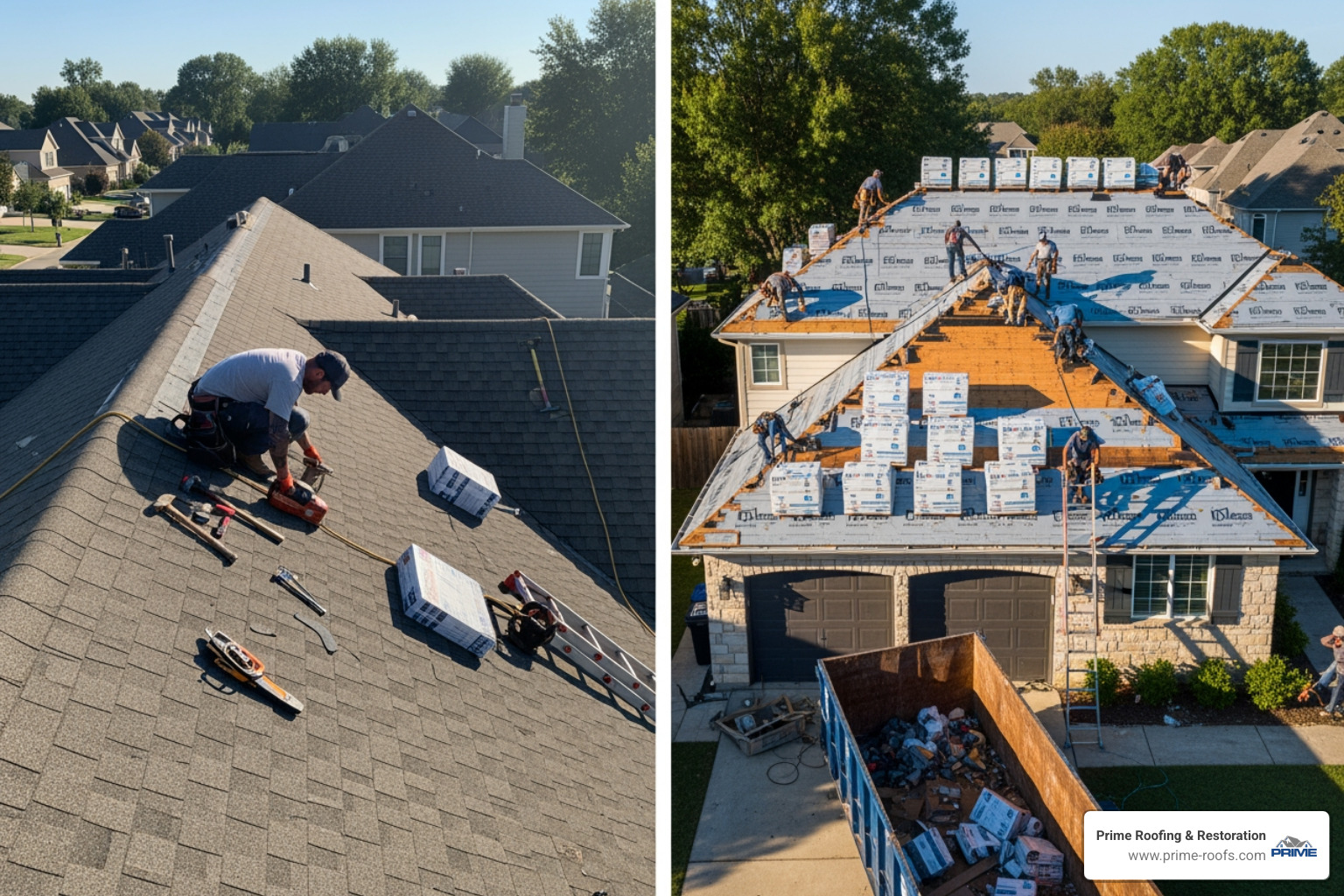
- Timeline: Most residential projects take 1 to 3 days, depending on the size and complexity of the roof. We strive to minimize disruption to your daily life.
- Site Preparation: We protect your landscaping, windows, and siding using specialized tarps and the “Catch-All” system to prevent falling debris from causing damage. We also move any outdoor furniture or items that could be at risk.
- Complete Tear-Off: We remove all layers of old roofing down to the wooden deck. This is the only way to inspect for hidden rot or structural issues. Alabama law generally allows for two layers of shingles, but we always recommend a full tear-off for the best results.
- Decking Inspection and Repair: Any soft or rotted plywood is replaced. A roof is only as strong as the wood it’s nailed to. We ensure the deck is smooth and securely fastened to the rafters.
- Underlayment Installation: We install high-quality synthetic underlayment and “Ice and Water Shield” in valleys and around penetrations. This provides a secondary layer of protection against wind-driven rain, which is common during Alabama’s tropical storms.
- Flashing and Ventilation: We replace all metal flashing around chimneys and walls and install high-efficiency ridge vents to ensure proper attic airflow. Proper ventilation is vital for preventing mold and reducing attic temperatures in Alabama’s humidity.
- Shingle Installation: We install your chosen material to strict manufacturer specifications, often using 6 nails per shingle for enhanced wind resistance. This exceeds the standard 4-nail pattern and provides much better protection against high winds.
- Meticulous Cleanup: We use high-powered magnetic rollers to find and remove every stray nail from your lawn and driveway. We take pride in leaving your property cleaner than we found it.
For a deeper look at our methods, see our home roof installation complete guide.
How to Prepare Your Home for Replacement Day
- Clear the Perimeter: Move vehicles, patio furniture, and potted plants at least 20 feet away from the house. This gives our crew space to work and prevents accidental damage.
- Protect the Attic: Roof replacement is a vibrating, dusty process. Cover any valuables in your attic with plastic sheets to protect them from falling debris or dust.
- Secure Wall Hangings: The vibrations from hammering can cause pictures or mirrors to fall. Take them down temporarily to be safe.
- Safety for Pets and Children: The work site is loud and dangerous. Keep children and pets indoors or away from the home during the project. The sound of hammering can be stressful for animals.
Choosing Resilient Materials for the Alabama Climate
- Impact-Resistant Shingles (Class 4): These shingles are tested with steel balls to simulate heavy hail. They rarely crack and often qualify you for significant insurance discounts. They are an excellent investment for North and Central Alabama.
- High-Wind Rated Shingles: In coastal areas like Orange Beach, shingles must be rated for 130-150 mph winds. We use specialized starter strips and nailing patterns to meet these needs.
- FORTIFIED Roof™ Standards: This is a voluntary construction standard developed by the Insurance Institute for Business & Home Safety (IBHS). It involves enhanced roof deck attachment, sealed roof decks, and heavy-duty flashing. It is the best way to protect against hurricanes and is highly recommended for Gulf Coast residents.
- Metal Roofing: With a lifespan of 40-80 years, metal is becoming increasingly popular in Alabama for its durability and energy efficiency. See the benefits of metal roofing for Alabama homes.
Finding a Licensed Contractor
Never hire a “storm chaser” who knocks on your door after a storm. Verify that your contractor is licensed by the Alabama Home Builders Licensure Board and carries both general liability and workers’ compensation insurance. For professional, local service, trust our roofers near me: Alabaster AL. You can verify our credentials by calling us at (205) 555-0123.
Frequently Asked Questions about Damaged Roof Replacement
How much does a full roof replacement cost in Alabama?
The cost of a damaged roof replacement varies based on the square footage, the pitch (steepness), the number of valleys and chimneys, and the material chosen. On average, an asphalt shingle roof in Alabama ranges from $8,000 to $20,000, while metal or tile can be significantly higher. Factors like the cost of labor in Birmingham versus Orange Beach can also play a role. For a detailed breakdown, see our cost to replace roof complete guide.
How long does the replacement process take?
For most standard-sized homes, the physical installation takes 1 to 3 days. However, the entire process—including insurance inspections, material ordering, and scheduling—can take 2 to 4 weeks. If your roof is an emergency, we can expedite the process. Our roof replacement guide Alabama provides a full timeline of what to expect.
Will my insurance premium go up if I file a storm damage claim?
In many states, including Alabama, insurance companies are generally prohibited from raising your individual rates solely because of a “catastrophe” claim (like a storm). However, rates may rise for an entire zip code based on regional risk. Often, the discount you get for having a brand-new, storm-resistant roof will offset any general rate increases. Read more: does home insurance cover roof?
What happens if you find rotted wood during the tear-off?
If we find rotted decking, we stop and document it with photos. We then provide this evidence to you and your insurance company. Most RCV policies will cover the cost of replacing rotted wood if it was caused by a covered peril (like a leak from a storm). We handle the supplemental filing to ensure this is paid for. If it’s not covered, we provide a fair price for the replacement to ensure your new roof has a solid foundation.
Can I change my roof material during a replacement?
Yes! A damaged roof replacement is the perfect time to upgrade from standard shingles to architectural shingles or metal. You would simply pay the difference in material cost, and your insurance settlement would cover the “like-kind and quality” portion of the project. This is a great way to increase your home’s value and durability for a fraction of the total cost.
What is the difference between a manufacturer warranty and a workmanship warranty?
A manufacturer warranty (like from GAF or Owens Corning) covers defects in the shingles themselves, such as premature granule loss or adhesive failure. A workmanship warranty, provided by Prime Roofing & Restoration, covers the actual installation. We offer a robust workmanship warranty to ensure that if a leak occurs due to installation, we fix it at no cost to you. We stand behind every nail we drive.
Do I need a permit for a roof replacement in Alabama?
Yes, most municipalities in Central Alabama, including Alabaster and Birmingham, require a building permit for a full roof replacement. This ensures the work is inspected and meets local safety codes. We handle the entire permitting process and ensure the final roof passes all local inspections, giving you one less thing to worry about.
Do you offer financing for the deductible or upgrades?
Yes, we understand that a damaged roof replacement can be an unexpected expense. We offer various financing options to help cover your deductible or any upgrades you choose, such as moving to a metal roof or Class 4 shingles. Call us at (205) 555-0123 to learn more about our flexible payment plans.
Secure Your Home with an Expert Damaged Roof Replacement
A damaged roof is more than a cosmetic issue; it is a threat to your home’s structural safety and your family’s comfort. Choosing a full damaged roof replacement over a temporary patch is a wise investment in long-term security and financial peace of mind. By working with a local expert for a roof replacement service, you ensure that your home is not just repaired, but fortified against the next generation of Alabama weather. Whether you are dealing with the aftermath of a tornado in Birmingham or a hurricane in Orange Beach, our team is ready to help.
From navigating the complexities of insurance claims to selecting the most resilient materials like Class 4 shingles or metal roofing, our team is dedicated to excellence. For homeowners in Birmingham, Alabaster, and the Gulf Coast, Prime Roofing & Restoration offers turnkey solutions that take the stress out of storm recovery. Don’t wait for the next storm to turn a small leak into a major disaster. Contact our local roofing experts in Birmingham, AL today at (205) 555-0123 for a comprehensive, free inspection. We are committed to providing the highest quality service and ensuring your home is protected for years to come.
Contact Your Local Alabama Roofing Experts Today
Don’t let roof damage compromise your home’s value and safety. Prime Roofing & Restoration is here to guide you through every step of the damaged roof replacement process, from the initial inspection to the final cleanup. We are a licensed, fully insured, and A+ BBB-accredited company committed to serving our Alabama neighbors with integrity. Our team is available 24/7 for emergency needs.
Prime Roofing & Restoration
Alabaster Office: 1000 Corporate Park Dr, Suite 100 Alabaster, AL 35007 Phone: (205) 555-0123 View on Google Maps
Orange Beach Office: 25299 Canal Rd Orange Beach, AL 36561 Phone: (251) 555-0124 View on Google Maps
Business Hours:
- Monday – Friday: 8:00 AM – 6:00 PM
- Saturday: 9:00 AM – 1:00 PM
- Sunday: Closed
- 24/7 Emergency Services Available for Tarping and Leaks
Whether you are in Alabaster, Birmingham, or Orange Beach, our team is ready to provide reliable, high-quality service. Visit our website or fill out our online form to schedule your free, no-obligation roof assessment today. Let us help you restore your home and your peace of mind with a professional damaged roof replacement.