
Why Timely Shingle Repair Protects Your Alabama Home
Repairing roof shingles is a critical maintenance task that protects your home from water damage and costly structural issues. For homeowners in Alabama, having access to reliable roofing and exterior restoration services is the first step in safeguarding your property. Here’s what you need to know:
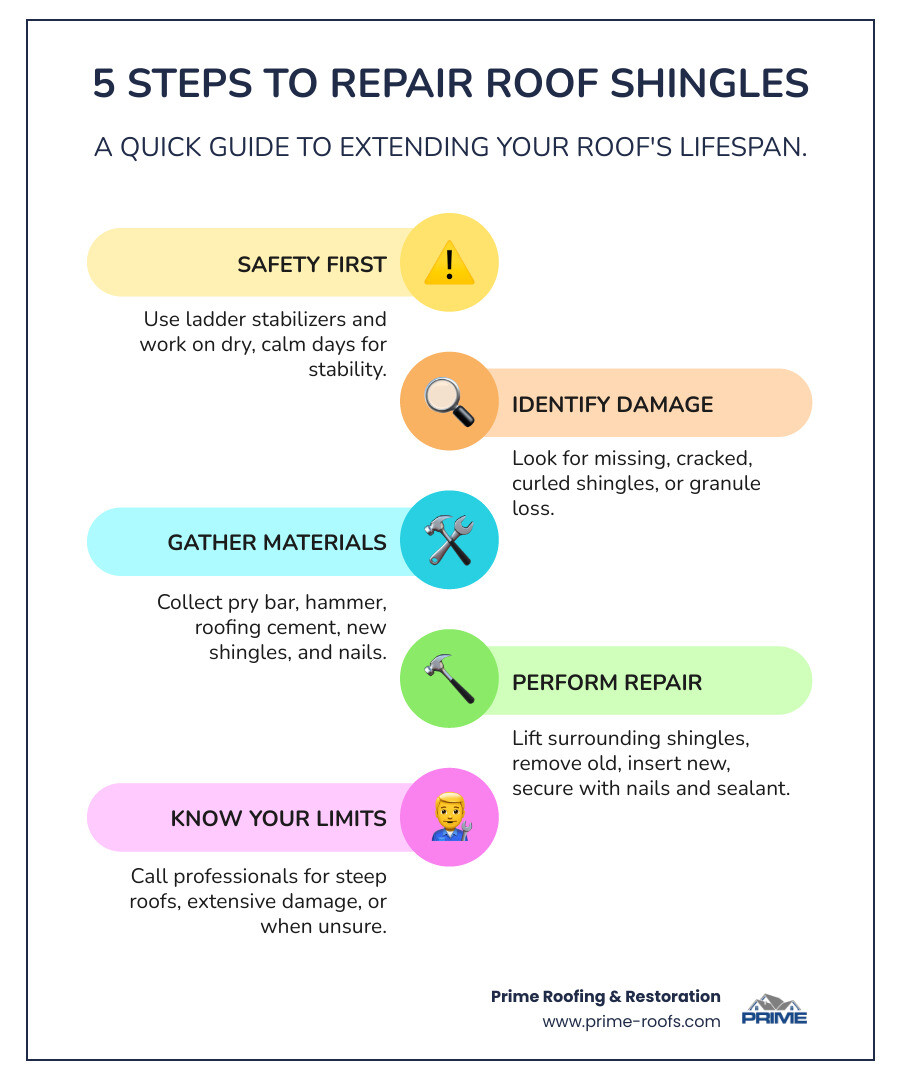
Quick Answer: How to Repair Roof Shingles
- Inspect – Check for missing, cracked, curled, or damaged shingles from the ground.
- Gather tools – Pry bar, hammer, roofing cement, replacement shingles, and nails.
- Replace damaged shingles – Lift surrounding shingles, remove nails, slide out the old shingle, and install the new one.
- Fix minor damage – Apply sealant under curled or cracked shingles and press flat.
- Know when to call a pro – Multiple damaged areas, leaks, or a roof over 20 years old requires professional help.
The average cost to repair a roof is $800, with most homeowners spending between $300 and $1,500. Simple repairs can cost as little as $150, while extensive damage may exceed $1,000.
In Central Alabama, severe storms with high winds and hail frequently damage shingles. Industry data shows that winds of 74 mph or greater can cause significant shingle loss, while even winds of 39-54 mph can lift shingles and break their watertight seal. Ignoring this damage allows water to cause rot, mold, and interior damage, turning a minor fix into a multi-thousand dollar problem.
For isolated damage like a few missing shingles, repair is cost-effective. However, if your roof is nearing its 20-30 year lifespan, shows widespread damage, or has interior leaks, a professional replacement is the wiser investment.
I’m Bill Spencer, Owner and President of Prime Roofing & Restoration. With over five years of experience helping Alabama homeowners, I know that early intervention and proper repair techniques are key to extending your roof’s lifespan and avoiding catastrophic failure.
Important repairing roof shingles terms:
How to Spot Shingle Damage: 5 Telltale Signs
Before performing a repair, you must correctly identify the problem. While some damage is obvious, other signs can indicate a larger issue. The safest first step is a visual inspection from the ground, using binoculars if necessary.
The first step in effective repairing roof shingles is a thorough inspection. We recommend performing inspections twice a year—in the spring and fall—and after any severe weather. Here are the common types of shingle damage:
-
Missing or Broken Shingles: This is the most obvious sign of damage. High winds can tear shingles off the roof, while hail can leave circular indentations or knock off the protective granules. Finding shingle pieces or an accumulation of granules in your gutters is a clear indicator that your roof has sustained damage and is vulnerable to water intrusion.
-
Curled or Cupped Edges: As shingles age, their edges can curl upwards (cupping) or downwards (clawing). This makes them brittle and less effective at shedding water, increasing the risk of leaks and wood rot.
-
Cracking and Splitting: Thermal expansion, age, or UV exposure can cause shingles to crack or split. Even small cracks allow water to penetrate the roof deck.
-
Blistering: These small, raised bubbles on the shingle surface are caused by trapped moisture or heat. When the blisters pop, they leave the shingle’s core exposed to the elements, accelerating deterioration.
-
Granule Loss in Gutters: The granular surface on asphalt shingles protects them from UV rays. While some shedding is normal, significant granule accumulation in your gutters indicates that your shingles are deteriorating and losing their protective capabilities, often leaving dark patches on your roof.
Other signs include popping nails, warped shingles, and mold growth. A musty smell in your attic 24 to 48 hours after a storm is a red flag for hidden water damage. For more in-depth knowledge, This Old House offers valuable insights on How To Repair and Replace Roof Shingles. Ignoring these signs can turn a minor repair into a full roof replacement.
Your Step-by-Step Guide to Repairing Roof Shingles
For minor, isolated damage, a DIY repair can be a cost-effective solution. Always prioritize safety: work on a dry, calm day, use a securely placed ladder, and wear safety gear. Shingles are most pliable on a warm day, making them easier to work with.
When repairing roof shingles, tackling small issues yourself can prevent bigger headaches. However, safety is paramount. Ensure your ladder is stable and consider using a climbing rope and harness for steeper pitches.
Tools and Materials You’ll Need
Gathering all your tools before you start minimizes trips up and down the ladder and ensures a safer repair.
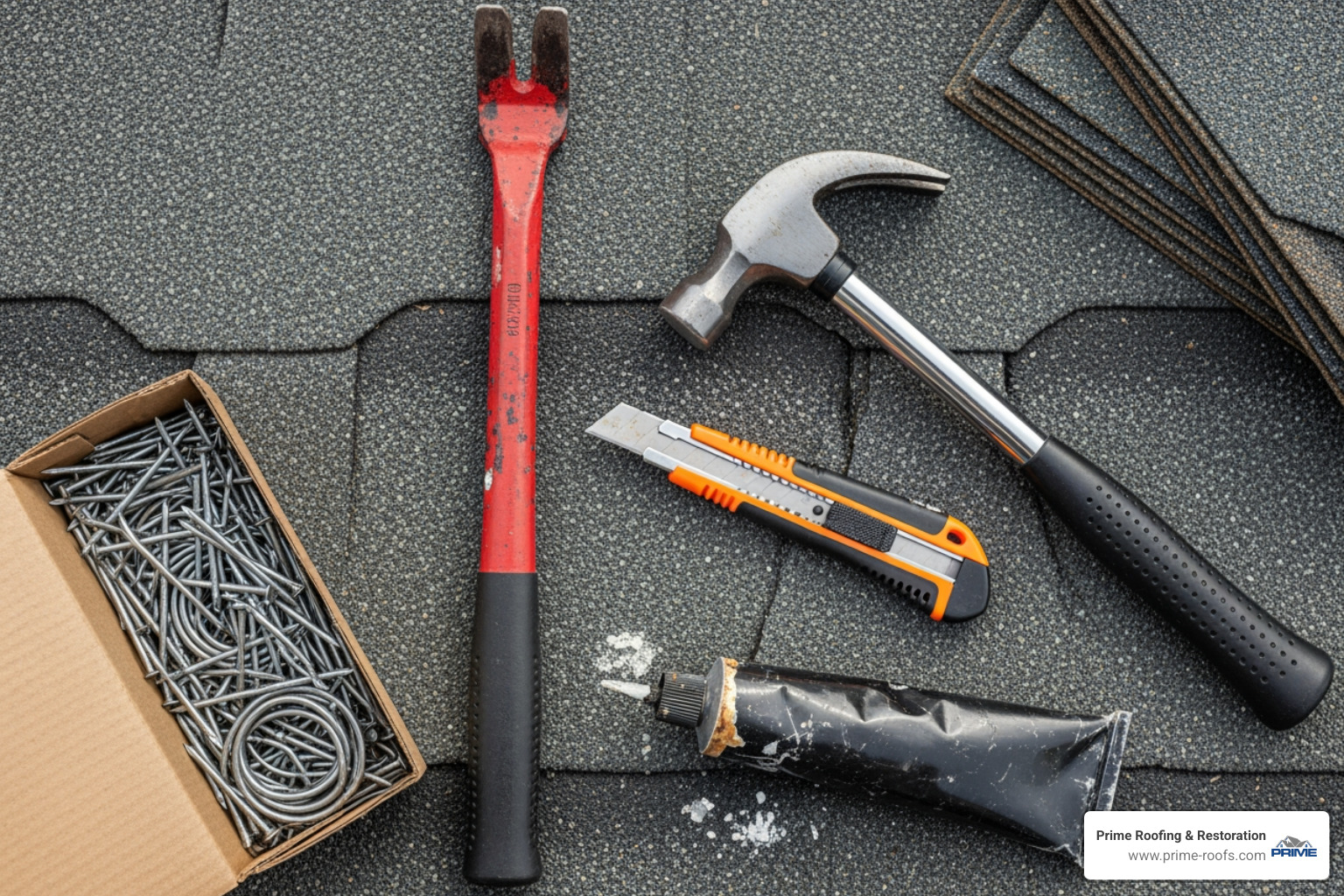
Here’s what you’ll need for repairing roof shingles:
- Pry bar (flat or catspaw)
- Hammer
- Utility knife
- Caulking gun
- Roofing nails (1-1/4 inch)
- Roofing cement/sealant
- Replacement shingles
- Safety harness and climbing rope
- Gloves and safety glasses
- Putty knife
- Tinsnips
- Brick or heavy object
How to Replace a Missing or Damaged Shingle
When a shingle is missing or severely torn, replacement is the best course of action. This process is easiest on a warm day when shingles are more pliable.
- Break Sealant Bond: Use a flat pry bar to gently break the sealant bond on the shingles above and around the damaged one.
- Pry Up Nails: Lift the overlying shingles to expose the nails holding the damaged shingle. Use your pry bar to carefully remove them.
- Remove Old Shingle: Slide the damaged shingle out. Use a utility knife to cut away any torn edges for a clean removal.
- Slide in New Shingle: Position the new shingle in the empty space, ensuring it aligns with the surrounding shingles.
- Nail Placement: Lift the overlapping shingle and secure the new shingle with 1-1/4 inch roofing nails. Place nails where they will be covered by the shingle above.
- Reseal Tabs: Apply dabs of roofing cement under the tabs of the new shingle and any surrounding shingles whose seals were broken. Press down firmly to create a new, wind-resistant bond.
For a visual guide, Family Handyman offers excellent advice on How to Replace Damaged Shingles.
How to Fix Curled or Cracked Shingles Without Replacement
For shingles with minor curling or small cracks, a sealant can extend their life and prevent leaks.
-
Repairing Curled Shingles:
- Gently flatten the curled edge, being careful not to crack it.
- Clean debris from underneath the curl.
- Apply a generous amount of roofing sealant under the curled section.
- Press the shingle down firmly and place a brick on top for 24 hours to ensure it adheres flat.
-
Repairing Cracked or Torn Shingles:
- Clean the area around the crack or tear.
- Apply a thick layer of roofing sealant underneath the crack.
- Press the shingle down firmly.
- Apply a second bead of sealant over the top of the crack and spread it smoothly with a putty knife.
- Pro Tip: Sprinkle loose granules from your gutters over the wet sealant to help the patch blend in.
DIY Repair vs. Calling a Professional: When to Make the Call
While DIY repairs can save money, some situations demand professional expertise. Attempting a complex repair without experience can lead to further damage, void your roof’s warranty, or cause serious injury.
Deciding whether to tackle a shingle repair yourself or call in professionals is a balance of cost and risk. For minor issues, a DIY approach is feasible, but it’s crucial to know when to let licensed experts handle the job.
When to DIY
We recommend a DIY approach for repairing roof shingles only in these limited circumstances:
- Single Missing Shingle: Replacing one or two isolated shingles when you have matching replacements.
- Minor Curling or Cracking: Applying sealant to shingles that are just beginning to curl or have small cracks.
- Small, Accessible Area: The damage is easily and safely reachable from a stable ladder.
- Comfort with Heights: You are genuinely comfortable working on a roof and have the necessary physical capability.
- Proper Safety Equipment: You own and will use a safety harness, non-slip shoes, and other protective gear.
When to Call a Professional for Roof Shingle Repairs
In many situations, calling a professional roofer is essential for the long-term health of your roof and your family’s safety.
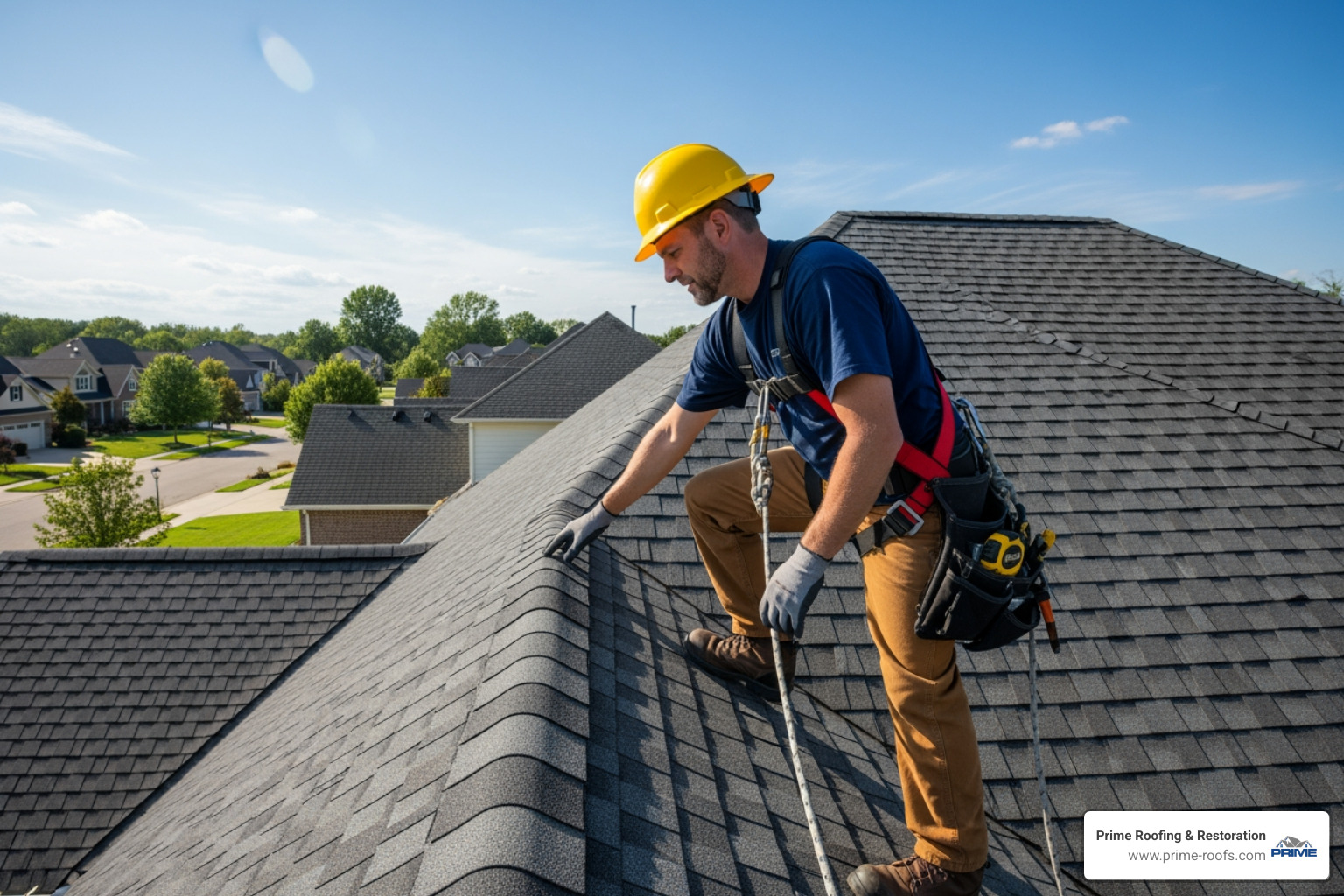
Here’s when to pick up the phone:
- Multiple Damaged Areas: More than a few damaged shingles often signals a systemic problem that needs a professional eye.
- Leaks Inside the Home: Any sign of water intrusion means the leak has already penetrated your roof’s layers and requires an expert to locate the source.
- Signs of Rot or Sagging: A sagging roof or soft spots on the deck indicate serious structural damage.
- Roof is Over 20 Years Old: An aging roof with widespread damage may need more than spot repairs. A professional can provide a roof replacement assessment to determine if replacement is more cost-effective.
- Steep Roof Pitch: Working on a steep roof is dangerous and should always be left to trained professionals with proper safety equipment.
- If You’re Unsure: If you can’t identify the cause of the damage or the correct repair method, consult an expert to avoid causing more problems.
- After a Major Storm: After severe weather in areas like Alabaster, AL, and Orange Beach, AL, a professional inspection can spot hidden damage. For certified roofers in Alabaster, AL, we are ready to help.
- For Warranty Compliance: Many roofing warranties require repairs to be performed by certified professionals to remain valid.
After the Storm: Immediate Steps for Roof Damage
Storms are a primary cause of shingle damage. High winds can tear shingles off, and hail can compromise their integrity. Acting quickly after a storm can prevent a small problem from becoming a catastrophe.
In Alabama, we are no strangers to severe weather. When a storm passes, taking these immediate actions can mitigate further damage and simplify the insurance claim process.
- Safety First: Before anything else, check your property for hazards like downed power lines. Do not climb on a wet or damaged roof.
- Ground-Level Inspection: Once it’s safe, visually inspect your roof from the ground with binoculars. Look for missing shingles, damaged flashing, or debris.
- Document Damage: Take clear photos and videos of all visible damage for your insurance claim. Note the date and time. Thorough documentation is key to a smooth claims process.
- Make Temporary Fixes (Tarping): If you have exposed areas or active leaks, cover them with a heavy-duty tarp to prevent further water damage. Call a professional for assistance if you are not comfortable doing this yourself.
- Check for Interior Leaks: Inspect your attic, ceilings, and walls for water spots, peeling paint, or dampness. A musty smell 24-48 hours after a storm indicates hidden water damage.
- Contact Your Insurance Provider: Report the damage to your insurance company as soon as possible. Provide them with your documentation and be prepared to discuss your policy. Getting estimates from reputable roofing contractors before the adjuster visits can provide a professional benchmark for costs.
For more guidance, Allied Roofing Solutions provides excellent advice on 4 Steps to Take To Fix Your Roof Storm Damage. Prompt action can save you from more extensive repairs.
Proactive Protection: Preventative Maintenance to Extend Your Roof’s Life
The best repair is the one you never have to make. Regular maintenance can significantly extend the life of your roof shingles and help you spot potential issues before they become costly problems.
We believe preventative care goes a long way in extending your roof’s lifespan and avoiding the need for extensive repairing roof shingles. Think of it as your roof’s annual health check-up.
- Twice-Yearly Inspections: Visually inspect your roof in the spring and fall. Use binoculars from the ground to look for missing granules, curling edges, cracks, or loose shingles.
- Clean Gutters and Downspouts: Clogged gutters cause water to back up onto the roof, leading to rot and deterioration. Keep them clear to ensure proper drainage and prevent damage to shingles and fascia.
- Trim Overhanging Branches: Branches can scratch shingles, causing granule loss, or break off during storms and cause impact damage. Trim any branches that are close to or touching your roof.
- Check Flashing and Seals: Flashing around chimneys, skylights, and vents is a common source of leaks. Regularly check these metal strips and their seals for signs of wear, corrosion, or damage.
- Manage Snow to Prevent Ice Dams: In colder weather, ice dams can form when melting snow refreezes at the eaves, trapping water that can back up under shingles. Proper attic ventilation helps prevent this. For more information, consult resources on how to prevent ice dams.
- Ensure Adequate Attic Ventilation: Good ventilation regulates temperature and moisture in your attic, preventing heat buildup that ages shingles and moisture that causes mold and rot.
By integrating these simple steps into your home care routine, you can extend the life of your roof and minimize the need for unexpected repairs.
Frequently Asked Questions about Shingle Repair
How much does it cost to repair roof shingles?
The cost of repairing roof shingles typically ranges from $300 to $1,500, with an average of $800. A simple patch might cost as little as $150, while more extensive repairs involving underlying deck issues or professional labor can exceed $1,000. The final cost depends on the shingle type, roof steepness, and local labor rates.
Can you put new shingles over old ones?
While sometimes possible, installing new shingles over an old layer (a “roof-over”) is generally not recommended. This practice can hide underlying deck damage like rot, add excessive weight to the roof structure, and may void the new shingles’ warranty. Most building codes limit roofs to two layers, so a tear-off is often mandatory and always the best practice for a proper, long-lasting installation.
How long do asphalt shingles last?
Standard asphalt shingles typically last 20 to 30 years. Higher-quality architectural shingles can last 30-50 years. However, the harsh weather in Alabama, including strong winds and hail, can shorten this lifespan. Regular maintenance and prompt repairing roof shingles are key to maximizing their longevity.
How does homeowner’s insurance typically cover roof shingle damage?
Homeowner’s insurance usually covers roof damage from sudden events like windstorms or hail, but not damage from neglect or normal wear and tear. Coverage varies, so it’s crucial to understand your policy’s deductible and whether you have Actual Cash Value (ACV) or Replacement Cost Value (RCV) coverage. ACV pays the depreciated value, while RCV covers the cost of a new roof at current prices. Always document damage and contact your insurer promptly.
What are the potential consequences of not repairing damaged roof shingles promptly?
Ignoring damaged shingles leads to a cascade of problems:
- Water Infiltration: Leaks cause water spots on ceilings and damage to drywall and interior finishes.
- Structural Damage: Persistent moisture leads to rotted roof decking and rafters, weakening your home’s structure.
- Mold and Mildew: Trapped moisture creates a breeding ground for mold, which poses health risks and deteriorates materials.
- Higher Energy Bills: Wet insulation loses its effectiveness, forcing your HVAC system to work harder.
- Pest Infestations: Gaps from damaged shingles become entry points for rodents, insects, and birds.
- Voided Warranties: Neglecting repairs can void your roofing material warranty, leaving you to cover future costs.
A small, inexpensive fix can quickly escalate into a major structural problem costing thousands.
Secure Your Home with Expert Shingle Repair
Repairing roof shingles is a critical part of home maintenance that protects your investment and prevents devastating water damage. Whether it’s a simple DIY fix or a professional repair after a storm, addressing issues promptly is key. By following this guide, you can identify damage, perform basic repairs, and know when to rely on experts. For homeowners needing reliable service, the licensed professionals at Prime Roofing & Restoration offer end-to-end solutions from minor repairs to full replacements. Contact us today for a free inspection.