
Why Cedar Shake Installation Demands Precision and Expertise
Cedar shake installation is a rewarding but challenging upgrade that brings timeless beauty and natural durability to any home. As a labor-intensive siding choice, it demands meticulous attention to detail. Proper installation is critical; industry standards require shingle joints to be offset by at least 1 1/2 inches between courses, with no joints aligning in any three consecutive courses. For homeowners in Alabama seeking professional results, understanding these fundamentals is essential whether you’re planning a DIY project or working with a trusted roofing contractor.
Quick Answer: Cedar Shake Installation Overview
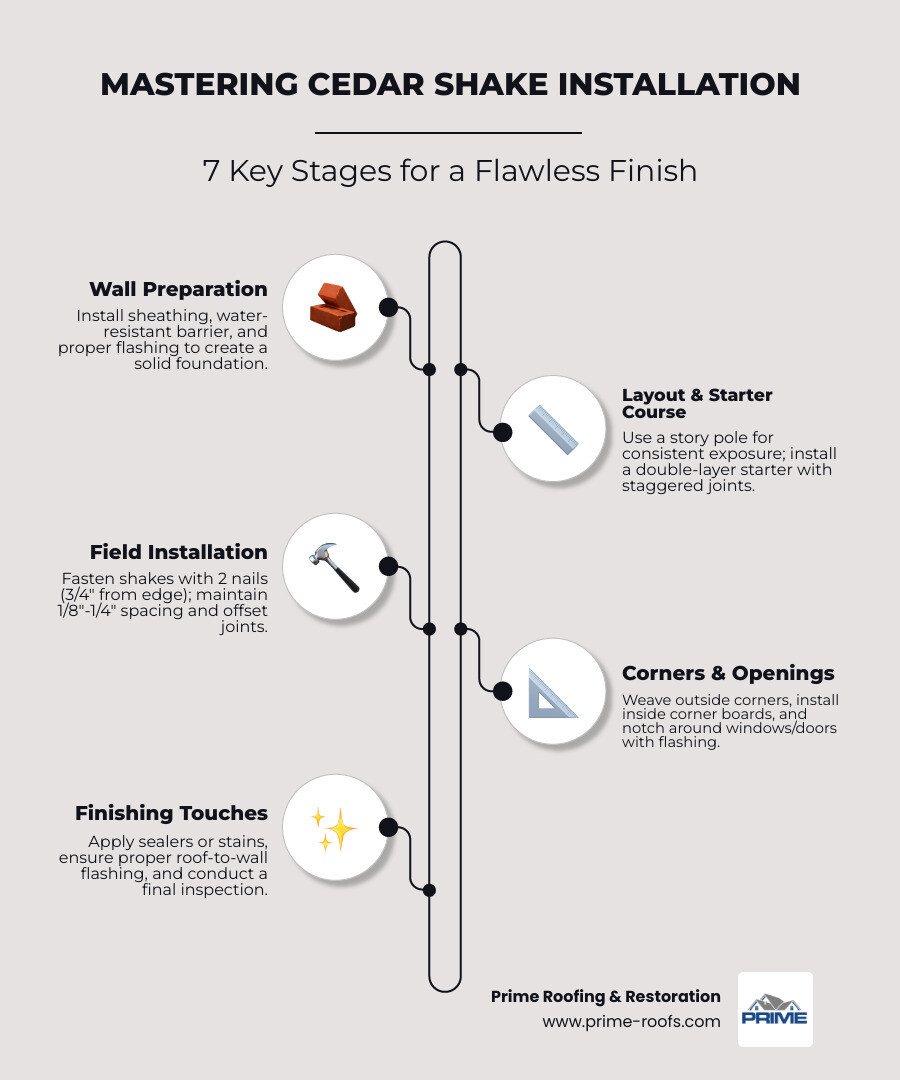
- Prepare the surface – Install proper sheathing, water-resistant barrier, and flashing
- Lay out courses – Use a story pole to mark consistent 5-inch exposures
- Install starter course – Double-layer at the bottom with staggered joints
- Fasten shakes properly – Use 2 stainless steel or galvanized nails per shake, 3/4″ from edges
- Maintain spacing – Leave 1/8″ to 1/4″ gaps between shakes for expansion
- Offset joints – Ensure joints are offset by at least 1 1/2″ between courses
- Finish and seal – Apply protective coating and proper flashing around all openings
Improper installation can lead to water infiltration and costly repairs, but a correct installation can last 30-50 years, adding significant curb appeal and value to your property. As an experienced roofer with Prime Roofing & Restoration, I’ve seen how a successful cedar shake installation can stand the test of time. This comprehensive guide will walk you through every critical step—from wall preparation and material selection to advanced techniques for corners, windows, and finishing touches.
Cedar shake installation helpful reading:
Pre-Installation Essentials: Tools, Materials, and Wall Prep
This foundational stage is critical for a successful project. Gathering the right materials and properly preparing your structure prevents costly mistakes and ensures the longevity of your cedar siding.
Gathering Your Tools & Materials
Before you begin, ensure you have the right tools and materials for a professional cedar shake installation.
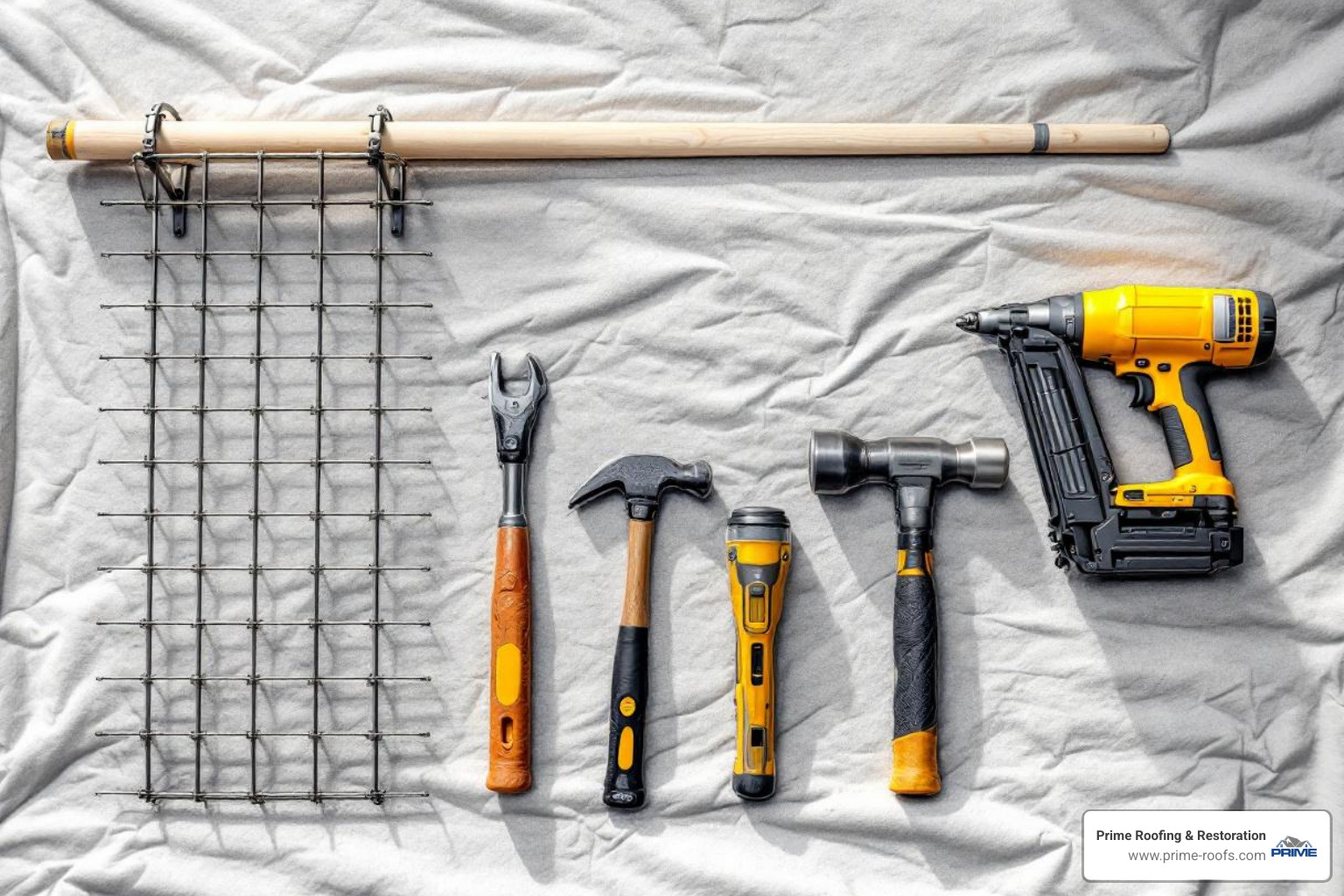
Essential Tools:
- Shingle rack: Holds shingles and helps with joint offsetting.
- Story pole: A 1×2 board used to mark consistent course exposures.
- Hammer & Pneumatic nailer/stapler: For fastening shakes. Ensure the pneumatic tool drives fasteners flush without damaging the wood.
- Saws & Utility knife: A circular saw for bulk cuts, a jigsaw for intricate shapes, and a utility knife for simple cuts.
- Chalk line, Level, & Block plane: For marking straight lines, ensuring level courses, and trimming woven corners.
Materials List:
- Cedar shakes/shingles: Store on a pallet in a dry, ventilated area.
- Stainless steel or hot-dipped galvanized fasteners: Critical for corrosion resistance. Never use electro-galvanized fasteners, especially in coastal areas like Orange Beach, AL.
- No. 30 building felt or breathable house wrap: For a water-resistant barrier.
- Self-adhesive flashing tape: For corners, windows, and doors.
- Caulk & Touch-up stain: For sealing trim and treating cut edges of factory-finished shingles.
Recommended Fasteners: Use ring shank nails (min. 7/32″ head) or staples (min. 7/16″ crown). They must penetrate sheathing by at least 1/2″. For projects near salt water, Type 316 stainless steel nails are required. Elsewhere in Alabama, Type 304, Type 316, or hot-dipped galvanized nails (ASTM A 153 Class D) are acceptable.
Understanding Cedar Shake & Shingle Varieties
Knowing the differences in cedar products is vital for selecting the right material.
Shakes vs. Shingles:
- Cedar Shingles: Sawn on both sides, offering a thinner, smoother, and more refined look.
- Cedar Shakes: Split from logs, they are thicker and have a more rustic, textured appearance.
Cedar Species:
- Western Red Cedar: Known for its rich color, natural rot resistance, and stability.
- Eastern White Cedar: Lighter in color, also decay-resistant, and weathers to a silvery-gray.
Product Grades:
- Premium Grade: 100% edge grain, clear, and heartwood.
- Number 1 Grade (Blue Label): Top quality for roofs and sidewalls.
- Number 2 Grade (Red Label): A good utility grade for many applications.
- Number 3 Grade (Black Label): Economy grade for undercoursing or utility buildings.
- Rebutted & Rejointed (R&R): Shingles with parallel edges for clean sidewall applications.
Certi-label® products: These products from the Cedar Shake & Shingle Bureau (CSSB) guarantee quality through independent inspections. Always ask for Certi-label products by name to ensure high standards. For more details, you can learn more about cedar grades from the Cedar Bureau.
Preparing the Structure for Installation
Proper preparation creates a fortress against moisture and a stable foundation for your siding.
- Sheathing: Your house must have a solid, nailable sheathing like plywood or OSB.
- Water-Resistant Barrier: Apply a breathable house wrap or No. 30 felt over the sheathing, overlapping seams correctly (2″ horizontally, 6″ vertically).
- Flashing: Back up corners with an adhesive membrane. Apply self-adhesive flashing tape around all window and door perimeters, creating a shingle-lap effect to direct water out. Use metal flashing above headers.
- Trim: Install exterior trim around windows and doors before shingling to provide a clean edge for the shakes to butt against.
- Substrate: Ensure your substrate is solid. If installing over existing siding (“over-walling”), you may need to install furring strips to create a level, nailable surface. Never install over vinyl or aluminum.
The Core Cedar Shake Installation Process: From Courses to Corners
With preparation complete, the installation begins. This section details the techniques for laying courses, fastening shakes correctly, and creating weathertight corners, forming the heart of a professional-grade cedar shake installation.
Laying Out Courses and Managing Exposure
Precision in layout is paramount for a visually appealing and structurally sound installation.
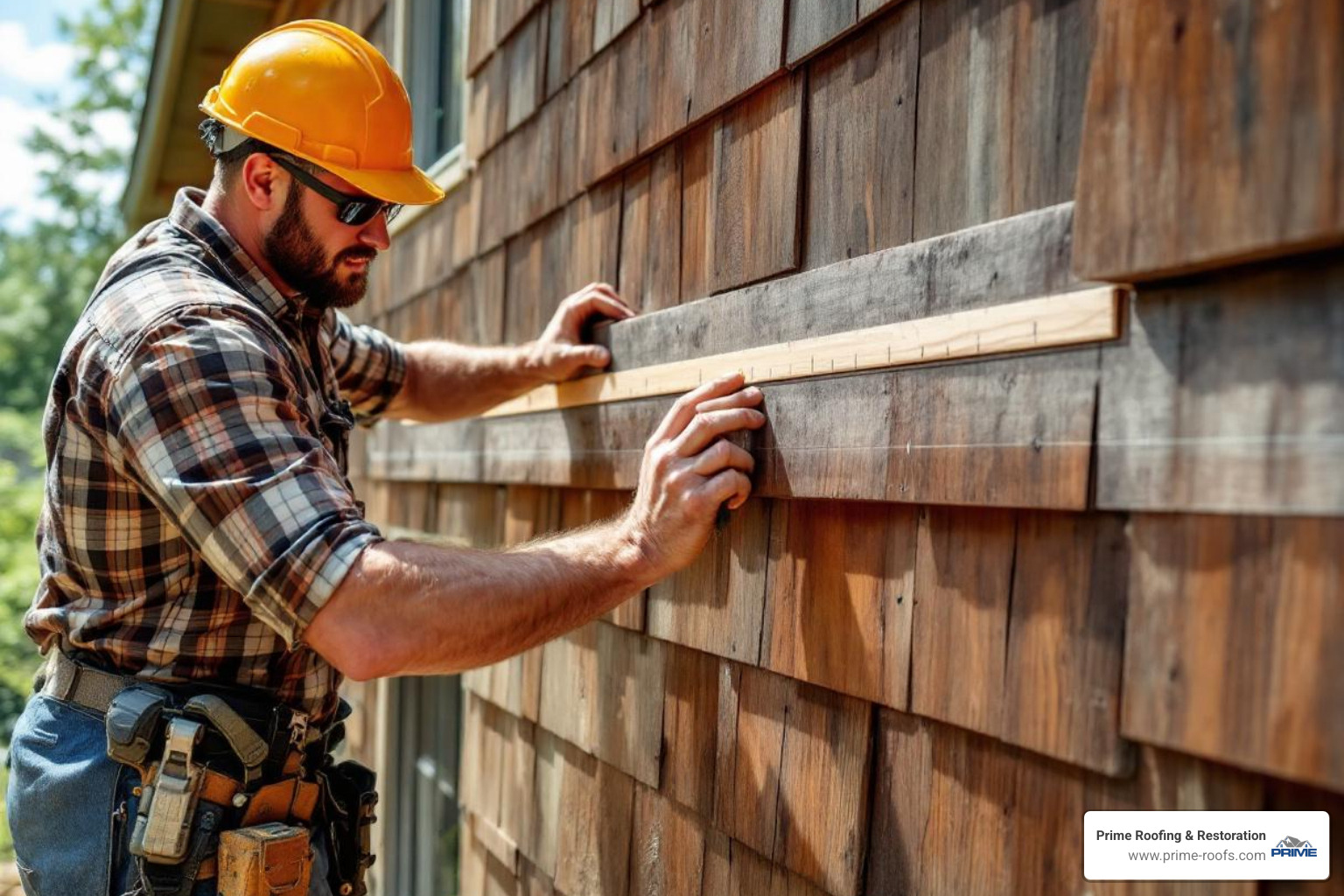
- Using a Story Pole: A story pole is a custom measuring stick used to mark the exposure for each course consistently up the wall. This ensures every course is level, even if individual shakes vary in length.
- Calculating Exposure: The exposure is the visible portion of each shingle. For 16-inch shingles, a 5-inch exposure is common, ensuring triple coverage for robust weather protection. Sidewalls can have a greater maximum exposure than roofs.
- Single vs. Double-Coursing: Single-coursing is a single layer of shingles. Double-coursing uses an undercourse (often a lower grade) covered by an outer course, which allows for wider exposures (up to 12″ for 16″ shingles) and creates deeper shadow lines.
- Chalk Lines and Alignment: Snap horizontal chalk lines using the story pole marks to guide each course. Whenever possible, align courses with the tops and bottoms of windows for a professional, seamless look.
Statistic: Shingle joints must be offset from course to course by at least 1 1/2 inches. In any three courses, no joints should align. This is a fundamental rule for preventing water intrusion.
A Guide to Proper Cedar Shake Installation and Fastening
Correct fastening and spacing are critical for durability and preventing moisture issues.
- Starter Course: This foundational course is a two-layer system. The first layer laps the foundation by about 1 inch. The second layer is installed over the first, extending about 1/2 inch lower, with joints offset by at least 1 1/2 inches.
- Fastener Placement: Use two fasteners per shingle, placed about 3/4″ from each side and 1 inch above the butt line of the next course. This hides the fasteners under the overlapping shingle. Fasteners must penetrate the sheathing by at least 1/2″.
- Nailing Wide Shingles: For shingles wider than 8 inches (Western Red Cedar), drive two nails 1 inch apart near the center to control potential splitting.
- Spacing for Expansion: Cedar expands and contracts with humidity. Leave a 1/8″ to 1/4″ gap (keyway) between dry shingles to prevent buckling. As a rule of thumb, a 4-inch wide dry cedar shingle can expand about 1/8″ when it absorbs moisture.
Mastering Corners and Transitions
Corners are critical points that showcase craftsmanship.
- Weaving Outside Corners: For a seamless look, overlap shingles at outside corners, alternating the overlap with each course. Shingle both adjoining walls simultaneously, lapping the end shingle of one wall over the corner, trimming it, and then lapping the adjoining wall’s shingle over the first.
- Trimming and Finishing: Use a utility knife for initial cuts and a block plane to trim the overlapping shingle flush, creating a smooth, invisible joint.
- Inside Corners: For inside corners, it’s more practical to install vertical corner trim boards. Leave a 1/2″ gap between the shakes and the trim board to allow for expansion.
- Weathertight Seal: Always back up corners with an adhesive membrane to ensure no moisture can penetrate.
Handling Complex Areas and Finishing Touches
The true mark of craftsmanship is how well challenging areas are handled. This section covers techniques for working around obstacles and applying the final touches that protect and beautify your new cedar siding.
Installing Shakes Around Windows, Doors, and Penetrations
Attention to detail around openings is crucial for a professional cedar shake installation.
- Notching Shingles: Carefully measure and notch shingles to fit around obstacles like windows. A sharp utility knife or a jigsaw works well. Cut so that any potential split runs into the scrap piece.
- Flashing Headers: Install metal flashing above all window and door headers. The flashing must extend behind the house wrap to direct water away from the opening.
- Drainage Gap: Leave a 1/4″ to 1/2″ gap between the top of the header trim and the bottom of the shingle course above it. This allows trapped moisture to drain freely, preventing rot. For professional architectural details, you can reference AutoCad Roof Files.
- Working Around Penetrations: For spigots or vents, use a hole saw to cut a neat opening in the shingle, leaving a 1/4-inch gap around the pipe for drainage and expansion. Seal the gap with caulk.
Finishing Gables and Roof Junctions
These areas require careful cuts and flashing to ensure a weathertight and aesthetic finish.
- Cutting for Gables: Use a T-bevel to find the roof’s angle and transfer it to the shingles for a perfect fit along the rake trim.
- Roof-to-Wall Flashing: Where a shingled wall meets a roof, install metal step flashing. Each piece should overlap the one below and extend up the wall behind the house wrap.
- Water Shedding: Maintain a 1-2 inch gap between the bottom of the siding and the roof surface to prevent moisture from wicking up into the wall and allow the shingles to dry.
Post-Installation Finishing and Maintenance
Proper finishing and maintenance are key to preserving your cedar siding’s beauty and longevity.
- Finishing Options: You can leave cedar to weather naturally to a silvery-gray, or apply a clear sealer, stain, or paint. If using pre-finished shingles, touch up all cut edges with the manufacturer’s stain before installation.
- Cleaning: Gently clean with a soft brush and a garden hose on a low-pressure setting. Never use a pressure washer, as it can severely damage the wood fibers.
- Preventing Moss and Mildew: Keep the siding clear of debris and ensure good airflow. Installing zinc or copper strips at the roofline can help inhibit growth. Consider using Certi-Last® preservative-treated products in high-humidity areas like Alabama.
- Extractive Bleeding: These natural reddish-brown streaks are caused by tannins. Address the moisture source, then clean with an oxalic acid-based product and use a tannin-blocking primer before refinishing.
For long-term performance, schedule a periodic roof inspection to spot potential issues early.
Common Mistakes, Safety, and Professional Alternatives
Even with a guide, cedar shake installation is complex. Knowing what to avoid, how to stay safe, and when to call for help is just as important as knowing the right steps.
Top Mistakes to Avoid During Cedar Shake Installation
Avoiding these common pitfalls is crucial for a durable, weathertight finish:
- Improper keyway spacing: Not leaving a 1/8″ to 1/4″ gap between shingles can cause buckling.
- Incorrect fastener placement: Placing fasteners too high, too low, or too close to the edge compromises holding power and can split the wood.
- Overdriving fasteners: Driving fasteners too deep crushes wood fibers and creates pockets for water.
- Misaligned joints: Failing to offset joints by at least 1 1/2 inches between courses creates weak points for water intrusion.
- Inadequate flashing: Skimping on flashing around openings and corners is a primary cause of water damage.
- Using the wrong fasteners: Electro-galvanized fasteners will corrode and fail. Use only stainless steel or hot-dipped galvanized.
- Neglecting ventilation: Poor wall cavity or attic ventilation traps moisture, leading to rot.
Safety First: Essential Precautions
Cedar shake installation involves risks. Prioritize safety at all times.
- Ladder and Scaffolding Safety: Ensure all equipment is stable, level, and used correctly. Never overreach.
- Personal Protective Equipment (PPE):
- Dust mask: Cedar dust is a known irritant and potential carcinogen. Always wear a quality respirator.
- Safety glasses: Protect your eyes from wood chips and dust.
- Gloves: Prevent splinters and protect your hands.
- Hearing protection: Use when operating power tools.
- Tool Handling: Understand your tools, keep blades sharp, and ensure safety guards are in place.
When to Call a Pro for Your Cedar Shake Project
Cedar shake installation is an advanced DIY project that requires significant skill and time.
- Project Complexity: Weaving corners, offsetting joints correctly, and handling architectural details demand a high level of craftsmanship. If you are not confident, consider professional help.
- Warranty Considerations: Many manufacturers, especially for Certi-label® products, require installation by certified professionals to validate the warranty.
- The Value of Experience: For a guaranteed, warrantied result on your cedar shake roofing project, hiring a certified expert is the best choice. Our licensed experts at Prime Roofing & Restoration have the experience to ensure a flawless installation, especially for homeowners in the Alabaster, AL area.
Frequently Asked Questions about Cedar Shake Installation
What is the main difference between cedar shakes and shingles?
Cedar shingles are sawn on both sides for a uniform, tapered appearance, making them thinner and smoother. They offer a more refined, custom look. In contrast, cedar shakes are hand-split from logs, resulting in a more rustic, textured, and thicker profile with a natural taper and uneven surface. This gives shakes a rugged, dimensional appearance.
How much space should be left between cedar shingles during installation?
A space, or “keyway,” of 1/8″ to 1/4″ should be left between dry shingles. This gap is crucial because cedar is a natural material that will expand when it absorbs moisture and contract when it dries. Proper spacing prevents the shingles from buckling, cracking, or splitting due to moisture-induced movement, ensuring the longevity and integrity of your siding. For green (undried) shingles, a minimum 1/16″ gap is recommended, while kiln-dried shingles need at least 1/8″.
Can you install new cedar shakes directly over old siding?
Yes, this process is called “over-walling.” It is possible to install cedar shakes over existing wood siding (like beveled siding), brick, or stucco, but it is not recommended over vinyl or aluminum siding. When over-walling, it’s often necessary to install furring strips (vertical nailing strips) to create a flat, even, and nailable surface for the new shakes, especially over masonry or uneven existing materials. This method can save on tear-off costs but requires careful preparation to ensure proper fastening and drainage.
Conclusion
Installing cedar shakes is a challenging project that adds unparalleled character and value to your home. By following these expert steps—from meticulous preparation to careful fastening—you can achieve a beautiful and durable exterior. However, the complexity involved means it’s not a task for everyone. For a flawless and warrantied installation that protects your home for years to come, trust the licensed experts at Prime Roofing & Restoration. Contact us today to learn more with our free roof inspection ultimate guide.