
Why Storm Damage Repair Demands Immediate Action
Storm damage repair is the process of restoring a property after severe weather events. When storms strike Central Alabama, property owners must act quickly to prevent further damage, document losses for insurance, and begin professional restoration. Delays can lead to mold growth, structural deterioration, and insurance complications.
Severe weather events are increasing across the United States, with insured losses from storms exceeding $100 billion in 2022 alone. In Alabama, hurricanes, tornadoes, and severe thunderstorms can devastate homes and commercial buildings in minutes. The aftermath is often overwhelming, leaving behind missing shingles, water intrusion, and structural damage.
Key Steps in Storm Damage Repair:
- Ensure Safety: Wait for official clearance, avoid downed power lines, and check for structural hazards.
- Document All Damage: Take photos and videos of every affected area before making any changes.
- Contact Your Insurer: File your claim within 24-48 hours and keep records of all communications.
- Make Temporary Repairs: Tarp damaged roofs, cover broken windows, and remove standing water.
- Hire a Licensed Contractor: Choose an experienced professional to assess damage and coordinate repairs.
- Complete Restoration: Work with your contractor and insurer to rebuild your property to pre-storm condition.
This guide provides a comprehensive overview of the entire storm damage repair process, from immediate safety measures and damage assessment to insurance coordination and professional reconstruction.
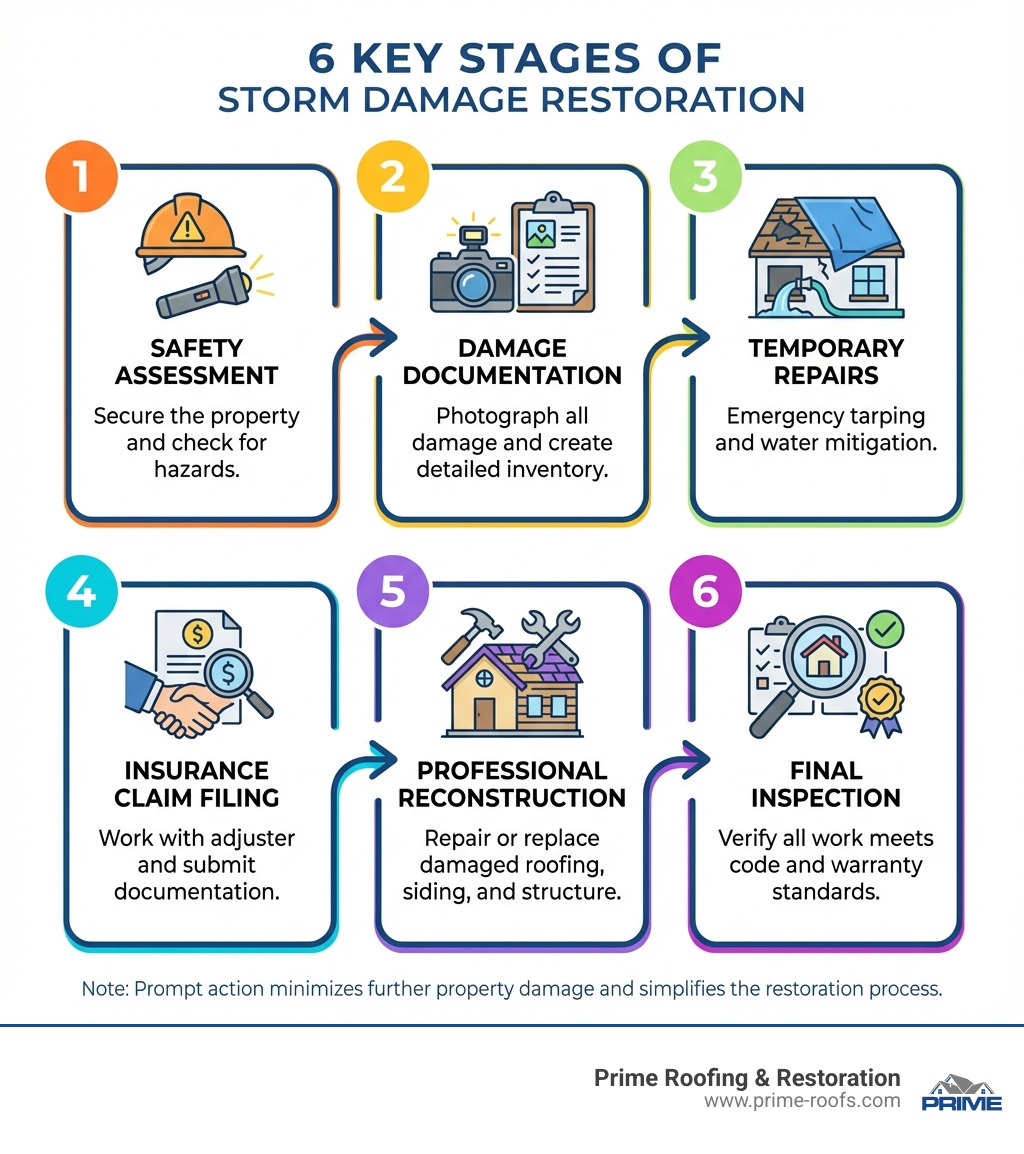
Key terms for storm damage repair:
First Response: Immediate Steps to Take After a Storm
When a storm hits, the moments immediately following can be chaotic. Acting swiftly and systematically is crucial, as the first steps you take can significantly impact your property’s safety and the success of your insurance claim.
Prioritize Safety Above All Else
Your top priority after any storm is safety. Never rush into a damaged building without first ensuring it is safe.
- Wait for Official Clearance: If you evacuated, do not return until local authorities declare it safe. Unseen dangers like downed power lines or gas leaks may be present.
- Beware of Downed Power Lines: Treat all downed lines as live and extremely dangerous. Keep a safe distance and report them to your utility company.
- Watch for Structural Hazards: Look for leaning walls, sagging ceilings, or shifted foundations. The U.S. Department of Energy notes that signs of structural damage include a shifted structure, broken pilings, or cracked crawlspace walls. If you see these, do not enter. Call a professional for a structural evaluation.
- Gas Leaks: If you smell gas or hear a hissing sound, evacuate immediately and call 911 or your gas provider from a safe distance.
- Contaminated Floodwater: Assume all standing water is contaminated with sewage or chemicals. Avoid direct contact.
- Seeking Help: If your home is uninhabitable, organizations like the American Red Cross can provide shelter and food. Visit their website at Help after a storm for resources.
Document Everything and Contact Your Insurer
Once it’s safe, meticulous documentation is vital for a smooth insurance claim.
- Take Photos and Videos: Before moving anything, use your smartphone to capture comprehensive photos and videos of all damage, both inside and out.
- Create an Inventory of Damaged Items: Make a detailed list of all damaged belongings, including descriptions, age, and estimated replacement cost.
- Keep All Receipts for Temporary Repairs: Document any money spent on tarps, plywood, or other emergency measures. Your insurance company will likely reimburse these costs.
- Contact Your Insurance Agent Immediately: Notify your insurance company about the damage as soon as possible. Rapid response is crucial for assessing storm damages for insurance claims. We can assist with a Roof Inspection for Insurance to help you get started.
Mitigate Further Damage with Temporary Repairs
After documenting, take steps to prevent the damage from worsening. Insurance policies often require property owners to take reasonable steps to protect their property from further harm.
- Cover Broken Windows: Use plywood or heavy plastic to cover broken windows and doors to prevent water intrusion.
- Emergency Tarping: If your roof is damaged, immediate tarping is essential to prevent rain from causing extensive interior damage. Our team provides a comprehensive Emergency Tarping Complete Guide.
- Remove Standing Water: Quickly remove any water that has entered your property using buckets or wet/dry vacuums to prevent mold growth.
- Secure Loose Siding or Debris: Remove loose debris that could be a hazard and temporarily secure any flapping siding.
- Emergency Repair Kit: Keep a kit with tarps, plywood, a hammer, nails, duct tape, gloves, safety glasses, and a flashlight.
Identifying the Aftermath: Common Types of Storm Damage
Alabama storms release various destructive forces, each leaving a unique signature on homes and businesses. Recognizing these common types of storm damage is the first step in understanding the scope of repairs needed.
Wind Damage: From Missing Shingles to Structural Failure
Wind is a formidable force during hurricanes and tornadoes, accounting for a significant portion of storm-related insurance claims.
- Lifted or Missing Shingles: High winds can lift, crease, or tear off shingles, exposing the underlayment to water.
- Damaged Flashing: Metal strips around chimneys and vents can be peeled back, creating entry points for water.
- Fallen Trees and Debris Impact: Strong winds can cause severe impact damage to roofs, walls, and windows from flying debris or fallen trees.
- Compromised Soffit and Fascia: These components along the roof’s eaves can be ripped away, allowing water and pests into your attic.
- Structural Damage: In extreme cases, high winds can compromise a property’s structural integrity. We provide detailed insights into Wind Damage to Roof Shingles.
Water Damage: The Silent Threat of Leaks and Mold
Water is arguably the most insidious form of storm damage, seeping into crevices and causing issues that are not immediately apparent.
- Ceiling and Wall Stains: Discoloration on ceilings or walls often indicates a leak.
- Bubbling Paint or Wallpaper: Peeling paint or wallpaper signals moisture behind the surface.
- Musty Odors Indicating Mold Growth: A musty smell is a strong indicator of hidden mold, which can develop within 24-48 hours of water exposure and poses health risks.
- Warped Flooring: Hardwood floors can warp or buckle, while carpets and subflooring become saturated.
- Electrical Hazards: Water near electrical outlets or wiring can create dangerous shock hazards. For businesses, water damage can ruin inventory and equipment. Our team can perform a thorough Water Damage Inspection to identify all issues.
Hail Damage: Bruising, Cracking, and Punctures
Hail is the most common cause of storm damage claims for homeowners, with the average claim costing around $11,000.
- Dents on Gutters and Flashing: Soft metals on gutters and flashing dent readily and are an easy-to-spot sign of hail.
- Bruising or Circular Cracks on Shingles: Hailstones can bruise asphalt shingles, creating soft spots that compromise their protective granules.
- Granule Loss on Asphalt Shingles: Hail impact can dislodge protective granules, exposing the asphalt mat to UV rays and causing premature deterioration.
- Punctures in Roofing Material: Larger hailstones can puncture roofing materials, creating direct entry points for water.
- Damage to Siding and Windows: Hail can also dent vinyl siding, crack stucco, and shatter windows. Learn more about How to Spot Roof Hail Damage.
The Road to Recovery: A Step-by-Step Guide to Professional Storm Damage Repair
After the immediate crisis subsides, the journey to full recovery begins. The professional storm damage restoration process unfolds in a structured manner, from a detailed assessment to full reconstruction, ensuring your property is restored to its pre-storm condition.
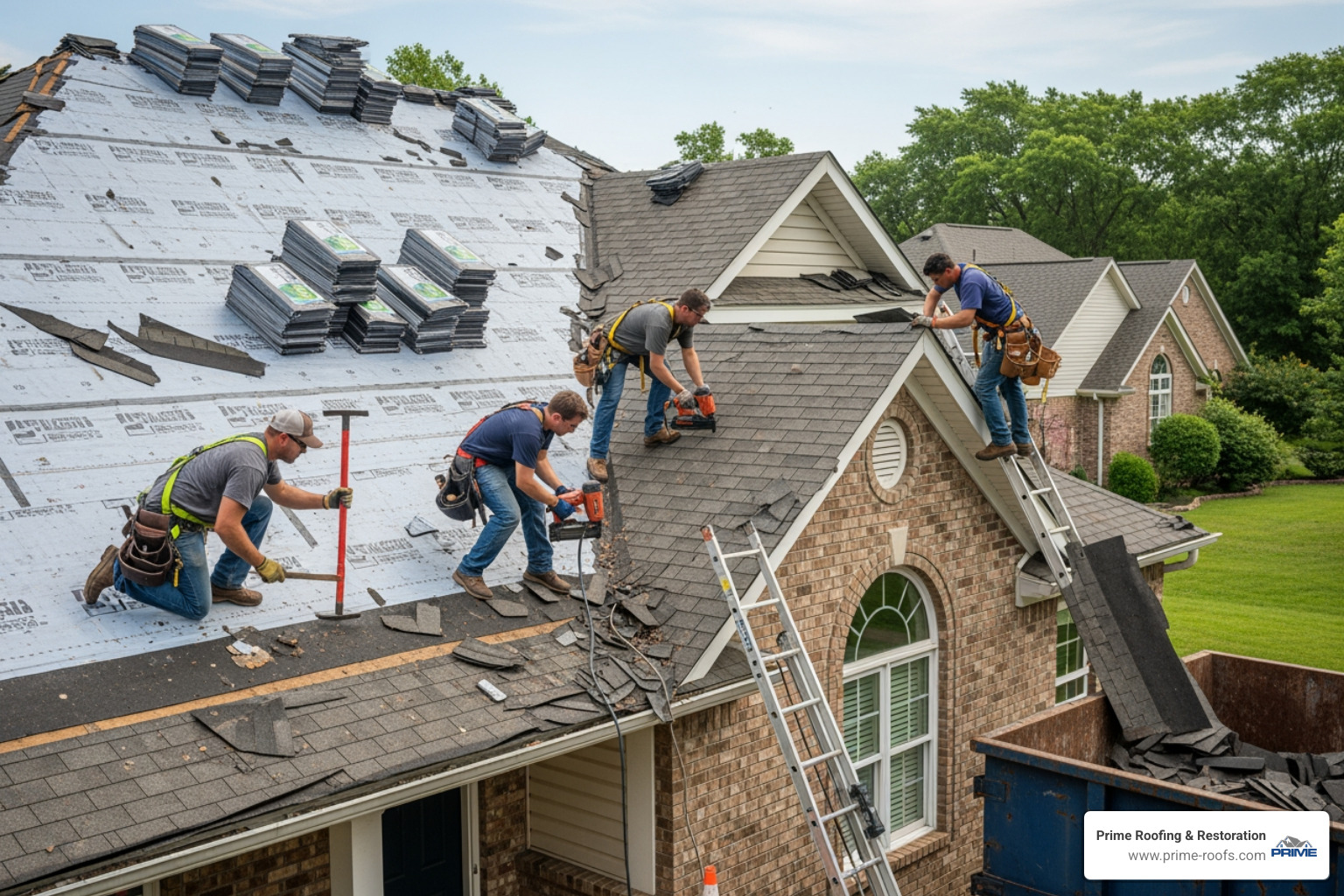
Step 1: Professional Inspection and Damage Assessment
While your initial documentation is valuable, a professional inspection is the cornerstone of effective repair. A licensed roof contractor identifies all visible and hidden damage, forming the basis for the insurance claim and repair plan.
- Comprehensive Damage Identification: Experts look beyond missing shingles to find subtle hail bruising, wind uplift, and flashing damage.
- Moisture Mapping: Using moisture meters and thermal imaging, professionals detect hidden moisture in walls and ceilings to prevent mold. Wood moisture content should be below 20% before covering.
- Structural Integrity Check: The roof’s decking, trusses, and overall stability are evaluated. A professional engineer may be consulted if structural damage is suspected.
- Code Compliance Review: An assessment ensures all repairs will meet current building codes for safety and insurance compliance.
- Detailed Report for Insurance: A comprehensive report with photos and drone footage is compiled to support your insurance claim and streamline approvals. Our Roof Assessment Services provide this crucial documentation.
Step 2: The Restoration and Reconstruction Process
Once the damage is assessed and the claim is progressing, physical reconstruction begins.
- Debris Removal and Cleanup: The first task is safely clearing all storm-related debris, a major undertaking for commercial sites.
- Structural Repairs: If structural damage was found, this is addressed first. This may involve bracing walls or repairing trusses to ensure building stability.
- Roof Repair or Replacement: This is often the most significant part of the repair. Depending on the damage, targeted repairs are made, or a full roof replacement is performed using high-quality, impact-resistant materials.
- Siding, Window, and Gutter Repairs: All damaged exterior elements are repaired or replaced to ensure the property is fully sealed from the elements.
- Interior Restoration: Once the exterior is secure, work moves indoors to repair water-damaged drywall, replace flooring, and handle any mold remediation.
- Specialized Commercial Restoration: For businesses, the process is customized to minimize downtime, including specialized cleaning and environmental controls. Most repairs are completed within 30 days of insurance approval.
Navigating Insurance and Choosing Your Contractor
Dealing with insurance companies and selecting the right contractor can be challenging after a storm. We emphasize clear guidance and partner with you every step of the way.
How to Effectively Steer the Insurance Claims Process
Navigating the insurance process effectively can make a significant difference in your financial recovery.
- Review Your Policy for Coverage Details: Understand what your policy covers, your deductibles, and any limitations. Standard homeowners’ insurance covers wind and hail, but flood damage usually requires a separate policy from the National Flood Insurance Program.
- Be Present for the Adjuster’s Inspection: When the insurance adjuster visits, walk them through the property and point out all the damage you have documented.
- Provide All Documentation: Submit all photos, videos, inventory lists, and receipts for temporary repairs. The more evidence you provide, the smoother the claim will be.
- Understand ACV vs. RCV: Actual Cash Value (ACV) pays for the depreciated value of damaged property, while Replacement Cost Value (RCV) pays to replace it with new materials. RCV policies offer better coverage.
- Don’t Settle for Less: If the insurance company’s initial offer seems too low, you have the right to dispute it by providing estimates from reputable contractors. You can also consider federal resources like DisasterAssistance.gov if the event is declared a federal disaster. Our Insurance Claims Assistance Complete Guide walks you through this process.
Choosing a Reputable Storm Damage Repair Contractor
Selecting the right contractor is a critical decision, as post-storm environments can attract unscrupulous individuals.
- Verify Licenses and Insurance: Always work with fully licensed and insured contractors. This protects you from liability and ensures they meet professional standards.
- Check Reviews and References: Look for contractors with a strong track record of positive customer reviews on platforms like Google or the BBB.
- Get Multiple Written Estimates: Obtain at least three detailed, written estimates. The cheapest option is not always the best, as a low bid may indicate shortcuts.
- Beware of Contractors Who Offer to Waive Your Deductible: This is a red flag and is generally considered insurance fraud.
- Look for Local Expertise: Choose a contractor familiar with local building codes and storm patterns. Our team of roofers in Alabaster, AL has years of experience with local storm damage.
- Experience with Commercial Properties: If you own a commercial property, ensure the contractor has specific experience with your property type to minimize business interruption.
Fortifying Your Property: How to Prevent Future Storm Damage
While we cannot stop storms, we can make our properties more resilient. Investing in preventative measures and proactive maintenance is a wise strategy to mitigate future storm damage, saving you stress and significant costs.
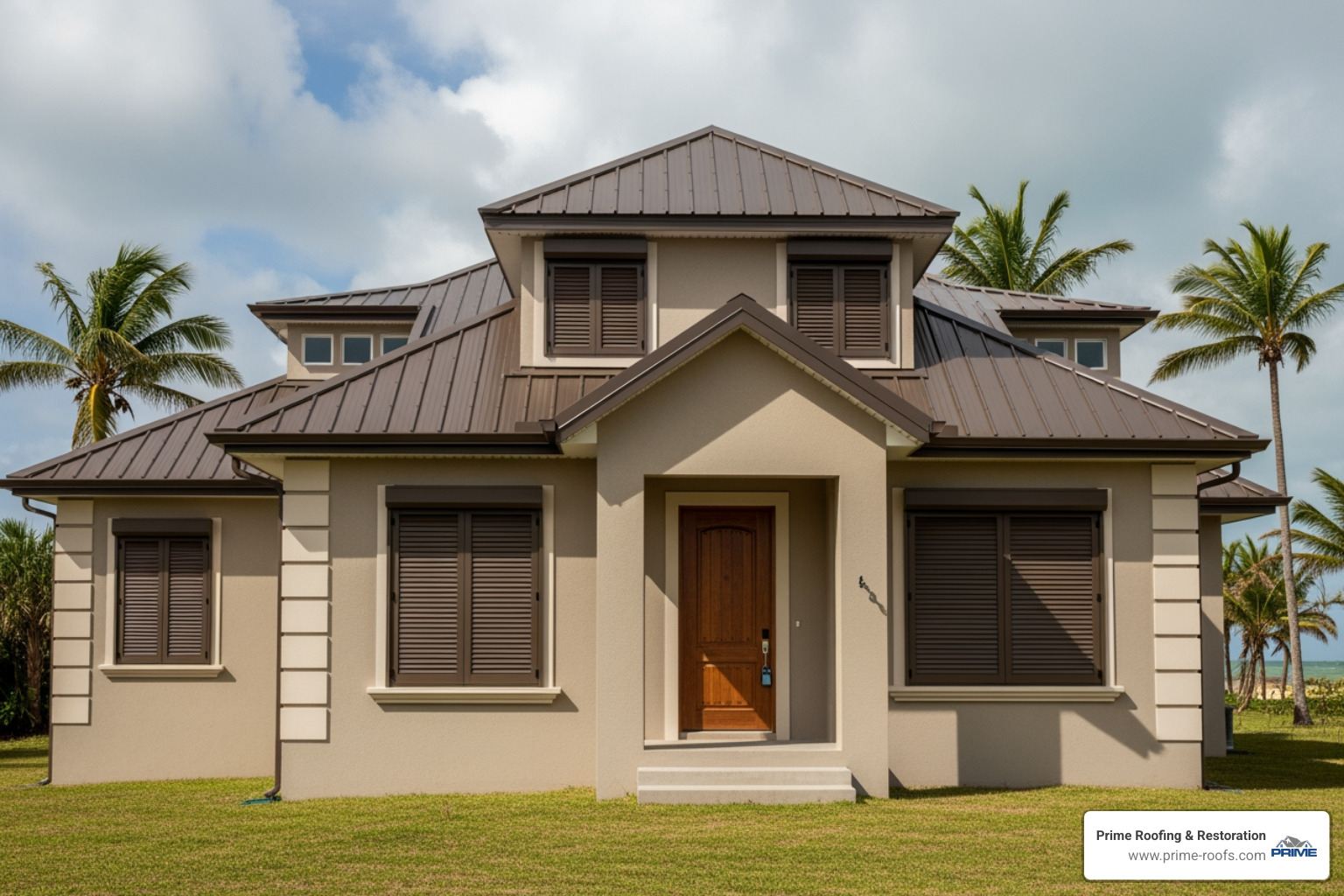
Invest in Resilient Roofing and Building Materials
Building stronger starts with choosing materials designed to withstand the elements.
- Impact-Resistant Shingles (Class 4): These shingles are designed to resist hail and wind damage. While they cost more upfront, they offer superior protection and may lead to insurance discounts.
- Metal Roofing: A popular choice in storm-prone regions, metal roofing is highly durable, fire-resistant, and can withstand extreme winds. It is an excellent long-term investment for resilience.
- Reinforced Windows and Garage Doors: These vulnerable points can be strengthened with impact-resistant windows, hurricane shutters, or garage door reinforcement kits.
- Hurricane Straps and Clips: These connectors strengthen the bond between the roof and walls, improving resistance to wind uplift. During Hurricane Andrew, hurricane ties had a 92% success rate in preventing roof separation.
- Secondary Water Barriers: A peel-and-stick underlayment beneath your primary roofing material provides an extra layer of protection against water intrusion.
Proactive Maintenance and Preparedness
Ongoing care and readiness are essential for storm preparedness.
- Regular Roof Inspections: Professional roof inspections at least once a year, and after any major storm, can spot minor issues before they become major problems.
- Keep Gutters and Downspouts Clear: Clogged gutters cause water to back up, leading to roof leaks and fascia damage. Keeping them clear ensures proper drainage.
- Trim Overhanging Tree Branches: Branches near your property are a hazard during high winds. Keep them trimmed to reduce the risk of impact damage.
- Develop an Emergency Plan: For homes, an evacuation plan and emergency kit are key. For businesses, a pre-disaster plan (PDP) is vital to protect assets and minimize interruption.
Frequently Asked Questions about Storm Damage Repair
Here are answers to common questions we hear from property owners in Alabaster, Hoover, Orange Beach, and Gulf Shores, Alabama.
How long does storm damage repair take?
The timeline varies based on the extent of the damage and the speed of insurance approval. Minor repairs might take a few days, while major reconstruction can take several weeks or months. Most storm damage repairs are typically completed within 30 days of insurance approval, but the initial assessment and claim process can add time.
Can I perform storm damage repairs myself?
While clearing minor debris may be a DIY task, most storm damage repairs, especially to the roof and structure, should be handled by a professional. Improper repairs can void warranties, cause more damage, and pose serious safety risks. A licensed contractor ensures the work meets safety standards and local building codes.
Will my insurance premium go up after a storm damage claim?
Filing a single claim after a widespread natural disaster does not automatically mean your premium will increase, as these are often considered “acts of God.” However, multiple claims in a short period can affect your rates. It is best to discuss your specific situation with your insurance agent.
Conclusion
Recovering from a storm is a challenging process, but with a clear plan, it is manageable. Prioritizing safety, documenting damage, and acting quickly are the first steps toward restoration. Partnering with a trusted, experienced contractor is essential for navigating repairs and the complexities of insurance claims. For comprehensive Storm Damage Repair Services and expert guidance, the team at Prime Roofing & Restoration is available 24/7 to help you protect your home and get your life back to normal.