
Wind-Damaged Roofs: Why Fast Action Saves Thousands in Repairs
When severe winds lash across Central Alabama, your roof is the first and most critical line of defense. The decision to seek roof repair after wind damage is most effective and financially prudent when it starts within 24–48 hours of the storm. This narrow window is crucial. Once shingles lift, crease, or blow off entirely, your home’s underlying structure is exposed. Every additional day of exposure dramatically increases the likelihood of pervasive water intrusion, which can lead to destructive leaks, hazardous mold growth, and irreversible structural rot in your roof deck and attic framing. Homeowners who secure prompt, professional help limit overall restoration costs by as much as 30–40%, according to multi-state claims data compiled by major insurers. This significant saving comes from preventing secondary damage, such as ruined insulation, stained ceilings, and compromised electrical systems. For homeowners in Central Alabama, scheduling expert storm damage roof repair services is the single most decisive step to prevent minor wind damage from escalating into a catastrophic full roof failure.
Quick Answer: Essential Steps for Wind Damage Repair
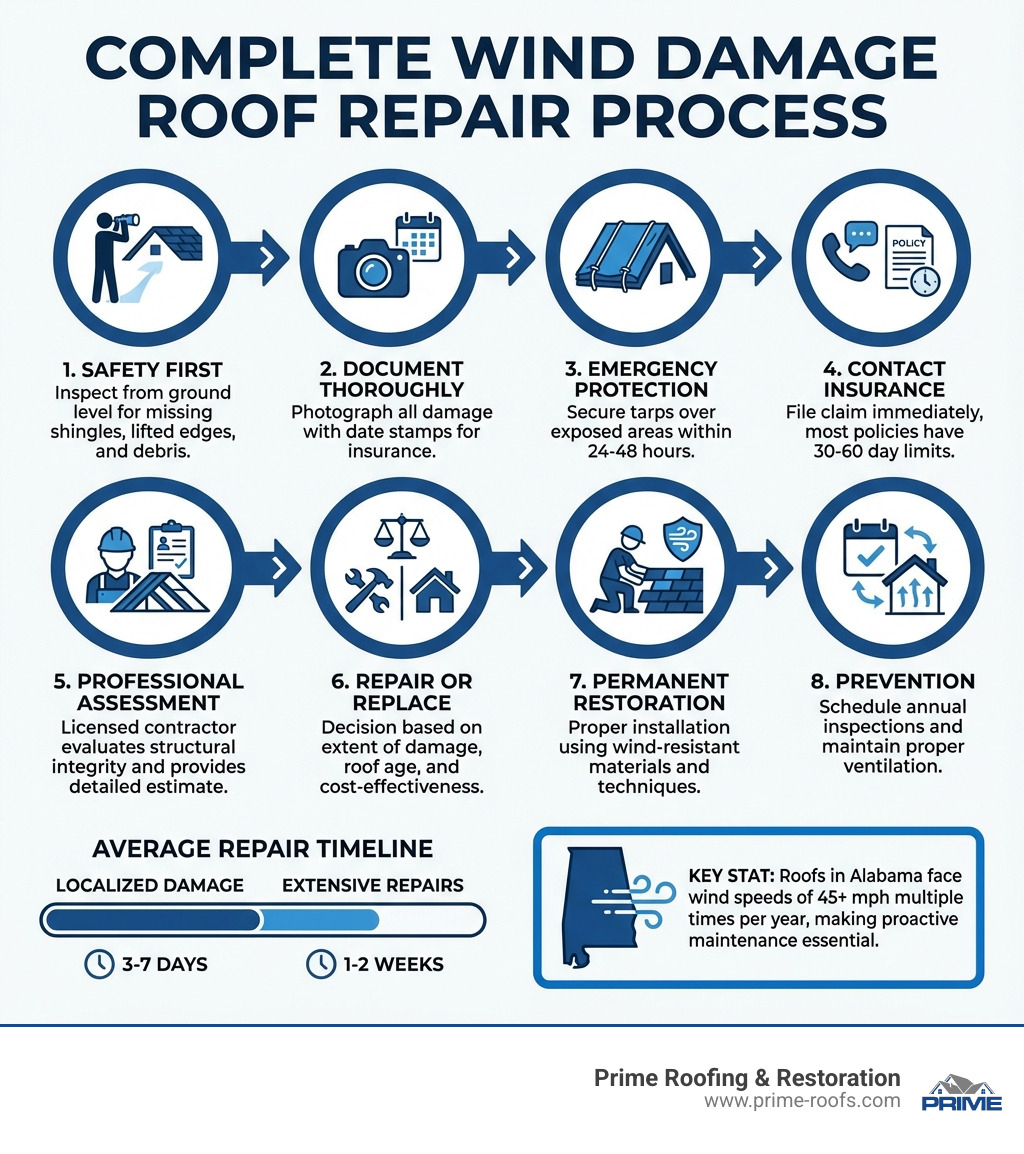
- Inspect Safely: From the ground, use binoculars to check for missing or lifted shingles, creased areas, granule loss in downspouts, and damage to flashing around vents and chimneys.
- Document Everything: Take extensive photos and videos of all visible damage. Use timestamps if possible. Capture both close-up shots of specific issues and wide-angle views of each roof slope.
- Secure Your Home: Arrange for emergency tarping to prevent water intrusion. This is a critical step to mitigate further damage while you arrange for permanent repairs.
- Contact Your Insurer: File your claim as soon as possible. Most insurance policies have strict time limits for reporting storm-related damage.
- Hire a Licensed Professional: Partner with an experienced, local roofing contractor who deeply understands Alabama’s specific building codes, climate challenges, and insurance claim processes.
Why Immediate Action is Critical: Wind damage is rarely a static event. A single lifted shingle creates a leverage point for wind to catch and tear off adjacent shingles in a zipper-like effect. Once the protective shingle layer is breached, wind-driven rain can penetrate the underlayment and saturate the roof deck within hours. According to FEMA research, roofs that are not promptly addressed allow water to saturate attic insulation, drastically reducing its R-value and leading to higher energy bills. This moisture creates a prime environment for mold and mildew, which can proliferate in as little as 48 hours and severely impact your home’s indoor air quality. In Alabama, the freeze-thaw cycle common in winter can then accelerate this damage exponentially, as trapped water freezes, expands, and widens cracks and gaps, leading to even more significant structural issues.
Most Central Alabama homeowners discover wind damage after storms producing sustained winds of 45-50 mph or greater—speeds that can easily tear shingles, bend or dislodge flashing, and break the crucial sealant strips that make your roof watertight. If you’re facing this situation, understanding the repair process and knowing when to call for professional roof repair services can save you thousands in avoidable secondary damage.
I’m Bill Spencer, owner of Prime Roofing & Restoration. For over five years, my team and I have helped hundreds of Alabama homeowners navigate the complexities of roof repair wind damage. From the initial emergency call and meticulous insurance documentation to a complete, high-quality storm restoration, we’ve seen it all. We understand the unique challenges our Gulf Coast climate presents—from intense summer thunderstorms to the threat of hurricanes—and we are committed to guiding you through every step of protecting your most valuable investment with integrity and expertise.
Step 1: How to Identify Common Signs of Wind Damage
Wind damage isn’t always as obvious as a tree branch crashing through your attic. Often, the most significant issues are subtle and require a trained eye. Knowing what to look for from the safety of the ground and inside your home is the first step toward a successful recovery. A thorough inspection can reveal the true extent of the problem, providing crucial information for your insurance claim. For Alabama homeowners facing the aftermath of a storm, Prime Roofing & Restoration provides expert, no-obligation assessments to identify all forms of wind damage, ensuring no detail is overlooked during the critical post-storm period.
Exterior Signs of Wind Damage
After any storm with winds exceeding 45 mph, conduct a careful visual inspection from the ground. Use binoculars for a closer look at your roof’s slopes.
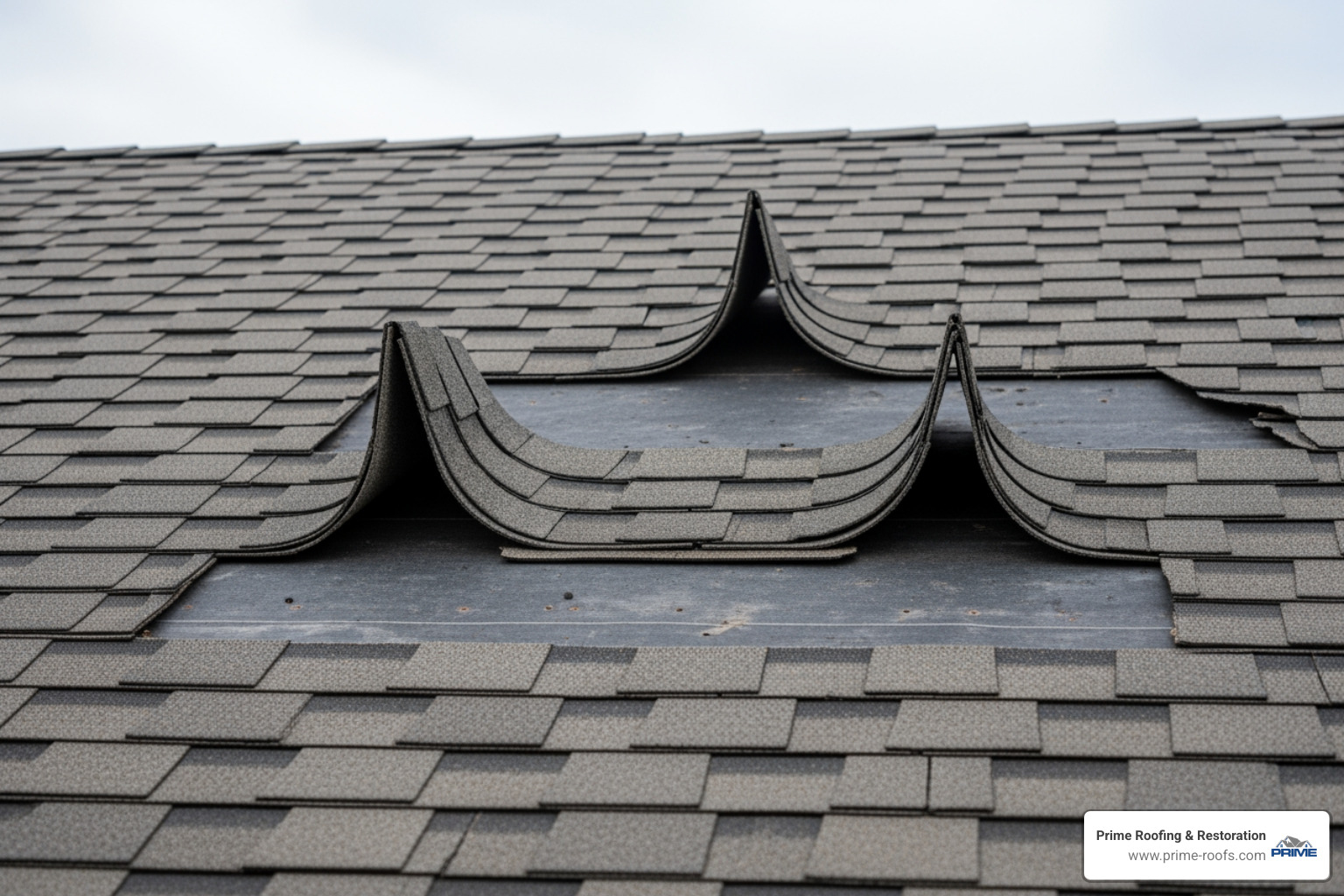
- Missing Shingles: This is the most obvious sign. High winds create uplift pressure that can overcome the fasteners, tearing shingles completely off the roof. This exposes the underlayment or plywood deck to direct rainfall, making it the highest priority for an emergency tarp.
- Curled, Lifted, or Flipped Shingle Edges: Wind uplift can break the sealant strip that bonds shingles together. Even if the shingle doesn’t fly off, this broken seal allows future wind and rain to get underneath, creating a vulnerability that will lead to failure in the next storm. This is often called the “zipper effect” as it can cause a whole line of shingles to peel off.
- Creased or Bent Shingles: Look for a horizontal line or crease where the shingle has been bent backward by the wind. This crease indicates the fiberglass matting inside the shingle has been fractured. A creased shingle is structurally compromised and will eventually crack and fall off, even if it lays flat after the storm.
- Granule Loss in Gutters and Downspouts: Asphalt shingles are coated with ceramic granules that protect them from UV rays and add fire resistance. While some minor loss is normal over a roof’s life, a large accumulation of granules in your gutters after a storm is a red flag. This “baldness” indicates the shingles have been battered and their lifespan has been significantly shortened.
- Damaged or Missing Flashing: Flashing consists of metal strips installed around chimneys, vents, skylights, and in roof valleys. Wind can lift, bend, or tear this flashing, creating direct entry points for water into some of the most vulnerable areas of your home.
- Soffit and Fascia Damage: The eaves of your roof, including the soffit (underneath) and fascia (the forward-facing board), can be damaged or blown off by high winds. This not only allows water and pests into your attic but can also compromise your attic’s ventilation system.
- Debris on the Roof: Don’t underestimate the impact of small branches, twigs, and other flying debris. These projectiles can puncture shingles, crack vent covers, and damage flashing systems, creating small but significant leaks.
To learn more about conducting your own initial assessment, check out our detailed guide on How to spot roof damage from the ground.
Interior Signs of a Compromised Roof
Sometimes the first sign of a problem appears inside your home. If you notice any of these, it’s time to call a professional immediately.
- Water Stains on Ceilings or Walls: Brown or yellowish stains, especially after a rainstorm, are a classic sign of a leak. The location of the stain on the ceiling doesn’t always correspond directly to the leak’s location on the roof, as water can travel along rafters and trusses before dripping down.
- Wet Spots in the Attic: After a storm, safely inspect your attic with a flashlight. Look for damp or discolored insulation, dark stains on the underside of the roof deck (plywood), or visible drips. A musty odor is also a strong indicator of hidden moisture.
- Sagging Ceiling Drywall: If you see your ceiling drywall beginning to sag or bow, this is a sign of a significant and ongoing water leak. The drywall has become saturated with water, lost its structural integrity, and is at risk of collapsing. This is a serious issue requiring immediate attention.
- Daylight Visible Through the Roof Deck: In the most severe cases, you may be able to see daylight through your roof boards from inside the attic. This indicates a direct opening to the elements and requires an emergency repair to prevent major structural damage.
For deeper insights into finding these hidden culprits, explore our page on More on finding hidden leaks.
Step 2: Immediate Actions for a Wind-Damaged Roof
Once you’ve identified potential wind damage, the actions you take in the next few hours are critical. Prioritizing safety, thorough documentation, and temporary protection will prevent further damage and lay the groundwork for a smooth and successful insurance claim and repair process.
Prioritize Safety Above All
Your personal safety and that of your family is the absolute top priority in a post-storm environment. Never take unnecessary risks.
- Stay on the Ground: Do not climb onto a potentially damaged roof. It may be slippery from rain, have loose shingles creating a fall hazard, or even have hidden structural damage making it unstable. Professional roofers have the training and safety equipment to navigate these conditions.
- Avoid Downed Power Lines: Storms often bring down power lines. Treat every downed line as live and extremely dangerous. Keep a significant distance (at least 30 feet) and report them to your utility company immediately.
- Watch for Falling Debris: High winds can leave tree limbs, loose shingles, and other debris precariously balanced on your roof or in surrounding trees. Be aware of your surroundings when walking around your property.
- Assess Structural Stability from a Distance: If a large tree has fallen on your roof or you can see a visible sag in the roofline, do not enter the home. The entire structure could be compromised. Call emergency services and a professional roofer immediately from a safe location.
Document Everything for Your Insurance Claim
Thorough and immediate documentation is the single most important thing you can do to ensure you receive fair compensation from your insurance company. Your phone is your best tool.
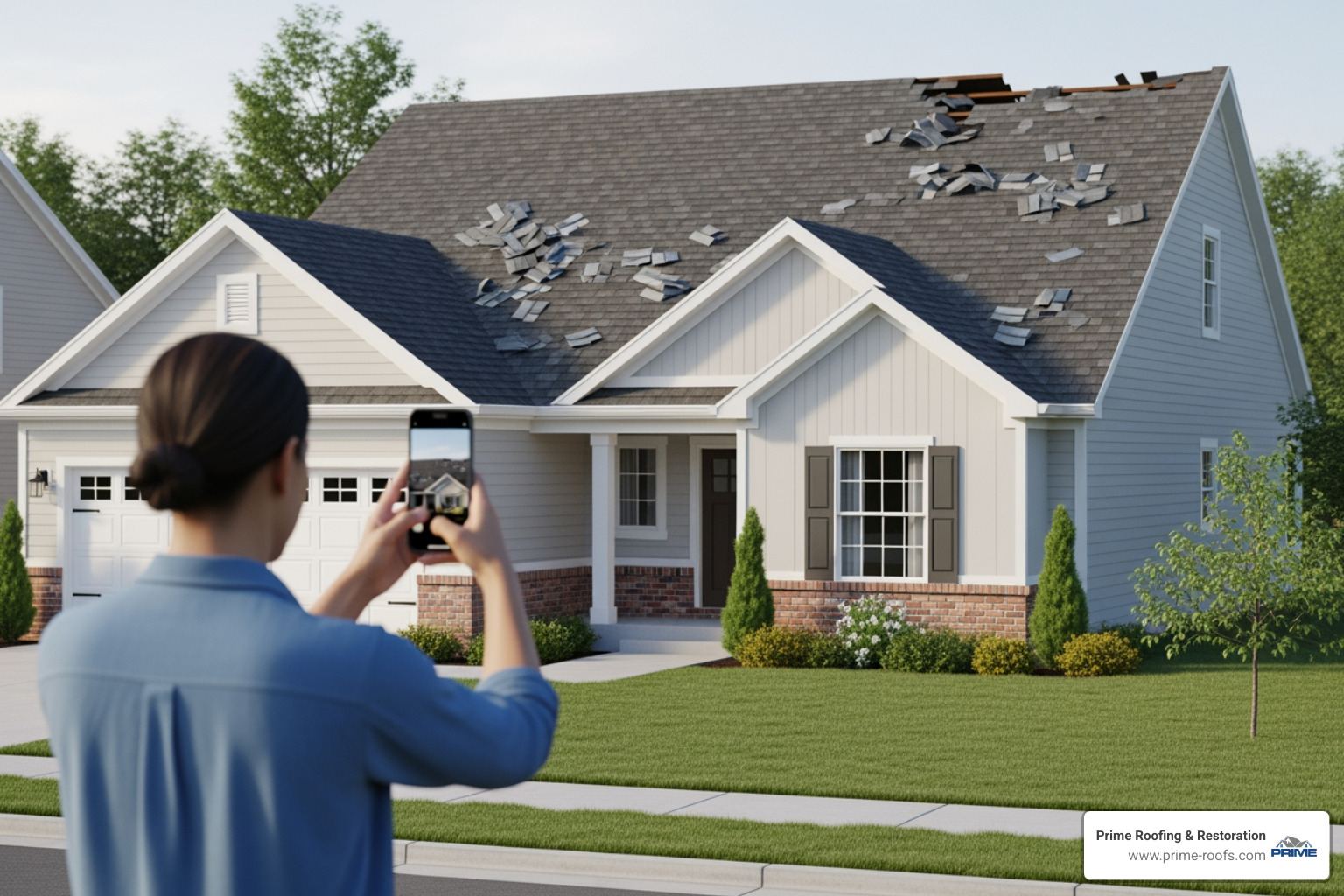
- Take More Photos and Videos Than You Think You Need: Document every sign of damage. Use your phone to take both close-up shots of individual damaged shingles and wide shots of each roof slope to show the overall context.
- Note the Date and Time: Many phone cameras automatically embed this data, but it’s wise to state the date and time in a video recording to establish a clear timeline for your insurer.
- Keep a Detailed Log: Create a written list of all the damage you find, noting the location (e.g., “north slope, near chimney,” “water stain in upstairs bedroom closet”). This helps you stay organized when talking to your insurer and contractor.
Essential Items to Document for Your Insurance Claim:
- Date and time of the storm event.
- Photos/videos of missing, creased, or lifted shingles from all angles.
- Photos/videos of damaged or missing flashing around chimneys, vents, and skylights.
- Clear images of any exposed roof deck or underlayment.
- Photos showing the accumulation of granules in your gutters or on the ground.
- Images of damage to soffit, fascia, gutters, and siding.
- Photos of any large debris (like tree limbs) that impacted the roof or property.
- Detailed photos/videos of all interior damage, including water stains, peeling paint, and sagging ceilings.
- Keep receipts for any temporary repairs you make, such as buying a tarp or paying for emergency services.
- A video walkthrough of the property, narrating what you see, can be incredibly powerful for an adjuster.
Arrange for Emergency Temporary Protection
After documenting the damage, your next immediate goal is to prevent any more water from entering your home. This is a key part of your responsibility to mitigate further damage, which is a requirement in most insurance policies.
- Cover Damaged Areas with a Tarp: A properly installed waterproof tarp is the most effective way to shield exposed areas of your roof from further rain and debris.
- Prevent Further Water Intrusion: Tarping protects your attic, insulation, and home’s interior from additional water damage, which in turn prevents the development of mold and structural rot.
- Hire Professionals for Tarping: While it may be tempting to do it yourself, securing a tarp on a high or steep roof is dangerous. Poorly secured tarps can act like wind sails, catching the wind and causing even more damage to your roof. Professional roofers can install a tarp securely using furring strips and proper techniques that won’t void your roof’s warranty.
When storms hit, our team is ready to help 24/7. Learn more about our professional emergency roof tarping services to protect your home when you need it most.
Step 3: Navigating Insurance and Professional Roof Repair
With your home temporarily protected and the damage documented, the next phase involves two critical components: coordinating with your insurance company and hiring a reputable, professional roofing contractor. Navigating this process can be daunting, but working with an experienced local team can make it seamless and stress-free.
Understanding Your Homeowner’s Insurance Coverage
Before you even call your insurance agent, it’s wise to locate and review your homeowner’s policy. Understanding your coverage is key to setting realistic expectations.
- Review Your Policy for Wind Damage Coverage: In Alabama, standard homeowner’s insurance policies (HO-3) typically cover damage from wind and hail as a named peril. However, it’s crucial to confirm this and understand any specific limitations.
- Identify Your Deductible: Your deductible is the amount you must pay out-of-pocket before your insurance coverage kicks in. Be aware that some policies have a separate, higher deductible for hurricane or named-storm damage, which is often a percentage of your home’s insured value (e.g., 1-5%).
- Understand ACV vs. RCV: This is one of the most important aspects of your policy.
- Replacement Cost Value (RCV): This coverage pays for the full cost of replacing your damaged roof with new, similar materials, without deducting for depreciation. You typically receive an initial payment for the actual cash value, and the remaining amount (depreciation) is paid once the work is completed and you provide a final invoice.
- Actual Cash Value (ACV): This coverage only pays for the depreciated value of your damaged roof. If your roof is 15 years old with a 20-year lifespan, an ACV policy might only pay for 25% of the replacement cost, leaving you to cover the rest.
- Check for Exclusions: Policies will not cover damage resulting from normal wear and tear, neglect, or faulty installation. This is why having a pre-storm inspection report can be valuable.
For a deeper understanding of policy details, refer to our Guidance on roof insurance coverage.
Filing a Successful Wind Damage Claim
A structured and professional approach will simplify the claims process and improve your chances of a fair settlement.
- Contact Your Insurer Immediately: Don’t delay. Most policies require you to report a claim in a “timely manner.” Have your policy number and all your documentation ready.
- Provide Your Detailed Documentation: Send your insurer the photos, videos, and logs you created in Step 2. This initial evidence is crucial for establishing the scope of the damage.
- Schedule the Adjuster Meeting: Your insurance company will assign an adjuster to inspect the damage. It is highly recommended to have your chosen roofing contractor present during this inspection. An experienced roofer can point out damage the adjuster might miss and ensure the scope of work is accurate from the start.
- Get a Professional, Itemized Estimate: A reputable contractor will provide a detailed, line-item estimate using software like Xactimate, which is the same platform most insurers use. This estimate should clearly outline the scope of work, materials to be used, and labor costs, serving as a powerful tool in negotiating your claim.
For comprehensive support, our team specializes in this process. Learn more about our Complete guide to insurance claims assistance.
Hiring a Qualified Wind Damage Repair Contractor
Your choice of contractor is the most important decision you’ll make in this process. The right partner ensures a high-quality repair and a smooth experience; the wrong one can lead to disaster.
- Prioritize Local, Established Experts: Look for contractors with a permanent physical office in your area. Local companies have a reputation to uphold and are familiar with Alabama’s building codes, weather patterns, and permitting processes.
- Verify License and Insurance: Ask for proof of their state license and, crucially, their general liability and worker’s compensation insurance. This protects you from any liability in case of an accident on your property.
- Read Reviews and Ask for Local References: Check their reputation on Google, the BBB, and other review sites. Ask for a list of recent local projects you can drive by and references you can call.
- Get a Detailed, Written Contract: Never rely on a verbal agreement. The contract should detail the full scope of work, materials, timeline, total cost, and payment schedule. Read it carefully before signing.
- Beware of Storm Chasers: After a major storm, out-of-state “storm chasers” often flood the area. Red flags include high-pressure sales tactics, demanding large upfront payments (or your entire insurance check), offering to “waive” your deductible (which is insurance fraud), and using vehicles with out-of-state plates.
If you’re in Alabaster, AL, find trusted and vetted roofers in Alabaster, AL through our dedicated local services.
Step 4: Deciding Between Repair and Full Replacement
Once a professional roofing contractor has thoroughly assessed the wind damage, you’ll face a critical decision: is a targeted repair sufficient, or is a full roof replacement the necessary and more cost-effective solution? This decision isn’t just about the initial cost; it involves considering your roof’s age, the extent of the damage, long-term performance, and insurance coverage.
When to Repair Individual Shingles
In many cases, especially on a younger roof with minor damage, a professional repair is a perfectly viable and economical option. Repairs are generally recommended under the following circumstances:
- Localized Damage: The damage is confined to a small, specific area, such as a few shingles blown off one slope or damage around a single vent.
- A Few Missing or Lifted Shingles: If only a handful of shingles are missing or have been creased, a roofer can often replace them or, in the case of lifted shingles, manually reseal them with roofing cement.
- The Roof is Relatively New: If your roof is less than 10-15 years old and the majority of it remains in excellent condition, spot repairs can effectively extend its life without the cost of a full replacement.
- No Widespread Underlying Issues: The inspection reveals that the underlayment and roof deck are still sound, and the damage is purely cosmetic or limited to the shingles themselves.
One challenge with repairs can be matching the shingle color. Due to weathering and manufacturing dye lot changes, new shingles may not be a perfect match for your existing roof, which can be a cosmetic concern for some homeowners.
When Full Roof Replacement is Necessary
While a repair might seem like the cheaper option upfront, there are many situations where it’s merely a temporary fix for a larger problem. A full replacement is often the smarter, safer, and more financially sound choice when:
- Widespread or Systemic Damage: The wind has damaged multiple slopes of your roof, or there’s evidence of a systemic failure (e.g., widespread lifting shingles indicate a failure of the original sealant across the entire roof).
- The Roof is Approaching the End of its Lifespan: In Alabama’s harsh climate, a standard architectural asphalt shingle roof has a realistic lifespan of 15-20 years. If your roof is in this age range, investing in repairs is often not cost-effective, as you’ll likely need a full replacement in a few years anyway.
- Multiple Layers of Shingles Exist: Building codes generally prohibit installing more than two layers of shingles. If your roof already has two layers, a full tear-off and replacement is required by law.
- Structural Damage to the Roof Deck: If the inspection reveals that the underlying plywood or OSB sheeting is soft, delaminated, or water-damaged, this decking must be replaced. This level of work almost always necessitates a full roof replacement.
- Insurance Company Approval: In cases of extensive damage, your insurance company will often determine that a full replacement is the appropriate course of action to properly restore your home’s integrity.
| Criteria | Repair | Replacement |
|---|---|---|
| Extent of Damage | Localized to a few shingles or a small, single section. | Widespread across multiple slopes or systemic failure. |
| Roof Age | Generally less than 10-15 years old. | 15-20+ years for asphalt shingles, or nearing end of life. |
| Cost | $400-$1,900 on average for minor to moderate repairs. | $7,500+ for asphalt, $11,655+ for metal (average-sized home). |
| Underlying Issues | No damage to underlayment or roof deck. | Structural damage, soft decking, or compromised underlayment. |
| Long-Term Outlook | A cost-effective fix that extends the life of a newer roof. | Provides 20-30+ years of protection with a new warranty. |
| Insurance | Often covered for storm damage, may fall under deductible. | Typically covered for extensive storm damage per policy terms. |
| Materials | Matching existing shingle color and type can be difficult. | Opportunity to upgrade to superior, wind-resistant materials. |
| Timeframe | Typically completed in 1-2 days. | Usually takes 3-7 days, depending on size and complexity. |
Learn more about our comprehensive roof replacement process and what you can expect from start to finish.
Step 5: Preventing Future Wind Damage
After your roof is repaired or replaced, the work isn’t over. Taking proactive steps to fortify your roof against future storms is a wise investment. Regular maintenance and strategic upgrades can provide long-term protection and peace of mind, especially in Alabama’s turbulent weather patterns. First, it’s important to understand the severe consequences of not addressing damage promptly.
Long-Term Consequences of Delaying Repairs
Ignoring what seems like minor wind damage is a recipe for a cascade of expensive and destructive problems:
- Structural Rot and Decay: Even a small leak from a single lifted shingle can allow water to slowly penetrate your roof deck. Over time, this persistent moisture causes the wood to rot, compromising the structural integrity of your entire roof system.
- Mold and Mildew Growth: The combination of moisture, warmth, and organic material (wood, drywall, insulation) in an attic creates a perfect breeding ground for mold and mildew. This can lead to serious health problems, including respiratory issues and allergies, and requires costly professional remediation.
- Saturated and Ineffective Insulation: When attic insulation gets wet, it compresses and loses its insulating properties (R-value). This leads to significantly higher energy bills as your HVAC system works harder to heat and cool your home. Wet insulation is also a catalyst for mold growth.
- Compromised Electrical Systems: Water leaking into attics and walls can come into contact with electrical wiring. This creates a severe risk of short circuits, power outages, and even house fires.
- Exponentially Higher Future Repair Costs: A problem that might have been a simple $500 shingle repair can evolve into a $20,000+ project involving roof replacement, structural wood repair, mold remediation, new insulation, and interior drywall and paint work.
Best Practices for Wind Mitigation
Fortify your roof against the next storm with these proven strategies:
- Schedule Regular Roof Inspections: The most important preventive measure is to have your roof professionally inspected twice a year (in the spring and fall) and after any major weather event. An expert can spot and address small issues before they become major vulnerabilities.
- Trim Overhanging Tree Branches: Large branches overhanging your roof are a significant threat. In high winds, they can snap and fall, puncturing your roof deck or causing widespread damage. Keep them trimmed back from your home.
- Keep Gutters and Downspouts Clean: Clogged gutters cause water to back up and pool along the eaves. This water can seep under shingles and rot the fascia boards and roof decking.
- Upgrade to High-Wind, Impact-Resistant Shingles: When it’s time for a replacement, invest in superior materials. For example, GAF’s Timberline HDZ shingles come with a WindProven Limited Wind Warranty that has no maximum wind speed limitation when installed with the required combination of GAF accessories. This is a significant upgrade over standard shingles.
- Ensure Proper Attic Ventilation: A well-ventilated attic helps regulate temperature and moisture levels, preventing the premature aging of shingles and the weakening of the roof deck from heat and moisture buildup.
- Strengthen Roof Deck Attachment: A key principle of wind mitigation is ensuring the roof deck is securely fastened to the trusses. Building codes now often require stronger fasteners like ring-shank nails and specific nailing patterns (e.g., 6-inch spacing) to resist wind uplift forces.
- Install a Sealed Roof Deck: This is perhaps the most effective upgrade for preventing water intrusion. A sealed roof deck involves applying a special peel-and-stick membrane directly to the plywood. This creates a continuous, waterproof barrier that protects your home even if the shingles are blown off. This is a core requirement for the FORTIFIED Home™ program by IBHS, a highly recommended standard for storm-prone areas.
Stay ahead of potential problems and protect your investment. Schedule routine roof maintenance with our experienced team.
Your Local Partner in Storm Recovery
Navigating the aftermath of a storm requires more than just a roofer; it requires a reliable, local partner who understands the entire recovery process. From the initial 24/7 emergency call and professional tarping to meticulous documentation, on-site insurance adjuster meetings, and completing permanent repairs to the highest standard, Prime Roofing & Restoration is here to restore your roof and your peace of mind. We are deeply rooted in the communities we serve, and our reputation is built on protecting the homes and families of our neighbors.
Don’t let wind damage compromise the safety and value of your home. The longer you wait, the more extensive and expensive the damage becomes. Our team of licensed, insured, and highly trained experts is ready to provide a comprehensive, no-obligation assessment of your property. We will give you an honest evaluation and a clear plan of action, whether it’s a simple repair or a full insurance-covered replacement.
If your home has suffered wind damage, take the most important step and call the experts. We proudly serve homeowners across Central and Coastal Alabama.
Contact us today for a comprehensive assessment or call us 24/7 for emergency service.
Prime Roofing & Restoration
Address:
123 Main Street
Alabaster, AL 35007
Phone:
(205) 296-3381
Business Hours:
Monday-Friday: 8:00 AM – 6:00 PM
Saturday: 9:00 AM – 1:00 PM
24/7 Emergency Services Available
Service Areas:
- Alabaster
- Hoover
- Orange Beach
- Gulf Shores
- Ono Island
- And surrounding Central Alabama communities