
Why Storm Damage Cleanup Requires a Systematic Approach
Storm damage cleanup is the process of safely removing debris, repairing structural damage, and restoring a property to its pre-storm condition. After severe weather, the damage can feel overwhelming, but a methodical approach is essential for a safe and effective recovery.
Key Steps for Effective Storm Damage Cleanup:
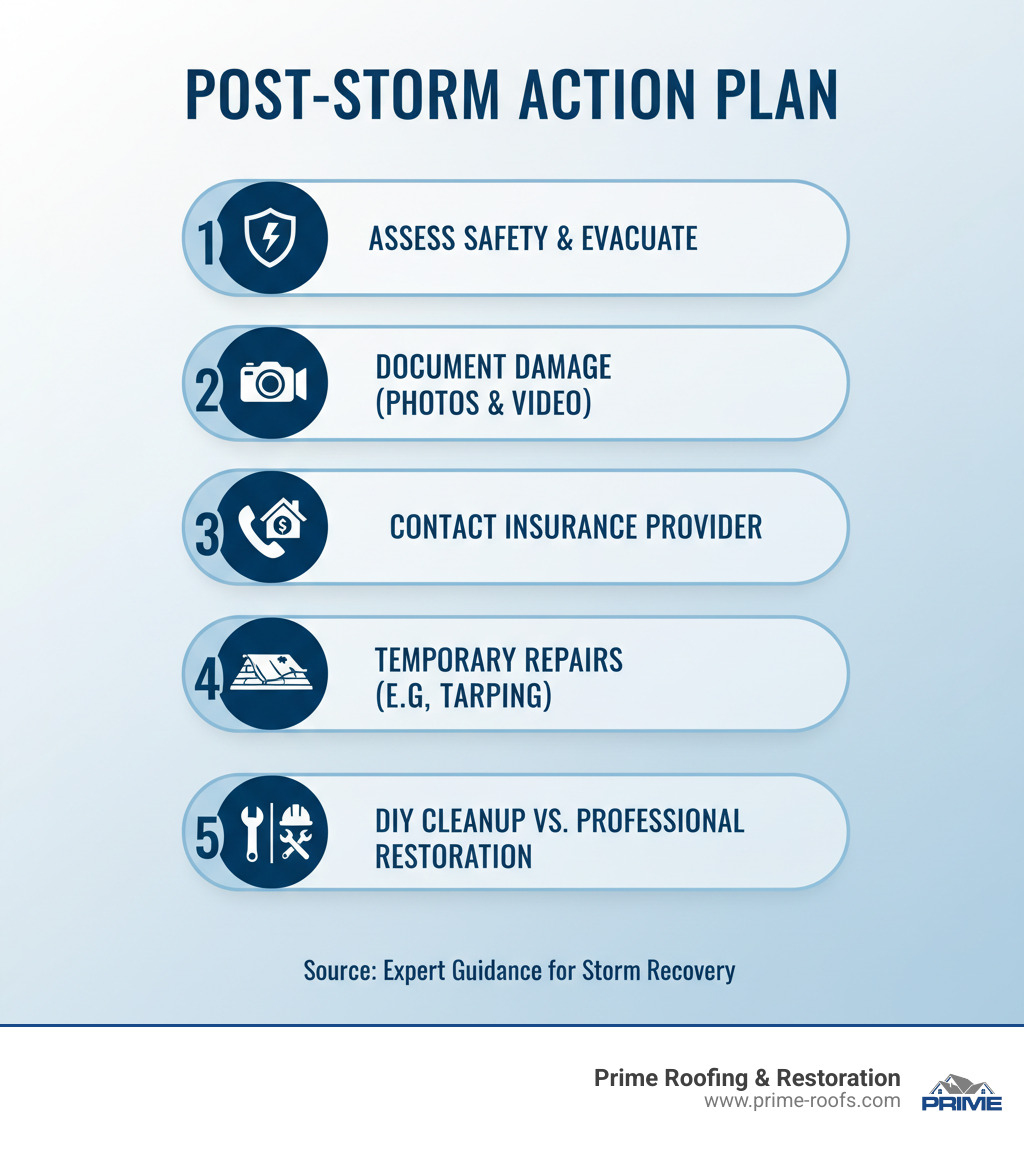
- Safety First: Check for downed power lines, gas leaks, and structural hazards before entering.
- Document Everything: Take photos and videos of all damage for insurance claims.
- Stop Further Damage: Use emergency tarping or board-up services to protect exposed areas.
- Contact Your Insurer: File your claim promptly and keep detailed records.
- Decide DIY vs. Professional: While minor debris removal is manageable, extensive water damage or structural issues require licensed experts.
Without swift action, water can penetrate a home’s interior within hours, leading to mold growth and compromised structural integrity. An emergency response within the first 24-48 hours can be the difference between a manageable repair and a costly reconstruction. This guide covers every phase of storm damage cleanup, from safety protocols to long-term prevention, explaining what steps to take and when professional trusted storm damage restoration experts should be called.
As Bill Spencer, Owner of Prime Roofing & Restoration, I’ve spent over five years leading storm damage projects across Alabama’s Gulf Coast. My experience has taught me that a methodical, safety-first approach is the key to successful recovery after severe weather.
First Response: Immediate Steps for Safety and Damage Assessment
After a storm, your family’s safety is the absolute top priority. If your property has sustained serious damage or you suspect hazards like gas leaks or electrical issues, evacuate immediately.
Once it is safe, check for immediate dangers. Be alert for downed power lines and never approach them. Note any strange odors that could signal a gas leak, and check for signs of structural instability, like leaning walls or sagging ceilings, before entering your home.
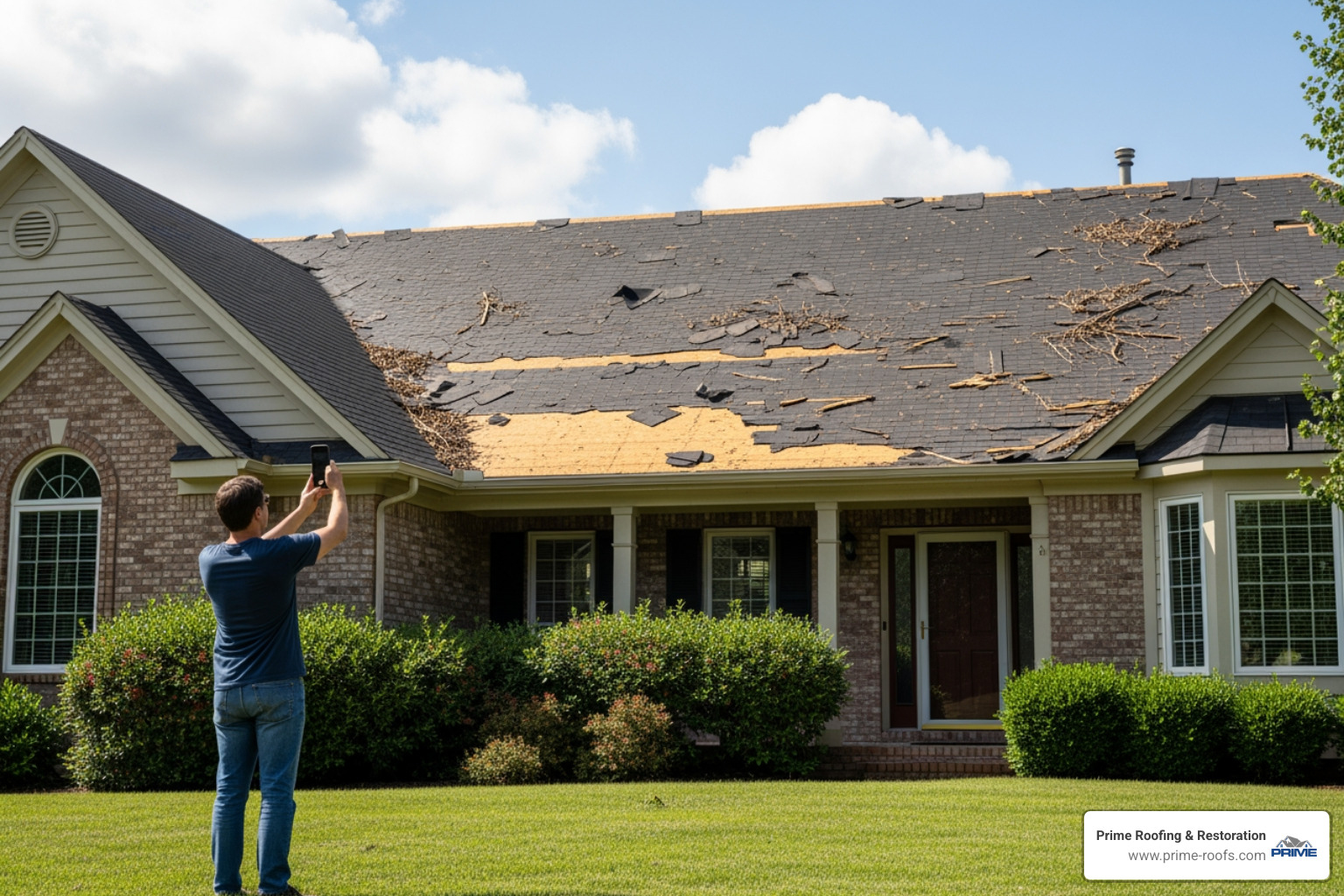
When the area is secure, the next critical step is to document everything. Take extensive photos and videos of all damage, both inside and out, before starting any cleanup. This visual evidence is essential for your insurance claim. After documenting, contact your insurance provider to start the claims process.
Finally, take temporary measures to prevent further damage. This may include boarding up broken windows or getting emergency roof tarping to stop water intrusion. These immediate actions can save significant time and money. For comprehensive assistance, connect with a trusted roofing and restoration partner. A calm, methodical approach is your best tool for recovery.
Understanding Different Storm Types and Their Impact
Alabama experiences a variety of storms, each with a unique impact on homes. Understanding these differences helps in preparing for and addressing specific types of damage.
- Hurricanes and Tropical Storms: These bring high winds, torrential rain, and storm surges, especially to coastal communities like Gulf Shores and Orange Beach. The wind can strip shingles and compromise roof structures, while heavy rain leads to extensive water intrusion and mold risk.
- Tornadoes: The U.S. averages 1,200 tornadoes annually. These storms produce extreme winds that can destroy homes, tear off roofs, and cause widespread structural collapse.
- Hailstorms: Hail can range from pea-sized to larger than golf balls, causing pitted or bruised shingles and dented siding. This damage can weaken a roof’s integrity and lead to future leaks.
- Thunderstorms: Strong winds from thunderstorms can lift or remove shingles, and lightning strikes can cause fires, resulting in smoke and soot damage.
- Winter Storms: Though less frequent in Alabama, ice and snow can cause roof collapses due to weight. Ice dams can also form, forcing water under shingles and into your home.
Nearly all storm types cause wind and water damage. Wind compromises a home’s exterior, while water from rain or flooding can lead to leaks, mold, and wood rot. Our team is experienced in addressing the specific impacts of all these weather events across Alabaster, Hoover, and the wider Alabama region.
How to Prioritize Cleanup Tasks After a Storm
Facing a storm-damaged property can be overwhelming. A clear set of priorities makes storm damage cleanup safer and more efficient.
- Ensure Safe Access: Clear pathways, driveways, and entry points to allow emergency services and cleanup crews to reach your home safely.
- Address Immediate Water Intrusion: If you have active leaks or standing water, stopping the source and removing the water is paramount to prevent further interior damage and reduce the risk of mold growth.
- Secure the Structure: Take steps to prevent the situation from worsening. This includes boarding up broken windows, applying temporary roof patches, or shoring up unstable walls to protect your home from weather, pests, or vandalism.
- Clear Major Debris: Once immediate threats are controlled, remove large debris like fallen tree limbs and broken fencing from around your property to make the area safer.
- Sort Debris for Disposal: As you clear debris, separate it into categories: organic waste (branches, leaves), construction debris (wood, drywall), recyclables, and hazardous materials. This streamlines the disposal process.
By tackling these priorities in order, you create a safe work zone and lay a solid foundation for a successful recovery.
A Homeowner’s Guide to Storm Damage Cleanup
After a storm, the cleanup can seem like a monumental task. This section provides a roadmap for the storm damage cleanup process, covering essential safety gear and proper debris disposal. While our team at Prime Roofing & Restoration handles major restoration, this knowledge empowers you to manage smaller tasks safely.
Essential Tools and Safety Precautions for DIY Storm Damage Cleanup
Safety is the foundation of any successful storm damage cleanup. A storm-damaged property presents numerous hazards, including sharp debris, unstable structures, and contaminated water.
Personal Protective Equipment (PPE) is non-negotiable:
- Heavy-duty gloves to protect from cuts and hazardous materials.
- Waterproof, puncture-resistant boots.
- Safety glasses or goggles to shield eyes from debris and dust.
- N95 respirator masks to protect your lungs from mold spores and airborne contaminants.
- Long pants and long-sleeved shirts for skin protection.
Essential cleanup tools include:
- Wet-dry vacuum for removing standing water.
- Shovels and rakes for clearing mud and debris.
- Heavy-duty trash bags.
- Chainsaw for large limbs (only if you are trained and experienced).
- Pry bar, hammer, and utility knife for dismantling damaged materials.
Critical Safety Precautions:
- Assume all downed power lines are live. Never touch them or anything in contact with them.
- Turn off the main power at the circuit breaker before starting indoor cleanup if water intrusion is present.
- Avoid contact with floodwater, which is often contaminated with bacteria and chemicals. The CDC advises to “throw out all food, beverages and medicine exposed to flood waters and mud.”
- Stay away from structurally hazardous areas with unstable walls or ceilings.
- Handle hazardous materials like chemical containers with extreme caution. Contact your local fire department for assistance with unknown or large quantities of hazardous waste.
- Be aware of asbestos in homes built before 1980. Avoid disturbing debris that may contain it.
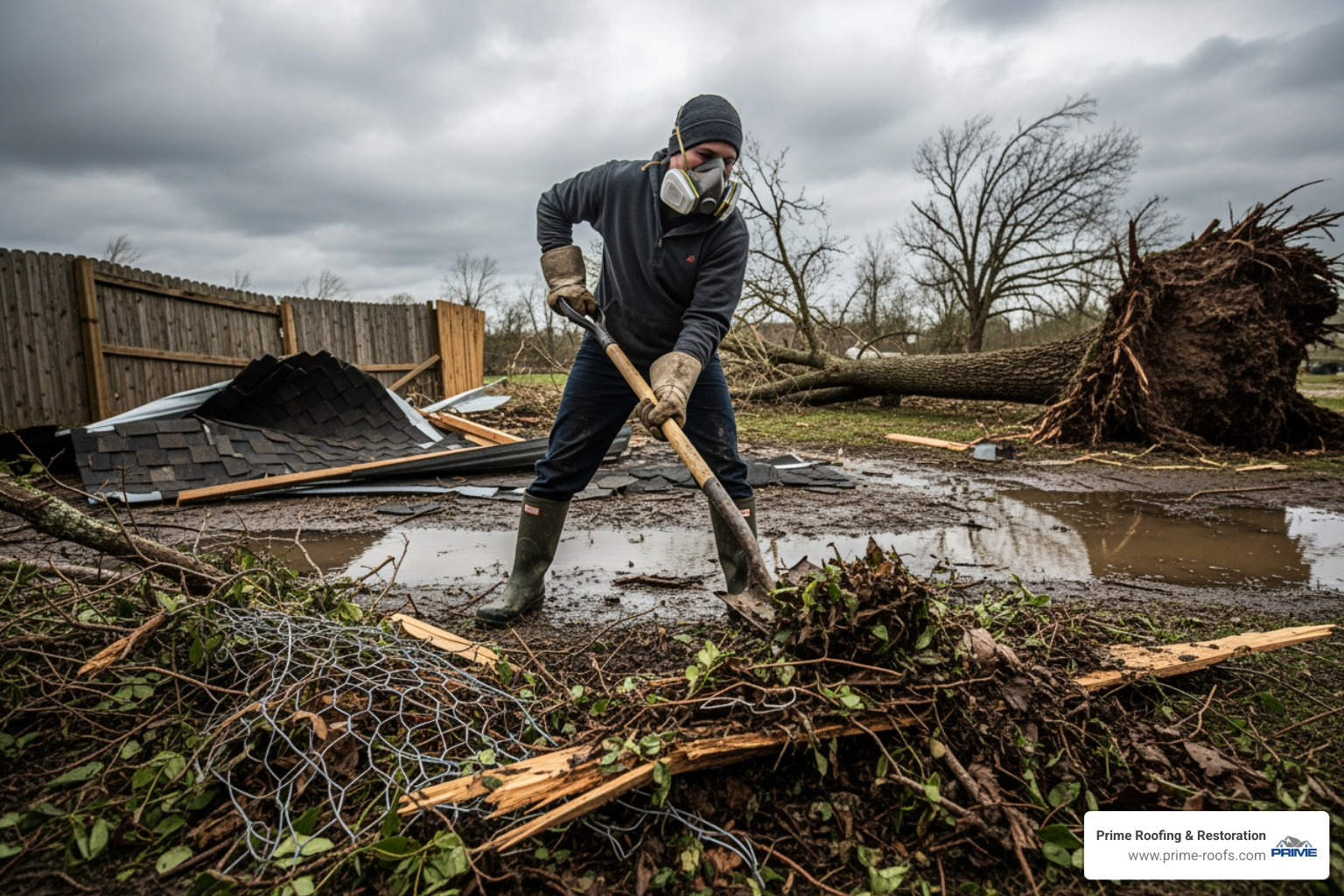
If a task feels too risky or the damage is extensive, call professionals. Your safety is paramount.
The Process for Debris Removal and Responsible Disposal
After addressing immediate hazards, the next step in storm damage cleanup is debris removal. A systematic approach ensures safety and efficiency.
First, sort debris into distinct categories: organic waste (branches, leaves), construction and demolition debris (drywall, lumber, shingles), household hazardous waste (paints, batteries), appliances, electronics, and recyclables (metal, certain plastics).
Before piling debris at the curb, check with your local municipality in Alabaster, Orange Beach, or Hoover for special storm debris collection schedules and separation guidelines. For large-scale cleanups, renting a dumpster is often the most practical solution.
Whenever possible, recycle materials like metal and clean wood. Dispose of hazardous waste at designated municipal facilities—never put it in regular trash or down drains. Organizations like All Hands and Hearts – Smart Response emphasize responsible debris management to reduce environmental impact.
Proper debris disposal protects our Alabama communities and environment for future generations.
DIY vs. Professional Restoration: When to Call for Help
After a storm, it’s tempting to start the cleanup yourself. A DIY approach works for minor tasks like picking up small branches or mopping up a small puddle. However, it’s crucial to recognize the line between what you can handle and when you need professional restoration.
Tasks you can likely DIY:
- Minor debris removal: Small branches, leaves, and light items in your yard.
- Surface-level water cleanup: Small amounts of water that haven’t soaked into the structure.
- Minor cosmetic cleaning: Scuffs or dirt that can be easily wiped away.
When to call the pros:
- Extensive Structural Damage: A damaged roof, leaning walls, or foundation cracks require a professional assessment.
- Widespread Water Intrusion: Standing water or water-soaked drywall, flooring, or insulation requires professional extraction and drying to prevent long-term damage and mold.
- Presence of Mold: If you see or smell mold, professional remediation is essential for your health and safety.
- Electrical or Gas Hazards: Any damage to your home’s electrical or gas systems is an emergency. Call your utility company, then restoration experts.
- Large Tree Removal: Removing large fallen trees or limbs requires specialized equipment and training.
When in doubt, call professionals. The cost of hiring an expert is often less than the cost of improper DIY repairs, which can lead to bigger problems or personal injury.
The Benefits of Hiring a Professional Restoration Company
Choosing a professional restoration company for storm damage cleanup offers significant advantages, especially after a major weather event.
Professionals bring specialized tools and expertise. They use industrial-grade equipment like powerful water extractors, air movers, and dehumidifiers. Certified technicians (e.g., IICRC certified) are trained in the science of drying, mold removal, and structural repair, ensuring a thorough restoration.
This leads to faster, more efficient restoration. Professionals can respond quickly, and their methods and equipment allow them to dry, clean, and restore your property much faster than a DIY approach, minimizing further damage.
They also offer comprehensive, end-to-end services. A single company can handle everything from the initial assessment and emergency board-up to water extraction, drying, mold remediation, and full reconstruction. For example, our expert roofing contractor in Alabaster, AL can manage the entire roofing process from tarping to replacement.
Professional companies also assist with navigating insurance claims. They are familiar with the claims process and can help ensure all damage is properly documented to support your claim for fair compensation.
Finally, hiring professionals minimizes disruption and stress. Letting experts handle the complex restoration process allows you to focus on your family’s well-being while they return your property to its pre-damage condition.
Making the Right Choice for Your Storm Damage Cleanup
Selecting the right restoration company is a critical decision. Here’s how to make an informed choice:
First, choose your own restoration service. As a homeowner, you have the right to select your contractor. This ensures the company’s loyalty is to you, not the insurance company’s budget.
Next, verify licenses and insurance. A qualified contractor should be fully licensed and insured, which protects you from liability and helps guarantee quality work.
Then, check reviews and references. Look for companies with a strong track record and positive testimonials from homeowners in your area, such as Alabaster or Hoover. Online reviews and direct references provide insight into a company’s reliability and professionalism.
Before signing, understand the contract and scope of work. A trustworthy company provides a detailed estimate and clearly explains the process and costs. Be wary of unusually low prices, which may indicate cut corners.
Finally, look for certifications. For water damage and mold, certifications from organizations like the Institute of Inspection, Cleaning and Restoration Certification (IICRC) indicate that technicians meet high industry standards.
Following these guidelines will help you choose a professional partner to restore your home with integrity and expertise.
Navigating Insurance Claims and Long-Term Recovery
Working with your insurance company and taking steps to prevent future damage are key parts of the recovery journey. With a clear plan, you can steer this process smoothly.
How Insurance Claims Work for Storm Damage Repair
The insurance claim process is vital for funding your home’s repairs. Here is a step-by-step guide:
- File Your Claim Promptly: Most insurance policies have a time limit for filing claims, so acting quickly is essential.
- Provide Thorough Documentation: Supply your insurer with the photos, videos, and detailed lists of damaged items you gathered. The more evidence you provide, the smoother the process will be.
- Meet with the Insurance Adjuster: Be present when the adjuster inspects your property. Walk them through the damage and point out all your concerns to ensure nothing is missed.
- Understand Your Policy: Review your homeowner’s policy to understand your coverage and deductible. This clarifies your financial responsibility upfront.
- Coordinate with Your Mortgage Lender: If you have a mortgage, the insurance check will likely be made out to both you and your lender. You will need to follow your lender’s process to endorse the check and release the funds for repairs.
- Address Disputes: If you disagree with the assessment or find additional damage later, contact your insurance company. If issues persist, your state’s Department of Insurance can help mediate disputes.
Rebuilding and Preventing Future Storm Damage
Rebuilding with resilience in mind can protect your home from future storms, a crucial consideration in a state like Alabama.
When repairing, consider using impact-resistant materials. Impact-resistant shingles or metal roofing can better withstand hail and high winds, while fiber cement siding offers improved protection against debris.
Upgrading windows and doors also makes a significant difference. Impact-resistant windows and reinforced garage doors can prevent breaches during high winds. Boarding up windows with plywood is also an effective temporary measure.
Managing your landscaping helps reduce risk. Regularly trim dead or weak branches from trees near your home, and consider removing trees that pose a fall risk. Secure outdoor items like patio furniture before a storm.
Finally, schedule regular property maintenance and inspections:
- Roof inspections: Have a professional inspect your roof annually and after any major storm to catch small issues early. Our guide on what to do after a storm damages your roof offers more tips.
- Gutter cleaning: Keep gutters clear to ensure proper water drainage and prevent damage to your roof and foundation.
- Drainage checks: Ensure water flows away from your home’s foundation.
- HVAC inspection: Have your HVAC equipment checked for damage before use.
Developing a storm preparedness plan with evacuation routes and an emergency kit is also a key part of long-term resilience.
Frequently Asked Questions about Storm Damage Cleanup
Here are answers to some of the most common questions homeowners have about storm damage cleanup.
What should I do first if my roof is leaking after a storm?
Your first priority is safety. Do not climb onto a damaged roof. Instead, protect your home’s interior by moving furniture and valuables away from the leak and placing buckets to catch the water. For a safe and lasting solution, contact a professional for emergency roof repair immediately. Swift action is crucial to prevent extensive water damage and mold growth.
How do I safely clean surfaces contaminated by floodwater?
Floodwater is often contaminated, so safety is paramount. Always wear personal protective equipment (PPE), including heavy-duty gloves, waterproof boots, safety glasses, and an N95 respirator. The Restoration Industry Association recommends saturating contaminated surfaces with a disinfectant or a bleach solution (1 part bleach to 9 parts water) for at least 10 minutes. Ensure the area is well-ventilated. Porous materials like drywall or insulation that have been wet for over 48 hours should be removed and replaced to prevent mold.
Is it safe to eat food from my refrigerator after a power outage?
When in doubt, throw it out. The CDC advises discarding all food, beverages, and medicine exposed to floodwaters. For power outages:
- A full freezer will keep food safe for about 48 hours (24 hours if half-full) if the door remains closed.
- Refrigerated food becomes unsafe if the power was out for more than 4 hours and the temperature rose above 40°F (4°C).
Prioritize your health over questionable food items.
Conclusion
Recovering from a storm is a process that requires patience and careful planning. Storm damage cleanup is more than just physical repairs; it’s about restoring your security and peace of mind. By prioritizing safety, documenting damage, and knowing when to call for professional help, you can steer the aftermath effectively.
While some tasks like clearing small branches are suitable for homeowners, extensive structural damage, widespread flooding, and mold growth demand professional expertise and specialized equipment. A systematic approach is crucial for a successful recovery.
At Prime Roofing & Restoration, we have built our reputation in Alabaster, Hoover, Orange Beach, and across the Gulf Coast by being there when families need us most. We offer complete, end-to-end restoration services, from the first emergency call and immediate tarping to comprehensive repairs, full reconstruction, and assistance with the insurance process. Our licensed team is available 24/7 because we know that storms don’t keep business hours.
If your home has been damaged by a storm, we are here to help. Explore our comprehensive storm damage repair services to learn how we can get your home—and your life—back on solid ground.