
Explaining Flat Roof Repair
When you ask, how do you repair a flat roof, you’re often facing a leak that’s become a major headache. Flat roofs, common on Alabama homes and commercial buildings, are known for their durability, lasting up to 25 years with proper care. However, even the toughest roofs can develop issues. Catching problems early and knowing how to address them can save you significant time and money. This guide will help you understand common flat roof problems and empower you with the knowledge to tackle repairs yourself, or know when it’s time to call experts for reliable roofing solutions from Prime Roofing & Restoration.
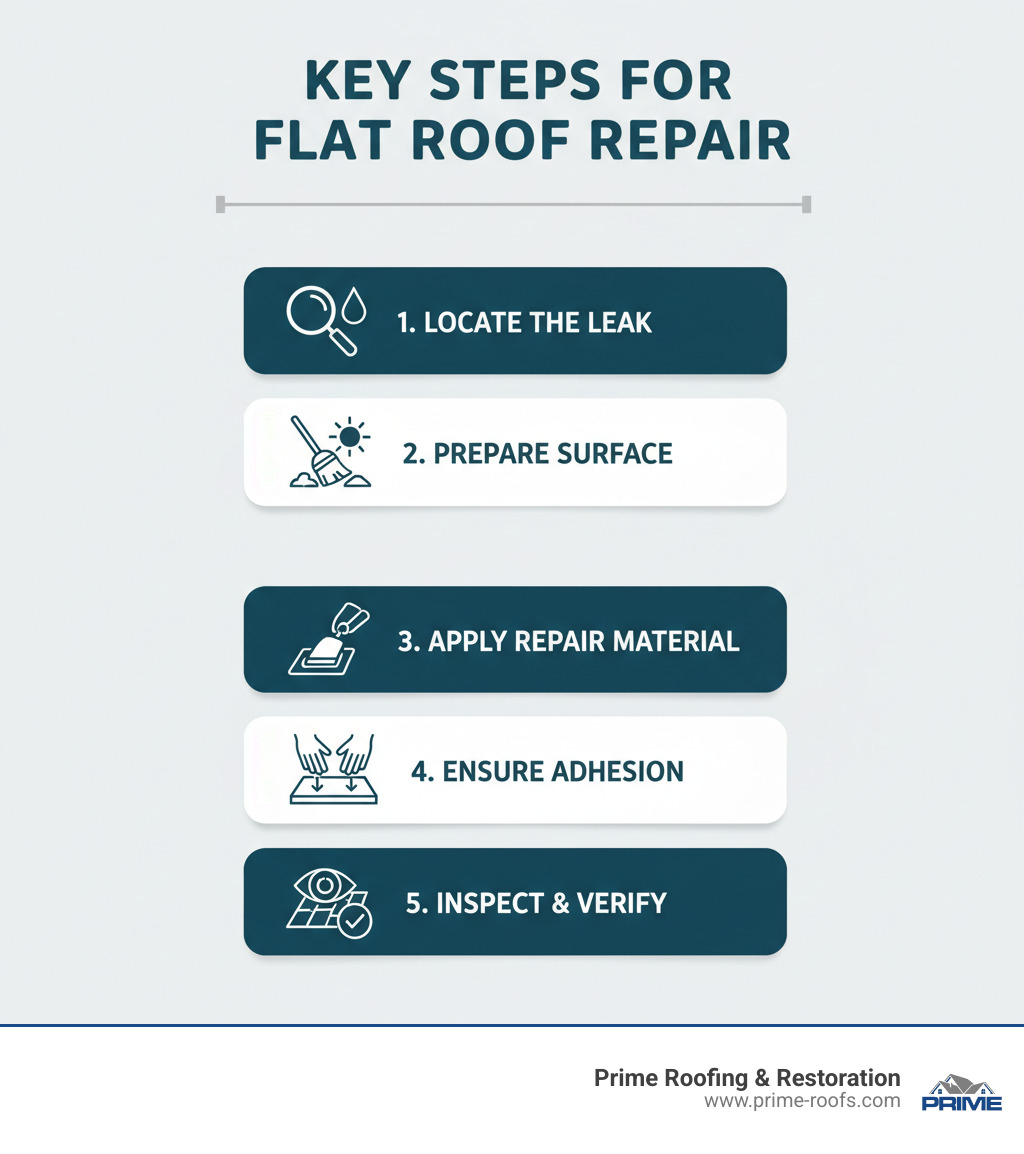
Here’s a quick overview of how to approach flat roof repair:
- Locate the Leak: Identify the exact source of water entry.
- Prepare the Surface: Clean and thoroughly dry the repair area.
- Apply Repair Material: Use appropriate patches or sealants for the damage and roof type.
- Ensure Adhesion: Press materials firmly and smooth out air bubbles.
- Inspect: Check the repair for watertight integrity.
I’m Bill Spencer, Owner and President of Prime Roofing & Restoration. With over five years leading our company, my hands-on knowledge helps property owners steer how do you repair a flat roof challenges, ensuring lasting protection for their investments.
First, Understand Your Flat Roof’s Anatomy
Before grabbing a patch kit, you need to know what you’re working with. How do you repair a flat roof effectively? It starts with understanding that flat roofs are complex systems where the material dictates the repair method and lifespan.
Most flat roofs can last up to 25 years, but this depends on the material and its maintenance history. A well-cared-for EPDM roof might outlast a neglected one by a decade or more.
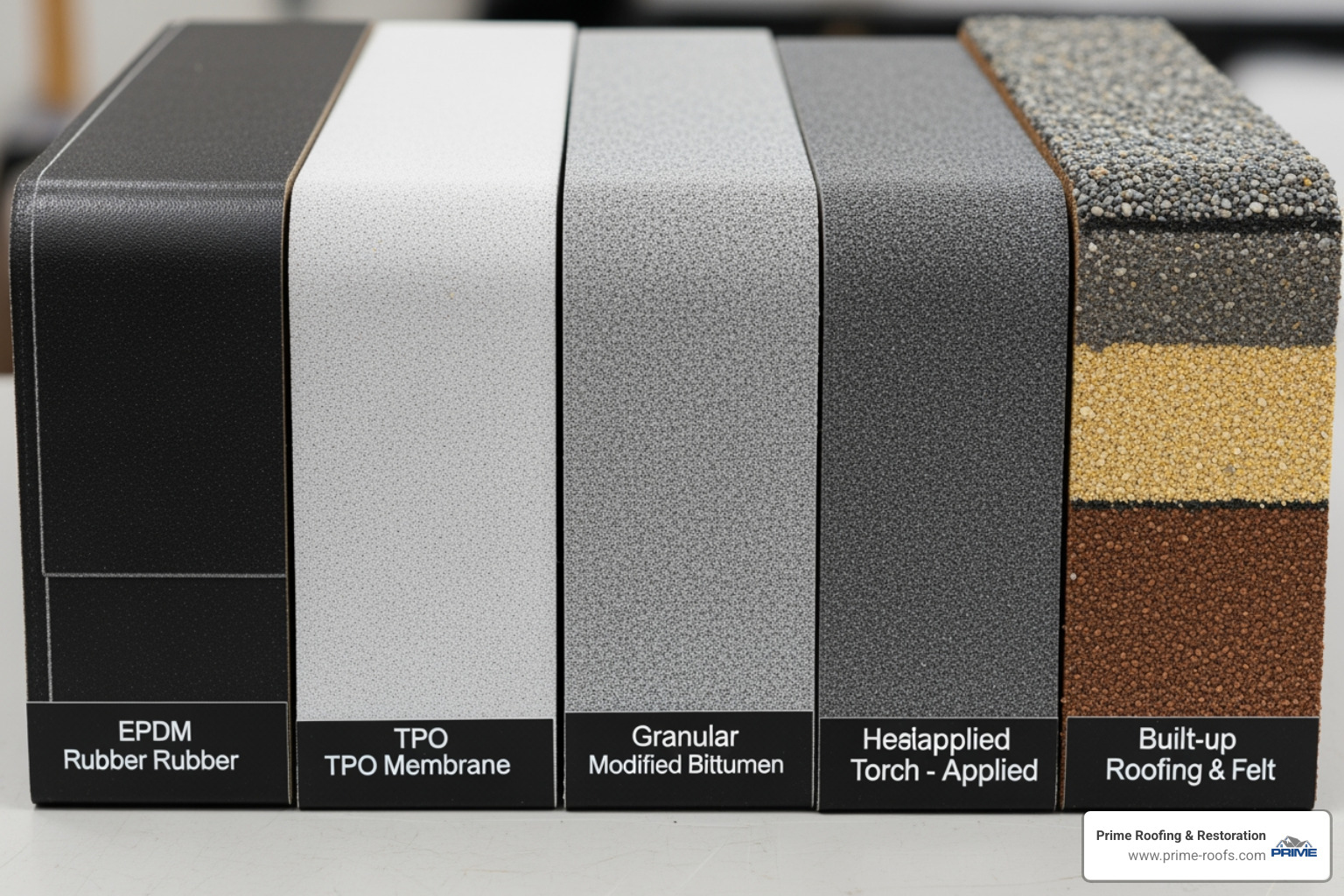
Here’s what you need to know about the most common flat roofing materials:
| Common Materials | Durability | Typical Lifespan | Best Repair Method |
|---|---|---|---|
| EPDM (Rubber) | Excellent | 20-30 years | Adhesive patches, heat-sealed seams |
| TPO | Very Good | 15-20 years | Heat welding, specialized patches |
| Modified Bitumen | Good | 10-20 years | Roofing tar, adhesive patches |
| Built-Up Roofing (BUR) | Good | 20-30 years | Roofing cement, new layers of felt |
“Flat” roofs aren’t completely flat; they have a slight slope (about 1/4-inch per foot) to aid water drainage. Even so, water can pool, making them vulnerable to leaks.
Understanding what causes leaks is half the battle. The most common culprits include:
- Ponding Water: Water that sits on your roof for more than 48 hours after rain. This standing water accelerates wear and tear, eventually causing leaks. If you have this issue, professional Flat Roof Ponding Repair is essential.
- Punctures and Tears: Holes created by fallen branches, foot traffic, or hail. A small puncture can quickly expand due to weather and natural roof movement.
- Seam Separation: Seams where roofing materials meet can pull apart due to age, poor adhesion, or temperature fluctuations, creating a direct path for water.
- Damaged Flashing: Flashing seals the roof around vents, skylights, and chimneys. Over time, it can crack or deteriorate, allowing water to seep underneath the membrane.
- Blisters or Alligatoring: Blisters are bubbles of trapped moisture or air. Alligatoring is a cracked, scaly pattern indicating UV degradation and an aging roof. Both signal that the material is stressed and vulnerable.
- General Deterioration: Years of sun, weather, and temperature extremes make materials brittle and thin. Poor installation or neglected maintenance can also cause premature failures.
For those with EPDM rubber roofing, our Complete EPDM Commercial Roofing Guide offers a comprehensive look at this durable material.
Before You Begin: Inspection, Safety, and Supplies
Proper preparation is key to a successful repair. Rushing this step can lead to a failed patch and more damage. Finding the true source of a leak is critical, as water can travel far from the entry point before appearing on your ceiling.
Safety First
Working on any roof carries risks. Always take these precautions:
- Ladder Safety: Ensure your ladder is stable, on level ground, and extends three feet above the roof edge. Use a spotter if possible.
- Non-slip Shoes: Wear sturdy, non-slip footwear.
- Work on Dry Days: Never attempt repairs in wet, icy, or windy conditions.
- Fall Prevention: Consider a fall prevention harness when working near edges.
- Cover Skylights: Temporarily cover skylights to prevent accidental falls.
- Gloves: Protect your hands from sharp materials and chemicals.
Leak Detection
Finding a flat roof leak can be tricky, as water often travels from the entry point.
- Interior Inspection: Start inside. Measure the distance of water stains on your ceiling from the two nearest walls to get a rough location on the roof. Look for damp insulation or peeling paint.
- Exterior Inspection: On the roof, use your interior measurements to narrow the search. Visually inspect the area for obvious damage like cracks, tears, blisters, or peeling seams. Pay close attention to flashing around vents, pipes, and chimneys. Areas of standing water (ponding) are prime suspects. If no damage is visible, search upslope from the interior stain.
- Moisture Surveys: For hidden leaks, professionals use infrared cameras to detect trapped moisture beneath the membrane, pinpointing issues not visible to the naked eye.
Surface Preparation
Once the damage is located, proper preparation is essential for a lasting repair.
- Cleaning Debris: Sweep away all loose dirt, leaves, and debris. A pressure washer can be used, but the roof must be completely dry before proceeding.
- Drying the Area: This is critical. Any moisture trapped under a patch will compromise the repair. Use old towels to dry the area thoroughly and ensure no rain is in the forecast.
Essential Tools & Materials
Having the right gear is crucial when asking how do you repair a flat roof:
- Utility knife
- Measuring tape
- Trowel
- Caulk gun
- Stiff brush
- Paint roller/brush
- Reinforcing fabric (fiberglass mesh/scrim)
- Roofing cement or compatible sealant
- Membrane cleaner or rubbing alcohol
- Appropriate patches matching your roof material
- Lap sealant
- Gravel (if applicable)
- Safety gear (gloves, eye protection, non-slip shoes, harness)
For more tips on keeping your roof in top shape, explore our Commercial Roof Maintenance guide.

How Do You Repair a Flat Roof? A Step-by-Step Guide
With your roof inspected and materials ready, it’s time to tackle the repair. The best method depends on the damage type and size. The golden rule for all repairs is to work on a clean, completely dry surface for lasting results.
How to Repair Small Cracks and Punctures
For minor damage, a multi-layer patch using roofing cement and reinforcing fabric creates a durable, watertight seal. This is a common and effective DIY repair.
- Clean and Prepare: Use a stiff brush to sweep away dirt. If needed, use a membrane cleaner and let it dry. Cut away any loose material around the crack.
- Apply Roofing Cement: Spread a 1/8-inch thick layer of roofing cement over the damage, extending it at least 6 inches beyond the problem area.
- Embed Fiberglass Mesh: Cut a piece of fiberglass mesh slightly larger than the cement application. Press it firmly into the wet cement with a trowel, ensuring there are no air bubbles.
- Apply Top Coat: Add a second, thicker layer of cement (about 1/2 inch) to completely cover the mesh. Smooth it out evenly.
- Feather Edges: Use your trowel to smooth the patch edges, blending them with the roof surface to prevent water from pooling. If your roof has a gravel ballast, add matching gravel to the wet cement for UV protection. For more on EPDM, see our EPDM Roof Repair Guide 2025.
Fixing Blisters and Larger Damaged Areas
Blisters are bubbles of trapped air or moisture that require proper attention. For larger tears or holes, a double-patch method offers maximum protection.
Repairing Blisters:
- Cut the Blister: Make an ‘X’ cut through the blister’s center with a utility knife, extending just beyond its edges.
- Dry the Substrate: Fold back the flaps, clean out any debris, and let the exposed area dry completely. A heat gun on low can speed this up.
- Apply Adhesive: Spread compatible roofing adhesive under the flaps and onto the exposed roof deck.
- Press and Roll: Press the flaps down firmly and use a hand roller to squeeze out trapped air and excess adhesive.
- Apply Primary Patch: Cut a patch of matching material to extend 2-3 inches beyond the ‘X’ cut. Apply adhesive to the patch and the blister area, position it, and press firmly.
- Roll and Seal: Use a hand roller on the patch from the center outwards. Apply a continuous bead of lap sealant around the patch’s entire perimeter to finish.
Repairing Larger Tears or Holes (Double-Patch Method):
- Prepare Area: Clean, dry, and trim away any loose or severely damaged material around the tear.
- First Cement Layer: Spread a thick layer of roofing cement into the hole and onto the surrounding surface, extending 6 inches beyond the damage.
- Apply Primary Patch: Cut a patch of matching material to cover the area, extending 2 inches beyond the damage. Embed it into the wet cement with a hand roller.
- Second Cement Layer: Apply another layer of cement over the first patch, extending it further out.
- Apply Second Patch: Cut a second, larger patch (4-6 inches larger than the first). Apply cement to its underside and place it over the first patch.
- Secure and Seal: Roll the second patch firmly to remove air bubbles and apply a continuous bead of lap sealant around its perimeter. Replace gravel if applicable. This resource offers more visual guidance.
How to Repair a Flat Roof by Resealing Seams and Flashing
Seams and flashing are the most vulnerable spots on a flat roof and require regular maintenance.
- Identify and Remove: Inspect all seams and flashing for lifting or cracking. Carefully scrape away any old, brittle caulk or sealant without damaging the membrane.
- Clean the Joint: Use a membrane cleaner or rubbing alcohol to ensure the surface is perfectly clean and dry.
- Apply New Sealant: Apply a generous, continuous bead of sealant compatible with your roof material along the seam or around the flashing.
- Smooth and Seal: Use a trowel or gloved finger to smooth the sealant, ensuring it fills all gaps and creates a uniform, watertight layer. For extra reinforcement on flashing, you can embed mesh scrim into the wet sealant and apply a second coat.
- Inspect Penetrations: Regularly check and reseal flashing around HVAC units, pipe boots, and drains.
DIY vs. Professional Repair: Knowing When to Call the Experts
While there’s satisfaction in a successful DIY fix, it’s crucial to know when to call a professional. Attempting a repair beyond your skill level can turn a small problem into an expensive disaster. Furthermore, if storm damage is the cause, a professional can provide insurance claims assistance to ensure you receive proper coverage.
When DIY Makes Perfect Sense
Some repairs are straightforward and suitable for a handy homeowner. You can typically handle:
- A small, single puncture from a fallen branch or dropped tool.
- Minor, superficial cracks in the membrane.
- Small, isolated blisters that you catch early.
Many rubber roof repairs are manageable if you are comfortable working at heights and are patient with surface preparation. The key is that the issues are small and isolated.
When It’s Time to Call Prime Roofing & Restoration
Some situations demand professional expertise. Call us at (205) 579-8316 if you encounter any of the following:
- Widespread Damage: If damage covers more than 10% of your roof, with multiple leaks or extensive cracking, it’s beyond a simple DIY fix.
- Structural Issues: A sagging roof deck or persistent standing water indicates a problem with the roof’s slope or structure. Our Flat Roof Ponding Repair service addresses these complex underlying issues.
- An Aging Roof: If your roof is over 20 years old, it’s nearing the end of its lifespan. Repairs may only be temporary fixes, and a replacement might be more cost-effective. A professional commercial roof repair contractor can provide an honest assessment.
- Safety Concerns: If you’re uncomfortable with heights, always call a professional. Your safety is paramount.
- Specialized Materials: TPO and PVC roofs often require heat-welding equipment for proper repairs.
- Hidden Damage: Saturated insulation or rotting decking can’t be seen from the surface and must be addressed by an expert.
What You Gain with Professional Service
Working with Prime Roofing & Restoration provides more than just a patch. You get expertise and a warranty on materials and labor. We bring professional safety protocols and specialized tools to every job. We don’t just fix the leak; we investigate the root cause to offer comprehensive solutions that prevent future problems. This saves you time and ensures the job is done right the first time.
For property owners in Alabama, finding trusted roofers in Alabaster, AL is the first step toward a secure roof. A professional inspection can identify issues you didn’t know existed and provide a roadmap for long-term roof health.
Frequently Asked Questions about Flat Roof Repair
What are the most common causes of a flat roof leak?
The most common cause of a flat roof leak is ponding water—water that remains on the roof for over 48 hours, which degrades materials over time. Other primary causes include:
- Punctures from falling debris or foot traffic.
- Seam separation due to age and temperature changes.
- Failed flashing around roof penetrations like vents and skylights.
- General material deterioration from age and UV exposure.
- Poor initial installation or neglected maintenance.
Because flat roofs drain water slowly, they are particularly susceptible to these issues.
How long does a typical flat roof repair last?
The longevity of a flat roof repair depends on the quality of the work and materials. A well-executed DIY patch on a minor puncture might last for several years as a temporary solution.
Professional repairs are designed for longevity. Using high-quality, compatible materials and proven techniques, a professional fix can last for many years and often includes a warranty. For more extensive issues, a full roof restoration (cleaning, repairing, and recoating the entire surface) can add 10-15 years to your roof’s life, while a total replacement can last 20-30 years or more.
Can I apply a new sealant over an old one?
No, applying new sealant over an old, failing layer is not recommended. For a sealant to create a waterproof bond, it must adhere to a clean, sound substrate. Applying it over cracked or peeling sealant means the new layer will fail along with the old one.
The correct method is to completely remove all old, deteriorated sealant. This is more labor-intensive but essential for a lasting repair. After removal, the joint must be thoroughly cleaned and dried before applying a new sealant that is compatible with your specific roofing material (e.g., EPDM, TPO, or modified bitumen). This ensures proper adhesion and a durable, watertight seal.
Conclusion: Protect Your Investment with Proper Roof Care
Keeping a close eye on your roof and addressing small issues quickly is the key to a long-lasting, leak-free flat roof. Knowing how to handle minor fixes, like patching a small puncture or resealing a seam, can save you significant time and money by preventing small problems from becoming major disasters.
However, the most valuable skill is recognizing when to call for professional help. For widespread damage, structural concerns, or simply for the peace of mind that comes with an expert repair, do not hesitate to contact the experts.
At Prime Roofing & Restoration, we are your reliable partner for roof care. We offer 24/7 emergency service and comprehensive inspections to ensure your property is always protected. Our team of licensed experts is dedicated to using quality materials and delivering exceptional service.
Ready to put your roofing worries aside? Schedule your free roof inspection online. Let us help you find a lasting solution for your flat roof.