
The Unseen Standard Above Our Heads
Why do commercial buildings have flat roofs is a question that strikes anyone driving through a business district. The answer lies in a combination of practical economics, structural efficiency, and modern functionality that makes flat roofs the clear winner for most commercial applications.
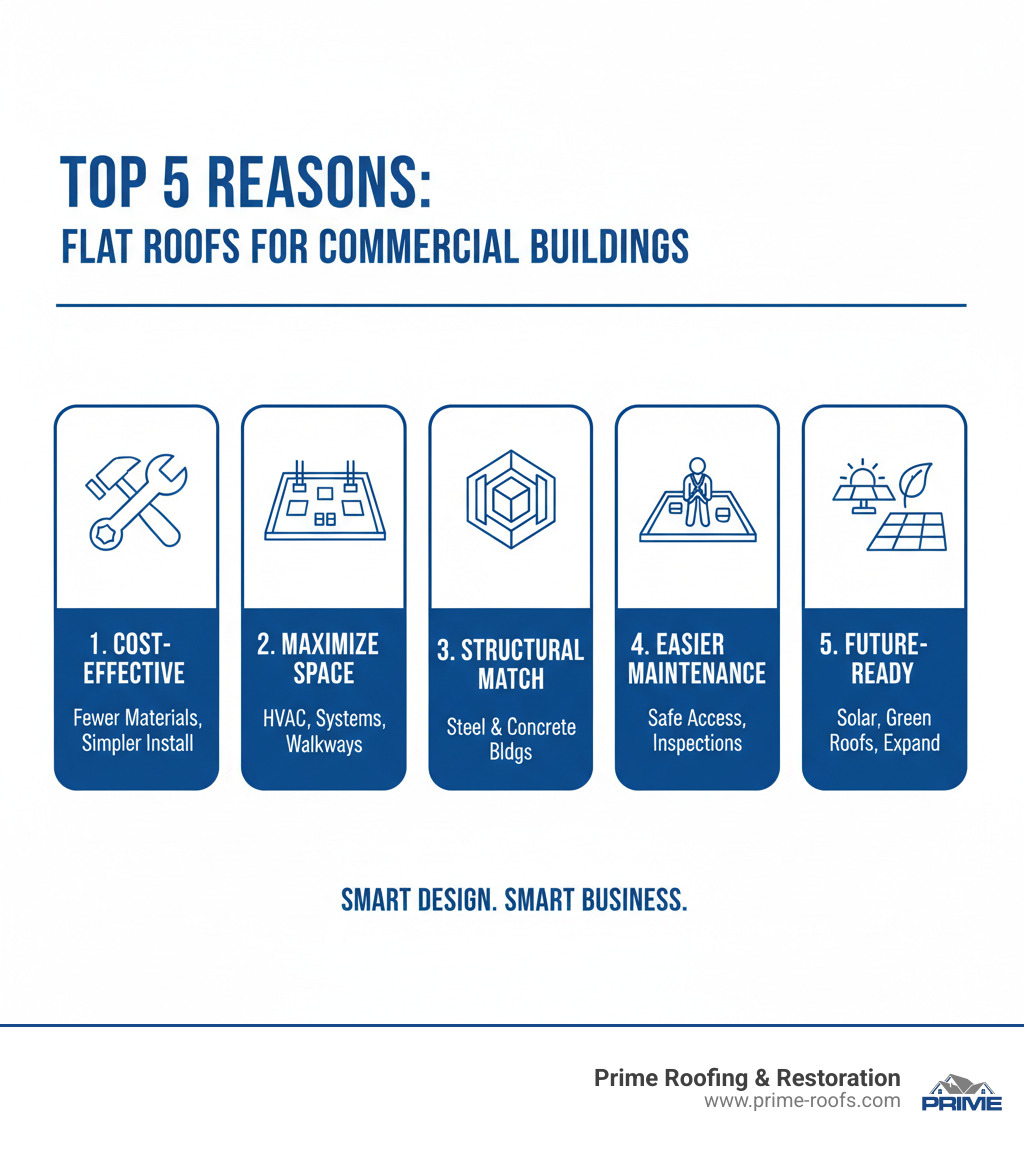
Quick Answer: Commercial buildings have flat roofs because they:
- Cost less to build – require fewer materials and simpler installation.
- Maximize usable space – provide room for HVAC equipment and future additions.
- Work better structurally – compatible with steel and concrete construction.
- Offer easier maintenance – safe, walkable access for repairs and inspections.
- Support modern needs – accommodate solar panels, green roofs, and building systems.
These aren’t just design preferences; they’re smart business decisions. The average commercial building spans 19,000 square feet, making material and labor costs significant factors. From warehouses to skyscrapers, the choice is clear for business owners seeking a reliable roofing partner.
What started as a practical solution during the Industrial Revolution has become the standard for modern commercial construction. While residential homes often feature pitched roofs for aesthetics, commercial buildings prioritize function over form.
I’m Bill Spencer, owner of Prime Roofing & Restoration, and I’ve spent over five years helping Alabama business owners understand why do commercial buildings have flat roofs and how to maintain them. My experience with flat roof systems across the Gulf Coast has shown me how these roofs deliver long-term value when designed and maintained correctly.
The Bottom Line: Cost and Structural Advantages
When dealing with commercial construction, every dollar matters. The question of why do commercial buildings have flat roofs becomes clear when you examine the costs for a typical 19,000-square-foot building. The savings between flat and pitched roofing can be enormous, often making or breaking a project budget. A flat roof eliminates the need for extra materials and complex framing required by pitched roofs, delivering superior structural performance for large buildings.
The Primary Cost Advantages of Flat Roofs
The cost benefits begin with simple geometry. A pitched roof has a larger surface area, which means more materials and labor.
- Fewer Materials: A low-slope roof minimizes material waste compared to a steep roof, which can require 30-40% more surface coverage. This means less membrane, fewer fasteners, and reduced insulation.
- Simpler Framing & Faster Installation: Flat roofs use straightforward beam and joist construction instead of complex trusses. This simplifies the build, reduces labor costs, and shortens the installation timeline, allowing businesses to become operational sooner.
The overall budget impact is substantial. Money saved on roofing can be reallocated to other business priorities. For detailed cost breakdowns, our guide on how much does a new roof cost offers helpful insights.
Structural and Design Benefits for Large Buildings
Beyond cost, flat roofs offer structural advantages ideal for modern commercial buildings that rely on steel frames and concrete slabs.
- Compatibility: Flat roofs work seamlessly with steel and concrete, which are designed for horizontal loads and wide spans. Adding a pitched roof would require expensive modifications.
- Simplicity: By eliminating complex truss systems, flat roofs simplify engineering and construction, creating a more cohesive and stable building.
- Maximized Volume: Flat roofs allow for full ceiling height across the entire building, providing more usable interior space for storage, equipment, or offices.
- Wind Resistance: A low-profile flat roof presents less surface area to wind, reducing structural stress during severe weather.
- Multi-Story Consistency: Flat roofs create a standard, repeatable design for multi-story buildings, simplifying construction and engineering.
Maximizing Utility: How Flat Roofs Create Usable Space
A flat roof is the ultimate multitasker, turning dead space into productive real estate. This is a key reason why do commercial buildings have flat roofs.
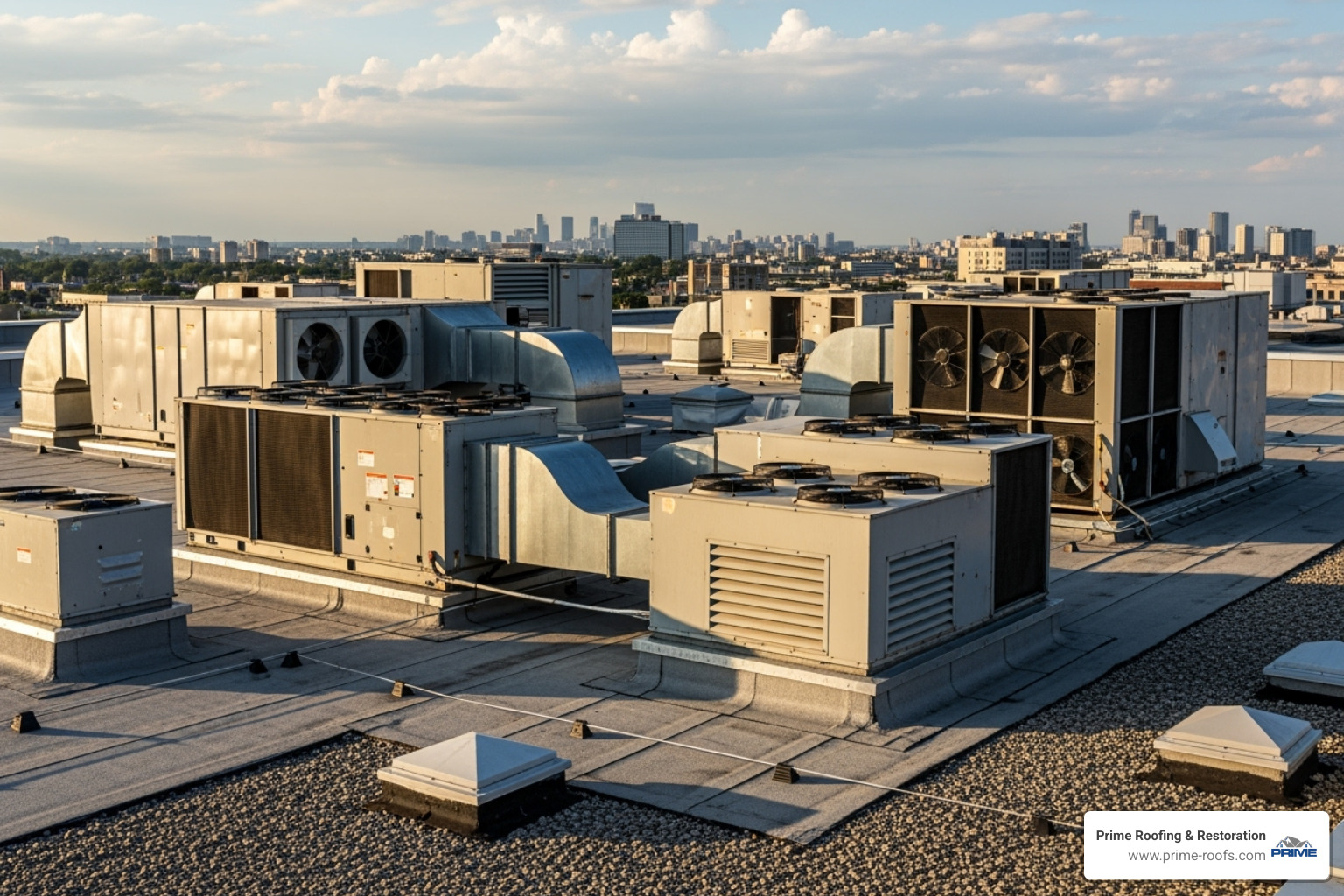
The rooftop becomes a mechanical penthouse, housing heavy, noisy HVAC systems, exhaust fans, and other equipment. This frees up valuable interior space, reduces noise, and keeps expensive equipment secure while allowing easy access for service.
Equipment Access and Maintenance
A flat roof provides a safe, walkable outdoor workspace. Maintenance teams can move around freely, use carts for heavy parts, and work on a stable platform. This is a stark contrast to the danger and difficulty of working on a steep, pitched roof.
This improved safety leads to lower insurance premiums and reduced liability for building owners. Furthermore, easier and safer maintenance allows for more thorough work, preventing small issues from becoming costly emergencies. Regular inspections are more practical, ensuring the entire roof is properly maintained.
Flexibility for Future Additions
A flat roof is a blank canvas for future needs. Its expansive, level surface is ideal for:
- Solar Panels: As sustainability becomes more critical, flat roofs offer the perfect platform for renewable energy systems. Panels can be mounted at optimal angles easily.
- Green Roofs: These living systems improve insulation, manage stormwater, and can provide recreational space for employees, turning a sterile roof into an environmental asset.
- Rooftop Patios: In dense urban areas, rooftop patios and recreational spaces are a popular way to boost employee morale and create impressive venues for clients.
The adaptability of flat roofs allows buildings to evolve with changing technology and business needs without requiring major structural overhauls.
Performance and Longevity: Materials and Maintenance
Modern flat roofing systems are engineered marvels, not the leaky surfaces of the past. They are designed with subtle slopes for drainage and built with advanced materials for impressive longevity.
Common Materials for Commercial Flat Roofs
Choosing the right material impacts performance, lifespan, and maintenance.
- TPO (Thermoplastic Polyolefin): A popular single-ply membrane offering 20-30 years of service. Its reflective surface is energy-efficient, and it’s durable and flexible for Alabama’s weather.
- EPDM (Ethylene Propylene Diene Monomer): Known as “rubber roofing,” this is the gold standard for longevity, often exceeding 30 years. It’s highly resistant to UV radiation and extreme weather. You can explore our EPDM roof system installations.
- PVC (Polyvinyl Chloride): A premium option with a 20-30+ year lifespan, offering exceptional chemical and fire resistance, ideal for restaurants or manufacturing facilities.
- Modified Bitumen: Reinforced asphalt with a 15-20 year lifespan, offering good puncture resistance.
- Built-Up Roofing (BUR): The traditional “tar and gravel” roof, lasting 15-30 years, but is heavier and more complex to install.
| Material Type | Key Benefits | Lifespan |
|---|---|---|
| TPO Roofing | Reflective, energy-efficient, durable | 20-30 years |
| EPDM Roofing | Highly durable, flexible, UV resistant | 25-30+ years |
| Modified Bitumen | Puncture-resistant, flexible | 15-20 years |
| Built-Up Roofing (BUR) | Multi-layered, waterproof, fire-resistant | 15-30 years |
| PVC Roofing | Chemical/fire resistant, durable | 20-30+ years |
Why do commercial buildings have flat roofs if they can leak?
The old reputation for leaks is outdated. Modern engineering has solved these issues.
- Drainage: “Flat” roofs aren’t truly flat. They have a slight slope (up to 12 degrees) guiding water to internal drains and scuppers. Regular maintenance to keep these clear is crucial.
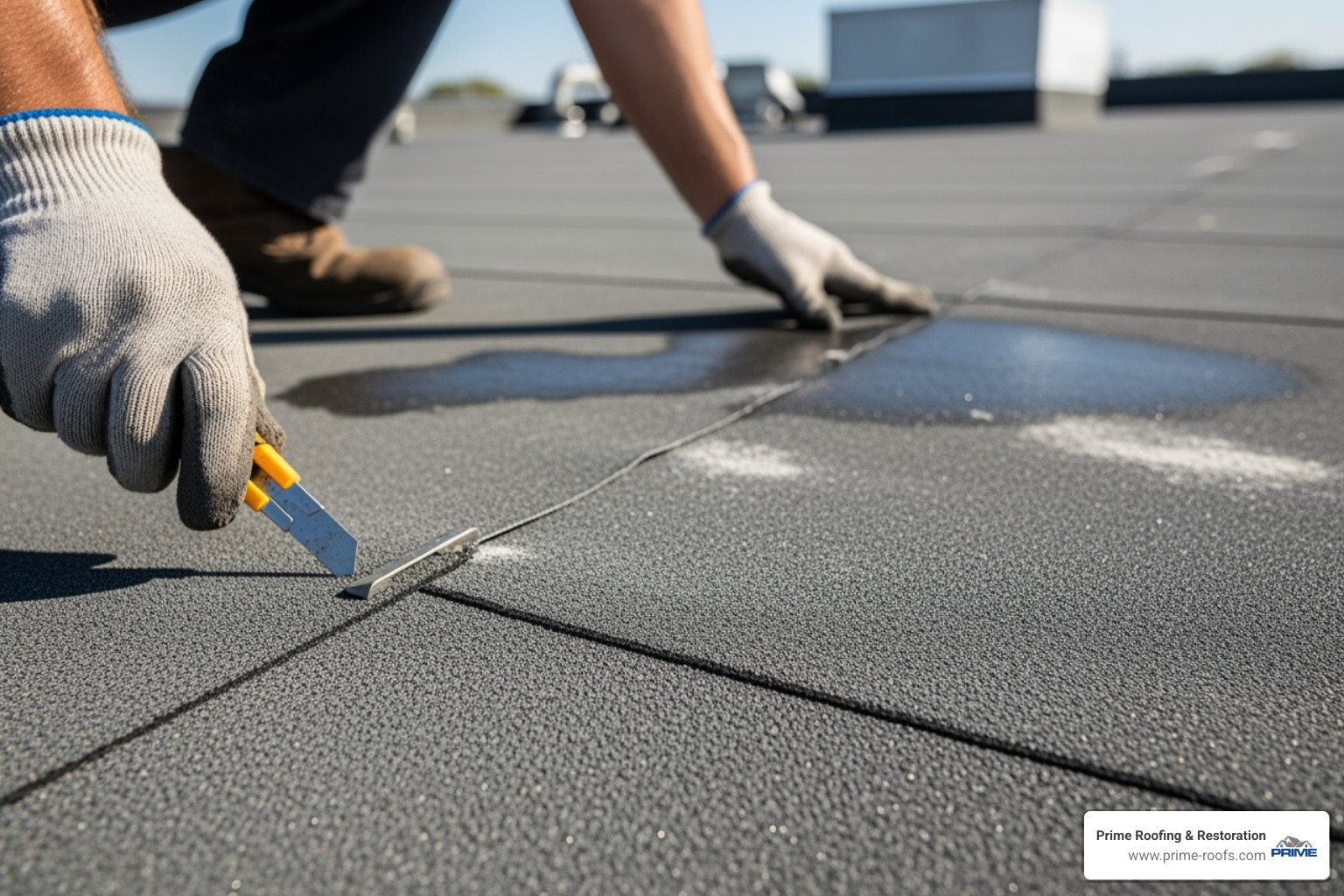
- Modern Materials: Today’s TPO, EPDM, and PVC membranes are installed in large sheets with heat-welded or adhesive-bonded seams, creating a seamless, watertight barrier.
- Professional Installation: Correct installation is vital. Experienced roofers ensure proper slope, flashing, and membrane application to prevent future problems.
- Regular Maintenance: Proactive inspections and maintenance, like applying waterproof coatings, extend a roof’s life and catch small issues before they escalate.
When properly designed, installed, and maintained, modern flat roofs are incredibly reliable.
Sustainability and Aesthetics: The Modern Appeal of Flat Roofs
Beyond the practical and economic advantages, flat roofs also align with contemporary architectural trends and environmental goals, making them an increasingly attractive choice for commercial properties. Businesses aren’t just looking at the bottom line – they’re also considering their environmental impact and brand image.
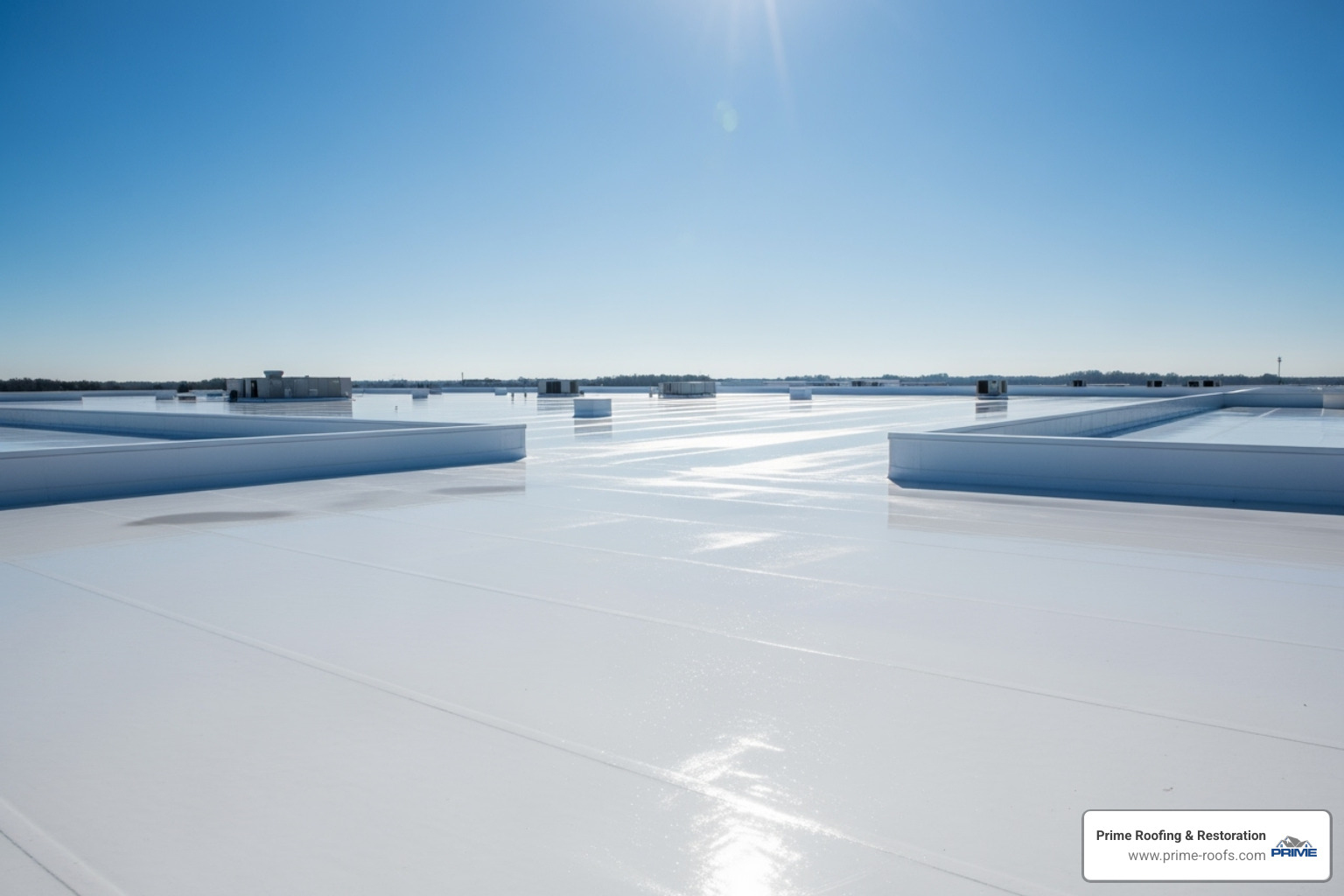
Energy efficiency has become a major factor in why do commercial buildings have flat roofs today. Think about walking barefoot on black asphalt versus white concrete on a hot summer day – the difference is dramatic! Many modern flat roofing materials work on this same principle, coming in light colors or designed to be highly reflective.
These “cool roof” technologies help deflect sunlight and reduce heat absorption into the building. According to the U.S. Department of Energy, cool roof options can significantly keep roof temperatures down and buildings cooler during the summer. This directly translates to lower cooling costs and reduced energy consumption for businesses. In Alabama’s hot climate, this can mean substantial savings on electric bills.
Solar panel compatibility is another sustainability win for flat roofs. As more businesses turn to renewable energy, flat roofs provide the ideal platform for solar installations. Their level surface allows for optimal positioning and angling of panels, maximizing energy generation without the complex mounting systems required for sloped roofs. This contributes significantly to a building’s overall sustainability profile.
From an aesthetic standpoint, flat roofs are a hallmark of modern and minimalist architecture. They offer clean lines and a sleek, unobtrusive appearance that blends seamlessly with urban landscapes. This design choice projects a contemporary and professional image for businesses – something that’s less critical for residential homes but important for commercial branding.
The architectural trend of modernism, which gained popularity with the rise of skyscrapers, often featured flat roofs, and this influence continues in today’s commercial structures. There’s something undeniably sophisticated about the simple, geometric lines of a well-designed flat roof building. It says “forward-thinking” and “efficient” – exactly the message many businesses want to convey.
Your Local Flat Roofing Experts in Alabaster, AL
Understanding why do commercial buildings have flat roofs is the first step. The next is partnering with professionals who know Alabama’s climate. At Prime Roofing & Restoration, we’ve helped countless businesses in the Alabaster area maximize their flat roof systems.
Our team brings years of hands-on experience, whether you’re dealing with ponding water, planning a solar installation, or need routine maintenance. We build lasting relationships, becoming your trusted partner for the life of your roof. Our licensed experts are available 24/7 for emergencies.
We provide end-to-end commercial roofing solutions using quality materials proven to perform in our weather. From TPO and EPDM installations to emergency repairs and insurance claim assistance, we protect your business and provide peace of mind.
Prime Roofing & Restoration
Address: 5 Brown Cir, Alabaster, AL 35007
Phone: (205) 661-8190
Ready to discuss your commercial roofing needs? Call us today to learn why so many Alabama businesses trust us to keep their operations running smoothly under a reliable flat roof.
Frequently Asked Questions about Commercial Flat Roofs
Many business owners have questions about flat roofs, especially if they are more familiar with residential pitched roofs. Here are answers to some of the most common inquiries.
How do flat roofs handle heavy rain and snow?
Commercial “flat” roofs are not actually flat. They have a slight, engineered slope (about 1/4 inch per foot) to guide water toward drains.
- Drainage Systems: Water flows to internal drains connected to the building’s plumbing or to scuppers and gutters along the roof edge. These systems are designed to handle large volumes of water from heavy storms.
- Structural Load: Commercial roofs are engineered to handle significant weight from snow and temporary water accumulation, as required by building codes.
- Debris Management: The key to effective drainage is keeping drains clear of leaves and other debris. Regular maintenance prevents blockages.
Are flat roofs more expensive to maintain than pitched roofs?
Not necessarily. While the maintenance needs are different, they are not always more expensive. Flat roofs require proactive inspections for membrane integrity and drainage, while pitched roofs involve shingle replacement and moss removal. The biggest advantage for flat roofs is accessibility. Maintenance crews can walk on the surface safely, which often reduces labor costs compared to the specialized equipment needed for steep roofs. Proactive maintenance, such as twice-yearly inspections, is key to catching small issues early.
What is the average lifespan of a commercial flat roof?
Modern flat roofing materials are built to last, often outperforming pitched roofs with proper care.
- TPO and PVC: 20 to 30 years.
- EPDM: 25 to 30+ years.
- Modified Bitumen: 15 to 20 years.
- Built-Up Roofing (BUR): 15 to 30 years.
The ultimate lifespan depends on two factors: quality of installation and consistency of maintenance. Regular inspections, prompt repairs, and keeping drains clear are the most important factors in maximizing the return on your roofing investment, especially in Alabama’s challenging climate.

Conclusion: A Practical and Forward-Thinking Choice
The answer to why do commercial buildings have flat roofs reveals a history of smart business decisions. It’s about strategic thinking that extends to every part of a commercial property.
The benefits are clear:
- Cost-Effective: For large buildings, the savings on materials and labor are substantial.
- Functional: The roof becomes usable space for HVAC systems, solar panels, and even rooftop patios.
- Durable: Modern materials like TPO, EPDM, and PVC, combined with proper drainage, offer impressive longevity and reliability.
- Sustainable: Cool roof technology lowers energy costs, and solar compatibility future-proofs the building.
- Aesthetic: The clean, minimalist lines of a flat roof project a modern and professional image.
From a practical necessity to a strategic advantage, the flat roof reflects efficiency and adaptability. It’s more than just overhead; it’s an investment in a business’s future.
Whether you’re planning a new build or maintaining your current system, the choice is clear. For expert guidance that puts your business first, trust the professionals. Learn more about how to choose the right roofer for your project.