
Converting a Flat Roof to a Pitched Roof: Costs, Process, and ROI Backed by Data
Changing flat roof to pitched roof is one of the most impactful and transformative structural upgrades a homeowner can undertake. This project goes far beyond a simple repair, fundamentally altering your home’s architecture to improve durability, boost energy performance, and dramatically enhance curb appeal. For many property owners grappling with the persistent headaches of a flat roof—chronic leaks, pooling water, and constant patching—the most reliable and permanent solution is to invest in a full professional roof replacement service. While the initial investment is significant, the long-term benefits are compelling. Within the first 10 years after conversion, homeowners typically see a substantial return on investment through drastically lower maintenance costs, reduced energy bills, and a significant increase in property resale value, offsetting a large portion of the upfront expense.
Quick Answer: Conversion Process and Cost
| Aspect | Details |
|---|---|
| Average Cost | $15,000 to $50,000+ (can exceed $75,000 for large, complex projects) |
| Timeline | 4 to 8 weeks for standard conversions, longer for complex designs |
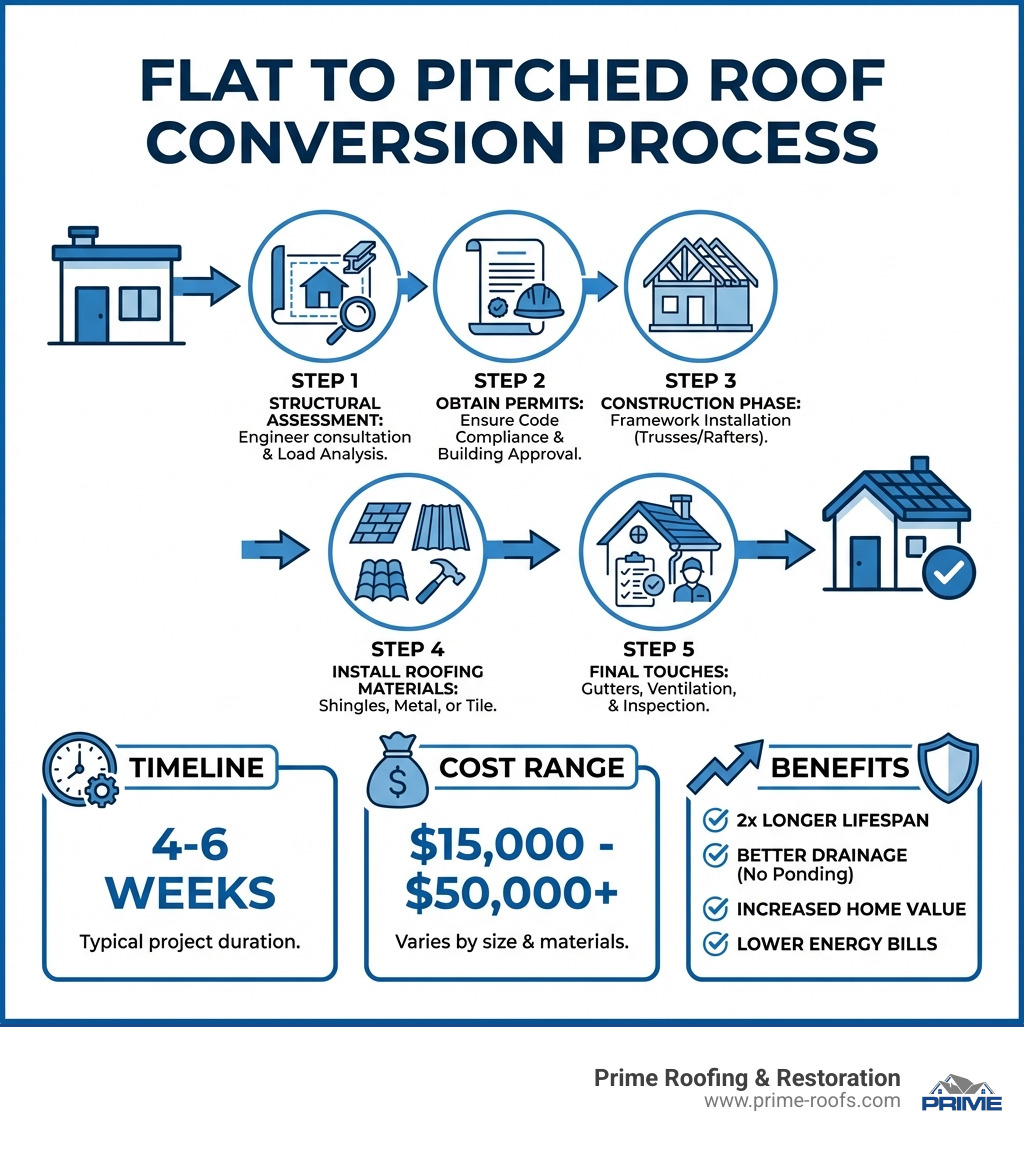
| Key Steps | 1. In-depth structural assessment by an engineer 2. Architectural design and material selection 3. Securing all necessary building permits 4. Construction: Removing or building over the existing roof 5. Installing new framework, decking, and roofing materials 6. Final inspection and project closeout |
| Lifespan Gain | Flat roofs (EPDM, TPO): 15-30 years vs. Pitched roofs (Shingle, Metal, Slate): 30-100+ years |
| Primary ROI | Eliminates chronic leak repairs, lowers energy bills by 10-25%, increases property value, and improves insurability. |
Are you tired of the constant worry that comes with every heavy rainstorm? Do recurring leaks, unsightly ponding water, and the endless cycle of flat roof repairs have you feeling frustrated? You are not alone. A vast number of homeowners in Alabama, from the suburbs of Alabaster to the coastal communities of Orange Beach, are discovering that converting their flat roof to a pitched design offers a permanent, value-adding solution to these persistent and costly problems.
Flat roofs are common on mid-century modern homes, garages, and especially on home additions because they are generally quicker and less expensive to install initially. However, their minimal slope—often as little as ¼ inch per foot—makes them inherently vulnerable to water pooling. This standing water, known as ponding, acts as a magnifying glass for UV rays, accelerating material breakdown and leading to premature failure of seams and seals. According to data from the National Roofing Contractors Association, a well-maintained flat roof typically lasts 15 to 30 years. In stark contrast, a pitched roof can easily last 30 years, with premium materials like standing seam metal or slate providing over a century of reliable protection.
Beyond sheer durability, a pitched roof introduces an attic space, a critical buffer zone that revolutionizes a home’s thermal performance. This new space allows for superior insulation and ventilation, which directly translates to lower heating and cooling bills throughout the year. The aesthetic transformation is equally profound. A pitched roof adds depth, character, and architectural interest, boosting your property’s curb appeal and making it more attractive in the real estate market. For homes in need of professional roof replacement services, this conversion represents a strategic, long-term investment in your property’s future.
The conversion process is a complex construction project involving meticulous structural planning, obtaining the correct permits, and expert installation. Costs typically range from $15,000 to $50,000, but can climb higher depending on your roof’s square footage, the complexity of the new design, and the materials you select. While the upfront investment is substantial, the combination of eliminated repair costs, significant energy savings, and increased home value provides a powerful return on investment, often realized within just a few years.
As Bill Spencer, owner of Prime Roofing & Restoration, I’ve personally guided dozens of Alabama homeowners through the intricate process of changing flat roof to pitched roof. My team and I specialize in helping clients navigate the crucial stages of structural assessments, material selection, and even insurance considerations to achieve durable, beautiful, and code-compliant results. We have extensive experience with both residential and commercial flat roof systems across Alabama and understand precisely what it takes to execute a successful conversion that will protect your home for decades to come.
Explore more about changing flat roof to pitched roof:
Pitched vs. Flat Roofs: Data-Driven Comparison of Performance and Value
Deciding to convert your roof requires a thorough understanding of the long-term advantages a pitched design offers compared to the inherent limitations of your current flat roof. A pitched roof is defined by its slope, a simple geometric feature that provides a cascade of benefits that flat roofs, by their very nature, struggle to replicate. Let’s break down the comparison across four critical areas.
Performance and Longevity
When evaluating the long-term performance of any roofing system, water management is the single most important factor. Pitched roofs are masters of hydrology. Their slope uses gravity to efficiently and immediately shed rainwater and melting snow, directing it into gutters and away from the structure. This rapid drainage is the primary reason for their superior longevity, as it minimizes the time roofing materials are exposed to moisture.
Flat roofs, despite the name, are engineered with a slight pitch (typically 1/4 inch per foot) to encourage drainage toward scuppers or internal drains. However, this minimal slope is often insufficient to prevent ponding water, especially if drains become clogged with debris. When water stands on a flat roof, it creates a hostile environment. It accelerates the degradation of common flat roofing materials like EPDM, TPO, and modified bitumen through intensified UV exposure, constant thermal expansion and contraction, and damaging freeze-thaw cycles in winter. This relentless exposure leads to seam separation, membrane cracking, and blistering, which are the primary causes of leaks. If you’re already seeing signs of this, we can help you learn about flat roof ponding repair.
In contrast, a pitched roof’s ability to dry quickly dramatically extends the life of its materials. While a well-maintained flat roof might last 15 to 30 years, a pitched roof covered in architectural shingles can last 30+ years. With more durable materials like standing seam metal or slate, the lifespan can easily exceed 50 or even 100 years. This vast difference in longevity means fewer costly replacements and greater peace of mind for homeowners in Alabama, especially those in coastal areas like Orange Beach where torrential rain and high winds are a seasonal reality.
Maintenance and Upkeep
The maintenance requirements for flat and pitched roofs are worlds apart. Flat roofs are high-maintenance systems by design, demanding frequent and diligent inspections. We recommend a thorough inspection of a flat roof at least twice a year (spring and fall) and after every major storm. Key maintenance tasks include:
- Clearing all drains, scuppers, and gutters of leaves, branches, and other debris to prevent blockages and water backup.
- Inspecting seams and flashing around vents, chimneys, and HVAC units for any signs of separation, cracking, or deterioration.
- Looking for punctures, blisters, or ‘alligatoring’ (cracking that resembles alligator skin) in the roof membrane.
- Removing any ponding water that remains 48 hours after rainfall, as this indicates a drainage problem.
Pitched roofs, conversely, are far more forgiving. Their sloped design naturally sheds most debris, simplifying upkeep. An annual check-up is typically sufficient. Maintenance generally focuses on ensuring gutters and downspouts are clear to handle water flow and a visual inspection for any damaged or missing shingles, particularly after a hail or wind storm. While both roof types can experience flashing failures, repairs on a pitched roof are often more localized and less invasive. Our team provides comprehensive roof maintenance services to keep any roof, flat or pitched, in optimal condition.
Energy Efficiency and Insulation
One of the most compelling financial arguments for changing flat roof to pitched roof is the dramatic improvement in your home’s energy efficiency. A pitched roof creates a dedicated attic space between your home’s ceiling and the roof deck. This space is a game-changer for insulation and ventilation, two pillars of an energy-efficient home.
Flat roofs typically have the insulation sandwiched between the roof deck and the ceiling joists, with little to no air gap. This makes effective ventilation extremely challenging. Without a path for heat to escape, solar radiation absorbed by the roof in the summer radiates directly into your living space, forcing your air conditioning system to work overtime. In winter, heat from your home escapes directly through the roof, leading to higher heating costs.
With a pitched roof, we can install a thick layer of insulation (up to R-49 or R-60, as recommended by the U.S. Department of Energy for our climate zone) in the attic floor, creating a robust thermal barrier. More importantly, we can create a passive ventilation system using soffit vents (for intake) and a ridge vent (for exhaust). This system uses natural convection to constantly circulate air, flushing out super-heated air in the summer and preventing moisture buildup that can lead to mold, rot, and ice dams in the winter. This translates directly into lower energy bills year-round for homeowners in Alabaster, AL, and across the state.
Aesthetics and Property Value
A home’s roofline is a dominant architectural feature, profoundly impacting its overall appearance and curb appeal. Changing flat roof to pitched roof can be one of the most dramatic aesthetic upgrades you can make, transforming a boxy or dated exterior into one with character, depth, and dimension.
While flat roofs are a hallmark of Modern home design and can look sleek and appropriate on certain structures, a traditional pitched roof often has a broader and more timeless appeal in most residential neighborhoods. This improved visual appeal, according to the National Association of Realtors, can significantly increase your property’s resale value. Potential buyers often perceive pitched roofs as more desirable, durable, and ‘homely.’
Beyond pure aesthetics, the new attic space created by the conversion offers tangible value. It can be used for easily accessible storage, or, with proper planning, converted into valuable conditioned living space—a home office, a guest suite, or a playroom. This added functionality and square footage further boosts your home’s market value, providing both practical benefits for your family and a financial return when it’s time to sell. Imagine turning a problematic roof into a brand-new room.
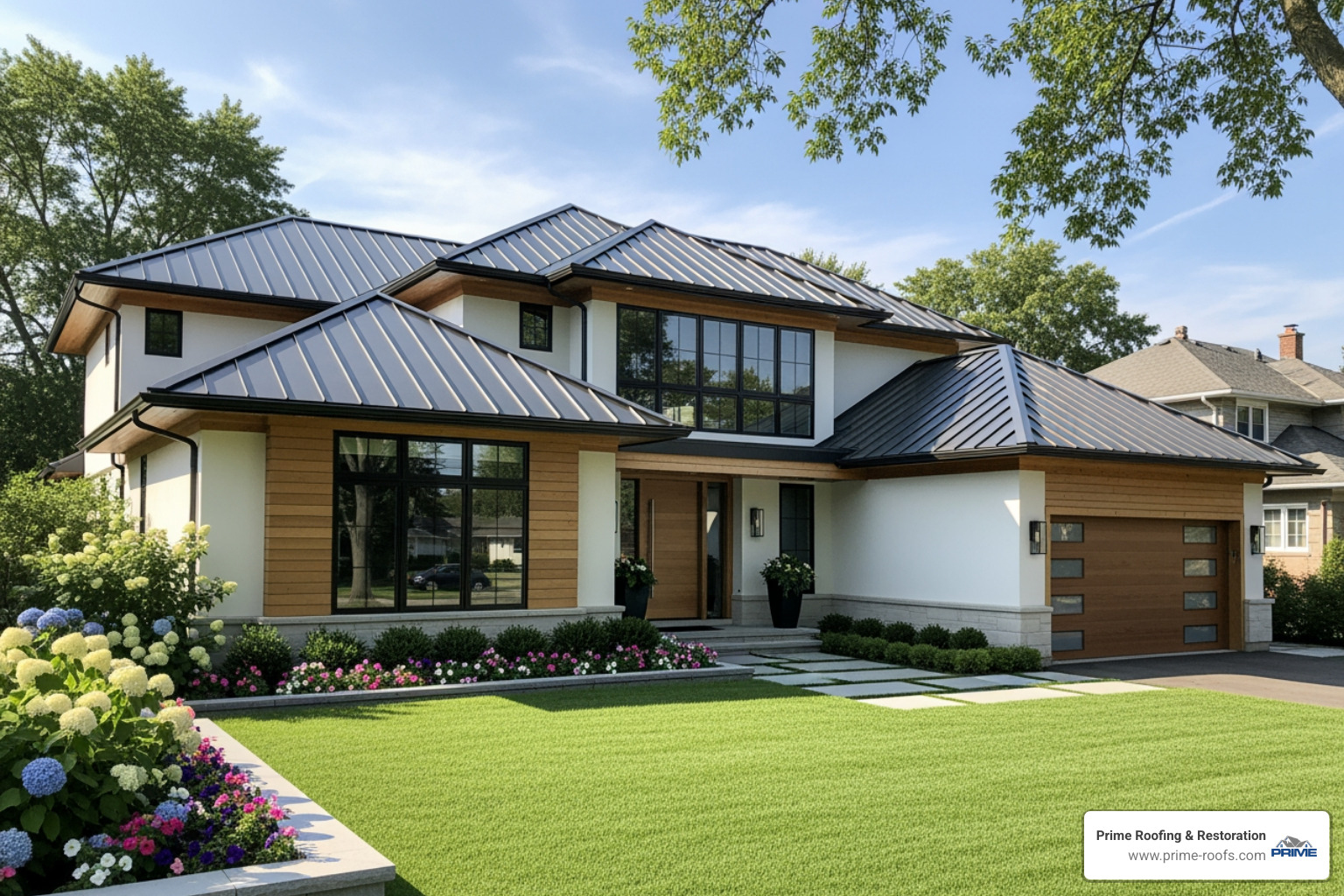
Flat-to-Pitched Roof Conversion Costs: Detailed Breakdown and Benchmarks
Understanding the financial commitment is a critical step for any homeowner considering this significant structural upgrade. While changing flat roof to pitched roof is a substantial investment, the long-term financial benefits in savings and increased equity often provide a strong return, making it a strategically sound decision for many Alabama properties.
Average Cost and Project Timeline
The total cost of converting a flat roof to a pitched roof varies widely, with most projects falling in the range of $15,000 to $50,000. However, for larger homes, complex designs, or premium materials, costs can easily exceed $75,000. This broad range is influenced by several key variables:
- Roof Size and Complexity: The total square footage is a primary cost driver. A simple, single-plane gable roof on a 1,500 sq. ft. home will be far less expensive than a complex hip roof with multiple dormers and valleys on a 3,000 sq. ft. home. Complexity adds labor hours and material waste.
- Chosen Roofing Materials: The material you choose for the final covering has a massive impact on the budget. Standard architectural asphalt shingles are the most cost-effective, while options like standing seam metal, clay tiles, or natural slate represent a significant premium.
- Structural Requirements: The condition of your existing home is a major factor. If the current walls and foundation can support the new roof with minimal changes, costs are contained. If they require significant reinforcement (e.g., adding new support columns, reinforcing headers), the budget will increase.
- Labor Rates and Location: Labor is a huge component of the cost. Rates vary based on your specific location in Alabama, with skilled labor in areas like Orange Beach potentially differing from rates in Alabaster.
A straightforward conversion on a small-to-medium-sized home typically takes about four to eight weeks from start to finish. This timeline can extend if the project involves extensive structural modifications, custom-fabricated materials, or is delayed by weather. We provide a detailed Roof Replacement Cost Guide that can help you begin to budget for your specific project.
Detailed Breakdown of Conversion Expenses
To budget effectively, it’s important to understand where the money goes. Here’s a more detailed breakdown of the costs involved in a typical flat-to-pitched roof conversion in the U.S. market:
- Structural Engineer & Architect Fees: This is non-negotiable. Expect to pay $1,000 – $3,500 for a professional assessment, load calculations, and certified blueprints for the new roof structure.
- Permit Fees: These vary by municipality but can range from $500 to $2,000+ for a major structural alteration. Our team handles the entire permitting process.
- Labor Costs: Often 40-50% of the total project cost. This covers demolition (if needed), framing, decking, installation of underlayment and roofing, and finishing work.
- Framing Materials: This includes lumber for trusses or rafters and plywood or OSB for the roof deck. Costs can fluctuate with the lumber market but typically range from $5 to $10 per square foot of roof area.
- Roofing Material (per square foot installed):
- Architectural Asphalt Shingles: $4 – $8
- Standing Seam Metal: $9 – $18
- Clay or Concrete Tiles: $10 – $25
- Natural Slate: $20 – $40+
- Insulation: Essential for energy efficiency. Blown-in fiberglass or cellulose insulation costs approximately $1.50 – $3.50 per square foot to achieve recommended R-values.
- Finishing Materials & Structural Extras:
- Gutters & Downspouts (Aluminum): $5 – $10 per linear foot.
- Soffit & Fascia: $6 – $20 per linear foot, depending on material (vinyl, aluminum, wood).
- Ventilation (Ridge & Soffit Vents): $500 – $1,500 for the complete system.
- Contingency Fund: We strongly advise every client to budget an additional 10-15% of the total estimated cost. This fund covers unforeseen issues like discovering rotted joists or termite damage once the old roof is opened up, ensuring the project stays on track without financial panic.
Is changing a flat roof to a pitched roof a worthwhile investment?
For the vast majority of homeowners we’ve worked with across Alabama, the answer is a resounding yes. The initial financial outlay for changing flat roof to pitched roof is significant, but the return on investment (ROI) is multifaceted and powerful.
Let’s analyze the ROI:
- Eliminated Maintenance & Repair Costs: A homeowner might spend $500-$2,000 every few years patching a flat roof. Over 15 years, this can add up to $5,000 or more. A conversion eliminates this recurring expense.
- Lower Energy Bills: The improved insulation and ventilation can reduce heating and cooling costs by 10-25%. For a monthly energy bill of $300, that’s a savings of $360-$900 per year.
- Increased Property Value: While a standard roof replacement might recoup about 60% of its cost at resale (according to Remodeling Magazine’s Cost vs. Value report), a flat-to-pitched conversion is a more significant upgrade. It not only adds a new roof but also enhances architecture and potentially adds usable square footage, which can lead to a much higher ROI, especially in a competitive real estate market.
- Lower Insurance Premiums: Many insurance providers view pitched roofs as far less risky due to their superior weather resistance. This can lead to a 5-15% reduction in your annual homeowner’s insurance premium. It’s always wise to discuss the project with your provider or our insurance claims assistance team to understand the potential savings.
- Invaluable Peace of Mind: Perhaps the most significant, yet unquantifiable, benefit is the peace of mind that comes from knowing your home is protected by a durable, reliable roof that can withstand Alabama’s intense storm seasons.
The 5-Step Flat-to-Pitched Roof Conversion Process, Explained Like an Engineer
A successful conversion from a flat to a pitched roof is a sophisticated construction project that demands meticulous planning, precise engineering, and expert execution. At Prime Roofing & Restoration, we deconstruct this complex process into five distinct, manageable stages to ensure a seamless, efficient, and high-quality transformation for your home.
Step 1: Structural Assessment and Architectural Design
This foundational phase is the most critical for the project’s success and your home’s long-term safety. Before any materials are ordered or a single nail is driven, a licensed structural engineer must conduct a comprehensive assessment of your home. This isn’t a quick look; it’s a detailed analysis of your home’s existing foundation, load-bearing walls, and ceiling joists. The engineer’s primary task is to determine if the current structure can safely support the additional dead load (the static weight of the new roof itself) and live loads (potential weight from heavy rain, high winds, or maintenance crews). Their report will certify the home’s capacity or specify the necessary reinforcements.
Simultaneously, you’ll collaborate with our design team to define the new roof’s architecture. This is where your vision takes shape. We’ll help you determine the ideal roof pitch—a 4/12 pitch offers a gentle slope, while an 8/12 or 10/12 pitch creates a steeper roofline with more potential for attic space. We’ll explore styles like a classic gable, a more complex hip roof, or a gambrel roof to best complement your home’s existing style. To begin this vital first step, you can schedule a professional roof inspection with our team.
During this phase, a key decision is made on the construction method:
- Build-over (or “Sleeper”) Method: The new pitched roof frame is constructed directly on top of the existing flat roof. The old roof membrane is typically left in place to act as an air and vapor barrier for the new attic space. This method is often faster, less disruptive, and more cost-effective, potentially allowing you to remain in your home during construction. It’s a viable option when the existing structure is sound and the goal is primarily to improve drainage and aesthetics.
- Tear-off Method: The existing flat roof structure is completely removed down to the ceiling joists before the new pitched roof is built. This approach is more expensive and disruptive, often requiring you to vacate the property temporarily. However, it is necessary if the existing structure is damaged, rotted, or cannot support the new load. It also provides the greatest design flexibility, allowing for the creation of dramatic cathedral ceilings or a fully conditioned and habitable attic room.
Step 2: Permits and Regulatory Compliance for changing a flat roof to a pitched roof
Because changing flat roof to pitched roof is a major structural alteration that changes your home’s silhouette and height, it universally requires building permits from your local municipality. Attempting to bypass this step is a critical error that can result in substantial fines, stop-work orders, and even a mandate to tear down the new structure. Our team is deeply experienced in navigating the permitting processes in Alabaster, Orange Beach, and other Alabama jurisdictions. We manage the entire application for roofing permits on your behalf.
We ensure the engineer’s plans comply with all relevant building regulations, which are based on the International Residential Code (IRC) with state and local amendments. Key regulatory considerations include:
- Height Restrictions: Local zoning ordinances often have a maximum building height. We ensure the new roof’s peak does not exceed this limit.
- Wind Load Requirements: In coastal areas like Orange Beach, codes mandate specific hurricane-resistant construction techniques, such as reinforced connections (hurricane straps) between the roof and walls.
- Structural Load Compliance: The permit application must include the engineer’s certified plans showing that the new design meets all weight and load requirements.
- HOA and Historic District Rules: If your home is in a community with a Homeowners Association or a designated historic district, there may be additional aesthetic guidelines on roof styles, pitch, and materials. We will help prepare and submit the necessary documentation for their approval.
Step 3: Construction and Installation
With permits in hand and the design finalized, the physical transformation begins. Our project manager will oversee every phase to ensure quality and safety.
- Site Preparation: We establish a safe and clean work zone, protecting your landscaping, windows, and siding with tarps and plywood. Material and debris staging areas are clearly defined.
- Demolition/Preparation: For a tear-off project, the old roof is carefully dismantled and disposed of. For a build-over, the surface is prepared. In either case, the top of the existing walls is prepped for the new framework.
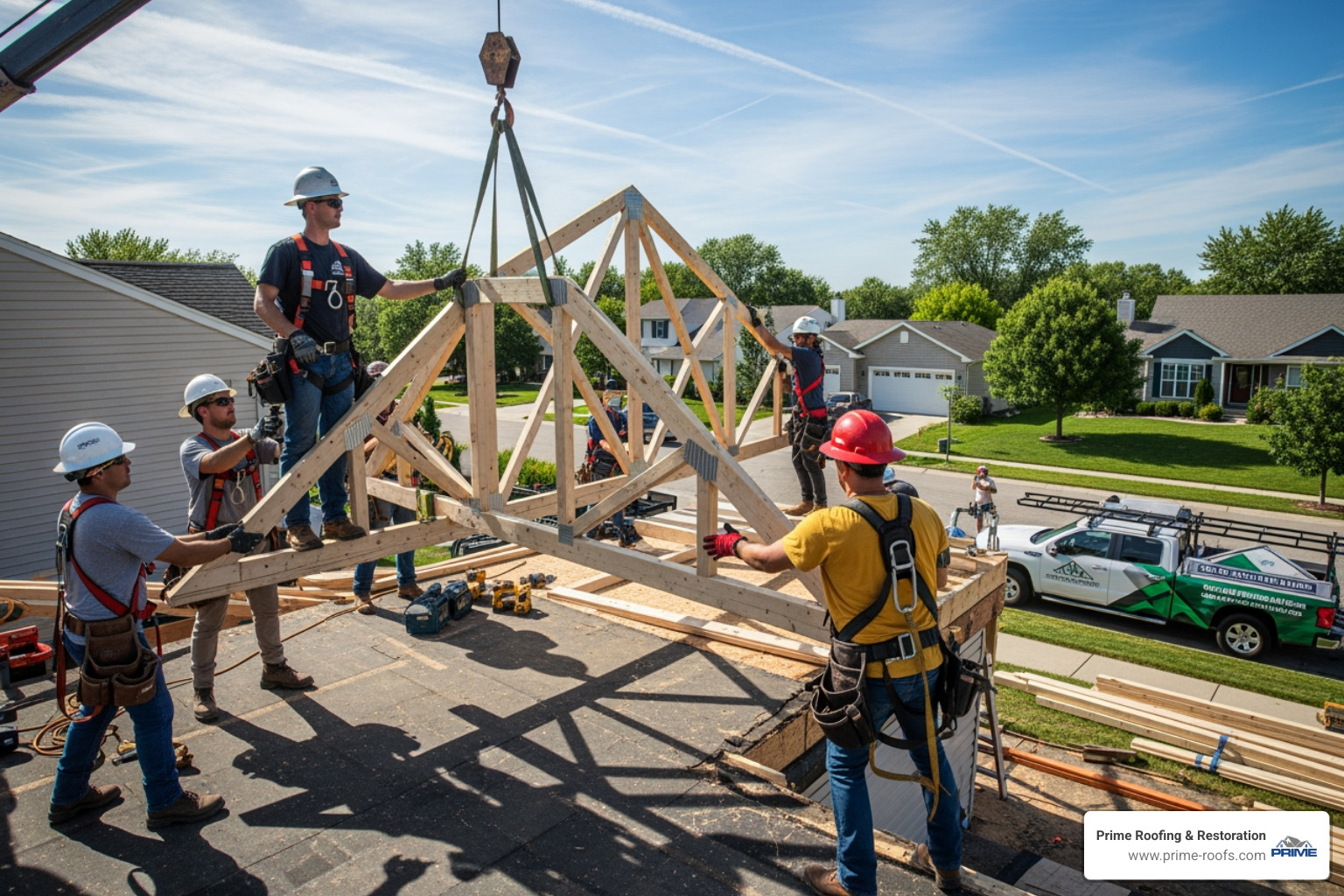
- Installing the New Framework: This is the most dramatic phase, where the new roofline emerges. Depending on the design, we use either pre-fabricated engineered wood trusses, which are craned into place for speed and precision, or a traditional stick-built frame constructed on-site by our expert carpenters. The framework is securely anchored to the load-bearing walls.
- Decking and Underlayment: Sheets of plywood or OSB (oriented strand board) are fastened to the trusses or rafters, creating the solid roof deck. This is followed by the critical water-shedding layers: a high-quality synthetic underlayment across the entire roof, and a self-adhering ice-and-water shield in all valleys and around penetrations for extra protection.
- Roofing Material Installation: Your chosen roofing material—be it architectural shingles, standing seam metal panels, or elegant tiles—is meticulously installed according to manufacturer specifications to ensure a valid warranty and long-term performance.
Step 4: Finishing Touches and Final Inspections
A roof is a complete system, and the finishing details are what guarantee its performance and longevity.
- Gutter and Downspout Installation: A new, properly sized gutter system is installed to manage the increased water runoff from the pitched surface, protecting your foundation and landscaping. Structural extras like new guttering can cost between $450 to $720.
- Soffit, Fascia, and Drip Edge: Soffits are installed on the underside of the roof overhang, and fascia boards cover the ends of the rafters. These elements give the roof a finished look, protect the wood structure from weather, and are critical for attic ventilation. Soffits can range from $100 to $260 per m².
- Ventilation System Activation: Proper ventilation is essential. We install a balanced system, typically combining continuous soffit vents (intake) with a ridge vent (exhaust). This creates a passive airflow that removes heat and moisture from the attic, extending the roof’s life and lowering your energy bills.
- Extending Penetrations: Any existing plumbing vents, furnace flues, or kitchen vents are professionally extended through the new roof deck. Each penetration is sealed with new, custom-fit flashing to create a permanent watertight seal.
- Final Inspections: The project concludes with two key inspections. First, our own project manager conducts a detailed quality control check. Second, a final inspection is scheduled with the local building official, who verifies that all work complies with the approved plans and building codes. Passing this inspection officially closes the permit and certifies the project’s safety and compliance.
Flat-to-Pitched Roof Conversion FAQs: Evidence-Based Answers for Homeowners
We understand that changing flat roof to pitched roof is a major decision, and it’s natural to have many questions. To provide clarity, we’ve compiled answers to some of the most common inquiries we receive from homeowners in Alabama, backed by our extensive field experience.
Can I create a habitable attic or loft space with the conversion?
Yes, absolutely! This is one of the most exciting and value-adding opportunities of a flat-to-pitched roof conversion. By designing a new roof with a sufficiently steep pitch (typically 7/12 or greater) and using the right structural supports (like attic trusses or stick-framing designed for open space), you can create a brand-new, functional area within your home’s existing footprint. This space can be transformed into a cozy home office, an extra bedroom, a children’s playroom, or simply an easily accessible, climate-controlled storage area. This added square footage not only enhances your home’s daily functionality but also significantly boosts its market value, offering an excellent return on investment. We’ve helped many clients in Alabaster and Orange Beach turn a problematic roof into their favorite new room.
How long does a pitched roof last compared to a flat roof?
The dramatic difference in lifespan is a primary motivator for many homeowners undertaking this conversion. A professionally installed pitched roof offers significantly greater longevity and durability, providing decades of protection with far less maintenance.
- Pitched Roofs:
- Architectural Asphalt Shingles: Typically last 25-30 years.
- Standing Seam Metal Roofs: Can last 50-70 years or more.
- Clay Tile or Slate Roofs: Can last 75-150+ years with proper care.
- Flat Roofs:
- Common materials like EPDM, TPO, and Modified Bitumen generally last 15-30 years. Their lifespan is often cut short in climates with high UV exposure and heavy rainfall, like Alabama’s, due to issues like seam failure and ponding water.
This means a new pitched roof can effectively double, triple, or even quadruple the lifespan of your previous flat roof, representing a long-term investment that saves you from the cycle of frequent and costly replacements.
Will my homeowners insurance change after the conversion?
It is very likely that your insurance will change, and almost always for the better. From an insurer’s perspective, a brand-new, professionally installed pitched roof is a much lower risk than an aging flat roof. Pitched roofs are inherently superior at shedding water and resisting wind uplift (when built to code), which drastically reduces the likelihood of water damage and storm-related claims—two of the most common and costly types of claims for insurers. This reduced risk often translates into a lower annual homeowners insurance premium. We always recommend that you notify your insurance provider before the project begins and provide them with the final documentation upon completion. You can also consult with our insurance claims assistance experts to understand how to best communicate this upgrade to your provider to maximize potential savings.
What are the main structural considerations for this project?
The primary structural consideration is weight. A pitched roof, with its extensive wood framing, decking, and shingles, is significantly heavier than a typical flat roof system. A structural engineer must verify that your home’s existing load-bearing walls and foundation are adequate to support this additional ‘dead load.’ If not, they will specify necessary reinforcements, which could include strengthening ceiling joists, adding support posts in the space below, or even pouring new concrete footings.
How do I choose the right pitch for my new roof?
The ‘pitch’ (or slope) of your roof affects its appearance, cost, and functionality. A lower pitch (e.g., 4/12) is less expensive to build but sheds water more slowly and offers limited attic space. A medium pitch (e.g., 6/12 to 8/12) provides a classic look with good water shedding and potential for storage. A steep pitch (e.g., 9/12 or higher) is ideal for creating habitable attic space and offers the best water and snow shedding, but is more complex and costly to build. We help you balance these factors to choose a pitch that meets your aesthetic goals, budget, and functional needs.
Ready to Upgrade Your Roof? Data-Backed Reasons to Act Now
Changing flat roof to pitched roof is a transformative project that solves persistent problems while adding immense long-term value. It’s a strategic investment in your home’s durability, energy efficiency, and curb appeal, moving you from a high-maintenance, leak-prone system to one that provides superior protection and peace of mind for decades. Due to the project’s structural complexity, the absolute necessity for precise engineering, and the critical need to adhere to local building codes, this is not a DIY endeavor. It requires the expertise of a licensed, insured, and experienced professional roofing contractor.
For homeowners throughout Alabama, from the growing communities of Alabaster to the beautiful coastal homes of Orange Beach, the team at Prime Roofing & Restoration possesses the specialized experience and local knowledge to guide you through every step of this complex process. From the initial structural assessment and architectural design to navigating complex permit requirements and executing a flawless installation, we serve as your trusted partners. We are committed to building lasting relationships with our clients, using only high-quality materials, and providing responsive 24/7 service to protect your homes and families.
If you are ready to make a permanent, aesthetically pleasing, and energy-efficient investment in your home, the time to act is now. Stop the endless cycle of repairs and start enjoying the benefits of a superior roofing system.
Contact us today or call us at (205) 686-7419 to schedule a free, no-obligation consultation. Let our experts in Alabaster, AL and Orange Beach, AL provide you with a detailed quote for your roof replacement and help you build a safer, more beautiful, and more valuable home that you’ll enjoy for generations to come.
Our Location
Prime Roofing & Restoration
Address: 123 Main Street, Alabaster, AL 35007 (Example Address)
Phone: (205) 686-7419
[Google Maps Embed Placeholder – A map showing the business location in Alabaster, AL should be embedded here.]