
Why Understanding Emergency Roof Tarping Costs Matters
The cost of emergency roof tarping typically ranges from $1.00 to $2.80 per square foot, with most homeowners paying between $450 and $3,300 depending on the size and severity of the damage. When disaster strikes—whether it’s a fallen tree, severe hail, or wind that tears shingles from your roof—the clock starts ticking. Water doesn’t wait for business hours, and neither should your response. Emergency roof tarping is the critical first line of defense, and finding a trusted roofing and restoration company to act fast prevents a manageable problem from becoming a catastrophic one. Every hour of delay can mean thousands of dollars in additional water damage to your ceilings, walls, insulation, and belongings.
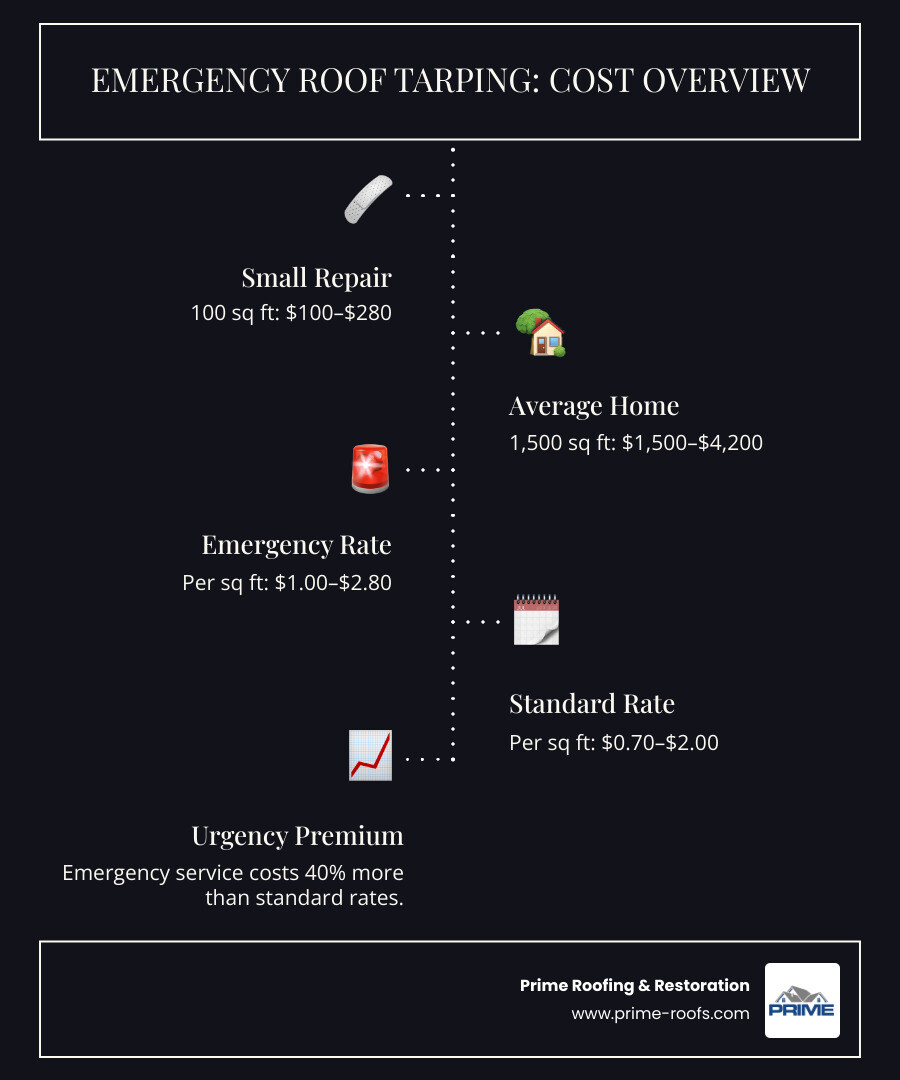
Quick Cost Overview:
- Average total cost: $450–$3,300
- Per square foot (emergency): $1.00–$2.80
- Per square foot (standard): $0.70–$2.00
- Small repairs (100 sq ft): $100–$280
- Average home (1,500 sq ft): $1,500–$4,200
- Emergency service premium: 40% higher than standard rates
Understanding these cost factors helps you evaluate quotes quickly and make informed decisions when you’re under pressure. The stakes are high. According to industry data, emergency roof tarping typically costs 40% more than standard, scheduled tarping services. That premium buys you immediate response—often within 2 to 4 hours—and the expertise to protect your home when it’s most vulnerable. For property owners in Central Alabama, having access to reliable roofers in Alabaster, AL is crucial for rapid response when severe weather strikes. If you’re facing a roofing emergency now, call Prime Roofing & Restoration at (205) 579-8301 for immediate assistance.
Cost of emergency roof tarping word roundup:
The Complete Cost Breakdown for Emergency Roof Tarping
The total cost of emergency roof tarping is determined by materials, labor, and service fees. On average, expect to pay between $1.00 and $2.80 per square foot for urgent tarping services, which includes rapid response and temporary protection. This range accounts for the critical nature of the work and the need for immediate action to protect your home from further damage. When we talk about emergency tarping, we’re not just covering a hole; we’re deploying a rapid response unit to safeguard your most valuable asset.
Material Costs: Tarp and Hardware
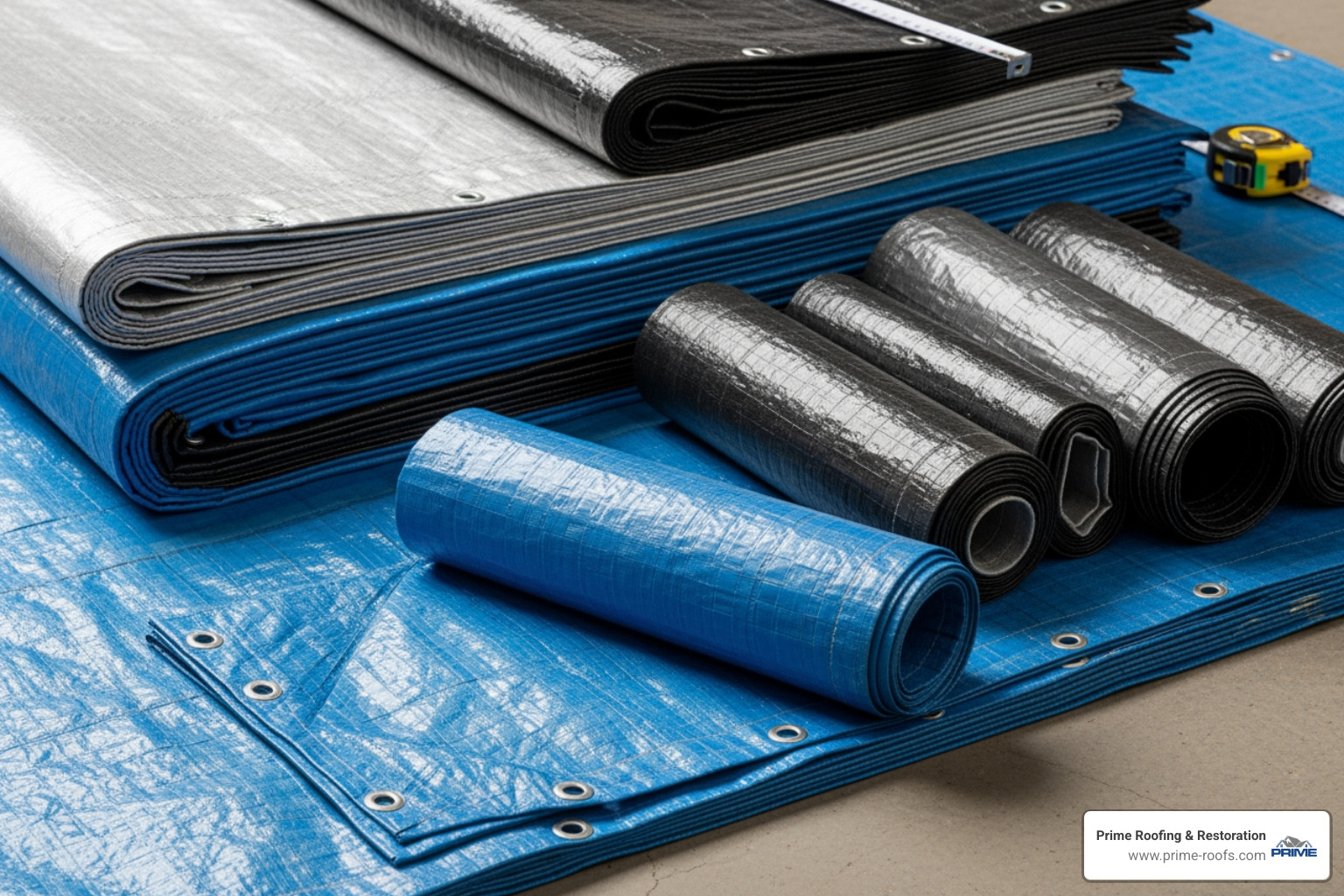
Material expenses, primarily for the tarp itself, range from $0.10 to $0.40 per square foot. The final price depends on the tarp’s thickness, material quality, and the hardware required for secure installation. It’s not just about the blue sheet you might imagine; professional-grade tarps are specifically designed for demanding conditions.
- Tarp thickness (mils): Tarp thickness is measured in “mils,” where one mil equals one-thousandth of an inch. Thinner tarps (10-15 mils) are less expensive but offer less durability, suitable for very short-term protection in mild conditions. Heavy-duty tarps (15-25 mils) are thicker, more robust, and can last longer, making them ideal for severe weather or when permanent repairs are delayed. For protection lasting up to two years, a heavy-duty tarp around 10 mils thick is often recommended. For shorter durations, like three months, thinner options suffice.
- Polyethylene vs. canvas: Most emergency roof tarping uses heavy-duty polyethylene tarps. These are highly waterproof and durable, making them excellent for storm damage protection. While canvas tarps exist, they are generally less waterproof and should only be considered for temporary, extreme circumstances where no better option is available. The superior waterproofing of polyethylene is crucial for preventing water intrusion.
- UV resistance: Exposure to the sun’s ultraviolet (UV) rays can degrade tarps quickly. High-quality emergency tarps often include UV inhibitors, which extend their lifespan and effectiveness, especially in sunny climates like Alabama. This resistance helps prevent the tarp from becoming brittle and failing prematurely.
- Fasteners (nails, screws): Securing a tarp isn’t just about throwing it over the roof. It requires specialized fasteners to ensure it stays in place against wind and rain. This includes galvanized nails, screws, and specialized roofing fasteners that resist corrosion. For very temporary solutions, sandbags might be used, but for anything more robust, proper fastening is essential. Xactimate, a common estimating software, allows for 1.33 square feet for tarping using nails and 3.17 per foot using sandbags, illustrating the difference in method.
- Anchor boards (2x4s): To prevent the tarp from flapping in the wind and causing further damage, it’s often secured using wooden boards, typically 2x4s. These boards are screwed into the roof, creating secure anchor points that distribute weight evenly and hold the tarp firmly. This method is more durable and effective than simply tying down the tarp with ropes or bungee cords.
Labor Costs: Professional Installation
Labor is often the largest component of the bill, typically costing $45 to $80 per hour per roofer. Emergency work often commands a 1.5x premium due to the need for immediate response, after-hours service, and additional safety measures required when working on a compromised roof in potentially hazardous conditions.
- Hourly rates: Roofing professionals typically charge an hourly rate that reflects their expertise, equipment, and insurance. This rate can vary based on the complexity of the job and the urgency.
- Crew size: The number of roofers required for a job directly impacts labor costs. A small, straightforward tarping job might only need a two-person crew for a few hours. However, extensive damage on a larger home could require three or four technicians working for an entire day to ensure proper and safe installation.
- Installation time: The time it takes to install a tarp is influenced by several factors, including the size of the damaged area, the roof’s complexity, and weather conditions. More time on the job means higher labor costs.
- Roof complexity: A roof’s pitch (steepness), number of stories, and the presence of obstacles like chimneys, skylights, or dormers significantly increase the complexity of installation. Steep roofs, for example, require specialized safety equipment and more careful maneuvering, which translates to more time and higher labor costs.
- Safety equipment: Professional roofers invest in extensive safety equipment, including harnesses, fall protection systems, and non-slip footwear. This equipment is crucial for protecting our team members, especially when working on damaged roofs in an emergency. The use and maintenance of this equipment are factored into labor costs, ensuring a safe working environment.
Standard vs. Emergency Service: The Urgency Premium
The main difference between standard and emergency roof tarping is response time and the associated cost. Emergency services are available 24/7 and can cost up to 40% more than scheduled, non-urgent tarping. This premium reflects the immediate deployment of resources, often outside regular business hours, to mitigate ongoing damage.
| Feature | Standard Roof Tarping | Emergency Roof Tarping |
|---|---|---|
| Cost per Sq. Ft. | $0.70–$2.00 | $1.00–$2.80 |
| Response Time | 1–3 days | 1–4 hours |
| Typical Scenario | Minor leak, planned repair delay | Major storm damage, active leak |
When you’re facing an active leak or significant storm damage, every minute counts. An emergency service means we prioritize your situation, often dispatching a crew within a couple of hours. This rapid response is invaluable in preventing extensive water damage, mold growth, and structural issues. An extra call-out fee of $100 to $200 may also apply for services outside regular business hours or for immediate dispatch, further contributing to the higher cost of emergency roof tarping. For instance, Xactimate, a software used for estimating repair costs, allows for an additional 1.85 per foot if tarped during emergency service hours, highlighting this premium.
Key Factors That Influence the Cost of Emergency Roof Tarping
Several variables can affect your final invoice. Understanding these factors helps you interpret your quote and set realistic expectations. It’s not a one-size-fits-all situation; each roof and damage scenario presents its unique challenges and costs.
Size and Severity of Roof Damage
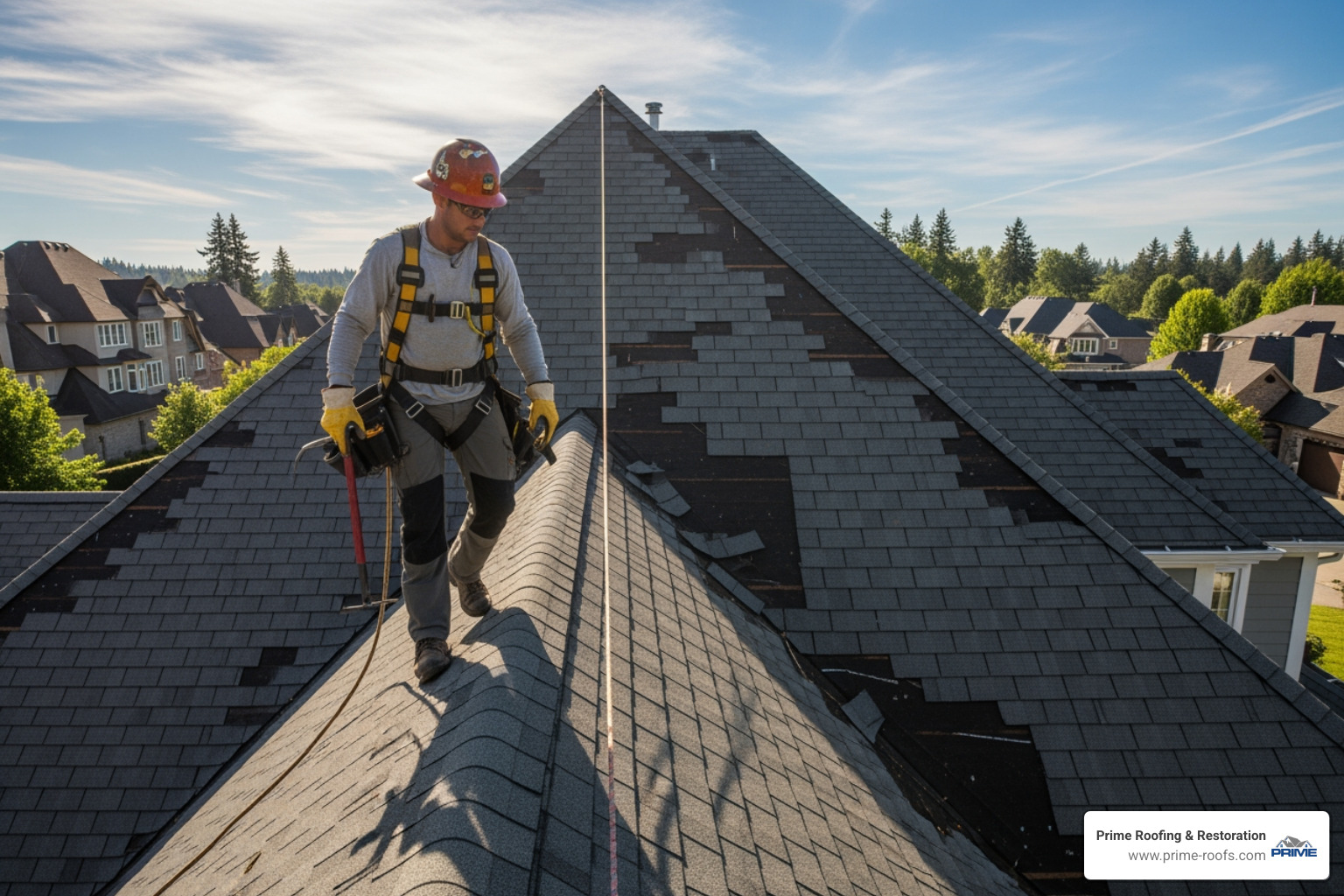
The extent and nature of the damage are primary drivers of the cost of emergency roof tarping. Larger or more severe damage requires more materials, more labor, and more complex installation techniques. Covering a few missing shingles, for example, is a much less involved and expensive task than tarping a large hole caused by a fallen tree.
- Square footage: The most straightforward factor is the size of the area needing to be tarped. Most professionals price tarping services by the square foot. A small puncture might require a tiny tarp, while extensive damage covering hundreds of square feet demands heavy-duty tarps and numerous fasteners. For example, tarping a 100 sq ft area might cost $70-$200, while a 2,500 sq ft area could range from $1,750-$5,000.
- Punctures vs. large holes: A simple puncture or small area of missing shingles is easier and quicker to cover. A large hole, especially one that exposes the interior of your home, requires more careful attention, potentially more complex framing with anchor boards, and a larger, thicker tarp for adequate protection. If there’s lightning damage or electrical burns, these hazardous areas need to be safely removed before tarping can even begin, adding to the complexity and cost.
- Debris removal: If a storm has left debris on your roof, such as tree branches or other wreckage, this must be safely removed before tarping can occur. If a tree has fallen on your roof, the cost of tree removal ($200-$2,000) will be an additional expense, and often a prerequisite for tarping. This removal ensures a clean surface for the tarp and prevents further damage during installation.
- Structural assessment: In cases of severe damage, a preliminary structural assessment might be necessary to ensure the roof is safe to walk on and to determine the best method for securing the tarp without causing further structural strain. This initial evaluation helps us understand the full scope of the emergency.
Roof Accessibility and Complexity
The ease with which our team can access and work on your roof significantly impacts labor costs and, by extension, the overall cost of emergency roof tarping. Steep, high, or complex roofs are inherently more dangerous and time-consuming, requiring specialized equipment and advanced safety protocols.
- Roof pitch: The steepness of your roof (its pitch) directly correlates with the difficulty and safety risks of the job. A low-slope roof is much easier and quicker to tarp than a steep-pitched roof, which demands specialized safety equipment, extended setup time, and experienced technicians comfortable working at challenging angles. Tarping over asphalt shingles is generally less costly than materials like tiles, which can be more fragile and complex to work around.
- Number of stories: Multi-story homes or homes with limited access points (e.g., no clear path for ladders, dense landscaping) increase the installation difficulty and safety requirements. Reaching higher sections of a roof safely requires more equipment and time.
- Obstacles (chimneys, skylights): Roof features like chimneys, skylights, dormers, and vents add complexity to tarp installation. Our team needs to carefully cut and secure the tarp around these elements to create a watertight seal, which takes more time and precision. This also often requires additional materials like ridge caps, edge flashing materials, and weatherproof tape to ensure no gaps remain.
- Landscaping access: Sometimes, dense landscaping or other obstructions around your home can impede ladder placement or the movement of equipment. Clearing these obstacles, if possible, can make the job safer and more efficient.
Additional Costs to Consider
Emergency tarping is often just the first step in protecting your home after damage. Be prepared for related expenses necessary for full restoration. These are crucial components of the overall recovery process and should be factored into your budget.
- Roof inspection ($100–$400): After the immediate threat is contained by tarping, a thorough roof inspection is essential to assess the full extent of the damage and plan for permanent repairs. This inspection identifies underlying issues that might not be visible from the ground.
- Water damage remediation ($1,400+): If water has already entered your home, you’ll likely face costs for water damage remediation. This can range from minor repairs ($150-$1,000) for small leaks to major remediation ($1,000-$6,000) for extensive water intrusion, including drying out wet areas, repairing ceilings, walls, and flooring, and preventing mold growth.
- Debris or tree removal: As mentioned, if a tree or significant debris has caused the damage, its removal is a separate, often substantial, cost ($200-$2,000). This can include cutting up fallen trees and hauling them away.
- Permanent roof repair: The tarp is a temporary fix. The ultimate goal is to get your roof permanently repaired or replaced. This cost will vary widely depending on the type of damage, roofing materials, and the size of your roof. Minor roof repairs can cost between $390-$1,930, while a full roof replacement can range from $4,700-$10,500.
DIY vs. Hiring a Professional: Cost and Safety Analysis
While DIY tarping can save $100 to $450 in labor, it carries significant risks that often outweigh the potential savings. Professionals have the training, insurance, and equipment to ensure safe, effective installation—especially after storms when conditions are most challenging. We strongly recommend professional help for your safety and the integrity of your home.
The Risks of DIY Roof Tarping
Working on a wet, damaged roof is extremely hazardous. It’s not just about getting the tarp on; it’s about doing it safely and effectively. Improper installation can fail, leading to further water damage and potentially voiding insurance claims.
- Falls from height: This is the most significant risk. Damaged roofs can be unstable, slippery, and difficult to steer. Falls from ladders or roofs are a leading cause of serious injury and even fatalities. We cannot stress enough the dangers of working at height, especially in an emergency situation.
- Electrocution risk: After a storm, downed power lines or damaged electrical components on the roof can present a severe electrocution hazard. Always assume electrical hazards are present and avoid contact.
- Further roof damage: Without proper techniques and tools, attempting to tarp your roof yourself can inadvertently cause more damage. Incorrectly nailing or screwing anchor boards, walking on weakened sections, or applying the tarp improperly can worsen the situation.
- Inadequate sealing: A poorly installed tarp might not create a watertight seal, allowing water to continue seeping into your home. This defeats the purpose of the tarp and can lead to continued water damage, mold growth, and further structural issues.
- OSHA safety guidelines for roof work: Professional roofers adhere to strict safety guidelines set by OSHA to protect their workers. These guidelines cover everything from fall protection to proper equipment usage. Homeowners attempting DIY often lack this critical training and equipment.
- Proper ladder usage: Even using a ladder can be dangerous if not done correctly. Professionals are trained in safe ladder setup and climbing, minimizing the risk of falls. The National Safety Council provides checklists that highlight the complexities of safe ladder use.
Questions to Ask Your Tarping Contractor
When requesting a quote for emergency roof tarping, asking the right questions is crucial to ensure you hire a reputable, qualified company. This due diligence can save you headaches and money in the long run.
- Are you licensed and insured? This is non-negotiable. A licensed contractor signifies they meet state requirements, and insurance (liability and workers’ compensation) protects you from financial responsibility if an accident occurs on your property.
- Do you provide a written estimate? Always get a detailed, written estimate that clearly outlines all costs, materials, and services included. This prevents surprises and misunderstandings later.
- What type of tarp do you use? Inquire about the tarp’s thickness (mils), material (polyethylene is preferred), and UV resistance. This helps you understand the quality and expected lifespan of the temporary repair.
- How is the tarp secured? Understand the installation method. Will they use anchor boards and screws, or a less secure method? Proper securing is vital for the tarp’s effectiveness against high winds.
- What is your emergency response time? In an emergency, time is of the essence. A reputable company should be able to provide a clear estimate of how quickly they can arrive on-site, often within 2-4 hours for urgent calls.
- Do you document damage for insurance claims? A good contractor will take photos and videos of the damage before and after tarping, which is invaluable for your insurance claim. They should also be able to provide detailed documentation of their work.
- What is your experience with my specific type of roofing material (e.g., tile, metal, slate)? This question helps gauge their expertise, as different materials require different handling techniques to avoid causing more damage.
- What is your warranty or guarantee on the temporary tarping work? While a tarp is temporary, a professional company should stand by their installation and ensure it holds up for the intended duration.
- Can you explain your process for working with my insurance company? An experienced contractor will be familiar with the claims process and can be a valuable ally in ensuring your paperwork is correct and complete.
Insurance Coverage and How to Save on Tarping Costs
The good news is that most homeowner’s insurance policies recognize the importance of emergency tarping as a necessary step to prevent further damage and will often cover the associated costs. Understanding your policy and how to steer the claims process can significantly ease the financial burden.
Will Homeowner’s Insurance Pay for Tarping?
Yes, homeowners insurance typically covers the cost of emergency roof tarping if the initial damage is from a covered peril such as wind, hail, a fallen tree, or another natural disaster. Policies are designed to protect against sudden, accidental damage.
- Covered perils: If your roof damage is caused by an event covered under your policy (e.g., windstorm, hail, fire, falling objects), the cost of temporary repairs like tarping is usually included. This is because insurance companies want to prevent the damage from getting worse, which would lead to a larger claim.
- Damage mitigation clause: Most policies contain a clause requiring homeowners to take reasonable steps to prevent further damage after an incident. Tarping your roof fulfills this obligation, making it a reimbursable expense. The Insurance Information Institute confirms that taking steps to prevent further damage is a standard part of the claims process.
- Documentation (photos/video): Crucially, you must document the damage thoroughly with photos and videos before any work begins. This evidence is vital for your insurance claim. Keep records of all expenses related to the tarping.
- Deductibles: Your policy’s deductible will still apply. You will typically pay this amount out-of-pocket before your insurance coverage kicks in.
- Policy limits: Most insurance policies allow up to 1% of your total policy value for temporary repairs. For example, if you have a $300,000 policy, your roofing company might only be able to recover up to $3,000 for tarping and other emergency repairs. It’s always best to confirm these details with your insurance provider.
- ACV vs. RCV Policies: It’s also helpful to understand if your policy is an ACV (Actual Cash Value) or RCV (Replacement Cost Value) policy. An ACV policy pays for the depreciated value of your roof, while an RCV policy covers the cost to replace it with new materials. While this distinction is more critical for the final roof replacement claim, it can influence how the insurance company views the entire claim, including the initial emergency services. A good roofing contractor can help you navigate these policy details.
How to Save Money on Emergency Roof Tarping
While the unexpected nature of emergency roof tarping means some costs are unavoidable, there are smart ways to manage expenses without sacrificing quality or safety.
- Act quickly to prevent more damage: This is perhaps the most impactful way to save. The sooner you get a tarp on, the less likely you are to incur additional costs from water damage remediation, mold removal, or more extensive permanent repairs. Procrastination in a roofing emergency is truly expensive.
- Get multiple quotes: Even in an emergency, if time allows, try to get at least three estimates from reputable local contractors in Alabaster or Orange Beach, AL. This allows you to compare pricing and services, ensuring you’re getting a fair deal. However, in dire situations, the fastest response from a trusted professional might be worth a slightly higher price.
- Ask about material options: Discuss different tarp materials and thicknesses with your contractor. While heavy-duty is often best, understanding the options can sometimes lead to a slightly more cost-effective solution if the damage is minor and permanent repairs are scheduled very quickly.
- Understand your insurance coverage: Before an emergency strikes, familiarize yourself with your homeowner’s insurance policy. Knowing what’s covered, your deductible, and your temporary repair limits can help you make informed decisions quickly and avoid unexpected out-of-pocket expenses.
- Consider buying materials yourself (if safe): Some sources suggest that if you are absolutely confident in your ability to safely procure materials, buying your own tarp and hardware from a local store before calling a professional could potentially save on material upcharges. However, this advice comes with a strong caveat about safety and the risk of further damage, as discussed earlier. We generally advise against this unless you have specific expertise.
Frequently Asked Questions about Emergency Roof Tarping
How long can a temporary roof tarp last?
A professionally installed, heavy-duty roof tarp can last effectively for 60 to 90 days on average. Some more robust, outdoor-use tarps can even last up to two years. However, it is crucial to remember that a tarp is a temporary solution. Permanent repairs should be scheduled promptly to avoid issues like trapped moisture underneath the tarp, which can lead to mold and rot, or UV degradation of the tarp material itself, causing it to become brittle and fail. Leaving a tarp on for too long can actually worsen the underlying roof damage.
Does the cost include removing the tarp later?
Typically, the initial cost of emergency roof tarping does not include the removal of the tarp. Tarp removal is usually bundled into the cost of the permanent roof repair or replacement. When you receive a quote for permanent repairs, clarify whether tarp removal is explicitly included in that estimate. This ensures there are no surprises when the time comes for the full repair.
What is the average cost to tarp a 1,500 sq. ft. roof?
For an average 1,500 square foot home, emergency professional tarping can range from $1,500 to $4,200. This wide range depends on various factors such as the complexity of the roof, its accessibility, the severity of the damage, and the specific labor rates of the roofing company. For comparison, a standard, non-emergency installation for the same size roof would typically cost between $1,050 to $3,000, illustrating the premium associated with urgent services.
Will the tarping process cause more damage to my roof?
When done by a professional, no. Professionals use specific techniques, like securing anchor boards over the tarp rather than nailing directly through it into the roof deck, to prevent new holes. They are also trained to walk on damaged roofs without causing further structural harm. DIY attempts, however, run a high risk of causing more damage.
How do you secure a tarp on a tile or metal roof?
Tarping tile or metal roofs requires special care to avoid cracking tiles or scratching metal panels. Professionals often use a combination of sandbags placed strategically along the edges and anchor boards secured to fascia or other structural elements rather than directly to the roof surface. This method provides a secure hold without damaging the delicate or specialized roofing material.
Can I stay in my home after the roof is tarped?
In most cases, yes. A professionally installed tarp creates a watertight barrier, making the interior of your home safe from further water intrusion. However, if the initial storm damage was severe enough to compromise the home’s structural integrity or if there is extensive interior water damage requiring remediation, you may need to relocate temporarily. Your contractor and a public adjuster can advise you on the safety of your home.
Take the Next Step: Secure Your Home with Prime Roofing & Restoration
When a storm damages your roof, the clock starts ticking. Understanding the cost of emergency roof tarping is the first step, but taking swift, decisive action is what truly protects your home and family. While costs can range from $450 to over $3,300, this investment is a critical measure to prevent thousands more in water damage, structural decay, and mold remediation. As we’ve detailed, the price reflects not just a tarp, but immediate response, professional expertise, and the safety protocols necessary for working in hazardous conditions.
Don’t risk your safety with a DIY attempt or wait for the damage to worsen. If your home in Central Alabama has been impacted by severe weather, the experienced team at Prime Roofing & Restoration is ready to help, 24/7. We provide fast, reliable, and professional emergency tarping to secure your property, and we have extensive experience working with insurance companies to ensure your claim process is as smooth as possible.
Contact us now for immediate emergency service:
Prime Roofing & Restoration
Address:
100 Colonial Promenade Pkwy
Alabaster, AL 35007
Phone:
(205) 579-8301
[Embedded Google Map showing Prime Roofing & Restoration’s Alabaster, AL location]
Protect your most valuable asset. Call us or visit our 24/7 emergency roofing services page to request a free, transparent estimate and let our team help you weather the storm with confidence and peace of mind.