
Roof Repair in Alabama: Costs, Timing, and Data Homeowners Can Rely On
Roof repair is one of the most critical maintenance tasks a homeowner can undertake, serving as the first line of defense against water damage, costly structural issues, and the significant expense of a premature roof replacement. National surveys from sources like the National Roofing Contractors Association (NRCA) consistently show that proactive, timely roof maintenance can extend a roof’s service life by an impressive 25–50%. Despite this, a staggering 60% of roof leaks are only discovered after they have already caused noticeable interior damage. For homeowners in Central Alabama weighing their options, professional roof repair and restoration services offer a data-backed, highly cost-effective alternative to an early and often unnecessary full replacement. As a leading roofing and exterior restoration company rooted in Alabaster, AL, we understand the unique challenges our climate presents. Whether you’re facing a minor leak after a thunderstorm or major structural damage from a hurricane, understanding the repair process is key to making informed, swift decisions when problems arise.
Quick answers for homeowners searching “roof repair”:
- Average repair cost: $379 to $1,755, with storm-related repairs potentially costing more.
- When to repair: Ideal for minor, localized damage on roofs under 15 years old.
- When to replace: Necessary for damage covering more than 30% of the roof or for roofs over 20 years old.
- Common repairs: Replacing missing shingles, sealing leaks, and fixing damaged flashing around vents and chimneys.
- Emergency signs: Water stains on ceilings, a visibly sagging roof deck, or multiple missing shingles after a storm.
The average residential asphalt shingle roof in the United States has a lifespan of 15 to 20 years, but in Alabama’s harsh climate, that lifespan can be shortened without proper care. Vigilant maintenance and timely repairs can significantly extend its functional life. Even seemingly small issues, like a few missing shingles or a cracked pipe boot, can rapidly escalate into major crises involving pervasive water damage, dangerous mold growth, and the structural deterioration of your home’s framing. In Central Alabama, where severe weather—from intense hail storms to high winds—is a regular occurrence, storm damage accounts for a large percentage of all roof repairs. According to FEMA, hail damage alone can cost homeowners an average of over $4,180 per incident, not including the subsequent water damage if left unaddressed.
Understanding the critical decision point of when to repair versus when to replace your roof is crucial for any homeowner. A reliable rule of thumb is that if more than 30% of your roof’s surface is compromised, a full replacement is generally more cost-effective in the long run. However, for localized damage on a roof that is otherwise in good condition, targeted repairs performed by certified professionals can fully restore your roof’s protective integrity at a fraction of the cost of a replacement. For immediate assistance or a professional opinion, call us at (205) 555-0199.
I’m Bill Spencer, owner of Prime Roofing & Restoration, and I’ve dedicated over five years to helping homeowners across Alabama navigate complex roof repair decisions and challenging insurance claims. My team is composed of highly trained specialists in both residential and commercial roof repair, offering everything from 24/7 emergency storm response to routine maintenance programs designed to prevent costly future damage and protect your most valuable asset.
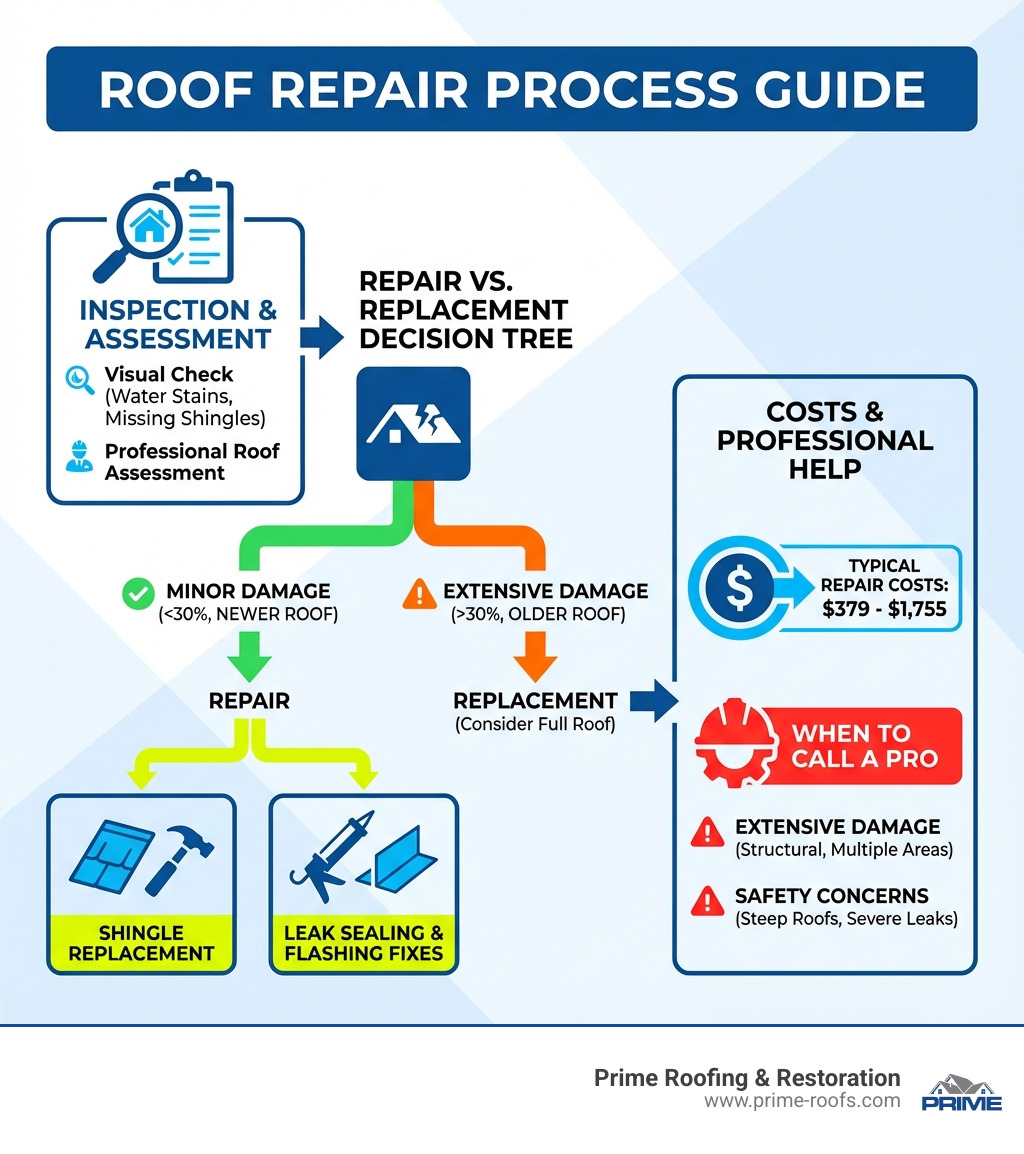
Roof repair terms explained:
First, Inspect: 7 Telltale Signs Your Roof Needs Attention
The first and most critical step in any roof repair is a comprehensive and thorough inspection. Identifying problems in their early stages is the single most effective way to save thousands of dollars in potential water damage, remediation costs, and structural repairs. Here are the seven most common signs that your roof requires immediate professional attention.
Signs of Leaks Inside Your Home
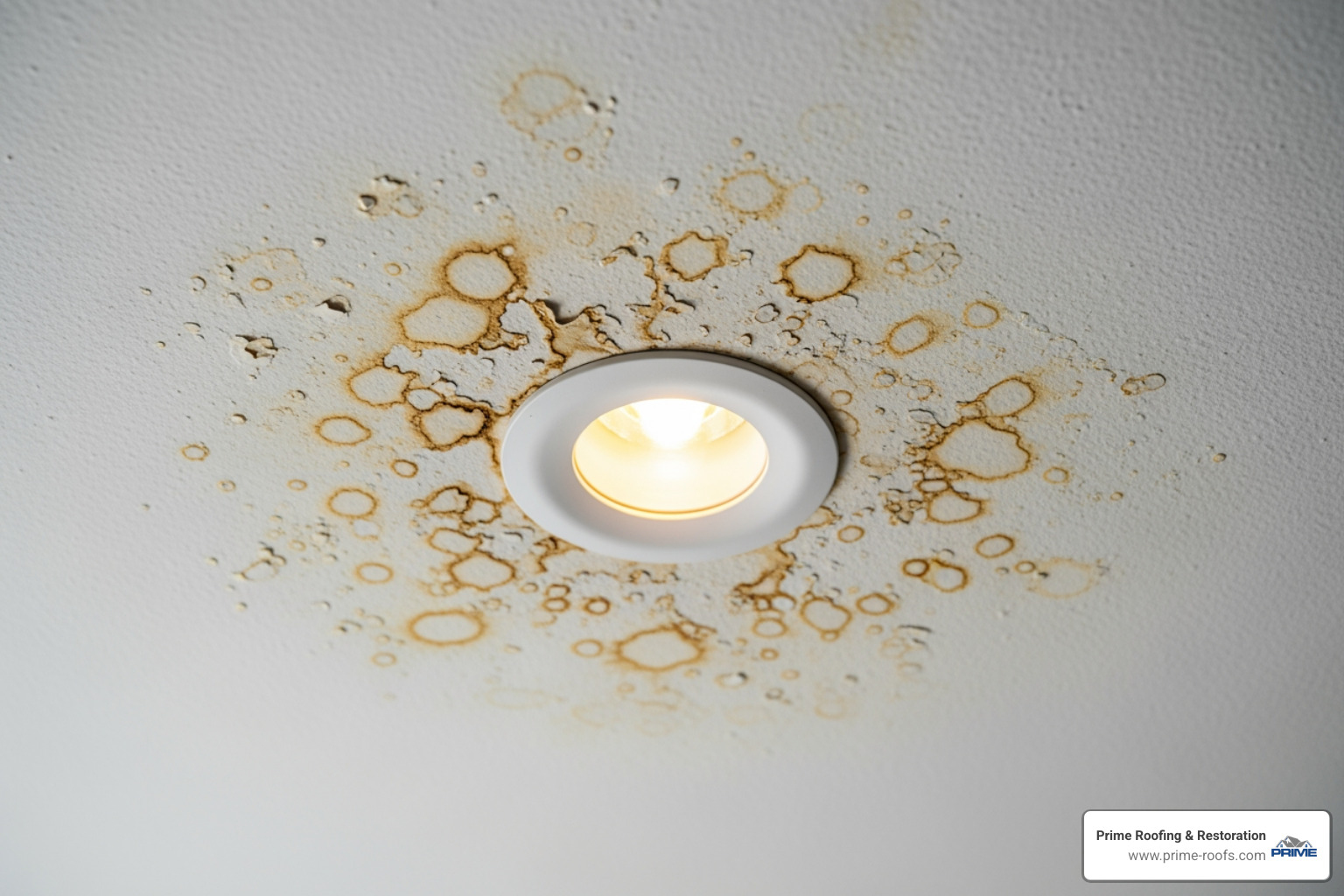
Water stains appearing on your ceilings or running down your walls are the most unmistakable indicator of a roof leak. These stains often present as brown, gray, or yellow patches, and may feel damp to the touch, especially after rain. However, the damage isn’t always in plain sight. A crucial part of any inspection is to venture into your attic. Armed with a flashlight, carefully check for signs of moisture on the underside of the roof deck, dark spots or rings on the wood, and damp or compressed insulation. If you can see any slivers of daylight through the roof boards, you have a direct breach that needs immediate repair. These symptoms point to a failure in your roofing system that must be addressed quickly to prevent the growth of toxic black mold, structural decay of rafters and joists, and costly damage to your home’s insulation and electrical systems. Furthermore, poor attic ventilation can trap moisture from inside the home, leading to condensation that mimics a leak. This trapped moisture can cause peeling exterior paint and sheathing decay, which are often overlooked signs of a struggling roof and ventilation system.
Visible Shingle and Flashing Damage
From the safety of the ground, use binoculars to get a closer look at your roof’s surface. Look for shingles that are cracked, curling at the edges, blistering, or missing entirely. These are often the most straightforward signs of wear and storm damage. Curling shingles are a significant concern; they can be categorized as either “cupping” (edges turn up) or “clawing” (edges stay flat and the middle rises), both of which indicate moisture absorption, advanced age, or poor attic ventilation. Blistering, which looks like bubbles on the shingle’s surface, is often caused by trapped moisture during the manufacturing process or overheating due to inadequate ventilation. Don’t forget to inspect the flashing—the metal or plastic material used to seal joints around chimneys, vents, skylights, and valleys. Damaged, rusted, or loose flashing is one of the most common sources of leaks, especially after heavy rains or strong winds. Another critical sign is finding an accumulation of shingle granules in your gutters and downspouts. These granules are the shingle’s primary defense against UV radiation and weathering; their loss indicates that the shingles are aging and becoming brittle.
Algae Growth, Clogged Gutters, and Sagging
While walking your property, look for dark streaks on your shingles. This is often Gloeocapsa magma, a type of algae that feeds on the limestone filler in asphalt shingles. While not immediately damaging, it can reduce your roof’s ability to reflect heat and, over time, retain moisture that accelerates deterioration. Also, check your gutters. If they are clogged with leaves, debris, and shingle granules, water can back up and seep under the roofing material, causing rot in the fascia boards and roof decking. Finally, and most seriously, look for any signs of a sagging roof deck. A droop or depression in the roofline is a major structural red flag that could indicate saturated decking, broken rafters, or foundation issues. A sagging roof requires immediate professional attention to prevent a potential collapse. We recommend scheduling regular professional roof inspection services twice a year and after any severe weather event to catch these issues early.
Common Shingle Damage and How to Fix It
Asphalt shingles are engineered for durability, but they are not indestructible, especially against Alabama’s weather. Understanding the common types of damage and how to perform minor, isolated fixes can significantly extend your roof’s life and delay a costly replacement. However, safety must always be the absolute top priority. If you are not completely comfortable working on a ladder, walking on a roof, or if the damage is widespread, it is always best to call a professional.
A Quick Guide to Replacing a Damaged Shingle
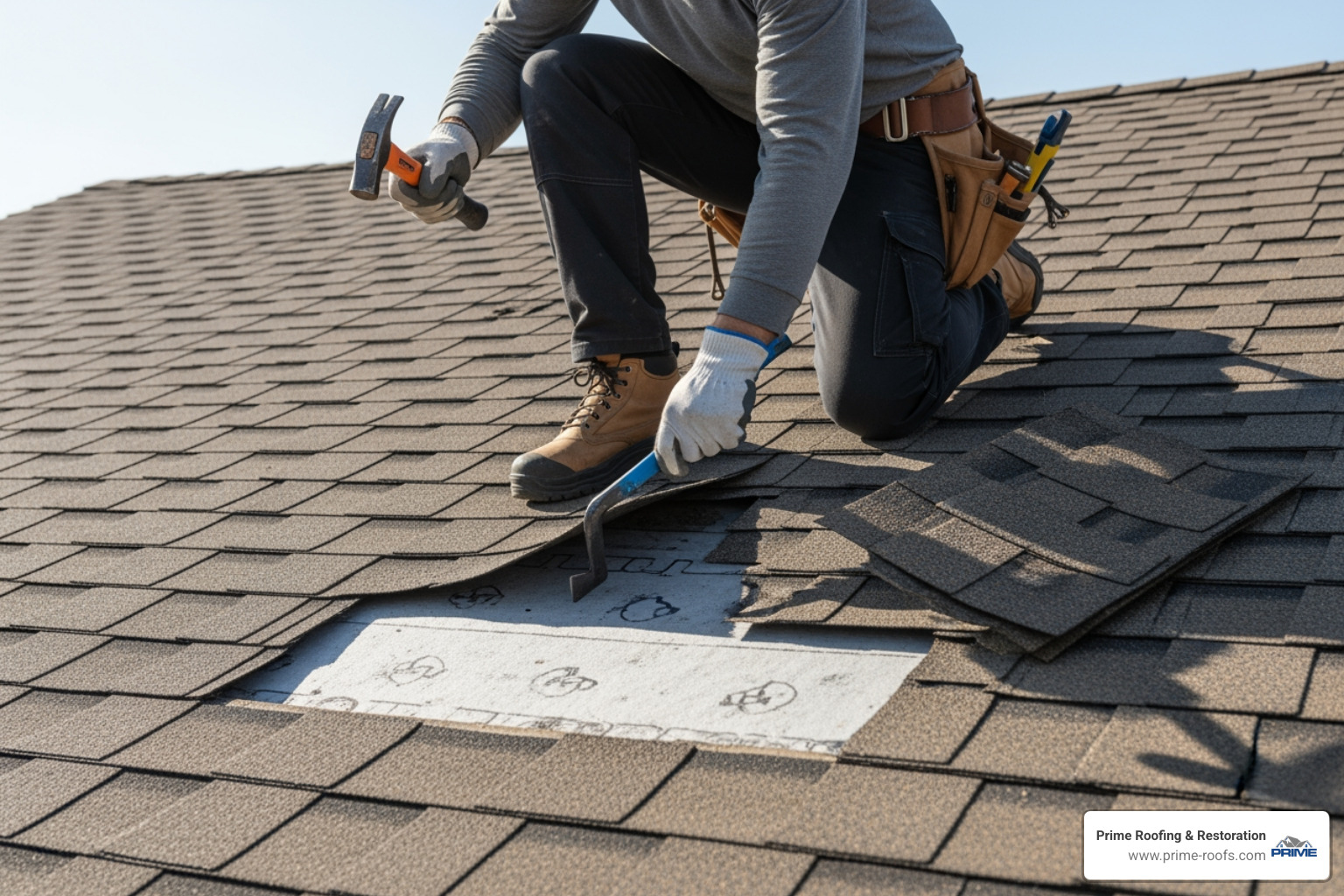
For a single cracked or missing shingle, a DIY roof repair is often feasible for a handy homeowner. Here’s a more detailed guide:
- Gather Your Tools & Safety Gear: You’ll need a flat pry bar, hammer, utility knife, roofing nails (1-and-1/4-inch galvanized are standard), a caulking gun with roofing sealant, and a replacement shingle that matches your existing roof. For safety, you must have heavy-duty gloves, non-slip, soft-soled shoes, and safety glasses.
- Break the Seal: The shingle above the damaged one is sealed to it with a strip of asphalt. On a warm day, you can often gently break this seal by sliding a pry bar between the shingles. On a cold day, you may need a heat gun on a low setting to soften the sealant to avoid tearing the good shingle.
- Expose and Remove the Nails: Gently lift the edge of the shingle directly above the damaged one to expose the nails holding the top edge of the damaged shingle. Use the pry bar to carefully pry up these nails (typically four per shingle). Once the nails are removed, the old shingle should slide out.
- Install the New Shingle: Slide the new shingle into position, ensuring it’s aligned horizontally with the others and its top edge is flush with the shingles beside it.
- Secure It: Drive four 1-and-1/4-inch roofing nails into the new shingle along the same nail line as the others. The key is to place the nails so they will be covered by the overlapping shingle above. Do not drive nails through the exposed part of the shingle.
- Seal It Up: Apply a dab of roofing sealant under the tabs of the overlapping shingle to reseal it to the new one. Also, apply sealant to the heads of the nails you just installed for extra protection. If you’ve collected granules from your gutters, you can sprinkle them over any exposed sealant for a better color match.
For curled shingles, you can attempt a repair by gently warming the shingle with a heat gun, applying a generous bead of roofing sealant underneath the curled portion, pressing it down firmly, and placing a heavy object on top for at least 24 hours. Cracked shingles can sometimes be repaired by applying sealant under the crack, pressing it down, and then applying a thin layer of sealant over the top of the crack, feathering it out with a putty knife.
Safety Considerations for DIY Roof Repair
Working on a roof is inherently dangerous and is one of the leading causes of construction-related injuries. According to OSHA (Occupational Safety and Health Administration), falls are the leading cause of death in the construction industry. Always use a sturdy, properly secured ladder that extends at least three feet above the roofline. Wear non-slip shoes and never work on a wet, icy, or excessively windy day. For any job that involves more than a few minor fixes, requires walking on a steep-pitched roof (greater than a 4/12 pitch), or is near power lines, professional assistance is the only safe option. Our team strictly adheres to a 100% ‘tie-off’ policy, using full-body harnesses and fall protection systems on every job. A DIY roof repair can lead to serious injury or death, and if done incorrectly, can cause more extensive damage, void your roof’s warranty, and cost you significantly more in the long run. It is always best to hire a trained, licensed, and insured professional.
The Big Question: Should You Repair or Replace Your Roof?
Deciding between a roof repair and a full replacement is one of the most significant financial decisions a homeowner will make. The choice hinges on a careful evaluation of your roof’s age, the nature and extent of the damage, and your long-term financial goals. While a targeted repair might solve an immediate problem and save money upfront, a full replacement could be a wiser investment for an aging, failing, or extensively damaged roof system.
| Factor | Roof Repair | Roof Replacement |
|---|---|---|
| Age of Roof | Generally suitable for roofs under 15 years old. | Often necessary for roofs 15-20+ years old, nearing end of lifespan. |
| Extent of Damage | Isolated, localized damage (e.g., a few missing shingles, small leak). | Widespread damage (more than 30%), structural issues, recurring leaks. |
| Cost | Average $379 – $1,755. More affordable short-term solution. | Average $7,500 – $22,000+. Higher upfront cost, long-term investment. |
| Future Plans | Good for homeowners planning to sell soon or on a tight budget. | Ideal for long-term homeowners, improving home value and energy efficiency. |
| Longevity | Extends current roof’s life by addressing specific issues. | Provides a brand-new roof with full lifespan (15-100 years depending on material). |
| Aesthetics | May result in color mismatches with new vs. aged shingles. | Uniform new appearance, boosts curb appeal. |
| Building Codes | Repairs must comply with current codes; overlays may be limited. | Ensures full compliance with all current building codes. |
When a Simple Roof Repair is Enough
If your roof is relatively new (less than 15 years old) and the damage is confined to a small, specific area, a professional roof repair is almost always the most sensible and sufficient solution. This approach is highly cost-effective and can fully restore your roof’s integrity without the massive expense of a full replacement. Common examples include replacing a few shingles blown off in a storm, re-sealing flashing around a chimney, or addressing leaks from pipe jacks. Pipe jacks, also known as roof boots, have rubber gaskets that can dry out and crack under the Alabama sun, creating a common and easily repairable leak source. Catching and repairing these small issues through regular inspections prevents water from entering your attic and causing rot, mold, and insulation damage.
When to Consider a Full Roof Replacement
A full replacement becomes the most prudent option when your roof is approaching or has surpassed its expected lifespan (typically 15-20 years for asphalt shingles). If you see signs of widespread aging, such as extensive granule loss, brittleness, or curling across multiple sections of the roof, a replacement is imminent. The “30% rule” is a good guideline: if a roofer determines that more than 30% of the roof’s surface is damaged, the labor and material costs for repairs begin to approach the cost of a replacement, making the latter a better investment. Furthermore, if you are experiencing recurring leaks in different locations, it’s a sign that the entire system is failing. Another factor is the presence of multiple roof layers. If your current roof was installed over an old one (an overlay), most building codes prohibit adding a third layer. A complete tear-off and replacement is required, which also allows a contractor to inspect and repair the underlying roof deck. A new roof not only solves all existing problems but also significantly improves your home’s resale value, enhances curb appeal, and can improve energy efficiency with modern materials. It also brings your home into full compliance with current building codes and comes with new, comprehensive warranties.
Discover the 5 critical signs you need a roof replacement.
Explore our complete roof replacement cost guide to understand the investment.
Navigating Major Roof Repair: Storm Damage, Insurance, and Hiring a Pro
In Alabama, severe weather is not a matter of if, but when. Hurricanes, tornadoes, and intense hail storms are a leading cause of significant roof damage. Navigating the aftermath can be a stressful and confusing process that involves identifying the damage, dealing with your insurance company, and hiring a trustworthy contractor to restore your home’s safety and integrity.
Identifying Storm Damage and Taking Action
After a severe storm passes and it is safe to go outside, a prompt inspection is crucial.
- Hail Damage: Look for dents or pockmarks on shingles, vents, and flashing. Hail impacts can be difficult to see but often create bruises that compromise the shingle’s integrity, leading to future leaks. Check the sunny side of the roof, as hail damage is often more visible there.
- Wind Damage: Scan the roof for lifted, creased, or entirely missing shingles. Pay close attention to the edges and ridges of the roof, which are most vulnerable to wind uplift. Check for damaged flashing or large debris on the roof.
- Flat Roofs: On flat or low-slope roofs, look for new blisters (trapped moisture or air), cracks in the membrane, or areas of ponding water that do not drain within 48 hours.
- Interior Signs: Always check your attic and ceilings for new water stains, which may not appear for hours or even days after the storm.
Before making any repairs, thoroughly document all damage with clear photos and detailed notes for your insurance claim. For urgent situations like a hole in the roof, professional emergency roof tarping services are essential to prevent catastrophic water damage while you await repairs. If your roof has been substantially blown off, evacuate the home immediately and contact your insurance company and emergency services once you are in a safe location.
What to do after a storm damages your roof
The Insurance Claim Process: A Step-by-Step Guide
- Contact Your Insurer: Call your insurance company’s claims hotline as soon as possible to report the damage. Have your policy number ready.
- Meet the Adjuster: The insurer will send an adjuster to assess the damage. It is highly recommended to have your chosen roofing contractor present during this inspection. Your roofer can point out damage the adjuster might miss and ensure the scope of work is accurate.
- Understand Your Claim: You will receive a summary detailing the scope of repairs and the estimated cost. It’s important to understand the difference between Replacement Cost Value (RCV) and Actual Cash Value (ACV). RCV covers the full cost of replacement, while ACV deducts for depreciation. Most policies pay the ACV first, then release the remaining funds (depreciation) after the work is completed and you submit the final invoice.
- Hire Your Contractor: Choose a reputable contractor to perform the work outlined in the insurance scope. Never feel pressured to use a contractor recommended by the insurance company.
How to Hire a Reliable Roofing Contractor
Choosing the right contractor is the most critical step in the entire process. A great roofer can make a difficult situation manageable, while a bad one can make it a nightmare. Look for a licensed and insured roof contractor with deep roots in your community, like a trusted roofer in Alabaster, AL.
Your Contractor Checklist:
- Licensing and Insurance: Ask to see their state license, proof of general liability insurance (we carry up to $5 million), and workers’ compensation insurance. This protects you from liability for accidents.
- Local Reputation: Check online reviews, ask for local references, and look at their past work. A physical office in your area is a strong positive sign.
- Detailed Estimate: Insist on a detailed, written estimate that itemizes materials, labor, timelines, and cleanup procedures. Be wary of vague contracts or high-pressure sales tactics.
- Warranties: A reputable contractor will provide a comprehensive workmanship guarantee that covers leaks and installation errors, which is separate from the manufacturer’s material warranty. Our guarantee covers leaks, water damage, and shingle blow-offs.
- Insurance Expertise: A contractor experienced with insurance claims can be an invaluable asset. We offer expert insurance claims assistance to ensure your claim is handled fairly and accurately.
Frequently Asked Questions about Roof Repair
What is the average cost of a roof repair?
The average cost for a professional roof repair in the U.S. typically falls between $379 and $1,755. However, this is a wide range. The final price depends heavily on the type of roofing material (asphalt is less expensive to repair than slate or metal), the extent and accessibility of the damage, and your specific geographic location. A minor fix like sealing a leaky vent might be on the lower end, while repairing a section of damaged decking and rafters will cost significantly more. For comparison, a full asphalt shingle roof installation averages as low as $7,500, while a standing seam metal roof installation can start around $11,655. It is always crucial to get at least two to three detailed, written quotes from reputable contractors for an accurate estimate.
How does Alabama’s climate affect my roof’s repair needs?
Weather is the single greatest factor in roof degradation, and Alabama’s climate presents a unique combination of challenges. The intense, prolonged exposure to the sun’s UV rays in our hot summers can cause asphalt shingles to become brittle, crack, and lose their protective granules prematurely. High humidity fosters the growth of mold, mildew, and algae (Gloeocapsa magma), which can trap moisture and deteriorate roofing materials. Most critically, our region is prone to severe weather events like hurricanes, tropical storms, tornadoes, and hail. The high winds associated with these storms can lift and remove shingles, damage flashing, and cause catastrophic failure from fallen trees and debris. These conditions necessitate the use of robust, weather-rated materials and demand vigilant, proactive maintenance. We recommend bi-annual inspections (in the spring and fall) to prepare for and recover from the storm seasons, ensuring maximum roof longevity.
Can I repair just one section of my roof?
Yes, in many situations, you can absolutely repair just a section of a roof. This is a very common and cost-effective solution for localized damage, such as a small area of wind-damaged shingles or a single leak. The primary drawback, however, is aesthetic. It can be extremely difficult to find new shingles that perfectly match the color of an older, weathered roof. Over years of exposure to UV light and the elements, roofing materials fade and change color. A new patch may be obvious and could potentially affect your home’s curb appeal. If the damage is widespread, if you have multiple leaks, or if your roof is nearing the end of its warrantied life, a full replacement often makes more sense for long-term protection and a uniform appearance.
What is the difference between a manufacturer’s warranty and a workmanship guarantee?
A manufacturer’s warranty covers defects in the roofing materials themselves. For example, if a batch of shingles was produced improperly and fails prematurely, the manufacturer would provide new materials. A workmanship guarantee (or warranty) is provided by your roofing contractor and covers errors in the installation process. Most roof leaks are due to improper installation, not material failure. A strong workmanship guarantee, like the one we provide, ensures that if a leak occurs due to our work, we will return to fix it at no charge. Always ensure your contractor provides a clear, written workmanship guarantee.
How long does a typical roof repair take?
The timeline for a roof repair varies with the scope of the work. A simple, minor repair like replacing a few shingles or sealing a pipe boot can often be completed in just a few hours. More extensive repairs, such as fixing a larger section of storm damage or replacing a portion of the underlying roof deck, might take a full day or two. Your contractor should provide you with a clear timeline in their written estimate.
Protect Your Investment with Professional Care
Your roof is arguably the most important structural component of your home, and its maintenance is fundamental to protecting your entire investment. From minor fixes that prevent future problems to major storm damage restoration, addressing roofing issues promptly and professionally ensures your home, your belongings, and your family are safe and protected. Proactive, regular maintenance not only extends the functional lifespan of your roof but also improves your home’s energy efficiency and prevents small, manageable problems from escalating into costly, catastrophic disasters. We stand behind every roof repair and installation with one of the strongest workmanship guarantees in the industry, giving you complete peace of mind. Our unwavering commitment is to using superior materials, employing highly-trained craftsmen, and delivering exceptional service to build lasting relationships within our community.
If you have noticed any of the warning signs mentioned in this article, or if it’s simply time for a professional inspection, do not wait for a small issue to become a major headache. The certified experts at Prime Roofing & Restoration are here to provide honest answers and effective solutions for all your roofing needs.
Contact Prime Roofing & Restoration Today
Get a free, no-obligation roof repair estimate from a team you can trust. We proudly serve homeowners and businesses in Alabaster, Orange Beach, Hoover, Ono Island, Gulf Shores, and the surrounding communities.
Prime Roofing & Restoration
123 Main Street
Alabaster, AL 35007
Phone: (205) 555-0199
Online: Contact us today for a free roof repair estimate