
Transform Your Outdoor Living Space with Professional Construction
A well-built patio roof is more than just a cover; it’s an investment that transforms your outdoor area into a year-round living space. With the National Association of Realtors reporting a 55% surge in patio demand, creating a functional and beautiful outdoor oasis has never been more popular. Professional patio roof construction protects you from the elements, increases your home’s value, and provides the perfect setting for everything from quiet mornings to lively gatherings. Understanding the fundamentals is the first step toward creating an expertly constructed outdoor space with Prime Roofing & Restoration.
Essential Steps for Patio Roof Construction:
- Planning & Design: Choose a roof style and materials that complement your home.
- Permits & Codes: Obtain necessary building permits and ensure code compliance.
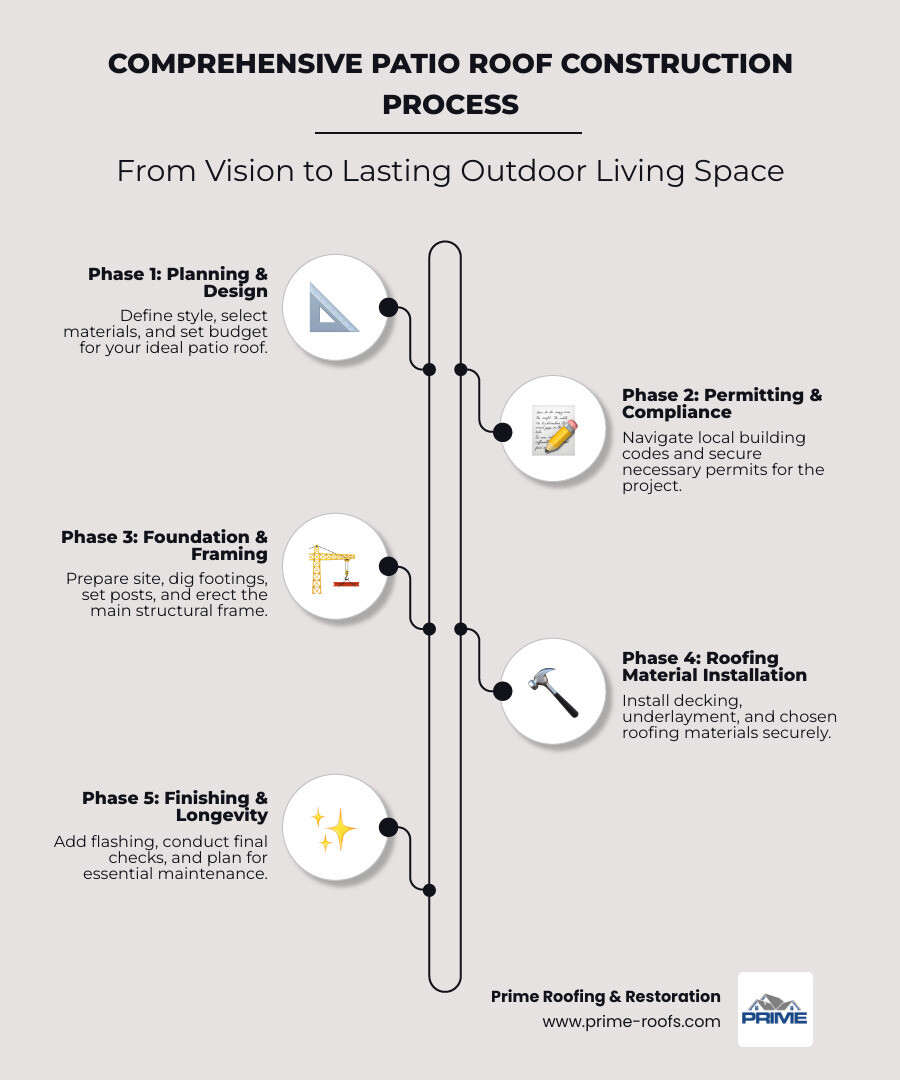
- Foundation: Set concrete footings and install support posts for stability.
- Framing: Attach a ledger board to the house and install beams and rafters.
- Roofing: Install decking, underlayment, and your final roofing material.
- Finishing: Add flashing, trim, and weatherproofing details for longevity.
A successful project requires careful attention to structural integrity, proper drainage, and local building codes. Material choices range from durable metal to traditional wood, each with specific installation and maintenance needs. Our expertise ensures your project meets all requirements for a lasting outdoor living solution.

Phase 1: Planning Your Perfect Patio Roof
Proper planning is the foundation of a successful patio roof construction project. This phase involves making key decisions about design, materials, and budget to ensure the final structure meets your needs and complies with local standards.
Choosing Your Patio Roof Style
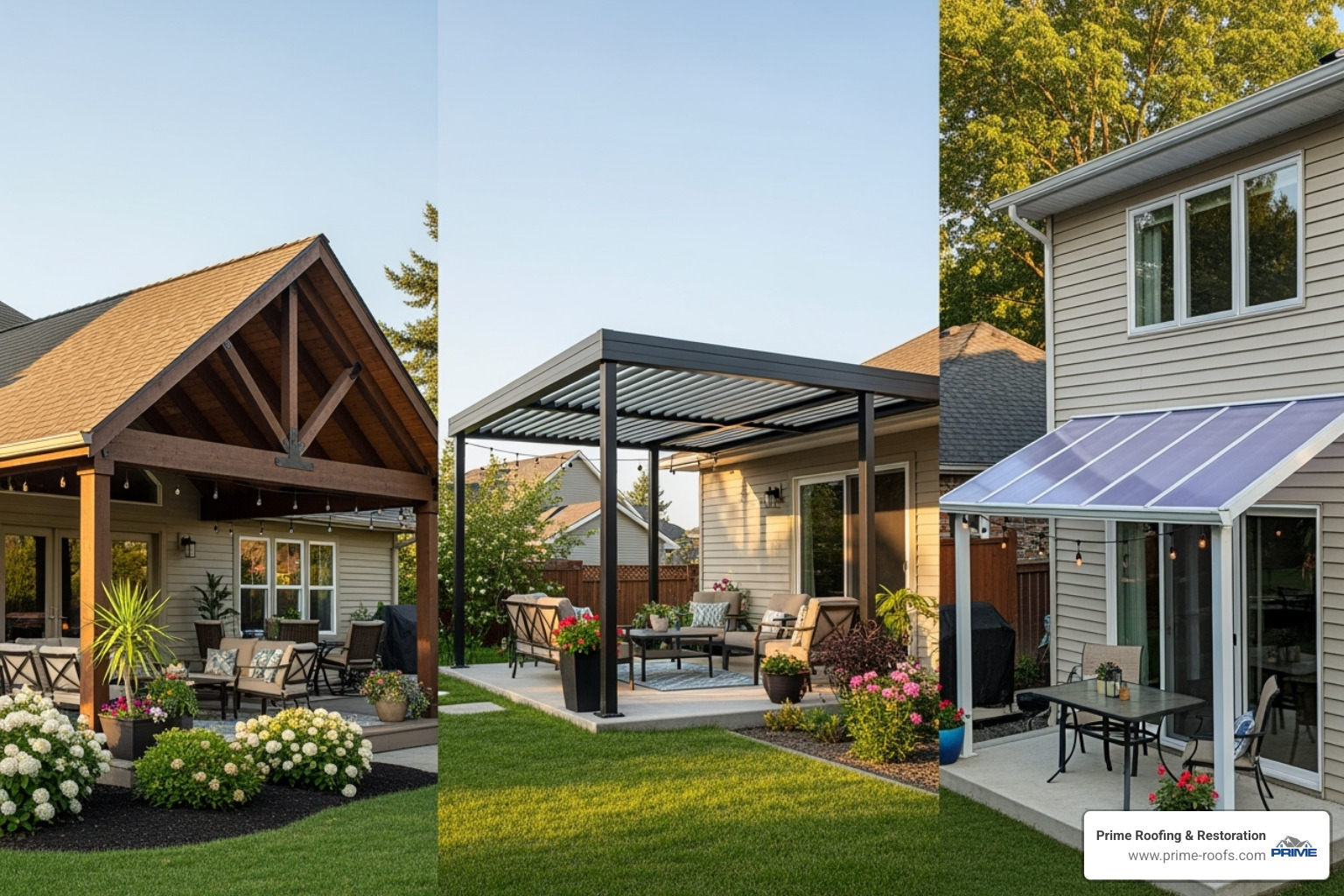
Selecting the right roof style is where your vision takes shape. The first choice is between an attached design, which connects to your home for a seamless transition, or a freestanding structure, which offers placement flexibility anywhere in your yard.
- Gable roofs feature a classic triangular shape with two sloping sides, offering excellent drainage and an open, airy feel.
- Shed or lean-to roofs have a single slope, making them a cost-effective and functional choice, especially for modern homes.
- Flat roofs are not recommended, as they are prone to water pooling and leaks. Proper drainage is non-negotiable.
- Pergola-style designs with solid covers offer the aesthetic of a pergola with the practical protection of a solid roof, using materials like polycarbonate or retractable canopies for flexibility.
Selecting the Right Materials for Durability and Style
Choosing the right material is a balance of function, beauty, and long-term value. Focusing only on upfront cost can lead to future repairs and replacements.
| Material Type | Lifespan | Cost (per sq ft) | Maintenance | Aesthetics | Key Benefits |
|---|---|---|---|---|---|
| Metal Roofing | 50+ years | $6-$15 | Low (occasional cleaning) | Modern, industrial, sleek | Durability, weather resistance, longevity |
| Wood | 10-15 years | $5-$10 | High (sealing, staining, pest checks) | Natural, classic, warm | Customizable, complements traditional homes |
| Polycarbonate | 15-25 years | $3-$7 | Low (cleaning) | Transparent/translucent, contemporary | Lightweight, UV protection, natural light |
| Asphalt Shingles | 15-30 years | $3-$6 | Moderate (inspections, minor repairs) | Traditional, blends with existing roofs | Cost-effective, wide color/style range |
Metal roofing is a top performer, offering a lifespan of 50+ years with minimal maintenance. Wood provides natural beauty but requires regular sealing and pest monitoring. Polycarbonate panels are a great choice for letting in natural light while blocking UV rays. Asphalt shingles are ideal for creating a seamless look that matches your home’s existing roof.
Budgeting and Cost Considerations
The cost of patio roof construction varies widely based on several factors. Size is the primary driver, followed by material choices and design complexity. A simple lean-to is more economical than a custom-designed structure with integrated features. Labor costs are also a significant portion of the budget, but professional installation ensures safety and code compliance.
According to recent data, patio construction costs can range from $590 for a basic setup to over $75,000 for an elaborate outdoor living space. A typical 12×14 patio with a metal roof might cost between $2,300 and $13,000. While DIY may seem cheaper, the complexity of structural support and drainage often makes professional installation a wiser investment.
Navigating Building Codes and Permits
Before starting, understand local permits and building codes. Most patio roof projects, especially those attached to a house, require a building permit. Always check with your local building department first.
- Local zoning regulations dictate setbacks from property lines, maximum heights, and sometimes even architectural styles.
- Frost line considerations are crucial for your foundation. Support post footings must extend below the frost line to prevent shifting.
- The International Building Code provides general guidelines, but your local authority has the final say.
We strongly recommend checking with the building department for roofers in Alabaster, AL before starting any patio roof construction project. They can provide specific requirements for your area, ensuring your new space is safe and compliant.
Phase 2: A Guide to Patio Roof Construction
With a solid plan, it’s time to bring your vision to life. This guide outlines the fundamental process of constructing a sturdy patio roof. Specific details will vary based on your design and materials.
Step 1: Site Preparation and Foundation
The foundation is the bedrock of your patio roof construction project. Getting this right ensures long-term stability.

First, clear and level the area, removing all vegetation and debris to create a stable base. Next, mark post locations with precision using stakes and string lines—measure twice, dig once. Dig footings to the depth required by local codes, typically below the frost line, to prevent shifting. Finally, place gravel for drainage, set your galvanized post anchors, and pour the concrete. Ensure anchors are perfectly level and allow the concrete to cure completely (usually 24-48 hours) before proceeding.
Step 2: Framing the Structure
Once the foundation is cured, you can build the skeleton of your patio roof.
- Set the posts (typically 4×4 or 6×6 lumber) into the anchors, using a level to ensure they are perfectly plumb (straight). Brace them with temporary supports.
- Attach the ledger board for attached roofs. This board must be securely bolted to your home’s structural framing (wall studs or rim joist), never just to the fascia.
- Install beams and rafters. Beams run horizontally across the posts, while rafters create the roof’s slope. Use appropriate hardware like structural screws and hurricane ties for strong connections.
- Create the correct roof pitch. A proper slope is essential for drainage. A minimum pitch of 2:12 (2-inch rise per 12 inches of run) is standard, but some materials like metal or polycarbonate may require a steeper slope. This prevents water from pooling and causing damage.
Step 3: Installing the Roofing Material
Now the frame is ready for its protective covering. Follow manufacturer guidelines precisely for the best results.
- Install roof decking or purlins. For shingles, you’ll install solid decking (plywood or OSB). For metal or polycarbonate panels, you’ll install purlins (horizontal framing members) to support the panels.
- Apply underlayment and drip edge. A protective underlayment adds a moisture barrier over the decking. Drip edge is a metal flashing installed at the edges to direct water away from the fascia.
- Fasten your chosen roofing material. Use the correct fasteners for your material: specialized screws with rubber washers for metal, specific nailing patterns for asphalt shingles, or H-profiles and dedicated fasteners for polycarbonate sheets.
- Install flashing where the roof meets the house. This is a critical step for attached roofs. Metal flashing creates a watertight seal at the intersection of the patio roof and the house wall, preventing leaks. Poor flashing is a common cause of water damage, so this step requires careful attention.
Phase 3: Ensuring Structural Integrity and Longevity
A patio roof is a significant structural addition. Ensuring it is built to be sound and is properly maintained is critical for safety and durability.
How to Ensure Your Patio Roof Construction is Sound
A well-built patio roof construction project is about sound structural engineering that can withstand Alabama’s weather. A poorly constructed roof is a serious safety hazard.
- Load Calculations: The roof must support both the dead load (its own weight) and the live load (temporary weight like rain, wind, or snow). These calculations determine the structural requirements.
- Rafter and Beam Sizing: The size and spacing of lumber must be calculated to support the loads over their specific spans. We use resources like the American Wood Council’s Span Calculator for accurate sizing.
- Structural Connectors: Standard screws are not enough. Use heavy-duty, galvanized connectors like hurricane ties and structural lag bolts to provide superior strength and resist corrosion.
- Diagonal Bracing: Triangular supports where posts meet beams add significant stability against strong winds. For complex projects, a structural engineer’s review provides peace of mind.
Essential Maintenance for a Lasting Patio Roof
Regular maintenance is like an insurance policy for your patio roof, preventing major repairs down the road.
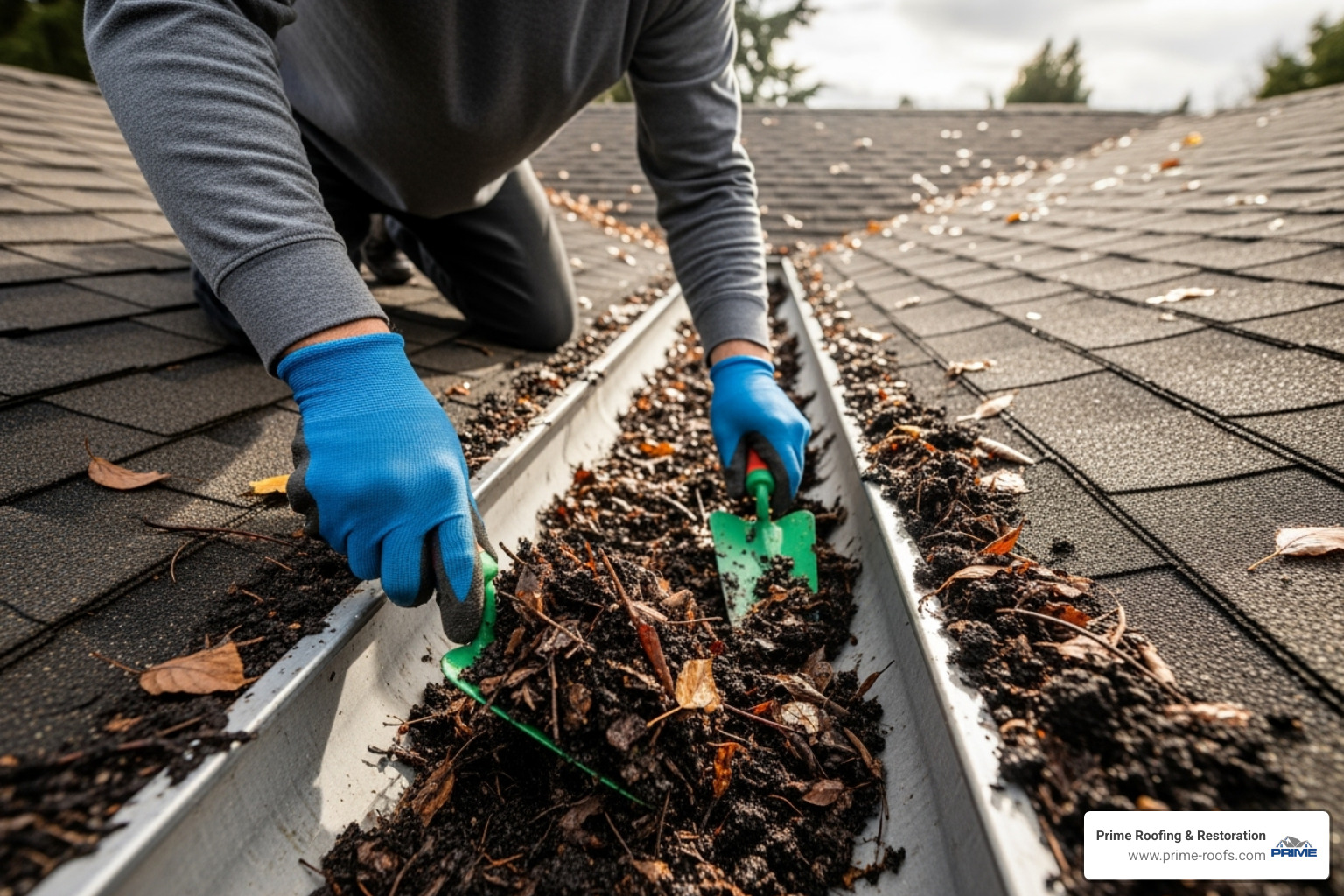
- Regular Inspections: Seasonally, check for loose fasteners, damaged materials, wood rot, or compromised flashing. Early detection is key.
- Debris Removal: Clean leaves and pine needles from the roof and gutters. Clogged gutters can cause water to back up, leading to rot and structural stress.
- Sealing or Painting: For wood components, reapply sealant or paint every few years to protect against moisture, UV damage, and pests.
- Address Minor Issues Immediately: A loose screw or small crack can become a major entry point for moisture. Fixing small problems promptly prevents them from escalating. If you notice any damage that seems beyond a simple fix, it’s always best to consult a professional.
Your Local Alabaster Patio Construction Experts
When it comes to patio roof construction in Alabaster and the surrounding areas, a trusted local expert makes all the difference. At Prime Roofing & Restoration, we understand Alabama’s unique climate challenges, from intense summer heat to sudden thunderstorms.
Our team brings years of experience, and we know a patio roof is an investment in your family’s comfort and your home’s value. We are committed to using quality materials that withstand our weather extremes and building lasting relationships with our neighbors. Our licensed experts are here to help protect your home and family for years to come.
Prime Roofing & Restoration
Address: 5 Brown Cir, Alabaster, AL 35007
Phone: (205) 661-8190
Frequently Asked Questions About Patio Roofs
We often hear the same questions about patio roof construction. Here are some quick insights based on our experience.
How long does a patio roof last?
The lifespan of your patio roof depends on the material and quality of installation. Metal roofs are the most durable, often lasting over 50 years. Polycarbonate panels typically last 15-25 years, while asphalt shingles can last 15-30 years. Wood roofs are beautiful but require the most maintenance and may need replacement after 10-15 years in Alabama’s humid climate. Quality installation and regular maintenance are key to maximizing the life of any patio roof.
Can I attach a patio roof directly to my house’s fascia?
No, you should never attach a patio roof directly to the fascia board. The fascia is a cosmetic trim piece and is not designed to support the structural load of a roof. Doing so is a significant safety hazard. For a secure connection, a ledger board must be bolted directly to your home’s structural framing, such as the wall studs or rim joist. This ensures the connection is safe and can handle the weight.
What is the best roof pitch for a patio cover?
The ideal pitch ensures proper water drainage. A minimum pitch of 2:12 (a 2-inch rise for every 12 inches of horizontal run) is a common standard that works for most materials. However, some materials have specific requirements; for example, metal roofs perform best with at least a 3:12 pitch, and polycarbonate panels need a minimum 5-degree slope. Proper pitch is essential in Alabama to handle heavy downpours, prevent water damage, and extend your roof’s life.
Conclusion: Enjoy Your New Outdoor Oasis
Building a patio roof construction project is one of the most rewarding home improvements, changing an ordinary patio into a true extension of your living space. Success lies in meticulous planning, choosing quality materials, and ensuring sound construction techniques.
From properly sized footings to a correctly pitched roof that sheds water, every detail matters for creating a safe space where your family can relax with confidence. A well-built patio roof turns weather from an obstacle into ambiance, allowing you to enjoy your outdoor space year-round.
We understand that the process can feel overwhelming, from structural calculations to navigating building permits. The complexity of ensuring a flawless result that stands up to Alabama’s weather often makes professional expertise invaluable.
If the project seems daunting, or if you want to ensure a professional result built to last, the experts at Prime Roofing & Restoration are here to help. For a lasting and beautiful patio roof installation, contact our team today. Your new outdoor oasis awaits.