
New Construction Roofing in Alabama: How to Get It Right from Day One
New construction roofing succeeds or fails based on decisions made before framing is complete. The most reliable way to protect a new build in Alabama’s harsh climate is to design and install a complete roofing system—structure, underlayment, ventilation, and surface material—under one coordinated plan by an expert new construction roofing contractor. A properly engineered roof can reduce storm-related damage risk by more than 40% compared to minimally compliant systems, according to industry insurance data. That performance difference directly affects lifetime repair costs, energy bills, and resale value.
Building a new home or commercial property is a significant investment, and the roof is its first and most crucial line of defense against the elements. Unlike a simple repair or replacement, a new construction roof is an opportunity to build quality, durability, and energy efficiency directly into the structure from the very beginning. Getting it right the first time is not just a matter of aesthetics; it’s about ensuring the long-term integrity and value of your entire property. For those building in Alabama, where weather can be unpredictable and harsh, making informed decisions about your roofing system is paramount. From selecting the right materials to ensuring flawless installation, every step contributes to a roof that will protect your investment for decades to come. That’s why partnering with an experienced and reputable team like Prime Roofing & Restoration is the most important decision you’ll make for your new build.
What makes new construction roofing unique:
- No Demolition Required: Starting from a clean slate means no tear-off of old materials, which can save time and reduce labor costs.
- Complete Customization: You have the freedom to choose every component, from the type of decking and underlayment to the final roofing material and color, ensuring the roof perfectly matches your architectural vision and performance needs.
- Integrated Design: The roofing system can be seamlessly integrated with other critical building systems, such as HVAC, plumbing vents, and skylights, ensuring optimal performance and preventing future issues.
- Long-Term Investment: By selecting high-quality materials and ensuring expert installation, you are investing in a roof that can last for 30, 40, or even 50+ years with minimal maintenance, significantly enhancing your property’s value.
- Maximized Energy Efficiency: Modern roofing materials and ventilation systems can be incorporated from the start, drastically reducing your heating and cooling costs over the life of the building.
The process involves five critical stages: design and coordination, roof deck installation, underlayment and weatherproofing, material installation, and final inspection. Each stage requires precision, expertise, and close collaboration with your general contractor to ensure the roof integrates flawlessly with the overall build. For commercial projects, this complexity increases significantly, as expert commercial roofing contractors must account for heavy equipment, complex drainage systems, and stringent building codes.
In Alabama, where we experience everything from intense summer heat to severe thunderstorms and the occasional hurricane, your roofing choices matter more than ever. According to the Insurance Institute for Business & Home Safety (IBHS), proper roofing design and material selection can dramatically reduce damage from wind, hail, and heavy rain. That’s why choosing the right contractor and materials from the outset isn’t just about aesthetics—it’s about protecting your property and your investment for the long haul.
I’m Bill Spencer, Owner and President of Prime Roofing & Restoration, and I’ve spent years specializing in both residential and commercial new construction roofing projects across Alabama, from Alabaster to the Gulf Coast. My team and I work closely with builders and property owners to ensure every roof is designed, installed, and inspected to the highest standards, providing decades of reliable protection.
The Blueprint for Success: 5 Key Steps in the New Construction Roofing Process
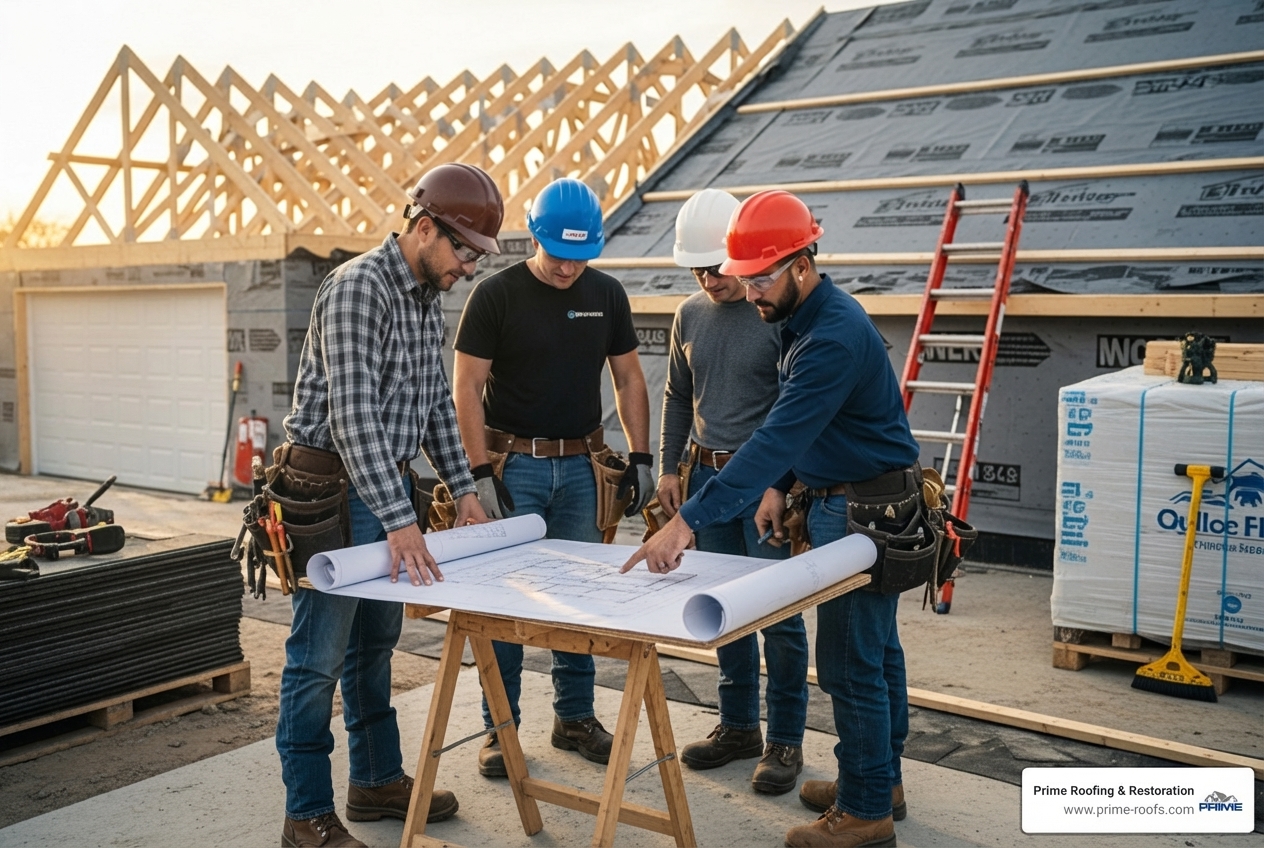
Installing a roof on a new building follows a repeatable, five-step framework that consistently produces durable, code-compliant systems. New construction roofing projects that adhere to a documented process have measurably lower leak and warranty-claim rates over the first 10 years of service. At Prime Roofing & Restoration, we use a standardized workflow that integrates structural engineering, weatherproofing science, and manufacturer specifications to create roofs that are designed to perform for decades, not just pass inspection.
Installing a roof on a new building is a systematic process that requires careful planning and execution to ensure it integrates perfectly with the rest of the structure. It’s far more than just nailing down shingles; it’s about creating a multi-layered system of protection that starts from the bare rafters. At Prime Roofing & Restoration, we follow a meticulous, five-step process to guarantee a durable, long-lasting, and high-performance roof for every new construction project.
1. Design, Planning, and Coordination
The foundation of a successful roofing project is laid long before the first nail is driven. This initial phase is all about collaboration and precision. We work closely with architects, builders, and homeowners to review blueprints and establish a comprehensive plan. Key decisions made during this stage include:
- Structural Load Calculations: We ensure the building’s frame can support the weight of the chosen roofing materials, which is especially critical for heavier options like tile or slate.
- Roof Pitch and Design: The slope of the roof affects water drainage, material choice, and the overall aesthetic of the building.
- Material Selection: We help you choose the best materials based on your budget, desired lifespan, and local climate conditions in Alabama.
- Permitting and Compliance: Our team handles the entire permit acquisition process, ensuring that your new roof meets or exceeds all local building codes and regulations. This proactive approach prevents costly delays and ensures a smooth workflow.
2. Roof Deck and Framework Installation
With the plan finalized, the physical construction begins. The roof deck, typically made of OSB or plywood sheathing, is the foundation of your roofing system. It’s the surface to which all other layers will be attached. Our process includes:
- Verifying the Framework: We inspect the rafters and trusses to confirm they are correctly installed and structurally sound, providing a stable base for the decking.
- Installing the Sheathing: Our expert roofers carefully install the sheathing, ensuring it is properly spaced and securely fastened. This step is crucial for the roof’s ability to withstand high winds and other environmental stresses common in our region.
A solid, well-installed roof deck is non-negotiable for the long-term performance and durability of your new roof.
3. Underlayment and Weatherproofing
Once the deck is in place, the next critical step is creating a robust water-resistant barrier. This is the roof’s secondary line of defense against moisture intrusion. This stage involves:
- Installing Underlayment: We apply a high-quality synthetic underlayment over the entire roof deck. This material acts as a crucial secondary water barrier, protecting the roof deck from any moisture that might get past the primary roofing material.
- Ice and Water Shield Application: In valleys, around chimneys, skylights, and along the eaves, we install a specialized self-adhering membrane. This ice and water shield provides extra protection in areas most vulnerable to leaks.
- Drip Edge and Flashing: A metal drip edge is installed along all roof edges to direct water away from the fascia and into the gutters. We then carefully install custom-fabricated flashing around all penetrations (vents, pipes, chimneys) to create a watertight seal. This detailed work is what separates a good roof from a great one, as explained in our guide to proper roof installation.
4. Roofing Material Installation
This is the stage where your building’s character truly comes to life. Whether you’ve chosen architectural shingles, standing seam metal, or another material, our certified installers apply it with precision and care. We follow manufacturer-specific guidelines to ensure your warranty remains valid and your roof performs as expected. This includes:
- Proper Nailing/Fastening: Using the correct number and placement of fasteners is critical to the roof’s wind resistance.
- Ventilation System Integration: We install a balanced ventilation system, including soffit vents (for intake) and ridge vents (for exhaust). This system allows your attic to breathe, preventing heat and moisture buildup that can lead to mold, mildew, and premature aging of the roof structure.
- Gutter System Installation: Finally, we install the gutters and downspouts, which are essential for managing rainwater and directing it safely away from your foundation.
5. Final Inspection and Cleanup
Our job isn’t finished until we’ve conducted a comprehensive final inspection. A project manager will walk the entire roof, carefully checking every detail to ensure it meets our high standards and all building codes. We verify that all components are installed correctly, all seals are tight, and the finished product is flawless. We then perform a thorough cleanup of the job site, using magnetic rollers to pick up any stray nails and leaving your property pristine. Finally, we provide you with all necessary warranty documentation, giving you the peace of mind that your new investment is fully protected.
Choosing Your Shield: Data-Backed Roofing Materials for New Construction
Choosing roofing materials for a new build is a high-impact, data-driven decision that shapes performance for decades. Material choice alone can change total life-cycle roof cost by more than 50%, once you factor in lifespan, maintenance, and energy savings. In hot, humid states like Alabama, reflective and impact-rated systems consistently outperform basic, code-minimum products on both durability and operating cost. At Prime Roofing & Restoration, we treat material selection as an engineering decision first and a design decision second, so your roof remains cost-effective and resilient over its entire service life.
Choosing the right material is one of the most critical decisions you’ll make for your new roof. This choice will impact not only the building’s curb appeal but also its long-term durability, energy efficiency, and maintenance requirements. With lifespans ranging from 20 to over 100 years, the material you select is a significant investment in your property’s future. At Prime Roofing & Restoration, we guide our clients through this selection process, ensuring they make an informed decision that aligns with their specific needs and the unique demands of the Alabama climate.
Important Factors for Your New Construction Roofing Material
When selecting materials for new construction roofing, several key factors come into play. It’s not just about looks; it’s about performance and value.
- Durability & Longevity: How long do you expect the roof to last? Materials like asphalt shingles offer a 20-30 year lifespan, while metal or slate can last 50 years or more. Consider the local climate in Alabama, which can include intense sun, heavy rain, and the potential for hail and high winds. We often recommend materials with high impact and wind resistance ratings, especially for coastal areas like Orange Beach and Gulf Shores.
- Maintenance Requirements: Some materials, like metal, are virtually maintenance-free, while others, such as wood shakes, may require periodic treatments. Consider how much time and effort you’re willing to invest in upkeep over the life of the roof.
- Energy Efficiency: Your roof plays a major role in your home’s energy consumption. Lighter-colored or specially coated “cool roof” materials reflect more sunlight, keeping your attic and home cooler and reducing air conditioning costs. The U.S. Department of Energy highlights that cool roofs can stay more than 50°F cooler on a sunny day, significantly lowering energy bills.
- Aesthetic Appeal: The roof can account for up to 40% of your home’s visible exterior. The material, color, and style should complement the architectural design of your property. From the classic look of architectural shingles to the modern appeal of standing seam metal, the options are vast.
- Cost vs. Value: While upfront cost is a major consideration, it’s crucial to think in terms of long-term value. A cheaper material might need replacement sooner, costing more in the long run. Investing in a more durable, energy-efficient material can pay for itself over time through lower energy bills and fewer repairs.
| Material Type | Typical Cost (per sq ft installed) | Average Lifespan | Pros & Cons |
|---|---|---|---|
| Asphalt Shingles | $4 – $7 | 20-30 years | Pros: Affordable, wide variety of colors and styles, easy to install and repair. Cons: Shorter lifespan, susceptible to wind and hail damage. |
| Metal Roofing | $9 – $20 | 50+ years | Pros: Extremely durable, energy-efficient, low maintenance, fire-resistant, recyclable. Cons: Higher initial cost, can be noisy during rain without proper insulation. |
| TPO/PVC (Flat Roofs) | $7 – $14 | 20-30 years | Pros: Excellent for low-slope or flat roofs, highly reflective (energy-efficient), durable, and resistant to punctures and chemicals. Cons: Seams must be expertly welded to prevent leaks. |
| Slate/Tile | $15 – $30+ | 50-100+ years | Pros: Best longevity, superior fire resistance, classic and neat appearance. Cons: Very heavy (requires reinforced roof structure), expensive, and can be brittle. |
Popular Residential Roofing Materials
For homeowners, the choice often comes down to balancing aesthetics, budget, and durability. The most popular options include:
- Asphalt Shingles: The most common choice in the U.S. due to their affordability and versatility. Modern architectural shingles offer a dimensional look that mimics more expensive materials like slate or wood shakes.
- Metal Roofing: Growing in popularity for its longevity and energy efficiency. Available in various styles, from standing seam panels to metal shingles that look like traditional materials. A metal roof is an excellent investment for Alabama’s climate.
- Tile Roofing (Clay or Concrete): Offers a classic, upscale look and is extremely durable, especially in coastal areas where it resists salt and moisture.
- Synthetic Composites: These modern materials mimic the look of slate or wood shakes but are lighter, more durable, and often more affordable. They offer excellent resistance to impact and weathering.
Top Commercial Roofing Materials
Commercial roofing systems are typically designed for large, flat, or low-slope surfaces and must accommodate HVAC units, vents, and other equipment. The most common choices include:
- TPO (Thermoplastic Olefin): A single-ply membrane known for its energy efficiency (often white and highly reflective), durability, and resistance to UV rays and chemical exposure. It’s a popular choice for modern commercial buildings.
- EPDM (Ethylene Propylene Diene Monomer): A durable synthetic rubber roofing membrane widely used on low-slope buildings. It’s known for its long-term weather resistance and flexibility.
- Modified Bitumen: An evolution of traditional asphalt roofing, this material is made of asphalt combined with rubber or plastic polymers for added flexibility and strength. It’s typically installed in multiple layers for a robust, waterproof seal.
- Metal Roofing: Commercial metal roofing is a long-lasting, low-maintenance option that provides excellent protection and can be coated for improved energy efficiency.
- Green Roofs: A growing trend, green roofs involve covering a flat or slightly sloped roof with vegetation. They provide excellent insulation, manage stormwater, and can extend the life of the roof membrane by protecting it from UV radiation. For more on why these systems are common, see our article on Why Do Commercial Buildings Have Flat Roofs?