
Why Getting the Right Insurance Claims Assistance Matters
Navigating the insurance claims process can feel overwhelming, especially after your property sustains damage. The paperwork is complex, policies are filled with confusing legal language, and the stakes—your home’s safety—are incredibly high. If you want a local advocate from day one, our Alabama roofing and restoration experts can guide documentation, inspections, and negotiations to keep your claim on track. You’ve paid your premiums faithfully, and you deserve a fair and timely settlement. Fortunately, you don’t have to handle it alone. For homeowners in Alabama dealing with roof damage, getting expert insurance claims assistance can be the deciding factor in securing the funds needed for a proper restoration. This comprehensive guide will walk you through the entire process, from the first steps after damage occurs to appealing a denial, ensuring you have the knowledge to protect your investment.
Insurers paid out approximately $12.3 billion in benefits in 2021 alone, yet many homeowners struggle to secure fair settlements without proper guidance. The reality is that insurance companies have teams of professionals protecting their interests, and you deserve the same level of expertise protecting yours. As the owner of Prime Roofing & Restoration, I’ve seen how professional support transforms stressful situations into successful restorations.
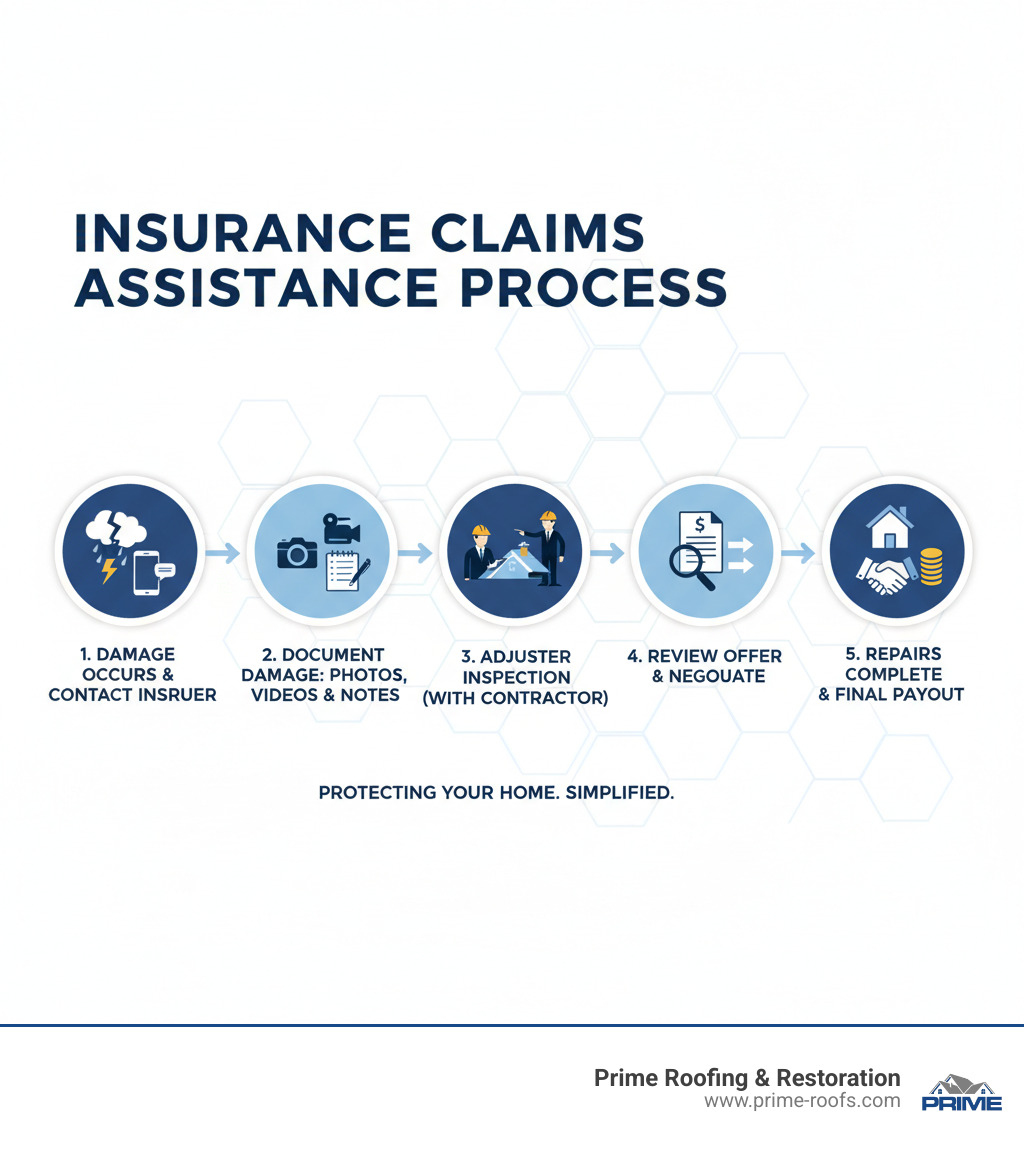
The 5 Key Steps of the Insurance Claims Process
The insurance claims process is a legally binding procedure that requires careful attention to detail. Understanding these five critical stages is your foundation for a successful outcome, helping you steer the system with confidence.
1. Immediate Action: Safety and Damage Mitigation
Your first priority after finding property damage is to ensure everyone is safe. Check for hazards like downed power lines, gas leaks, or structural instability. If you notice any dangers, evacuate and contact emergency services.
Once the area is safe, your next responsibility is to prevent further damage, a requirement in most insurance policies known as “mitigating your loss.” For roof damage, this often means covering exposed areas with tarps to prevent water intrusion. We offer emergency services, including professional tarping, to protect your home from secondary damage like mold or soaked insulation. Keep all receipts for these temporary repairs, as they are typically reimbursable.
2. Document Everything and Notify Your Insurer
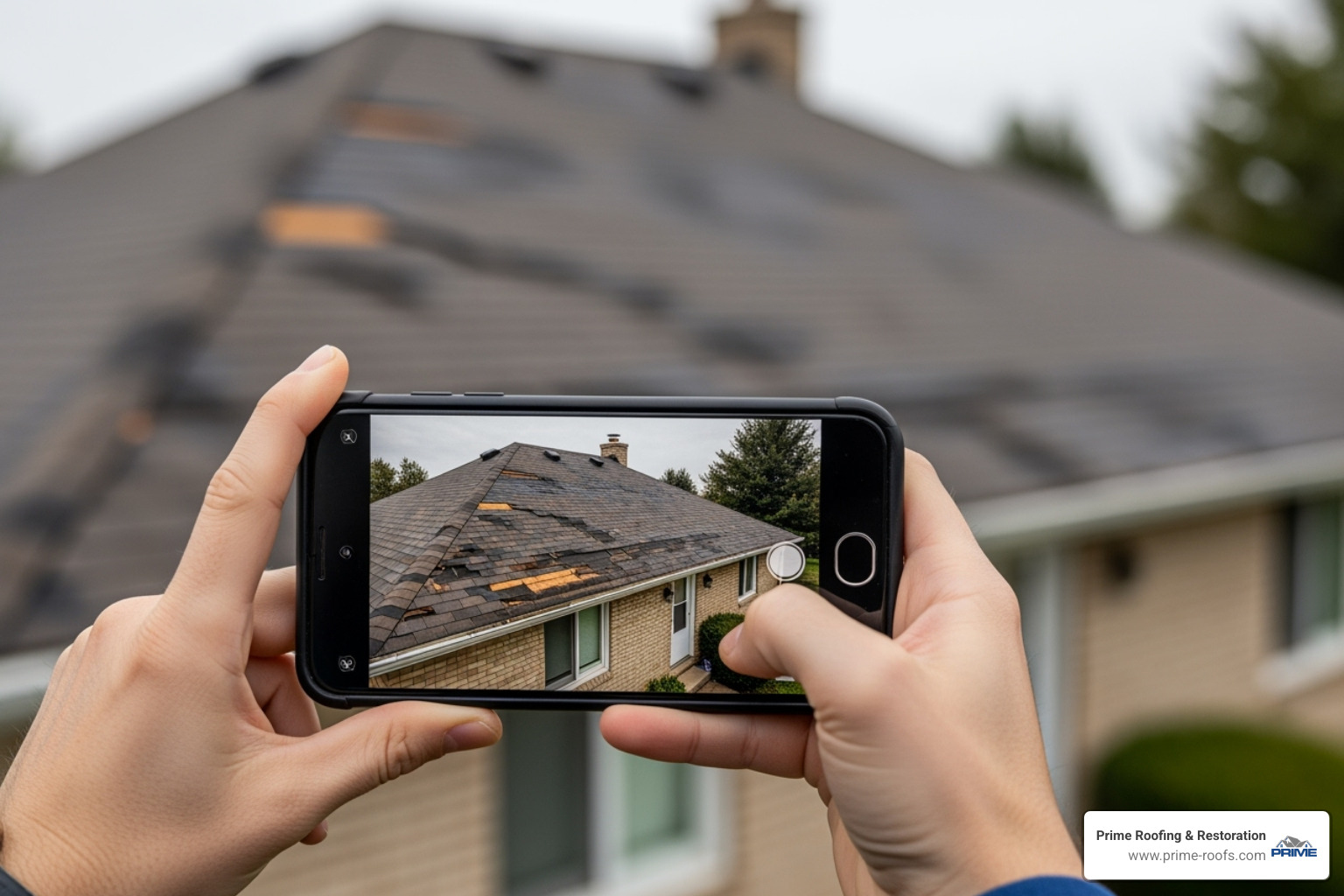
Comprehensive documentation is the backbone of a successful insurance claim. Before making any temporary repairs, use your smartphone to take extensive photos and videos of all damage. Capture wide shots for context and close-ups to highlight specific issues. It’s also wise to keep a detailed written log of all events and conversations with your insurance company, noting dates, times, and names.
Once you’ve documented the initial damage, notify your insurer as soon as possible. Have your policy number and the date of loss ready. Prompt reporting is key, as delays can sometimes complicate a claim.
3. The Adjuster’s Inspection and Assessment
After you file, your insurer will assign an adjuster to inspect the damage and create a “scope of loss” report. It is highly recommended that you have your own trusted contractor present during this inspection. As your roofing contractor, we can meet with the adjuster to point out all damage, including subtle or hidden issues they might otherwise miss. We speak the same technical language as adjusters, which ensures a more accurate and thorough assessment. This collaborative approach is critical, as the adjuster’s report forms the basis of your settlement offer. Getting it right from the start prevents difficulties later.
4. Reviewing the Settlement Offer
Never accept the first settlement offer without a thorough review. Compare the insurer’s estimate line-by-line with the one provided by your contractor. Look for discrepancies in materials, labor costs, or overlooked items. It’s also vital to understand your policy’s coverage type:
- Actual Cash Value (ACV): Pays the depreciated value of your damaged property.
- Replacement Cost Value (RCV): Pays the full cost to replace your property with new materials. With RCV, you typically receive an initial payment (the ACV), and the remaining amount, called recoverable depreciation, is paid after you complete the repairs and submit invoices.
If the offer is too low, we can help you negotiate by providing detailed documentation and justification for a higher settlement.
5. Completing the Repairs and Final Payout
The final step is to complete the repairs and receive your full payout. Choosing a contractor experienced in getting a roof replaced on insurance is crucial. We manage the entire restoration, ensuring all work meets industry standards and insurance requirements.
Once the project is finished, we submit all final invoices to your insurer. This is the trigger for them to release your recoverable depreciation (if you have an RCV policy). We advocate for you until every dollar you’re owed is received, bringing your claim to a successful close.
Why Claims Get Denied: Common Reasons and How to Respond
A claim denial is frustrating, but it’s not always the final word. Many denials can be successfully appealed when you understand the reasons behind them and know how to respond. Understanding these common pitfalls can help you build a stronger claim from the start.

Insufficient Documentation or Missed Deadlines
The most common reason for claim denial is a lack of clear, comprehensive evidence. Insurance companies operate on documentation; if you can’t prove the extent of your loss, they may reject the claim. Vague descriptions and a few blurry photos are not enough. Another major pitfall is missing deadlines. Most policies require you to report damage and file paperwork within a specific timeframe. To protect yourself, always provide detailed photos, repair receipts, contractor estimates, and a list of damaged items.
Policy Exclusions and Coverage Limits
Your insurance policy is a contract with specific exclusions. A frequent point of confusion is the difference between sudden, accidental damage (which is covered) and gradual wear and tear or lack of maintenance (which is not). If your roof was already old and deteriorating, an insurer might argue the damage was due to age, not a storm. Standard policies also exclude certain perils like floods and earthquakes. Furthermore, if the repair cost is less than your deductible, you won’t receive a payout. It’s essential to read your policy to understand your coverage before you need it.
Disagreements on the Scope or Cost of Damage
Sometimes a claim is approved, but the settlement offer is too low to cover the actual cost of repairs. These lowball offers can occur if the adjuster missed hidden damage, used outdated pricing, or underestimated labor costs. This is especially common with roof claims, where subtle hail impacts or water intrusion under shingles can be overlooked. A detailed, itemized estimate from a trusted contractor, like the ones we provide in our roof replacement cost guide, is your best tool for disputing an inadequate offer and negotiating a fair settlement.
How to Appeal a Denied Claim
If your claim is denied, don’t give up. Start by carefully reviewing the denial letter to understand the specific reason. Next, gather additional evidence that directly addresses the insurer’s reasoning, such as a more detailed contractor’s report or new photos. Write a formal appeal letter explaining why you believe the denial was incorrect and include your new evidence. If you’re still unsuccessful, you can seek help from a public adjuster or an attorney. You also have the right to file a complaint with the AL Department of Insurance, which regulates insurers and protects consumers.
Your Guide to Professional Insurance Claims Assistance
When a claim is large, complex, or unfairly denied, you are entitled to have your own representation. Insurance companies have teams of experts protecting their interests, and so can you. Several types of professionals can provide insurance claims assistance to level the playing field.
The Role of a Public Adjuster
A public adjuster is a state-licensed professional who works exclusively for you, the policyholder, not the insurance company. Their job is to manage your claim, document your loss, and negotiate with the insurer to achieve the maximum possible settlement. They conduct their own independent damage assessment, often uncovering issues the company’s adjuster missed. Public adjusters typically work on a contingency fee, meaning they are paid a percentage of the final settlement, which incentivizes them to get you the best outcome. As the non-profit United Policyholders notes, hiring professional help can make a significant difference.
How a Specialized Contractor Can Help
For property damage claims, especially those involving your roof, a specialized contractor offers invaluable expertise. As roofing system experts, we identify all forms of damage, from subtle hail impacts to hidden water intrusion. We provide detailed, accurate estimates based on current local costs, which are crucial for securing a fair settlement. One of the most valuable services we offer is meeting with the insurer’s adjuster during their inspection. By having a technical expert present, you ensure all damage is documented and advocated for in real-time. This insurance claims assistance is typically included as part of our restoration service at no extra charge to you.
When to Contact an Attorney
In some cases, a claim requires legal counsel. The most common reason to hire an attorney is if you suspect your insurer is acting in bad faith—unreasonably delaying or denying a valid claim without proper justification. An attorney can also help with complex legal disputes over policy interpretation. Insurance policies are legal contracts, and if an insurer is using ambiguous language to limit your coverage, a lawyer can challenge their position. Be aware that policies often have strict lawsuit limitations, so if you are considering legal action, it is important to consult an attorney promptly.
Navigating Specific Property Damage Claims
Different types of damage require different approaches and documentation. Whether you’re dealing with the aftermath of a tornado in Alabaster, AL or a sudden leak, knowing how to proceed is crucial for effective insurance claims assistance.
Storm and Hail Damage Claims
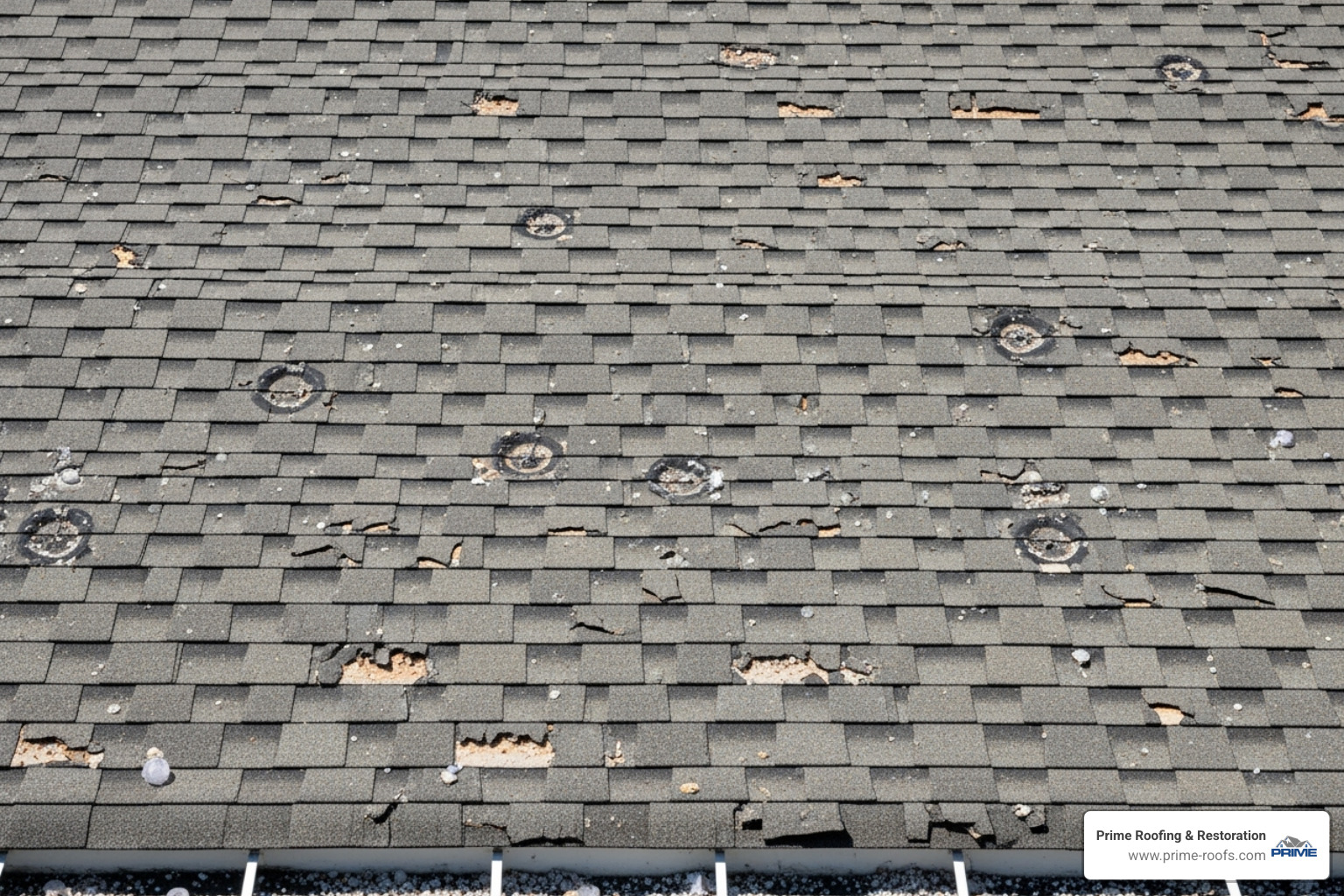
Storm and hail damage claims are common in Alabama but can be tricky to document. Hail damage is often subtle, appearing as small dings on shingles and flashing that break down the protective layers and lead to premature roof failure. Wind can lift, crease, or tear shingles, compromising their seal. Documenting the exact date of the storm with weather reports strengthens your claim. After a storm, a professional inspection is essential to identify all covered damage. Our team knows exactly what to look for and how to document it to meet insurers’ standards.
Water and Fire Damage Claims
These claims are often complex because the damage extends far beyond what is visible. A water leak can lead to hidden mold, rot, and structural issues. Most policies have limits on mold coverage, so immediate mitigation is critical to ensure your claim is not denied due to inaction. Fire damage is more than just what burned; smoke and soot can penetrate drywall and HVAC systems, causing ongoing acidic damage. A professional structural assessment is mandatory after a fire to check for compromised support beams and trusses. For total loss situations, expert assistance is vital to ensure you are compensated for the structure and your belongings.
Commercial Property Claims
Commercial claims operate on a different scale of complexity. The policies are more intricate, and the stakes are higher. Business interruption coverage is a key component, covering lost income and fixed costs while your business is closed for repairs. Documenting these losses requires detailed financial records. Equipment damage, inventory, and specialized machinery also require precise valuation. Because of the larger scale and unique policy features, commercial claims benefit greatly from professionals who understand commercial construction and insurance requirements.
Frequently Asked Questions about Insurance Claims
Navigating insurance claims can bring up many questions. Here are direct answers to some of the most common ones we hear from Alabama homeowners.
What is the difference between a public adjuster and the insurance company’s adjuster?
The insurance company’s adjuster works for the insurer, and their primary duty is to protect the company’s financial interests. A public adjuster is a state-licensed professional you hire to work exclusively for you. Their goal is to represent your interests and maximize your settlement.
How much does insurance claims assistance cost?
The cost depends on the professional. Public adjusters typically charge a contingency fee of 10-20% of the final settlement, so they only get paid if you do. Specialized contractors, like Prime Roofing & Restoration, often provide insurance claims assistance as part of our restoration services at no extra charge. Attorneys may charge hourly, flat, or contingency fees, depending on the case.
Can I reopen a claim after it has been closed?
Yes, in many cases, you can reopen a closed claim, which is known as filing a “supplemental claim.” This is appropriate if you find additional damage that wasn’t included in the original settlement. However, policies have time limits, typically one to two years from the date of loss, so you must act quickly. You will need to provide new evidence, such as a contractor’s report or photos, to support your request. If you face resistance, professional assistance can be highly beneficial.
Your Local Partner for Roofing Insurance Claims
Navigating an insurance claim for your roof requires expertise and persistence. You don’t have to face the insurance company alone. By carefully documenting everything, understanding your policy, and knowing when to call for professional backup, you can protect your investment and secure the fair settlement you are owed. This proactive approach, coupled with expert insurance claims assistance, is your best defense against unfair denials or undervalued payouts.
If your home in Hoover, Alabaster, or the surrounding Alabama communities has suffered roof damage, the team at Prime Roofing & Restoration is here to help. We provide comprehensive roofing restoration services and expert insurance claims assistance, guiding you through every step of the claims process to restore your home and your peace of mind. We pride ourselves on building lasting relationships, using quality materials, and providing 24/7 service with licensed experts to protect homes and families across Alabama.
Don’t let the complexity of insurance claims add to your stress. Let us put our expertise to work for you. Contact us today for a free inspection.