
Why Flat Roof Ponding Repair is Critical for Your Property
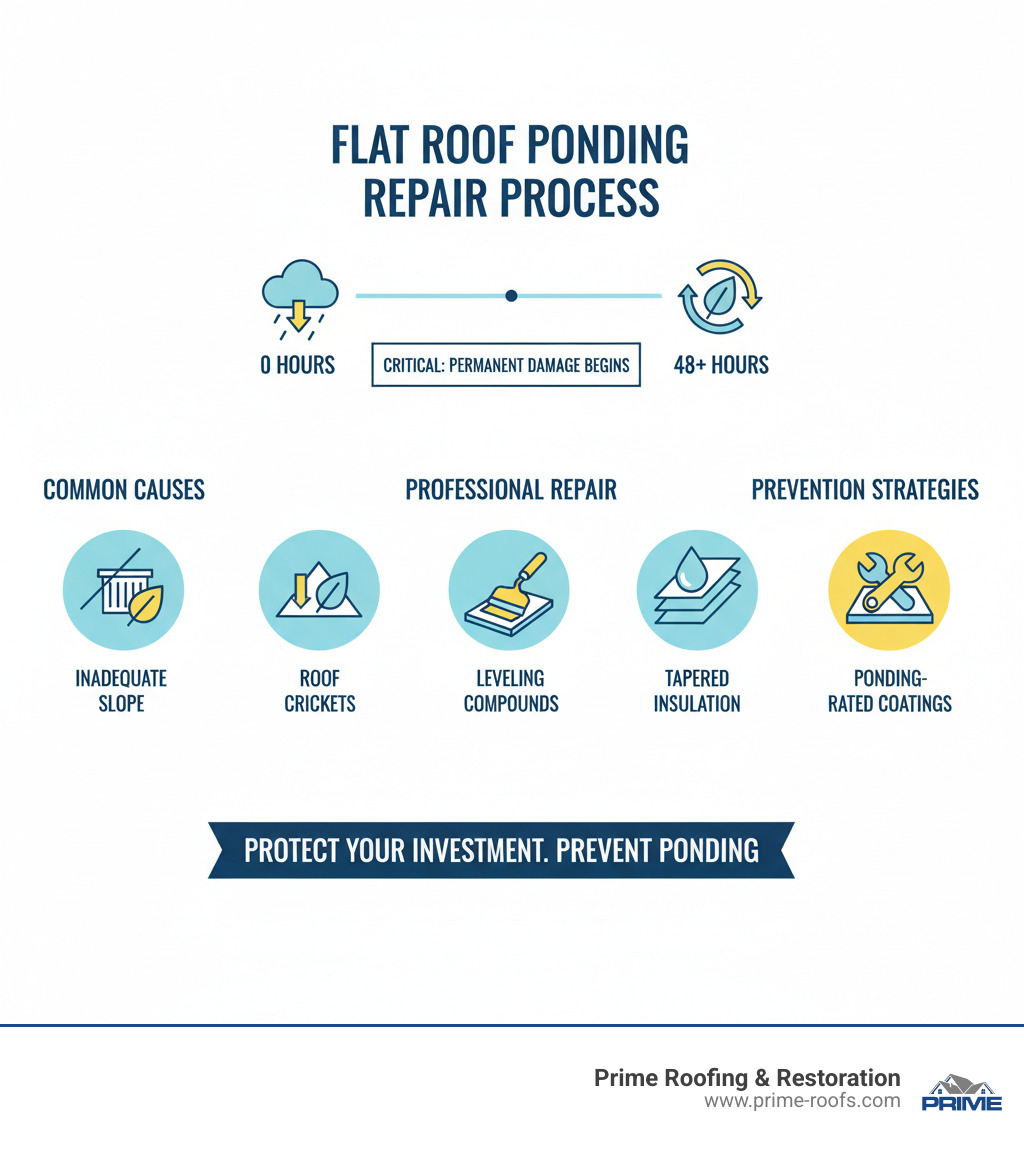
That standing water on your flat roof after a heavy rain is more than just an eyesore—it’s a serious warning sign. According to the National Roofing Contractors Association (NRCA), any water that remains on a roof for more than 48 hours is considered “ponding water.” Ignoring these puddles can lead to accelerated membrane wear, structural damage, and costly leaks. If you’re unsure where to start, speak with a trusted roofing contractor in Alabama to assess your roof and recommend the right fix. For property owners facing this common issue, securing expert help is crucial for a long-term solution. Our professional commercial roofing services provide the expertise needed to address both immediate problems and long-term prevention strategies, protecting your investment.
The consequences of ignoring ponding water are severe. What starts as a simple puddle can quickly escalate into thousands of dollars in damage, voided warranties, and even structural failure. This guide will walk you through everything you need to know about tackling flat roof ponding repair like a pro.
The Dangers of Standing Water: Why Ponding is More Than Just a Puddle
That seemingly harmless puddle on your flat roof? It’s actually a silent destroyer waiting to release chaos on your building. Once water sits for more than 48 hours, it transforms from a minor inconvenience into a serious threat that can compromise your entire roofing system.
Let’s talk about weight first. A single inch of standing water weighs about 5.2 pounds per square foot. That might not sound like much, but imagine a large section of your roof covered in several inches of water—we’re talking about thousands of pounds pressing down on your roof deck. This constant structural stress can cause sagging, deflection, and in extreme cases, even collapse. Your roof trusses and supporting elements weren’t designed to handle this extra load indefinitely.
The damage doesn’t stop there. Ponding water accelerates membrane deterioration in ways that will make your wallet weep. The continuous moisture exposure breaks down roofing materials prematurely, creating blisters as trapped water expands and contracts with temperature changes. Those vulnerable membrane seams? They’re particularly susceptible to water infiltration, and once they fail, you’re looking at serious problems.
In colder climates, freeze-thaw cycles turn ponding water into a wrecking ball. The ice expansion literally tears apart roofing materials, with modified bitumen systems seeing their mineral surfaces erode dramatically. It’s like nature is using your roof as a punching bag.
But wait—there’s more unwelcome news. Standing water creates the perfect breeding ground for biological growth and pest problems. Algae, moss, and other vegetation take root, further degrading your membrane while trapping debris. Mosquitoes love stagnant water for breeding, and rodents are attracted to the water source. Before you know it, your roof has become a mini ecosystem you definitely didn’t ask for.
The most dreaded consequence is water penetration leading to leaks and interior damage. Once your membrane fails, water seeps into insulation, reducing its R-value and driving up energy costs. Interior leaks can cause mold growth, damage ceilings and walls, and create hazardous conditions inside your building.
Perhaps most frustrating for property owners is the potential for voided warranties. Many manufacturers explicitly state that warranties become invalid if ponding water persists. When serious issues arise, you could be left paying for repairs that should have been covered—essentially turning a manufacturer’s problem into your expensive headache.
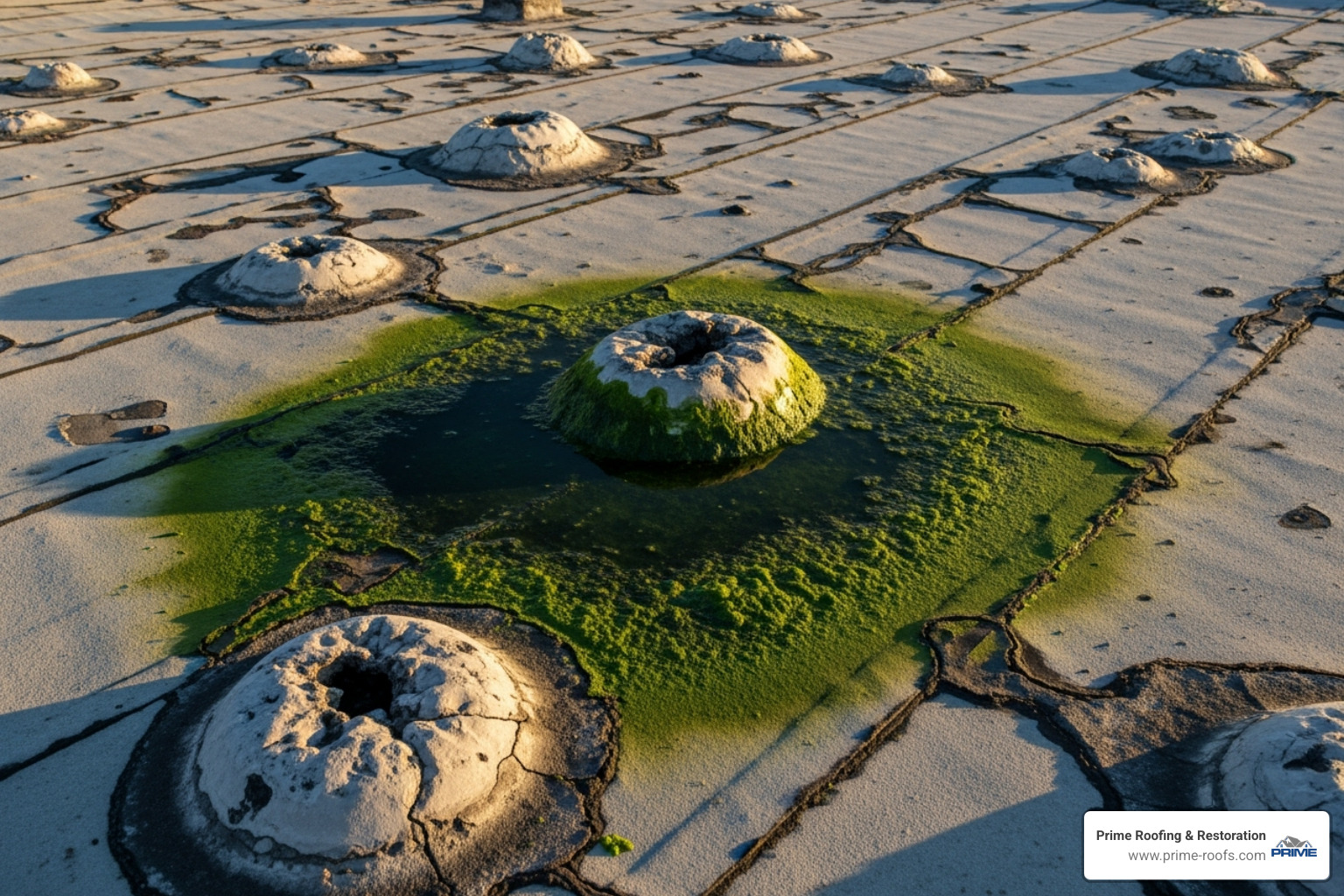
The bottom line? Flat roof ponding repair isn’t just about fixing a cosmetic issue—it’s about protecting your entire investment. When these problems surface, quick action is essential to address these critical concerns before they escalate into major disasters.
Diagnosing the Problem: Common Causes of Flat Roof Ponding
Before you can tackle flat roof ponding repair effectively, you need to play detective and identify what’s really causing those stubborn puddles. Think of it like diagnosing a headache—the pain is obvious, but the underlying cause could be anything from dehydration to stress. The same principle applies to ponding water on your flat roof.
The most common culprit we encounter is inadequate slope. Here’s the thing: despite being called “flat” roofs, they should never actually be completely flat. Every properly designed flat roof needs at least a 0.25-inch slope per foot to guide water toward drainage points. When your roof lacks this essential pitch—whether due to poor initial installation or gradual settling over time—water naturally seeks the lowest spots and sets up camp there.
Another frequent troublemaker is a clogged or insufficient drainage system. Picture this: your roof drains and scuppers are like the bathtub drain in your home. When they’re blocked with leaves, dirt, or debris, the water has absolutely nowhere to go. We’ve seen cases where a seemingly minor blockage creates a domino effect, turning a small puddle into a major ponding problem. Sometimes the issue isn’t blockage but capacity—your drainage system might simply be too small to handle Alabama’s heavy downpours.
Structural settling and deck deflection represent more serious underlying issues. Over the years, buildings naturally settle, and roof decks can sag under the weight of time, weather, and repeated stress. This creates depressions that act like natural swimming pools for rainwater. What makes this particularly concerning is that it often signals a structural problem that goes beyond just surface-level repairs.
Don’t overlook compressed insulation as a sneaky cause of ponding. The insulation beneath your roof membrane can get squished down from heavy foot traffic during maintenance, installation of HVAC equipment, or simply from years of exposure to the elements. When insulation compresses, it creates low spots that trap water—and unfortunately, these problem areas tend to get worse with each rainfall as the insulation compresses further.
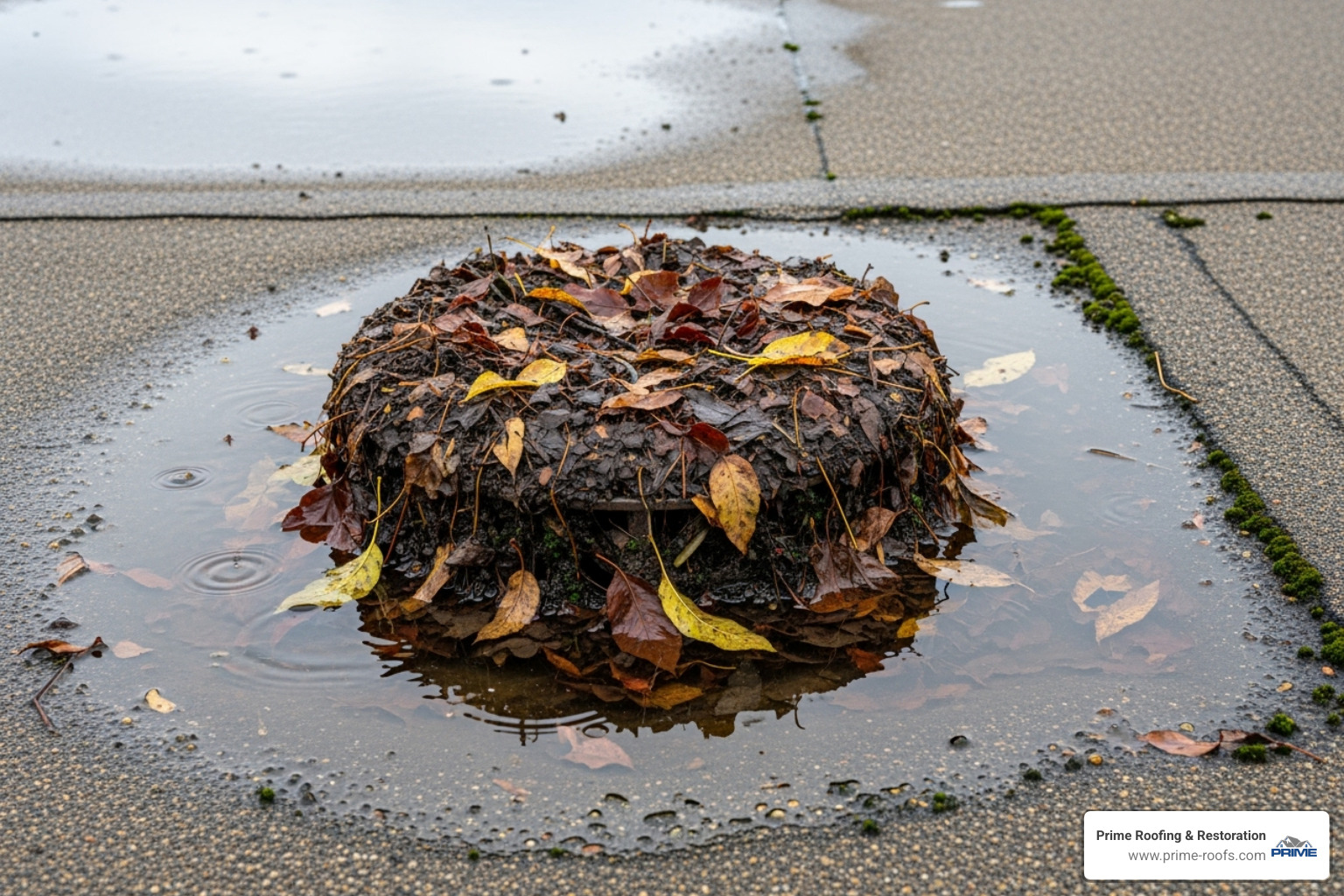
The key to successful flat roof ponding repair lies in accurate diagnosis. Guessing at the cause often leads to wasted money on temporary fixes that don’t address the real problem. That’s why a professional assessment is so valuable—an expert can identify whether you’re dealing with a simple drainage issue or a more complex structural concern and develop the right repair strategy.
Your Guide to Effective Flat Roof Ponding Repair
Now that we’ve identified what’s causing your ponding problem, it’s time to roll up our sleeves and tackle the solution. The good news? There are proven repair strategies for every level of severity, from simple maintenance fixes to comprehensive professional overhauls. The key is matching the right solution to your specific situation—and knowing when to call in the experts.
DIY Fixes for Minor Ponding Issues
If you’re dealing with very small puddles that usually disappear within a day or two, there are a few steps you can take yourself. The simplest and most effective action is regularly cleaning your roof drains, scuppers, and gutters to remove leaves, dirt, and debris. Think of it as giving your roof a clear path to “breathe”—when water can flow freely, minor ponding often resolves itself naturally.
For tiny surface depressions, you might find patch-and-coat kits at your local hardware store. These typically involve applying a self-leveling compound or thick mastic to fill small dips. While these products can provide temporary relief, I need to be honest with you about their limitations.
The reality is that DIY repairs come with significant risks. Without professional experience, it’s surprisingly easy to trap moisture beneath patches or accidentally create new ponding areas. Many of these products simply don’t hold up against Alabama’s intense heat and frequent storms. Even more concerning, using non-approved materials can void your existing roof warranty, leaving you without coverage when you need it most.
Here’s my professional advice: treat DIY fixes as emergency band-aids, not permanent solutions for your flat roof ponding repair needs. For anything beyond routine drain cleaning, you’ll save time, money, and frustration by getting professional help from the start.
Professional Flat Roof Ponding Repair Solutions
When you’re ready for a lasting solution, professional methods make all the difference. We use specialized techniques and commercial-grade materials designed specifically for Alabama’s challenging climate conditions.
One of our most effective approaches involves applying high-quality, fluid-applied roof coatings that are specifically rated for ponding water. Silicone roof coatings, for example, are among the few materials that can actually withstand standing water when properly installed by certified professionals. These coatings create a seamless, flexible membrane that protects your roof from both ponding water and our intense UV rays. For severely damaged areas, we often use a three-course technique—primer, fabric reinforcement, and topcoat—for maximum durability.
Another proven solution is installing roof “crickets”—small triangular structures made from rigid foam-board insulation. These clever devices redirect water flow away from problem areas and toward your drains, kind of like building tiny hills that guide water where it needs to go. They’re particularly effective around HVAC units, chimneys, and other roof obstacles that commonly create ponding zones.
For eliminating depressions and improving overall drainage, we rely on lightweight leveling compounds to fill low spots. One innovative product that’s revolutionizing the industry is GreenSlope, which offers remarkable advantages over traditional concrete solutions. Made from recycled rubber granules, styrofoam beads, and polyurethane binder, it weighs only about 2 pounds per square foot—that’s one-fifth the weight of concrete compounds that can add dangerous stress to your roof structure.
GreenSlope is also incredibly versatile and environmentally friendly. Its breathable composition allows trapped moisture to evaporate naturally, and it’s compatible with virtually all roofing systems. A single 5-gallon pail covers about 9 square feet at one-inch thickness, making it both efficient and cost-effective. Best of all, it can be applied over or under your existing membrane, giving us flexibility in repair approaches.
For built-up and modified bitumen roofs, Spray-Polyurethane Foam (SPF) offers another excellent option for filling depressions and creating proper slope. However, SPF requires immediate coating with UV-resistant materials since it degrades rapidly in sunlight—another reason why professional installation is crucial.
These targeted repairs are fundamental to any effective commercial roofing strategy, providing durable solutions that stand up to Alabama’s weather extremes.
Local contact info: Prime Roofing & Restoration — Phone: (205) 661-8190
Re-Pitching and Structural Solutions
When ponding covers large areas or stems from structural issues, we need to think bigger. These comprehensive solutions address fundamental drainage problems for truly long-term performance.
The gold standard for widespread ponding is installing a tapered insulation system. This involves precisely cutting insulation boards of varying thicknesses to create proper slope across your entire roof surface. Every section is calculated to direct water efficiently toward drains, eliminating collection areas completely. Beyond solving drainage problems, tapered systems often improve your building’s energy efficiency—a nice bonus that can help offset the investment cost.
The installation process is methodical and precise. We layer the tapered boards directly over your existing deck, secure them with screws and steel plates, then install your new roofing membrane over the entire system. While complex, this approach provides a permanent solution that can extend your roof’s life by decades.
Sometimes we find that your existing drains are poorly located or simply insufficient for your roof’s size and Alabama’s heavy rainfall patterns. Adding new drains or scuppers in strategic locations can dramatically improve water evacuation. This work often requires coordination with plumbers and careful structural planning, but the results speak for themselves.
If a professional roof assessment reveals significant structural damage from prolonged ponding, we’ll need to address those issues before any surface repairs can be effective. This might involve reinforcing roof joists, replacing damaged deck sections, or addressing foundational settling. While more extensive, ignoring structural problems would make any surface repair a temporary fix at best.
When weighing repair versus replacement options, it’s helpful to understand the trade-offs:
| Factor | Ponding Repair | Full Roof Replacement |
|---|---|---|
| Cost | Lower initial cost | Higher initial investment |
| Time | Faster (days) | Longer (weeks) |
| Disruption | Minimal | Significant |
| Longevity | Extends roof life 5-15 years | New 20-30 year lifespan |
Professional ponding repairs can save an average of $10,000 compared to full replacement while providing years of reliable performance. The key is working with experienced professionals who can accurately assess your situation and recommend the most cost-effective long-term solution.
Prevention is Key: How to Stop Ponding Water Before It Starts
You know what they say—an ounce of prevention is worth a pound of cure. When it comes to flat roof ponding repair, this couldn’t be more true. The smartest approach is stopping water from pooling in the first place, saving you thousands in repair costs and countless headaches down the road.
Prevention starts at square one with proper installation that ensures adequate slope from day one. Despite their name, flat roofs should never be truly flat. They need that crucial minimum pitch of at least 0.25 inches per foot to guide water where it needs to go. If you’re installing or replacing a roof, make sure your contractor understands this isn’t optional—it’s essential.
Once your roof is in place, a consistent roof maintenance plan becomes your best friend. Think of it as giving your roof a regular health checkup. Semi-annual inspections help you spot trouble before it becomes expensive trouble. During these checkups, you’ll want to look for signs of wear, damage, or those sneaky little depressions that love to collect water.
The most important task? Keeping those drains, scuppers, and gutters squeaky clean. It’s amazing how quickly leaves, dirt, and debris can turn your drainage system into a dam. We recommend clearing these areas at least twice yearly—more often if you’re surrounded by trees that love to drop their leaves on your roof. Installing drain guards acts like a bouncer at your favorite restaurant, keeping the unwanted debris out while letting the water flow freely.
Don’t forget to check for compressed insulation during your inspections. Those soft spots or depressions, especially around heavy equipment or high-traffic areas, are red flags waving for your attention.
Here’s a bonus tip that pays double dividends: applying a reflective roof coating. These acrylic elastomeric coatings work overtime for you. Not only do they improve energy efficiency by reflecting sunlight and helping combat the urban heat island effect (hello, lower HVAC bills!), but they also shield your roofing membrane from harmful UV rays. This protection keeps your roof stronger and more resilient against the kind of material breakdown that leads to ponding problems.
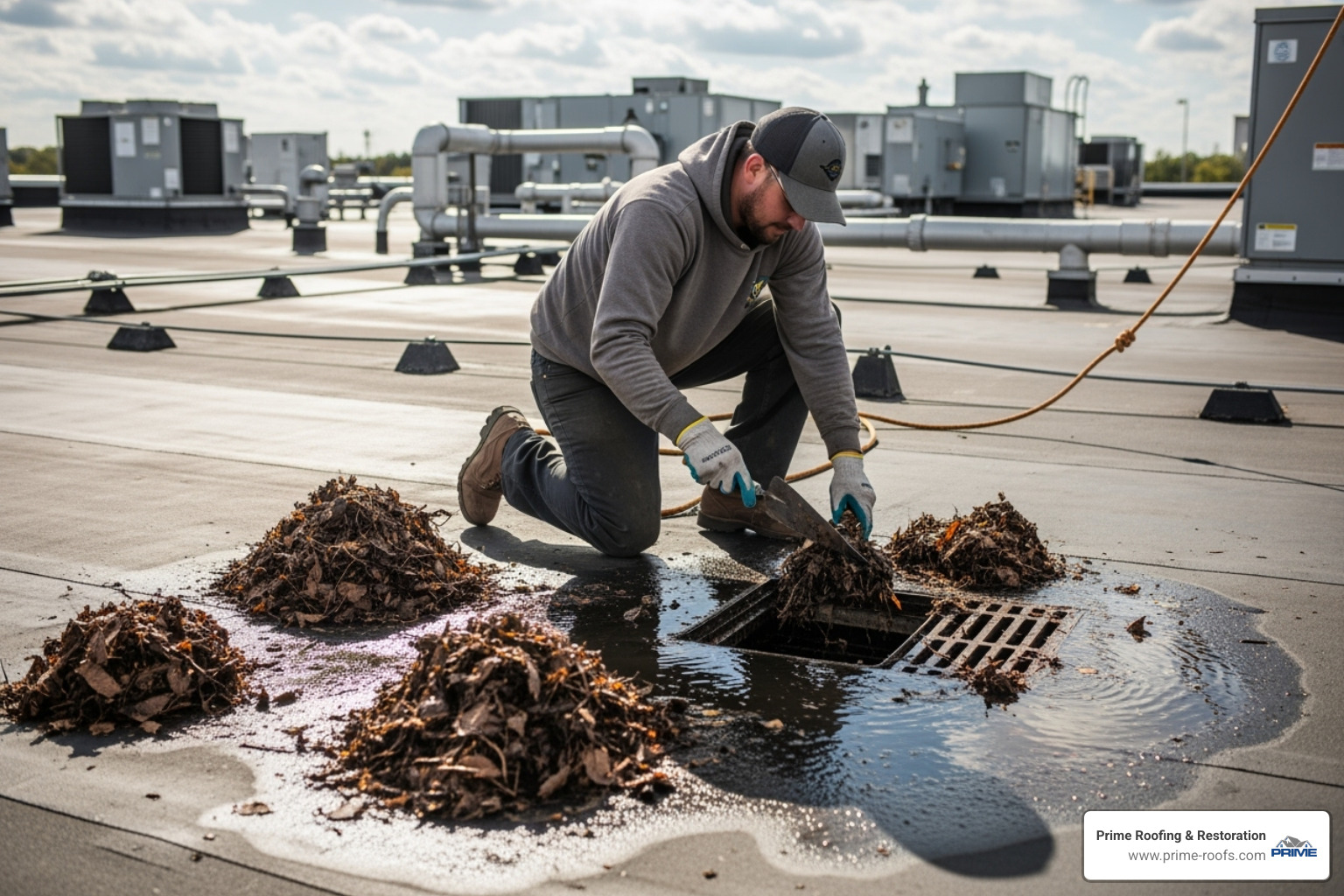
By staying on top of these preventative measures, you’re not just dodging expensive repairs—you’re actively protecting your entire building’s integrity and ensuring it performs well for years to come. It’s like insurance, but better, because you’re actually preventing the problem instead of just paying for it after it happens.
When to Call the Pros in Alabaster, AL
I get it—there’s something satisfying about tackling problems yourself. But when it comes to flat roof ponding repair, knowing when to put down the tools and pick up the phone can save you thousands of dollars and countless headaches.
While cleaning out a clogged drain is perfectly fine for a DIY weekend warrior, certain warning signs scream “professional help needed!” The most obvious red flag is water that sticks around for more than 48 hours after rainfall. This isn’t just a slow-drying puddle anymore—it’s officially detrimental ponding according to industry standards.
Visible sagging in your roof deck is another urgent signal. If you can actually see your roof dipping like a hammock, you’re looking at a potential structural issue that needs immediate attention. Similarly, cracked or blistered roofing membrane tells you the protective barrier is failing, and leaks are probably already happening or about to start.
Recurring interior leaks mean the battle is already lost—water has breached your roof’s defenses and is causing damage inside your building. And if you notice soft, spongy areas when walking on your roof, that’s compressed insulation crying for help.
Here’s the thing about professional intervention: it’s not just about fixing the immediate problem. A certified roofer can dig deeper to find the real culprit behind your ponding issues. Sometimes what looks like a simple drainage problem is actually a complex structural issue that requires an engineer’s expertise.
The financial benefits are compelling too. Professional repair can save an average of $10,000 compared to a full roof replacement. When you consider that replacing even a modest 500-square-foot flat roof can cost $5,500 to $6,000 (and commercial properties cost much more), investing in expert repair makes perfect sense.
For property owners here in Alabaster, where we face intense summer storms and heavy rainfall, professional flat roof ponding repair isn’t just smart—it’s essential. Our local climate can be particularly tough on flat roofs, and having someone who understands these challenges can make all the difference in protecting your investment.
If you’re dealing with flat roof ponding issues, don’t wait for the problem to get worse. Contact our experienced team for a thorough assessment that could save you thousands down the road.
Prime Roofing & Restoration
Address: 5 Brown Cir, Alabaster, AL 35007
For more local roofing expertise, explore our roofers near me in Alabaster, AL.
Conclusion: Protect Your Investment with Proactive Roof Care
Flat roof ponding repair isn’t just about fixing puddles—it’s about safeguarding your entire investment. Throughout this guide, we’ve seen how something as simple as standing water can spiral into a cascade of expensive problems. From accelerated membrane wear to structural damage, the costs of ignoring ponding water far exceed the investment in proper repairs.
The good news? You now have the knowledge to act decisively. Understanding the 48-hour rule gives you a clear timeline for action. Recognizing the warning signs—from visible sagging to recurring leaks—means you’ll never be caught off guard again.
While keeping drains clear is something any property owner can handle, the real solutions require professional expertise. Whether it’s applying specialized coatings, installing drainage crickets, or implementing comprehensive tapered insulation systems, lasting repairs demand the right materials and skilled installation.
Think of it this way: investing in professional flat roof ponding repair today can save you thousands down the road. We’ve seen too many cases where a $2,000 repair could have prevented a $15,000 roof replacement. That’s not just smart business—that’s protecting your peace of mind.
Prevention remains your strongest ally. Regular inspections, consistent maintenance, and addressing small issues before they become big problems will keep your roof performing for decades. Your building deserves that level of care, and so do the people who depend on it staying dry and safe.
Ready to take action? Don’t let another rainstorm add to your worries. Contact the team at Prime Roofing & Restoration for an expert assessment that will give you confidence in your roof’s future. We’re here to help you protect what matters most—your property, your investment, and your peace of mind.