
Why Family Home Protection Matters More Than Ever
Family home protection is a concept that has evolved far beyond a simple lock on the door. In today’s world, it represents a multi-layered, comprehensive strategy designed to secure your physical property, your legal and financial rights, and your family’s overall well-being. With real estate constituting a significant portion of household wealth for most American families, adopting a comprehensive approach to home security is not just a safety measure; it’s one of the most critical financial and personal decisions you can make. The stakes are higher than ever, and understanding the full spectrum of protection is essential.
Statistics from law enforcement agencies and security experts paint a stark picture. The oft-cited fact that homes without security systems are up to five times more likely to be burgled underscores the deterrent effect of visible security measures. However, the threat isn’t just burglary. It includes property damage from severe weather, legal challenges during life-altering events like divorce, and the personal trauma that follows any breach of your sanctuary. Proactive measures are therefore not just about preventing loss—they are about preserving peace of mind and ensuring your family has a stable, secure environment in which to thrive.
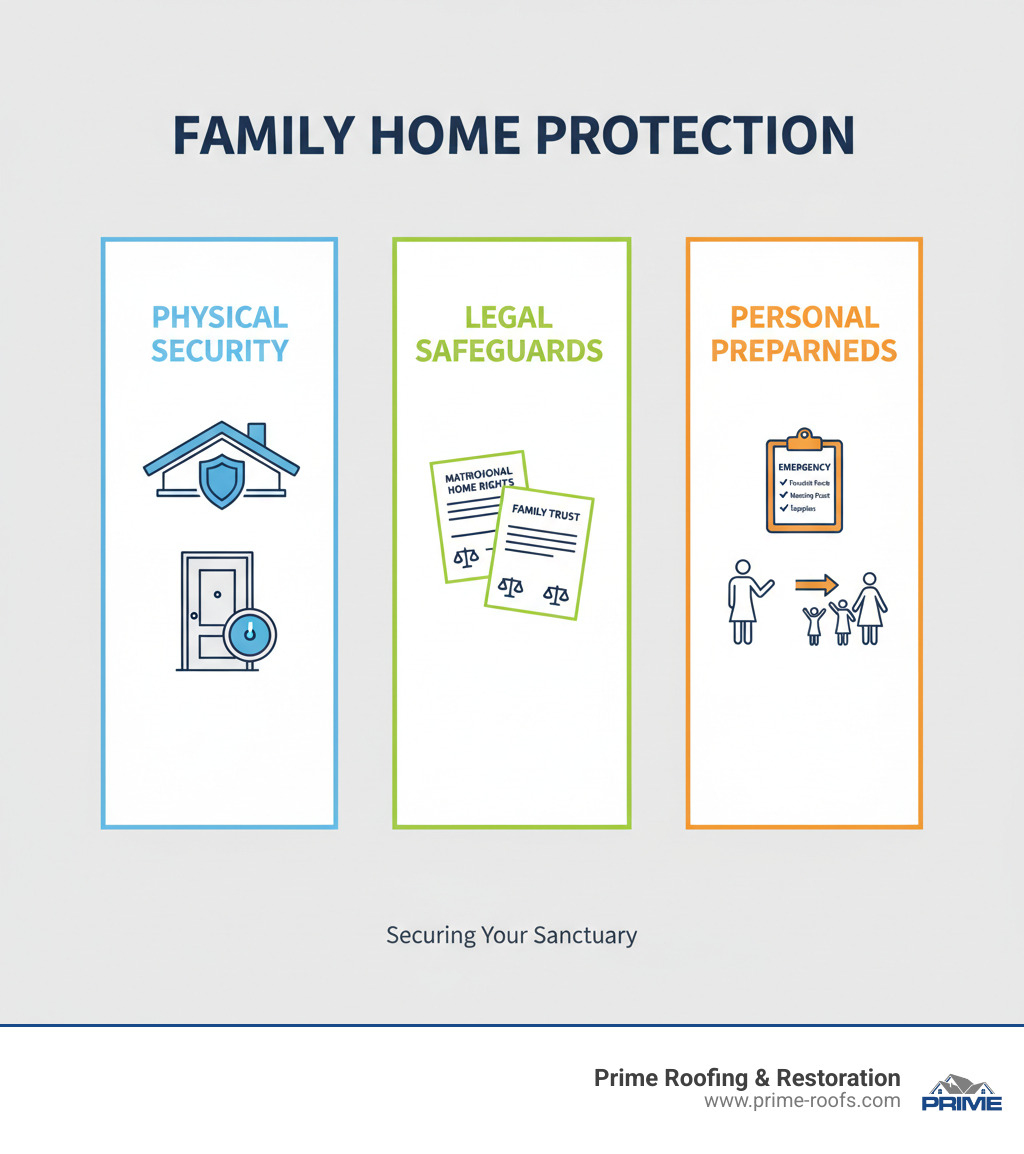
To effectively secure your family home, it is crucial to think in terms of a holistic, three-pronged strategy. This guide will delve into each of these critical areas, providing actionable steps and expert insights to help you build a robust protection plan for your most valuable asset.
-
Physical Security: This is the most tangible layer of protection. It begins with the structural integrity of your home, from the roof that shields you from the elements to the doors and windows that serve as entry points. We will explore how to fortify these elements, from reinforcing your home’s primary structure to leveraging modern technology like alarm systems and surveillance cameras. A strong physical defense is your first and most important barrier against external threats.
-
Legal Safeguards: Your home is not just a physical structure; it’s a significant financial asset with complex legal attachments. This layer of protection involves understanding your property rights, especially in the context of marriage and partnerships. We will discuss how to use legal instruments like trusts and prenuptial agreements to protect your home from unforeseen legal disputes, ensuring it remains a source of stability for your family through all of life’s changes.
-
Personal Preparedness: A secure home is one where the occupants are prepared to act decisively in a crisis. This pillar focuses on the human element of safety. It involves creating and regularly practicing detailed emergency plans for scenarios like fires, medical emergencies, and home invasions. Furthermore, it requires a clear understanding of your legal rights and responsibilities regarding self-defense within your own home.
This guide provides a roadmap to building this complete protection strategy. As Bill Spencer, owner of Prime Roofing & Restoration, I have dedicated my career to helping Alabama families secure their homes. I’ve seen firsthand how a strong, well-maintained roof serves as the first line of defense against both storms and potential structural decay that can lead to other vulnerabilities. By adopting a holistic approach that integrates physical, legal, and personal preparedness, you can create a sanctuary that provides lasting security and peace of mind for your family for years to come.
Fortifying Your Fortress: A Guide to Physical Home Security
Your home’s physical structure is the first and most critical barrier against a wide array of external threats, from intruders to severe weather. Every element, from the shingles on your roof to the screws in your door hinges, works in concert to create a comprehensive shield for your family. Given that homes without a monitored security system face a significantly higher risk of burglary—up to five times more, according to some studies—strengthening your home’s physical defenses is an essential and non-negotiable aspect of true family home protection.
Start from the Top: The Critical Role of Your Roof in Home Protection
Often overlooked in discussions about security, your roof is arguably your home’s most important defense system. It does more than just keep out the rain; it protects the entire structural integrity of your house. A compromised roof can trigger a cascade of devastating problems, including persistent water damage, the proliferation of hazardous mold, weakening of wooden frames and supports, and even creating direct security breaches. In a state like Alabama, a roof must be robust enough to withstand a punishing combination of intense summer heat, high-velocity winds from thunderstorms and hurricanes, and the impact of hail. A single small, unnoticed leak can quickly escalate, leading to thousands of dollars in repairs and compromising your family’s safety.
Regular, professional roof inspections are a cornerstone of any serious home security strategy, especially after severe weather events. At Prime Roofing & Restoration, our Residential Roofing Services are designed to identify and rectify vulnerabilities before they become catastrophic failures. Understanding What to Do After a Storm Damages Your Roof can mean the difference between a minor repair and a major reconstruction project. A high-quality roofing system, installed and maintained by certified experts, is the foundation upon which your entire home protection strategy is built. It ensures that the electronic systems inside, the reinforced doors below, and the family within are all shielded from the top down.
Securing the Perimeter: Doors, Windows, and Environmental Design
While the roof provides overarching protection, most burglars exploit ground-level vulnerabilities. Doors and windows are the most common points of entry, so securing them effectively is paramount. The primary goal is to make unauthorized entry as difficult, noisy, and time-consuming as possible, increasing the likelihood of deterring the intruder altogether.
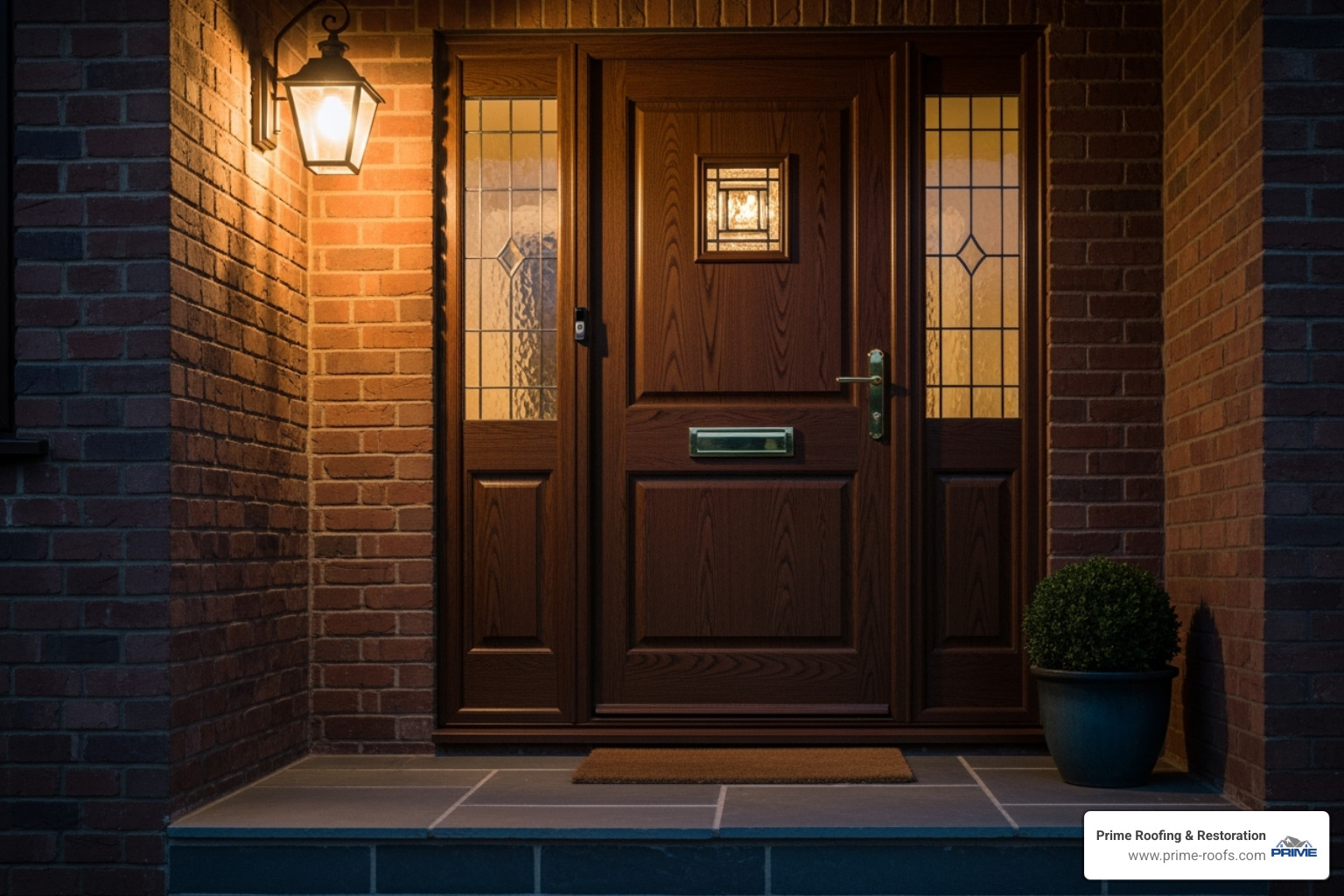
- Doors: All exterior doors should be made of solid-core wood, steel, or fiberglass. The frame is just as important as the door itself. A powerful and cost-effective upgrade is to replace the flimsy half-inch screws in your deadbolt’s striker plate with heavy-duty 3-inch screws that anchor deep into the wall stud. This simple change can dramatically increase resistance to forced entry. Don’t forget to secure the hinges with equally long screws.
- Windows: Windows are often a weak link. Install keyed locks or secondary blocking devices like pins or sash locks to prevent them from being forced open. For enhanced protection, consider applying a security film to the glass. This transparent polyester layer makes the window much harder to shatter, and even if it breaks, the film holds the shards together, frustrating and delaying entry.
- Landscaping and Lighting (CPTED): The principles of Crime Prevention Through Environmental Design (CPTED) use landscaping and lighting to make your home a less appealing target. Trim shrubs and trees around your property to eliminate hiding spots near doors and windows. Studies have shown this simple act can significantly reduce break-in attempts. Pair this with strategically placed, motion-activated lighting around the entire perimeter of your home, including side yards and the back of the house. A well-lit property is a powerful deterrent to prowlers.
- Garage and Other Access Points: The garage is a common and often overlooked entry point. Secure the main garage door with a physical lock, especially when you’re away for extended periods, as a backup to the electronic opener. If your garage provides direct access to your home, the door leading inside should be as secure as your front door—solid-core with a deadbolt. Remember to secure pet doors, mail slots, and basement windows as well.
Just as a roofer looks for the 5 Signs You Need Roof Replacement to protect your home from above, you must regularly assess and upgrade your ground-level security to protect it from the sides.
Leveraging Technology for Modern Family Home Protection
In the 21st century, technology offers an incredibly powerful layer of security. Modern alarm systems create an interconnected web of protection that extends far beyond a simple siren, providing real-time monitoring, remote access, and life-saving alerts.

Today’s smart security systems integrate a suite of devices, including door and window sensors, glass-break detectors, and motion sensors, all of which can be monitored and controlled from your smartphone. Video doorbells and strategically placed security cameras act as both a powerful deterrent and a source of invaluable evidence should an incident occur. You can choose between systems that offer professional 24/7 monitoring, where a security company is alerted and dispatches emergency services, or self-monitored systems that send alerts directly to your phone. Many modern systems also integrate life-safety devices, such as interconnected fire and carbon monoxide detectors that automatically alert emergency services, protecting your family and pets even when you’re away. Some advanced systems even offer medical alert features for elderly family members, providing a comprehensive safety net.
This technology is a direct investment in your family’s safety and peace of mind. As an added benefit, many insurance companies offer significant discounts—often between 5% and 20%—for homes with professionally monitored security systems, which can help the system pay for itself over time.
Legal Safeguards: Protecting Your Home as a Family Asset
True family home protection extends far beyond physical barriers and alarm systems; it encompasses a robust framework of legal and financial safeguards. Your home is likely your most valuable asset, and protecting it from legal challenges, creditors, or division during major life events like separation or divorce is just as critical as reinforcing your front door. Without these legal protections, the physical sanctuary you’ve built could be at risk.
Understanding Your Rights During Separation or Divorce
The legal treatment of a family home during a marital dissolution varies significantly by state, making it essential to understand the laws in your specific jurisdiction to protect your interests. The two primary systems in the U.S. are “community property” and “equitable distribution.”
Most states, including Alabama, operate under an equitable distribution model. This legal principle dictates that all marital property—assets acquired during the marriage—should be divided in a manner that is fair and just, though not necessarily a strict 50/50 split. Courts in equitable distribution states consider numerous factors when deciding how to divide assets like the family home. These factors can include the length of the marriage, each spouse’s financial and non-financial contributions (such as homemaking), the earning capacity of each spouse, and the future needs of the spouse who may have custody of the children. For example, a court might award the home to the custodial parent for a period to provide stability for the children.
In some jurisdictions, the family home is granted a special legal status, often referred to as the “matrimonial home.” This can grant both spouses rights to occupy the property and prevent one spouse from unilaterally selling, refinancing, or mortgaging the home without the other’s explicit consent, even if only one person’s name is on the title.
It is critically important to recognize that the legal protections afforded to married couples often differ dramatically from those available to common-law or cohabiting couples. Unmarried couples typically do not have the same automatic statutory rights to a shared home. If an unmarried partner’s name is not on the deed, their claim to the property often depends on being able to prove their financial contributions toward the home’s purchase or upkeep, or the existence of a co-ownership agreement. This can lead to complex and costly legal battles. Given the intricacies of family and property law, consulting with a local family law attorney is the most prudent step to fully understand your specific rights and obligations.
Using Trusts, Agreements, and Exemptions for Asset Protection
Beyond the default statutory protections, you can implement proactive legal strategies to add powerful layers of asset protection for your home. These tools allow you to define how your assets are managed and distributed, providing clarity and security long before any dispute arises.
-
Family Trusts: A trust is a legal entity where a trustee holds and manages assets for the benefit of designated beneficiaries. Placing a home into a carefully structured irrevocable trust can, in some cases, shield it from being classified as marital property or protect it from creditors. However, the laws governing trusts are highly complex. Courts may still consider trust assets or income when determining alimony, child support, or overall asset division, so the effectiveness of a trust depends heavily on its specific structure and the laws of your state.
-
Prenuptial and Postnuptial Agreements: These legal contracts offer a direct and powerful way for couples to decide in advance how their assets, including the family home, will be divided if the marriage ends. A well-drafted prenuptial (before marriage) or postnuptial (during marriage) agreement can override a state’s default property division laws, providing certainty and preventing contentious disputes down the road. These agreements can specify whether the home will be sold, who has the right to buy the other out, or how the equity will be split.
-
Homestead Exemptions: Many states offer homestead exemptions, which are designed to protect a certain amount of a homeowner’s equity from being seized by creditors. In Alabama, for example, the homestead exemption protects a portion of your home’s value in the event of bankruptcy or other debt collection actions. While these exemptions may not protect against all types of debts (like a mortgage or tax lien), they provide a crucial safety net for your family’s primary residence. You can find more information on state-specific laws through resources like the American Bar Association.
This type of proactive legal planning is not about pessimism; it’s about responsible financial management and foresight. Protecting the legal and financial status of your home—the center of your family’s life—is as fundamental as any physical security measure. Just as you would seek a specialist when Choosing a Roofer to ensure structural integrity, you need an expert lawyer to ensure your legal and financial foundation is just as solid.
Personal Safety Inside Your Home: Preparedness and Self-Defense
A truly secure home is one where every family member is not just physically protected, but also mentally prepared to react calmly and effectively in a crisis. This crucial layer of family home protection involves creating and practicing detailed emergency plans and having a clear, responsible understanding of the legal boundaries of protecting yourselves and your property. Physical barriers can be breached, but a prepared mind is a formidable defense.
Creating and Practicing a Comprehensive Family Emergency Plan
When a crisis strikes—be it a fire, a medical emergency, or an intruder—panic is the enemy. A well-rehearsed emergency plan can replace fear with decisive action, potentially saving lives. An effective plan is not a single document but a living strategy that every member of the household understands and can execute.
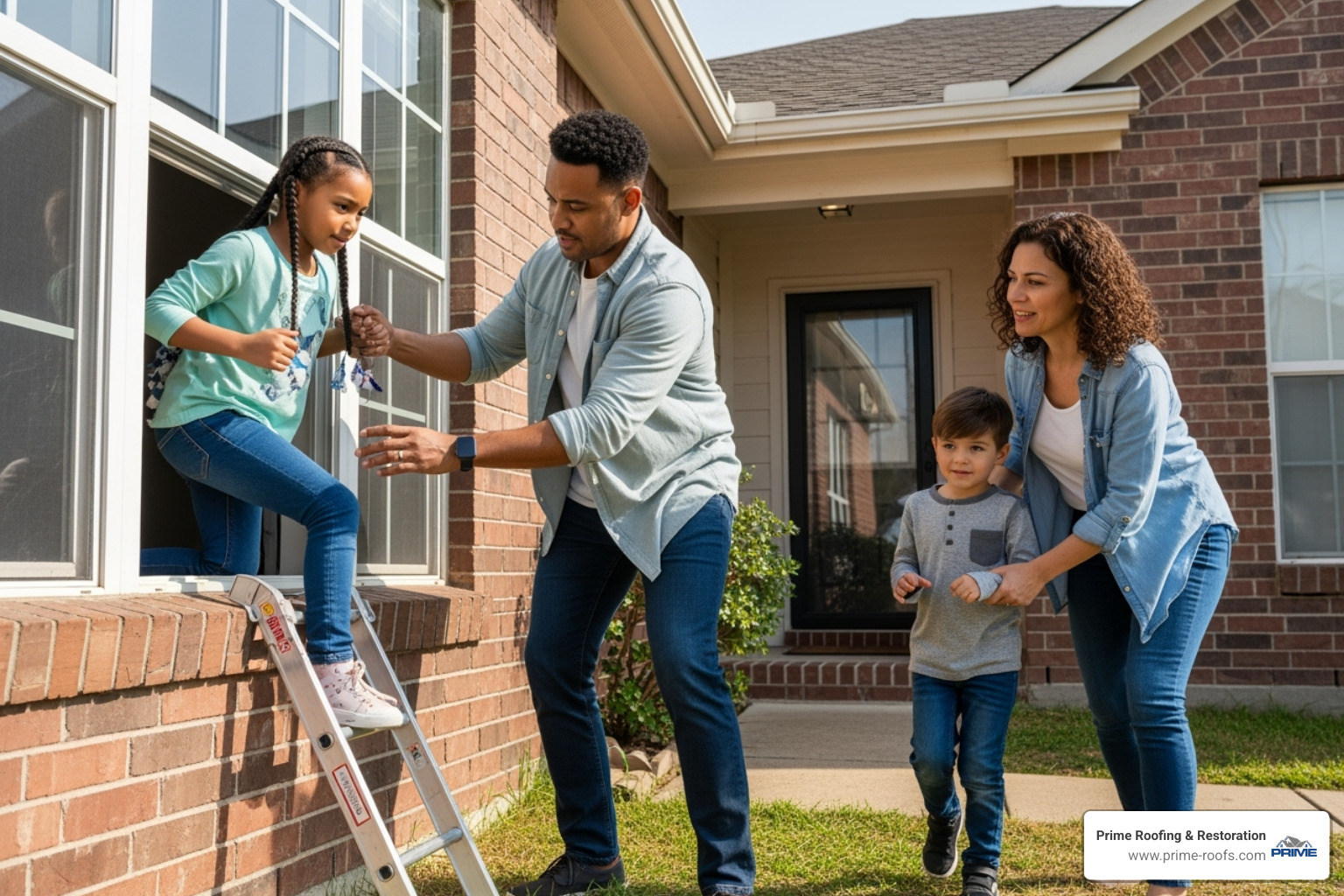
Your plan should be customized to your home and family, covering several key scenarios:
-
Fire Safety: This is one of the most common household emergencies. Identify at least two escape routes from every room, especially bedrooms. Ensure windows are not painted shut and are easy to open. Establish a safe, immovable meeting point outside (e.g., a specific tree or a neighbor’s mailbox) where everyone will gather for a head count. Install smoke detectors in every bedroom, outside sleeping areas, and on every level of the home. Test them monthly and replace batteries annually. Teach everyone how to use a fire extinguisher using the P.A.S.S. method (Pull, Aim, Squeeze, Sweep).
-
Home Invasion Protocol: Designate a “safe room” within your home. This should be a room with a solid-core door, a deadbolt lock, and minimal windows, such as a master closet or bathroom. Equip this room with a charged cell phone and, if possible, a basic emergency kit. The plan should be for all family members to retreat to this room, lock the door, and immediately call 911. Teach your family not to confront an intruder; their primary goal is to create distance and get help.
-
Natural Disasters: Given Alabama’s climate, your plan must include protocols for tornadoes and severe thunderstorms. Identify the safest location in your home (a basement, storm cellar, or an interior room on the lowest floor with no windows). Your emergency kit should be stored here and include a weather radio, helmets for head protection, and sturdy shoes.
-
Communication Plan: In a widespread emergency, local phone lines can become overwhelmed. Designate an out-of-state relative or friend as a central contact point for all family members to call and check in with. Ensure everyone, including young children, knows how to call 911 and can clearly state their full name and address.
The absolute key to an effective plan is practice. Run drills for fire and home invasion scenarios at least twice a year. These drills build muscle memory and help identify weaknesses in your plan. For comprehensive resources, including printable templates and checklists, visit authoritative sites like Ready.gov for guidance on creating a family emergency plan and building an emergency supply kit.
Understanding Self-Defense Laws in Your Home
The right to protect yourself and your family within your own home is a fundamental legal principle, but the laws governing the use of force in self-defense are specific and vary significantly by state. Understanding these laws before you are ever in a threatening situation is a critical responsibility.
In the United States, many states have adopted the Castle Doctrine, which is a legal principle that designates one’s home as a place where they have the right to protect themselves with force, including deadly force, without a duty to retreat. Alabama has a strong Castle Doctrine and a related “Stand Your Ground” law. This means that if someone unlawfully and forcefully enters your home, you are generally presumed to have a reasonable fear of imminent peril of death or great bodily harm, and you are justified in using defensive force.
However, the legal standard is almost always reasonableness and proportionality. The force used must be proportional to the threat you are facing. This is a critical distinction. Using lethal force against a non-violent trespasser who poses no immediate threat would likely be deemed excessive and could lead to criminal charges. The law protects you when you are defending against a credible threat of serious harm, not simply protecting property. It is crucial to understand the specific self-defense statutes in Alabama, as the nuances can be complex.
The laws surrounding the ownership and use of defensive tools, such as firearms, pepper spray, or tasers, also vary. Before acquiring any item for self-defense, it is your responsibility to research and comply with all local and state laws regarding purchase, storage, and training. Responsible ownership includes seeking professional training on the safe and effective use of your chosen tool. Consulting with a legal professional who specializes in self-defense law can provide clarity on your rights and limitations, forming a critical layer of your family home protection strategy.
Frequently Asked Questions about Family Home Protection
Navigating the world of home security can bring up many questions. Here are detailed answers to some of the most common queries we receive about family home protection.
How can I significantly improve my home security on a tight budget?
Effective security doesn’t always require a large financial investment. Many of the most impactful measures are low-cost and high-impact. Start with your doors. Replace the short, flimsy screws in your door’s striker plates and hinges with 3-inch, heavy-gauge screws that anchor into the solid wood of the door frame. This single, inexpensive upgrade can make a door exponentially more resistant to being kicked in. Install quality deadbolts on all exterior doors if you don’t already have them. Next, turn your attention to your yard. Trim back overgrown shrubs and trees near windows and doors to eliminate potential hiding spots for intruders. This principle of natural surveillance is a core tenet of Crime Prevention Through Environmental Design (CPTED) and has been shown to reduce break-in attempts by approximately 60%. Finally, create the illusion of occupancy, which is a powerful deterrent. Use inexpensive mechanical or smart timers to turn lights, radios, or a TV on and off at varied intervals, especially when you are away.
Can better home security actually lower my homeowners insurance premiums?
Yes, absolutely. Most insurance companies view proactive security measures as a reduction in risk, and they reward homeowners for it. Installing a professionally monitored security system that includes intrusion detection as well as fire and carbon monoxide alerts can often lead to discounts ranging from 5% to 20% on your annual premiums. Other upgrades that may qualify for smaller discounts include installing deadbolt locks on all exterior doors, having interconnected smoke detectors, and even having a fire extinguisher in the home. The key is to contact your insurance agent before making major upgrades. Ask them for a specific list of security and safety improvements that qualify for a premium discount. The savings can often help offset the cost of the security system over time, making it a wise financial decision as well as a safety one.
What is the real difference in home protection rights for married vs. common-law couples?
The legal rights to a shared home differ profoundly based on marital status and your state’s laws. It’s a critical distinction that can have massive financial consequences.
- Married Couples: In an “equitable distribution” state like Alabama, a home purchased or paid for during the marriage is generally considered “marital property.” This means both spouses have legal rights and an equitable interest in the property, regardless of whose name is on the title. During a divorce, the home’s value is subject to fair division by the court. One spouse cannot legally sell or mortgage the home without the other’s consent.
- Common-Law or Unmarried Couples: Unmarried partners do not receive these same automatic legal protections. If a partner’s name is not on the deed, they have no automatic right to the property. To make a claim, they would typically need to pursue legal action to prove they have an interest based on a written cohabitation agreement, their name being on the mortgage, or by demonstrating significant financial contributions to the home’s purchase, taxes, or major improvements. This can be a difficult, expensive, and uncertain legal process.
Because these laws are so complex and state-specific, both married and unmarried couples should strongly consider consulting a family law attorney to draft protective agreements (like a prenuptial or cohabitation agreement) to clarify ownership and rights from the outset.
Are smart locks a safe and reliable security option?
Smart locks offer a compelling mix of convenience and security, but they come with their own set of pros and cons. On the plus side, they provide keyless entry, the ability to grant temporary access to guests or service people remotely, and an audit trail of who has entered and when. However, potential vulnerabilities include the risk of being hacked (though reputable brands use strong encryption), a reliance on battery power (most have a backup key or method), and potential connectivity issues with your home’s Wi-Fi. The most secure smart locks are those from established brands that are professionally installed and feature ANSI/BHMA Grade 1 or 2 certification, which is the same standard applied to high-quality traditional deadbolts.
How does a well-maintained roof contribute to my home’s security?
This is a crucial point that is often missed. A roof’s role in security is twofold: direct and indirect. Directly, a decaying or damaged roof with soft spots or holes can potentially offer a point of entry for a very determined intruder, especially on single-story homes or near second-story balconies. Indirectly, and more commonly, a failing roof leads to leaks and water intrusion. This moisture weakens the structural integrity of your home’s wooden frame, including the frames around doors and windows. A rotted door frame will not hold a deadbolt securely against force, rendering your expensive lock useless. Therefore, maintaining a sound, strong roof is a foundational step in ensuring the rest of your physical security measures can function as intended. It’s why we say security starts from the top.
Conclusion: A 360-Degree Approach to a Secure Home
True family home protection is not a single product you can buy or a simple checklist you can complete. It is a dynamic and comprehensive strategy that thoughtfully weaves together the distinct yet interconnected layers of physical security, legal safeguards, and personal preparedness. Each of these pillars reinforces the others, creating a resilient shield for your family and assets that is far greater than the sum of its individual parts. From the shingles on your roof to the clauses in your legal documents, every element plays a vital role in building a true sanctuary.
The foundation of this entire 360-degree approach is a sound, secure physical structure, which unequivocally starts at the very top. A compromised roof can silently undermine every other security investment you make. A leak can rot the very doorframe your deadbolt is meant to secure, and structural decay can create vulnerabilities where none existed before. That is why we are passionate in our belief that family home protection truly begins with your roof—the primary shield that protects everything and everyone you value.
At Prime Roofing & Restoration, we have spent years dedicating our craft to helping families in Alabaster, AL, and the surrounding communities build that crucial first layer of defense. Our licensed, insured, and highly trained professionals understand that your roof is more than just a part of your house; it is the guardian of your home’s integrity and your family’s safety. We use only high-quality materials and adhere to the strictest installation standards because we know that your home’s protection is paramount, and there are no shortcuts to peace of mind.
Strengthen your home’s first and most important line of defense. We invite you to contact our local team for a comprehensive, no-obligation consultation and a free estimate. Let’s discuss how we can help you protect what matters most.
Contact Prime Roofing & Restoration Today
Name: Prime Roofing & Restoration
Address: 123 Main Street, Alabaster, AL 35007
Phone: (205) 555-7663
Click here to view our location on Google Maps
Ready to secure your home from the top down? Contact us today through our website and let our family help protect yours.